Daily Archives: November 8, 2012

Big real estate investors say Sandy hurts lower Manhattan values | Chappaqua Homes

Lower Manhattan office building values are likely to suffer as a result of damage inflicted by Superstorm Sandy that has left thousands of downtown Manhattan workers unable to return to their offices, major real estate executives said at a conference on Wednesday.

“I think there’s been value erosion downtown,” Howard Lutnick, chairman and CEO of Cantor Fitzgerald LP and BGC Partners Inc, said during the New York University Schack Institute of Real Estate Capital Markets in Real Estate conference. “It had just started to come back. The concept now of fear of flooding is going to affect values.”

About 500 of his employees are unable to return to the three floors they occupy at 199 Water Street. Lutnick expect that to continue for six weeks to two months. Meanwhile his staff has been doubling up at the company’s midtown offices and trading floors at 499 Park Avenue and its connected building at 110 East 59th Street.

Nearly one-third of the 101 million square feet of office space in downtown Manhattan either was closed, powered by generators or had no heat due to the flooding Sandy inflicted last week, said Jones Lang LaSalle Inc. There was no correlation between the age of the building and the damage suffered, the real estate services company said.

Lutnick, unfortunately, knows about disasters. The company occupied floors 101 through 105 of One World Trade when it was destroyed on Sept. 11, 2001. Cantor Fitzgerald lost 658 of its 960 employees who worked there.

“All disaster recovery plans are a disaster,” he told about 475 real estate investors, bankers and students at the conference.

Cantor Fitzgerald’s lease at 199 Water Street expires in about 15 months, he said, and the company has yet to decide whether to renew it. Lutnick said downtown landlords may have to make more concessions and ultimately take in less rent to convince tenants to stay.

“They’ll have to offer more value to get them to stay,” he said.

The destruction and prolonged building closings and heating and electrical interruptions will take their toll on property values, Darcy Stacom, CBRE Group Inc vice chairman, said later at the conference.

“Will investors think about this when they look at buildings in hard-hit areas? Yes,” she said.

HUDSON YARDS

The repercussions from Sandy could reach well past downtown. Part of Hudson Yards, the office and housing development planned for midtown’s far west side, is also in the flood zone. That could prompt some changes to the plans.

“It is a subject that we and our partner will definitely be talking about,” said Andrew Trickett, senior vice president, U.S. region, for Oxford Property Group, the real estate arm of Canadian pension fund Ontario Municipal Employees Retirement System. Oxford is Related Companies’ equity partner in Hudson Yards.

Stephen Ross, Related’s chairman, said if Hudson Yards had been built already, it would not have had many problems.

“We have plans for backup generators for the entire project,” he said of the planned 6 million square feet of office space, 5 million square feet of housing, and 1 million square feet of retail space.

It will take public and private money to prevent another disaster, real estate experts said, and will require regulatory and zoning changes determining how things are built and where they are located.

It will take even more money to prevent storm surges and rebuild the city’s old infrastructure.

“If they could do it in New Orleans, they certainly can do it in New York,” Ross said, referring to the infrastructure built after Hurricane Katrina.

The rebuilding could stir demand for professions and trade workers who were hit hard by the recession that dried up financing for development projects.

“Construction workers who have been sitting on the bench for five or six years, they’ll be in demand,” said William Rudin, chief executive and vice chairman of Rudin Management Co Inc. “They’ll be able to get back to work, so will the architects, the engineers, the contractors. You go down the line, one of our strengths is that we have these industries here.”

Related Quotes and News

Company
Price
Related News
  • Tweet this
  • Link this
  • Share this
  • Digg this
  • Email
  • Reprints

We welcome comments that advance the story through relevant opinion, anecdotes, links and data. If you see a comment that you believe is irrelevant or inappropriate, you can flag it to our editors by using the report abuse links. Views expressed in the comments do not represent those of Reuters. For more information on our comment policy, see http://blogs.reuters.com/fulldisclosure/2010/09/27/toward-a-more-thoughtful-conversation-on-stories/
Comments (0)
Be the first to comment on reuters.com.
Add yours using the box above.

Treasury Bond Demand Most This Year on Fiscal-Cliff Concern | Armonk NY Homes

Treasury 30-year bond yields fell to a two-month low as the U.S. received the highest demand this year at an auction of the debt amid concern lawmakers risk pushing the economy into recession over a budget showdown.

The difference in yields between 10- and 30-year debt narrowed to the least since August with demand for the bonds, as measured by the number of bids submitted compared with the amount of debt sold, the highest since December. Treasuries have risen since the re-election of President Barack Obama and a split Congress on concern they’ll be unable to compromise and avoid a series of automatic tax increases and spending cuts that have become known as the fiscal cliff.

Treasury Bond Demand Most This Year on Fiscal-Cliff Concern

Treasury Bond Demand Most This Year on Fiscal-Cliff Concern

Ken Cedeno/Bloomberg

Today’s auction was the final of three offerings of coupon-bearing securities by the Treasury this week totaling $72 billion.

Today’s auction was the final of three offerings of coupon-bearing securities by the Treasury this week totaling $72 billion. Photographer: Ken Cedeno/Bloomberg

Goolsbee on Tax Legislation, Obama Re-Election

Austan Goolsbee, a professor at the University of Chicago’s Booth School of Business and a former chairman of the White House Council of Economic Advisers, talks about the re-election of President Barack Obama and the outlook for new tax and entitlement legislation. Goolsbee speaks with Betty Liu on Bloomberg Television’s “In the Loop.” (Source: Bloomberg)

‘The strong auction reflects strong demand,’’ said Priya Misra, head of U.S. rates strategy at Bank of America Corp. in New York, one of the Federal Reserve’s 21 primary dealers that are required to bid on the auction. “If you are worried about the fiscal cliff, the place to be is the long end of the Treasury curve, as the yield there has more room to fall.”

The yield on the current 30-year bond dropped six basis points, or 0.06 percentage point, to 2.77 percent at 2:13 p.m. New York time, according to Bloomberg Bond Trader data. The price of the 2.75 percent security maturing in August 2042 rose 1 6/32, or $11.88 per $1,000 face value, to 99 19/32.

The U.S. faces $1.2 trillion in mandated spending cuts and tax increases starting Jan. 1 if Congress can’t agree to reduce the deficit, which totaled $1.09 trillion in fiscal 2012. The Congressional Budget Office has said the world’s biggest economy would slow by as much as 0.5 percent next year if Congress fails to prevent the measures from kicking in, pushing the economy over what’s become known as the fiscal cliff.

As Obama was re-elected this week, Republicans maintained control of the House of Representatives and Democrats held on to a Senate majority.

Auction Yield

The 30-year bonds sold today drew a yield of 2.82 percent, compared with a forecast of 2.848 percent in a Bloomberg News survey of nine primary dealers. The bid-to-cover ratio, which gauges demand by comparing total bids with the amount of bonds offered, was 2.77, versus an average of 2.59 for the past 10 sales.

Indirect bidders, an investor class that includes foreign central banks, purchased 45.4 percent of the bonds sold today, compared with 26.5 percent at the October sale, which was the lowest level since August 2011, and an average for the past 10 offerings of 32.6 percent.

Direct bidders, non-primary dealer investors that place their bids directly with the Treasury, purchased 12.4 percent on the bonds, versus 14.2 percent at the last sale and an average of 14.4 percent for the past 10 auctions.

Thirty-year bonds have returned 4.3 percent this year, compared with a 2.4 percent gain in the broader U.S. Treasuries market, according to Bank of America Merrill Lynch indexes.

Final Sale

Today’s auction was the final of three offerings of coupon- bearing securities by the Treasury this week totaling $72 billion.

The U.S. sold $24 billion of 10-year debt yesterday at a yield of 1.675 percent and auctioned $32 billion of three-year notes on Nov. 6 at a yield of 0.392 percent. Both sales drew lower demand than at previous offerings. Investors bid for 2.59 times the amount of securities available yesterday, versus 3.26 times at the auction in October. For the three-year sale, the figure dropped to 3.41, from 3.96 a month earlier.

“There is definitely concern out there, given the policy and economic uncertainties, and even at these low yields investors are willing to pay up to get the long end,” said Jason Rogan, director of U.S. government trading at Guggenheim Partners LLC, a New York-based brokerage for institutional investors.

Quantitative Easing

Long-bond yields fell yesterday the most in 11 weeks as Obama’s re-election also fueled speculation the Fed will keep buying Treasuries.

The Fed purchased $2.3 trillion of Treasuries and mortgage- related bonds in two rounds of quantitative-easing stimulus from 2008 to 2011 and has begun a third effort. The central bank announced Sept. 13 it would buy $40 billion a month of mortgage- backed securities until the outlook for the labor market improves “substantially.”

Fewer Americans than forecast filed claims for unemployment insurance last week as the effects of Hurricane Sandy started to show up. Applications for jobless benefits fell by 8,000 to 355,000 in the week ended Nov. 3, the Labor Department said today in Washington. A Bloomberg News survey had forecast claims for jobless benefits increased by 2,000 to 365,000 last week.

Fiscal cliff worries may turn USD 10yr swap spreads negative | North Salem NY Homes

Worry about the pending fiscal cliff and its implications for the US sovereign rating are weighing on USD 10-year swap spreads and may be the catalyst that tips them into negative territory.

Swap spreads already tightened to zero following the Federal Reserve’s third round of quantitative easing launched in September before moving back into low single digits.

But it’s the fisal cliff, the pending tax increases and spending cuts that will automatically kick in in 2013 if Congress fails to agree on measures to avert them, that are now spooking investors.

“There are salient concerns over the sovereign credit rating, however I fail to see how an investor would take on the credit of a financial institution (via swaps) over that of the US Treasury (bonds) which negative rates would suggest,” said one swaps trader.

The swap spread is the difference between the swap rate, or the fixed rate of an interest rate swap, and the corresponding Treasury yield. An interest rate swap exchanges a fixed payment for a floating payment and is tied to the London Interbank Offer Rate, or Libor.

In normal conditions, the Treasury yield should be lower than its corresponding swap rate, as government debt is considered to be less risky than bank debt. When Treasury yields are higher than swap rates, swap spreads invert.

The typical catalysts for swap spreads are Treasuries, mortgage-backed securities (MBS) and bond supply. That relationship was demonstrated by the Fed’s QE3, as convexity selling occurred between Treasuries, swap spreads and MBS.

Fixed-rate mortgages are tied to the 10-year Treasury yield. When yields fall, mortgage rates drop in sympathy. However, MBS have negative convexity, which means they cannot rise in price rapidly enough to accommodate the drop in interest rates.

Negative convexity is due to the fact that borrowers have the option to prepay their loan and refinance at a better rate. That increased prepayment risk reduces the price gains and causes the convexity selling.

To smooth out duration, an MBS investor will purchase a longer-dated asset, such as a Treasury or swap rate, facilitating the tightening in swap spreads.

THE NEW NORMAL?

The decline in mortgage rates sparked by QE3 led to heavy selling in swap spreads. That pulled the 10-year spread to zero, although it moved back up by the end of September as MBS repriced.

The 10-year spread has plumbed briefly into negative terrain in 2009 and 2010. Other swap spreads, both USD and in other currencies have also inverted.

In fact, the 30-year swap spread went negative following pronounced selling in 30s in reaction to the Lehman collapse in 2008. The trade was not expected to persist for the long term, but four years later, it remains negative and is considered the “new normal.”

The 10-year swap spread is now expected to track a similar pattern as old worries resurface.

This week, Fitch reiterated its negative outlook on the US AAA rating and urged the government to quickly resolve the fiscal cliff, lift the debt ceiling and put a credible deficit reduction plan into place now that the presidential election is over.

“Failure to reach even a temporary arrangement to prevent the full range of tax increases and spending cuts implied by the fiscal cliff and a repeat of the August 2011 debt ceiling episode would mean that the general election had not resolved the political gridlock in Washington and likely result in a sovereign rating downgrade,” the ratings agency said.

Before the presidential election, the 10-year Treasury yield stood at 1.72% and the 10-year swap rate stood at 1.71%, according to the Federal Reserve website. That saw the 10-year swap spread briefly flirt with negativity.

That in turn suggests the market is pricing in a risk premium to Treasury debt over that of the interbank market.

Supply and demand are other factors affecting swap spreads.

“There has been a reasonably robust issuance calendar, therefore there is demand from hedgers,” the trader said. “I believe that a lot of the movement in spreads is attributable to this element.”

The Bank for International Settlements pegged the size of the interest rate swap market at around $442 trillion in aggregate outstanding in its June 2011 survey.

In the intermediate term, swap spreads will take their direction from the fiscal cliff scenario. If there is no resolution to the event risk, they will move wider as Treasury supply will be reduced.

However, many believe some compromise will be met which will result in some fiscal tightening.

Town of Bedford NY Sandy Update | Bedford NY Real Estate

Thursday, 11/8 – 1:30pm
The Town of Bedford lifts its State of Emergency as of Noon today, November 8th. Click here to read the order:http://www.bedfordny.info/html/pdf/town_clerk/2012%20State%20of%20Emergency%20Resind%20Order.pdfDry ice and bottle water is available in front of the Town House.

ConEd is distributing dry ice at 200 Business Park Drive from Noon until 5pm today. ConEd representatives will be available to answer any questions you may have.

Day warming shelters and charging stations continue to be available at the libraries and fire houses in Bedford, Bedford Hills and Katonah.

Readers Digest (Chappaqua Crossings) is open as an overnight Emergency Shelter and have hot meals. Contact Vince Russell, Director, 845-825-7395.

NYSEG and ConEdison continue Sandy recovery efforts. Both NYSEG and ConEd report 300+ residents without power in the Town. NYSEG is reporting full restoration 11/8 by 11pm and ConEd reporting 11/9 by 11pm.

If either utility company shows your power as restored on their website, you must report the outage to your utility company: NYSEG 800-572-1131 / Con Edison 800-752-6633.

If you have a generator and are using it quite a bit, you will need to change the oil. Generators have an oil change schedule usually of every 100 hours of use to prevent engine damage or failure. Please visitwww.bedfordny.gov click on “What’s New” for information regarding the prevention of carbon monoxide poisoning.

The Town will be removing storm debris and leaf pickup, please click here for details: http://www.bedfordny.info/html/whats-new.html

FEMA will be opening a Disaster Recovery Center at the Westchester County Center 11/8 at 3PM for individuals and businesses to file claims and apply for eligible aid.

The 11/8 Conservation Board meeting has been rescheduled to 11/15 at 7:30pm and will be held in the 2nd floor conference room at 425 Cherry Street, Bedford Hills.

The Viral Video Formula Revealed: 7 Key Elements for Viral Content | Armonk NY Real Estate

So, at about this time in our study of viral videos, we should know a few things: it’s rarely an accident.  I’m about to break down a formula from the good people at Salesforce, who were kind of enough to make a video about this early this year.  But a mere formula always has one thing missing: it’s easy enough to say you’ve got to make great content, but you have to know what that is and how to make it.  If you have the ability to make it, then this formula should work fine.  It all comes down to how much work you’re willing to do after creating and publishing a great video.  Let’s take a look.

A Formula and Equation for Viral Success

Let’s take a look at their video, provided by Jamie Grenney, VP of Social Media at Salesforce:

YouTube Preview Image

The formula breaks down like this:

Frequency (Who is talking about it?) x Proximity (How many people have they shared it with?) x Potency (How potent is the message?) x Incubation (How long after someone shares the content is it ultimately viewed?)

7 Key Elements of the Viral Video Formula: A Viral Loop Checklist

The formula comes from how actual viruses are spread.  So how do you make content spread like a virus?  They’ve broken it down into a checklist:

1. Answers a question, or evokes an emotional response.

The first part of this step is why “how-to” videos do so well on YouTube.  Giving people information about things they are actively seeking.  Like, for instance, I suddenly thought of pancakes.  How do I make pancakes?  Wait…how do I make perfect pancakes?

YouTube Preview Image

Making pancakes.  1 million views.  Answers a question, makes me hungry.  In fact, that video also evokes an emotional response.

Emotional responses were a huge factor for the Olympic Games this summer.  It’s what distinguished the top brands when looking for viral success:

YouTube Preview Image

2. Addresses a hot topic that people are searching for or talking about.

Remember the pancakes?  Well, actually, that kind of thing is always on people’s minds, or maybe it’s just mine.  Anyway, pancakes aren’t likely to be a “hot topic” unless they’ve hit the news somehow.  And believe me, we don’t ever want to see pancakes make the news, unless scientists find a way to make them even more fluffy and delicious and it’s a slow news day.

But maybe there’s a trending topic floating around.  It’s not hard to find those if you’re roving around Facebook or Twitter or news outlets.  You can totally capitalize on this.  For instance, when the Higgs-Boson particle was discovered, it generated a lot of interest, and curiosity.  What is so darn important about the Higgs-Boson anyway?

YouTube Preview Image

Not done:

YouTube Preview Image

Not nearly done:

YouTube Preview Image

Seriously, Minute Physics took a topic and ran with it for three videos.  That’s genius.  If you’ve got particular knowledge on a currently trending subject, or if you have a way to incorporate a trending topic into one of your videos, you can use that tent-pole event to raise interest in your video.

3. Title, description, & video thumbnail are compelling and drive clicks.

I hate it when people talk about thumbnails, because that’s something YouTube hasn’t completely ironed out yet.  And then I look like a jerk for expressing the need to make good thumbnails, when A.) some people can’t generate custom thumbnails because they’re not allowed and B.) they have to rely on the good ol’ 3 randomly generated thumbnails that YouTube provides.  They’re getting better at this, and most any channel that’s been around for awhile can do them.  But hey, not everything is YouTube.  Many services allow you to do what you like with thumbnails.  And you should have a compelling one.

When you make titles it should be something that is not only compelling, but relevant.  I think some creators kind of tiptoe a line with this, but in the end, you want a title that you yourself would click if you came across it.  So that’s why you see a lot of “BEST PANCAKES EVER!!!!” and “HOW TO MAKE KILLER PANCAKES!!!” and stuff like that.  You’ve entered a sort of huckster field here.  “Step right up, I promise you’ll see something amazing that will change your life.”  You should really talk to our founder Mark Robertson sometime about this.  That guy is always thinking of titles.

In the description, this is where you tell people what’s in the video.  Hopefully, a bit of a teaser that will get people to want to click.  Descriptions are helpful in SEO, as it describes the content of the video and helps a search engine to figure out what it is.  But the small description below the video, before someone clicks, “Show More” should be something compelling, engaging curiosity.

4. Video is short and sweet, ideally 2 minutes or less.

Wait a minute…come on, ReelSEO.  You tell us the top branded videos that get shared are 4 minutes, 11 seconds in length, then someone else turns right around and says, well, except for cars.  So how long does any video need to be, anyway?

This could show how much length is a case-by-case basis.  I think if you’re a brand, you shoot for a story to tell, something interesting and unique with your product that enriches lives, and you show how by telling someone’s story.  Those go viral for different reasons than just someone trying to make a quick video hoping for it to go viral.  So maybe you want to make a video about something not all that substantial, something funny, something light.  Something people want to share with their friends during a busy workday.  That’s where a 2-minutes-or-less video comes in.  You get those people who are looking to take a break and they see that your video is less than 2 minutes, and that’s attractive during a busy day.  Either way, grab a viewer within 15 seconds, as the YouTube Creator Playbook says.

This step is entirely dependent on what kind of video you want to make.  So I think it’s important that when you make any video, good content reigns, and if it drags, you’ll want to edit it down to where everything “pops.”  So I’m not entirely sold on the “2 minutes or less” rule described here.  It kind of depends on the situation, doesn’t it?

5. Get your video off to a strong start propelled by paid, owned, and earned media.

This takes a lot of work.  Well, not so much work that you’ll feel like a construction worker who hauls bricks all day, but you’re going to have to prepare yourself for lots of rejection, even if your content is good.

You want to submit your video to relevant media outlets, those who feel like your content helps them attract readers/viewers.  There are a ton of news aggregation sites like Reddit, Digg, FARK, StumbleUpon, and so forth.  But let’s say your content is about movies.  You now have a ton of sites to send your video, as long as it’s something you think they’ll enjoy and you follow their submission guidelines.  You’re going to be rejected, or just not get a response, most of the time.  But if your content is good, you’ll have a few bites on it.  That’s all you need.  Eventually, if it gets big enough, those sites who rejected you might start posting the video anyway.

And once people start watching the video on other sites, they start sharing it with others.  Facebook and Twitter become huge, especially if you get one of those “big fish” Twitter users who have thousands or tens of thousands of followers.

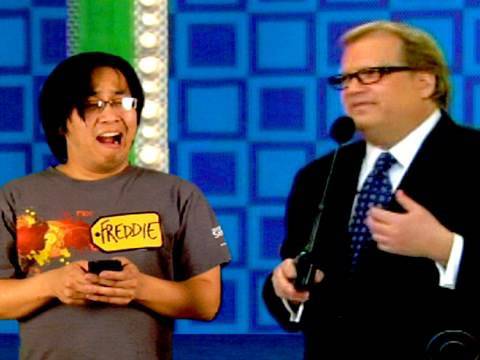
I pretty much always bring up Freddie Wong’s “I Am AWESOME at Price is Right” video when it comes to this.  He submitted this video to Price is Right fan pages, which accepted the video with open arms, and he got a lot of views from that:

YouTube Preview Image

6. There are 4 reasons people share a video.  Find one reason.

Salesforce outlines these 4 reasons.  People share content:

  1. That source information and spark discussions
  2. That others might find valuable
  3. Because it aligns with their identity and how they want to be perceived
  4. That maintain and grow relationships

This sort of goes back to step 1: it answers a question or elicits an emotional response.  What you want to have in mind when pitching this video to other people is one or more of the reasons above.  One of these reasons might be your “sales pitch” to blogs and friends.

7. Eliminate things that would make people reluctant to share.

Tough source material, depressing things, perhaps too much profanity.  Things that make the video toxic to a wide audience.  Salesforce also mentions that too much branding in a video could be considered a turn-off.  But I think if you’ve successfully navigated the first step, this shouldn’t be too much of an issue.  You’re making content people want to share.  I don’t know what kind of crazy video you have where you’ve successfully navigated most of this formula and then you get stopped in your tracks once you come to this one, but maybe I want to watch that video.

Give Salesforce’s blog post on this video a look. They break these steps down into other details you might find valuable.

The iPhone’s Hidden Costs | Chappaqua NY Real Estate

The iPhone 5 is a C-average student. At least, that’s the grade InsuranceQuotes awarded the smartphone, based on its effect on public health, the environment and the U.S. economy.

In the video above, the insurance news publisher weighed the pros and cons of newer iPhone models and gave them a solid C+ grade. Apple has come a long way in making its mobile devices more environmentally friendly, but poor conditions in Chinese manufacturing plants have led to employee suicides and protests.
Likewise, InsuranceQuotes found the cost to charge a smartphone over the course of a year to be negligible, but the overall cost of maintaining an iPhone is high — more than 4% of the average American’s salary, including the cost of data plans, accessories and those addictive apps.

Take a look at some of the other factors InsuranceQuotes considered in the video above. And tell us what grade you would give your smartphone in the comments section below.


Diane Sawyer’s Zany Election Performance Inspires ‘Drunk Diane’ Twitter Account | Bedford Corners NY Homes

Election night is like no other for on-air journalists. It’s what Christmas is like to Santa Claus, Flag Day is for Betsy Ross, Super Bowl for football players.

It’s a non-stop night of filler coverage, while pundits and political reporters stare as maps slowly change from gray to blue and red. It can be enthralling for us at home, but for those in the studio, it’s a little bit of a (nationally broadcast, live) mess.

So no one can blame Diane Sawyer if she needed a little liquid courage to help her with the nerves of the night (or just help keep the night moving along). OK, so we don’t actually know if Sawyer had been drinking, and ABC reps told The Daily Mail she was “exhausted” from having to cover Hurricane Sandy in the days prior, but nonetheless, the anchor was a sight to see.

Sawyer was slurring words, going off on tangents, propping herself animatedly on her desk with her arms and even asking for music cues.

“I wanna — can we have our music, because this is another big one here?” Sawyer said, going on to call President Obama, “Orama.”

Before long, the tweets started rolling in, making Diane’s alleged drinking a trending topic. A parody account was even opened — @DrnkDianeSawyer — with hundreds of followers before the election results were even announced.

99 bottles of beer on the wall 99 bottles of beer

hey guys wh o won i fell aslee?p

Turns out even the office had a chuckle at the tweets and rumors.

“Rumors that Miss Sawyer had been a tad tipsy had been met with ‘a lot of laughter’ around the office,” according to a source The Daily Mail was in touch with.

But Sawyer’s “drinking” was the least of ABC’s struggles throughout the night; its studio in Times Square lost power for 20 minutes during the broadcast.

The network tried to avoid any hitches by simply shifting Sawyer and her co-anchor George Stephanopoulos to a different area and used shots of the people crowding into Times Square to distract the viewers.

Sawyer herself thanked the ABC team for quickly dealing with the situation and even gamely acknowledged the tweets from the previous night.

Awe for the @abc powerhouse team. Hail the techs who kept us on air…

…during 25 minute power outage. Read your tweets the good, bad, and the funny. See you on @abcworldnews.

Thumbnail image courtesy of Flickr, david_shankbone.