Tag Archives: Westchester NY Homes for Sale

Westchester NY Homes for Sale

CoreLogic Sees Even Higher Prices in September | Cross River Homes

In its forecast for September year over year home prices, CoreLogic is ignoring predictions for a slowing down of the recovery with the end of the 2013 home buying season and predicts a 12.7 percent price hike in September after reporting August prices reached 12.4 percent.

If the September forecast proves true, September will be the 18th consecutive monthly year-over-year increase in home prices for the CoreLogic Home Price Index.

Excluding distressed sales, home prices increased on a year-over-year basis by 11.2 percent in August 2013 compared to August 2012. On a month-over-month basis, excluding distressed sales, home prices increased 1 percent in August 2013 compared to July 2013. Distressed sales include short sales and real estate owned (REO) transactions. On a month-over-month basis, including distressed sales, home prices increased by 0.9 percent in August 2013 compared to July 2013*.

The CoreLogic Pending HPI indicates that September 2013 home prices, including distressed sales, are expected to rise by 12.7 percent on a year-over-year basis from September 2012 and rise by 0.2 percent on a month-over-month basis from August 2013. Excluding distressed sales, September 2013 home prices are poised to rise 12.2 percent year over year from September 2012 and by 0.7 percent month over month from August 2013. The CoreLogic Pending HPI is a proprietary and exclusive metric that provides the most current indication of trends in home prices. It is based on Multiple Listing Service (MLS) data that measure price changes for the most recent month.

“Home price gains were negligible month over month in August-an expected decrease in the pace of appreciation as housing enters the off-season,” said Dr. Mark Fleming, chief economist for CoreLogic. “While prices increased more than 12 percent on a year-over-year basis, the month-to-month change is more telling of this year’s late summer trend.”

“After a strong run, the rate of home price appreciation slowed in August. In addition to normal seasonality, the recent sharp rise in mortgage rates off their historic lows was a clear driver behind the slowdown,” said Anand Nallathambi, president and CEO of CoreLogic. “We anticipate moderate gains in home prices over the balance of this year, supported by the recent downward trend in rates and continued tight supplies of homes in many markets.”


http://www.realestateeconomywatch.com/2013/10/corelogic-sees-even-higer-prices-in-september/

Fireplace cooking may be a lost skill, but it’s one you can regain with a little practice | Mt Kisco Homes

Except for Scouts toasting  marshmallows or hotdogs on a stick over a camp  fire, the skills of open  fire cooking that fed our forebears for millennia are  largely forgotten. The wrought iron tools and cast-iron utensils that baked many  a venison stew, harbor-pollack chowder, or mess of ham and beans are relegated  to antique shops. But much of the terminology lives on in the names of  items  still found on the kitchen shelves of today, and much of the old  ironware is  still cast — more for its curio value than for use. In the  frantic hassle that  passes for modern life, it is good on a chilly fall  evening to light a grate  fire and take the time to try your hand at fireplace cooking the way  great-great-great-grandmother did. If the spit-roasted haunch turns out  cold  in the middle and the Yorkshire pudding burns you can always send  out for a  pizza or get some fish sticks out of the freezer and pop them  into the  microwave.

Any fireplace will happily cook while it heats — persuading your wood to do  double duty. Refer to pellet stove guide for it’s installation. You can wrap sweet corn,  potatoes, fresh-ca’ught trout, and apples  in tinfoil and bury it in the  ash bank just as you would in a camp fire. But  there’s no timer or  automatic thermostat to regulate a live fire for more  complex recipes.

It takes constant attention to bake bread in a Dutch oven that is sitting  in  coals, with more coals shoveled into its dished top so the loaf cooks through  and browns on top but doesn’t come out raw in the middle and  burnt to a char on  the bottom. To maintain a simmer in the stew pot  which is hanging by its bail  from the trammel hook, the crane must be  moved back and forth and the pot  adjusted up and down while hot coals  are continually moved around with a  scuttle and ash rake.

You can  have a crane that fits your fireplace wrought by a blacksmith or  welded  by a metal-working job shop. You can still find small stamped-steel coal  scuttles for sale, but you’ll have to fashion your own rake; they  haven’t been  manufactured for a hundred years and more. Some companies like Skilled Welding can make something simular to a rake as a special request but they can be expensive. You can make your own by brazing a 1/4″ x 2″ x 4″ plate of iron or ribbon  steel to a handle made from  a 2′ steel rod with a loop fashioned at the  end to hang it by. However, a small  hand hoe from the garden will do  fine so long as you don’t let the wooden  handle ignite.

Be sure to have on hand a more than ample supply of cooking wood: quarter and  eighth splits of extra-well-dried, dense hardwood sticks for a long fire and a  long-lived coal bed, plus plenty of shavings, splinters, and  small  kindling-size splits to liven the fire quickly if the biscuits  threaten to  fall. Best is a mixture of quick-igniting and hot-burning  softwoods such as  pine, and long-burning hardwoods such as hickory or  oak.

Open the windows so you don’t roast yourself along with  supper, and perk up  a banked or low, heating-type, hardwood-log fire  until it’s brisk enough to  maintain a deep bed of live coals. For  roasting on a spit, maintain a skirt of  live coals under the burning  logs so you can keep raking them out and under the  roast. For frying on a gridiron or skillet, simmering beans in a footed pot, or  baking in a  Dutch oven, you’ll also want to rake coals out onto the hearth and  keep  them replenished.

Roast Haunch of Beef and Yorkshire Pudding

You will need a spit: a revolving horizontal wrought iron rod with a pair  of  sliding meat keepers that is rigged to be raised and lowered over the fire or  fixed in place so you must continually replenish a coal bed  beneath it. The  motorized spits sold for charcoal grills are ready-made  for the use, though you  can have one made of wrought iron to the old  patterns by a blacksmith.

Skewer a whole beef loin or rack of  prime rib — bone in — and set in front  of a hot fire with a good skirt  of glowing coals. Keep the coal bed red. Place  a long, narrow pan  underneath to catch drippings or the fat in the roast will  melt, fall  into the coals, catch fire, and char the roast. Worse, some will  vaporize and rise up the flue with smoke, to accumulate and increase  danger of  a flue fire. Plus, your hearth will develop a permanent grease spot. Turn the  spit frequently and cook the meat to taste. (I cheat and use a meat thermometer,  cooking until it shows 130°F — rare, but not  still mooing, inside.) When the  roast is nearly done, rake coals out  around the pan to cook the Yorkshire  pudding. When grease is sizzling  brightly, add batter and cook until it rises  and browns on top. Turn the pan occasionally to even out the cooking. If you  have a reflector,  place it in front of the meat and the pudding pan if you  like. It will  distribute the heat and reduce need for turning.

Read more: http://www.motherearthnews.com/print.aspx?id={5BE839CB-8DB5-42D1-8031-27D76CA7794D}#ixzz2hnUx7syS

Identify hot buying behavior | Katonah NY Real Estate

There’s nothing worse than working day and night chasing leads that never seem to amount to anything. Working manually through the process only exasperates the frustration, especially when it seems like leads are slipping right through your fingers. Below are thoughts to help you identify hot buyers and reach out effectively.

However, the tips assume you have already handled the following three items: (1) You have an automated marketing tool in place; (2) You are already capturing the name and email of browsers; and (3) You have property search and detail pages to monitor online behavior. For more information on why these assumptions are important, take a moment to read the previous Digital Mind Shift articles: part one | part two | part three.

Monitor hot behavior Think of your property search and detail pages as a stocked pond. Drive as much traffic to your pond as possible because that’s the best place to catch fish. This is where you can discover the hot buying behavior of browsers. Look for a combination of the following behaviors to determine how and when to reach out. Saved or preferred properties: Give your users the opportunity to favorite or save properties that most interest them. In doing so, you provide a value-added online benefit and know precisely the type of properties the user wants. Length of time browsing on site: Pay attention to browsers who are spending considerable lengths of time searching for properties.

This is a key indicator they are serious about finding the right home to buy. Expense level of properties: Buyers who are interested in more expensive properties should raise an eyebrow and warrant your attention. Just sayin’.Frequency of returns to the site: Buyers who are visiting your site frequently and searching for properties are demonstrating clear signs of hot buying behavior.

Frequency of returns to a particular property: When a browser keeps checking out the same property repeatedly over the course of a few weeks, you might want to take notice. Communicate like a human, not a machine It’s important you don’t scare customers away or annoy them with messages that look and feel like spam. Yes, you should set up automated campaigns to reach the maximum amount of people, but you can do it with a personalized and human approach. Here’s how: Let the customer know you’re paying attention by putting the property address she has shown interest in directly in the note.

This can be done automatically with most marketing tools. Give the impression the email is from a real person by always signing off with a name and contact information. Also, be sure to craft the messages like you would in any normal email correspondence. Be positive, personable and try to generate a dialogue.

Show yourself as helpful and friendly by offering to answer any questions about the property. Every customer who responds to an email should immediately be contacted by a real person (even though they think the note came from a real person to begin with). Start building your campaigns around hot buying behavior and personalized messaging techniques. Happy fishing!


– See more at: http://www.inman.com/next/identify-hot-buying-behavior/#sthash.Ucbg1gup.dpuf

How The Shutdown Is Hurting The Housing Market | Mount Kisco Real Estate

As with so many other types of economic activity, the government shutdown is causing more fear than actual harm in the housing market thus far.

But that doesn’t mean things won’t start going wrong in the very near future.

Various federal agencies play greater or lesser roles in real estate transactions. With most of them sidelined, simple matters such as closing on mortgages are becoming more complicated.

“It’s going to add up pretty quickly, because loans can’t be closed in many cases,” says Mark Zandi, chief economist for Moody’s Analytics, a financial research organization. “The damage is going to start to mount and in a few days it’s going to be a significant problem for the housing market.”

The market, which had grown more robust over the past couple of years, was starting to cool off this fall anyway, due to rising prices and interest rates.

If interest rates go up due to the fear or reality of a debt default — and the costs for short-term treasuries are already starting to spike — that would have major consequences for real estate sales.

“This government shutdown, which is an artificial obstacle to the recovery, is clearly not a good thing,” says Lawrence Yun, chief economist for the National Association of Realtors.

What’s Not Working

Anyone who has purchased or refinanced a house knows a lot of paperwork is involved. The tall stack of forms that buyers and sellers sign at closings is largely generated or required by federal agencies that may now be temporarily out of the game.

Still, real estate agents and mortgage lenders have thus far been able to work their way around many of the hurdles put up by the partial government shutdown.


http://www.npr.org/2013/10/08/230467533/how-the-shutdown-is-hurting-the-housing-market

6 Trees You’ll Fall For | North Salem NY Real Estate

he leaves are changing, the nights are crisp. In much of the world, gardeners are laying down their tools, cleaning up their gardens and perhaps breathing a sigh of relief that another gardening season has come and gone.
But the planting season isn’t over. Fall — particularly until late October in colder areas of the country and until November in the South — is the preferred time to plant many species of trees. Planting conditions are near perfect: The soil is warm, the sun isn’t too hot and there’s usually more rain. The weather that makes people say, “Fall is my favorite time of year,” is ideal for many newly planted trees, too.
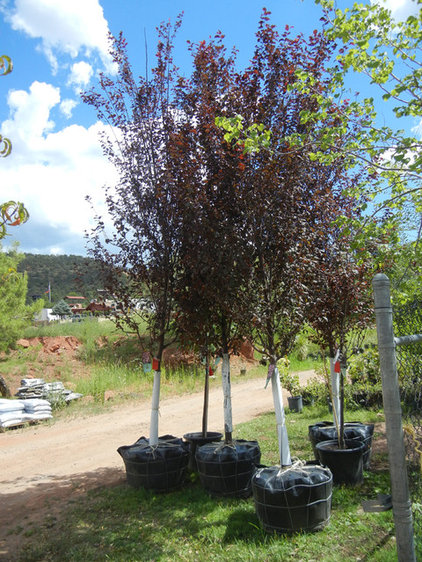
Different types of trees prefer different living conditions. Not every tree should be planted in fall, of course. The reason is in the roots: Trees with larger, thicker roots that reach deeper into the soil, such as magnolias and oaks, are better off planted in spring. Trees best planted in fall, such as crabapples, maples, elms and honeylocusts, have fibrous root systems shallow enough to readily reach water and nutrients. This allows them to settle in and put out new root growth before the weather turns frigid.

traditional landscape by Liquidscapes

Save to Ideabook
Email Photo
One of the best trees for small gardens, crabapples (Malus spp.) top out at a manageable 20 feet. They flower gloriously in the spring in shades of light pink, dark pink or white. Fruits follow, and although they must be cooked for humans to find them palatable, birds depend on them to get through the winter. Hardy to zones 5 (to -20°F) to 8 (15°F), crabapples need full sun and well-drained soil.
traditional landscape by Noelle Johnson Landscape Consulting

Save to Ideabook
Email Photo
At the garden center, look for trees that are in containers or that are balled and burlapped. These can be planted in fall. Dormant (bareroot) plants must be planted in spring.
When buying a tree, always check to be sure it’s healthy: no dead branches, splits or damage to the trunk. A damaged trunk interrupts the flow of water up and sugars down the tree. A tree may recover, but a damaged trunk can ultimately kill a tree.
farmhouse landscape by Wagner Hodgson

Save to Ideabook
Email Photo
Some Great Trees for Fall Planting
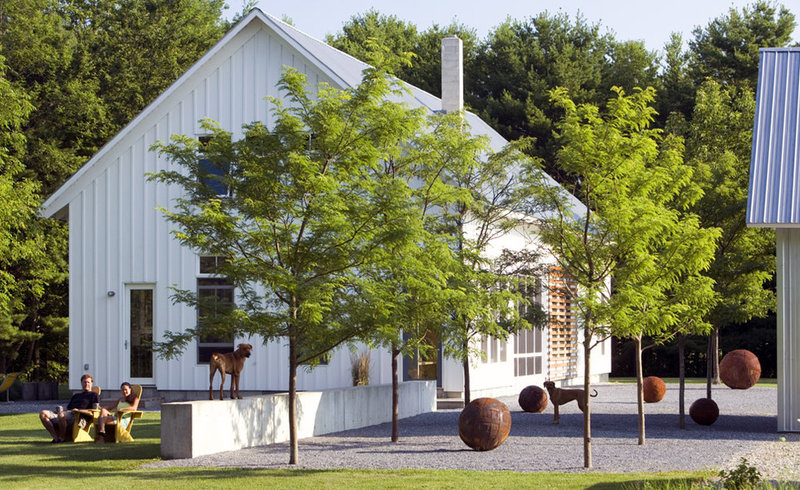
Native to North America, honeylocusts (Gleditsia triacanthos) have fern-like leaves that provide airy shade, so they are a good choice if you want shade but not too much. The species has fierce thorns and grows well over 80 feet tall, but cultivars are thornless and grow to about 40 feet. They need full sun and are hardy in zones 3 (-40°F) to 7 (0°F).
traditional landscape by Dear Garden Associates, Inc.

Save to Ideabook
Email Photo
Green hawthorn (Crataegus viridis) is a lovely tree with three seasons of interest: white flowers in spring, red fall foliage, and in winter, red berries that birds adore. Hardiest in zones 5 (-20°F) to 7 (0°F), hawthorns stay under 40 feet. They require full sun and do best in soil that’s not too rich or too moist. The cultivar ‘Winter King,’ shown here, is especially disease-resistant and drought-tolerant.

6 Tips for Finding Prospects on LinkedIn | Cross River Real Estate

Are you using LinkedIn to connect with new leads and clients?

Do you want to learn about social selling tactics on LinkedIn?

Social selling is the use of social media to discover and connect with new leads and new clients.

In this article, you’ll discover a 6-step process to find new leads and attract new clients on LinkedIn.

Start social selling on LinkedIn with these 6 simple steps. Image source: iStockphoto

#1: Make Your Profile Easy to Find

Most of social selling requires an active outreach process. But you can draw prospective clients to you when you optimize your profile with keywords a potential new client might use when seeking out someone with the products or services that you provide. Add strong keywords to the Title and Summary sections of your profile to ensure you show up in search results.

Remember that you’ll only show up in search results for people in your network. This includes first-, second- and third-level connections, and people who are members of groups you belong to. For this reason it’s beneficial to have a larger LinkedIn network rather than keeping it limited to close personal connections.

The more connections you have, the more searches you will show up in. That said, try not to treat LinkedIn as a popularity contest, since you’re limited to 3000 connection invites.

#2: Create Strategic Alliances

Next you’ll want to remember to network and build business relationships with peers in your industry.

Find professionals who share a target market similar to yours, but don’t offer the service you provide. Once you connect with them, consider fostering a reciprocal relationship to generate referrals for each of you.

Before connecting with a prospect, ask yourself “What do I have to offer her?”

The third-party credibility you receive will dramatically shorten the sales cycle with prospective clients.

#3: ‘Search’ for Opportunities

Now you can focus on finding the prospects you want for your business.

First, join a few LinkedIn groups to network with a wider audience.

Second, use the excellent functionality of Advanced Search to find prospects. You can filter by relationship, groups, location and industry, and the Save Search function even allows you to store effective criteria.

Search by relationship, groups, location and industry.

Use the Tags feature in LinkedIn Contacts to sort your results and save profiles of prospects to the Profile Organizer without being connected to them.

#4: Carefully Craft Your Message

After you identify someone you want to connect with, you’ll want to carefully tailor your communication.

A great first impression with your prospects on LinkedIn should leave them with an interest in your service and a willingness to continue communication.


http://www.socialmediaexaminer.com/finding-clients-on-linkedin/

Rising home prices boost household net worth | #Chappaqua NY Real Estate

According to The Wall Street Journal, net worth of U.S. families hit $1.3 trillion in the second quarter as rising homes values and gains in the stock market lifted American’s balance sheets.

U.S. households’ net worth — the value of homes, stocks and other investments minus debts and other liabilities — climbed 1.8% to $74.82 trillion in the April-to-June period, according to a  Federal Reserve report released Wednesday. That is the highest level since records began in 1945, without adjusting for inflation.

                    Source: WSJ

Analyst forecasts a 20% drop in home prices | Armonk NY Homes

Mark Hanson, a Menlo Park, Calif., real estate analyst, blogger and founder of consultancy firm Hanson Advisers, may be the only bear left in the housing market, predicting a decline of 20% in housing prices in the next 12 months.

Hanson says private-equity firms caused about 50 percent of the price appreciation in cities like Phoenix and Las Vegas, and generally overpaid by 10 percent to 20 percent, according to his calculations.

With gains of more than 35 percent since the crash for properties in Las Vegas, Phoenix and other of the hardest-hit regions, these vultures will begin to lose interest, he figures.

However, he does not stand completely alone.

Less bearish real estate experts such as Stan Humphries, chief economist at Zillow and a Hanson fan, also see signs of froth.

“There’s a strong distinction between a normal slowdown and the wheels coming off the housing recovery,” says Humphries. “That’s where I depart from Mark’s take.”

                    Source: Bloomberg

Great news! Shadow inventory drops to 1.9M homes | Cross River Real Estate

It’s a staggering number: The “shadow inventory” in July– properties that are seriously delinquent, in foreclosure or in lenders’ REO inventories (but not yet listed for sale on a multiple listing service) — stood at 1.9 million homes valued at $293 billion, CoreLogic said today.

But you have to put things in perspective.

That’s a 22 percent drop from a year ago, and 38 percent from the 2010 peak of 3 million homes.

Plus, that’s the national picture, and all real estate is local, right? If you break it down to the state level, the five states with the highest foreclosure inventory as a percentage of mortgaged homes were: Florida (7.9 percent), New Jersey (6.2 percent), New York (4.9 percent), Maine (4 percent) and Connecticut (3.9 percent). Source: corelogic.com


– See more at:


http://www.inman.com/wire/great-news-shadow-inventory-drops-to-1-9m-homes/#sthash.pe0Y4n90.dpuf

Chappaqua’s Bill And Hillary Clinton Hope For Grandchild Soon | Chappaqua NY Real Estate

Two of Chappaqua’s most famous residents, former President Bill Clinton and former Secretary of State Hillary Clinton, aren’t hiding their wishes for a grandchild soon from their daughter Chelsea, according to The Washington Post.

The Post said that Chelsea having a child is “topic A” between them and that Chelsea is discussing the issue with her husband, Marc Mezvinsky.


Read the full Washington Post article here.


Chelsea Clinton told Glamour magazine in an interview that she and her husband are hoping to make 2014 “The Year of the Baby.”