Monthly Archives: May 2013

Best loan prospects may desert FHA | Bedford Hills Real Estate

It’s a catchy marketing pitch: “720 and above, don’t go gov.”

And it has potentially far-reaching significance not only for large numbers of first-time and moderate-income home buyers this year, but for the dominant source of low down payment mortgages many buyers depended on during the past several years: FHA.

The new “720″ jingle, used in advertisements by Radian Guaranty Inc, one of the highest-volume players in the industry, refers to FICO scores and spotlights the steadily rising cost of FHA insurance premiums compared with private competitors.

As the result of those fee increases — the most recent hike in premiums took effect April 1 — and the impending revocation of the right to cancel premiums for most new FHA borrowers starting June 3, private mortgage insurers can now offer much more attractive deals to the most creditworthy homebuyers than FHA.

That has long-time advocates of FHA — and privately, some federal officials — concerned about adverse selection. Private insurers appear likely to start “creaming” the best of FHA’s current customer base — the low credit-risk, 700+ credit score borrowers who have provided the bedrock for FHA’s vaunted, high quality 2010-12 books of new business, which Commissioner Carol J. Galante calls “the strongest in agency history.”

This, in turn, could leave FHA with a preponderance of borrowers who have the lowest scores and present the highest risk of future default and foreclosure — a trend that could put new strains on the agency’s insurance funds and eventually increase the odds that it may need to either seek a Treasury bailout or raise fees again to pay for the losses.


Best loan prospects may desert FHA | Inman News.

More millennials see homeownership as a good investment | Bedford NY Real Estate

PulteGroup survey: Intention to buy rose among most 18- to 34-year-olds in the last year

Most millennials that make more than $50,000 a year are more interested in buying homes than they were a year ago, a recent survey by homebuilder PulteGroup, Inc. found.

Nearly two-thirds, or 65 percent, of renters between 18 and 34 who responded to the survey and had an income above $50,000 said that their intention to buy has “significantly or somewhat increased in the past year,” PulteGroup said.

“Millennials have witnessed the housing boom and bust, but still believe homeownership is a good investment,” said Fred Ehle, vice president for PulteGroup, in a statement. “Consistent with other third-party research that shows more than 90 percent of millennials plan to buy a home someday, we see a lot of young adults who are making financial sacrifices to afford a place of their own.”

As part of the survey, PulteGroup also polled people on what home aspects matter most to them. The company found that millennials highly value efficient use of space in a home, with 69 percent of respondents indicating that they “overwhelmingly want an open layout space in the kitchen and family rooms for entertaining family and friends.”

Millennial survey respondents also said these features were either very important or extremely important to them:

  • 84 percent said ample storage for daily items;
  • 76 percent said space for TV, movie, or sports watching;
  • 73 percent said the entry to the home;
  • 63 percent said an outdoor living space or deck; and,
  • 36 percent said the ability to conduct business from home.


More millennials see homeownership as a good investment | Inman News.

Facebook Advertising for Grown-ups | Pound Ridge Realtor

Facebook is Maturing for Users and for Advertisers

Several members of the Find and Convert team recently attended the Social Fresh EAST Conference here in Tampa. We all came away with a lot of food for thought but the key takeaway that is still ringing in my ears, something we heard from more than one speaker at Social Fresh, is that Facebook has matured. It’s true! Since the release of Graph Search in January, Facebook has released several powerful new tools that give marketers new and exciting ways to reach hyper-targeted audiences with relevant, effective content like never before.

Facebook’s Audience has Matured

According to SocialBakers, the age of the average Facebook user, 29.53 in 2010, is now 30.11. But anecdotally, we know that teenagers have moved on to channels like Instagram, Kik, and Vine while older adults are warming up to social media and discovering Facebook. So, in terms of audience, we can say Facebook has “matured” and there is clear evidence that older users may be more likely to click through to an ad.

Facebook has Matured

Many Facebook users feared changes that would come when the company went public. For a while, it seemed as though Facebook wasn’t entirely sure where it was going. For anyone paying attention recently, however, Facebook seems to have found some direction. There are still grumblings about changes to the user experience and new types of advertising but the still-active users don’t seem to be giving up on Facebook quite yet. They’re talking about the changes…but they’re staying on Facebook to do it!

Facebook Advertising has Matured

As Facebook itself has matured from the wild, young start up to a large corporate entity employing over 4,600 people and responsible to its shareholders, they’re almost tripping over themselves to improve the user experience for business users as well. While there is a real danger in relying too heavily on Facebook advertising, neglecting engagement and undervaluing the power of organic reach, the tremendous potential Facebook now presents for advertisers cannot be ignored.

There are really three ways to advertise on Facebook:
• On the page with promoted posts and offers;
• In the Ads Manager with ads, sponsored stories, and promoted page posts;
• In the Power Editor with mobile ads, advanced targeting, and testing options.

Crawling and Walking

Promoting a Post from the Facebook Page

On-page ad creation gives the page manager very few options. You can specify a budget to reach users who already like your page and their friends. Unless your target audience truly includes anyone in the world, I do not recommend promoting or “boosting” posts from your page.


Facebook Advertising for Grown-ups | Find and Convert.

6 Marketing Automation Lessons Learned the Hard Way | Bedford Corners Realtor

Not too long ago, my colleague Katie Burke wrote a great article, “The Right Way to Think About Your Marketing Software RFP,” and it got me thinking about my own experiences as a buyer of marketing technology. Particularly I realized, more often than not, I was thinking about automation the wrong way.

In the past nine or so years, I’ve evaluated, purchased, implemented, and used over ten different email marketing and marketing automation platforms (there may be more but I’ve lost count). My love for technology and marketing is what led me to join HubSpot over two years ago, and why I regularly speak with prospects and customers on what I learned when I was in their shoes.

Right now the marketing automation industry couldn’t be hotter. Due to increasing adoption rates, analysts are predicting a more than 50% industry revenue increase this year. Recent acquisitions (Eloqua acquired by Oracle, Pardot by ExactTarget, and others) are also signs of a market headed in the right direction.

I’m certainly not going to complain about our industry’s growth, but I wonder, are companies adopting automation the right way? Perhaps the belief that marketing automation just encourages bad behavior more than it createslovable marketing, or that it’s simply a more efficient spamming engine, is a telling sign.

Too often I hear from companies that are headed down the wrong path in the decision process despite where they started (with good intentions). Make no mistake, automation can do wonders for your bottom line — if you avoid the purchasing pitfalls. Below are six common mistakes I see over and over again, failures I’ve experienced myself, and how you can avoid them so that you’re successful with marketing automation.

6 Common Marketing Automation Lessons I Learned the Hard Way

1) Automating bad processes doesn’t magically make marketing better.

This might appear like a no-brainer, but it’s the #1 offense I see. Let me you give you a real-life scenario:

A three-person marketing team for a large technology company is struggling to supply inside sales reps with good leads. In addition, a lot of the work to hand leads to sales is very manual, due to a lack of integration with their email provider and CRM. They target a niche audience in the Fortune 1000. Because of this, the company attends tradeshows and buys targeted prospect lists of “Directors of IT.” They email these lists regularly with the goal to schedule more sales appointments, or maybe they will send a newsletter or product offer. But the company often experiences high bounce rates and low engagement. Their database hasn’t really grown in years, and in fact, it’s churning at a high rate. They decide it’s time to buy marketing automation to better utilize their existing database and put new lists through automated drip campaigns. They plan to use lead scoring, as well.

What’s wrong with this picture? First, yes, buying email lists is a no-no and no one should do it. But the main problem is that this company is solely looking at automation to fix an already broken process. In this case, this company needs to fix their lead problem by creating better content. In other words, they should consider marketing transformation prior to marketing automation.

John Common, CEO of Intelligent Demand, mentioned in this post:

“It is a disruptive technology in that it forces a company to think differently about its most important process: revenue creation. This is a good thing! At most companies today, marketing and sales are working from an outdated playbook that was written back when interruptive, batch-and-blast, product-focused, hunch-based marketing actually worked, and Sales was in control of the buying process. Those days are gone, but the thinking behind that playbook still exists.”

Sure, automation can make things easier in some cases and you may even see some short-term gains. But long-term success is what matters, and that requires a different way of marketing. Using automation as a glorified email tool won’t get you where you need to be.

Great automation is a result of highly targetedpersonalizedvaluable, timely, and remarkable content that is sent to a healthy and engaged database (see point #2 below in just a minute). As John mentions above, the batch-and-blast approach to sending prospects stuff they don’t care about isn’t going to suddenly make things better with automation. If your company feels like creating great content is the core of your problem — and in most of the scenarios I’ve seen, it is — start there.

2) Automation requires a growing and engaged database to nurture.
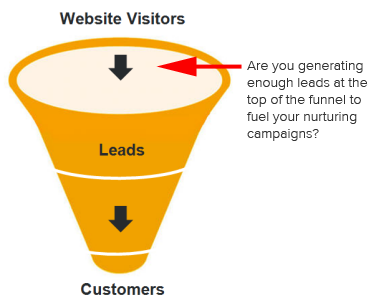
marketing-automation-funnelThe average email database expires at the rate of ~25% per year. That means a database of 50,000 email addresses will have shrunk to 21,000 in just three short years. The best way to solve for attrition is to replenish the funnel with new leads at a higher rate than you’re burning through. Or else you’ll find yourself with diminishing returns.

Before you invest in marketing automation, ask yourself, “What am I doing to fuel the top of my funnel?” In other words, automation is a fantastic tool to further qualify and nurture leads, but when you don’t even generate enough for Sales, what’s the point?

I learned this the hard way. A few years ago, I implemented marketing automation before putting the processes in place to attract and convert more leads, like creating better content, offers, calls-to-action, and landing pages, and doing things like blogging and optimization (and to clarify, buying email lists does not count as lead generation). Essentially, I put the cart before the horse and my results later suffered.


6 Marketing Automation Lessons I Learned the Hard Way.

Mortgage Rates – Today’s Home Loan Rates and Trends | Chappaqua NY Homes

Latest rates from zillow.com


3.625% APR
  • 30 year fixed
  • 3.625 % Rate

    – 

    $1,094 /mo
  • $1 in Fees
View Details
3.626% APR
  • 30 year fixed
  • 3.625 % Rate

    – 

    $1,094 /mo
  • $35 in Fees
View Details
3.641% APR
  • 30 year fixed
  • 3.625 % Rate

    – 

    $1,094 /mo
  • $465 in Fees
View Details
3.641% APR
  • 30 year fixed
  • 3.625 % Rate

    – 

    $1,094 /mo
  • $466 in Fees
View Details
3.672% APR
  • 30 year fixed
  • 3.625 % Rate

    – 

    $1,094 /mo
  • $1,392 in Fees
View Details
3.752% APR
  • 30 year fixed
  • 3.750 % Rate

    – 

    $1,111 /mo
  • $72 in Fees
View Detai


Mortgage Rates – Today’s Home Loan Rates and Trends | Zillow.

New Listings Cool California Hot Spots | Armonk NY Homes

In the several California markets that have seen soaring prices and historically low inventory levels during this spring buying season, a flood of new listings drove inventories up.  The increasing inventories are helping to moderate price increases in the hot markets.  In Sacramento, for example, list prices actually declined on a monthly basis.

In Sacramento, inventories increased 81.17 percent and in Stockton-Lodi, 74.80 percent in April.  San Francisco, Oakland, San Francisco also registered monthly inventory increases exceeding 10 percent according to realtor.com’s April trend report.

Nationally, inventories increased by 4.12 percent over the month, while list prices rose by 2.63 percent, as home owners sought to take advantage of what is now widely seen as a sellers’ market.  At the same time, the average age of the inventory fell to 81 days in April, 10.99 percent lower than one year ago.  All of these positive signs point to a housing market that is well on its way to a broad-based recovery.

The recovery continues to reach more and more of realtor.com’s 246 markets.  Year-over-year median list prices increased in 96 markets, held steady in 20 markets and declined in only 30 markets, a pattern that has been steadily improving since the beginning of the year.  These patterns suggest that the housing recovery is likely to be broad, particularly if the overall economy continues to improve.

On a year-over-year basis, the for-sale inventory declined in all but 11 of the 146 markets tracked by realtor.com, with 36 markets registering declines of 20% or more.  At the same time, year-over-year median list prices increased in 96 markets, held steady in 20 markets and declined in 30 markets, a pattern that has been steadily improving since the beginning of the year.  These patterns suggest that the housing recovery is likely to be broad, particularly if the overall economy continues to improve.  While there continue to be pockets of weaknesses, 2013 promises to be a very good year for the housing market.

On a year-over-year basis, April median list prices were up by 1 p or more in 96 of 146 MSAs, and up by 5% or more in 59 MSAs.  Median list prices were down by 1% or more in 30 markets, while 6 experienced a decline of more than 5%.  The remaining 20 markets have not experienced significant changes in their median list price compared to a year ago.  These results represent a significant improvement over March’s results, when only 82 markets were up by 1% or more on an annual basis and 36 markets were down by 1% or more.


New Listings Cool California Hot Spots | RealEstateEconomyWatch.com.

Pound Ridge NY Unsold Inventory Report | Pound Ridge Homes | RobReportBlog

Pound Ridge NY Unsold Inventory Report  |  Pound Ridge Homes | RobReportBlog


80  unsold homes


21 sold last six months

22.85 months of unsold inventory


34 sold/pending/conditional contract

14.13 months of inventory


Pound Ridge NY Unsold Inventory Report | Pound Ridge Homes | RobReportBlog.

Mt Kisco Sales Up 8.6% | Median Price Up 50% | RobReportBlog

Mt Kisco NY Real Estate ReportRobReportBlog
20136 months ending 5/142012
25Sales23
$630,000.00median sold price$418,000.00
$325,000.00low sold price$275,000.00
$3,950,000.00high sold price$1,475,000.00
3188average size2359
$288.00ave. price per foot$239.00
232ave days on market214
$1,055,437.00average sold price$549,706.00
94.59%ave sold to ask93.96%


Mt Kisco Sales Up 8.6% | Median Price Up 50% | RobReportBlog.

North Jersey Data Center Industry Blurs Utility-Real Estate Boundaries | Waccabuc Real Estate

The trophy high-rises on Madison, Park and Fifth Avenues in Manhattan have long commanded the top prices in the country for commercial real estate, with yearly leases approaching $150 a square foot. So it is quite a Gotham-size comedown that businesses are now paying rents four times that in low, bland buildings across the Hudson River in New Jersey.
Why pay $600 or more a square foot at unglamorous addresses like Weehawken, Secaucus and Mahwah? The answer is still location, location, location — but of a very different sort.
Companies are paying top dollar to lease space there in buildings called data centers, the anonymous warrens where more and more of the world’s commerce is transacted, all of which has added up to a tremendous boon for the business of data centers themselves.
The centers provide huge banks of remote computer storage, and the enormous amounts of electrical power and ultrafast fiber optic links that they demand.
Prices are particularly steep in northern New Jersey because it is also where data centers house the digital guts of the New York Stock Exchange and other markets. Bankers and high-frequency traders are vying to have their computers, or servers, as close as possible to those markets. Shorter distances make for quicker trades, and microseconds can mean millions of dollars made or lost.
When the centers opened in the 1990s as quaintly termed “Internet hotels,” the tenants paid for space to plug in their servers with a proviso that electricity would be available. As computing power has soared, so has the need for power, turning that relationship on its head: electrical capacity is often the central element of lease agreements, and space is secondary.
A result, an examination shows, is that the industry has evolved from a purveyor of space to an energy broker — making tremendous profits by reselling access to electrical power, and in some cases raising questions of whether the industry has become a kind of wildcat power utility.
Even though a single data center can deliver enough electricity to power a medium-size town, regulators have granted the industry some of the financial benefits accorded the real estate business and imposed none of the restrictions placed on the profits of power companies.
Some of the biggest data center companies have won or are seeking Internal Revenue Service approval to organize themselves as real estate investment trusts, allowing them to eliminate most corporate taxes. At the same time, the companies have not drawn the scrutiny of utility regulators, who normally set prices for delivery of the power to residences and businesses.
While companies have widely different lease structures, with prices ranging from under $200 to more than $1,000 a square foot, the industry’s performance on Wall Street has been remarkable. Digital Realty Trust, the first major data center company to organize as a real estate trust, has delivered a return of more than 700 percent since its initial public offering in 2004, according to an analysis by Green Street Advisors.


North Jersey Data Center Industry Blurs Utility-Real Estate Boundaries – NYTimes.com


North Jersey Data Center Industry Blurs Utility-Real Estate Boundaries | Waccabuc Real Estate | Bedford NY Real Estate | Robert Paul Talks Life in Bedford NY.

Obama Weekly Address: Growing The “Healing” Housing Market | South Salem Real Estate

Obama Weekly Address: Growing The “Healing” Housing Market

WHITE HOUSE: In this week’s address, President Obama said seven years after the real estate bubble burst, our housing market is healing. The administration’s policies have helped responsible homeowners save money on their mortgages and stay in their homes, and the President’s consumer watchdog agency is working to protect consumers from being taken advantage of on their mortgages, but there is still more work to do. The President urges Congress to quickly confirm Mel Watt to lead the Federal Housing Finance Agency, and take action to give every responsible homeowner the chance to refinance and save money on their mortgage, so that we can keep growing the housing market, support working families, and strengthen the economy.

PRESIDENT OBAMA: Hi, everybody. Our top priority as a nation is reigniting the true engine of our economic growth – a rising, thriving middle class. And few things define what it is to be middle class in America more than owning your own cornerstone of the American Dream: a home.

Today, seven years after the real estate bubble burst, triggering the worst economic crisis since the Great Depression and costing millions of responsible Americans their jobs and their homes, our housing market is healing. Sales are up. Foreclosures are down. Construction is expanding. And thanks to rising home prices over the past year, 1.7 million more families have been able to come up for air, because they’re no longer underwater on their mortgages.

From the day I took office, I’ve made it a priority to help responsible homeowners and prevent the kind of recklessness that helped cause this crisis in the first place.

My housing plan has already helped more than two million people refinance their mortgages, and they’re saving an average of $3000 per year.

My new consumer watchdog agency is moving forward on protections like a simpler, shorter mortgage form that will help to keep hard-working families from getting ripped off.

But we’ve got more work to do. We’ve got more responsible homeowners to help – folks who have never missed a mortgage payment, but aren’t allowed to refinance; working families who have done everything right, but still owe more on their homes than they’re worth.

Last week, I nominated a man named Mel Watt to take on these challenges as the head of the Federal Housing Finance Agency. Mel’s represented the people of North Carolina in Congress for 20 years, and in that time, he helped lead efforts to put in place rules of the road that protect consumers from dishonest mortgage lenders, and give responsible Americans the chance to own their own home. He’s the right person for the job, and that’s why Congress should do its job, and confirm him without delay.

And they shouldn’t stop there. As I said before, more than two million Americans have already refinanced at today’s low rates, but we can do a lot better than that. I’ve called on Congress to give every responsible homeowner the chance to refinance, and with it, the opportunity to save $3,000 a year. That’s like a $3,000 tax cut. And if you’re one of the millions of Americans who could take advantage of that, you should ask your representative in Congress why they won’t act on it.

Our economy and our housing market are poised for progress – but we could do so much more if we work together. More good jobs. Greater security for middle-class families. A sense that your hard work is rewarded. That’s what I’m fighting for – and that’s what I’m going to keep fighting for as long as I hold this office.


Obama Weekly Address: Growing The “Healing” Housing Market | RealClearPolitics


Obama Weekly Address: Growing The “Healing” Housing Market | South Salem Real Estate | Bedford NY Real Estate | Robert Paul Talks Life in Bedford NY.