Daily Archives: May 15, 2013

How to Generate More Leads With Your Blog, 5 Tips | Waccabuc Realtor

Does your business have a blog?

Would you like your blog to bring in more leads for your business?

You already know you need to create awesome blog content, but there’s more to business blogging than just that.

You also need to include a few tactics to help you bring in the leads you want.

Here are some useful tactics to entice and capture leads used by top marketing business blogs!

#1: Place Opt-In Forms Around Your Blog Content

There are several areas on your blog that you can use to introduce visitors to calls to action such as free trials, free consultations or a simple mailing list opt-in form. These areas include your header, sidebar, the end of blog posts, your About page and your footer.

Unbounce, a landing page software creator, encourages people to try their software or sign up for their mailing list in their sidebar and post footers.

unbounce options

Unbounce has lead generating calls to action in their sidebar.

KISSmetrics, a web analytics software company, uses their blog footer along with the sidebar and ends of posts to encourage subscriptions and free trial signups.

kissmetrics footer

KISSmetrics has lead generating calls to action in the footer of their blog.

While it might seem like overkill to put lead capturing options in so many places on your blog, it’s really not if you consider the fact that a visitor may only notice them at certain points during their visit.

While reading a blog post, for example, readers may ignore your header and sidebar. But if they are impressed by your blog content, then they will notice a subscription option at the end of the post.

Alternatively, if they make it to the homepage of your blog and scan all the way down the latest post titles and summaries, they might be interested in subscribing in the footer.

The key is to place your opt-in form in various locations on your blog where you have captured your readers’ attention.

#2: Regularly Create Free, Downloadable Content

HubSpot has the leading inbound marketing blog to complement their marketing platform. If you follow their blog, you know that they are constantly creating free, downloadable marketing content in the form of ebooks, whitepapers, templates and other valuable digital material. They not only promote their free content on their blog, but on their social networks as well for additional traction.

hubspot free ebooks

HubSpot markets free content on their blog and social networks.

In exchange for all of these downloads, people must provide their name, email and additional information about their business. Free content is the perfect lead generator!

The key to getting the right kind of leads with your free content is to create content that will attract your target customer base. You don’t want to capture just any subscriber—you want to capture someone who will want to learn more about your products and services.

#3: Incentivize Sharing With a Referral Program

What’s better than offering free content to capture leads for your business? Offering more free content to those who help you build leads.

Marketo, a marketing automation software business, created a free coloring book for marketers. Their incentive offer was a free hard copy coloring book—and crayons—for each person who referred five people to download the digital copy.

referral for free content

Using referral incentives to generate leads.

Now, instead of just one new lead from their blog, they have the opportunity to capture five more!

Consider ways you can incentivize your readers to refer more leads to your business.


How to Generate More Leads With Your Blog, 5 Tips | Social Media Examiner.

Hong Kong Home Prices at Record Gap to Sales | South Salem Real Estate

Bloomberg

The gap between Hong Kong home prices and sales is the widest on record as new taxes, rising supply and the prospect of higher mortgage costs deter buyers in the world’s most expensive housing market.

Residential buildings stand in the Mid-levels area of Hong Kong. Photographer: Lam Yik Fei/Bloomberg

The CHART OF THE DAY tracks Centaline Property Agency Ltd.’s weekly index of home prices against monthly sales of residential units, according to data compiled by Bloomberg dating back to 1996. Prices have fallen 4.2 percent from a record reached in mid-March, compared with a 77 percent contraction in sales from their post-global financial crisis peak in 2010. The lower panel shows the U.S. benchmark interest rate compared with America’s unemployment rate.

The Hong Kong dollar’s peg to the U.S. counterpart has kept borrowing costs in the city at near-record lows, underpinning a 109 percent gain in home prices since the beginning of 2009, even as the government imposed several property curbs to cool demand. The city’s housing market got an additional boost in January 2012 when the U.S. Federal Reserve pledged to keep interest rates low through at least late-2014.

“When people were expecting prices to rise, as they had been over the last couple of years, none of the government’s measures could deter buyers because borrowing costs were low,” said David Ng, an analyst at Macquarie Securities Ltd. in Hong Kong. “Now, the opposite is happening.”

Since 2010, Hong Kong has charged an extra tax of up to 20 percent of the value of homes on buyers who resell them within three years and raised the minimum down-payment on mortgages for homes costing more than HK$7 million ($902,000). In October, Chief Executive Leung Chun-ying imposed an extra 15 percent tax on all home purchases by companies and non-residents, and promised to raise land supply


Hong Kong Home Prices at Record Gap to Sales – Bloomberg.

Goldman Sachs’ DIY Outlook Hinges on Housing Recovery | Cross River Real Estate

Rising home prices stand to benefit home-improvement retailers, especially Lowe’s, although investors may have to wait until second-quarter results are out before they see meaningful acceleration, Goldman Sachs said in a new research report.

For now, first-quarter strength will likely be shrouded by unfavorable weather comparisons after a much colder-than-normal period following a more-mild-than-usual first quarter of 2012.

Recent economic data point to a sharp uptick in prices with the median price for a home resale rising the most since 2005 and the S&P/Case-Shiller indexshowing the best annual increase for single-family home prices since May 2006.

Play Video
Housing: Bubble Watch With Trulia
Jed Kolko, Trulia chief economist, reveals the results of its latest report on housing and credit, explaining that they found in most of the country, “prices are below “their fundamental value.”

Both of these are correlated to increases in do-it-yourself same-store sales trends, Goldman said. The firm also talked with private remodeling firms in five different markets in the eastern half of the U.S. to gauge the health of the housing environment.

“We heard consistent feedback that reinforces our expectation of strengthening sales in remodeling-oriented categories, and for larger projects,” the report said. “Note that all of these players—like most pros—source only a small part of their materials for big box retailers, but these sales are certainly rising, and to the extent that they are representative of the broader market, they bode well for overall demand.”

Analysts also noted that the ratio of residential improvements to gross domestic product remains lower than its level a year ago, with upside of 10 percent until it returns to its historic average.

Even with these sharp rises, home prices have further room to run, said Jed Kolko, Trulia’s chief economist. Currently, 91 of the 100 largest metro prices remain below their fundamental values, according to the company’s analysis.

“Right now, prices are still actually 7 percent undervalued relative to fundamentals,” he told CNBC’s “Squawk Box.” “That’s even with the big price increases we’ve seen over the past year.”

Citing rising home prices and discussions with remodeling firms, Goldman raised its 12-month price target on Lowe’s to $46 with a “buy” rating and upped its target forHome Depot to $81 with a “neutral” rating. Home Depot, it noted, already has a premium valuation and near-peak margins, while Lowe’s margins are well below its historical peak levels.

A separate report from Oppenheimer was also bullish on the two home-improvement retailers with “outperform” ratings on each. The housing market recovery is likely to propel consumer spending for the foreseeable future, driving both home-improvement sales and home-goods sales, its analysts said.


Goldman Sachs’ DIY Outlook Hinges on Housing Recovery.

Angie’s List breaks 2 million paid user mark | Katonah Real Estate

Review service Angie’s List announced today that it has doubled its customer base over the past 18 months and that the total number of households that pay to use the site surpassed 2 million over the weekend.

“Realizing such momentum in membership growth is truly a testament to our commitment to help consumers find the best local service providers,” said Angie Hicks, a co-founder of the company, in a statement. “Our members drive Angie’s List.”

Angie’s List, which helps consumers find many types of professionals including real estate agentsappraisers, and mortgage brokers, topped the 2 million mark on Sunday, and passed the 1 million mark in October of 2011, the company said.

“It took us more than 16 years to get to one million paid households but just 18 months to double it,” Hicks said.

Angie’s List claims to offer more reliable reviews than other sites by strictly enforcing rules designed to guard against fake ones.

Users can post reviews of home services providers inluding handymen, remodelers, roofers, electricians, painters, and heating, ventilation and air conditioning (HVAC) contractors.


Angie’s List breaks 2 million paid user mark | Inman News.

Best loan prospects may desert FHA | Bedford Hills Real Estate

It’s a catchy marketing pitch: “720 and above, don’t go gov.”

And it has potentially far-reaching significance not only for large numbers of first-time and moderate-income home buyers this year, but for the dominant source of low down payment mortgages many buyers depended on during the past several years: FHA.

The new “720″ jingle, used in advertisements by Radian Guaranty Inc, one of the highest-volume players in the industry, refers to FICO scores and spotlights the steadily rising cost of FHA insurance premiums compared with private competitors.

As the result of those fee increases — the most recent hike in premiums took effect April 1 — and the impending revocation of the right to cancel premiums for most new FHA borrowers starting June 3, private mortgage insurers can now offer much more attractive deals to the most creditworthy homebuyers than FHA.

That has long-time advocates of FHA — and privately, some federal officials — concerned about adverse selection. Private insurers appear likely to start “creaming” the best of FHA’s current customer base — the low credit-risk, 700+ credit score borrowers who have provided the bedrock for FHA’s vaunted, high quality 2010-12 books of new business, which Commissioner Carol J. Galante calls “the strongest in agency history.”

This, in turn, could leave FHA with a preponderance of borrowers who have the lowest scores and present the highest risk of future default and foreclosure — a trend that could put new strains on the agency’s insurance funds and eventually increase the odds that it may need to either seek a Treasury bailout or raise fees again to pay for the losses.


Best loan prospects may desert FHA | Inman News.

More millennials see homeownership as a good investment | Bedford NY Real Estate

PulteGroup survey: Intention to buy rose among most 18- to 34-year-olds in the last year

Most millennials that make more than $50,000 a year are more interested in buying homes than they were a year ago, a recent survey by homebuilder PulteGroup, Inc. found.

Nearly two-thirds, or 65 percent, of renters between 18 and 34 who responded to the survey and had an income above $50,000 said that their intention to buy has “significantly or somewhat increased in the past year,” PulteGroup said.

“Millennials have witnessed the housing boom and bust, but still believe homeownership is a good investment,” said Fred Ehle, vice president for PulteGroup, in a statement. “Consistent with other third-party research that shows more than 90 percent of millennials plan to buy a home someday, we see a lot of young adults who are making financial sacrifices to afford a place of their own.”

As part of the survey, PulteGroup also polled people on what home aspects matter most to them. The company found that millennials highly value efficient use of space in a home, with 69 percent of respondents indicating that they “overwhelmingly want an open layout space in the kitchen and family rooms for entertaining family and friends.”

Millennial survey respondents also said these features were either very important or extremely important to them:

  • 84 percent said ample storage for daily items;
  • 76 percent said space for TV, movie, or sports watching;
  • 73 percent said the entry to the home;
  • 63 percent said an outdoor living space or deck; and,
  • 36 percent said the ability to conduct business from home.


More millennials see homeownership as a good investment | Inman News.

Facebook Advertising for Grown-ups | Pound Ridge Realtor

Facebook is Maturing for Users and for Advertisers

Several members of the Find and Convert team recently attended the Social Fresh EAST Conference here in Tampa. We all came away with a lot of food for thought but the key takeaway that is still ringing in my ears, something we heard from more than one speaker at Social Fresh, is that Facebook has matured. It’s true! Since the release of Graph Search in January, Facebook has released several powerful new tools that give marketers new and exciting ways to reach hyper-targeted audiences with relevant, effective content like never before.

Facebook’s Audience has Matured

According to SocialBakers, the age of the average Facebook user, 29.53 in 2010, is now 30.11. But anecdotally, we know that teenagers have moved on to channels like Instagram, Kik, and Vine while older adults are warming up to social media and discovering Facebook. So, in terms of audience, we can say Facebook has “matured” and there is clear evidence that older users may be more likely to click through to an ad.

Facebook has Matured

Many Facebook users feared changes that would come when the company went public. For a while, it seemed as though Facebook wasn’t entirely sure where it was going. For anyone paying attention recently, however, Facebook seems to have found some direction. There are still grumblings about changes to the user experience and new types of advertising but the still-active users don’t seem to be giving up on Facebook quite yet. They’re talking about the changes…but they’re staying on Facebook to do it!

Facebook Advertising has Matured

As Facebook itself has matured from the wild, young start up to a large corporate entity employing over 4,600 people and responsible to its shareholders, they’re almost tripping over themselves to improve the user experience for business users as well. While there is a real danger in relying too heavily on Facebook advertising, neglecting engagement and undervaluing the power of organic reach, the tremendous potential Facebook now presents for advertisers cannot be ignored.

There are really three ways to advertise on Facebook:
• On the page with promoted posts and offers;
• In the Ads Manager with ads, sponsored stories, and promoted page posts;
• In the Power Editor with mobile ads, advanced targeting, and testing options.

Crawling and Walking

Promoting a Post from the Facebook Page

On-page ad creation gives the page manager very few options. You can specify a budget to reach users who already like your page and their friends. Unless your target audience truly includes anyone in the world, I do not recommend promoting or “boosting” posts from your page.


Facebook Advertising for Grown-ups | Find and Convert.

6 Marketing Automation Lessons Learned the Hard Way | Bedford Corners Realtor

Not too long ago, my colleague Katie Burke wrote a great article, “The Right Way to Think About Your Marketing Software RFP,” and it got me thinking about my own experiences as a buyer of marketing technology. Particularly I realized, more often than not, I was thinking about automation the wrong way.

In the past nine or so years, I’ve evaluated, purchased, implemented, and used over ten different email marketing and marketing automation platforms (there may be more but I’ve lost count). My love for technology and marketing is what led me to join HubSpot over two years ago, and why I regularly speak with prospects and customers on what I learned when I was in their shoes.

Right now the marketing automation industry couldn’t be hotter. Due to increasing adoption rates, analysts are predicting a more than 50% industry revenue increase this year. Recent acquisitions (Eloqua acquired by Oracle, Pardot by ExactTarget, and others) are also signs of a market headed in the right direction.

I’m certainly not going to complain about our industry’s growth, but I wonder, are companies adopting automation the right way? Perhaps the belief that marketing automation just encourages bad behavior more than it createslovable marketing, or that it’s simply a more efficient spamming engine, is a telling sign.

Too often I hear from companies that are headed down the wrong path in the decision process despite where they started (with good intentions). Make no mistake, automation can do wonders for your bottom line — if you avoid the purchasing pitfalls. Below are six common mistakes I see over and over again, failures I’ve experienced myself, and how you can avoid them so that you’re successful with marketing automation.

6 Common Marketing Automation Lessons I Learned the Hard Way

1) Automating bad processes doesn’t magically make marketing better.

This might appear like a no-brainer, but it’s the #1 offense I see. Let me you give you a real-life scenario:

A three-person marketing team for a large technology company is struggling to supply inside sales reps with good leads. In addition, a lot of the work to hand leads to sales is very manual, due to a lack of integration with their email provider and CRM. They target a niche audience in the Fortune 1000. Because of this, the company attends tradeshows and buys targeted prospect lists of “Directors of IT.” They email these lists regularly with the goal to schedule more sales appointments, or maybe they will send a newsletter or product offer. But the company often experiences high bounce rates and low engagement. Their database hasn’t really grown in years, and in fact, it’s churning at a high rate. They decide it’s time to buy marketing automation to better utilize their existing database and put new lists through automated drip campaigns. They plan to use lead scoring, as well.

What’s wrong with this picture? First, yes, buying email lists is a no-no and no one should do it. But the main problem is that this company is solely looking at automation to fix an already broken process. In this case, this company needs to fix their lead problem by creating better content. In other words, they should consider marketing transformation prior to marketing automation.

John Common, CEO of Intelligent Demand, mentioned in this post:

“It is a disruptive technology in that it forces a company to think differently about its most important process: revenue creation. This is a good thing! At most companies today, marketing and sales are working from an outdated playbook that was written back when interruptive, batch-and-blast, product-focused, hunch-based marketing actually worked, and Sales was in control of the buying process. Those days are gone, but the thinking behind that playbook still exists.”

Sure, automation can make things easier in some cases and you may even see some short-term gains. But long-term success is what matters, and that requires a different way of marketing. Using automation as a glorified email tool won’t get you where you need to be.

Great automation is a result of highly targetedpersonalizedvaluable, timely, and remarkable content that is sent to a healthy and engaged database (see point #2 below in just a minute). As John mentions above, the batch-and-blast approach to sending prospects stuff they don’t care about isn’t going to suddenly make things better with automation. If your company feels like creating great content is the core of your problem — and in most of the scenarios I’ve seen, it is — start there.

2) Automation requires a growing and engaged database to nurture.

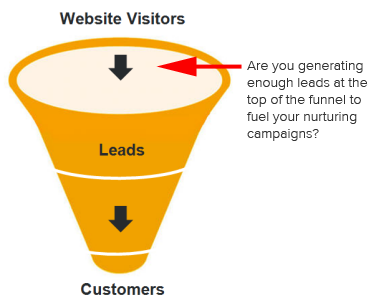
marketing-automation-funnelThe average email database expires at the rate of ~25% per year. That means a database of 50,000 email addresses will have shrunk to 21,000 in just three short years. The best way to solve for attrition is to replenish the funnel with new leads at a higher rate than you’re burning through. Or else you’ll find yourself with diminishing returns.

Before you invest in marketing automation, ask yourself, “What am I doing to fuel the top of my funnel?” In other words, automation is a fantastic tool to further qualify and nurture leads, but when you don’t even generate enough for Sales, what’s the point?

I learned this the hard way. A few years ago, I implemented marketing automation before putting the processes in place to attract and convert more leads, like creating better content, offers, calls-to-action, and landing pages, and doing things like blogging and optimization (and to clarify, buying email lists does not count as lead generation). Essentially, I put the cart before the horse and my results later suffered.


6 Marketing Automation Lessons I Learned the Hard Way.

Mortgage Rates – Today’s Home Loan Rates and Trends | Chappaqua NY Homes

Latest rates from zillow.com


3.625% APR
  • 30 year fixed
  • 3.625 % Rate

    – 

    $1,094 /mo
  • $1 in Fees
View Details
3.626% APR
  • 30 year fixed
  • 3.625 % Rate

    – 

    $1,094 /mo
  • $35 in Fees
View Details
3.641% APR
  • 30 year fixed
  • 3.625 % Rate

    – 

    $1,094 /mo
  • $465 in Fees
View Details
3.641% APR
  • 30 year fixed
  • 3.625 % Rate

    – 

    $1,094 /mo
  • $466 in Fees
View Details
3.672% APR
  • 30 year fixed
  • 3.625 % Rate

    – 

    $1,094 /mo
  • $1,392 in Fees
View Details
3.752% APR
  • 30 year fixed
  • 3.750 % Rate

    – 

    $1,111 /mo
  • $72 in Fees
View Detai


Mortgage Rates – Today’s Home Loan Rates and Trends | Zillow.

New Listings Cool California Hot Spots | Armonk NY Homes

In the several California markets that have seen soaring prices and historically low inventory levels during this spring buying season, a flood of new listings drove inventories up.  The increasing inventories are helping to moderate price increases in the hot markets.  In Sacramento, for example, list prices actually declined on a monthly basis.

In Sacramento, inventories increased 81.17 percent and in Stockton-Lodi, 74.80 percent in April.  San Francisco, Oakland, San Francisco also registered monthly inventory increases exceeding 10 percent according to realtor.com’s April trend report.

Nationally, inventories increased by 4.12 percent over the month, while list prices rose by 2.63 percent, as home owners sought to take advantage of what is now widely seen as a sellers’ market.  At the same time, the average age of the inventory fell to 81 days in April, 10.99 percent lower than one year ago.  All of these positive signs point to a housing market that is well on its way to a broad-based recovery.

The recovery continues to reach more and more of realtor.com’s 246 markets.  Year-over-year median list prices increased in 96 markets, held steady in 20 markets and declined in only 30 markets, a pattern that has been steadily improving since the beginning of the year.  These patterns suggest that the housing recovery is likely to be broad, particularly if the overall economy continues to improve.

On a year-over-year basis, the for-sale inventory declined in all but 11 of the 146 markets tracked by realtor.com, with 36 markets registering declines of 20% or more.  At the same time, year-over-year median list prices increased in 96 markets, held steady in 20 markets and declined in 30 markets, a pattern that has been steadily improving since the beginning of the year.  These patterns suggest that the housing recovery is likely to be broad, particularly if the overall economy continues to improve.  While there continue to be pockets of weaknesses, 2013 promises to be a very good year for the housing market.

On a year-over-year basis, April median list prices were up by 1 p or more in 96 of 146 MSAs, and up by 5% or more in 59 MSAs.  Median list prices were down by 1% or more in 30 markets, while 6 experienced a decline of more than 5%.  The remaining 20 markets have not experienced significant changes in their median list price compared to a year ago.  These results represent a significant improvement over March’s results, when only 82 markets were up by 1% or more on an annual basis and 36 markets were down by 1% or more.


New Listings Cool California Hot Spots | RealEstateEconomyWatch.com.