Tag Archives: Westchester Homes for Sale

Westchester Homes for Sale

Happy Birthday, Westchester! County Turns 330 Friday | Westchester Real Estate

Friday marks the 330th anniversary of the founding of Westchester County, and at the Westchester County Historical Society in Elmsford, staffers Katie Hite and Patrick Raftery are dedicated to preserving the county’s rich historical significance.

The county was first formed on Nov. 1, 1683. With the British still in charge, the county government was established as a way of organizing the region. Most towns weren’t established until after the Revolutionary War. What is now the Bronx was originally part of Westchester before being annexed into New York City in the 1870s.

The major population centers of Westchester were Bedford and White Plains, where the two courthouses were located. There were some small towns, but most of the land was divided into manors, land bestowed upon wealthy individuals who let farmers work their land in an almost feudal society.

When the Revolutionary War broke out, Westchester played an important role, acting as a buffer zone between land owned by British and American forces.

“It was as much a civil war as the Civil War was,” Hite said. “People within families, within communities took different sides.”

Many historical sites still survive from the Revolution, such as the Bedford Courthouse and the Purdy House in White Plains, which served as Washington’s headquarters. The Odell House in Hartsdale was where Washington and Count de Rochambeau devised their strategy to attack the British in Yorktown, VA.

Many of the owners of the manors sided with the British, and were forced to give up their land after the war. The land was sold at affordable rates to the farmers who worked the land, and towns began to be established.

“Nowadays, people tend to think of the county as a suburb of New York City, and really the railroads made that possible,” Raftery said. “Someone could wake up, hop on a train and head into the city for work, where before they couldn’t do that.”

A lot of the population lived and worked in the county, operating stores, farming, working in manufacturing. Once the railroads came in, more people started moving out to Westchester.

“They began moving out for the fresh air,” Hite said. “They didn’t want to live in an overcrowding, teeming place. They wanted peace and quiet. And that trend accelerated when the care was invented and became something that everyone had.”

The Westchester Historical Society was first established in 1874 and is one of the oldest historical societies in the country. Located in the same building as the county’s records department, its library contains more than 100,000 private and public documents from the county.

The books, letters, photos, diaries and maps are carefully preserved in a temperature and humidity controlled vault. Visitors researching their family, home or other aspect of Westchester history can visit and receive help finding the records and information they need.


http://armonk.dailyvoice.com/news/happy-birthday-westchester-county-turns-330-friday


Architectural wood panels, Viridian Reclaimed Wood | Bedford Hills Real Estate

Commercial design comes with its own set of challenges, and at 4’ by 8’, the dimensions of these engineered panels offer a handy solution for contract interiors, particularly in retail applications.

The premade three-ply architectural panels from Viridian Reclaimed Wood feature reclaimed wood faces, including the company’s Jakarta Market Blend and Rustic Old Growth Doug Fir.

The panels are available fire-rated, custom-stained, and pre-finished. Custom graphics and CNC milling can be applied to each panel. viridianwood.com


http://www.ecobuildingpulse.com/green-products/

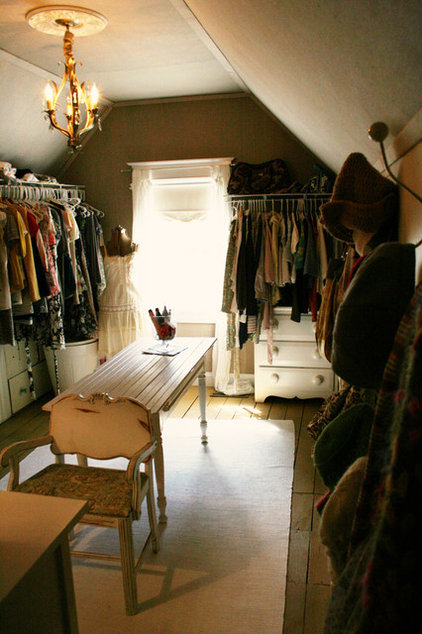
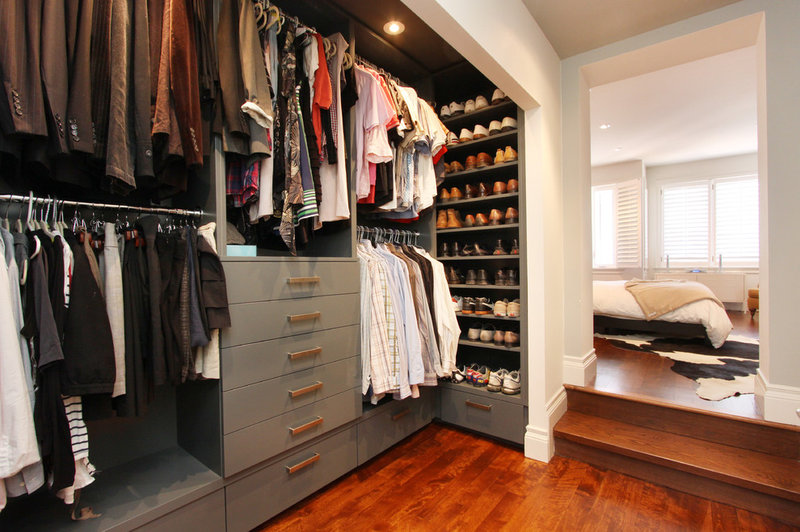
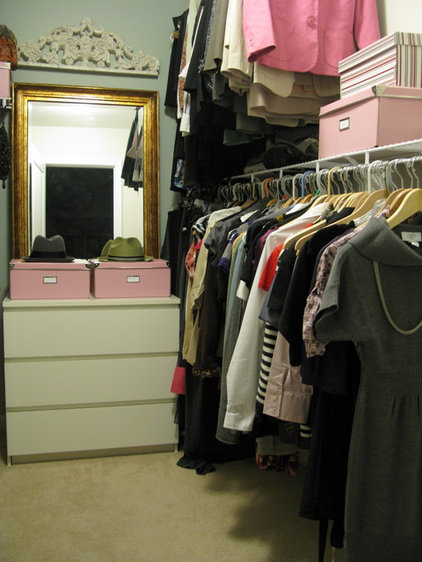
How to Finally Tackle Your Closet’s Critical Mess | Pound Ridge Real Estate

Ever the organizer, I was extolling the virtues of closet purging to a friend. She was feeling a little overwhelmed. Her possessions had been slowly encroaching due to nothing more insidious than the steady march of time and life. Honestly, my friend is an organized person. Things have their place. But lately, there are fewer and fewer places for things. Yet she remained staunchly purge-resistant, especially when it came to her clothes. Sound familiar? Keep reading to learn more about how making a little room in your closet can be an exercise in self-discovery.

Reaching “critical mess.” “I don’t have a problem getting my closet organized,” my friend said. “My problem is keeping it organized.” And this brings us to the crux of a problem shared by the organized and maybe-not-so-organized alike.
“As long as I have room for it,” the thinking goes, “I might as well keep it.” And that’s all fine until you have to dislodge a carefully constructed pile to fish for that pair of shorts. Or you pull out a blouse and three other things slip off their hangers with it in a wrinkled, crumpled mess. That’s when all of your efforts at tidying up go out the window. You’ve reached “critical mess,” and there’s no room for even one more thing. And yet folks still insist on holding on.
Editing boldly. While people often toss a few token items, they rarely edit boldly. Cleaning out your closet is a very personal thing and can highlight some complexities in our psyche. Sound dramatic? Maybe, but it’s true. We identify our possessions with ourselves — our accomplishments, joys and sorrows. Being told to let go of old or even not-so-old clothing can feel like we’re being told to get rid of parts of ourselves. And, in fact, that would be correct.
What no one tells you (but I will). When your closet (or your house) is full of things from your past, things that only remind you of who you were, you very literally have no room for who you are now and who you are becoming.
Granted, lots of people simply will not go down the philosophical road with me here: “Seriously? My closet is a mirror for what I think about myself? Yeah, right.”
So look at it this way: What is the point of spending money on new clothes if you lose them in a sea of stuff you don’t even wear? At least think of it as making room for all the new things you’re going to buy this season.
Does your closet make you feel bad about yourself? Now let’s take a clear-eyed look at items in your closet that may have unpleasant feelings associated with them. For example, do you have professional clothing from a job where you felt unappreciated? Are you keeping your “skinny clothes” as inspiration to lose weight?
Be honest about whether seeing them each day inspires you or just makes you feel bad about yourself again and again. Put them away. Or better yet, get rid of them. Because when you do lose that 20 pounds (or get a new job), chances are you’ll want a whole new wardrobe to celebrate your new self!
Put it in perspective. Having a hard time deciding what to get rid of? Try this simple exercise I did with one of my clients. Her closet was packed wall to wall, floor to ceiling, with old clothes she couldn’t let go of. However, it was clear to me that the old, boring, outdated clothes definitely didn’t reflect the style and personality of the woman who stood before me and, most likely, no longer fit her properly.
So, I tore a page from her favorite clothing catalog of a kicky little jacket that she wanted to buy — something that definitely expressed the stylish and confident person she is today. I taped it to the door. Then I pulled each item out of her closet, held it up to the picture and asked, “If you had to make room for one of these things, which would it be?” The juxtaposition was illuminating! Given the choice between a paisley corduroy pinafore dress (not kidding) and this little gem of a jacket, she finally saw what she’d been doing to herself. In the end, she donated about a quarter of her closet.
Feeling overwhelmed at the prospect of dredging through your past — I mean, your closet? Start with these baby steps.
Look at each item. Do you wear it? If not, ask yourself why you’re keeping it and listen to your answer.
Try things on. Have a trusted friend with you and honestly (honestly being the operative word) see if it fits and suits you — your body, personality, style and lifestyle. If it doesn’t, put it in a bag.
Do one drawer, one shelf, one row at a time, once a week. Put what you remove into a bag. Then find a charity, like a women’s shelter or a veterans’ job training program where you know those clothes will be appreciated, or the nondescript thrift store you pass on the way to work, and drop those bags off. You will feel good and get a tax deduction to boot.
Store the keepakes. Finally, if you really want to keep something you don’t currently wear, like your favorite boyfriend jeans from college, it doesn’t mean you have to keep it in your closet competing for space with stuff you wear frequently. Pack it up and store it elsewhere.
Do this and you’ll gain yourself a little breathing room. Your wardrobe will have plenty of room to grow, and maybe sprout a kicky little jacket or two.
More: Your Total Home Organizing and Decluttering Guide

The 13 Most Haunted Buildings in New York City | Armonk NY Homes

halloweenmap_10_13.jpg

New York has been called the most haunted city in the world, and with good reason. Every single street is steeped in history, and in the four-hundred-plus years of cycles of expansion, construction, destruction, and rejuvenation, you’re bound to hear more than a few legends and tales of the otherwordly. So, in the spirit of Halloween, we’re proud to present this map of the most haunted buildings in town, from the southernmost tip of Staten Island, all the way up to the hills of Washington Heights. We’ve got ethereal authors, pesky poltergeists, creepy colonials, phantom flappers, and even a mysterious mayor or two. And hey, if a skeptic you remain, a lot of these locales are open to the public, so by all means, check them out yourself if you think you ain’t afraid of no ghost. You might just learn something too!

Special thanks to The Bowery Boys and Forgotten NY.

Gruesome incidents may not be disclosed to homebuyers | South Salem NY Real Estate

Halloween is upon us and some house hunters out there may be wondering what spooky things have occurred in the homes they’re eyeing. Tales of haunted real estate abound at this time of year, and they are often tied to a particularly traumatic incident in a home’s history. But the reality is that most prospective buyers may not find out about any such incident unless they ask.

In most states, a murder, suicide or other violent crime occurring in a home does not have to be disclosed, Walt Molony, spokesman for the National Association of Realtors, told USA Today.

Most lawmakers agree the psychological damage of such an incident in a home would not be a material defect that should be required to be disclosed to buyers, the paper said.

But at least one case is heading to a state supreme court next month. In 2007, Pennsylvania homeowner Janet Milliken found out her home, purchased the year before, had been the scene of a murder-suicide after experiencing several disturbing incidents in the home, including the sound of a gun clicking.

She filed suit against the former owner of the house and the real estate agents involved in the deal, alleging fraud and breach of the state’s real-estate disclosure law.

Source: USA Today

– See more at: http://www.inman.com/wire/gruesome-incidents-may-not-be-disclosed-to-homebuyers/#sthash.CgJAr5ol.dpuf

Townhouse of Park Slope’s First Gentrifiers Listed for $4.8M | Bedford NY Real Estate

5 images

Location: Brooklyn, N.Y. Price: $4,800,000 The Skinny:Identified by theNew York Times in 2004 as “the original gentrifiers,” Evelyn and Everett Ortner dedicated their lives to the historic preservation of Brooklyn’s Park Slope, campaigning against big development projects, pushing for the neighborhood to gain landmark status, and setting a shining example by meticulously maintaining and restoring the 1886 four-story brownstone that they bought for $32,000 in 1963. With both Ortners now gone—Everett died in 2012, Evelyn in 2006—the house now finds itself back on the market for $4.8M. Featuring original mahogany woodwork, parquetry ornamentation, Lincrusta wallpaper, and its original heating system (uh-oh), the 5,043-square-foot house is one of the best preserved specimens in an area where people are paying above ask for historic properties on a regular basis—a phenomenon that Everett Ortner was not above jokingly taking credit for, telling friends he’d convinced to buy townhouses in the ’60s, “I made you all millionaires, and I think you should give me a commission.”

Homes near cemeteries: Do they sell? | Mount Kisco Homes

With Halloween quickly approaching, Redfin was dying to know: Do homes near cemeteries sell for more or less than homes farther away from cemeteries? Would a drop-dead-gorgeous home take longer to sell if the view includes tombstones? Would a home shopper have grave concerns about a home near a cemetery, or would the quiet neighbors be a selling point? We dug into the data to find out.


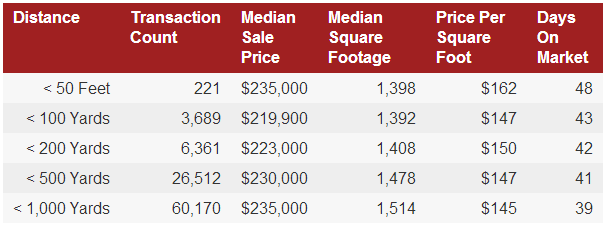
Redfin analyzed the price of homes less than 50 feet from a cemetery and compared those to the price of homes less than 100, 200, 500 and 1,000 yards away. The numbers indicate that on average, homes near cemeteries are slightly smaller, but they sell for more per square foot. On average, homes closest to cemeteries sold for $162 dollars per square foot, whereas the homes located more than 500 yards away sold for $145 per square foot.


Redfin

“I have a current listing that backs up to a cemetery, and 10 to 15 people have toured the home. One potential buyer provided feedback that it was a deal breaker, but that is just one of many. In my opinion, cemeteries make very quiet neighbors,” said Blakely Minton, a Redfin real estate agent in Philadelphia.


“Like everything with homebuying, there are pros and cons to living near a cemetery. The pros are that most likely there would be no chance of future development on the site of a cemetery, there is usually well-maintained open space, it’s quiet and many cemeteries are picturesque. The cons would be that cemeteries give some people an uneasy feeling, as it represents mortality, and it might not be an area they want to ‘live’ next to everyday,” said Lynn Ikle, a Redfin real estate agent in Baltimore.

The analysis also reveals that homes adjacent to cemeteries take longer to sell on average. Those located less than 50 feet away took 48 days to sell, whereas those located more than 500 yards away took 39 days to sell. Based on the analysis, homes near cemeteries sell for more money, but it may take longer to find the right buyer.


“Having a home right next door to a cemetery may make it more difficult to sell. There will always be a group of people who might love all of the specifications of the house, but the ‘creepy’ factor may prevent them from even touring the home. Having fewer folks tour a home could lead to a home staying on the market longer,” said John Malandrino, a Redfin real estate agent in Chicago.

Not all cities are the same when it comes to the number of cemeteries located within city limits and the number of homes built around them. Redfin evaluated 90 metropolitan areas across the nation to find the five cities with the most homes for sale near cemeteries. The analysis looked at homes for sale as of Oct. 15 that were less than 100 yards from a cemetery. Some of the nation’s oldest cities topped the list:


1. Baltimore

Homes for sale near cemeteries: 172 Median list price of those homes: $101,950

“It doesn’t surprise me that Baltimore tops the list, because it was founded back in the early 1700s,” Ikle said. “Our neighborhoods here are very well-established, and cemeteries were part of the landscape during their development.”


2. Philadelphia

Homes for sale near cemeteries: 157 Median list price of those homes: $134,900

“Since Philadelphia was one of the first major settlements in the U.S., there are cemeteries scattered throughout the city,” Minton said. “I had one friend who moved into a home with a cemetery right behind it. One day, she came home with her hands full of groceries and nearly hit the floor with food flying when she heard a gun shot outside. It turns out that the cemetery was for veterans, and it was a military salute.


“The type and size of cemetery is something to consider when deciding on a home by a cemetery, but in my opinion, the reminder of how precious life can be is a positive, not a negative.”

3. Chicago

Homes for sale near cemeteries: 115 Median list price of those homes: $229,900

“With buildable land at a premium, especially in and around the downtown Chicago area, builders have built and will continue to build in close proximity to cemeteries,” Malandrino said.


4. Boston

Homes for sale near cemeteries: 50 Median list price of those homes: $711,809

“The main reason Boston has so many cemeteries is because it has so many churches. Nearly all of the older churches in the greater Boston area have large cemeteries attached to them. These churches are frequently located in residential neighborhoods, so people could walk to church events,” said Peter Phinney, a Redfin real estate agent in Boston. “Churches were not only the center of worship, as they continue to be, but also the center of cultural events and social gatherings. It was only natural for people to want to be buried in their neighborhood next to the church, so homebuyers in the Boston area have made their peace with having a cemetery nearby. In fact, many welcome having the green space.”


http://realestate.msn.com/blogs/listed-buy.aspx?post=5c37386d-9625-4935-974f-33ed9e917554

Legislators Race to Buy Time as Flood Insurance Rate Spike Threatens Homeowners | Bedford Corners Homes

A bipartisan group of Senate and House members have proposed a deal to delay flood insurance premium increases taking effect as a result of last year’s Biggert-Waters Act. The rate increases will greatly increase costs for homeowners living in flood-prone areas and could also impact the nation’s housing market.

The legislation has four principal goals: it would delay most flood insurance increases for four years; compel the Federal Emergency Management Agency to complete an affordability study mandated by Biggert-Waters; address issues found within the study; and allow Congress time to review those findings and revisions.

Rep. Maxine Waters (D-Calif.), one of the namesakes of the Biggert-Waters Act, announced the deal today. On Friday, eight Senators appealed to fellow senators for support for the bill, which would delay flood insurance rate increases for thousands of homeowners set to take effect as part of the Biggert-Waters Flood Insurance Reform Act.

As of Friday, eight senators—Mary Landrieu (D-La.), David Vitter (R-La.), John Isakson (R-Ga.), Robert Menendez (D-N.J.), Jeff Merkley (D-Ore.), Heidi Heitkamp (D-N.D.), John Hoeven (R-N.D.), Thad Cochran (R-Miss.)—had signed on as cosponsors. There has been no announcement as to of or when there might be a vote on the proposed legislation.


http://www.remodeling.hw.net/legislation/legislators-race-to-buy-time-as-flood-insurance-rate-spike-threatens-homeowners.aspx?utm_source=newsletter&utm_content=jump&utm_medium=email&utm_campaign=RDU_102913&day=2013-10-29


Local New York #Mortgage #Rates | #BedfordHills Real Estate

Average rates in New York Metro, NY

Loan TypeTodayChangeLast Week
30 yr fixed4.18%4.27%
15 yr fixed3.25%3.35%
30 yr fixed refi4.17%4.26%
15 yr fixed refi3.24%3.34%
30 yr jumbo4.39%4.41%
5/1 ARM refi3.47%3.62%


Source:         Bankrate.com

Montlake Spite House in Seattle sells | Cross River Real Estate

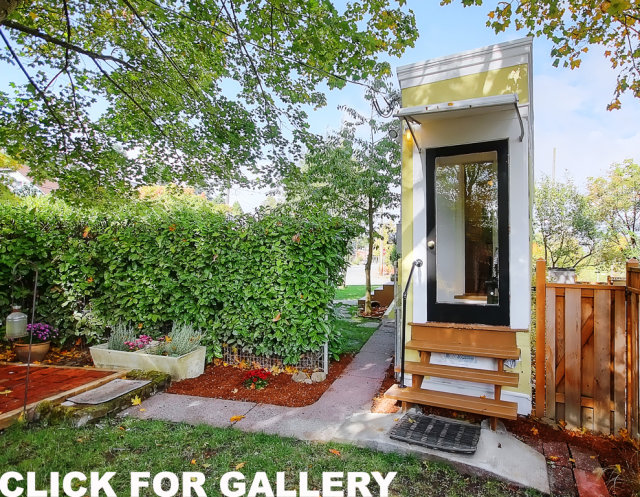
This is the home’s narrowest point, 55 inches wide. Down the path on the left is the front door. Click to go to …Did you spot the Spite House? It’s the wedge-shaped house in the upper left. Click to go to a slideshow.You might think that a little wedge-shaped house built explicitly to aggravate someone would be a tough sell.

Not in Seattle. Listed at $397,500, the home was just snapped up over the weekend, the real estate agent told Yahoo Homes, after spending only a couple of weeks on the market. “We had quite the interest!” she told us. (A local news story published Tuesday and picked up internationally might have helped the quick sale.)

Click here or on a photo to go to a slideshow.

Locals call it the Montlake Spite House. Legend has it that the home, on a mere sliver of a lot, was built by:

• A woman who won only a bit of yard in a divorce settlement, while her ex got the rest of the property, including the (normal-shaped) house they’d shared. Or …

• A landowner who was furious when the neighbor who owned the adjacent (normal-sized) lot made him a lowball offer on the sliver. Or …

• A traveler who, while visiting Germany, gave permission for someone to build on the lot — with the provision that enough land be left for a second house. When the traveler returned, he discovered that the new house took a lot more space than he’d expected, so, “out of spite, he [the landowner] built that funny little pie-shaped home” as an obstacle, the current homeowner told KPLU-FM’s Martha Kang. “I also heard that back when it was first built, the side that was facing the neighbor had been painted black.”

The house at 2022 24th Avenue East has 830 square feet, and it’s just 55 inches wide at its narrowest point. The house is shaped like a right triangle with its sharpest point slightly blunted — that’s the 55-inch-wide edge, where a mudroom and exit door lead into the yard. The longest side of the triangle (the hypotenuse) faces the street, with the entrance placed roughly at its center.

Click here or on a photo to go to a slideshow.

Lisa Horton, the current homeowner, told KPLU that the shape of the house was never much of an impediment, except when she was cooking: The kitchen is toward the narrow end of the house, so you can’t stand in front of the oven when you open it; you have to stand to the side.


http://homes.yahoo.com/blogs/spaces/montlake-spite-house-seattle-sells-231552209.html