Category Archives: Mount Kisco

Affordable Housing Victory for Westchester | Mt Kisco Real Estate

Another Affordable Housing Victory for Westchester

Westchester won another victory Thursday in the ongoing affordable housing settlement with the federal government when U.S. Magistrate Judge Gabriel W. Gorenstein ruled that the county had provided financing for enough units to meet its 2014 benchmark.

The ruling further states that there was no basis for the county to be held in contempt. Thursday’s decision follows a September victory where a federal appeals court found that the county had not discriminated as it relates to affordable housing.

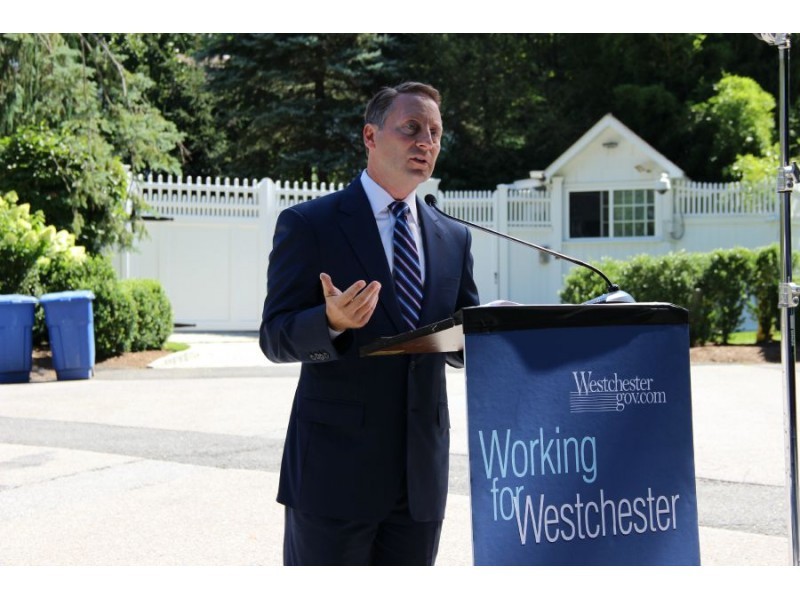
“This is another win for our residents,” said County Executive Rob Astorino in a statement. “From the beginning, the county has worked hard to comply with the terms of the settlement. But we have also stood firm against overreaching by the federal government to force the county to do things that are not in the agreement. The magistrate’s decision clearly shows that the county has met its obligations and that the federal government’s contention of contempt was wrong and without legal merit or justification.”

From an Astorino press release on the ruling:

The latest ruling centers on 28 units of affordable housing being developed in New Castle under the name Chappaqua Station. The units are part of the 2009 affordable housing settlement reached between the federal Department of Housing and Urban Development and the administration of former County Executive Andrew Spano. Under the terms of the agreement, the county must ensure the development of 750 units of affordable housing in 31 mostly white communities by the end of 2016.

The settlement also calls for the county to meet annual benchmarks. By the end of 2014, the county had to have 450 units with financing in place. In November of 2014, the Westchester County Board of Legislators approved financing for the Chappaqua Station project, putting the county over the benchmark by four units. However, the federal monitor assigned to the case, James Johnson, who serves at the pleasure of HUD, and the Department of Justice claimed the units should not count because the financing was “subject to” the development receiving all the necessary approvals. Not counting the units would have left the county 24 units short.

However, U.S. Magistrate Judge Gabriel W. Gorenstein dismissed the federal government’s contention, saying the 28 units “should be counted.” “The record is devoid of evidence that the inclusion of this [‘subject to’] provision makes the financing any less available for the Chappaqua Station development,” wrote Judge Gorenstein.

The magistrate also sided with the county on the contempt issue, saying the federal government had failed to meet the standard for showing such a charge was warranted. The county argued successfully that its behavior had to be measured against what the settlement actually says, not what the Monitor claimed it said in his report.

“We cannot conclude on the current record that the Settlement language was clear and unambiguous … such that the County could be held in contempt for not taking the additional actions stated in the Report.”

Astorino said the ruling was critically important for showing once again that the county has been complying with the terms of the settlement. In September, the U.S. Court of Appeals for the Second Circuit gave Westchester a resounding victory when it declared that “there has been no finding, at any point, that Westchester actually engaged in housing discrimination.” That finding by the nation’s second highest court clearly repudiated the allegation that Westchester’s zoning laws are discriminatory and exclusionary.

“The federal government has tremendous power and can do tremendous damage to the reputations of people and institutions simply by throwing out charges like contempt even if they are later found to be baseless,” said Astorino. “The U.S. magistrate’s ruling corrects the false narrative by the federal government that Westchester County has done anything wrong with respect to implementing the housing settlement.”

For 2015, the county has already surpassed its 600-unit benchmark for financing with 635; and has 466 units with building permits, 59 short of the goal with 101 applications pending.

read more….


http://patch.com/new-york/newrochelle/

Some 50,000 more New York City apartments may be eligible for rent regulation | Mt Kisco Real Estate

In late August, Gov. Andrew Cuomo and other top New York officials announced an unusual crackdown on landlords. Nearly 200 building owners were collecting big tax breaks under a program to spur housing, officials said, but hadn’t registered their apartments for rent stabilization as the law requires.

Is your rent legal? It might not be. Your landlord might be charging you too much, and we want your help figuring that out.

“We will not tolerate landlords who break the law and deny their tenants rent-regulated leases, plain and simple,” Cuomo said in a statement at the time. With Attorney General Eric Schneiderman, the governor announced a new enforcement effort to clean up such abuses.

But an investigation by ProPublica found that in reality, state and New York City officials have tolerated the problem for years—and ignored pleas to investigate. Nor is it limited to the building owners Cuomo and Schneiderman found—landlords have failed to register thousands of buildings for rent regulation, casting doubt on the legality of leases for about 50,000 apartments across the city.

That is the finding of an extensive analysis of government data covering nearly 15,000 rental buildings receiving the tax subsidies as of 2013. About 40%—or 5,500 buildings—weren’t listed as rent-stabilized, yet records show the owners are receiving more than $100 million in property tax reductions.

Stephen Werner, an analyst at the city’s Housing Preservation and Development Department (HPD), has been complaining to higher-ups about the missing registrations for decades. Werner said he first told his bosses 20 years ago they were “perpetrating a fraud” by counting too many apartments as rent-stabilized in the triennial surveys prepared for the City Council and the public.

Briefed on ProPublica’s analysis, Jumaane Williams, a city council member from Brooklyn who chairs the council’s housing and buildings committee, called for a “severe and swift response” to ensure that tenants are getting the rent protections they deserve.

“We have to fight and scrape for every last piece of affordable housing,” Williams said, “and here we are with thousands of units with people we’ve given money to and tax breaks to, and who’ve agreed to keep these units in rent stabilization, blatantly not doing it.”

ProPublica reported yesterday on a related abuse, where landlords do register for rent stabilization then collect bigger rent increases than allowed by the city’s Rent Guidelines Board. They do so in part by exploiting confusion about “preferential” rents and whether newer buildings are rent-stabilized.

Landlords who register properly for rent stabilization must do so annually with the state. Lists of buildings that have done so are published by the Rent Guidelines Board. To determine if a tax-advantaged building was registered, ProPublica cross-checked that data against a listing of properties receiving the tax breaks, known as 421-a and J51, published by the city’s Department of Finance.

Exactly what’s happening to tenants in the buildings is unclear. In some cases, tenants did have rent-stabilized leases because landlords skipped a year but had registered in others. In other cases, buildings had multiple addresses but registered only one. Others had opened only recently.

Despite that, three tenants reached by ProPublica said they had not been given rent-stabilized leases. “I knew that rent stabilization was something that existed, and I looked out for it and it definitely wasn’t present,” said Mark Ellison, a Crown Heights resident who lives in one unregistered building.

In 2013, Ellison said, his landlord proposed raising the rent $800 a month, or 40%. The landlord backed down when Ellison said it was unacceptable.

The implications go beyond rent. Tenants can only properly claim legal rights provided under a rent-stabilized lease—such as eviction protection and the right to timely repairs—if they are not in the dark about their building’s status and if the state has a record of it.

City officials acknowledged there is a problem with registrations but were unable to explain how such a large number of landlords could be out of compliance. They did not respond to a detailed accounting of ProPublica’s findings and methods or questions about why Werner’s complaints hadn’t been addressed.

A spokesperson for Mayor Bill de Blasio’s administration said in emails that officials “became cognizant” of the problem after de Blasio took office last year and “took action promptly to address it.” The matter is now the subject of a “multi-stage, multi-agency” enforcement effort, the spokesperson said.

“While we cannot disclose details on an ongoing investigation, we will not stop until every property is brought into compliance,” the de Blasio spokesperson said.

Announcing their August crackdown, Cuomo and Schneiderman said building owners who don’t register as rent-stabilized face serious legal consequences, including loss of their tax breaks, a rent freeze and paying triple the amount of overcharges any tenant might have received.

Instead of taking those steps, they sent owners of the 194 unregistered buildings a “one-time” opportunity to comply and informed tenants that they should expect their landlords to get into compliance sometime soon.

In the past three years, only two landlords have lost their tax breaks for not following the rent-stabilization rules, city officials have said.

The two tax-incentive programs at issue together provide almost $1.4 billion in property tax savings to New York City real estate owners, with most of the money flowing to multifamily apartment buildings.

Landlords who receive the 421-a and J51 tax benefits are supposed to submit all the units in their properties to rent stabilization for the duration of their tax breaks, which can span up to 34 years and significantly lower property tax burdens, in some instances by more than 90%.

The rent stabilization requirements are intended to help preserve affordability in places like Manhattan’s Stuyvesant Town and Peter Cooper Village, which receive a J51 tax break that subjects all of their 11,000 units to rent stabilization. A 2009 court decision involving Stuyvesant Town confirmed that, as long as such tax breaks are in place, landlords must provide tenants with rent-stabilized leases.

To make sure they are doing so, the state requires landlords to register their rent-stabilized apartments annually and report each unit’s rent. Tenant advocates say registration also creates an important protection for tenants, who are entitled to the rent history and can use it to prove overcharges.

“It’s incredibly important for tenants to be able to know that they’re rent-stabilized and also have the legal record of what the rent increases are,” said Katie Goldstein, executive director of Tenants & Neighbors, a statewide tenants’ rights group.

Landlords who didn’t register used to be ineligible for rent increases. But that changed in 1993, when the New York Legislature eliminated penalties for failing to register. “If they don’t do it, there are no repercussions,” Goldstein said.

Most of the buildings identified by ProPublica were repeat offenders: About 80% that didn’t register units in 2013 also didn’t do so from 2009 to 2012. Some appear to have never registered, according to searches against the state’s master directory of rent-stabilized buildings.

The noncompliant properties were mostly smaller buildings receiving 421-a benefits, including many three-family homes and four-to201310 unit apartment complexes. Among the five boroughs, Brooklyn and Queens had largest numbers of unregistered buildings.

In some corners of city government, the gap in registrations has been an open secret. Werner, the housing department analyst, first took notice in 1995.

Werner, 69 and still working at HPD, helps put together the city’s triennial housing survey. He collects data from the state showing all the apartments that have been registered for rent stabilization. The number never exceeded 800,000, he said, while the housing surveys routinely reported a higher number, now more than 1 million.

“The numbers never matched,” Werner said. He estimated the total shortage—beyond just properties receiving the tax breaks—at 200,000 apartments.

Werner said he raised the issue repeatedly with his superiors, but nothing was ever done about it besides occasional meetings and memos that went nowhere. In 2006, he emailed state regulators to inquire about the tax breaks, but no one there answered him, either.

The city denied ProPublica’s public records request for emails and memos about the registration gap.

Earlier this year, Werner took things into his own hands. Using publicly available data, he spent nights and weekends creating his own website where tenants can type in their address and see their building’s registration status and tax breaks. Then, out of frustration, he contacted ProPublica

read more…

http://www.crainsnewyork.com/article/20151106/REAL_ESTATE/151109917/some-50000-more-new-york-city-apartments-may-be-eligible-for-rent#utm_medium=email&utm_source=cnyb-realestate&utm_campaign=cnyb-realestate-20151106

#Expandable #Home Is a Low-Cost Solution to Social Housing Shortage | Mt Kisco Real Estate

Image via Dezeen
Image via Dezeen

What can be done to help those underprivileged groups who cannot afford a home? Mexican female architect, Tatiana Bilbao, gives her answer with a presentation of her latest building prototype at the recent Chicago Architecture Biennial.

Image via Dezeen
Image via Dezeen

The house, about half the cost of a same-sized regular property, consists of a five-meter-high living and dining area, kitchen, bathroom, and two bedrooms. The home has a concrete block core and wooden pallet modules in the surrounding rooms, which allows flexibility to add up to five additional bedrooms. Such a design makes it quick and easy to adapt the house for different layouts to fit into a specific lot. At its smallest, the house takes up an area of 463 square feet, which meets the minimum federal requirement.

Image via Dezeen
Image via Dezeen

The flexible, expandable house was commissioned by the Mexican government to address the country’s social housing shortage for people with low incomes, which has been a worsening yet neglected problem. There has been a housing shortage of as many as nine million homes in Mexico, but few architects have taken the initiative to address the urgent crisis, Bilbao told Dezeen in an interview.

Image via Dezeen
Image via Dezeen

“When we were commissioned to design this model, the first thing in my mind was that I wanted to give more space for the same money,” Bilbao said to Dezeen. Part of the modular system is done with an industrial palette, rather than some expensive strong materials, to save the budget and cut down the price for the customers, she explained.

Image via Dezeen
Image via Dezeen

Bilbao expected to have as many as 3,000 of these homes built per year, to meet the strong need of social housing in Mexico.


read more…


http://www.ecobuildingpulse.com/projects/


Student Debt Is a Bigger Barrier to Homeownership than ever | Mt Kisco Real Estate

Student loan debt continues to grow as an obstacle in a consumer’s ability to buy a home, as 57 percent of 2015 respondents who acknowledge having student loans said this debt was either “very much” or “somewhat” of an obstacle, compared to 49 percent of 2014 respondents, according to the third annual America at Home survey from NeighborWorks America.

The survey found that generally levels of student debt among adults have not changed greatly in the past year.  The percent that personally has any student debt stayed the same, at 17 percent of the national sample.  The percentage that worries about their student debt they owe either all of the time or some of the time also stayed constant, at 30 percent.

When it comes to their ability to buy a home, however, the survey found that student debt has grown to be an even greater barrier to homeownership now than it was a year ago.  One out of four participants in the survey (25%) said student is “very much of an obstacle” to buying a home, compared to 20 percent a year ago and 32 percent said it is “somewhat of an obstacle” compared to 29 percent a year ago. The percent of adults who said they who has had to delay the purchase of a home because of their student loan debt increased from 24 to 28 percent over the past 12 months.

Additionally, although mortgage rates remain historically low, a generally steady rise in home prices is outpacing income growth, leading homebuyers — especially first-time buyers — to search for ways to build up a down payment. However, nearly 40 percent of respondents have received “nothing at all” in terms of information about down payment assistance programs for middle-income homebuyers, programs that could provide thousands of dollars to help bridge a savings gap.

Finally, the housing market is being pressured by changing demographics. Of the respondents surveyed, 43 percent planned to purchase a home when they “got married or moved in with a life partner.” This is important for the housing market’s rebound, because the median age at first marriage has increased to 29.3 for men and 27.0 for women, according to the Census Bureau, up from 26.8 and 25.1 years, respectively in 2000.

“It’s clear the housing market is directly affected by many factors, and these forces identified in our survey are putting strong downward pressure on growth,” said Paul Weech, president and CEO of NeighborWorks America. “While NeighborWorks can’t address the demographic shift, we are increasing our efforts to support nonprofits that offer homebuyer education and financial capability coaching.”


read more…


http://www.realestateeconomywatch.com/2015/10/student-debt-is-a-bigger-barrier-to-homeownership-than-ever/

Home Affordability Improves | Mt Kisco Real Estate

Buying a home was at the most affordable level in two years in the first quarter of 2015, according to a recent report jointly released by RealtyTrac® and Clear Capital, which shows that home­buying is becoming more affordable, despite the average U.S. home price increasing at more than twice the pace of the average weekly wage nationwide over the past year.

“Although home prices continue to outpace wage growth in the majority of local markets, this analysis somewhat surprisingly shows that affordability is actually improving in most markets thanks to falling interest rates and slowing home price growth, which is allowing wage growth to catch up in some markets,” says Daren Blomquist, vice president at RealtyTrac.

“At the national level, buying an average­priced home in the first quarter of 2015 was the most affordable it’s been in two years and nearly twice as affordable as it was in the second quarter of 2006—when affordability was its worst in the past 10 years.

At the local level, we’re seeing several bellwether markets where wage growth matched or even outpaced home price growth over the past year.” For the report, RealtyTrac analyzed recently released Q1 2015 average weekly wage data from the Bureau of Labor Statistics and average prices for single­family homes and condos derived from publicly recorded sales deed data collected by RealtyTrac in 582 U.S. counties with sufficient home price data.

Average interest rates on a 30­year fixed rate mortgage came from the Freddie Mac Primary Mortgage Market Survey. Clear Capital analyzed data from its Home Data Index to determine counties at highest risk and lowest risk based on affordability and potential for price growth.

Average home price appreciation outpaced average wage growth between the first quarter of 2014 and the first quarter of 2015 in 397 out of 582 (68 percent) U.S. counties analyzed for the report. But during the same time period, the average interest rate on a 30­year fixed rate mortgage dropped 57 basis points (13 percent), from 4.34 percent in the first quarter of 2014 to 3.77 percent in the first quarter of 2015.

The drop in interest rates—along with wage growth outpacing home price appreciation in 32 percent of counties—meant buying a home in the first quarter of 2015 required a smaller share of the average wage compared to a year ago in 339 of the 582 counties (58 percent).

Counties where wage growth outpaced home price growth Major markets where wage growth outpaced home price growth in the first quarter— counter to the national trend—included Cook County, Ill., in the Chicago metro area; Orange County, Calif., in the Los Angeles metro area; Brooklyn, N.Y.; Fairfax County, Va., in the Washington, D.C., metro area; and Riverside County in Southern Calif., where the average weekly wage in the first quarter was up 10 percent from a year ago, double the 5 percent growth in average home prices during the same time period.

Buying a home 48 percent more affordable than during 2006 housing bubble Assuming a 3 percent down payment, monthly payments on an average­priced U.S. home —including property taxes, home insurance and private mortgage insurance (PMI)— required 36.5 percent of the average wage nationwide in the first quarter of 2015, down from 37.6 percent in the previous quarter and down from 37.4 percent in the first quarter of 2014 to the most affordable level since the first quarter of 2013, when affordability was 33.5 percent.

Buying a home nationwide was at the most affordable level in the last 10 years in the first quarter of 2012, when monthly house payments required 32 percent of average wages, while buying a home nationwide was at the least affordable level in the last 10 years in the second quarter of 2006, when monthly house payments required 70.7 percent of average wages.

Home price growth outpacing wage growth 3 to 1 during housing recovery Since bottoming out in the first quarter of 2012, the average U.S. home price has risen 24 percent while the average weekly wage nationwide has risen 7 percent during the same time period. The average interest rate on a 30­year fixed rate mortgage has dropped 5 percent.


read more…


http://rismedia.com/2015-10-01/


NAHB reports home builders confidence at 10 year high | Mt Kisco Real Estate

The National Association of Home Builders’ housing market index increased for the second straight month by 1 point to 62 in September of 2015. It is the highest figure since October of 2005, boosted by an increase in buyer traffic and current sales while the gauge for sales over the next 6 months decreased. Nahb Housing Market Index in the United States averaged 48.63 from 1985 until 2015, reaching an all time high of 78 in December of 1998 and a record low of 8 in January of 2009. Nahb Housing Market Index in the United States is reported by the National Association of Home Builders.

United States Nahb Housing Market Index


ActualPreviousHighestLowestDatesUnitFrequency
62.0061.0078.008.001985 – 2015Monthly
SA
NAHB/Wells Fargo Housing Market Index (HMI) is based on a monthly survey of home builders. They are asked to rate current sales of single-family homes and sales expectations for the next six months and to rate traffic of prospective buyers. Scores for responses to each component are used to calculate a seasonally adjusted overall index, where a number over 50 indicates more builders view sales conditions as good than poor. This page provides the latest reported value for – United States Nahb Housing Market Index – plus previous releases, historical high and low, short-term forecast and long-term prediction, economic calendar, survey consensus and news. Content for – United States Nahb Housing Market Index – was last refreshed on Wednesday, September 16, 2015.


CalendarGMTReferenceActualPreviousConsensusForecast (i)
2015-07-1603:00 PMJul6060(R)6057.76
2015-08-1703:00 PMAug61606159.26
2015-09-1603:00 PMSep62616161.40
2015-10-1603:00 PMOct6261.69
2015-11-1803:00 PMNov62.17
2015-12-1503:00 PMDec62.06


United States HousingLastPreviousHighestLowestUnit
Housing Index0.200.501.42-1.72percent[+]
Building Permits1130.001337.002419.00513.00Thousand[+]
Housing Starts1206.001204.002494.00478.00Thousand[+]
New Home Sales507.00481.001389.00270.00Thousand[+]
Pending Home Sales7.408.2030.00-24.50percent[+]
Existing Home Sales5590.005480.007250.001370.00Thousand[+]
Construction Spending0.700.105.90-4.80percent[+]
Nahb Housing Market Index62.0061.0078.008.00[+]
Mortgage Rate4.094.1010.563.47percent[+]
Mortgage Applications-7.00-6.2049.10-38.80percent[+]
Case Shiller Home Price Index180.88177.08206.52100.00Index Points[+]
Home Ownership Rate63.4063.7069.2062.90percent[+]


Nahb Housing Market IndexReferencePreviousHighestLowestUnit
United States62.00Sep/1561.0078.008.00[+]


read more….


http://www.tradingeconomics.com/united-states/nahb-housing-market-index


Mortgage Rates Average 3.84% | Mt Kisco Real Estate

Freddie Mac (OTCQB: FMCC) today released the results of its Primary Mortgage Market Survey® (PMMS®), showing average fixed mortgage rates falling to their lowest levels since May of this year amid substantial and ongoing global volatility out of China.

News Facts

  • 30-year fixed-rate mortgage (FRM) averaged 3.84 percent with an average 0.6 point for the week ending August 27, 2015, down from last week when it averaged 3.93 percent. A year ago at this time, the 30-year FRM averaged 4.10 percent.
  • 15-year FRM this week averaged 3.06 percent with an average 0.6 point, down from last week when it averaged 3.15 percent. A year ago at this time, the 15-year FRM averaged 3.25 percent.
  • 5-year Treasury-indexed hybrid adjustable-rate mortgage (ARM) averaged 2.90 percent this week with an average 0.4 point, down from last week when it averaged 2.94 percent. A year ago, the 5-year ARM averaged 2.97 percent.
  • 1-year Treasury-indexed ARM averaged 2.62 percent this week with an average 0.3 point, unchanged from last week. At this time last year, the 1-year ARM averaged 2.39 percent.

Average commitment rates should be reported along with average fees and points to reflect the total upfront cost of obtaining the mortgage. Visit the following links for theRegional and National Mortgage Rate Details and Definitions. Borrowers may still pay closing costs which are not included in the survey.

Quote
Attributed to Sean Becketti, chief economist, Freddie Mac.

“Events in China generated eye-catching volatility in equity markets worldwide over the past week. Interest rates also rocked up and down — although to a lesser extent than equities — as investors alternated between flights to quality and bargain hunting among beaten-down stocks. Amidst all this confusion, the 30-year mortgage rate dropped to 3.84 percent, the lowest mark since May and the fifth consecutive week with a rate below 4 percent.”

“Given the recent volatility, mortgage rates could change up or down significantly by the time this report is released. There are indications though that the unsettled state of global markets will make the Fed think twice before taking any action on short-term interest rates in September. If that’s the case, the 30-year mortgage rate may remain subdued in the short-to-medium term, providing support for continued strength in the housing sector. Just this week, new home sales were reported to be up 26 percent year over year.”

Americans still reluctant to ramp up mortgage borrowing | Mt Kisco Real Estate

Americans are buying more homes and at higher prices, yet new data shows that mortgage debt is little changed.

The Federal Reserve Bank of New York said Thursday that outstanding U.S. mortgage debt slipped 0.7 percent in the April-June quarter to $8.12 trillion. That is up slightly from a year ago and about the same level as three years ago when the housing market bottomed.

The second quarter’s decline occurred even as Americans took out more new mortgages, either to refinance old loans or purchase homes. New mortgages totaled $466 billion in the second quarter, the most in almost two years.

Those trends suggest Americans are paying down mortgage debt at roughly the same pace as new loans are made, evidence that homeowners remain wary of housing-related debt. Total mortgage debt peaked at $9.29 trillion in the third quarter of 2008.

Overall, the New York Fed’s report indicates that there is little sign of a return to bubble-era excesses in mortgage financing, even as the housing market rebounds. Would-be buyers are bidding up prices on a scarce supply of available homes. Sales of existing houses climbed to an eight-year high in June.

And home prices rose nearly 5 percent in May from a year earlier, according to the S&P/Case-Shiller 20-city index. They jumped 10 percent in Denver, 9.7 percent in San Francisco and 8.4 percent in Dallas — big increases that are making homeownership increasingly unaffordable for the typical family.

Yet there are many signs in the New York Fed’s report that housing finance is much healthier than before the recession. Just 95,000 people received new foreclosure notices in the second quarter, the fewest in the 16-year history of the data. And total

And in another sign of caution, total borrowing on home-equity lines of credit fell $11 billion in the second quarter, to $499 billion. That’s far below the peak of $714 billion six years ago.

The amount of new mortgages has risen for four straight quarters, the New York Fed said, after falling to a 14-year low of $286 billion in last year’s second quarter.

Several trends have offset those increases to keep overall mortgage debt mostly unchanged, according to economists at the New York Fed. A wave of refinancing has lowered borrowing rates, allowing homeowners to pay down more principal each month and less interest. Many homebuyers are making larger down payments. And the proportion of investors and other buyers paying cash has been elevated for most of the economic recovery.


read more…


http://finance.yahoo.com/news/us-mortgage-debt-little-changed-150050678.html

Living in your Garden Shed | Mt Kisco Real Estate

Garden sheds are no longer just for storing tools and other things you’d rather hide away. Home dwellers around the world are finding new uses for their backyard outbuildings and making them fit their lifestyles through a wide range of personalized designs and patio furniture set. See how these 11 international sheds and cottages have been reimagined for today’s living — be it lounging, dining, working or beekeeping. Which one would suit your backyard best?

Home Prices Level Out | Mt Kisco Real Estate

Home prices increases may be leveling out, according to one closely-followed real estate report.

In 20 major American cities, home prices this May were about 4.9% higher than May of last year, according to the S&P/Case-Shiller Home Price Index, released Tuesday. That’s the same pace of growth as April, and surprised economists when it fell short of expected growth.

Economists predicted a 5.6% year-over-year increase, according to an Econoday survey.

Price increases of single-family homes have settled at a steady pace of 4-5% this year, said David Blitzer, managing director and chairman of the Index Committee at S&P Dow Jones Indices. He said he expects price increases to slow over the next two years, as wages rise to catch up with housing costs.

“First time homebuyers are the weak spot in the market,” said Blitzer, citing research that high down-payments may be putting off first-time home purchases. “Without a boost in first timers, there is less housing market activity, fewer existing homes being put on the market, and more worry about inventory.”

Overall, 10 of the 20 cities surveyed saw housing price increases slow on a seasonally-adjusted basis.  Some real estate markets remain hot, however.

Home prices in Denver are 10% higher than this time last year, and San Francisco and Dallas are also seeing prices increase at almost twice the national pace. New York City and Phoenix have seen prices rise for six consecutive months.

Between April and May, the index slowed 0.2% on a monthly, seasonally adjusted basis. An analyst at Barclays said they were not inclined to “read too much” into the decline.

“This could be a pause for breath in the data after a strong performance for half a year,” wrote Blerina Uruçi in a research note.


read more…

http://www.usatoday.com/story/money/business/2015/07/28/home-price-increases-stay-steady/30773195/