U.S. single-family home prices rose slightly less than expected on an annual basis in July, and the year-over-year gain was smaller than in the prior month, a survey showed on Tuesday.
The S&P CoreLogic Case-Shiller composite index of 20 metropolitan areas rose 5 percent in July on a year-over-year basis, retreating from the 5.1 percent climb in June and short of the estimate calling for a 5.1 percent increase from a Reuters poll of economists.
“Both the housing sector and the economy continue to expand with home prices continuing to rise at about a 5 percent annual rate,” said David M. Blitzer, managing director and chairman of the index committee at S&P Dow Jones Indices.
“There is no reason to fear that another massive collapse is around the corner.”
Prices in the 20 cities were flat in July from June on a seasonally adjusted basis, the survey showed, matching expectations.
On a non-seasonally adjusted basis, prices increased 0.6 percent from June.
Home prices in three U.S. cities, Denver, Seattle and Portland, Oregon, showed the highest year-over-year gains, the survey showed.
Oct 13, 2016) – Freddie Mac (OTCQB: FMCC) today released the results of its Primary Mortgage Market Survey® (PMMS®), showing average fixed mortgage rates following Treasury yields and moving higher.
News Facts
30-year fixed-rate mortgage (FRM) averaged 3.47 percent with an average 0.6 point for the week ending October 13, 2016, up from last week when they averaged 3.42 percent. A year ago at this time, the 30-year FRM averaged 3.82 percent.
15-year FRM this week averaged 2.76 percent with an average 0.6 point, up from last week when they averaged 2.72 percent. A year ago at this time, the 15-year FRM averaged 3.03 percent.
Average commitment rates should be reported along with average fees and points to reflect the total upfront cost of obtaining the mortgage. Visit the following link for the Definitions. Borrowers may still pay closing costs which are not included in the survey.
Quote Attributed to Sean Becketti, chief economist, Freddie Mac.
“This week the 10-year Treasury yield continued its climb as an increasing number of financial market participants foresee a December rate hike after a series of positive economic data releases. The 30-year fixed-rate mortgage moved up 5 basis points to 3.47 percent in this week’s survey, the first increase in one month. Even though we’ve seen economic activity pick up, consumer price inflation and implied inflation expectations remain below the Federal Reserve’s 2 percent target.”
The count of unfilled jobs in the overall construction sector fell in August, as residential construction employment hiring accelerated in August and September.
According to the BLS Job Openings and Labor Turnover Survey (JOLTS) and NAHB analysis, the number of open construction sector jobs (on a seasonally adjusted basis) fell to 184,000 in August, after establishing a cycle high of 225,000 in July (post-data revisions). The July estimate represents the highest monthly count of open, unfilled jobs since February 2007.
The open position rate (job openings as a percent of total employment) for August was 2.7%. On a smoothed twelve-month moving average basis, the open position rate for the construction sector held steady at 2.9%, near a cycle high.
The overall trend for open construction jobs has been increasing since the end of the Great Recession. This is consistent with survey data indicating that access to labor remains a top business challenge for builders.
The construction sector hiring rate, as measured on a twelve-month moving average basis, ticked up to 4.7% in August.
Monthly employment data for September 2016 (the employment count data from the BLS establishment survey are published one month ahead of the JOLTS data) indicate that home builder and remodeler net hiring continued to rebound, as sector employment increased by 15,700 after posting a 14,400 gain in August. These gains come after a recent period of hiring weakness, which has reduced the 6-month moving average of jobs gains for residential construction to just under 4,000.
Residential construction employment now stands at 2.617 million, broken down as 738,000 builders and 1.879 million residential specialty trade contractors.
Over the last 12 months home builders and remodelers have added 146,000 jobs on a net basis. Since the low point of industry employment following the Great Recession, residential construction has gained 631,000 positions.
Single family home sales rose just over 2 percent in Westchester County compared to the third quarter in 2015, according to report released Tuesday from the Hudson Gateway Association of Realtors.
Westchester lagged behind other counties in the HGAR report, which also incorporates Putnam, Rockland and Orange. For the four-county region, sales rose 7 percent compared to the third quarter in 2015. For the year, sales in all four counties are 15 percent higher than last year.
“The real estate market is healthy,’’ said Marcene Hedayati, HGAR President and part owner and manager of William Raveis Legends Realty Group in Tarrytown. “It’s growing, and transaction are up. Prices are flat, which is good because we don’t want to see some sort of wild market where prices keep going higher and we have a situation like we did in the early 2000s.”
The median sale price for a single family home in Westchester County fell 1.2 percent to $668,500, according to the HGAR Report. The median sale price in 2015 was $676,500.
Inventory, however, continues to fall in Westchester County and other regions. In Westchester, inventory fell 18.2 percent compared to the third quarter in 2015. Inventory dropped 20 percent over the four counties compared to third quarter in 2015. In Putnam County, inventory fell a staggering 29.4 percent.
“Inventory has been declining for more than a year, but it has not yet put pressure on prices,’’ Hedayati said. “I’m not sure at what point that will happen. We keep thinking it’s going to happen, but it hasn’t done so yet. We’re also having fewer buyers coming out as well. I think we’ll be able to tell more in the spring market what impact lower inventory is having on prices.”
Hedayati also said most pricing sectors continue to perform well, except for the high end markets.
Westchester County continues to attract growing families looking to move from the city. Millennials are finally starting to see the value in home ownership, but they are also seeking properties that are move-in ready and require little work and repair.
“There’s something for everybody on the market now,’’ Hedayati said. “Buyers are a little more particular than they have been in the past. Buyers are much more sensitive. They are reluctant to buy homes that require much work. And staging has become a huge factor. Homes that are priced right and staged well are getting a lot of attention.”
The lonely $250,000 S-Class coupe at Mercedes-Benz of Greenwich says it all. For six months, it’s been sitting in the showroom, shimmering in vain while models priced at only $70,000 fly out the door.
“We haven’t had anyone come in and look at it,” says Joey Licari, a sales consultant at the dealership, looking over his shoulder at the silver beauty. “I feel like normally they would, maybe a few years ago.”
Such is the state of affairs in Greenwich, the leafy Connecticut town famous for its cluster of hedge funds and the titans of Wall Street who occupy many a gated mansion. The rich are being maddeningly frugal, as Barry Sternlicht complained when he assailed his former hometown as possibly the country’s worst housing market. “You can’t give away a house in Greenwich,” the head of Starwood Capital Group said, causing something of a ruckus.
The reality is that places like Sternlicht’s, a nearly 6-acre estate priced at $5.95 million before he gave up, aren’t moving. No such problem if it’s $2 million or less. That Benz is going nowhere, but sales are up at Cadillac of Greenwich, where $50,000 is pretty much the basement. Ten-carat diamonds that can cost in the six figures collect dust in stores on the main drag. On the other hand, a husband will still drop $10,000 on jewelry for a 10th anniversary.
The new Greenwich is like that. “We aren’t getting caviar and champagne,” says Edward Tricomi, co-owner of Warren Tricomi Salon on Greenwich Avenue, “but we’re still eating steak.”
Bonus Slump
The town was hit hard by the 2008 financial crisis, and never fully recovered: The median sales price for homes in the second quarter was $1.56 million, 17 percent below the peak back in 2006, according to data compiled by appraiser Miller Samuel Inc. and brokerage Douglas Elliman Real Estate. Now, with the hedge-fund business struggling and investment-banker incentive pay in a slump, bonus-fueled purchases are cooling again. These days, in fact, not losing money can be cause for swagger.
“We talk to a lot of guys from hedge funds, and they’re like, ‘Look at our numbers, we haven’t gone down, we’re staying level,’” says Brad Walker, who moved from Boston two years ago to open a branch of his family’s shop, Shreve, Crump & Low. A newcomer, he finds it perplexing. “I don’t run a hedge fund, I work in a jewelry store, but I think you’d want to do a little bit better.”
$135,000 Median
Flat probably isn’t so bad, though, if you’re already in the neighborhood of the .001 percent. Anyway, many factors are at play in the scaling back. Tastes are changing. And with income inequality a talking point across America, and the finance industry the target of criticism and scrutiny in recent years, some might just want to keep low-spending profiles.
“The things being bought are less trophy items and, more likely, carefully bought quality,” says Terry Betteridge, who owns Betteridge, a jewelry store. “One doesn’t want to become the next episode of ‘Billions.’”
Just 35 miles from Manhattan in the heart of Connecticut’s famed Gold Coast, with about 60,000 residents and 32 miles of shoreline, Greenwich is among the most prosperous communities in America. One out of every $10 in hedge funds in the country is managed here, according to data compiled by Bloomberg, by firms such as Viking Global Investors and AQR Capital Management. It’s home to finance heavyweights including Steven Cohen of Point72 Asset Management and Dick Fuld. The median annual household income is $135,000 — compared with $56,516 nationally. Residents paid more state income taxes in 2014, the last year for which data are available, than in any other municipality in Connecticut.
Sore Point
The tax rate, by the way, is a sore point, and possible reason behind the departure of the likes of Paul Tudor Jones and Thomas Peterffy, who switched their permanent residences to Florida. The state income tax there is zero.
In 2015, Connecticut boosted the income tax for individuals making more than $500,000 and couples above $1 million to 6.99 percent from 6.7 percent. Levies on luxury goods rose to 7.75 percent from 7 percent on cars over $50,000, jewelry over $5,000 and clothing or footwear over $1,000.
Sternlicht said at a conference two weeks ago that this was why he relocated to the sunshine state. “We used to have no taxes,” he said wistfully, recalling Connecticut before it enacted its income tax in 1991.
Many continue to try to sell their real estate holdings. As of Sept. 14, there were 46 homes at $10 million or more on the market, some that have been lingering since 2014, according to data from Miller Samuel and Douglas Elliman.
3,000-Bottle Cellar
Among them: an 80-acre estate on Lower Cross Road for $49 million that until last month was asking $65 million, and a 19,773-square-foot manse once owned by Republican presidential candidate Donald Trump that has been looking for a buyer for nearly two years. It’s on the market now for $45 million, down from $54 million.
Former Trump property
Source: Coldwell Banker
No takers yet for a seven-bedroom affair with a 3,000-bottle chilled wine cellar, a tennis court that converts to a hockey rink and a globe-shaped observatory with a retractable roof and high-powered telescope. That one recently returned to the market at $8.495 million, after an earlier effort at $8.95 million. Former Citigroup Chief Executive Officer Sandy Weill is trying to offload his 16,460-square-foot home at $9.9 million, down from $14 million more than two years ago.
One problem is that risk levels have gone through the wringer. Members of the younger Wall Street crowd are quite conservative, says Robin Kencel, a broker with Douglas Elliman. “They used to say Oh, I’ll stretch.’ Now they’re more practical. They’ll ask ‘What are the utility bills? Oh, wait — I don’t want it.’”
That could explain why, this year through Sept. 22, pending sales of homes priced up to $999,999 jumped 29 percent from the same period in 2015, according to brokerage Houlihan Lawrence, and those between $1 million and $1.99 million were up 69 percent. Contracts for homes between $5 million and $5.99 million, meanwhile, fell 80 percent.
As Florida and the Carolinas begin digging out from the from the record flooding and high winds that Hurricane Matthew delivered over the weekend, thousands of homeowner insurance claims are sure to follow.
The Consumer Federation of America, a Washington D.C.-based consumer advocacy group expects about 100,000 homeowners to file damage claims for as much as $7.5 billion from the Category 3 storm, though well short of the record claims made from the most severe storms such as Hurricane Katrina or Hurricane Andrew, where damage claims were more than $100 billion.
But if it turns out that fewer-than-expected insurance claims will be filed for damage, it may not just because Hurricane Matthew was a less-powerful storm than expected, it may be because far fewer homeowners are carrying property insurance.
That’s the analysis from Trulia.com, a San Francisco-based real estate research firm, which looked at homeowners’ insurance rates in some of the most hurricane-prone regions of the Southeast and mid-Atlantic, the so-called southernmost “Hurricane Alley” states comprised of Florida, Georgia and the Carolinas. The study also looked at Gulf Coast insurance rates including Texas. Hurricane insurance is often supplemental, but is typically required by mortgage lenders if the home is located in a storm-prone market like Florida.
Here’s another reason to use Facebook at work. The social media giant launches “Facebook at Work” on Monday, a new business-messaging tool that will represent the first time it charges for its services.
Overall, the U.S. Census noted that in 2014, 94.7% of homeowner households that had outstanding mortgage obligations had property insurance. The property insurance rate however dropped to 75.5% of those homeowner households that did not have any mortgage.
While property insurance is typically required by banks to protect their investment while the mortgage is being paid, Trulia’s data shows that many homeowners are dropping insurance once the mortgage is extinguished, primarily due to cost.
The percentage of Miami households reporting that they had homeowners’ property insurance fell to 78% in 2014 down from 90% in 2006, according to U.S. Census data cited by Trulia. Tampa-St. Petersburg, Fla., saw the steepest drop in insured homes, to 79% in 2014 from 92% in 2006, Trulia said.
Nationally, the number of insured homes fell to 89.2% from 94.1% eight years ago. Almost all major southeastern U.S. metros had insured rates below the national average, Trulia said.
On a national basis, Trulia noted that premiums have climbed on average more than 28%, with 10 of the 25 most expensive markets for homeowners insurance in the Southeast.
The Longaberger Basket Building, the Newark, OH, office structure built to resemble a giant picnic basket, is heading to foreclosure if the home goods company does not pay more than $600,000 in back property taxes.
Olivia Parkinson, the Licking County treasurer, tells realtor.com® that the county recently sent a letter informing Longaberger that it is referring the property for tax foreclosure. The company, which hasn’t made a tax payment since November 2014, owes $605,219.12.
In order to halt foreclosure proceedings and an eventual property auction, the company must pay the bill in full within two weeks, Parkinson says. You can even check expert auction bidder Melbourne before moving for any auction.
The one-of-a-kind property has lingered on the market for 18 months. Brenton Baker, a spokesman for the Longaberger Company, says serious negotiations are underway with “several entities” who’d like to pack their employees into the basket building.
The basket backstory
It’s been tough to find a buyer for the 180,000-square-foot building in a suburb of Columbus. The basket landed on the market for $7.5 million about a year and a half ago, and the price has since been slashed to $5 million. The current asking price works out to about $27 per square foot, roughly half of what area office space—that doesn’t look like bologna sandwich storage—typically commands.
Inside the Longaberger building
Cushman & Wakefield
“It’s a very unique property, and I don’t know that there are a lot of basket-related businesses out there,” says Baker. “The inside is a very nice, high-end office space. But the outside does present certain challenges.”
Longaberger, which sells baskets through a national network of Tupperware-style home consultants and is now owned by JRJR Networks, completed the office building in 1997 at a cost of approximately $32 million. It was the brainchild and dream project of the company’s founder, Dave Longaberger, who wanted his headquarters to mimic his best-selling basket.
Initially, the project’s architects thought he was speaking conceptually. But after the third failed design, Longaberger grabbed one of his baskets, slammed it on the table, and said, “Make it look exactly like this.”
And so they did, handles and all.
The exterior consists of stucco-covered framed metal set in a basket weave pattern. Two 75-ton handles heated to prevent ice from forming grace the top of the basket, and two 725-pound gold leaf Longaberger tags adorn the sides. The interior contains a 30,000-square-foot atrium and a 142-seat auditorium, where employees used to gather for movie night.
“It was a great home for us for many, many years,” says Baker, who’s worked for the company for 25 years. The final employees emptied out of the basket in July.
It also was a tourist destination. TripAdvisor, which calls the building “World’s Largest Basket,” ranks it No. 6 out of 19 things to do if you happen to be in Newark. The Dawes Arboretum is No. 1.
“It did bring people to the area when it was new,” says Jennifer McDonald, vice president of Licking County Chamber of Commerce, which includes Newark businesses. “They’d make a stop because of the size of the building and the photo opportunity.”
Unpacking the basket’s fate
But after Dave Longaberger died in 1999, tastes in home décor changed and sales slumped. The company’s revenue shrank from $1 billion in sales in 2000 to about $100 million in 2014. In fall 2014, the company was nipping away at the back taxes it owed, paying $10,000 per week for eight weeks, says Parkinson. But the payments stopped in November 2014.
Those delinquent taxes are “the scary part” for prospective buyers, saysMcDonald. “Heating and cooling costs must be phenomenal. Plus, it looks like a basket.” A basket in need of a paint job, according to a TripAdvisor comment posted in August.
Builder confidence in the market for newly built, single-family homes in September jumped six points to 65 from a downwardly revised August reading of 59 on the National Association of Home Builders/Wells Fargo Housing Market Index (HMI). This marks the highest HMI level since October 2015.
With the inventory of new and existing homes remaining tight, builders are confident of positive market conditions for new construction. Solid job creation and low interest rates are also fueling demand, while builders continue to be hampered by supply-side constraints that include shortages of labor and building lots.
As household incomes rise, builders in many markets across the nation are reporting they are seeing more serious buyers, a positive sign that the housing market continues to move forward. The single-family market continues to make gradual gains and we expect this upward momentum will build throughout the remainder of the year and into 2017.
Derived from a monthly survey that NAHB has been conducting for 30 years, the NAHB/Wells Fargo Housing Market Index gauges builder perceptions of current single-family home sales and sales expectations for the next six months as “good,” “fair” or “poor.” The survey also asks builders to rate traffic of prospective buyers as “high to very high,” “average” or “low to very low.” Scores for each component are then used to calculate a seasonally adjusted index where any number over 50 indicates that more builders view conditions as good than poor.
Freddie Mac (OTCQB: FMCC) today released the results of its Primary Mortgage Market Survey® (PMMS®), showing average fixed mortgage rates largely unchanged ahead of this week’s employment report.
News Facts
30-year fixed-rate mortgage (FRM) averaged 3.42 percent with an average 0.5 point for the week ending October 6, 2016, unchanged from last week. A year ago at this time, the 30-year FRM averaged 3.76 percent.
15-year FRM this week averaged 2.72 percent with an average 0.5 point, unchanged from last week. A year ago at this time, the 15-year FRM averaged 2.99 percent.
5-year Treasury-indexed hybrid adjustable-rate mortgage (ARM) averaged 2.80 percent this week with an average 0.4 point, down from last week when it averaged 2.81 percent. A year ago, the 5-year ARM averaged 2.88 percent.
Average commitment rates should be reported along with average fees and points to reflect the total upfront cost of obtaining the mortgage. Visit the following link for the Definitions. Borrowers may still pay closing costs which are not included in the survey.
Quote Attributed to Sean Becketti, chief economist, Freddie Mac.
“The 10-year Treasury yield leaped to a two-week high following reports of the European Central Bank retreating from its bond-buying program ahead of its initial March deadline. In contrast, the 30-year fixed-rate mortgage remained unchanged at 3.42 percent. Over the past two weeks, mortgage rates have remained fairly flat while Treasury yields have fallen and risen. This Friday’s jobs report will provide clarity on whether or not mortgage rates follow the recent upward trend in Treasury yields.”
New homes with 5,000 square feet or more of living space increased both as a share of all new construction and in absolute number in 2015, according to the Census Bureau’s Survey of Construction read more about this below in this article. In 2015, the share of new homes this size reached a post-recession peak of 3.9% of new homes started. The total number of 5,000+ square-foot homes started that year was 28,000 units.
In 2012, the number of new homes started with 5,000+ square feet rose to 15,000 units, yet their share remained at only 2.8%. In 2015, while the number of 5,000+ square feet homes started (28,000) was the highest since 2008, their share of the new market (3.9%) was the highest since 2004. A previous postdiscussed the declining trend in the median and average size of new single-family homes due to an expansion in entry-level market wherein home size is expected to trend lower. This is not necessarily a contradiction, because 5,000+ square foot homes are relatively uncommon and represent the extreme upper tail of the distribution. The extreme upper tail can behave differently than the center of the distribution, measured by the average or median.
In the boom year of 2006, 3.0% or 45,000 new homes started were 5,000 square feet or larger. In 2007, the share of new homes this size was 3.6%, yet the total number of 5,000+ square-foot homes started that year fell to 37,000. In 2008, only 20,000 such homes were started or 3.2% of the total. From 2009 to 2011, fewer than 13,000 of these large homes were started every year, accounting for less than 3% of all new construction during this period. The extent to which the 5,000+ square foot homes have recovered, roughly to where they were in 2008, shows a growing trend at the top of the market at least through 2015.




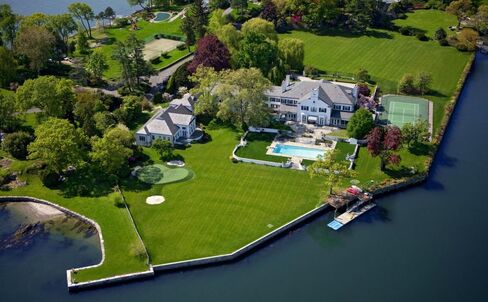


 New homes with 5,000 square feet or more of living space increased both as a share of all new construction and in absolute number in 2015, according to the Census Bureau’s Survey of Construction
  In 2012, the number of new homes started with 5,000+ square feet rose to 15,000 units, yet their share remained at only 2.8%. In 2015, while the number of 5,000+ square feet homes started (28,000) was the highest since 2008, their share of the new market (3.9%) was the highest since 2004. A previous