Monthly Archives: March 2015

February Existing Homes Rise | Bedford Corners Real Estate

Sales of existing homes rose 1.2% in February to a seasonally adjusted annual rate of 4.88 million, the National Association of Realtors reported Monday. The gain was below expectations. Economists polled by MarketWatch had expected the sales rate to increase to 4.94 million in February from 4.82 million in January. Existing home sales remain soft, having been stuck below 5 million unit rate for two-and-a-half years. The median sales price of used homes hit $202,600 in February, up 7.5% from the year-earlier period. This is the biggest gain in a year. February’s inventory was 1.89 million existing homes for sale, a 4.6-month supply at the current sales pace. The number of homes available for sale was down 0.5% from the year-earlier period.


read more..


http://www.foxbusiness.com/markets/2015/03/23/february-existing-homes-rise-to-488-million-rate-but-stay-below-expectations/

Existing home sales slightly rebound after last month’s plummet | Pound Ridge Homes

Existing-home sales slightly ticked back up 1.2% in February after last month’s plummet, but tight inventory levels pushed price growth to its fastest pace in a year, theNational Association of Realtors said.

Lawrence Yun, NAR chief economist, said although February sales showed modest improvement, there’s been some stagnation in the market in recent months.

“Insufficient supply appears to be hampering prospective buyers in several areas of the country and is hiking prices to near unsuitable levels,” he said. “Stronger price growth is a boon for homeowners looking to build additional equity, but it continues to be an obstacle for current buyers looking to close before rates rise.”

Total existing-home sales, which are completed transactions that include single-family homes, townhomes, condominiums and co-ops, rose 1.2% to a seasonally adjusted annual rate of 4.88 million in February from 4.82 million in January. Sales are 4.7% higher than a year ago and above year-over-year totals for the fifth consecutive month.

This is not too far off Zillow’s (Z) forecast that the seasonal adjusted annual rate would rise 1.3% to 4.88 million in February.

The median existing-home price for all housing types in February was $202,600, which is 7.5% above February 2014. This marks the 36th consecutive month of year-over-year price gains and the largest since last February with it was 8.8%.

In addition, total housing inventory at the end of February increased 1.6% to 1.89 million existing homes available for sale, but remains 0.5% below a year ago (1.90 million). For the second straight month, unsold inventory is at a 4.6-month supply at the current sales pace.

The percent share of first-time buyers barely increased, growing to 29% in February from 28% in January, marking the first increase since November 2014. First-time buyers represented 28% of all buyers in February 2014.

All-cash sales were 26% of transactions in February, down from 27% in January and down considerably from a year ago when it was 35%.

Individual investors, who account for many cash sales, purchased 14% of homes in February, down from 17% last month and 21% in February 2014. Sixty-seven percent of investors paid cash in February.

Distressed sales, foreclosures and short sales, were 11% of sales in February, unchanged for the third consecutive month and down from 16% a year ago. Eight percent of February sales were foreclosures and 3% were short sales. Foreclosures sold for an average discount of 17% below market value in February (15% in January), while short sales were discounted 15% (12% in January).


read more…


Existing home sales slightly rebound after last monthÕ plummet

Down to Earth Farmers Markets | Chappaqua Real Estate

DTE-E-Mail-Masthead_(722x126pxl)_(1-14-15)07

Mamaroneck:
Shovel Ready String Band Plays 10 am-noon;
Honey, Indian Simmer Sauces, & Ice Cream Tempt Local Palettes + More!

Ossining:
Celtic Fiddle with Brian Vegh this Saturday;
Welcome Back Taiim Falafel Shack & OM Champagne Tea + More!


March 19-25th, 2015

DowntoEarthMarkets.com

BrooklynWinterOffer
What’s New, In Season, and On Sale This Week
Chicken Bone Broth
Sold in re-sealable bags, easy to recycle.
$10 for one 24 oz bag or $18 for two
Great for the “Bone Broth Challenge” (a cup a day) or
in wide variety of cooking!
Yellow Bell Farm
Gluten-Free Pasta Varieties: Including Egg + Spinach and Egg
Trotta Foods
Click on a market to see all vendor and event details…

Ossining Winter

Saturdays
9:00 am-1:00 pm
Claremont Elementary School on Van Cortlandt Avenue, off of N. Highland (Rte. 9)

Note: The market moves back outside to the corner of Spring & Main Streets in downtown Ossining
on Saturday, April 4th.

Mamaroneck Winter

Saturdays
9:00 am-1:00 pm
St. Thomas Episcopal Church
168 W. Boston Post Road

Headed to the city? We’ve got markets there, too. CLICK HERE for details.

Announcements
Down to Earth Markets is Hiring!

It’s Hiring Season here at Down to Earth Markets. As we prepare for the 2015markets, we have PAID,
part-time positions available in Westchester. Most markets run one day per week, from May through Thanksgiving. Click here for details. Applications are due to Frankie Rowland, Westchester/Rockland County Territory Manager, by Tuesday, March 31st. We look forward to hearing from you.

Ossining: Please Order Tierra Farm Nut Products with Market Manager, Samantha

Down to Earth Markets is happy to partner with Claremont Elementary School to hold the Ossining Indoor Winter Farmers Market. In an effort to meet the needs of the school community, Tierra Farm will no longer be a vendor at the indoor market. For customers interested in purchasing Tierra Farm products, there will be weekly order forms available at the market. Please submit your Tierra Farm order form to the market manager, Samantha, during market hours, 9 am to 1 pm. During the week, you can pick up your Tierra Farm order at Down to Earth’s office on Main Street in Ossining.
We look forward to seeing you.

Tierra Farm will return on Saturday, April 4th, when the market moves back outside to its longtime home at the corner of Spring and Main Streets in downtown Ossining.

For upcoming events, visit our Down to Earth Markets Event Calendar.

Stay tuned to all market happenings via our Down to Earth Markets Facebook page
and follow us on Instagram and on Twitter @DowntoEarthMkts.

Rotating* Vendors This Week
*Vendors who rotate through various markets during the season.
They enjoy getting to know many communities. Here’s where to find them this week:

Mamaroneck – Saturday, March 21st

Calcutta Kitchens
Hudson River Apiaries
LizBeth’s Dessert Boutique (Handmade ice cream)

Ossining – Saturday, March 21st

OM Champagne Tea (Small batch kombucha)
Taiim Falafel Shack

Down to Earth Markets 173 Main Street Ossining, NY 10562 Phone: 914-923-4837
DowntoEarthMarkets.com

Mortage Rates Move Down as We Head Into Spring | #Armonk Real Estate

Freddie Mac today released the results of its Primary Mortgage Market Survey® (PMMS®), showing average fixed mortgage rates moving down across the board. The average 30-year fixed mortgage rate continues its run below 4 percent — a good sign for the spring homebuying season.

News Facts

  • 30-year fixed-rate mortgage (FRM) averaged 3.78 percent with an average 0.6 point for the week ending March 19, 2015, down from last week when it averaged 3.86 percent. A year ago at this time, the 30-year FRM averaged 4.32 percent.
  • 15-year FRM this week averaged 3.06 percent with an average 0.6 point, down from last week when it averaged 3.10 percent. A year ago at this time, the 15-year FRM averaged 3.32 percent.
  • 5-year Treasury-indexed hybrid adjustable-rate mortgage (ARM) averaged 2.97 percent this week with an average 0.5 point, down from last week when it averaged 3.01 percent. A year ago, the 5-year ARM averaged 3.02 percent.
  • 1-year Treasury-indexed ARM averaged 2.46 percent this week with an average 0.4 point, unchanged from last week. At this time last year, the 1-year ARM averaged 2.49 percent.

Average commitment rates should be reported along with average fees and points to reflect the total upfront cost of obtaining the mortgage. Visit the following links for theRegional and National Mortgage Rate Details and Definitions. Borrowers may still pay closing costs which are not included in the survey.

Quotes
Attributed to Len Kiefer, deputy chief economist, Freddie Mac.

“The average 30-year fixed mortgage rate fell to 3.78 percent this week following mixed housing data. Housing starts dropped 17 percent to a seasonally adjusted pace of 897,000 units, below market expectations. However, housing permits increased 3 percent in February. As we head into spring, home builders remain positive about home sales in the near future although the NAHB Housing Market Index dropped another 2 points to 53 in March.”

Southern California housing market is poised for a stronger spring | North Salem Homes

After two years of slim pickings for Southern California home buyers, the supply of houses for sale may be starting to open up, at least a bit. And that could power the region’s housing market to a stronger spring.

The fundamentals are good. But affordability is going to stare us right in the face again.
– Selma Hepp, senior economist at C.A.R.
Market watchers and real estate agents say they’re starting to see more sellers as prices remain relatively high, interest rates stay low and fewer borrowers owe more on their houses than they’re worth. The number of homes listed for sale in February climbed 9% in Los Angeles County from a year earlier, according to data from the California Assn. of Realtors, and the time it would take to sell every house on the market was at its highest level in three years.

“Supply is not an issue right now, not like it was,” said Rich Simonin, chief executive of Westcoe Realtors in Riverside. “It’s not a problem.”

That’s a shift from the last few years, when many sellers held their homes off the market and bidding wars were common for the rare well-priced listing. More supply should help keep prices in check, economists say, and coupled with an improving economy could help fuel a broad recovery in the region’s housing market over the next few months.

But so far the housing market has been in a slump.

lRelated Housing starts fall in February as home builders hit the brakes
BUSINESS
Housing starts fall in February as home builders hit the brakes
SEE ALL RELATED
8

Home sales in the six-county Southland fell 2.7% in February from a year earlier, according to figures out Tuesday from CoreLogic DataQuick; it was the 15th time in 17 months that sales have fallen. Although the region’s median sale price of $415,000 was up 8.4% compared with February 2013, it has been basically flat since last summer, when it plateaued as many buyers hit a ceiling for what they could afford.

Selma Hepp, senior economist at C.A.R., says measures of buyer interest — online real estate searches and open-house traffic — have jumped in recent weeks. If that activity translates into sales, it could put a new round of pressure on pricing, she said.


read more…


http://www.latimes.com/business/realestate/la-fi-home-sales-20150318-story.html

Housing starts see biggest collapse since January 2007 | Mt Kisco Real Estate

Privately-owned housing starts in February plummeted 17%, down to an annualized 897,000 from the revised January estimate of 1,081,000, with drops in the Northeast, Midwest and West leading the collapse.

Single-family housing starts in February were at a rate of 593,000; this is 14.9% below the revised January figure of 697,000.

Multi-family starts are the lowest since June 2014.

“Housing clearly remains under pressure. Increased volatility month to month has left permits and starts little changed from levels reached 12-24 months ago,” said Lindsey Piegza, chief economist for Sterne Agee. “With consumers struggling amid minimal wage growth, housing is unlikely to be a sizable contribution to headline growth in the near term.

“Nevertheless, the disappointment in this morning’s report only further exacerbates the downward trend in the economic data as of late. Needless to say, the Fed has plenty to discuss at this week’s policy meeting,” she said.

The collapse was dominated by the Northeast which saw a -56.5% drop and in the Midwest, which collapsed -37%.

“There’s no question that the harsh winter we had in the Midwest and Northeast was the culprit in February’s slowdown in new home construction,” said Quicken Loans Vice President Bill Banfield. “I wouldn’t look too much into February’s drop, as the overall housing picture shows homebuilder confidence growing and permits for new construction rising. Look for demand to increase in the coming months.”

The West region, where weather wasn’t a problem, saw starts drop 18.2%.

Privately-owned housing units authorized by building permits in February were at a seasonally adjusted annual rate of 1,092,000. This is 3% above the revised January rate of 1,060,000 and is 7.7% above the February 2014 estimate of 1,014,000.

Single-family authorizations in February were at a rate of 620,000; this is 6.2% below the revised January figure of 661,000. Authorizations of units in buildings with five units or more were at a rate of 445,000 in February.

“The big drop in February housing starts was largely due to the severe weather up North.  The effects were most severe in the Northeast:  Starts fell 56% and completions dropped 29%, the largest declines of any region.  There was brighter news around permits,” said Frank Nothaft, senior vice president and chief economist at CoreLogic. “Except for the snow-engulfed Northeast, permits were up in all other regions and for the U.S. as a whole, especially for multifamily, a good sign for spring construction.”

Privately-owned housing completions in February were at a seasonally adjusted annual rate of 850,000. This is 13.8% below the revised January estimate of 986,000 and is 1.8% below the February 2014 rate of 866,000.


read more…


http://www.housingwire.com/articles/33260-housing-starts-see-biggest-collapse-since-january-2007

 

Hidden Buildings | Waccabuc Real Estate

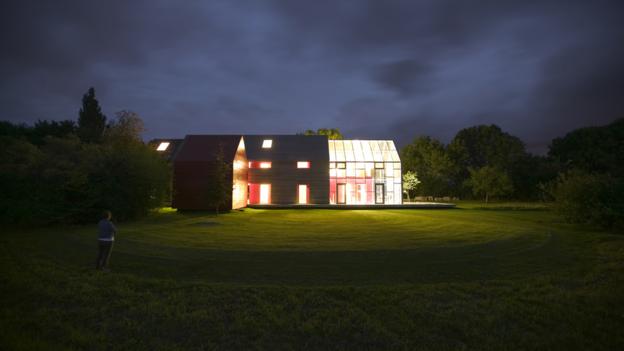
Architects have made a virtue out of the need to hide buildings. London-based dRMMM stuck to stringent planning guidelines for rural development, creating an award-winning design in the process. Their Sliding House in Suffolk replaced a bungalow and some outbuildings with a building based on a traditional timber-framed barn. Yet the structure is mobile: a 50-ton roof and wall enclosure glides along recessed tracks, revealing the house, annexe and garage. (Credit: Alex de Rijke/Ross Russell/DRMM)


read more…


http://www.bbc.com/culture/story/20150316-buildings-hidden-from-the-world

Housing Production Stumbles | South Salem Real Estate

Housing starts fell 17% to their lowest level since January 2014. The decline was across the board in building types and regions. Single-family starts were down 14.9% and multifamily starts were down 20.8%. Single-family starts were down the most in the weather sensitive Northeast (-60.7%) and Midwest (-32.4%) but were also down in the less unseasonable weather patterns of the South (-5.9%) and West (-9.1%).

While total building permits were up 3%, single-family permits were down 6.2% with only the West recording a rise in single-family permits (+5.6%). Multifamily permits were up 18.3% to the highest level since April 2014 and only the third time above 470 since 2006.

Aside from a small weather impact in the Northeast and Midwest, the decline is in line with a hesitation in builder sentiment as measured by the NAHB/Wells Fargo March Housing Market Index that fell 2 points to 53. Builders express concern that buyers are unable to attain a mortgage because of tight underwriting standards and that buyers continue to expect price concessions and discounts.

Coincident with buyers discount expectations, builders are facing higher costs and reduced availability of lots on which to build the homes and workers to construct them. The squeeze is causing builders to slow construction until new home prices rise, consumers regain confidence and the supply chain for lots, labor and to a lesser extent building materials rebuilds.

The underlying conditions for a good, not great, housing rebound remain in place. The economy is adding jobs at a much faster pace than earlier in the recovery, overall growth is more dependably positive, mortgage rates are historically low and there is considerable pent-up demand waiting to be released. Consumers need to regain their confidence in those trends and to readjust their expectations for home prices. The softness in the fourth quarter GDP estimates and the very slow rise in worker pay and household incomes contributed to the current hesitation.

Actual Housing Starts and Trends


read more…


http://eyeonhousing.org/2015/03/housing-production-stumbles/

North American Passive Building Standard Introduced | Cross River Real Estate

To adapt the European Passive House standard to North American markets, PHIUS (Passive House Institute US) will launch the new PHIUS+ 2015 passive building standard on March 25 at Seattle’s Bullitt Center.

The event, cosponsored by PHIUS/PHAUS, the passive building research institute and alliance, and Sam Hagerman, past president of PHAUS and owner of passive builder Hammer & Hand, marks implementation of the new energy performance targets in the PHIUS+ project certification program. PHIUS+ is the leading passive building certification program in North America.

“For years we have worked to increase awareness and market penetration of the passive building concept in North America,” said Hagerman. “The new PHIUS+ 2015 standard is a giant leap in this process.”

Executive Director Katrin Klingenberg will will give a brief overview of the impetus for the new standard, as well as a capsule summary of what’s new and what’s better.

Klingenberg said that “PHIUS+ 2015 gives designers and builders a powerful new tool: A building energy performance target that’s in the “sweet spot” where cost effectiveness overlaps with aggressive energy and carbon reduction. As such, it promises to ignite tremendous growth in the application of passive building principles.”

Formally known as PHIUS+ 2015 Passive Building Standard: North America, the standard is the product of nearly three years of research conducted by the PHIUS Technical Committee in partnership with Building Science Corporation under a U.S. Department of Energy Building America grant. The effort employed the National Renewable Energy Laboratory’s BEopt tool (a cost-optimizing software tool) to develop optimized design guidelines for use in North America’s wide-ranging climate zones.

Passive building has gained great attention in recent years because of its potential for reducing carbon levels and mitigating climate change, for comfort and resiliency, and for saving energy costs in general. But the adoption of passive principles—superinsulation, airtight envelope, energy recovery ventilation, e.g—has been slower than hoped because of cost and other disincentives.

The new formula and standards remove those obstacles. In addition, passive building is increasingly being adopted as a platform for achieving Net Zero or Net Positive buildings—by reducing building energy requirements from the start, it brings those targets well within reach. The U.S. DOE recognized the synergy between Net Zero and passive building by partnering with PHIUS from 2012 onward. Buildings that earn PHIUS+ certification also earn the U.S. DOE’s Zero Energy Home Ready label. Since the partnership, PHIUS+ certifications have increased exponentially, and the new standard promises to not only sustain but also dramatically increase that growth.


read more…


http://www.proudgreenhome.com/news/phius-to-launch-north-american-passive-building-standard/