Monthly Archives: November 2014

Mianus River Gorge To Buy 73-Acre North Castle Site For $2.8M | Armonk Real Estate

Mianus River Gorge will acquire a 73-acre parcel in North Castle for $2.8 million, according to Rod Christie, the preserve’s executive director. The purchase is expected to close in the coming months.

The property, which is located at 99 E. Middle Patent Road, is co-owned by Hope Levene and her relatives, according to Christie.

Levene, a 93-year-old Bedford resident who formerly lived in North Castle, has a long local history. In a July interview that focused on her decades of six decades of volunteerism at Northern Westchester Hospital (NWH), she discussed the various roles she had over her lifetime. They included serving as the only trustee of a small school district that included a 1-room schoolhouse, and later as a Bedford Central school board member. Levene has also been involved with Twigs, a thrift store that supports NWH.

Christie noted that Levene used to serve on his organization’s board. He appeared before the North Castle Town Board on Monday evening at a special meeting. The Town Board voted to authorize Supervisor Michael Schiliro to sign a conservation easement, which will cost $500,000

The easement, which will cover 68 of the site’s acres, will be paid for by using open-space funding. It was disclosed at the meeting that the funding stems from a 2004 voter referendum that authorized the town to bond up to $3 million for acquiring open space and for conservation easements.

The Town Board voted on Monday because town’s ability to utilize the bond expired after 10 years, according to Schiliro. Monday was the expiration date because it was the next business day,


read more…


http://armonk.dailyvoice.com/news/mianus-river-gorge-buy-73-acre-north-castle-site-28m

Somebody Actually Lives on This Remote Pillar of Rock | Chappaqua Real Estate

08a7b805-03af-483a-be29-7a49eacb5825-2060x1322.jpegPhoto by Amos Chapple via The Guardian

The Katskhi Pillar, a towering limestone monolith in the Republic of Georgia with the ruins of two Byzantine churches on top of it, has so many legends swirling around it that it’s hard to tell which ones are fact, and which are (admittedly very appealing) fictions. In this case, however, the truth of the matter reads a lot like fiction: a survey of the cliff a few years back revealed a pair of monasteries dating from the sixth to ninth centuries, where members of an ascetic religious order called the Stylites lived until around 1400. In the ruins of the churches, researchers found three hermit cells, a crypt, and a wine cellar. To this day, the locals of the village of Katskhi venerate the rock formation as the “Pillar of Life,” a symbol of the cross where Jesus was crucified, and some believe the monastery on the surface was once connected by a long iron chain to the dome of another nearby church.

It was uninhabited for centuries. Then a monk moved there in 1993. >>

The first mention of the ancient monastery was in the 18th century, when a Georgian scholar and prince described it thusly: “There is a rock within the ravine standing like a pillar, considerably high. There is a small church on the top of the rock, but nobody is able to ascend it; nor know they how to do that.”

For centuries, it was uninhabited. In the 1990s, a local monk named Maxim Qavtaradze moved in and began to restore the vertiginous churches himself. He enters and leaves via a 131-foot iron ladder; it takes him about 20 minutes to climb. Qavtaradze had been motivated to change his life after a stint in prison, and actually slept in an old fridge for his first two years, until some supporters built him a cottage.


read more…


http://curbed.com/archives/2014/11/05/katskhi-pillar-republic-of-georgia-natural-wonders.php

Arthur Elrod Designed This $2.15M Palm Springs ‘Showpiece’ | Armonk Homes

41 images

Location: Palm Springs, California
Price: $2,150,000
The Skinny: Arthur Elrod, the interior wizard best known for the UFO-like residence he commissioned from John Lautner, designed the inside of this $2.15M Palm Springs home. Located in the “prestigious” neighborhood of Old Las Palmas, it’s got all kinds of “quintessential Palm Springs glamour” on display, in the words of the Sotheby’s listing, with swanky floor-to-ceiling double doors opening onto an “exceptional great room” with 14-foot ceilings, rear walls of glass, and a wet bar backed by a geometric mirrored wall. The walls and doors of the living room, lounge, and office are clad in handsome cyprus pecky wood. Off the upgraded kitchen, an informal dining area has French doors that open out onto a backyard hidden by tall hedges, with a pool and a built-in barbecue.


read more…

http://curbed.com/archives/2014/11/05/arthur-elrod-palm-springs-for-sale.php


3 lessons learned from the mortgage rate drop | North Salem Real Estate


Mortgage rates are back to the highest level in a month, and if news from the U.S. economy stays positive, they could edge ever higher. While the brief drop a few weeks ago, due to concerns over global economic growth, may already seem like a distant memory, we should take a hard look back nonetheless.

In early October, the average rate on the 30-year fixed conforming mortgage ($417,000 or less) fell below that psychologically significant 4 percent level. It’s back above that now, but just that inch below was enough to reveal the underbelly of the housing beast. 

1. While the drop itself was not huge, it pushed thousands of potential borrowers off the fence to refinance. Applications to refinance jumped more than 20 percent in just one week, according to the Mortgage Bankers Association. That tells us that there is still a large cohort able to refinance. The common myth was that anyone who could benefit already refinanced over a year ago, when rates were in the lower 3 percent range. The recent rate reductions added 1.4 million borrowers to the “refinanceable” population, according to a new report from Black Knight Financial Services, which estimates that at least 7.4 million 30-year loans could now benefit by refinancing.

2. The drop in rates did nothing to push potential homebuyers off the fence and into a home. Mortgage applications to purchase a home actually fell along with rates, and then rose this week when rates began climbing higher. A monthly survey of real estate agents by Credit Suisse found, “The recent move lower in rates (that has already partially reversed) did not drive incremental demand, though this could change over time if low rates persist.” How can this be? Because home buying today is not about rates; it’s about price and supply. The two are inextricably linked, and both have been moving more dramatically than normal lately. Buyers are either facing sticker shock or not finding what they want.


read more…

https://homes.yahoo.com/news/3-lessons-learned-mortgage-rate-174700632.html

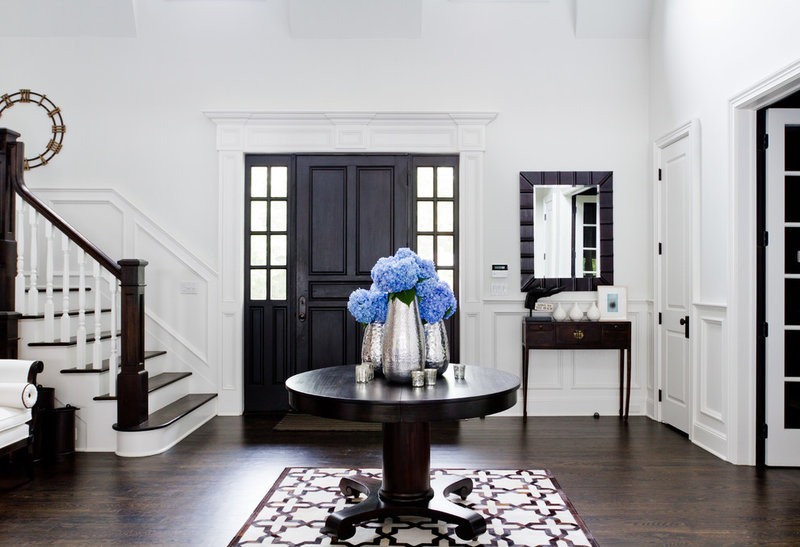
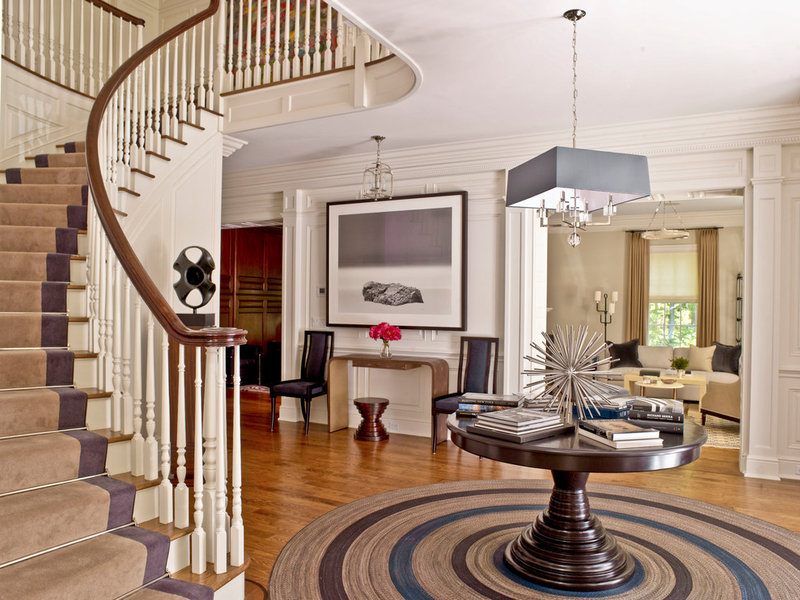
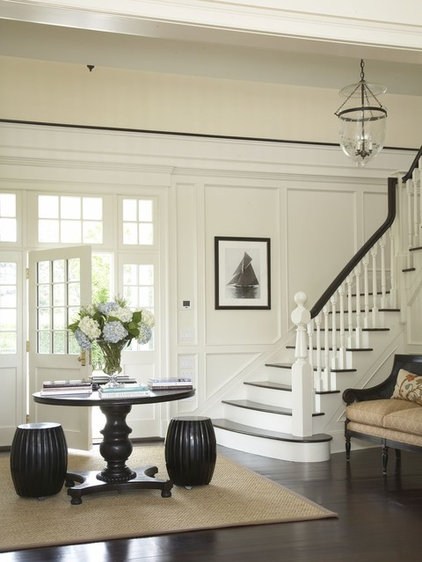
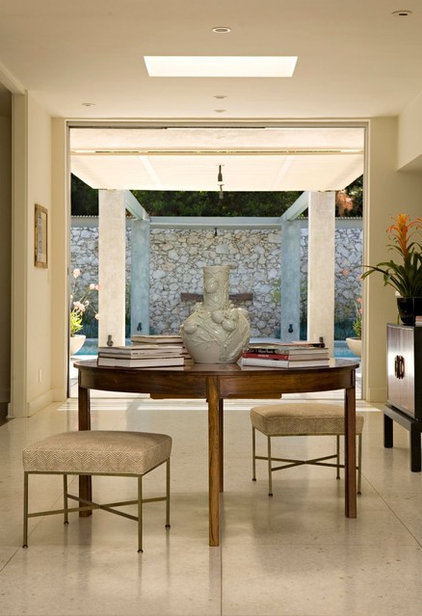
8 Ways to Decorate a Center Table | Mt Kisco Real Estate


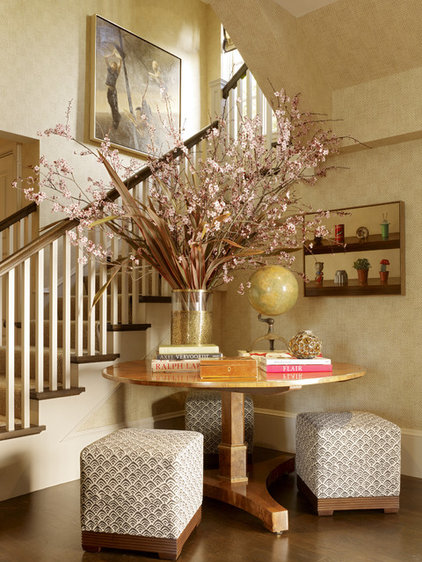
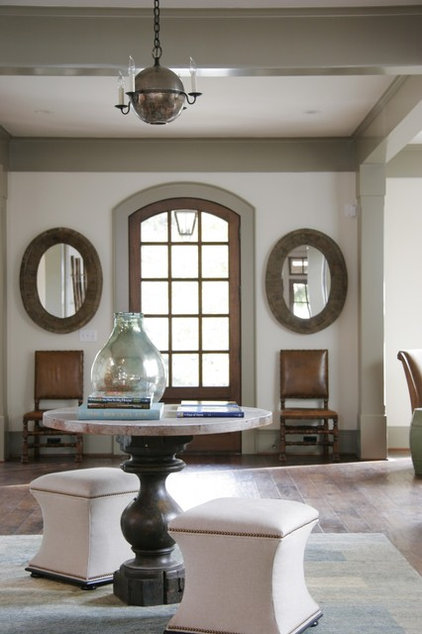
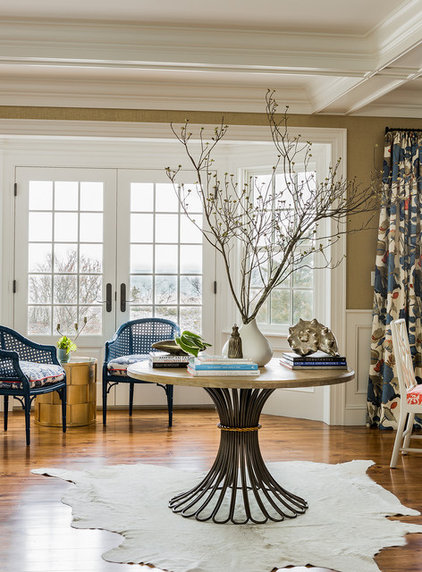
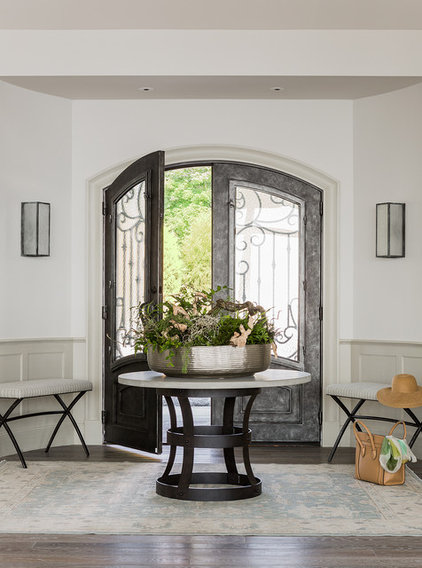
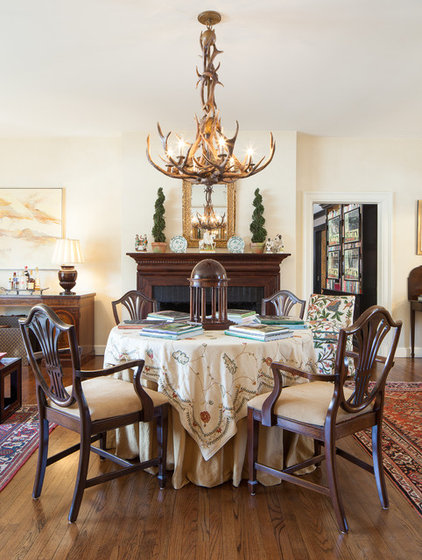
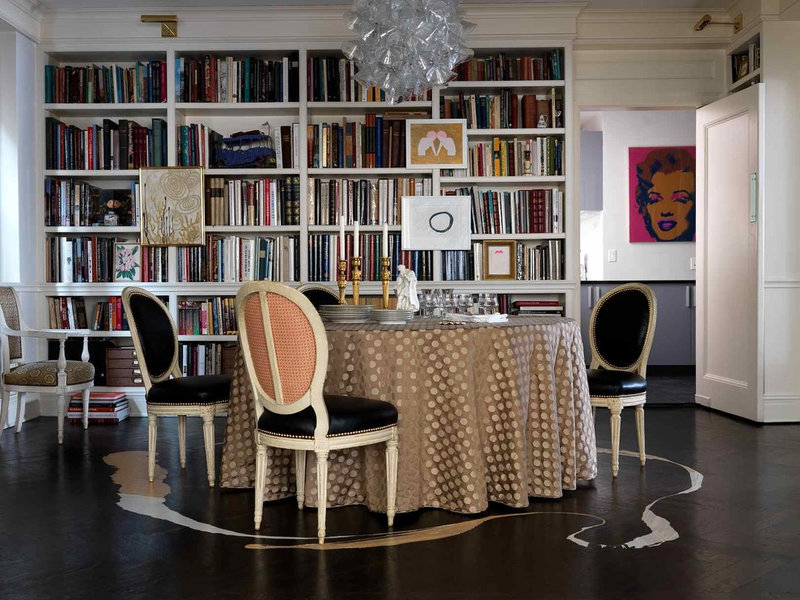
Whether placed in a grand foyer, tucked in the corner of a compact entry or serving double duty as a reading spot and dining table, you can count on a center table to bring a gracious note to the home. Here are eight ways to decorate this classic piece.

DIY Spirit Reinvents an Industrial Home | Cross River Real Estate


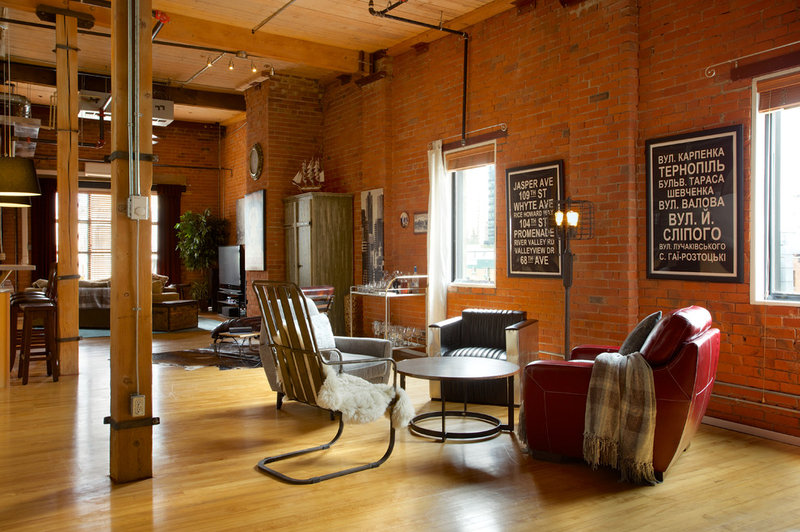
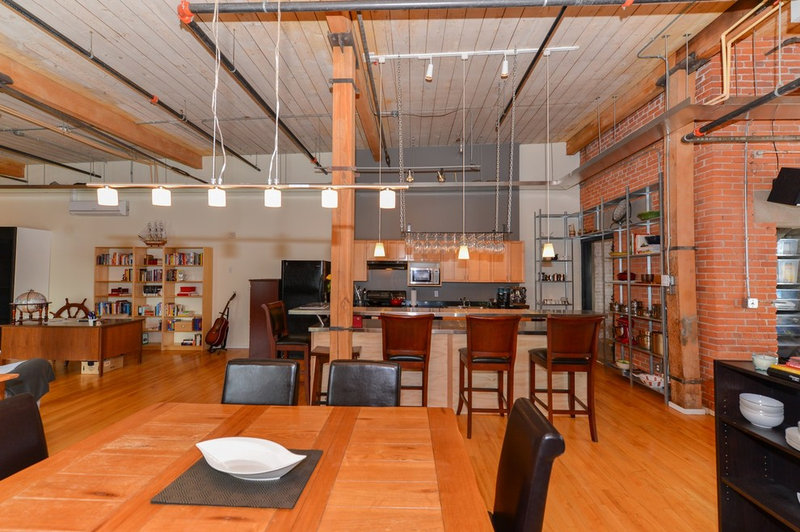
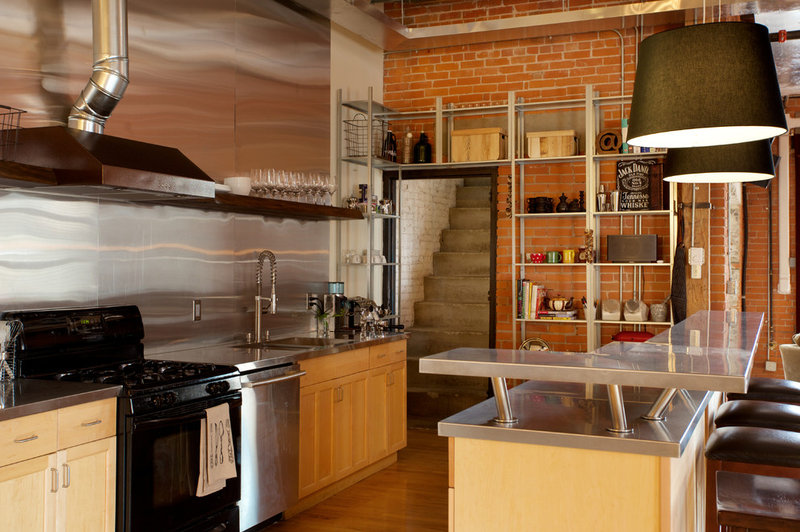
After living for six years in his downtown Edmonton loft, in the Canadian province of Alberta, this homeowner was ready for a change. He liked the industrial nature of the space — soaring ceilings, raw redbrick walls, exposed ducting and conduit — but didn’t like its low-grade cabinetry. Plus, he was flat-out tired of his furniture.While he didn’t mind getting his hands dirty doing some of the work of refreshing the space, he knew he needed professional help when it came to the layout and choosing colors and furniture styles. He found designer Brenda Brix of AMR Design while searching for local professionals on Houzz and enlisted her help through a design consultation. She wrote up a detailed plan, and he implemented it himself, finding materials and furnishings and even teaching himself how to build and modify pieces.

For example, he bought mirror tiles and antiqued them. He took a basic pine cabinet from Ikea and distressed it. He even located his own stainless steel and installed it himself as a backsplash. “I wanted to add personal touches and cool things that people would come in and we could talk about them for five minutes,” he says.

6 Reasons Why Your Home Isn’t Selling | Waccabuc Real Estate


Wondering why your home is still sitting on the market after weeks-or even months-of showings? Can’t figure out why your open houses are well-populated but nothing ever comes of them? Or maybe no one is coming to your open houses at all?

It’s easy to get frustrated when your home isn’t selling and you don’t know why. Which is why we’ve rounded up 10 of the top reasons houses sit on the market. Chances are no one’s biting because

Your home is really only worth what people are willing to pay for it.

you’ve committed one (or more) of these mistakes. Identify which ones they are, do the work to set them right, and you could be signing on the dotted line in no time.

1. It’s priced way too high. Like or not, the market dictates how much you get for your home-regardless of how much you think you’re home is “really” worth. Buyers will be looking at comparable homes in your area and seeing how yours stacks up, and if your asking price is much higher, it will work against you.

Remember, your home is really only worth what people are willing to pay for it.

2. Your timing is off. More people house-hunt in the spring, summer and early fall than they do in the winter. It’s simply a matter of convenience — no one wants to trek from house to house in the snow and freezing temperatures, and even if they find a house they like, no one wants to move in at that time, hauling cardboard boxes across snow and ice. Unless they need to find a home ASAP, many put their searches on hold over the winter.

That’s not to say you can’t sell your home during the wintertime, but you need to take the season into consideration. Offering incentives (like a $500 credit towards moving services) and targeting buyers who are on a similar deadline can help.

3. Buyers can’t find it. More and more buyers are searching online, and if your home isn’t listed in all the places they’re looking, they could be passing you by. Make sure your home is listed on major real estate sites like Homefinder, Zillow and Trulia, as well as on the multiple listing service (or MLS) used by realtors.

4. Your photos suck. When buyers do find your home’s listing, your photos (or lack thereof) could be sending them away. Buyers want to get a good feel for what a home has to offer before they decide to arrange to visit it in-person, and they can’t do that if you have no photos, few photos, or photos that are of a very low quality.

Include plenty of shots of the major areas of your home, as well as what the front and back exterior look like. Highlight any special selling points. Make sure these photos are well-lit, in focus and show off your home at its best.

5. It needs some work. While some buyers may be willing to take on a “project,” the majority of them won’t-especially if you’re asking the same price as homes that don’t need any repairs. From big things like a leaky roof to little things like a leaky faucet, you don’t want your buyers creating a running list in their head of projects they’ll need to take on if they buy your home.

Fix everything you can before you list so that when buyers tour your home, they can focus on the home and not how much it will cost them in repairs.

6. It’s got too much “you” in it. Roman statesman Cicero once said that people fail because they “refuse to set aside trivial preferences.” Apparently, he would have been a great at selling homes.

You want people to be able to picture themselves living in your home, and they can’t do that if too many of your personal touches are on display.

Get rid of those family photos on the mantle in the living room and your kids’ drawings tacked up on the fridge. Repaint bold-colored walls a more neutral tone. Remove any statements pieces that aren’t to everyone’s taste. If you’re a big collector, take some of your souvenirs and knickknacks down and box them up for your next home.

read more…


http://realestate.aol.com/blog/2014/11/04/reasons-why-home-isnt-selling/

 

Mortgage applications continue to slide, down 2.6% | South Salem Real Estate


Mortgage applications dropped again this week, falling 2.6% from one week earlier, according to data from the Mortgage Bankers Association’s Weekly Mortgage Applications Survey for the week ending October 31, 2014.

The Market Composite Index, a measure of mortgage loan application volume, decreased 2.6% on a seasonally adjusted basis from one week earlier.  On an unadjusted basis, the Index decreased 3% compared with the previous week.

The Refinance Index decreased 6% from the previous week.  The seasonally adjusted Purchase Index increased 3% from one week earlier. The unadjusted Purchase Index increased 1% compared with the previous week and was 13% lower than the same week one year ago.

The refinance share of mortgage activity decreased to 63% of total applications from 65% the previous week. The adjustable-rate mortgage (ARM) share of activity decreased to 7.4% of total applications.

The FHA share of total applications increased to 9.5% this week from 8.9% last week.  The VA share of total applications remained unchanged at 10.7% this week and the USDA share of total applications remained unchanged at 0.9% this week.


read more…


http://www.housingwire.com/articles/31954-mortgage-applications-continue-to-slide-down-26

Dreamy 1830s Abode Was a Stop on the Underground Railroad | Katonah Real Estate


4470KatherinesWay1.jpg

Location: Westerville, Ohio
Price: $1,250,000
The Skinny: Several homes in the northeastern Columbus suburb of Westerville, Ohio, were stations on the Underground Railroad. One of them, an updated five-bedroom with a spiffy columned facade, some beautiful mounted panels rescued from the LeVeque Tower, a Jeffersonian-looking dome topped with a skylight, and a 1930s schoolhouse outfitted for guest accommodations, was put on the market just the other day.

The oldest sections, which were built in 1830, according to the marketing material, have a healthy amount of exposed brick that’s since been balanced out by large windows and glass doors in the rear of the home. Much of the yellow pine and walnut woodwork is original, and there’s vintage tiling in a few of the bathrooms. With a pool and an expansive brick patio, facing out on a about five acres with “mature trees & landscaping,” this handsome historic hodgepodge is priced at $1.25M.


read more….


http://curbed.com/archives/2014/11/04/westerville-ohio-underground-railroad-home-for-sale.php

Liberal Politics Raise Housing Prices | Bedford Real Estate


A post at Trulia called “Blue Markets Face Bigger Housing Challenges Than Red Markets” has been generating interest in media outlets typically read by blue voters, like The Atlantic and the Washington Post. The Post even considers itself “startled” by the connection between cities with liberal politics and higher housing prices:

Between these two poles, though (metro San Francisco voted for Obama by 58 points, metro Knoxville for Romney by 34 points), the relationship between housing affordability and politics across the country is startlingly strong.

But for those of us following the ongoing struggle to deal with rising housing costs in the city, this isn’t startling at all; in fact it makes perfect sense. As Megan McArdle points out in her take on the Trulia data, density (more people living in a smaller area) tends to bother people who already live in a city. Those that got there first are tempted to close the door behind them.

Density also multiplies the frictions over things such as noise, pets, public amenities and so forth that people have to put up with. Which increases the pressure for a resolution via the law…Consider, too, that the liberal base is composed of a large number of small interest groups with a long and successful history of lobbying government for laws. Those groups have paid a lot of attention to enabling this sort of action, making sure that their local political institutions have lots of avenues by which small groups can affect the legislative process. Everything has extensive community review, and it’s easy for local groups to file lawsuits that block some undesirable project.
Strategy and tactics in liberal politics was born out of organizing the mass movement, getting bodies into rooms where decisions are being made and using the pressure of large numbers of people, and when necessary, law suits to win. What happens in cities where there are lots of liberals is that when it comes time to grow the population, and things change and maybe get uncomfortable, the resolution is to organize for restrictions on the development and construction of new housing, policies that raise rents. And oddly, this means using the tactics pioneered by Saul Alinsky not to push for more building and more housing choice for renters and new people, but less by erecting more rules, taxes, and fees. Red and Blue Chart What’s ironic is that the more liberal cities agitate about the cost of housing, the more rules, fees, and taxes they propose. I’ve called this dynamic the “San Francisco Death Spiral,” a pattern of pressure by existing residents to make more rules on new housing because new housing is too expensive which results in higher prices and thus more agitation. The claims about gentrification and income inequality that seem to beleaguer bigger, liberal cities also are used to support the arguments for more limits on market rate housing and taxes on it to “solve” the housing problem. What’s encouraging about the Trulia data and graphics is that perhaps it will cause some soul searching among elected officials in liberal cities. Maybe those leaders might at least consider the idea that raising costs and limiting supply really do contribute negatively to housing prices. What’s needed in liberal cities is an economic and ideological reset: you can support taxes and regulation and government spending to solve social problems and also support the idea that sometimes reducing some or all of those things can solve social problems too. As liberal cities grow because they are progressive, open, and support diverse lifestyles, maybe their housing policies can be open and progressive too.


read more….


http://www.forbes.com/sites/rogervaldez/2014/11/03/liberal-progressive-politics-raise-housing-prices/