Home Prices Climb by Most in Six YearsHome prices in 20 U.S. cities rose in November from a year earlier by the most in more than six years, indicating the U.S. housing rebound is gaining ground.
Jan. 29 (Bloomberg) — Karl Case, co-creator of the S&P/Case-Shiller index of property values in 20 U.S. cities, talks about the housing market. The S&P/Case-Shiller index increased 5.5 percent in November from a year ago, the biggest year-over-year gain since August 2006. Case speaks with Tom Keene and Michael McKee on Bloomberg Radio’s “Surveillance.” (Source: Bloomberg)
Jan. 25 (Bloomberg) — Susan Wachter, a professor at the University of Pennsylvania’s Wharton School, and Keith Jurow, author of a report on the U.S. housing market for Minyanville, discuss the outlook for the housing market. They speak with Mark Crumpton on Bloomberg Television’s “Bottom Line.” (Source: Bloomberg)
Jan. 24 (Bloomberg) — Robert Shiller, a professor at Yale University and co-creator of the S&P/Case-Shiller index of property values, talks about the global economy and the U.S. housing market. He speaks with Tom Keene on Bloomberg Television’s “Surveillance” on the sidelines of the World Economic Forum in Davos, Switzerland. (Source: Bloomberg)
The S&P/Case-Shiller index of property values increased 5.5 percent from November 2011, the biggest year-over-year gain since August 2006, a report showed today in New York. The median projection of 30 economists surveyed by Bloomberg called for a 5.6 percent advance.
Mortgage rates near a record low are propelling demand for real estate that’s outpacing the available supply, a sign prices will keep strengthening. Home-equity gains and an improving job market may help to put a floor under Americans’ confidence and spending, the biggest part of the economy, cushioning the hit from a higher payroll tax that began in January.
“With inventory of both new and existing homes still very low, prices will likely continue to rise,” Ian Shepherdson, chief economist at Pantheon Macroeconomics Advisors Inc. in White Plains, New York, said in a note to clients. “Each successive price increase adds more weight to the idea that the housing market is recovering, and nothing pulls people into the market faster than the thought that prices will rise further.
Consumer confidence slumped more than forecast in January, reaching the lowest level in more than a year, as higher payroll taxes took a bigger bite out of Americans’ paychecks, another report today showed.
Confidence Wanes
The Conference Board’s sentiment index decreased to 58.6, the weakest since November 2011, from a revised 66.7 in December. The January reading was lower than the most pessimistic forecast in a Bloomberg survey, which had a median estimate of 64.
Stocks dropped after the confidence data, erasing earlier gains. The Standard & Poor’s 500 Index fell less than 0.1 percent to 1,499.75 at 10:03 a.m. in New York.
Bloomberg survey estimates ranged from 3.4 percent to 6.4 percent. The S&P/Case-Shiller index is based on a three-month average, which means the November data were influenced by transactions in October and September.
The October reading was revised to show a 4.2 percent year- to-year advance from a previously reported 4.3 percent gain.
Home prices adjusted for seasonal variations climbed 0.6 percent in November from the prior month, matching October’s increase. That compares with the Bloomberg survey median of a 0.7 percent rise.
San Francisco
The month-over-month gain was led by San Francisco, followed by Minneapolis.
Unadjusted prices in the 20 cities fell 0.1 percent in November from the previous month. Property values typically fall during this time of year.
The year-over-year gauge provides better indications of trends in prices, the group has said. The panel includes Karl Case and Robert Shiller, the economists who created the index. Year-over-year records began in 2001.
“There are a lot of good signs,” Case said in an interview on Bloomberg Radio with Tom Keene. Nonetheless, “there’s a long way to go before we would declare victory over this housing market.”
Nineteen of the 20 cities in the index showed a year-over- year gain, led by a 22.8 percent jump in Phoenix and a 12.7 percent increase in San Francisco.
New York
New York was the only city to show decreases both month to month and year to year. Over the 12-month period, values in the city decreased 1.2 percent.
“Housing is clearly recovering,” David Blitzer, chairman of the S&P index committee, said in a statement. “These figures confirm that housing is contributing to economic growth.”
Combined sales of new and previously owned properties last year rose 9.9 percent, the biggest annual gain since 1998, data showed last week.
Purchases of previously-owned homes, which unexpectedly fell in December, were constrained by a lack of houses available for sale, the National Association of Realtors reported. Some 1.82 million existing homes were on the market last month, the fewest since January 2001, according to the group.
Lennar Corp. (LEN), the largest U.S. homebuilder by market value, reported fiscal fourth-quarter earnings that beat analysts’ estimates as revenue jumped 42 percent. Stuart Miller, chief executive officer of the Miami-based company, said “a long-term demographic need for housing” is driving the housing recovery, which also is bolstering prices.
‘Pent-Up Demand’
As “pent-up demand unwinds, homebuilders are gaining pricing power,” Miller said on a Jan. 15 earnings conference call. “After years of home prices falling, in 2012 the trend turned positive, initially stabilizing and then allowing for price increases across the country.”
D.R. Horton Inc. (DHI), the largest U.S. homebuilder by volume, said today that fiscal first-quarter profit more than doubled as demand for new houses climbed. Orders jumped 39 percent to 5,259 homes. The company’s contract backlog, an indication of future sales, rose 80 percent to $1.76 billion.
“We experienced broad improvement in demand in most of our markets this quarter, and we significantly increased our investments in homes under construction, finished lots, land and land development to capture this increasing demand,” Chairman Donald R. Horton said in a statement.
Low borrowing costs are helping buyers who qualify for financing. The average rate on a 30-year fixed mortgage was at 3.42 percent last week, close to the 3.31 percent in November that was the lowest in data going back to 1972, according to McLean, Virginia-based Freddie Mac.
The fiscal pact passed by Congress on Jan. 1, while avoiding sweeping tax increases, let the payroll tax used to pay for Social Security benefits return to the 2010 level of 6.2 percent from 4.2 percent. That reduces the paycheck by about $83 a month for someone who earns $50,000.
Monthly Archives: January 2013
Home Prices Up 5.5% From a Year Ago | Chappaqua NY Homes
Single-family home prices in the United States slipped in November from a month earlier, but were up 5.5 percent compared with a year ago, according to the S.&P./Case-Shiller housing price index released Tuesday.
The annual increase builds on a string of gains that point to a housing market that is on the mend.
“Housing is clearly recovering,” David Blitzer, chairman of the index committee at S.&P. Dow Jones Indexes, said in a statement.
Prices on a nonadjusted basis slipped 0.1 percent from October. Prices fell in about half of the 20 metropolitan areas covered by the survey, with the winter months typically a weak period for housing.
On a seasonally adjusted basis, the index gained 0.6 percent from October to November, in line with economists’ forecasts.
A separate report releaed on Tuesday said that consumer confidence in the United States had dropped in January to its lowest level in more than a year.
The Conference Board, an industry group, said its index of consumer attitudes fell to 58.6 from an upwardly revised 66.7 in December, falling short of economists’ expectations for 64. It was the lowest level since November 2011.
At the start of the year, Washington came to an agreement that averted spending cuts and tax increases that had been set to come into effect. But the deal did raise taxes for many Americans and a number of budget decisions still remain.
“The increase in the payroll tax has undoubtedly dampened consumers’ spirits, and it may take a while for confidence to rebound and consumers to recover from their initial paycheck shock,” Lynn Franco, director of economic indicators at the Conference Board, said in a statement.
Average home prices rose 5.5% the past 12 months | Armonk NY Homes
![]()
In this Jan. 5, 2013, photo a “for sale” sign is seen outside a home in Glenview, Ill. Average U.S. rates on fixed mortgages rose this week but remained near record lows, keeping home buying more affordable. (Photo: Nam Y. Huh AP)
Story Highlights
- Home prices in the 20-city index slid 0.1% in November from October
- Only NY shows year-over-year drop
- Low supply contributes to higher prices
Home prices rose 5.5% in the 12 months through November, providing more evidence of a recovering housing market, a closely-followed report showed Tuesday.
The Standard & Poor’s Case-Shiller index of 20 major cities showed prices rising in 19 of the 20 cities for the 12-month period. Prices fell only in New York — by 1.2%.
Compared with October, the index showed a 0.1% decline.
“Housing is clearly recovering,” said David Blitzer, chairman of the home price index committee.
The November numbers were stronger than October with 10 cities posting gains month to month. Only seven cities showed monthly gains in October’s Case-Shiller report. Declines in 10 cities are not unexpected for November because of winter weather and normal seasonal slowdowns in housing markets.
In Phoenix, which has led the recovery, home prices posted the strongest monthly gain, up 1.4%. San Francisco also saw a 1.4% rise. Minneapolis followed with 1%. Chicago was among the weakest with a 1.3% drop in November from October.
The housing market helped pulled the economy into recession in 2007 but it has finally emerged as a bright spot in the economy. Prices are rising as are both new and existing home sales.
Case-Shiller’s data shows the Southwest — represented by Phoenix and Las Vegas — have the strongest home price gains while Southeastern cities Miami and Tampa are close behind. Year over year, Phoenix prices are up almost 23%.
California’s cities are also showing strong improvment but the Northeast and Midwest are lagging.
Other home price data also show increases for last year that came in higher than most economists expected.
Prices are being propelled by several factors.
In December, the nation’s supply of homes for sale fell to a 4.4 months, based on that month’s sales pace. That was the lowest level since May 2005, the National Association of Realtors says.
The supply situation, which has been tightening for six months, has led to multiple bids for houses in some markets.
“Any new listings are getting eaten up right away,” says EJ Bowlds, managing broker for Coldwell Banker Bain in Mercer Island, Wash. Multiple offers of 6 to 10 per home are now common, he says.
A slowly improving economy and low interest rates, which ticked up slightly to 3.42% the week ended Jan. 24, are also fueling demand.
Prices are expected to keep moving higher this year, many economists and market watchers say.
Prices will rise an average of 3.1% in 2013, according to the most recent survey of more than 100 economists and real estate experts surveyed by market watcher Zillow.
“We have probably hit bottom and we’ve probably come off the bottom a little,” says Lawrence White, economist at New York University Leonard N. Stern School of Business.
Home prices see best yearly gain since 2006 | North Salem Realtor
A U.S. flag decorates a for-sale sign at a home in the Capitol Hill neighborhood of Washington, August 21, 2012.
Credit: Reuters/Jonathan Ernst
Home prices rose in November to rack up their best yearly gain since the housing crisis began, a further sign that the sector is on the mend.
But data on consumer confidence on Tuesday was less encouraging, with moods falling to their lowest level in more than a year as Americans became more pessimistic about the economic outlook and their financial prospects.
The S&P/Case Shiller composite index of 20 metropolitan areas gained 0.6 percent in November on a seasonally adjusted basis, in line with economists’ forecasts.
Prices in the 20 cities rose 5.5 percent year over year, making for the strongest yearly price increase since August 2006 when prices were on their way down.
“This is continuing a trend in place for the better part of a year,” said Omair Sharif, U.S. economist at RBS Securities in New York. “This is another indication that the housing rebound is fairly entrenched at this point.”
The housing market became a bright spot for the economy last year as prices rose and inventory tightened. The sector is expected to contribute to economic growth in 2013, though a number of challenges remain, including tight access to mortgages and on-going foreclosures.
It was the 10th month in a row that prices have increased, the longest string of gains since before 2006. Last year’s rise in prices beat a nine-month consecutive run in 2009 and 2010, when the market was boosted by a homebuyer tax credit.
Separate data from The Conference Board showed an index of consumer attitudes fell to 58.6 in January from an upwardly revised 66.7 the month before, falling short of economists’ expectations for 64. It was the lowest level since November 2011.
At the start of the year, U.S. politicians came to an agreement that averted the so-called fiscal cliff of spending cuts and tax increases that had been set to come into effect.
But the deal did raise taxes for many Americans, while a payroll tax holiday came to an end. Also, a number of budget decisions remain.
“Consumers are probably pretty unhappy to notice that their payroll taxes have gone up,” said David Sloan, economist at 4Cast Ltd in New York.
U.S. stocks pared slight gains immediately after the report was released, while the euro rose to a session high against the dollar.
The expectations index tumbled to its lowest level since October 2011 at 59.5 from 68.1. The present situation measure slipped to 57.3 from 64.6.
Consumers’ views on the labor market were also weaker, with the “jobs hard to get” index rising for the first time since September.
Home prices on a non-adjusted basis slipped 0.1 percent. The non-adjusted numbers showed prices fell in about half of the cities covered by the survey, with the winter months typically a weak period for housing, the survey said.
Phoenix, which saw its housing market rebound sharply last year, led with the biggest yearly gain at 22.8 percent. New York was the only city to fall, down 1.2 percent from the previous year.
Housing Prices Climb; Market ‘Clearly Recovering’ | Waccabuc NY Real Estate
“Housing is clearly recovering”, David Blitzer, chairman of the index committee at S&P Dow Jones Indexes, said in a statement.
“There’s a lot of momentum,” he added during an interview on CNBC’s “Squawk on the Street.” “It shows up in all the housing statistics, not just the prices. As far as I can see it’s going to continue well into the new year.”
Prices in the 20 cities rose 5.5 percent year over year.
It was the 10th month in a row that prices have increased, the longest string of gains since before the market started to turn down in 2006.
The housing market became a bright spot for the economy last year as prices rose and inventory tightened. The sector is expected to contribute to economic growth in 2013.
Chappaqua and Katonah Lead in 2012 Average Sold to Ask Price | RobReportBlog
Chappaqua and Katonah Lead in Average Sold to Ask Price | RobReportBlog
Average 2012 Sold to Ask Price 93.72% Armonk 95.68% Chappaqua 93.10% Pound Ridge 93.07% North Salem 93.42% Bedford NY 93.66% South Salem 92.68% Bedford Hills 94.91% Mount Kisco 95.17% Katonah
A Complete Guide To Being Yourself Online | Cross River Realtor
This is the Internet, where two things are never in short supply: information and opinions. If you’re the new guy (or girl) looking to establish yourself in the ranks here, or you’ve been online for more than five minutes, there’s something you’ll need to recognize:
Just Because You Read It Online Doesn’t Make It True
Shocking, I know.
There’s a lot of people and a lot of businesses dispensing advice. You’ll need to recognize quickly how to consider your source. If last week’s blog included something about flying pigs or the sky being green, then you immediately recognize that their opinions about the latest industry news could very easily be B.S.
Or maybe it’s coming from a good source, but you simply don’t agree.
That’s cool too.
No matter how prolific the source of the advice, if you have a legitimate, well thought out argument…
It’s OK To Disagree With The Talking Heads
Be the smart person your mother knows that you are. Be professional. But most of all, if you want to stand out from the thousands of other search results you’re balled up with, BE YOURSELF.
Don’t just repackage the same tips and tricks that the top websites in your industry are publishing. By the time you hit publish, that information will be stale, and you will have added nothing new to the conversation.
Why not give us your twist on the information?
Tell us what you think. Has one of the tips worked for you in the past? Is one of the tips just doomed to failure? That’s more interesting to your audience than mindlessly reciting the information.
Tell us about yourself.
What makes you tick? How does the essence of who you are as a person play into who you are as a business person? Tell us how one of your real world interests relates to your business.
A personal example: I love coffee. A simple light roast, black coffee will do. Love the flavor. I’ve written before about keeping your simplest products visible. Not everyone’s looking for a drink with a name that’s six words long.
How does your background relate?
When you’re busy trying to distinguish yourself from hundreds of other businesses in your area, trust me, it matters. There’s something about your background that makes you different from others’. It’s up to you to find out what it is.
For instance, copywriters are a dime a dozen. A copywriter with a journalistic background can find ways to tell your story.
Pick up the scissors, and cut off the tie.
Formal and professional are not the same thing. You can wear blue jeans and still know what you’re talking about. If formal is not a true reflection of your business, don’t turn into something you’re not.
Give us good info, but give it in a way that is a reflection of who you are.
We’re more likely to act if we like you.
We can’t make any decision on your likability if we don’t know who you are. So go ahead and put your cards on the table.
The Internet Is Watered Down
There are so many businesses out there, it’s too easy to get lost in the shuffle. You need to stand out to be noticed. This doesn’t happen through imitation. It’s time to just be yourself.
Amazon dominates Android tablets | South Salem NY Realtor
Google entered the tablet market with its Nexus 7 range last year but it is Amazon, the US retailer that has a somewhat strained relationship with the search giant, that is dominating the Android tablet market worldwide with its Kindle Fire range, a new report claims.
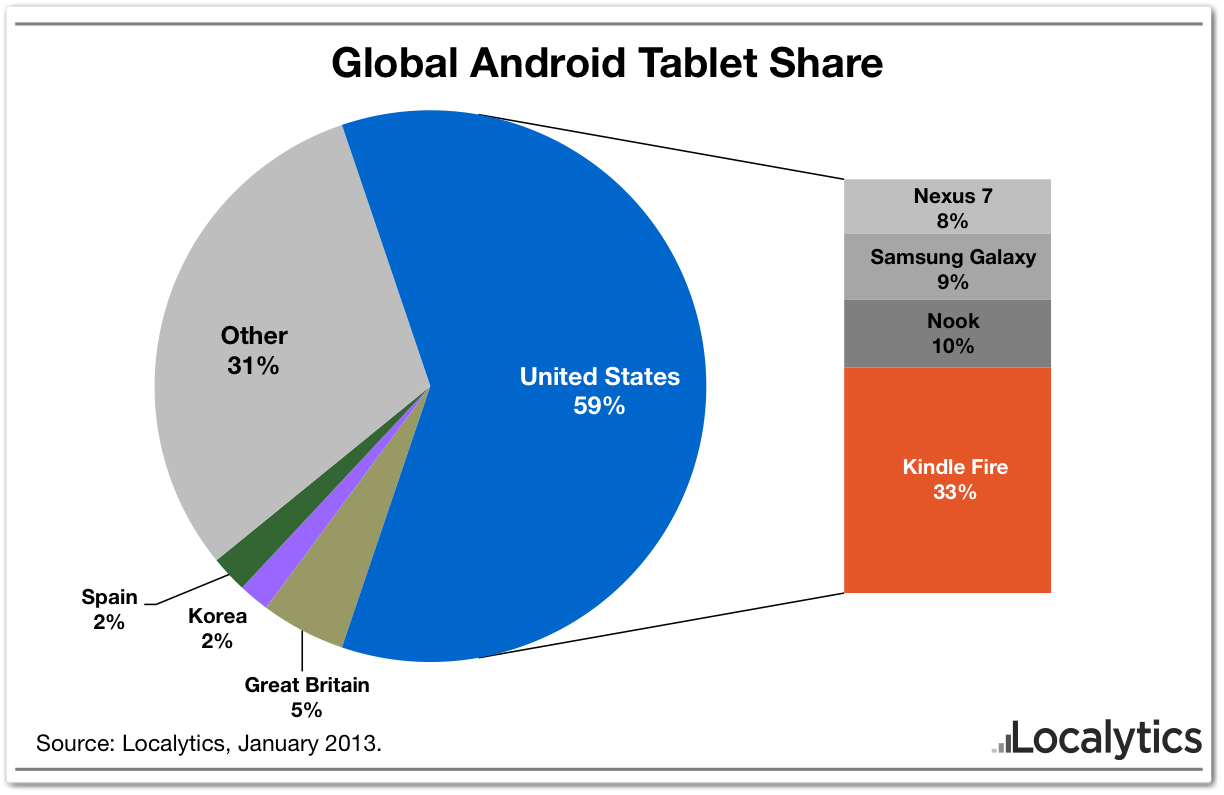
Research from mobile app analytics service Localytics which goes live tomorrow shows that the Kindle Fire is by far and away the most owned Android tablet on the planet. The company estimates that the number of Amazon Fire devices in the US alone represents 33 percent of all Android tablets worldwide — while the US itself is the world’s biggest tablet market with a 59 percent market share.
There is a key reason behind that factor, namely the limited availability of the Kindle Fire range itself. Initially available in the US only, Amazon later released its devices in selected European markets but Localytics estimates that 89 percent of Kindle Fires are based in the US.
Localytics doesn’t break out device metrics for other tablets but, with US based Kindle devices according for a third of all Android tablets worldwide, it is well ahead of the Nexus 7 (US ownership is 8 percent of the worldwide total), Samsung’s Galaxy range (9 percent) and Barnes and Noble’s Nook (10 percent).
Of course, it goes without saying that these are estimates (notably devoid of raw sales or shipments figures) but they present an interesting snapshot of the Android tablet market as it stands today. Localytics says it has “insights into over 500 million unique devices” which have run its analytics and in-app marketing solution.
Apple’s iPad has long defined the industry, there’s no doubt in that, but it stands to reason that the broad range of Android partners and devices that they produce will, at some point, eat into Apple’s dominance of the market — as has happened with global smartphone numbers. Likewise, the growing maturity of Google’s Nexus 7 tablets are likely to challenge Amazon. Though initial supply has been limited, consumer demand has been buoyant…though Google lacks the range of devices, width of price points and market maturity of the Kindle Fire.
Over time one might expect adoption of Android tablets to grow out of the US, and likewise Amazon’s share of the Android tablet eco-system to lessen as devices from others grow their footprint overseas. However, running counter to that, Amazon is focusing on taking its success global but internationalizing the Kindle. Given that it makes a loss on the sale of devices — content is its real money earner — it has the potential to use aggressive pricing strategies to draw in new and existing tablet owners across the world like few other players can.
Indeed, it could be hugely disruptive in China when it finally launches there. Amazon’s app store has already gone live in the country, so it seems like it is only a matter of time before the Kindle, Kindle Fire and others arrive.
As it stands today, aside from the US and UK, Localytics says that “no other country has even one percent of worldwide Kindle Fires”. We know that tablet option is at its highest in Western markets, that can be seen as a huge opportunity for growth, or potential for the competition.
Enders Analysis analyst Benedict Evans recently looked at what Google stands to gain from Android. While much of the motivation is to help technology reach the hands of new users, Google’s services are baked into the operating system. As it stands, given that Amazon’s own fork of Android cuts out a number of key Google properties — most notable the Google Play app and content store — its continued dominance is lessening the impact of said Google services in Android.
Overall, the takeaway for Android developers is clear, ignore the Kindle at your peril, as Localytics explains:
In the meantime, any Android developer with a focus on tablets should be distributing their apps in the Amazon App Store. The degree to which Amazon has dominated their most serious geographical market should speak to the future potential, and since Google Play is unavailable on the Kindle Fire family, adding Amazon’s App Store as a distribution channel is important.
4 Reasons to Convert Your Facebook Business Profile into a Page | Katonah NY Realtor
Have you ever gotten a Facebook friend request from something other than a person? I have… several times… recently. There are countless businesses operating in Facebook as user profiles rather than pages. In the early days, those enterprising business owners that could see serious potential in Facebook had no option but to launch a profile for their business. Over the years the connections have brought success, so there is little motivation to change a good thing. Lots of small business owners have only had time and energy to learn their way around a profile, so they stick with what they know and understand when it comes to their Facebook presence. Whatever the reason may have been to launch a business profile, there are 4 very huge reasons to make the switch to a business page.
Reason #1: You are in violation of the Facebook user agreement and run the risk of losing access to all of your hard work.
Here it is as stated on the Facebook Help page:
Maintaining a personal account for anything other than an individual person is a violation of Facebook’s Statement of Rights and Responsibilities. If you don’t convert your noncompliant account to a Page, you risk permanently losing access to the account and all of its content.
Exact wording from the Statement of Rights and Responsibilities:
Registration and Account Security
Facebook users provide their real names and information, and we need your help to keep it that way. Here are some commitments you make to us relating to registering and maintaining the security of your account:
- You will not provide any false personal information on Facebook, or create an account for anyone other than yourself without permission.
- You will not create more than one personal account.
- If we disable your account, you will not create another one without our permission.
- You will not use your personal timeline primarily for your own commercial gain, and will use a Facebook Page for such purposes.
- You will not transfer your account (including any Page or application you administer) to anyone without first getting our written permission.
- If you select a username or similar identifier for your account or Page, we reserve the right to remove or reclaim it if we believe it is appropriate (such as when a trademark owner complains about a username that does not closely relate to a user’s actual name).
Facebook does have a way to convert a profile to a page, enabling you to keep your user name and connections and not start again from scratch. If this first reason is enough for you, scroll down to the bottom of the post for all the links and info you need to start converting to a business page.
Reason #2: You have no way of tracking your effectiveness on a profile.
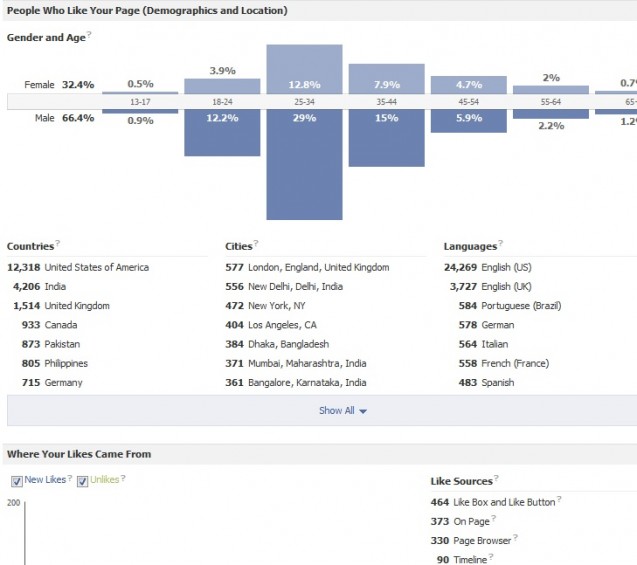
How many people like your business is only the beginning. To get the most out of the time and effort you put into Facebook, you need to be able to determine the makeup of your fan base, their consumption habits, and how well your message propagates beyond the people you are directly connected to. Since Pages are designed for business use, they come with tons of data not available to a user profile. The page “Insights” provide up to date information about what kind of interaction and reach each post on the page timeline generated. Insights will break down your fan base by gender, age, location, and how they came to land on your page. This kind of data enables you to stop shooting in the dark and serve up content that keeps your business connections buzzing.
Reason #3: Your profile has no access to advertising and promotion.
Facebook’s billion users is a huge draw for any business looking to expand their customer base. But reaching the right people at the right time is tricky. A user profile is designed for personal one on one relationships and was never intended to reach large groups of people. The most powerful tool offered by Facebook for reaching it’s vast user base is advertising and promotion. That tool is only available to business pages. If you want to reach Facebook users that you do not already have some connection to, you need to break free of the profile and get access to the business promotional tools.
Reason #4: You will miss out on Graph Search opportunities.
Facebook search will fundamentally change the way users navigate the topics and connections that interest them most. Soon users will be able to search for restaurants their friends like. But if you are interacting with your Facebook connections as a “friend” with a user profile rather than a restaurant with a business page, you could wind up pointing your friends to other restaurants rather than their friends pointing them back to your business. So long as you operate you business on Facebook as a user profile, your business will be defined by search as a friend. In order for new people to discover your business via Graph Search, you need your business on a page that people can “like.”
So, how do you convert your profile to a business page?
Here is the basic info from Facebook Help:
When you convert your personal account to a Facebook Page, we’ll transfer your current profile picture and add all your friends and subscribers as people who like your Page. Your account’s username will become the username for your Page, and the name associated with your personal account will become your Page’s name. If you want your Page to have a different name, consider creating a new one.
No other content will be carried over to your new Page, so be sure to save any important content before beginning the conversion:
- Download your timeline information. You can download a file that contains all of your sent and received messages and all of the photos and videos you’ve uploaded to Facebook.
- Appoint a new group admin to any groups you manage. You’ll be unable to manage groups once the conversion begins.
When you’re ready, start converting your personal account to a Facebook Page.
Homebuilder stocks outperform in January | Bedford Hills Real Estate
Homebuilder stocks continued to outperform last week with Keefe, Bruyette & Woods reporting that homebuilder stocks jumped 4.1% for the week ending Jan. 25.
That is up from the S&P 500’s 1.1% increase in the same week and the S&P 500 Financial Index’s 1.3% jump, KBW said.
“Building products companies and mortgage insurers were strong, while non-agency REITs and mortgage servicers were weak,” KBW noted when comparing builders to other parts of the housing industry.
Homebuilder stocks are up 10.9% month-to-date, compared to only a 5.3% increase for the S&P 500 and a 6% increase for the S&P 500 Financials Index.
“In 2012, homebuilder stocks were up 122.8% vs. +13.4% for the S&P 500 and +26.3% for the S&P Financials Index,” KBW analysts said. “Historically, homebuilders have outperformed the S&P 500 in January by 3.5-6.0%.”