Tag Archives: Westchester NY Homes

Westchester NY Homes

Support for ‘patent troll’ legislation builds | Cross River Real Estate

A push for legislation cracking down on so-called “patent trolls” is gathering steam on Capitol Hill, potentially spelling relief for many businesses, including those in the real estate industry.

Last week, Rep. Hakeem Jeffries, D-N.Y., introduced the “Patent Litigation and Innovation Act of 2013″ (H.R. 2639) in the House, which is related to the “Patent Abuse Reduction Act of 2013″ (S. 1013) introduced by Sen. John Cornyn, R-Texas, in May.

The White House has also issued a series of legislative recommendations and executive actions to tackle the issue. The executive actions will require patent applicants and owners to disclose the true owner of a patent, train patent examiners to flag overly broad patent applications, and offer a website educating consumers and small-business owners about what to do if they are targeted, among other things.

Federal Trade Commission Chairwoman Edith Ramirez last month urged the commission to use its authority to collect more comprehensive information about the business models and scope of “patent assertion entities” — the formal name given to companies that are focused primarily on purchasing and asserting patent claims against companies with products currently on the market.

“These entities are driving the increase in patent litigation and targeting firms in a growing slice of the economy,” Ramirez said. Patent trolls have moved beyond their original primary targets — information technology firms — and are going after financial services providers and retailers, she said.

“Even hotels and coffee shops are not immune,” Ramirez said, and the costs to consumers “appear increasingly tangible and direct.”

– See more at: http://www.inman.com/2013/07/17/support-for-patent-troll-legislation-builds/#sthash.Fb1QAAW4.dpuf


Support for ‘patent troll’ legislation builds | Inman News.

June Foreclosures Fell to Lowest Level since December 2006 | Bedford Corners Real Estate


Not since Santa Claus visited the George W. Bush White House has the total of properties with foreclosure filings–default notices, scheduled auctions and bank repossessions – reached a level as low as they did last month.

RealtyTrac reported last week that 0.61 percent of all U.S. housing units (one in 164) had at least one foreclosure filing in the first six months of the year. A total of 127,790 U.S. properties had foreclosure filings in June, down 14 percent from the previous month and down 35 percent from a year ago to the lowest monthly level since December 2006   Filings in the first half of the year totaled 801,359, representing a 19 percent decrease from the previous six months and a fall of 23 percent from the first half of 2012.

For a little perspective, here’s an excerpt from Freddie Mac’s economic outlook in December 2006:

“The recovery, however, will not be a re-run of the white-hot market in 2004-2005. Rather, there will likely be a return to more “normal” conditions next year, with starts and sales picking up only gradually and then growing at a modest pace. Nationally, house prices will likely appreciate around the rate of consumer price inflation, although there is a potential for real declines and some hard-hit areas will need greater improvements in the local economy before experiencing a housing recovery. With smaller price gains and reduced opportunities to extract equity, mortgage debt will grow more slowly. In short, housing markets will move off center stage, but will resume quietly providing homes and opportunities to build a nest egg for millions of American households.”

Things didn’t work out as planned.  Six years later, some 4.3 million nest eggs were lost to foreclosure and homeowners have lost $3 trillion in equity but at long last the recovery has begun and housing is back on center stage.

High-level findings from the report:

  • U.S. foreclosure starts in June dropped 21 percent from the previous month and were down 45 percent from a year ago to the lowest monthly level since December 2005 – a seven and a half year low. Year to date through June, 409,491 foreclosure starts have been filed nationwide, on pace to reach more than 800,000 for the year, which would be down from 1.1 million foreclosure starts in 2012.
  • Foreclosure starts in June decreased from the previous month in 38 states, including Nevada (down 84 percent), Colorado (down 62 percent), New Jersey (down 40 percent), Illinois (down 39 percent) and Florida (down 26 percent).
  • Bank repossessions (REO) in June decreased 9 percent from the previous month and were down 35 percent from a year ago. Year to date through June, a total of 248,538 bank repossessions have occurred nationwide, on pace for nearly 500,000 for the year, which would be down from more than 671,000 in 2012.
  • Bank repossessions in June decreased from a year ago in 34 states, but there were some notable exceptions where bank repossessions were up from a year ago, including Arkansas (up 143 percent), Oklahoma (up 103 percent), Maryland (up 74 percent), Washington (up 71 percent), New Jersey (up 33 percent), and New York (up 21 percent).
  • Judicial foreclosure auctions (NFS) were scheduled for 28,296 U.S. properties in June, up less than 1 percent from May but up 34 percent from June 2012. States with substantial annual increases in scheduled judicial foreclosure auctions included New Jersey (up 103 percent), Florida (up 100 percent), Maryland (up 94 percent), New York (up 66 percent), and Illinois (up 65 percent to a 35-month high).
  • Florida, Nevada, Illinois, Ohio and Georgia posted the top five state foreclosure rates for the first half of the year, while five Florida cities posted the top five metro foreclosure rates: Miami, Orlando, Jacksonville, Ocala, and Tampa.

“Halfway through 2013 it is becoming increasingly evident that while foreclosures are no longer a problem nationally they continue to be a thorn in the side of several state and local markets, particularly where a backlog of delayed distress has built up thanks to a lengthy foreclosure process,” said Daren Blomquist, vice president at RealtyTrac. “The increases in judicial foreclosure auctions demonstrate that these delayed foreclosure cases are now being moved more quickly through to foreclosure completion. Given the rising home prices in most of these markets, it is an opportune time for lenders to dispose of these distressed properties, either at the foreclosure auction to a third-party buyer, or by repossessing the property at the auction and subsequently selling it as a bank-owned home.

Florida, Nevada, Illinois post top state foreclosure rates in first half of 2013

Florida posted the nation’s highest state foreclosure rate in the first half of the year: 1.74 percent of housing units with a foreclosure filing (one in every 58) during the six-month period – nearly three times the national average. A total of 155,264 Florida properties had a foreclosure filing in the first six months of the year, the most of any state and up 12 percent from a year ago. In June Florida foreclosure starts (LIS) decreased 23 percent from a year ago but scheduled foreclosure auctions increased 100 percent and bank repossessions increased 14 percent during the same time period.

Despite a 58 percent month-over-month drop in foreclosure activity in June, Nevada posted the nation’s second highest foreclosure rate in the first half of 2013: 1.40 percent of housing units with a foreclosure filing (one in every 71) during the six-month period. A total of 16,291 Nevada properties had a foreclosure filing in the first half of 2013, up 12 percent from the previous six months but down 21 percent from a year ago. New state legislation (AB 300) that changes the foreclosure process in Nevada took effect in June.

Illinois foreclosure activity in the first half of 2013 decreased from the previous six months and a year ago, but the state still posted the nation’s third highest foreclosure rate: 1.20 percent of housing units with a foreclosure filing (one in 83) during the six-month period. In June Illinois foreclosure starts (LIS) decreased 68 percent from a year ago and bank repossessions were down 49 percent from a year ago, but scheduled foreclosure auctions increased 65 percent during the same time period to the highest monthly level since July 2010

New Home Prices Rise in China | Chappaqua Real Estate

New home prices in major Chinese cities rose strongly in June compared with a year ago, according to an analysis of official data released Thursday, but the market is also showing signs of moderation following last month’s government-led liquidity squeeze.

Prices rose an average of 6.12% in June compared with a year earlier, according to Wall Street Journal calculations based on data released by the National Bureau of Statistics on 70 large and medium-size Chinese cities. Prices rose in 69 of cities in June compared with a year earlier, unchanged from May.

The result marks the latest pickup in the pace for home-price appreciation on a year-to-year basis—prices rose 5.32% in May and 4.27% in April, according to the calculations.

But compared with May, home-price appreciation appears to be easing a bit. Prices in the 70 cities increased an average 0.78% in June compared with May. They had risen 0.86% in May and 0.9% in April compared with the prior months, according to the calculations.

The data showed that prices of new homes in 63 of 70 large and medium-size cities rose in June from May. Prices fell in five cities and were unchanged in two cities. In May, prices rose in 65 cities.

“The moderation in growth momentum will likely continue, but home prices are not going to drop,” said Lee Wee Liat, a property analyst at BNP Paribas BNP.FR +0.16%. A decline is unlikely as many Chinese cities have issued guidance targeting home price growth at 10%, alongside expected gains in disposable income per capita, Mr. Lee added


read more…

http://online.wsj.com/article/SB10001424127887323309404578612880231899740.html


McDonnell invested heavily as housing market tanked | Katonah Real Estate

Before the wedding gifts, the Rolex, the luxury clothing and the loans, there was the real estate bubble.

Gov. Bob McDonnell invested heavily in real estate in 2005, as property values were still rising, and in 2006 and early 2007, as they began to plummet.

Often with his sisters as partners, McDonnell bought stakes in four residential properties — two in Virginia Beach, one in Henrico County and one at the Wintergreen resort in Nelson County — all purchased for a total of $3.8 million. Today, the properties are assessed at about $3.2 million.

Mortgages on two properties have been refinanced this year, and a slew of activity on the mortgage loans has taken place over the years.

McDonnell’s real estate holdings were thrust to the center of the gubernatorial gift scandal after The Washington Post revealed last week that Jonnie Williams Sr., the donor at the center of the scandal, gave $70,000 to MoBo Real Estate Partners, a limited-liability corporation owned by the governor and his sister. McDonnell’s wife, Maureen G. McDonnell, also received a $50,000 check from Williams. The Post reported that Bob McDonnell viewed the payments as loans rather than gifts.

In his financial disclosures, McDonnell has listed MoBo as owning two Virginia Beach rental properties that make up the bulk of his residential real estate holdings. They bring in $50,001 to $250,000 in gross income a year, according to his disclosure.

A Virginia Beach office building purchased for $3.15 million in 2004 by Racehorse Properties — an entity in which McDonnell has an interest — generates $50,001 to $250,000 in gross income a year. It is unclear how much interest McDonnell has in the building, which houses the law firm where he worked as managing partner before being elected attorney general.

That property has increased in value. It is assessed at $4.65 million.

Real estate prices here and nationwide peaked in mid-2006, leading to the collapse in the housing market.


In general, home prices throughout most of Virginia have rebounded to 2005 levels, but not in all cases, real estate experts say. People who bought houses from 2006 to 2008, when prices were unsustainably high, probably owe more than their houses are worth, the experts say.

McDonnell invested heavily as housing market tanked – Richmond Times Dispatch: Henrico.

China’s Real-Estate Sector Sees Solid Housing Demand | Pound Ridge Real Estate

China’s real-estate sector showed strength in the first half of the year amid solid housing demand, despite government controls on the market and slowing economic growth.

While the buoyancy in the housing market could lead to tighter market curbs in the months ahead, analysts said that for now, growth levels were within tolerable levels.

Reuters

Workers welding a steel frame at a construction site in Hefei, Anhui province.

Total property investment in China in the first half of the year rose 20.3% compared with a year earlier to 3.68 trillion yuan ($599.3 billion), according to data released Monday by the National Bureau of Statistics. That is marginally slower than the 20.6% growth in the first five months of the year.

The statistics bureau doesn’t give data for individual months.

Residential and commercial property sales totaled 3.34 trillion yuan in the January-June period, up 43.2% over a year earlier. Sales totaled 2.59 trillion yuan in the five months ended May, up 52.8%.

“Inventory levels in major cities are leveling off, so we’re positive on construction starts and expect growth in this portion of the market to reach 5% to 7% this year,” said Johnson Hu, an analyst at CIMB Securities.

Construction starts by area in the first half rose 3.8% from a year earlier to 959.01 million square meters. They were up 1% at 736.13 million square meters in the January-May period.

The increase comes despite a more than three-year government campaign to keep real-estate prices in check amid fears that higher housing costs could lead to social unrest. Efforts include limiting home purchases, squeezing credit to developers and tightening down-payment requirements.

Larger developers have been buying land in what are known as tier one and tier two cities—China’s most affluent and developed cities—because of expectations of continued housing demand from migrants as the government pushes ahead with its plans to speed up urbanization. Developers typically purchase land and keep it in what they call a land bank for later use.

“Despite uncertainties in the macro environment and credit conditions, most of the developers we talked to last week still have aggressive plans for land banking” in the second half of this year, said Credit Suisse analyst Jinsong Du.


China’s Real-Estate Sector Sees Solid Housing Demand – WSJ.com.

Phoenix housing market sees ‘boomerang buyers’ sooner than expected | Bedford Corners Real Estate

Early in the housing crisis, financial experts estimated it might take up to seven years for people who lost a home through a foreclosure or short sale to qualify for a mortgage to buy again.

Thousands of new Phoenix-area homeowners are proving the experts wrong. These “boomerang buyers” — so called by real-estate insiders because they were out of the market and have now come back — have returned as a major market force much earlier than expected. Many buyers are qualifying for a new loan only a few years after defaulting on their last mortgage.

Boomerang buyers are expected to account for almost one in every five home sales in metro Phoenix this year, according to a national housing analyst. That’s double the projected U.S. rate.

The boomerang phenomenon is being driven by several factors. Many former owners face rising rents, and now that their finances and the housing economy are more stable, they want to own again. And many of these tens of thousands of metro Phoenix families who are renting are attractive to mortgage backers and some lenders again because they have rebuilt their credit and because any purchases they make add strength to the real-estate recovery.

“Probably 25 to 30 percent of the borrowers calling us now have had a short sale or foreclosure in their past,” said Mike Metz, managing director of Scottsdale-based Sun State Home Loans.

Lenders and government agencies backing mortgages do require steep down payments and decent credit scores from most boomerang buyers. The sooner a loan application comes after a foreclosure or short sale, typically the more up-front money is required.

These former homeowners, like many other prospective buyers, are scrambling to make a deal before home prices and interest rates climb too high.

“Foreclosed homeowners who are now renting are in a panic,” said John Burns, a national real-estate analyst.

Metro Phoenix has a bigger pool of potential boomerang buyers than most areas. More than 250,000 houses in the region were foreclosed on during the crash, and 80,000 other borrowers sold homes through short sales to avoid foreclosure.

Approximately 22,000 home sales, or 19 percent of all home sales, in metro Phoenix this year will involve boomerang buyers, according to an estimate by Burns’ company, Irvine, Calif.-based John Burns Real Estate Consulting.

“Phoenix is the third-biggest U.S. market for boomerang buyers,” Burns said. The California metro areas of Riverside-San Bernardino and Los Angeles are No. 1 and No. 2, respectively.

The many prospective buyers also face a challenging market in metro Phoenix because of the shortage of the number of affordable properties for sale.

Buying again

Phyllis Borchardt is one recent boomerang buyer.

She and her husband, Larry Fetkenhauer, bought a Sun City Grand home in May for $138,000, blocks from the house they had rented for three years. The couple had moved from Temecula, Calif., in 2005 and bought a house for $250,000 in Buckeye.

As home prices fell and Phyllis’ business as a real-estate agent brought in less money, the couple tried to refinance to lower their mortgage payment through the federal Home Affordable Refinance Program, or HARP. After submitting documents to their lender for a year, the couple still weren’t approved for a loan with a lower interest rate. Then, in 2010, Fetkenhauer lost his job as a kitchen designer at one of the big-box home-improvement stores.


Phoenix housing market sees ‘boomerang buyers’ sooner than expected.

Caramoor Opera Review | Waccabuc Real Estate


A production of the 1855 French opera “Les Vêpres Siciliennes” by Verdi performed on Saturday at the Caramoor Center for Music and the Arts in Katonah was praised in a review in Sunday’s edition of The New York Times.

The Katonah Museum of Art’s new Collage Center might feature artists from around the world, but at the center of it all is North Salem native Pavel Zoubok.

The Bedford Central School District updated its 2013-14school calendar this week, adding dates that teacher and superintendent conferences will take place.

The Journal News is seeking more information on gun owners in Westchester County several months after it posted a controversial map on the publication’s website that gave the names and addresses of legal gun owners, according to an article on the Fox News website.

Caramoor Opera Review Tops Bedford News This Week | The Bedford Daily Voice.

Hottest Digs of June 2013 | South Salem Real Estate

With summer in full swing, Zillow Digs users were inspired to create an oasis fit for a staycation this June. Check out what you and your friends Dug the most:

No. 10

Zillow's Hottest Digs of the Month for June 2013

Previously cluttered, this laundry room gets an perky update with a coat of bright green paint.

Zillow Digs User 1

No. 9

Zillow's Hottest Digs of the Month for June 2013

Natural elements, such as this intricate stone backsplash and wood cabinetry, work in tandem to create a kitchen space that feels simultaneously rustic and fresh.

Zillow Digs User 2

No. 8

Zillow's Hottest Digs of the Month for June 2013

It’s a hit! This transitional garden area makes a comeback this month as summer blooms across the nation. When asked to describe this project, Zillow Digs architect Rick McDermott said, “…The homeowners have transformed it into a beautiful lush shade garden.”

Zillow Digs User 3

 No. 7

Zillow's Hottest Digs of the Month for June 2013

Vacation season has arrived and this tropical-inspired bedroom has Zillow Digs users dreaming of their own paradise by the sea.

Zillow Digs User 4

No. 6

Zillow's Hottest Digs of the Month for June 2013

Zillow Digs designer Beth Whitlinger created a seamless flow between this sumptuous marble kitchen and full-size dining area, complete with a window seat for after-diner star gazing!

Zillow Digs User 5

No. 5

Zillow's Hottest Digs of the Month for June 2013

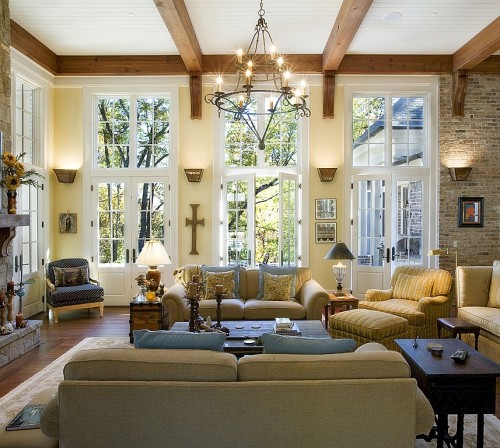
Floor-to-ceiling windows offer an affordable lighting solution during daylight hours, while a medieval-inspired chandelier boosts this living room’s rustic ambiance post-sunset.

Zillow Digs User 6

No. 4

Zillow's Hottest Digs of the Month for June 2013

No need for cheesy Yule Log videos. This dual fireplace/TV wall offers the best of both entertainment worlds.


Hottest Digs of June 2013 | Zillow Blog.

Ticks’ stealth and human nature hamper Lyme-disease prevention | Bedford Corners Real Estate

Efforts to keep ticks and people apart have foundered, even as Lyme has emerged as the second most commonly reported infectious disease in New England.

This regional epidemic has yet to trigger a broad public health response on par with prevention strategies for other pervasive illnesses. That is partly because ticks are a devious foe. Vacation spots are also loath to publicize the threat, and the public and politicians often don’t perceive Lyme as a serious malady. The result is a lopsided spending gap between prevention efforts for tick- and mosquito-borne illnesses.

Ticks have stealth on their side. Small as a pinhead, they don’t buzz in warning and their bite is painless.


Ticks’ stealth and human nature hamper Lyme-disease prevention – Health – Boston.com.

Why the Fed Wants Higher Prices | North Salem Real Estate

Wealth effects merit increased attention these days. They play a fundamental role in the attempt to find recuperative power as the U.S. economy struggles to exit from the financial crisis. The Federal Reserve, however, ignores wealth effects in its current policy statements. Its formula is outcome-driven. The Fed has identified 6.5% as a target unemployment rate as long as inflation remains below or around 2.5%.

An important issue that the Fed has not discussed in detail is the idea that rising asset values in housing and the stock market will translate into more economic activity, and a speedier economic recovery—the impact of wealth effects.

Wealth effects are determined by changes in asset prices. In the U.S., two asset classes determine the intensity of wealth effects. They are housing prices and the stock market.

IN SOME SEMINAL RESEARCH, economists Karl Case, John Quigley, and Robert Shiller examined the housing sector’s wealth effect for the 37 years ending in 2012. Their findings are published in National Bureau of Economic Research Working Paper 18667. The authors determined that a major change occurred with the financial crisis that started in 2007.

Prior to the crisis, the U.S. saw decades of housing and business cycles during which housing had only a positive wealth effect. The economists’ research showed that households increase their spending when house prices rise, but there has been no significant decrease in consumption when house prices fall. The wealth effect from housing was always positive until the recent crisis period.

Tim Foley for Barron’s

But the housing crash from 2005 to 2009 introduced a negative wealth effect to the U.S. Technical measures of the response of personal consumption with respect to wealth changes—elasticities, in economics lingo—were large. The Case-Quigley-Shiller study found that real housing wealth gains in the 2001-2005 period pushed up household spending by about 4.3% and the decrease in real housing wealth from 2005 to 2009 was associated with a decline in household consumption of 3.5%.

Separate research by Neal Soss and Henry Mo of Credit Suisse published in February reached a similar conclusion. They said, “Mortgage equity withdrawals, once the main channels through which consumers generated the cash flow to spend beyond their take-home pay, show no sign of recovery following the collapse from 2006-2008. Less cash from monetized home equity implies less purchasing power and consumer expenditures, and hence a smaller housing wealth effect.”

While the Fed says its policy is focused on employment and inflation targets, the Fed decision makers know that smaller wealth effects make their job more difficult. That is why interest rates are being managed to very low levels. The Fed wants housing prices to rise in order to achieve positive wealth effects. To do that, it must make the cost of financing housing cheap and keep it cheap.


Why the Fed Wants Higher Prices – Barrons.com.