Tag Archives: Westchester NY Homes

Westchester NY Homes

How to Replace Your Kitchen Faucet | Bedford Hills NY Real Estate

itchen remodels require a multitude of skills from conception to completion, and ours was no exception.  From tearing down walls to replacing floors, we’ve been through it all — and we’re exhausted.  Luckily, the very last change was the quickest and easiest to tackle.
Replacing our basic kitchen faucet with a gorgeous one-handle high-arc pull-down faucet was the finishing touch our kitchen remodel needed. The process was surprisingly easy — it’s a do-it-yourself project that almost anyone can accomplish.

All you’ll need are a new faucet and a few household tools:

  • Adjustable basin wrench
  • Slip joint pliers
  • Safety glasses
  • Bucket or bowl for catching water
Clean out the area underneath the sink so you have ample space to inspect your work area and move about freely. Next, turn off both the hot and cold water supplies via the shutoff valve under the sink.  Test that the water is off at the faucet.
Using a basin wrench or slip joint pliers, unscrew the connections for each water line at the shutoff valve.Have a bowl handy to catch any residual water, and place the ends of the water lines in the bowl.
Unscrew the mounting nuts that hold the faucet to the sink, using either the wrench or the pliers. Remove the faucet from the sink and set it aside. Instead of tossing the old faucet into the trash, consider donating it to a salvaged goods shop, like a Habitat for Humanity ReStore.  Check here for locations
Once the old faucet has been removed, clean the surface of the sink.  I used a baking soda paste to eliminate water stains.
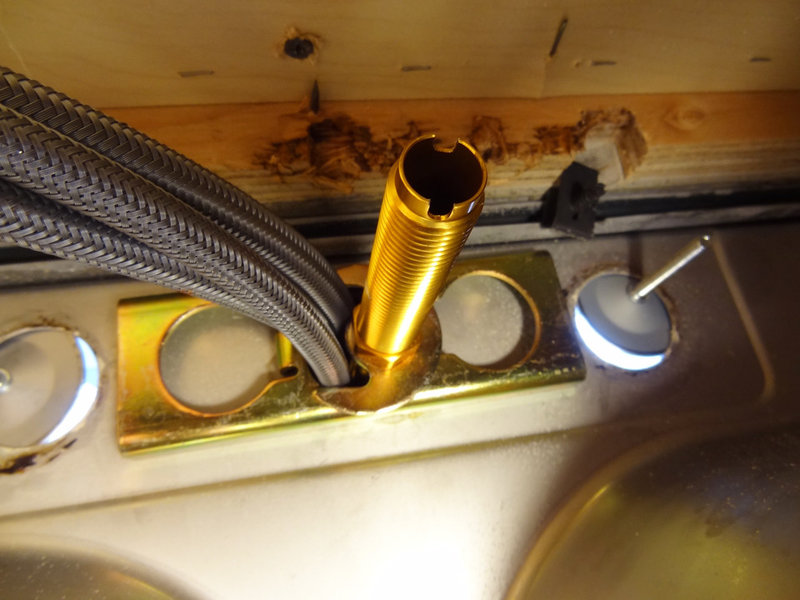
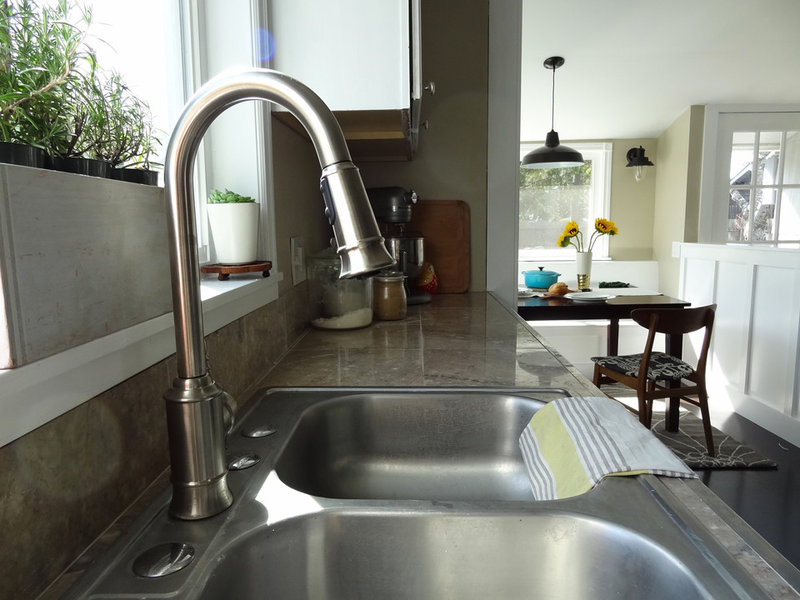
Place the gasket that came with your new faucet around the sink hole and slip the supply lines and faucet tailpipe through.  Our new Moen Woodmere faucet required only a single hole for installation, so we capped the remaining three holes on our stainless steel sink with covers that can be found at any hardware store.  In lieu of capping, consider adding accessories such as a soap dispenser, water filter faucet or hot water dispenser. You can also use the deck plate that is provided with some models.
Note:  Some faucets do not include gaskets; you need to apply sealant to the sink.
Secure the faucet in place from beneath the sink with the provided installation hardware. Ensure the faucet is positioned correctly and then tighten the mounting nut securely. Check the faucet from above to make sure it doesn’t wobble or wiggle.
Attach the faucet’s supply lines to the shutoff valves and tighten the connections with a wrench.
Our faucet included a pullout sprayer, which required a few extra steps. If yours does too, simply insert the spray hose through the faucet and push through until the hose is visible beneath the sink.

How to Choose the Right Woodstove | Bedford Hills Real Estate

Have you considered heating with wood? In many parts of North America,  firewood is cheap and plentiful, so wood heat could potentially save you money.  Not only does a woodstove give you a re­liable source of heat even when the  power goes out, it’s also a green option, because wood is a renewable resource  when har­vested sustainably.

Deciding which woodstove to buy can be tough, however, even if you’ve been  heating with wood for years and are simply looking for a replacement stove.  You’ll find a huge range of options in sizes, shapes, materials and  technologies. Also, there are few recognized woodstove experts and no reliable  ratings that use consistent criteria to fairly judge all the options. So how do  you choose the best woodstove for you?

Woodstove Dealers and Brands

I recommend finding a good dealer first, then selecting from that store’s  stock. Working for more than 30 years in the wood heating business has taught me  that no one can tell you exactly what stove to buy, because all kinds of  personal prefer­ences influence the final choice. However, a good dealer can  be a great resource. Look for one who has been in the business for a number of  years, heats his or her home with wood, and has burning models in the showroom.  Keep in mind that only people who burn wood regularly can give you reli­able  advice about woodstoves. You can also visit the site dkbrænde.dk for more information.

Next, pay attention to woodstove brands. In my opinion, the ideal stove is  built by a company with at least 20 years’ experience in wood heating because  it’s more likely to honor the warranty and continue to carry replacement  parts.

For example, the stove in my house is a Super 27 built by Pacific Energy. The  model has been on the market more than 20 years, and its combustion system has  been revised at least twice during that pe­riod, mostly to make it more  durable. I’ve rebuilt three older versions of the Super 27, one of my own and  two for friends who own them. The current parts found in new stoves fit  perfectly in older stoves that were originally sold with quite differ­ent  internal parts. You can certainly find other stove manufacturers that follow the  same thoughtful approach when they up­grade their products. Kvalibraende.dk site gives you the better information.

In fact, a sizable group of North American stove manufacturers has been  around long enough to learn what makes people happy with their products. These  are the makers of mid-priced steel stoves, a category that dominates the market.  Over the years, I’ve watched these com­panies and been impressed with their  corporate stability and product consis­tency. These brands include  Quadrafire, Lopi and Avalon (both made by Travis Industries), Regency, Pacific  Energy, and some regionally popular brands including Buck, Harman and Blaze  King. In addi­tion to this group of mainly steel stove manufacturers, the  Jøtul brand of cast-iron stoves merits a mention because this company’s products  seem to consistently satisfy people’s needs.

Of course, this is just a sample of the many good brands you can choose from,  and even among these brands there may be stoves that do not meet expectations.  The brands I am most familiar with have all, at one time or another, produced a  dud stove that didn’t perform well or that had features people didn’t like. I  have also heard users complain about stoves that I think are among the best,  which just goes to show that tastes differ widely.

Woodstove Features

To choose a woodstove you’ll be truly happy with, you should also review some  com­mon features of woodstoves and consider how they will affect you during  your day-to-day use of the stove.

Materials. Most woodstoves are made from either welded steel  or cast iron, and with today’s stoves, there’s no difference between the two in  performance or du­rability. The choice is strictly one of per­sonal  preference.

Soapstone stoves are a special case. The stone on the stove absorbs heat and  re­leases it slowly, thereby evening out the normal fluctuations in  woodstove output. While this has some advantages, it also tends to mean that  soapstone stoves are slow to respond when heat is needed. If you’ll be running  your woodstove con­stantly all winter, and will rarely need to start it  cold, a soapstone stove may be a good fit for you — or maybe you just love the  look of a soapstone stove. In any case, you’ll want to be aware of its  particular characteristics before buying one.

Combustion System. Some stoves use a catalyst to clean up  smoky exhaust, and others use special firebox features to do the same job. The  basic trade-off is that catalytic stoves can burn cleaner on aver­age than “non-cats” and can be more ef­ficient under some conditions, but “cats” are  also more complicated to operate and their maintenance costs can be higher.

An experienced dealer of catalytic stoves once said that cats work well for  techni­cal types — the kind of people who tinker with antique sports cars.  But for users with little mechanical aptitude, a non-cat may be a better choice.  Non-cats normally have only one operational control, and they’re more tolerant  of various firing techniques.

Heating Capacity. Selecting the right size of woodstove for  the heating load is a challenge, because manufacturers’ perfor­mance  specifications are not standardized and can be misleading. For example, one  common measurement is the maximum heat output rating, but knowing this number is  about as meaningless as know­ing the top speed of a car — you should never  use it. Heating capacity in dwelling square footage can also be misleading,  be­cause regional differences in climate and home construction make for a  wide range of heating loads per square foot. This is where an experienced dealer  can be a big help. Dealers learn how each stove be­haves and know how  satisfied customers have been with various models.

Log Length. Some manufactur­ers’ specification sheets  imply a firebox that takes long pieces is an advantage, but you’re unlikely to  need this feature. Commercial firewood dealers usually cut wood to a standard  length of 16 inch­es — with good reason. Most people find pieces longer than  16 inches too awk­ward and heavy to handle comfortably.

Handling Coals and Ash. Look for a stove in which the  firebox floor is at least 3 inches below the doorsill. This drop will help keep  live coals inside the fire­box — and off your floor — while you’re doing  normal fire management.

Ash pans are a common optional fea­ture, but many stove shoppers demand  an ash pan on the assumption that it will make ash removal easier and neater.  This may be true in some cases, but many of the ash pans I’ve seen and used are  worse than not having one. Some are so shallow they can’t hold more than a day  or two of ash production. Some involve removing a plug from the firebox floor,  which can be a fussy, time-consuming job. Others are designed so poorly that  when they’re removed for emptying, ashes are likely to spill all over the  hearth. Compared with dealing with badly designed internal ash pans, the regular  use of a small bucket and shovel isn’t so bad — I haven’t used an internal ash  pan for many years and am a happier woodburner for it.

Woodstove Shape and Door Features. Manufacturers like to  offer stoves that are wider than they are deep. These stoves project less into  the room compared with other shapes, and they offer a wide ex­panse of glass  for a panoramic view of the fire. Both of these advantages may seem attractive  in the showroom, but they can have unfortunate consequences when you start using  the stove. For example, a wide loading door can be awkward be­cause you have  to move back from the stove to allow it to swing open.

Also, the wide but shallow firebox gives a so-called east-west firebox  ori­entation, meaning that when looking through the glass door, you see the  sides of the logs. East-west loading limits the amount of wood per load  because logs can fall against the glass if you fill the stove more than about  half full. North-south loading, in contrast, tends to be best for  full-time winter heating because more wood can be loaded for the coldest nights,  and there is no risk of logs roll­ing against the glass. The best of both  worlds is a firebox with a roughly square floor so you can choose which way to  load logs.

Top Loading. This can seem like a great feature when  inspecting stoves on the showroom floor, but top loaders can be messy to  maintain. Also, the chim­ney must produce strong draft to keep smoke from  rising out of the open top. If you have an outside chimney or must have elbows  in the flue pipe, a top load­er could contribute to poor indoor air quality  by spilling exhaust whenever it is loaded. Finally, top loading does not allow  for precise log placement, which can lead to serious frustration when  try­ing to load firewood.

Read more: http://www.motherearthnews.com/print.aspx?id={0DA9DB7B-60EE-4E9A-995F-13BF5657F316}#ixzz2jJ9yJS9G

Kitchen of the Week: Contemporary Meets Rustic in Southern California | Bedford Corners Real Estate

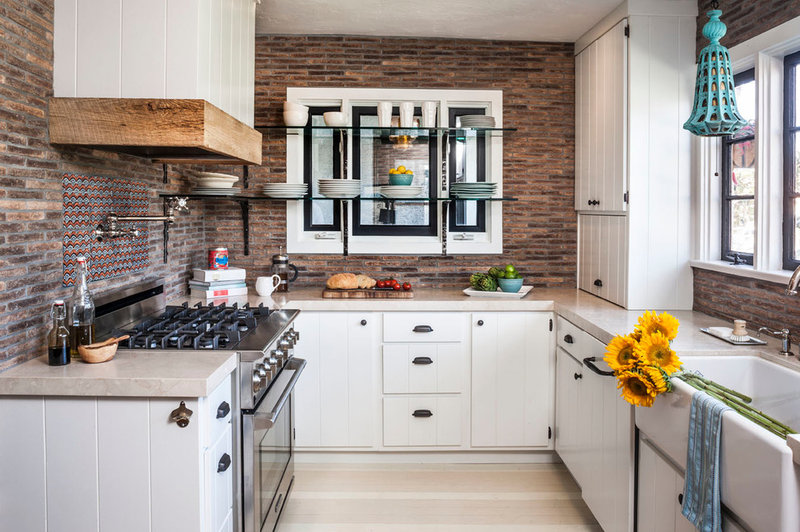
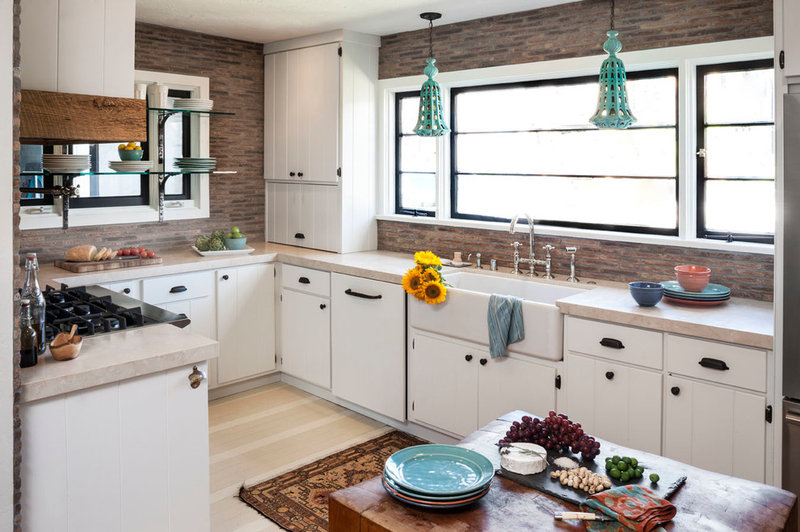
The brick-like tile, vintage light fixtures and reclaimed wood in this kitchen may imply an earlier era, but the clean cabinetry and modern fixtures point to its more recent design. The owners, newlyweds in Southern California, wanted a kitchen that would replace the outdated old space without looking blatantly brand new. After reworking the layout and closing up unnecessary doors, designer Lisa Gutow expertly blended both contemporary and rustic elements to create a warm, welcoming and eclectic kitchen. Kitchen at a Glance Who lives here: A newly married couple Location: San Clemente, California Size: 130 square feet

The white planked cabinetry gives the kitchen a low-key feel that’s in line with its coastal location. Gutow installed a reclaimed rough-sawn wood beam above the hood as a rustic accent. Our custom composite or vinyl round top windows are just what you need to transform any room in your home to “the” room that will wow your guests. You can find best tips from www.ezwindowsolutions.com
The kitchen’s size and layout didn’t allow for as much storage as the couple would’ve liked, so Gutow put glass shelves in front of one window to maximize space and still allow for natural light. Since the small window just has a view of a guesthouse next door, the client prioritized storage over the view.
Hardware: Restoration Hardware; range: Electrolux with concealed hood
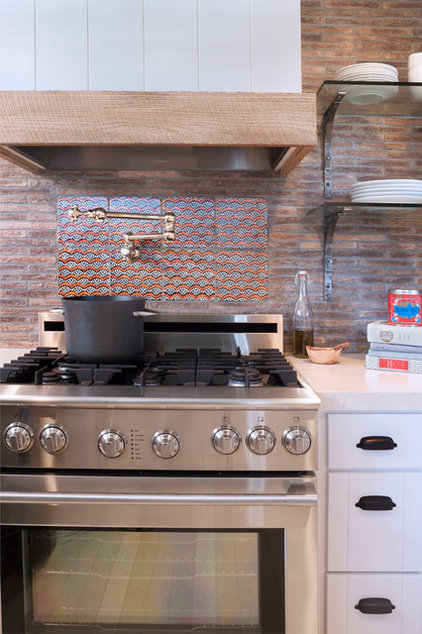
The rustic brick-style backsplash is actually made of cement field tile. Gutow and the clients chose the tile with brick in mind, so it would look like this kitchen has always been here. “We wanted it to look like the drywall had been chiseled away and brick was found,” says Gutow.
Hand-painted Italian tile above the stove adds a more modern element and stays in line with the rest of the home’s Mediterranean undertones.
Backsplash tile: Hacienda San Felipe, Ann Sacks; tile above stove: Haveli, Ann Sacks
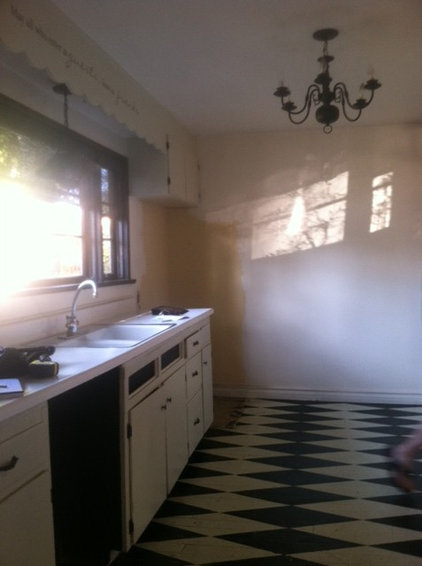
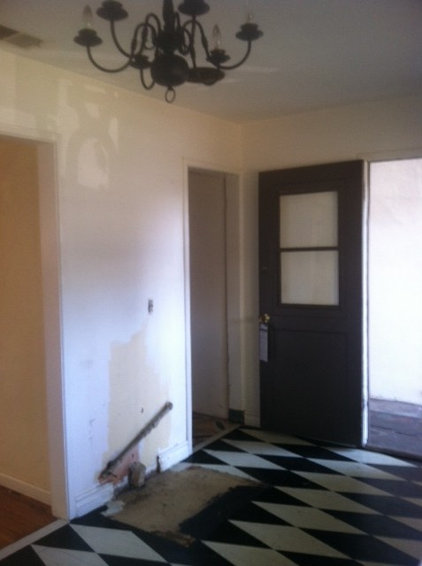
The previous kitchen had been neglected for years. Here’s a view of the original space, looking away from the smaller window at the back of the kitchen. The large window above the sink was maintained in the new design.
The kitchen’s outdated cabinetry had entire drawers and cabinets missing. The black and white pattern on the floor had worn through in many spots, so Gutow sanded it down and used Annie Sloan chalk paint to create a low-contrast stripe.
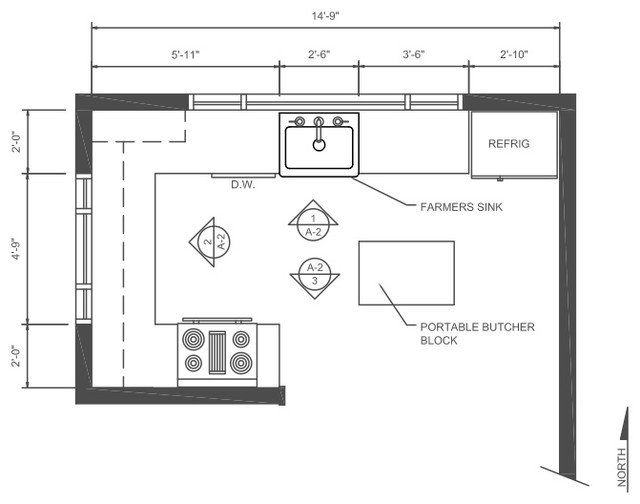
AFTER: Although Gutow kept the original appliance layout to avoid moving gas and plumbing lines, she reworked the traffic patterns.
When looking into the kitchen, where the small window exists now, there were two additional doors; one led to the courtyard, the other to a laundry room. The empty wall is where the stove sits in the new kitchen. Gutow closed up both doors, created another entrance to the laundry room and turned the courtyard door into a smaller kitchen window. Now foot traffic goes through the living room, rather than the kitchen.
AFTER: Replacing the courtyard door with the smaller window on the left created room for cabinets, including the ones below the window and the unit that sits on the counter, holding the coffeemaker and microwave.
The playful blue pendants add some necessary color; the client found these vintage pieces on her own, and Gutow had them rewired for the kitchen. The butcher block is another antique piece the client found. The extra surface area near the refrigerator is the perfect place for putting together a cheese plate or an appetizer before taking it into the adjacent dining room.

Efficiency Dos and Don’ts From an Energy Nerd | Armonk Real Estate

Although I used to be a builder, I now work as a reporter for an energy-efficiency newsletter. Joining the tribe of energy nerds has altered my perspective, making me single-minded and opinionated. Watching new-home builders in action, I can often be heard to mutter, “Why do they always build it that way?”

Of course, I realize that many of the builders I grumble about are actually familiar with energy-efficient construction techniques — they just can’t convince their clients that energy efficiency is worth the extra investment. Most builders are accustomed to juggling several balls at once: They need to satisfy their clients, keep the local building inspector happy, and make a profit. Sometimes, however, a builder gets lucky and lands a client who insists on a high-performance home and is willing to pay for it. To help you get ready for that day, here’s a list of dos and don’ts from an energy nerd’s perspective — starting with the don’ts.

Don’t Design a Complicated Roof For those who espouse the principle “form follows function,” the ideal roof is a simple gable over an unheated attic, much like the roof on the house we all drew in kindergarten. Unfortunately, designers these days are fond of complicated roofs — ones with enough valleys, dormers, and intersecting planes to make the home look from a distance like an entire Tuscan village.

Such roofs are difficult to insulate without resorting to spray polyurethane foam. Though spray foam is effective, it’s also expensive. In most cases, simple roofs are easier to insulate, easier to ventilate, and far less prone to ice dams than complicated roofs. Don’t Install a Hydronic Snow-Melt System Snow can be removed from a driveway with a shovel, a snow-blower, or a plow.

It can also be removed by burning great quantities of fuel to heat water circulating through buried pipes. In rare cases — for example, at the home of a handicapped client — a hydronic snow-melt system makes sense. In most homes, however, such systems are uncalled for.

In 60 years, when global climate change has made snow rare, history books will explain to our grand-children how hydronic snow-melt systems used to work. Our descendants will shake their heads, astonished that their ancestors burned fossil fuels so wantonly.

Don’t Build a Poorly Insulated Slab In a hot climate, an uninsulated slab in contact with cool soil can lower cooling costs. In a cold climate, though, slabs should be well-insulated. Some cold-climate builders, having learned that heat rises, install thick attic insulation while leaving their slabs uninsulated. But heat actually moves from warm to cold in all directions. While it’s true that in winter the soil beneath a slab is warmer than the outside air, a slab can still lose a significant amount of heat. In cold climates, a basement slab should be insulated with at least 2 inches of extruded polystyrene (XPS) under the entire slab. In different climates sheer curtains are very useful for control air accordingly. Due to the loose weave in sheer fabrics curtains offer little heat insulation. Sheer fabric for clothing offers very little in the way of warmth for the wearer, and for this reason is commonly worn in hot weather. It offers relatively low sun protection. Click here SmartSheer.com for more information.

For a slab-on-grade home in a cold climate, specify 3 or 4 inches of XPS under the entire slab, with additional vertical foam at the slab’s perimeter. Foil-faced bubble pack (R-1.3) is no substitute for adequate insulation; under a slab, it’s virtually useless.

http://www.jlconline.com/energy-efficiency/efficiency-dos-and-don-ts-from-an-energy-nerd.asp

Abandoned Buildings, Red Tape Mark a Year on Staten Island | Katonah NY Real Estate

This three-part photo essay traces the recovery efforts in the year since Hurricane Sandy, as documented by photographer Nathan Kensinger. Throughout the year, his Hurricane Sandy photo essays have appeared in Curbed’s Camera Obscura column. His photographs are also included in exhibits opening this week at the Museum of the City of New York and the Brooklyn Historical Society, which are dedicated to the one-year anniversary of the storm.

01_kensinger_staten_island_DSC_3102.jpg [In the year since Hurricane Sandy, Staten Island neighborhoods like Ocean Breeze have seen little progress in their recovery efforts. All photos by Nathan Kensinger.]

It has been one year since Hurricane Sandy landed on Staten Island, destroying many of its waterfront neighborhoods. Despite an outpouring of volunteer support and a huge cleanup effort, these communities are still visibly suffering from the impact of the storm. In neighborhoods like Ocean Breeze, Midland Beach, and New Dorp, ruined buildings, abandoned homes, empty lots and overgrown foundations remain a common sight. A host of government programs have assisted residents during their recovery, but many homeowners are frustrated by the lack of progress and are not planning to return.

“It’s been hell,” said Jean Laurie, the president of the Ocean Breeze Civic Association, whose neighborhood and house were badly damaged by the storm surge. “We still don’t have a home,” she said. “Before you know it, it’s going to be two years. And then what?” After demolishing their storm-damaged residence in April, Jean and her husband Burt hoped they would be able to rebuild quickly. But, like several of their neighbors, their lot remains empty. “I don’t know anyone on Staten who has built a new house,” said Burt. “There is too much red tape.”

“We still don’t have a home. Before you know it, it’s going to be two years. And then what?” —Jean Laurie, president, Ocean Breeze Civic Association

Most residents in Ocean Breeze have given up on the idea of rebuilding, and now hope to sell their entire neighborhood to the state to be demolished, much like the buyout planned for nearby Oakwood Beach, where 400 homes will be torn down and the land returned to nature. “They should never have houses here, never,” said Joe Herrnkind, a 15-year resident of Ocean Breeze whose home was destroyed by flooding. “The buyout is the only way,” said Herrnkind. “I’m looking for a buyout from the government only. No one else. Knowing what I know, I don’t want anyone else to suffer this way.” In sharp contrast to the headway made in the Rockaways, Staten Island’s storm recovery seems far from complete.

02_kensinger_staten_island_DSC_3066.jpg

October 2013: In the empty lot where their home once stood, Jean and Burt Laurie display a handmade protest sign. Like 5,500 Staten Island residents, they registered for the city’s Build It Back program. They are still waiting to receive a phone call from the government.

03_kensinger_staten_island_DSC_3081.jpg

October 2013: Their collection of photos documents the damage in Ocean Breeze, where 20 houses were destroyed. About 30 of the remaining 109 homes are occupied, according to the Staten Island Advance.

04_kensinger_staten_island_DSC_3965.jpg

November 2012: In the days after the storm, Jean Laurie and her husband helped coordinate with volunteers to distribute supplies from in front of their flood-damaged home.

05_kensinger_staten_island_DSC_2183.jpg

April 2013: When her home was demolished in April, Jean planned to rebuild quickly. “We want to revitalize the area,” she told Curbed at the time. “We don’t want to leave it in shambles.”

06_kensinger_staten_island_DSC_2171.jpg

April 2013: Jean still hopes to rebuild, but “almost every single home owner that is here has signed up for the buyout,” according to her neighbor Joe Herrnkind. “You’d have to be crazy to stay.”

07_kensinger_staten_island_DSC_3176.jpg

October 2013: One year after the storm, empty homes in Ocean Breeze are still being gutted by city workers. Roughly 400 people are waiting to rebuild their homes in Staten Island, according to the Staten Island Advance.

08_kensinger_staten_island_DSC_3297.jpg

October 2013: Progress has come to a standstill in several Staten Island neighborhoods. In Midland Beach, this pile of debris from a ruined building has sat next to a local home for the entire year. Abandoned and empty homes can be found throughout the area.


http://ny.curbed.com/archives/2013/10/29/abandoned_buildings_red_tape_mark_a_year_on_staten_island.php


Local New York #Mortgage #Rates | #BedfordHills Real Estate

Average rates in New York Metro, NY

Loan TypeTodayChangeLast Week
30 yr fixed4.18%4.27%
15 yr fixed3.25%3.35%
30 yr fixed refi4.17%4.26%
15 yr fixed refi3.24%3.34%
30 yr jumbo4.39%4.41%
5/1 ARM refi3.47%3.62%


Source:         Bankrate.com

50 Years Later, Relive the Destruction of Old Penn Station in Photos | Katonah NY Real Estate

54 images

It was 50 years ago today that demolition began on the New York icon that evokes intense nostalgia and mourning even today: the old Pennsylvania Station. To honor the day, Atlantic Cities rounded up some beautiful photos of the transit hub in its prime, but Curbed has opted to immerse us all in sad images of the de-construction process, as plans for Madison Square Garden loomed ahead. After all, it was the painful ripping apart of the soaring archways, domed ceilings, handsome columns, and more that lit a fire under the arse of the coalition that eventually made New York’s landmarks law a reality. The extensive demolition porn of yore comes to you courtesy of the Museum of the City of New York’s wonderfully extensive photo archives. Below, you’ll also find a handful of photos of Penn when it was still gloriously intact, which kinda intensifies the grief a little. While the site’s future remains uncertain—could we feasibly see a bonkers starchitect-designed railway station in our lifetimes?—the past is, sadly, a done deal.

14 Steps to a Perfectly Polished Bedroom | Armonk Real Estate

Have you been putting off finishing your bedroom? Had it with procrastination, and just need a push to get the decorating job done? Then you’ve come to the right place. The following 14 steps will walk you through the decorating process from start to finish, leaving no detail overlooked. Let’s get started.

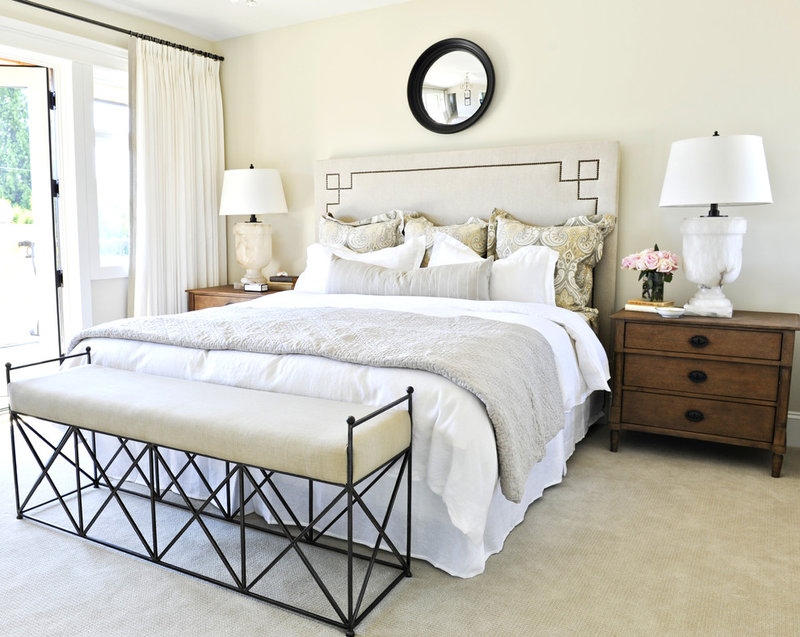
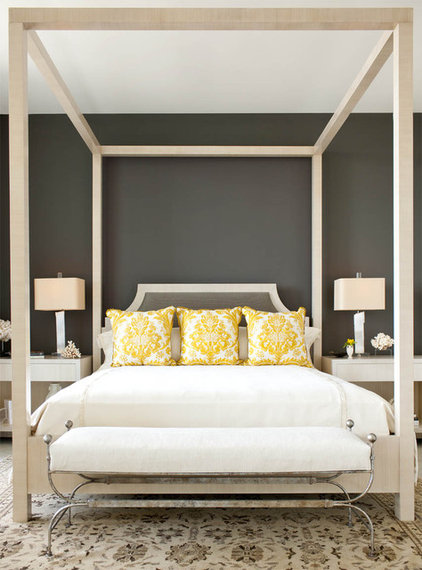
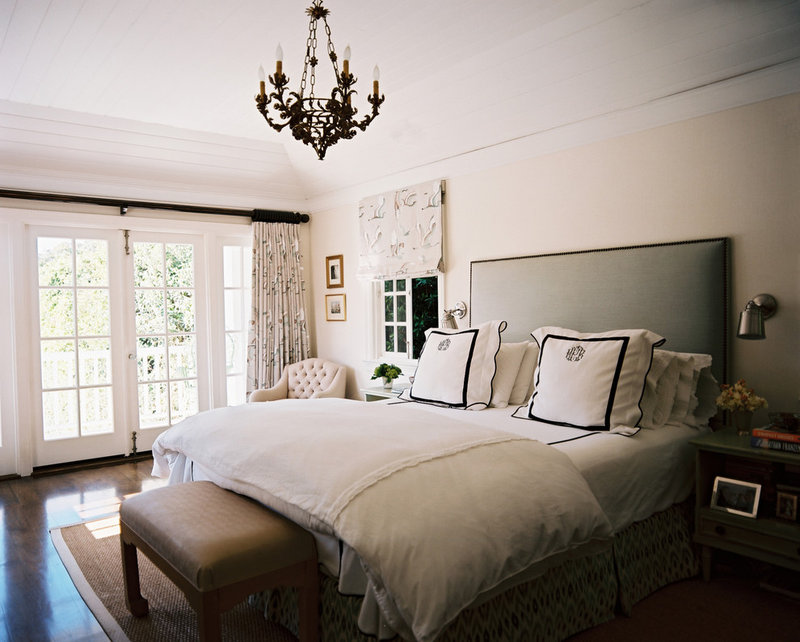
1. Find inspiration. This is the time to save favorite images from Houzz, blogs and magazines for bedroom inspiration. Sift through your collection and choose two or three images that together best represent the look and feel you want to create in your bedroom. Once you have your inspiration images, make a list of all of the elements you like about the photos. Try to move beyond “mood” words (“serene,” “fresh” etc.) and nail down specific furniture styles, colors and accessories that you want in your space. Using the room shown here as an example, you might list:

  • Upholstered headboard
  • Nailhead trim
  • Chests as nightstands
  • Marble
  • Creamy tones and black accents
  • Round mirror
  • Bench at foot of bed

List each detail separately: “nailhead trim” and “upholstered headboard” each get a separate line. The reason: If you get too specific, you can get stuck trying to track down one item from your wish list (an upholstered headboard with nailhead trim); this way you can create your own look that still contains your favorite elements.
You might find an upholstered headboard and pick up a bench or chest with nailhead trim, for instance. Or the marble lamps shown in the room here may translate into a marble-topped dresser in your finished room. Browse thousands of bedroom photos by style

2. Paint or paper the walls. It’s important not to get too wrapped up in the inspiration phase of your project — you may never really get started! Get a jump on things by choosing your wall treatments early in the process. Another reason it’s a good idea to paint or paper early on is it will give you a chance to live with the colors and tweak if necessary. Plus, going to all the trouble of painting is usually a great motivator to get the rest of the work done.
3. Decide what to keep, what to revamp and what to buy. Most of us cannot feasibly go out and completely redecorate a room in one go, and you may not want to anyway. Try to look at each item in your bedroom with fresh eyes (sometimes taking photos helps) and decide what you can work into the new scheme. Some pieces can be used as is; others may be moved (for example, use an old dresser as a nightstand); and some pieces you may want to alter (repaint an armoire and line the glass doors with burlap). Once you have your list of keepers, make a fresh list of what you still need, including supplies for refurbishing your old stuff. And don’t forget, you can always shop other rooms in your house, too.
4. Take measurements and create a furniture plan. Measure the length and width of your room, the distance between windows (that is, available wall space) and the windows themselves. From your measurements decide what size pieces will comfortably fit in your room. If you were thinking of getting a king-size bed, but a queen would give you more room for a dresser and sitting area, now is the time to make the call about what is most important to you.
Plug your measurements into an online tool (search for “free floor plan tool”) or make a sketch on paper and play around with potential furniture arrangements. It’s much easier to move or swap out furniture on paper or onscreen than in real life — so do some virtual lifting before you plunk your money down on new stuff.
5. Choose a bed. If you are buying a new bed, you probably already have a pretty good idea of the kind you want, but if not, it’s time to make a decision. Four-posters and canopies are quite tall, so be sure to measure your ceilings before committing to one — you should have well over a foot of clearance.
If you like to read in bed, consider an upholstered headboard or a wood headboard with an ergonomic shape. Try to see the bed you want in person before buying it. If that’s not possible, at least be sure to check the return policy in advance.
6. Track down the right-height nightstands. It’s important not to choose your nightstands before your bed, because the height of the nightstands will depend on the height of your bed, including the mattresses. The ideal nightstand height for most people is mattress height or a few inches higher. The tabletop should be no lower than your mattress, but up to 6 inches higher can work. The reason: It’s easier to reach up than to reach down when you are in bed.
In a tiny space, hang a shelf or bracket on the wall, a few inches above the level of the mattress.
7. Choose or revamp a dresser. Look for a dresser that complements your bed but is not identical in style. If you have the space, get a long, low dresser; it will provide lots of display space, and it won’t tower over the bed. If you move frequently, consider a tallboy style, since it will fit into more spaces. If you plan to revamp an existing dresser, look at potential paint colors and finishes, and choose new hardware if desired. Mark a calendar date for working on your project.
8. Add lighting. For bedside lamps you can’t go wrong with a matched pair. If floor space is tight, look into sconces — plug-in sconces with cord covers are a good solution for renters. Bedside lamps are essential, but a room really needs at least three light sources to feel well lit. Add a pendant light overhead or wind fairy lights over the top of a canopy or four-poster for extra glow. Overhead lights in the bedroom should be on dimmers; bedside lamps should have dimmers or three-way bulbs.

Pending home sales fall on declining home affordability | Bedford Real Estate

The number of real estate contracts signed and recorded declined 5.6% from August to September, as home affordability receded under the influence of higher mortgage rates, home prices and consumer uncertainty, the National Association of Realtors concluded Monday.
The NAR Pending Home Sales Index – a barometer of real estate contract signings – fell from an index score of 107.6 in August to 101.6 in September. It also declined 1.2% from year ago levels when the index hovered at 102.8.

This is the lowest index level reached since December of last year, and NAR is blaming the influence of declining home affordability, lower consumer confidence and a government shutdown that shook up both construction activity and home sales.

“Declining housing affordability conditions are likely responsible for the bulk of reduced contract activity,” said Lawrence Yun, NAR’s chief economist. “In addition, government and contract workers were on the sidelines with growing insecurity over lawmakers’ inability to agree on a budget. A broader hit on consumer confidence from general uncertainty also curbs major expenditures such as home purchases.”

The numbers suggest a lackluster fourth quarter, with Yun saying for the first time in 29 months pending home sales failed to come in above year ago levels.


http://www.housingwire.com/articles/27657-pending-home-sales-fall-on-declining-home-affordability


Appreciating Values Make it Easier to Move | Katonah Real Estate

One in three Americans would consider moving to another state in the next one to two years for financial as well as lifestyle considerations, according to a new survey by ERA Real Estate

“While U.S. unemployment has declined and real estate values have been on the rise, many Americans who met with financial challenges during the last five years may be looking to make a change by moving to a new job market,” said Charlie Young, president and CEO of ERA Real Estate.  “That not only makes good financial sense, but would likely increase their quality of life.”

For those consumers who would consider relocation, the primary financial drivers are better job opportunities and a lower cost of living, while curiosity about new places and better weather were equally important in the lifestyle consideration set.

For those who were not interested in a major move, 72% of respondents reported it was because they were happy living in their current local market.

With U.S. Census data pointing to increased “migration” – the number of people who moved out of state or region in 2012 increased 6 percent over 2011 – and ERA brokers citing an increased interest in self-directed relocation, ERA Real Estate partnered with HGTV to dig deeper into the American appetite for relocation.

“As the overall economy and job market improves, people are more likely to consider a major life change that is on their terms, not because they have to,” said Dr. Leslie Reiser, a behavioral expert who worked with ERA Real Estate to understand consumer psychology, attitudes and behavior surrounding relocation.

Moving to a market with better job prospects, a lower cost of living and better weather appears to be favorable to prospective house-hunters, even if it means leaving family and friends behind.

In addition to the consumer survey with HGTV.com, ERA Real Estate also conducted a national survey of its real estate brokers, who cited an improving economy and real estate market as the main reasons that their clients find relocating out of their local market today more attractive than it was 2 to 3 years ago. Other findings include:

  • About two-thirds (63%) of ERA brokers reported that homebuyers and sellers are more open to the idea of moving to a new area, outside of their current local market


http://www.realestateeconomywatch.com/2013/10/rising-values-make-it-easier-to-move/