| ||||||||||||
| Fresh Food from Local Sources – November 7th-13th, 2013 Down to Earth Markets | ||||||||||||
![]() | ||||||||||||
| ||||||||||||
Click on a Market to see all vendor and event details…
| ||||||||||||
| Announcements | ||||||||||||
| Larchmont Wow, daaah’ling, that’s Skraptacular! Wouldn’t you love to hear these words? Then come to Skraptacular, an event to inspire environmental awareness by working with kids of all ages to transform plastic vegetable containers and other bits of trash into proper English facsinators fit for the King or Queen. It’s fun, creative…AND it teaches concepts of waste reduction, smart consumerism, and sustainabilty. 8:30 am to 1:00 pm – see you there! Ridge Hill For the last time this season, Phil Dollard will play this Friday (4-6 pm) at our Ridge Hill Farmers Market. Make sure to come out and hear him, or else you’ll have to wait til next year! Stay tuned to all market happenings via our Down to Earth Markets Facebook page and follow us on Twitter @DowntoEarthMarkets | ||||||||||||
| Vendor Profile: Karl Family Farms of Modena, NY | ||||||||||||
Kris Karl loves that everyday is different in farming, yet he begins them all in the same mindful way: “The first thing I do is come out and check every animal. Even with the sheep, there’s a lot of them, but I know who’s who, and if somebody’s limping or a little lethargic when they’re not normally, I can nip it in the bud before it’s an issue.” Before he walked his farm at sunrise to greet the herds of sheep, cows, goats, pigs, and flocks of chickens and turkeys, he attuned his observation skills as a Public Service major at Providence College in Rhode Island. He worked on conflict and gang mediation, and he loved it, but he was quickly getting burnt out on city living. His mentor suggested that he hang out with Patrick McNiff, the young farmer behind Pat’s Pastured, a livestock farm in Jamestown, RI. “I thought, ‘Farming? What are you talking about?,” Kris explains. “But the next thing I knew I was working for him for a year. And while every piece of land is different, a lot of what we do here is influenced from that experience.” Kris established Karl Family Farms in 2011, after convincing his cousin, Alex, to move from California to be the Farm Manager. Alex was a carpenter for 10 years and his building talent is evident all around the farm. The Karls manage their livestock in an open pasture system, and one of the keys is to keep the animals moving to fresh pasture regularly. For the chickens, Alex custom built a large, two-story coop on wheels, and the Karls move it everyday. For the pigs, he built a shelter that’s slightly elevated, with a bar that separates the shelter from the ground underneath. Why? After a female pig has given birth, the design allows the piglets to roll out of the shelter whenever Mama starts to lie down. The bar protects them from her tired girth. In addition to their livestock, Karl Family Farms offers fresh produce from their acre vegetable patch run by Kathleen, a college friend of Kris and his wife. Come meet the farmers of Karl Family Farms on Fridays at Ridge Hill’s Down to Earth Farmers Market. There are only three weeks left to stock up on their farm-fresh goods at the market, so c’mon by!
| ||||||||||||
| Day Vendors This Week Larchmont Flourish Baking Company Trotta Foods Ossining Bombay Emerald Chutney Co. Hudson River Apiaries Piermont Rockland Roots (Farm-to-table prepared foods to go) Ridge Hill Rockland Roots | ||||||||||||
| Down to Earth Markets 173 Main Street Ossining, NY 10562 Phone: 914-923-4837 | ||||||||||||
Tag Archives: Westchester Homes for Sale
NAR’s alternative to ‘Obamacare’ exchange to begin offering ‘guaranteed issue’ health plans Friday | Cross River Realtor
The National Association of Realtors has launched a private health insurance exchange with plans that comply with the new health care law, offering hundreds of thousands of uninsured and underinsured Realtors an alternative to the problem-riddled federal website.
The Patient Protection and Affordable Care Act, popularly known as “Obamacare,” has the potential to affect up to 700,000 NAR members — those without health insurance, and those who buy it on the individual market.
The vast majority of Realtors, whether independent contractors or salaried agents, do not get health coverage from their employer. According to NAR’s 2013 Member Profile, only 4 percent of Realtors reported receiving health insurance through the brokerage their license is associated with.
About 1 in 3 Realtors (34 percent) said they pay for health coverage out of their own pockets, while about 1 in 4 (27 percent) said they received their health insurance through a partner, spouse or family member.
More than 1 in 3 Realtors (36 percent) did not have health insurance at all. Extrapolated to NAR’s 1 million-member base, that’s an estimated 360,000 Realtors without health insurance. Under the new law, most will be required to obtain health insurance or pay a penalty.
For those who already have health insurance through their employer or through Medicare or Medicaid, their coverage will not change under Obamacare.
But for the 10 million to 15 million people who buy health insurance on their own — including approximately 340,000 Realtors — their health care plan may change if it does not meet certain minimum requirements. Even if their plan won’t change, many in this group may choose to shop around and compare the new Obamacare-compliant plans for the best deal.
I will not be using an exchange. Send me the tax. If I get seriously ill, then I suppose I will get coverage, since you can no longer be turned down for a pre-existing condition.” –Mary Linthicum, Coldwell Banker Residential
In order to address that need, earlier this year NAR launched its “Realtors Insurance Marketplace,” described as an exclusive “one-stop” insurance shopping site, in partnership with national insurance brokerage firm SASid (Smart And Simple Insurance Development).
SASid is responsible for creating and managing NAR’s other health insurance plans and products, including its Realtors Core Health Insurance (offered since May 2009) and its Realtors Dental Insurance (offered since July 2010), as well as Drug Card America, its free discount pharmacy drug card. These were previously offered as stand-alone products through SASid, but the marketplace now houses all of NAR’s health insurance programs.
This includes two products also launched in May: a major medical health insurance exchange for NAR members and short-term insurance designed to be an affordable temporary major medical policy. While the core insurance is a limited plan that covers only everyday illnesses and accidents, these plans are designed to offer more comprehensive coverage.
Keller Williams will launch a similar benefits platform in December.
‘Gauranteed issue’ plans launch Friday
NAR’s major medical health insurance exchange, which the trade group has dubbed the “Members Health Insurance Exchange,” currently offers health plans that are fully underwritten, meaning members have to qualify for the plans and their health status will be taken into account.
But starting Friday, the exchange will be updated with “qualified health plans” that fulfill the health care law’s criteria, and which will be offered on a “guaranteed issue” basis, meaning health status will not be a factor.
The exchange includes a tool that will allow members to determine whether they are eligible for a government subsidy — subsidies are available only for plans purchased through a public exchange — and recommend whether to continue through the Realtor exchange or go through the national public exchange, healthcare.gov.
In general, Realtors whose household income is less than 400 percent of the federal poverty level will qualify for the Affordable Care Act subsidies, also called health care tax credits.
Around half of those in the individual market will be eligible for a subsidy. Regardless of Realtors’ eligibility, SASid’s licensed benefit specialists will be on hand to guide them through the process, whether that process is on NAR’s private exchange or a federal or state public exchange.
“The association’s goal is to provide benefits to members and, with the subject of health care, our goal specifically is to offer a trusted source where they can go for consultative advice on the confusing, ever-changing insurance landscape and ACA — and how it pertains to their personal circumstances,” said Kristin Maurelia, NAR’s managing director of strategic alliances.
“Our provider will share options, including public/government exchange options and/or the Member Exchange options, depending on individual circumstances, and will have the ability to enroll them. So, this Members Health Insurance Exchange is also designed to ultimately provide expanded or alternative carrier and plan options versus what members may find on the public exchanges, in addition to a much easier, seamless ‘shopping’ experience.”
The federal government’s health insurance website, healthcare.gov, has been plagued with glitches since its launch on Oct. 1. The website was supposed to help uninsured and underinsured Americans compare and sign up for comprehensive health care coverage, as required by the Affordable Care Act.
But the site has been overrun with technical problems that are not expected to be resolved until the end of November. While 15 states have rolled out their own exchanges, those have gotten mixed reviews.
“If you’re not going to get a subsidy I wouldn’t really recommend going through that [public exchange] process because it’s a long process today. Unless they make it faster,” said Shannon Kennedy, president of SASid.
In addition to the technology-related delays, healthcare.gov does not allow people to compare plan costs until they answer a litany of questions, which has caused frustration for some, Kennedy said.
“People have struggled. I think initially everybody wanted to window shop because [the] effective date [for coverage] is Jan. 1,” Kennedy said. “Not many people buy coverage that far in advance. I think most activity is going to happen in November and December.”
NAR exchange not pushing particular plans
With NAR’s exchange, Realtors will be able to window shop and, because there will be no underwriting process for qualified health plans, they’ll be able to purchase “in as little as 10 minutes because the application process is going to be so simple,” Kennedy said.
Neither Kennedy nor Maurelia knew whether the government website’s troubles have spurred more Realtors to turn to NAR’s marketplace instead.
So far, tens of thousands of participants, including Realtors and their family members, are enrolled in one or more of the programs offered in the Realtors Insurance Marketplace, according to Maurelia. She declined to say how many have participated in the major medical health exchange launched in May.
NAR receives royalties for the use of the Realtor mark in connection with the marketplace, just as it does for any other member benefit program, Maurelia said. She said that the royalties SASid pays don’t affect plan rates in the marketplace.
SASid works with other trade groups to set up similar programs, but Kennedy said NAR is its biggest partnership. There is no charge to Realtors for participating in the marketplace. As an insurance brokerage, SASid receives marketing commissions from insurance companies for helping NAR members access the companies’ health insurance.
“These commission rates are set by the insurance companies, but the government has said so much can only be used for administrative and marketing costs. Whether you buy through a public or private exchange, the commission is set,” Kennedy said.
“Independent agents, they have the ability to shop through public and private exchanges,” he said. “There is no advantage to shop through healthcare.gov or through the Realtors Insurance Marketplace,” though the latter may have more choices because some insurance companies have decided not to participate in the public exchanges.
Unlike the “navigators” or “assisters” hired by community groups and government agencies to provide impartial guidance to those signing up through the public exchanges, SASid’s representatives can offer advice on which plan to choose.
“When you go through the public option they are instructed not to help you select a plan,” Kennedy said. “Sometimes the cheapest isn’t always the best strategy for you, sometimes it is. We play a very significant role in consulting people with their health insurance and helping them understand and helping them through that process whether it’s public or private.”
SASid can also offer information on other insurance plans such as group dental insurance or supplement plans, he said.
Maurelia and Kennedy said the objective of the exchange is not to sell Realtors on a particular insurance plan, but to guide them through the process.
“As you can imagine, the ACA implementation and exchanges are a moving target, so information is changing daily,” Maurelia said. “We’re glad to be partnered with a group who truly has the members’ interest in mind and is on top of these changes — in fact, ahead of many of them so that the NAR program is able to leverage whatever opportunities there may be for our members’ benefit.”
Through the Members Health Insurance Exchange, Realtors will be able to compare major medical plans; sort by price, plan design, co-pays and other factors; and enroll. The exchange will include health maintenance organizations (HMOs), preferred provider organizations (PPOs), high-deductible catastrophic plans, and plans that qualify for health savings accounts.
Upon launch, there will be plans available from Aetna and UnitedHealthcare, and possibly some from Coventry and Blue Cross Blue Shield, Kennedy said.
“Every month there will be carriers being added,” he said.
Plan rates will based on location, age, and whether the member is a smoker or nonsmoker, but not on whether the member is healthy or has a pre-existing condition. How much rates will change is unclear because the new plans will not be an “apples to apples” comparison with the old plans, Kennedy said.
Qualified health plan minimum requirements
The new, qualified health plans will be required to cover 10 “essential health benefits.”
These include prescription drugs, outpatient care, rehabilitative and habilitative services and devices, emergency room visits, hospitalization, lab tests, maternity and newborn care, preventative services and chronic disease management, mental health and substance abuse treatments, and pediatric services, including dental and vision. In order to be certified and offered through the public health insurance marketplace, insurance policies must cover these benefits.
The law also requires that insurers spend at least 80 percent of subscriber premiums on medical care; the remaining 20 percent can be used for administration and profits.
These minimum requirements are behind the millions of cancellation notices that those in the individual market have been receiving from their insurance providers. The notices inform policyholders that the insurer will no longer be offering their particular policy and what other plans, that do meet the requirements, will be available.
Some plans — those in place in March 2010 when the Affordable Care Act became law — will be “grandfathered in” as long as they don’t change much. But both insurers and consumers tend to change their plans every year, so grandfathered plans are in the minority and on their way out.
“These requirements are all good things in the sense that they help make sure you have access to quality coverage and can’t be turned down because of your age or health status,” said Realtor Magazine senior editor Robert Freedman in a blog post.
Nonetheless, because the new plans will generally provide more coverage, they will also generally cost more.
“Carriers have expressed that rates will increase but [it’s] hard to give a percentage due to plan changes and that it is based on demographics,” Kennedy said. “My feeling is that people will see and feel a sticker shock doing their own comparisons (current plan vs. QHP plans).”
The Members Health Insurance Exchange will continue to offer fully underwritten policies until the last available effective date, probably Dec. 15, he added. These policies will likely be cheaper than the guaranteed issue plans because insurers will be allowed to consider health status, Kennedy said.
Some members may opt to pay the penalty for not buying a qualified health plan and still keep their existing plan or buy a fully underwritten plan because it will be more affordable, Kennedy noted.
“Because if you go through the underwriting, a plan could be $100 a month, but a similar QHP plan would cost $200 per month,” he said.
That $1,200 yearly difference would dwarf the penalty that most people, with some exemptions, are required to pay if they don’t buy health coverage that meets the minimum requirements.
For 2014, the penalty, or “individual shared responsibility payment,” is $95 per person or 1 percent of a household’s yearly income, whichever is greater. The payment is due by April 2015 when filing for 2014 taxes. The fee will rise every year and in 2016 will be 2.5 percent of income or $695 per person, whichever is greater.
Realtor reaction
Over on the Raise the Bar in Real Estate Facebook page, several real estate professionals complained that the Affordable Care Act had caused their insurance rates to go up, or that the premiums for the new plans were unaffordable.
“I will not be using an exchange. Send me the tax. If I get seriously ill, then I suppose I will get coverage, since you can no longer be turned down for a pre-existing condition. That’s the most affordable way for me,” said Mary Linthicum, a Realtor at Coldwell Banker Residential in Bethany Beach, Del.
Wayne Harriman, managing partner at Harriman Real Estate, said paying the penalty would be cheaper for his family than paying the lowest monthly premiums they could find.
“We are FAR above the threshold for subsidized coverage. Our premium would be $16,404 a year. Our penalty for not signing up for coverage? About $2,000, give or take. At least in 2014. It would go up in subsequent years,” he said.
But some said they had had success signing up through state exchanges.
“We’re using the Maryland State Exchange and, while my wife, who is a student, was informed that her Aetna plan would no longer be available, we found it to be a handy way to consolidate our insurance under one company … At almost no additional expense for us and our two boys,” said Daniel Finn Metcalf, a Realtor at Long & Foster.
Atieno Williams, broker-owner at DC Home Buzz, said Washington, D.C.’s exchange did not face the same challenges as the federal site.
“I am switching from my current individual plan. It is a little more money, but I am also getting lots more coverage and not as severely underinsured as I was,” she said.
Inman News columnist Teresa Boardman, a broker in St. Paul, Minn., has said NAR’s insurance marketplace is worth a look and plans to compare the rates and benefits of plans offered through NAR’s marketplace with programs offered through Minnesota’s health exchange.
Affordability may not be the only consideration in evaluating whether to obtain health insurance, however.
Michael DeFilippi of Mega Model Management and Global Luxury Realty has NAR’s dental insurance, which he said is “great,” but that he has no interest in health care.
“I work out and eat well,” he said.
NAR will hold a presentation on the Members Health Insurance Exchange at NAR’s booth theater at its annual conference on Saturday morning. Kennedy and other staff will also be available at the Realtors Insurance Marketplace booth in the Realtor Pavilion to work with members.
6 Ways to Maximize Your Google+ Engagement | Bedford Hills Realtor
Is Google+ working for your business?
Are you wondering how to increase engagement with your Google+ community?
Google+ is designed to focus on one thing and one thing only: engagement.
So, how can you pump up your Google+ engagement?
In this post, you’ll discover six ways to use Google+ posts to stimulate activity.
#1: Make Your Text Stand Out
You’ll first want to help your content stand out by differentiating the formatting. Instead of publishing a boring block of text, add a little formatting variety to your next Google+ post.
Unlike Facebook, it’s generally acceptable to have longer posts on Google+. If you publish a long post, remember that dense text can be a turnoff for readers. Use appropriate line spacing and paragraph breaks to make it easy for readers to scan your content.
Use bold, italic and strike-through text to highlight important headings or passages and your post will stand out in the stream.
Here are some handy tips for text formatting in Google+.
Google+ lets you format text in your posts.
#2: Choose Pictures That Pop
Don’t underestimate the importance of images. Stimulating graphics directly impact the click through rates on your posts.
When you post an image, choose one that has vibrant pictures with bright, eye-catching color contrasts as seen in this Etsy image.
Example of a visually engaging image on an Etsy Google+ post.
Instead of using the thumbnail images that auto-generate when you drop a link into your status update, upload a standard-size image to grab your readers’ attention.
National Geographic used this tactic to command more attention in the news feed.
Example of a full-size image on a National Geographic Google+ post.
And if you have great photography, use HUGE high-resolution images, which are much larger than standard-size images. Upload the original image resolution of your photo (e.g., 4288 x 2848), but remember that uploads count against your Google Drive storage quota.
Take advantage of this feature and your post will dominate the news feed like Mercedes-Benz does.
http://www.socialmediaexaminer.com/maximum-engagement-on-google-plus/
Manhattan Rents Increase For The 26th Straight Month | Bedford NY Homes
Maybe this isn’t new news to you time-wearied renters out there, but it’s official: Manhattan rents haven’t declined in 26 months. The long-running trend of year-over-year increases—which makes landlords grin with glee and tenants grind their teeth in frustration—continued into August, according to the latest rental market report from Douglas Elliman. To be precise, median rents rose 1.8 percent to $3,150 last month. But at least the rent jumps themselves are getting smaller as 2013 progresses, meaning that the market is headed, at some indeterminate point, to a plateau. But that’s not expected to happen in the near future, mostly because tight credit, low inventory, and rising mortgage rates on the sales side are keeping those who might otherwise buy under better conditions in the competitive rental market. “None of these factors is expected to change significantly over the next year, so whether rents are rising (in Brooklyn) or stabilizing [in Manhattan], we don’t expect much relief to tenants over the next year,” says Elliman report author Jonathan Miller. “On the bright side, in what other city can you buy strawberries at 3am?”
Before we move on to Brooklyn, one more analysis of Manhattan trends. The latest Citi Habitats report, also out today, puts the average August rent at $3,434, which based on their data is actually a slight decline compared with July and last August. See their neighborhood by neighborhood breakdown, above.
There’s no respite from the hikes to be found in Brooklyn, folks, where the median August rent was $2,850, a 4.6 percent jump from August 2012. That’s the highest figure Brooklyn has seen in over five years. More good news? The borough’s upswing is about 12 to 18 months behind Manhattan’s. So Miller expects Brooklyn rents to see more and bigger increases than Manhattan down the line, just because they “were later to the party.” · Market Reports [Elliman] · Market Reports [Citi Habitats] · Manhattan Median Rents Haven’t Declined in 25 Months [Curbed] · Market Reports archive [Curbed]
Restoration Rallies a 1790 Stone Springhouse | Bedford Hills Real Estate
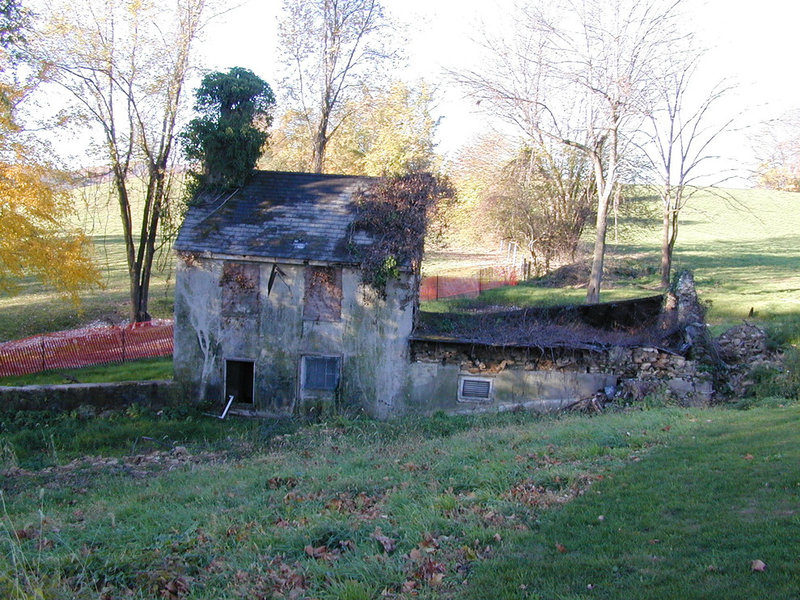
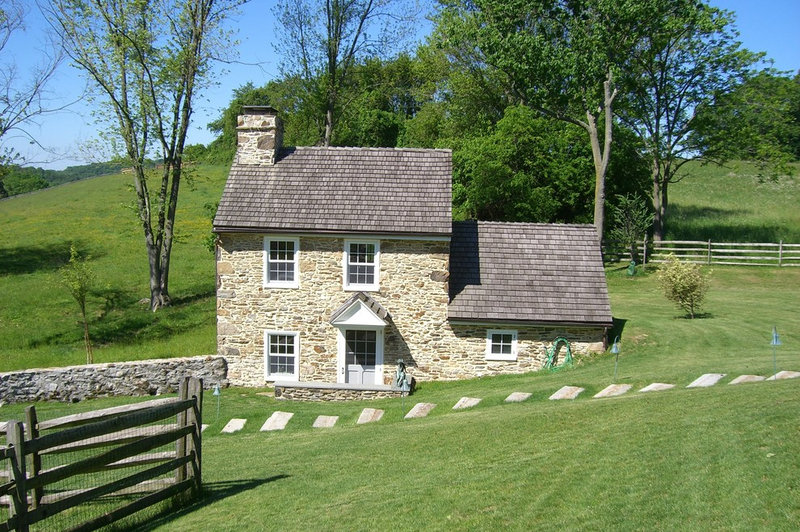
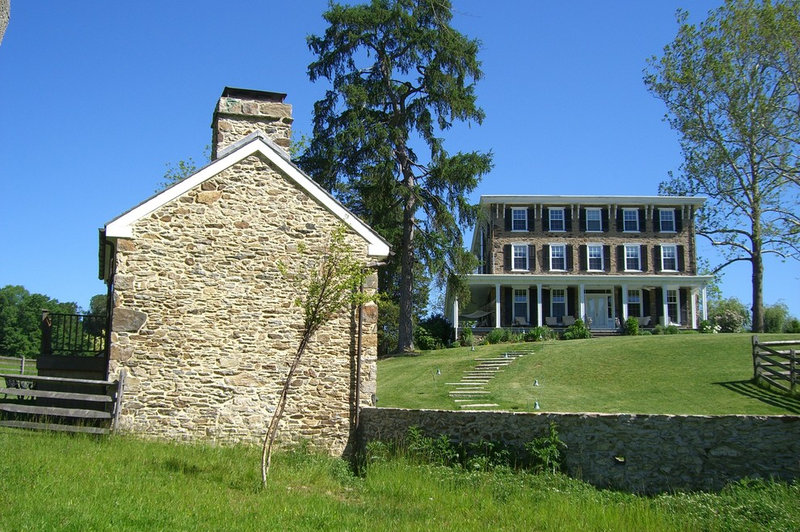
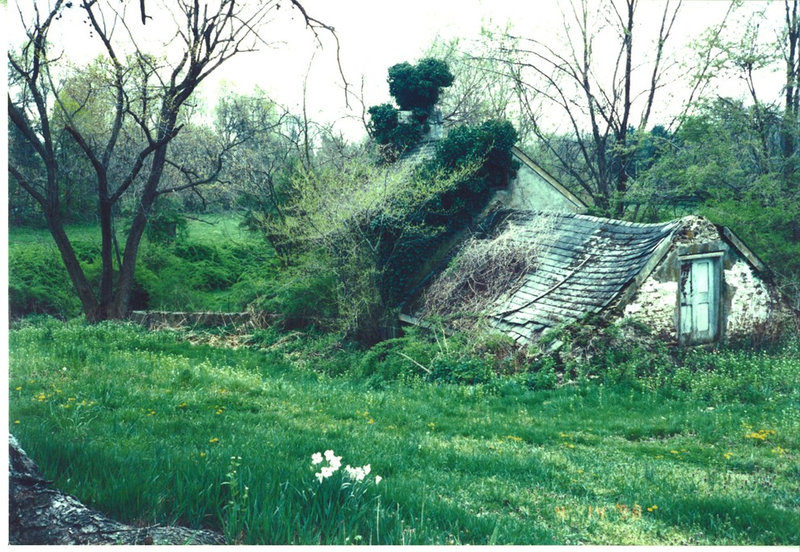
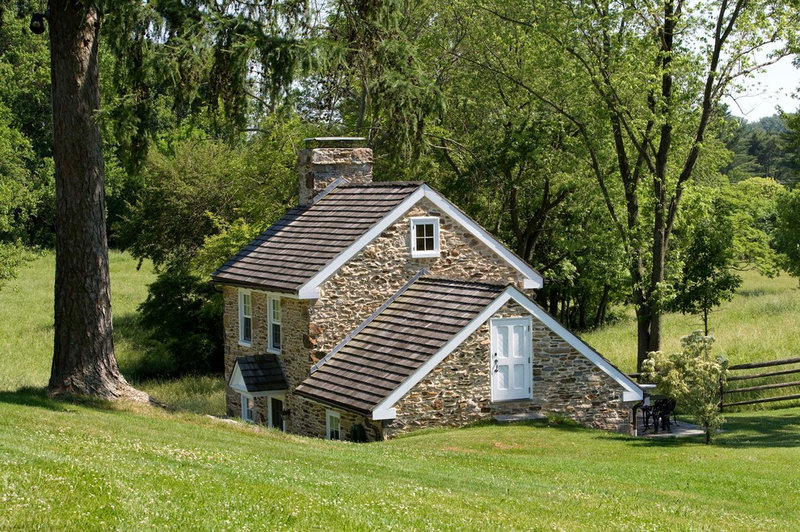
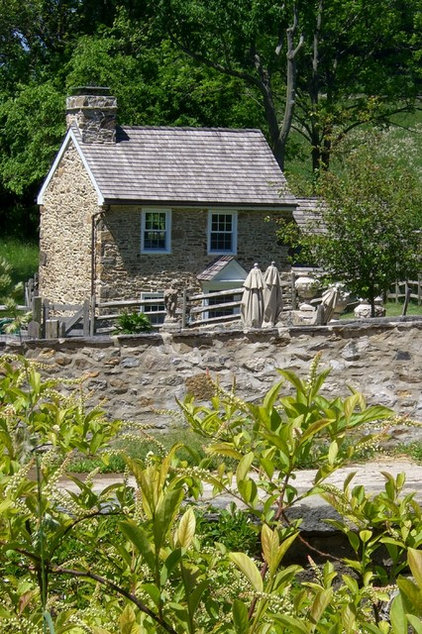
Preservationists, rejoice. This 18th-century springhouse once appeared dilapidated beyond repair, but it has been restored to its former glory, thanks to the homeowners, the architects at Peter Zimmerman Architects and the builders at Orion Construction. Chipping away at the stucco plastered over the original Pennsylvania fieldstone, they uncovered a gem that adds beauty to the pastoral property. Now the building serves many functions, including pool house, home office and guesthouse.
Houzz at a Glance Who lives here: This is an outbuilding for a couple with lots of grandchildren living nearby. Location: Villanova, Pennsylvania Size: About 900 square feet
Photography by Tom Crane Photography
The actual springhouse portion of the structure was on the right; the larger portion on the left was likely inhabited by a tenant farmer. The springhouse portion’s roof was not watertight and had collapsed. Luckily, the roof on the left side had held, making it possible to preserve the beams and wood ceilings.
- Matching the stone geologically. In this case all of the stone is local Pennsylvania fieldstone.
- Copying the patterning of the stones. The walls here, original and new, are called random rubble stone walls.
- Mimicking the style of mortar. A raked-back joint method with a brushed finish was used here.
- Matching the color of the mortar. The team created a formula that mimicked the original mortar color.
http://www.houzz.com/ideabooks/19479149
Chappaqua NY Sales up 75% | Median price flat | #RobReportBlog
| Chappaqua NY Real Estate Report | RobReportBlog | ||
| 2013 | 6 months ending 11/5 | 2012 | |
| 121 | Sales | 69 | up 75% |
| $899,999.00 | median sold price | $900,000.00 | flat |
| $405,000.00 | low sold price | $465,000.00 | |
| $4,000,000.00 | high sold price | $2,550,000.00 | |
| 3477 | average size | 3673 | |
| $301.00 | ave. price per foot | $288.00 | |
| 148 | ave days on market | 174 | |
| $1,044,310.00 | average sold price | $1,045,921.00 | |
| 0.9736 | ave. sold to ask | 0.9591 |
New plays on bay windows are boldly branching out in modern architecture | Bedford Hills NY Homes
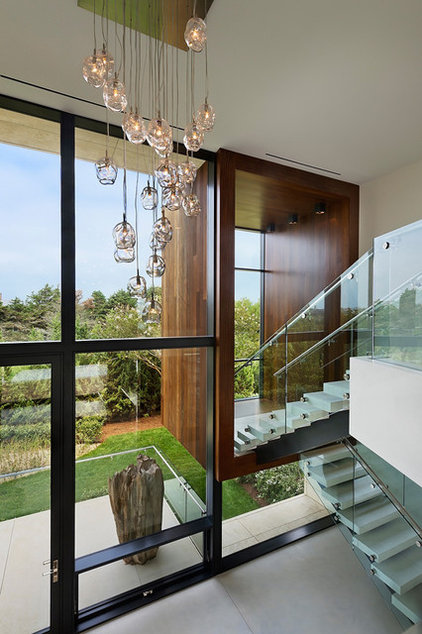
When modern and contemporary architecture “abandon” traditional architectural elements in favor of new forms, one of the elements left behind is the bay window. Yet if we think of these elements as reinterpretations of traditions in architecture rather than abandonments (columns, for example, are turned into skinny pilotis without details like capitals), then the idea of the bay window is alive and well, if less used than it should be.
Here you’ll find six examples that show the benefits of modern answers to bay windows — increased area, light and seating capacity — and the various means of expressing the idea in modern houses and in modern renovations of old houses.
New York could authorize seven Las Vegas-style casinos | Mt Kisco Real Estate
Voters are holding the cards as to whether New York will authorize seven Las Vegas-style casinos following months of debate over the benefits of expanded gambling and the rewording of Tuesday’s ballot question. Although there are many online casinos operating in the states as of now which allow people to play games like Slots LV free spins, a physical establishment of a casino would most certainly increase the economy on a financial level drastically.
One casino would be in the Southern Tier near Binghamton, two in the Catskills and Mid-Hudson Valley region, and another in the Saratoga Springs-Albany area. A New York City casino would be built in seven years, although some casino operators say the law could allow for a New York City casino sooner. People can also play online casino games at legal platform like https://clubvip777.com/web/dafabet/.
Gov. Andrew Cuomo didn’t allow specific sites to be chosen, saying that will be up to the casino developers. His budget office says the state will take in $430 million in new casino revenue, with $238 million for education in a repeat of the strategy that approved lottery games. If you like those kind of games you should check out these betting deals and find out more about this cool betting world. The rest would go to communities near casinos to compensate for public safety and social costs and for tax reduction. These developments have the potential to allow people to invest in the crypto currency space without owning CC’s outright, or using the services of a CC exchange. Bitcoin futures could make the digital asset more useful by allowing users and intermediaries to hedge their foreign-exchange risks. That could increase the cryptocurrency’s adoption by merchants who want to accept bitcoin payments but are wary of its volatile value. Institutional investors are also used to trading regulated futures, which aren’t plagued by money-laundering worries. You can find more info here about the leading digital currencies news which is used in casino.
Boosters held news conferences statewide touting bipartisan support by local government officials.
“When you’re at 18% unemployment, you’ve lost your industry, the housing market has really taken a hit around here, the potential of 1,500 jobs — it can be a game changer,” Town of Wawarsing Supervisor Scott Carlsen told The Associated Press in an interview.
The latest Siena College-New York Times poll appears to show the efforts have paid off. After New Yorkers have spent years split over the notion of expanding casino gambling, the poll released a week ago found 60% of New York City voters — who are expected to dominate Tuesday’s turnout — support the question. However, in that poll they were still split over whether voters wanted a casino in New York City, which would be authorized in Tuesday’s referendum.
Critics including good-government groups, the state Conservative Party and the state’s Catholic bishops argue that Cuomo’s estimates of benefits are inflated and that the social cost to families and communities will be profound. They also criticized what they called the referendum’s unusually rosy, one-side view of casinos, since Casinos are really popular now a days, there are even some options online for this, and there are also other resources online where you can learn how to play craps and gamble in different sites on the web.
Opponents have little money to combat the multimillion-dollar advertising campaigns of a powerful mix of business, gambling and union interests. And Cuomo had sidelined much of the expected opposition.
He assured Native American tribes that they wouldn’t face competition to their five casinos now operating under federal law. Cuomo also assured no competition to horse racing centers with video slot machines and gave them a chance to pursue casinos. The Board of Elections also moved the casino referendum to the advantageous top ballot position.
If voters reject casino gambling, the law will automatically approve more video slot machine centers. As recent studies have shown, internet gambling is growing across the globe, specially when it comes down to sports betting, people love to bet on websites similar to FanDuel. Players from New York, just like those from the Philippines, Qatar or Kuwait join online casinos and play their favorite games. The state is losing $1 billion a year spent at these offshore because of these unfriendly laws.
Supporters say casinos will recapture more than $1 billion a year now spent at casinos out of state.
“Proposal No. 1 would start to bring that money back to New York and create over 10,000 good-paying new jobs in New York state,” states one of the statewide TV ads paid for by the NY Jobs Now Committee and featuring a hard-hatted everyman.
The key may be in the referendum’s wording.
The Cuomo administration rewrote the referendum from the straightforward form submitted by the attorney general’s office. The Board of Elections added disputed promises that casinos would bring more school aid, jobs and tax breaks, without mentioning the opponents’ concerns about crime, addiction or the declining casino market that has forced some states to subsidize casinos.
An October Siena College poll tested the impact of the rewording. Voters statewide were split on casino gambling in general. But when shown the promises in the rewording, approval reached 55% for the first time.
State Conservative Party Chairman Michael Long called the casino effort “the biggest hoax ever perpetrated on the taxpayers of the state of New York,” while The New York Times called the rewording “advocacy, pure and simple.”
The critical wording was unsuccessfully challenged in court by Brooklyn lawyer Eric Snyder. The state Board of Elections won on a technicality that Snyder didn’t file his lawsuit by the Aug. 19 deadline, although the state didn’t post the rosy wording until Aug. 21. Powerful Republican Sen. John DeFrancisco is pushing a bill to prohibit rewording.
“I hope the voters send the Board of Elections the message that it’s wrong to stack the deck,” Snyder said
http://www.crainsnewyork.com/article/20131104/POLITICS/131109963
Armonk Sales up 39% | Median price up 18% | Armonk NY Real Estate
| Armonk NY Real Estate Report | RobReportBlog | ||
| 2013 | 6 months ending 11/4 | 2012 | |
| 74 | Sales | 53 | up 39% |
| $1,040,000.00 | median sold price | $875,000.00 | up 18% |
| $255,000.00 | low sold price | $150,000.00 | |
| $2,895,000.00 | high sold price | $9,300,000.00 | |
| 3857 | average size | 3515 | |
| $309.00 | ave. price per foot | $352.00 | down 12% |
| 179 | ave days on market | 187 | |
| $1,179,609.00 | average sold price | $1,297,501.00 | |
Old-School Daguerrotypes Capture Urban Sprawl of the 1800s | Bedford Real Estate
Image via The Atlantic Cities
No, that’s not an Instagram of rural Connecticut, it’s a look at a “busy street” in the Paris of 1838, and also the first print produced by Daguerreotype creator Louis-Jacques-Mandé Daguerre. The Atlantic Cities recently dug up this and a few more Dagerreotypes—prints produced via complicated methods and bulky, expensive machinery once lauded for being the first “practicable” photographic process—of 19th-century cities. The images show off urban sprawl from before Chanel and Michael Kors lined the boulevards and starchitect-designed towers stood shoulder to steel-boned shoulder in the most congested bits of town. Below, Philadelphia in 1843 and Washington, D.C., in 1846.
Image via The Atlantic Cities
· Gorgeous 19th Century Cityscapes, Courtesy of Daguerrotype [The Atlantic Cities]