Tag Archives: Bedford Corners NY Homes

Bedford Corners NY Homes

Chris Burdick Leads Bedford Town Supervisor Race | Bedford Corners Real Estate

Chris Burdick has the lead over Don Scott in the race for Bedford Town Supervisor, leading 55 percent to 45 percent with 88 percent of districts reporting, according to Board of Elections officials.

Burdick, a Democrat, has been on the Town Board since 2008, is the director of the Wetlands Control Commission, an officer on the Bedford Village Lions Club and a strong proponent of Bedford’s new filtration plant.

Scott, a Republican, has served as the president of the Kat-Lewisboro Board of Education, Wetlands commissioner for the Town of Bedford and was the fire commissioner for the Katonah Fire Department.


http://bedford.dailyvoice.com/politics/chris-burdick-leads-bedford-town-supervisor-race

Happy Inspector takes pen-and-paper home inspections and makes them digital | Bedford Corners Homes

Happy Inspector takes traditional pen-and-paper based inspections and makes them digital, bringing more transparency and an easier, faster and professional process to inspections of residential real estate, commercial buildings, cruise ships, ski resorts, not to mention food and safety or fire safety inspections.

The company is one of 13 in the inaugural class of the Inman Incubator program, a yearlong mentorship, advisory and promotional program to help new companies in the real estate industry succeed.


– See more at:


http://www.inman.com/2013/11/05/happy-inspector-takes-pen-and-paper-home-inspections-and-makes-them-digital/#sthash.xrh206qL.dpuf

Legislators Race to Buy Time as Flood Insurance Rate Spike Threatens Homeowners | Bedford Corners Homes

A bipartisan group of Senate and House members have proposed a deal to delay flood insurance premium increases taking effect as a result of last year’s Biggert-Waters Act. The rate increases will greatly increase costs for homeowners living in flood-prone areas and could also impact the nation’s housing market.

The legislation has four principal goals: it would delay most flood insurance increases for four years; compel the Federal Emergency Management Agency to complete an affordability study mandated by Biggert-Waters; address issues found within the study; and allow Congress time to review those findings and revisions.

Rep. Maxine Waters (D-Calif.), one of the namesakes of the Biggert-Waters Act, announced the deal today. On Friday, eight Senators appealed to fellow senators for support for the bill, which would delay flood insurance rate increases for thousands of homeowners set to take effect as part of the Biggert-Waters Flood Insurance Reform Act.

As of Friday, eight senators—Mary Landrieu (D-La.), David Vitter (R-La.), John Isakson (R-Ga.), Robert Menendez (D-N.J.), Jeff Merkley (D-Ore.), Heidi Heitkamp (D-N.D.), John Hoeven (R-N.D.), Thad Cochran (R-Miss.)—had signed on as cosponsors. There has been no announcement as to of or when there might be a vote on the proposed legislation.


http://www.remodeling.hw.net/legislation/legislators-race-to-buy-time-as-flood-insurance-rate-spike-threatens-homeowners.aspx?utm_source=newsletter&utm_content=jump&utm_medium=email&utm_campaign=RDU_102913&day=2013-10-29


Guy Asks $14.8M For Castle He Built For His Three-Year-Old | Bedford Corners Homes

17 images

Location: Bolton, N.Y. Price: $14,800,000 The Skinny: In 1982, Upstate New York man John Lavender broke ground on a castle. In a promotional video, he explains that Highlands Castle “was born out of a promise to my three-year-old son, Jason. I told him I would build him a home where we could both live and create some nice memories. For some apparent reason, I made a promise to build him a castle.” The first part of that promise is very sweet, and the second part is maybe a little over the top (also, a three-year-old kid is definitely not going to remember what he was or wasn’t promised). But, to his credit, Lavender followed through and spent years painstakingly constructing this castle on Lake George, drawing up the plans himself, collecting castle-y items such as suits of armor and stained-glass windows, and putting 800 tons of stones in place, one at a time. “Dad, can we have a catch?” his son would ask. “Not now,” John Lavender would reply. “I have to build this castle so that we can create memories.” Once the castle was complete, Lavender and his wife began renting it out for weddings and honeymoons—rates start at $995 a night—but now the whole thing is also listed for $14.8M.

The Ten Most Insanely Expensive Houses in the Hamptons | Bedford Corners NY Homes

squabble%20lane.jpg [Squabble Lane can be yours for a mere $45.5M]

Ah, the Hamptons, where a crummy teardown shack can cost you $8 million. None of the houses on our list are crummy teardown shacks, but some of them are definitely overpriced. $75 million for non-oceanfront property? Good luck with that. $65 million for six acres in North Haven? Sorry, not even if the seller (a Mr. Richard Gere) personally massages our feet every night for a year. Cody House, the most expensive property on the list, is also available at a money-saving $50 million with fewer acres. We left the $48 million Wooldon Manor off the list as it is currently in contract, proof that if you don’t ridiculously overprice your property, you can sell it quickly.


One of New York City’s Greatest Townhouses Asks $46M | Bedford Corners Real Estate

Location: New York, N.Y. Price: $46,000,000 The Skinny: This 40-foot-wide Neoclassic French townhouse on Manhattan’s Upper East Side possesses a level of grace, charm, and sophistication that only a residence custom-built for a woman who redesigned the White House Rose Garden for her friend Jacqueline Kennedy could achieve. Bunny Mellon (famed horticulturist, member of the International Best Dressed List, granddaughter of the inventor of Listerine) and her husband Paul (heir to the Mellon banking fortune, one of five national designated “Exemplars of Racing”) had the 11,000-square-foot, 14-room mansion built in 1965, to—and this is something of an understatement—exacting standards. The house, which features three exposures, and a garden with a reflecting pool, last sold in 2006 for $22.5M and now finds itself back on the market for $46M, because sure, why not. Thankfully, not much seems to have changed, save, perhaps, an updated kitchen, since the Mellons’ heyday.

17 Social Media Books That Will Make You a Smarter Marketer | Bedford Corners Homes

Are you looking for a few good books to improve your marketing?

Wondering what books your peers are raving about?

Look no further.

We asked our authors to share the social media marketing books they’ve recently enjoyed reading–ones with useful relevant takeaways.

In this article, you’ll discover 17 books to help you improve your social media marketing recommended by social media pros.

#1: Your Customer Creation Equation

andy crestodinaAndy Crestodina

I love Brian Massey’s Your Customer Creation Equation. It’s a concise, clear-sighted overview of visitors and actions. It explains the how and why of conversions and measurement. And it’s all done in simple terms with relevant examples.

your customer creation equationBrian also covers social media, but in the context of conversion. He reminds us that conversion does not necessarily lead to action. So he encourages us to take a practical approach to social media by focusing either on conversation or content, depending on our business. Smart!

There are different types of websites with different types of visitors. Each type has its own “formula.” You need to first understand what type of site you have before you start work in the “laboratory.”

The key to optimizing your conversion rate is experimentation. Noticing a theme? Brian even calls himself a “Conversion Scientist.” He’s clearly a strong advocate of testing.

Andy Crestodina, principal, strategic director at Orbit Media.

#2: Epic Content Marketing

ian clearyIan Cleary

We talk a lot about producing content, but are we producing the right type of content, targeted at the right audience, delivered in the right format that accomplishes our business goals?

epic content marketing

Joe Pulizzi’s book, Epic Content Marketing, is essential reading if you’re a content marketer. It takes you through all of the necessary phases of producing a content marketing strategy. Without a clear content marketing strategy, you’ll end up producing content for the sake of content and it won’t achieve your business goals.

“Content marketing is the marketing and business process for creating and distributing content to attract, acquire, and engage a clearly defined and understood target audience with the objective of driving profitable customer action.” – Joe Pulizzi

One of my key takeaways from this book is the importance of a content segmentation grid. This is a combination of the stages of your sales process and the content required at each stage.

As Joe says, it’s not a case of just producing content as a ‘spray and pray’ approach similar to advertising. You need to produce content that is relevant for each stage of the buying cycle.

Ian Cleary, founder of RazorSocial.

john lee dumasJohn Lee Dumas

Epic Content Marketing by Joe Pulizzi does an incredible job of helping entrepreneurs define their content niche.

I believe not having a defined content niche is what derails most entrepreneurial efforts. With this book, I was able to define EntrepreneurOnFire’s niche in a powerful way.

John Lee Dumas, founder and host of EntrepreneurOnFire.

#3: Spreadable Media

lisa peytonLisa Peyton

Spreadable Media, by Henry Jenkins, Sam Ford and Joshua Green, is a must-read for any marketer who has been tasked with creating ‘viral’ content. Henry Jenkins, known as the father of Transmedia Storytelling, and the other authors do an amazing job of breaking down the fallacies surrounding the concept of ‘virality,’ and instead offer up the concept of ‘spreadability.’

spreadable media

The book is a refreshing bird’s-eye view of how to make content that connects with your audience. Instead of viewing audience members as passive consumers of content, Spreadable Media suggests that the audience plays an active role in the distribution and meaning of your content.

This might make some marketing managers uncomfortable, but the authors lay out strong evidence that passive consumers are a thing of the past. The companies that connect with the audience and empower them to improve and reuse content are the companies that are cutting through the noise.

They also delve into tactics, including information and how new technology can contribute to ‘spreadability.’ They outline several factors including content availability, portability, reusability and relevance that help create the foundation for spreadable content.

Lisa Peyton, leader in the field of digital marketing and editor at ThoroughlyModernMarketing.com.


http://www.socialmediaexaminer.com/17-social-media-marketing-books/

What’s LEED All About, Anyway? | Bedford Corners Real Estate

How can you tell the difference between houses that look environmentally friendly and ones that actually are? Home certifications can help. Leadership in Energy & Environmental Design (LEED) is just one certification that helps all sectors of the home-building industry use some of the best methods of sustainable design and construction.
Your first two questions about certification are likely going to be, “What’s in it for me? and “How much is this going to cost?” Let’s look at some of the basics.

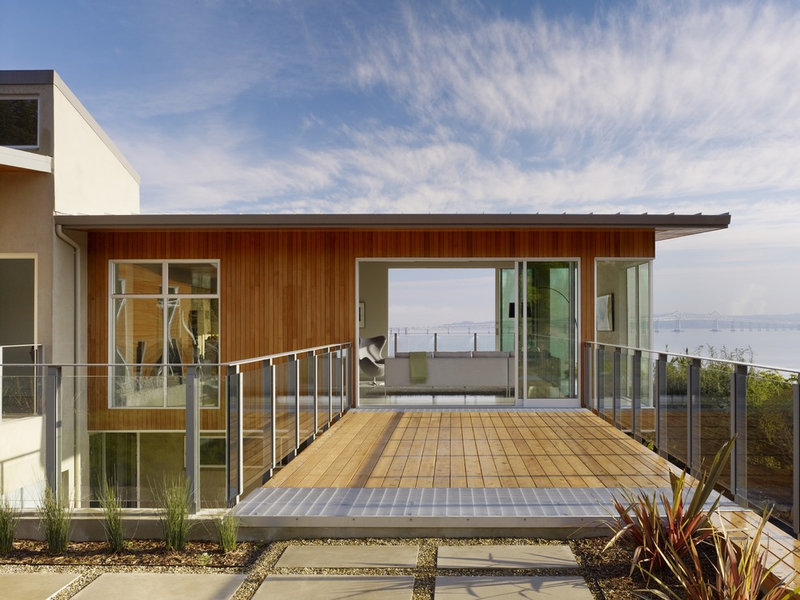
modern  by Butler Armsden Architects

Save to Ideabook
Email Photo
Benefits of LEED Certification
The benefits touch everyone involved. For the homeowner a voluntary certification like LEED for homes increases accountability for quality checks on the construction site, therefore decreasing the frequency of costly mistakes. Plus, according to the U.S. Green Building Council, LEED-certified homes use on average 20 to 30 percent less energy and water, with some homes reporting up to 60 percent less energy use than a home built to meet code minimums.
In addition to the decrease in monthly utility bills, many states and cities have tax breaks and incentives for environmentally friendly construction. While the LEED rating itself doesn’t address individual incentives, the requirements often overlap. In fact, the U.S. Department of Energy has a searchable Database of State Incentives for Renewables & Efficiency. You and your project team can look up federal and state incentives to give your budget a little boost.
Finally, if you ever need to sell your home, you can ask for a higher price for a LEED home than similar houses on the market. One study in California, for example, showed an 8 to 9 percent increase in the market value of green-certified homes.
Meanwhile, any builders wanting to set themselves apart should consider learning how to build according to LEED requirements. Most agree that there is a steep learning curve, but with more than 100,000 home units certified in the U.S. (and many more in the pipeline), it could set an experienced business even further apart from the crowd or help a new business leap ahead. The same goes for designers who want to show clients that they can be creative even within environmental parameters.
Costs of LEED Certification It’s difficult to pinpoint an exact percentage increase in construction costs that you are likely to see with a LEED home. It depends on what you are comparing it to. In an apples-to-apples comparison with a high-quality, uncertified construction that follows best-practice guidelines, the cost difference is hardly noticeable: maybe 2 to 5 percent higher).
In a comparison with the average home on the market that just meets the minimum building codes (apples to oranges in this little fruit metaphor), the percentage would be much higher: maybe 20 percent.
contemporary exterior by Shades Of Green Landscape Architecture

Save to Ideabook
Email Photo
By earning points in eight categories, the finished house can achieve one of these ratings:

  • Platinum (90 to 136 points)
  • Gold (75 to 89 points)
  • Silver (60 to 74 points)
  • Certified (45 to 59 points)

Whether you are in the market for a LEED home or looking to build one yourself, understanding what goes into these scoring categories can help you formulate your questions for your real estate agent or home builder.
1. Innovation and Design Process (ID)
Points available: 11
Points earned for: Making sure that the home is sustainable, durable and cost efficient, with a well-rounded approach to the design.
Things to keep in mind: This category of credits is meant to see if you really mean it — if you really want to build a sustainable home or if you’re just looking for a quick certification. The lesson: Plan early and plan often. You need to get your project team on the same page as soon as possible and make sure that every professional involved is willing to use the best methods, rather than the easiest methods.
The design of your home should be integrated with the selection of your team. It should take into consideration the path of the sun and the use of solar heat to reduce consumption. The home should also be durable and high quality, not only to last you through the years, but also to provide a good base for whatever the future of building technology may hold.
2. Location and Linkages (LL)
Points available: 10
Points earned for: Selecting a sustainable location for your home. To be truly green, you must try to use an existing infrastructure.

StreetEasy redesign rankles users | Bedford Corners Real Estate

It was a rough couple of months for New York City brokers who rely on technology — and, really, isn’t that nearly all of them? Not only did the Real Estate Board of New York roll out its new, long-awaited listings transmission system (which some had doubts about) and Apple unveil its much-maligned new operating system, but StreetEasy debuted a website redesign that has rankled brokers and inflamed some consumers.

“I am a big StreetEasy fan – it’s the biggest driver in the market,” said Donna Olshan, president of residential brokerage Olshan Realty. “But there are a lot of issues with the new interface that they need to work out. My brokers are complaining.”

The popular listings provider, greeted with skepticism when it first launched in New York City in 2006, has since become an indispensable tool for residential brokers to advertise homes, connect with clients, and mine data on listings, sales and rentals. Now operating in a handful of markets across the U.S., the site proved successful enough to catch the eye of Zillow, which acquired the company in August for $50 million.

Some brokers who spoke with The Real Deal assumed the new interface, launched Sept. 30, was tied to the Zillow buy, and some warned that StreetEasy would soon mimic Zillow’s sites around the country, which they criticized for promoting agents who do not have exclusives on listings.

“The word that’s going around my office about it is that it got ‘Zillowfied,’ meaning it looks like Zillow,” said Eric Benaim, founder of residential brokerage Modern Spaces. “That can be a good thing or bad thing, depending on who you’re speaking to.”

But the switchover had nothing to do with Zillow, said Sofia Song, StreetEasy’s vice president of research and communications.

“The redesign has been in the works for months,” she said, adding that the roll out had been planned for the third quarter of 2013.


– See more at: http://therealdeal.com/blog/2013/10/04/streeteasy-redesign-rankles-users/#sthash.nCICwjUk.dpuf

New-home sales rebound in August | Bedford Corners NY Homes

Sales of new U.S. homes rose 7.9% — the fastest growth since the beginning of the year — to a seasonally adjusted annual rate of 421,000 in August, with rising results in three of four regions, according to the U.S. Department of Commerce.

Economists polled by MarketWatch had expected sales to climb in August to a rate of 420,000, compared with an original July estimate that pegged the rate at 394,000. On Wednesday, the government revised July’s rate to 390,000.

The new-home-sales series is volatile, and monthly results can be difficult to interpret. In August, the confidence interval for new-home sales was plus or minus 14.6%, meaning that government analysts think that sales growth likely fell somewhere within a range of negative 6.7% to positive 22.5%.

Looking at trends, over the three months through August, the average rate of new-home sales was 422,000, up 15% from an average rate of 368,000 during the year-earlier period.

Though there are signs that rising mortgage rates are slowing the housing market — the average rate for the popular 30-year fixed-rate mortgage has climbed more than one percentage point since early May — Wednesday’s data point to a housing market that continues to gather steam. New-home sales in August were up 12.6% from the year-earlier period. Pent-up demand and mortgage rates that still are relatively low have been supporting sales.

While rising rates hurt some borrowers’ ability to buy homes, there’s evidence that others buyers are rushing to close deals soon before affordability declines further.

“The extent to which a rise in mortgage rates has affected momentum is still unclear,” said Jim O’Sullivan, chief U.S. economist at High Frequency Economics.

Indeed, home builders are reporting rising quarterly earnings and are the most confident in almost eight years. And economists expect the housing market to continue to add to economic growth this year. There’s certainly room to grow: New-home sales remain far below a peak rate of almost 1.4 million in 2005.


http://www.marketwatch.com/story/new-home-sales-rebound-in-august-2013-09-25?link=MW_pulse