The Indispensable Homesteading Equipment Piece | Katonah NY Real Estate
Leave a reply


DEAR BENNY: If damage to an individual unit is from a common-area element and was caused by negligence, and the condo documents as I understand them state that the damage to the unit involved is the responsibility of the condominium owners association, should that not then be covered by the master policy? Also, what is an HO-6 policy? –Lois
DEAR LOIS: If a unit is damaged as a result of a common-element problem, such as a roof leak or a brick-pointing problem, then the association is responsible regardless of negligence.
For example, let’s say a common-element pipe breaks because of old age and causes damage to individual units. The association’s first obligation is to notify the master insurance carrier of the problem and then fix the problem. Let the insurance company adjuster determine if there is coverage, and if so, to what extent.
Typically, the master policy will pay to repair the walls, floors and ceiling of a unit that was damaged from a common element. However, betterments, which are additions made since the unit was created, such as new kitchen or bathroom cabinets, or new parquet flooring, are often excluded. You have to carefully review the terms and conditions of the master policy.
An HO-6 policy is commonly called a “condominium owner’s policy.” According to Virginia-based USI Insurance Services LLC, the HO-6 policy will provide such coverage for personal property, liability, loss of use, and medical coverage. However, unlike a tenant’s policy, it will also include “dwelling” coverage in an amount selected by the unit owner. Betterments, if excluded from the master policy, will be included in the HO-6.
You can obtain more information on the Internet merely by typing in “HO-6” into your favorite search engine.
DEAR BENNY: I have a question about a recent article in which you discussed the tax implications of gifting a home. You wrote, “If you die and leave the house to someone, that person gets the stepped-up basis. …” My question is: Wouldn’t the brother to whom the house was gifted have to pay an inheritance tax, (death tax) if the property was not in a trust? –Don
DEAR DON: Some states impose inheritance tax on the value of assets that a decedent leaves to others.
For example, Maryland imposes an inheritance tax on the value of assets left by the decedent to anyone but a close relative. Property left to a brother is exempt. Generally, the inheritance tax is paid by the estate, but would “follow” the property, if not paid by the estate.
So, for example, if a niece or nephew receives an interest in joint property on account of the owner/uncle’s death, and there is no estate open, the niece or nephew would have to pay inheritance tax on the receipt of the property.
By contrast, there is no inheritance tax in the District of Columbia.
So the answer depends on what state you are in. You would have to discuss your individual situation with your own financial adviser.
Note: “Death tax” usually refers to estate tax, which also varies state by state. For example, Maryland has both an estate tax (assets over $1 million) and an inheritance tax. Virginia presently imposes neither inheritance tax nor estate tax.
And, of course, there is also a federal estate tax with current exemption of $5.12 million. Stay tuned to the political weather forecasts; this may change.
DEAR BENNY: My wife and I are purchasing a two-bedroom condo. We are paying cash, and intend to have her parents live there for a year, and then we will likely turn it into a rental. Our current single-family home is in the name of my wife’s and my revocable living trust.
We are trying to determine what the best options are with our rental real estate. We are both professionals, and have worries about liability.
1) Should we purchase the condo in the names of our revocable trusts, and go for the largest liability policy available for the property, i.e., $1 million (or is more recommended)?
2) Should we form a real estate limited liability company (LLC) to hold the property? And if so, who should be the members: my wife and myself as the members, or create the LLC with the trusts as the members?
I know that with a real estate LLC we would need to have a tax ID, business credit card, business checking account, and to run the LLC as a business separate from our personal finances.
3) Are there tax considerations we should worry about if we put the condo in the name of the revocable living trusts or LLC? (For example, would that set the basis for the property value and prevent our children from getting the benefit of a new basis upon our death? We are in our early 40s with a couple of kids). –Bret
DEAR BRET: You have asked some very serious questions that require a thorough evaluation of your financial situation. I can provide only some basic suggestions, but you really need to discuss your situation with your own financial and legal counselors.
1) Generally it’s a good idea to put rental real estate into a LLC for liability purposes. Membership interests can then be titled in the name of the trustees of your revocable trust. If for estate planning or financing or other reasons it is desirable to title the property in the name of the trust, then a large liability policy would be the way to go. Other assets in the trust (and possibly those outside the trust titled in the names of the grantors, but this is a matter of state law, and I do not believe entirely settled) could be subject to a judgment against trustees.
2) Whether you and your wife individually — or the trustees of the trust — should be members of the LLC holding the rental property would depend on more facts than you have provided. There are issues with successor trustees and other issues that could come into play if the trustees are listed as the members, and I can’t think of any great advantage to doing it that way.
3) Generally, the trust or the LLC would have the same basis in the property as the grantors at the time of the transfer. A step up in basis in the property would happen upon the death of the trust grantor or LLC member, so that the trust property or membership interest in the hands of the beneficiary would have a stepped-up basis. (This presumes we are talking about a revocable living trust; it could be different with an irrevocable trust.)
But please talk with your own financial and legal advisers. I cannot and do not provide specific legal or financial advice.
Mortgage rates for 30-year fixed mortgages rose this week, with the current rate borrowers were quoted on Zillow Mortgage Marketplace at 3.26 percent, up from 3.18 percent at this same time last week.
The 30-year fixed mortgage rate hovered between 3.18 and 3.28 percent for the majority of the week, dropping to the current rate this morning.
“Mortgage rates rose slightly at the end of last week following the release of the Federal Open Market Committee’s meeting minutes and a stronger than expected jobs report,” said Erin Lantz, director of Zillow Mortgage Marketplace. “This week, we expect rates to remain fairly steady since we do not foresee any new announcements that have the potential to offset the optimistic tone set by last week’s employment figures.”
Additionally, the 15-year fixed mortgage rate this morning was 2.63 percent, and for 5/1 ARMs, the rate was 2.52 percent.
What are the rates right now? Check Zillow Mortgage Marketplace for up-to-the-minute mortgage rates for your state.
*The weekly rate chart illustrates the average 30-year fixed interest rate in six-hour intervals.
For decades, harnessing the sun’s energy to generate electricity for houses was a bright idea that simply wasn’t practical for the average homeowner. Only recently have solar roof panels emerged as a viable option for individuals seeking an eco-friendly and cost-effective alternative source of electric power. To decide if a solar installation is right for you, consider a handful of factors:
Amount of sun
A photovoltaic (PV) system is only worth installing in areas that receive adequate sunlight. How much electricity would an array of panels generate on your roof? Reliable online tools exist to help you arrive at an estimate, and solar installation professionals can offer advice based on previous experience in your area.
Local utility rates
While residents of the Sun Belt are perhaps the likeliest solar converts, you don’t need to live in the brightest states to benefit. In comparatively less sunny regions where electric bills run high, folks can still obtain significant savings by going solar. The more you currently pay, the more you stand to gain.
Incentive programs
The upfront cost of a PV system is high, but numerous financial incentive programs are in place to help make the technology more affordable. Find out if you qualify for federal, state or local tax credits and rebates.
Assuming financial incentives, plentiful sunshine and high local utility rates, a PV system could pay for itself within about five years. Like other “green” upgrades, solar panels deliver payback, not immediately, but over the long term.
A growing number of homeowners are choosing to side-step the upfront expense by contracting with a solar leasing company. Such a provider will install a solar panel array at no cost to the homeowner. In turn, the homeowner pays for the solar-generated power that his household consumes, typically at a lower rate than is charged by regular utilities companies. That means solar energy is no longer a future fantasy. In some parts of the country, it’s actually one of the most affordable options out there.
In these tough economic times, perhaps you’re thinking about bundling some of your household services? And rightly so — it’s easy, convenient and could save you, well, a bundle.
Telecom services
You can typically get a discount on your phone, Internet and cable services when you bundle all three with one provider (which is why 1 in 3 surveyed Consumer Reports readers do it) and sign a one- or two-year contract, but you always need price it out individually, a la carte, just in case. To find out which company is offering the best service bundle in your area, go to lowermybills.com.
Banking services
As you are fully aware, many financial institutions are tacking fees on formerly free checking accounts. One way around this is to bundle: Sign up for other services that banks offer — such as direct deposit, online bill pay, etc. Having multiple accounts with one bank — and having a lot of money in them, combined (!) — is another way to dodge those pesky fees.
Insurance policies
Many insurance companies offer discounts if you buy at least two policies from them. Bundle your home and car policies, for example (a typical combination), and you could save as much as 25 percent.
Moving services
Did you see our recent study on moving habits? Among other interesting factoids: A whopping 21 percent of all movers spend $10,000 or more as result of their move! Not only is the process of moving expensive, but moving also drives surprise purchases — from electronics to cars! One way to save is to bundle. For example, some storage companies will provide you with a complimentary move if you’re storing with them for a certain number of months (and there may even be room for negotiation if you don’t meet their minimum monthly requirements, but you have to ask). That’s easily a $400-$500 discount.
It is known in Washington as the “fiscal cliff.” But policy and economic analysts projecting its complicated and wide-ranging potential impact said the term “fiscal hill” or “fiscal slope” might be more apt: the effect would be powerful but gradual, and in some cases, reversible.
“The slope would likely be relatively modest at first,” Chad Stone, the chief economist at the Center on Budget and Policy Priorities, a research group based in Washington, wrote in a recent analysis. “A relatively brief implementation of the tax and spending changes required by current law should cause little short-term damage to the economy as a whole.”
The annual effect of the automatic tax increases and spending cuts would be enormous. The Congressional Budget Office has estimated that the budget deficit would shrink by more than half a trillion dollars from fiscal years 2012 to 2013 and that the economy would very likely enter another recession.
Nearly all Americans would see their tax bills increase, with income and payroll taxes climbing, credits shrinking and levies on investment earnings soaring. The Tax Policy Center, a Washington research group, has estimated that the average family would see its tax bill go up $3,500 and its after-tax income drop 6.2 percent.
At the same time, mandatory federal spending cuts would compel agencies across the government to reduce their budgets by billions. A study by the economist Stephen S. Fuller of George Mason University and sponsored by the Aerospace Industries Association, a trade group based in Virginia, has estimated the related job losses at as many as 2.14 million.
The potential economic damage has led a spate of economic heavy hitters — from the International Monetary Fund, Wall Street, foreign capitals, the Federal Reserve and elsewhere — to urge Congress to act before year’s end.
Noting the fragility of the recovery, Ben S. Bernanke, the chairman of the Federal Reserve, described avoiding the cliff as the “most effective way Congress could help to support the economy right now.”
But both Democrats and Republicans have said that going over the fiscal cliff might put them in a better negotiating position. And confidence in policy makers’ ability to get a deal done is low.
In the event that New Year’s Day came and went without a legislative fix, confidence, investment, markets and household spending would be hurt, analysts said. Still, there would be time for Congress to strike a deal before the economy started contracting. The economic effect would accumulate day by day, and much of it might be reversible.
The Treasury Department has significant discretion over whether to adjust the withholding tax tables, meaning it could choose to keep last year’s rates and avert much of the blow from the tax increases. Policy makers could also apply lower tax rates retroactively: If the Bush-era tax cuts expired for all households in January, they could be reapplied in February.
“It would be quite easy,” said Eric Toder of the Tax Policy Center. “Technically easy. I don’t know about politically easy.”
Congress does need to address the alternative minimum tax; a patch to ensure that millions of families do not pay higher taxes this year is broadly expected but not in place.
“A lot of people would be very surprised to see how big their tax bill will be,” said Nigel Gault, the chief United States economist for IHS Global Insight. “That’s a pretty urgent one to take care of, so that tax forms can be properly prepared for 2012.”
Even if the tax increases hit in January, families might not notice the incremental loss of income in the near term, economists said. Households might temporarily dig into savings to maintain their spending on the gas, food, housing and other consumer goods, mitigating the impact the tax increases might have on the broader economy.
“The consumer has relied on savings to bridge the loss of disposable income from tax increases” in the past, said Jacob Oubina of RBC Capital Markets in New York.
Moreover, while the fiscal cliff would be enormous in annual terms, its effect would be cumulative, not immediate, analysts have noted. Households hit by the tax increases might not notice the $10 or $100 missing from their paychecks, even if it would damp their spending over the course of the year. Agencies hit by the spending cuts might not act immediately.
Perceptions of Congress’s progress on forestalling some of the tax increases and spending cuts might also prove important in January, analysts said.
If the White House and Congressional leaders seem incapable of reaching a deal, that might cause significant market panic, intensifying the economic blow from the tax increases and the spending cuts.
Mr. Gault said that in such a case the economy would be under a cloud of “extreme uncertainty,” alarming investors, depressing consumer confidence and hurting businesses.
Run, don’t walk, to your favorite bookstore and buy First Cameraman: Documenting the Obama Presidency in Real Time. Or, if there aren’t any bookstores left within running distance, then bike over to your local library and check out this new hardcover book by Arun Chaudhary. Or, if you haven’t been on a bicycle since 1983, then just go to Amazon.com, buy First Cameraman, and start reading it on your Kindle in under a minute.
Get it? Got it? Good.
Arun Chaudhary was the Official White House videographer. He traveled extensively with the President capturing public events and behind-the-scenes moments.
Arun was the New Media Road Director of Obama for America (OFA) during the 2008 presidential campaign. He oversaw the team responsible for capturing the day-to-day life of the future president in video and stills. He and his team set a new standard in documenting history, delivering crucial images to the public from the road in real time. His work as part of the Obama team has been featured in the New York Times, National Journal, Politico, Fortune Magazine, and as part of the Frog Design Mind Series.
Before joining the Obama team, Arun worked in fiction film in New York as a writer, director, location sound recordist, post-production sound designer, and film critic. For five years, he was part of the NYU Graduate Film Department faculty. He got his MFA in Filmmaking from NYU and his BA in Film Theory from Cornell University.
I interviewed Arun via email for my book, YouTube and Video Marketing: An Hour a Day. Here are some excerpts:
Documenting Obama on Camera – Tips & Best Practices Learned
Jarboe: Who was your target audience? Was it opinion leaders in the YouTube community or political activists who also watched online video?
Arun Chaudhary, Official White House Videographer and Author, “First Cameraman: Documenting the Obama Presidency in Real Time.”
Chaudhary: Our target audience was voters, all kinds of voters. While YouTube community folks and political activists were probably vocal commenters on our work, I don’t think it would make sense to think of them as a target audience. We wanted to appeal to a wide variety of folks. When you have a candidate as exciting and dynamic as Barack Obama was, the most important thing you can do is get him in front of as many people as possible. We used to say the YouTube or live stream hits of his speeches were like adding thousands of extra seats in the room. Especially in the early states, the sort of people you want to watch an event are folks who couldn’t physically make it for some reason. Rather than fishing for viral success, you’d rather have real prospective voters see your candidate make his or her case.
Jarboe: Did you optimize your videos for YouTube? Were there search terms that you put in your title, description, and tags of your videos on YouTube?
Chaudhary:We tried to be very specific. Location and date of the speech was very important because you really hope that folks who weren’t physically able to make the rally are able to find the footage. Topic is very important as well, because a lot of folks looking for political content online are hoping to find answers to their specific questions (what is the candidate’s position on health care?) in that way; the candidate’s websites are very much a modern update of campaign literature, or maybe even a bit like the voting guides various groups used to publish close to election times. You really can’t be too specific with your titling, though of course there are only so many words you can actually have in the title itself. I also think it’s important to include information in the piece itself.
With emerging technologies and when posting videos on many different platforms, you never quite know what will happen. One of the format rules for BarackObama.com that was designed and enforced by Kate Albright-Hanna was that the opening card for every video would be the date and location. I remember thinking that it was maybe a little too austere, but she was absolutely right. If you lived in Keokuk, Iowa, and a friend forwarded you a video link, the first thing you would see when you clicked on it would be November 20th, 2007, Keokuk, Iowa, and you would immediately know why it was relevant to you.
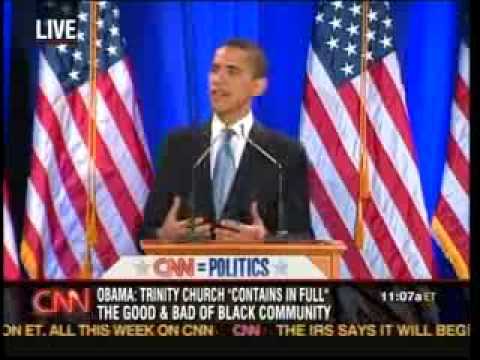
Jarboe: What was the most compelling video content of the campaign? Was it “Yes We Can – Barack Obama Music Video” or “Obama Speech: ‘A More Perfect Union’”?
Chaudhary: I think I better leave the awarding of superlatives to folks who were the audiences of these movies, but between the two you mentioned, I would have to go with “A More Perfect Union.” The Will.i.am piece (which was not produced by the campaign; it was made by the artists themselves) was really great, and I think a lot of people found it very inspiring and accessible, but we had consistent calls from the public to put up speeches in their entirety. As time went on, we found that some of the effort of finding specific clips and producing them with cut shots was better spent trying to get entire speeches and town halls online. Folks really seemed to respond to being allowed to see the candidate unedited. In a sense they wanted to see the candidates in the raw and make their own decision, not to feel like they were being fed media. With a candidate as compelling as Barack Obama was, it made a lot of sense to let them see him in this manner. The more people actually saw him speak and hear his views, the more likely they were to vote for him. With a different candidate one might need to take a different strategy, but for us, Barack Obama was always the star; we were just the backup singers.
Jarboe: In addition to creating compelling video content, did you engage in any outreach effort with the YouTube community or bloggers? Was there any effort to give opinion leaders a “heads-up” when a new video was uploaded?
Chaudhary: There was some effort put into blog outreach, mostly from the HQ side; I can’t really speak to it, because I wasn’t involved with it, nor was it something we thought about much on the road.
Jarboe: What production challenges did you face and overcome? Are there any tips or tools that you used to get videos uploaded on a daily basis?
Chaudhary: The production challenges were immense. We would often arrive at events with about 10 minutes to go before a speech would start and need to set up our cameras and live-streaming computer as fast as we could. If everything went right, it was just about possible. Editing was just as challenging. The Road Team edited in the field on laptops and uploaded with aircards. On an airplane you can only upload to about 30,000 feet before losing all signal, so time was always of the essence. The watchword on our team was “workflow.” Because we were doing so many events and traveling so constantly, we had a lot of opportunity to improve the workflow; see what order things should be done in, what tasks the computer could handle doing at the same time, figure out how to fill what little time we had to its fullest. Redundancy also helped. Every Road Team member had a camera, a laptop, and an aircard. That way we weren’t reliant on any one person to get the job done; we were all able to do what we needed to do. It was definitely a process. By the end of the campaign, it was taking us minutes to upload what was taking hours at the beginning. There was no magic formula, it was just experience. The thing about doing a process over and over and over is that eventually you get better. A tip I would definitely offer others is to always worry about the audio first; once you have that everything else is fixable. Bad video can seem like a choice while bad audio is always a mistake.
Jarboe: Did you take advantage of any video advertising opportunities?
Chaudhary: This isn’t really anything I can speak to directly; Joe Rospars and our online ad guys Michael Organ and Andrew Bleeker did a lot of amazing things, even putting up Obama posters in video games, but it wasn’t something the Road Team got involved with other than providing footage—something we did for the television folks as well.
Jarboe: How did you measure your video campaign? Did you use YouTube Insight, TubeMogul, or web analytics BarackObama.com? What feedback did these tools give you that led you to change what you were doing?
Chaudhary: We did pay attention to the analytics. In fact, there was an entire section of the New Media Department devoted to analyzing all the data.
On a personal level, I was never quite sure how accurate the metrics of YouTube Insight or TubeMogul were, but I think it can show you some general trends and that can be quite useful. Seeing that folks would actually watch entire speeches and not just clips was very useful, especially as it is slightly counterintuitive. Also finding out that our core audience was much older than the 18–25 demographic was very interesting. According to the YouTube Insight tool, our main audience was 40 to 50, which is what you would expect from normal political media but not necessarily online. It has certainly reinforced my notion that online political video was essentially the modern replacement for the printed campaign guides of the past. I think a lot of folks went to all the websites to compare and contrast the candidates’ views and make an informed decision.
Now, the first official White House videographer chronicles his time capturing behind-the-scenes moments of the president and his administration. “I’m sort of like President Obama’s wedding videographer,” Arun explains, “if every day was a wedding with the same groom but a constantly rotating set of hysterical guests.”
President Obama Pretends to Tape Videographer Arun Chaudhary – Image courtesy of whitehouse.gov.
Some of the moments Chaudhary captures are small, like the president throwing warm-up pitches deep inside Busch Stadium in St. Louis before the All-Star game. Some are intensely emotional, as when Obama comforts a grieving teenager whose father had died in a devastating tornado. And some are just plain bizarre—like getting thrown out of the Indian parliament by his belt, or being trapped in a White House bathroom while Obama conducts a YouTube town hall on the other side of the door.
Arun’s entertaining and eye-opening book – which includes stories and images of key players such as Barack and Michelle Obama, Joe Biden, and Hillary Clinton, among others – will give online video marketers lots of expert advice and plenty of best practices to share with either executives in their company or clients of their agency.
In other words, get your hands on a copy of First Cameraman. And don’t wait until after Nov. 6, 2012, to start reading it.