Monthly Archives: May 2017

Irving Berlin’s onetime Yorkville home returns to the market | Bedford Corners Real Estate

Courtesy of Warburg

A Yorkville duplex that slipped onto the market earlier this week comes with a unique backstory: It was the onetime home of great American songwriter Irving Berlin. The “God Bless America” and “There’s No Business Like Show Business” songster moved into the duplex at 130 East End Avenue in 1931 at the age of 43 along with his family. At the time, Berlin already had hits like “Puttin’ on the Ritz” and “Blue Skies” under his belt, but would go on to write “I’ve Got My Love to Keep Me Warm” and “Say It Isn’t So” during the time he lived in the apartment.

In As Thousands Cheer: The Life of Irving Berlin, author Laurence Bergreen recalls the East End Avenue duplex:

Reflecting Ellin’s taste rather than [Irving’s], it was a formal, stately dwelling with impressive views of the East River. There was nothing showbizzy about the place; the antiques and floor-to-ceiling bookshelves quietly suggested the home of a wealthy, cultivated businessman possessed of exacting, if severe taste.

The Berlins lived in the apartment for the next 13 years, long enough for the space to be photographed by prolific American architectural photographer Samuel Gottscho. The photographs, on file with the Museum of the City of New York, show an apartment that today largely remains unchanged barring cosmetic upgrades like paint.

 MCNY

Today, the apartment shows just as stately with its sweeping entry staircase, black and white marble foyer floor, and 28-foot living room with a wood-burning fireplace and views onto the East River.

The two-bedroom, four-bathroom penthouse is on the market for $7.9 million, with monthly maintenance charges of $7,585. (Surely more pricey than in Berlin’s day.) The listing is held by Jane R. Andrews at Warburg.

NAR: Existing home sales will see best year since 2006 | Chappaqua Real Estate

Single-family existing home sales are set to see their best year since 2006, driven by robust job gains and improving household confidence, according to the forecast from the National Association of Realtors.

While existing home sales are increasing, low levels of supply and rising affordability concerns are creating headwinds for sales and threatening the low homeownership rate.

The first quarter came in with the best sales pace for existing homes in a decade; NAR Chief Economist Lawrence Yun expects that pace to continue, finishing off 2017 with 5.62 million sales, the best pace since 2006. This would represent an increase of 3.5% from 2016.

And home sales aren’t the only thing predicted to rise. NAR also forecasts an increase of 5% in existing home prices in 2017.

However, starter home shortage continue to plague the housing market and discourage would-be first time homebuyers.

“We have been under the 50-year average of single-family housing starts for 10 years now,” Yun said. “Limited lots, labor shortages, tight construction lending and higher lumber costs are impeding the building industry’s ability to produce more single-family homes.”

“There’s little doubt first-time buyer participation would improve and the homeownership rate would rise if there was simply more inventory,” he said.

Yun predicted new home starts will rise 8.4% to 1.27 million in 2017. While an increase from the current pace, this is still 1.5 million homes below the amount needed to make up for insufficient building in recent years. New home sales are also expected to rise 8.4% from last year to 620,000 sales.

Jonathan Spader, Joint Center for Housing Studies senior research associate at Harvard University, joined Yun at the 2017 Realtors Legislative Meetings and Trade Expo to discuss the 2017 forecast. He explained the homeownership rate will hover between 61% and 65.1% as it faces headwinds such as an aging population, changes in family type and increasing diversity by race and ethnicity.

“Stagnant household incomes, rising rental costs, student loan debt and limited supply have all contributed to slower purchasing activity,” Spader said. “When the homeownership rate stabilizes, there will be an increase in homeowner households. Young and minority households’ ability to reach the market will play a big role in how much the actual rate can rise in coming years.”

But while home sales continue to rise to decade highs, economic growth is at its slowest since World War II. Mark Calabria, chief economist and assistant to Vice President Mike Pence, explained at the conference the housing market cannot be strong without a solid economic foundation.

“A strong labor market will drive a strong housing market, but you can’t have a strong housing market without a strong economic foundation,” Calabria said. “The recovery has been uneven with roughly 70 counties making up roughly half of all job growth.”

And while the first quarter gross domestic product did come in at a disappointing 0.7% growth, the second quarter will see an increase to about 2.2%, Yun said.

Yun predicts two more rate hikes this year to bring mortgage rates to an average 4.3% by the end of 2017, and climbing towards 5% in 2018.

“There was a lot of uncertainty at the start of the year, but a very strong first quarter sets the stage for a modest sales increase compared to last year,” Yun said. “However, prices are still rising too fast in many areas and are outpacing incomes.”

read more…


NAR: Existing home sales will see best year since 2006

Zillow kickback problem | Armonk Real Estate

Earlier this month, Zillow Group Z, +0.39%  , the popular online real estate data provider, reported blowout earnings. Revenue rose 32% compared to a year ago, and online visits were up 18%.

But there was a note of caution in its earnings release. In April, the company said, it had received a notice from the Consumer Financial Protection Bureau that questioned whether some of Zillow’s advertising revenues violated regulations against kickbacks.

At issue is the question of how a real estate service provider, like a real-estate agent or lender, gets business from a home buyer. Congress passed the Real Estate Settlement Procedures Act, also known as RESPA, in 1974 to make sure those providers weren’t funneling customers to each other in exchange for kickbacks or other inappropriate rewards.

Real estate market observers say that while Zillow’s broad footprint and accessible data have been a boon for customers, deciding whom to hire for the transaction is often a fraught process that could benefit from more transparency and less of the old handshake-deal approach that has often characterized real estate.

In Zillow’s case, what’s called “co-marketing” works by allowing a real estate agent to share the cost of an ad on the web site with a preferred lender.

Zillow

This practice makes it seem as though those lenders or agents are receiving a seal of approval from each other or from Zillow itself. Many industry participants see the co-marketing process as little more than advertising that may appear like due diligence to a captive and uninformed customer.

There’s broad recognition among consumer advocates – and the CFPB itself – that would-be home buyers don’t shop for mortgages. It’s hard to spend the time required with more than one lender, and there are concerns about checking credit scores too frequently. And many lenders use confusing jargon that makes it hard for consumers to compare one offer to another.

“People do real estate transactions rarely, a couple times in their lifetime, so it’s not like people can gain experience, and it’s hard to shop around because you don’t know what you’re asking for,” said Andrew Pizor, a staff attorney at the National Consumer Law Center.

“It’s opaque and there’s very little competition,” Pizor continued. “It’s a horrible market. As a consumer advocate I have my doubts about the free market, but this is not a free market in terms of supply and demand and transparency. It just puts consumers even more at risk.”

As Pizor puts it, “you only want people to be making a referral for reasons based on the merits of the product or the service: they’re good and you trust them or they have a product you can’t get elsewhere, not because you’re getting referrals.”

The CFPB’s interest dates back to 2015. The agency has requested information several times since then, with the most recent request, a civil investigative demand, coming in April. “We are continuing to cooperate with the CFPB in connection with their most recent request for information,” Zillow’s earnings report noted. “We continue to believe that our acts and practices are lawful and that our co-marketing program allows lenders and agents to comply with RESPA.”

The next step, Zillow added, could be what’s known as an “enforcement action,” which could include “restitution, civil monetary penalties, injunctive relief or other corrective action. We cannot provide assurance that the CFPB will not ultimately commence a legal action against us in this matter, nor are we able to predict the likely outcome of the investigation into this matter.”

A Zillow spokeswoman declined to answer MarketWatch questions on the scale of the co-marketing program. Company management fielded four analyst questions on the CFPB review on its quarterly earnings call and said little except that “it’s a small portion of overall revenue.”

But the prepared remarks for the earnings release noted that customer leads rose 30% compared to a year ago in the first quarter, and “we continue to expect that growth in contacts sent to Premier Agent advertisers will outpace unique user growth.”

In an emailed statement, the spokeswoman wrote, “Zillow offers myriad ways for consumers to comparison shop for lenders and agents. Rather than offer a few service providers, consumers can browse more than a million reviews for agents and lenders, including published, up-to-the-minute mortgage rates being offered and skill sets of particular agents. Zillow Group’s mission is to give consumers lots of information so they can make good choices when choosing agents and lenders for one of the most important transactions of their lives.”

The CFPB also declined to discuss the matter with MarketWatch.

The agency usually only takes actions like the ones against Zillow when it believes its case is “pretty clear-cut,” Pizor told MarketWatch. “I think the CFPB is being generous. I think the law is pretty clear.”

Still, Pizor said, a ruling from the CFPB would help bring clarity to the market – a step many real estate professionals would welcome. The National Association of Realtors has released best practices materials recommendations and industry lawyers are watching carefully.

The CFPB earlier this year fined Prospect Mortgage, a lender, with failing to comply with RESPA. It also fined two real estate brokers and a mortgage servicer, all of whom it said took kickbacks from Prospect.

To many industry participants, it seems clear that the co-marketing arrangement must be very profitable for Zillow. Why else would a new-media company founded to, as it says in its mission statement, “empower” customers with new ways of shopping for and maintaining a home cling to an outdated way of doing business, rather than trying to disrupt it with a newer, better model?

“Nobody is doing referral fees any more. They were done away with. Marketing service agreements are the next wave of that,” said Brian Faux, CEO of Morty, an online mortgage brokerage.

Faux describes Zillow as a “great web site with a lot of data that’s good for consumers,” including data that helps them understand the cost of owning a home.


read more…


http://www.marketwatch.com/story/zillow-advertising-under-cfpb-fire-sets-real-estate-industry-on-edge-2017-05-18

Mortgage rates average 4.02% | Mt. Kisco Real Estate

Freddie Mac (OTCQB: FMCC) today released the results of its Primary Mortgage Market Survey® (PMMS®), showing the 30-year fixed mortgage rate remaining around four percent for the fifth consecutive week.

News Facts

  • 30-year fixed-rate mortgage (FRM) averaged 4.02 percent with an average 0.5 point for the week ending May 18, 2017, down from last week when it averaged 4.05 percent. A year ago at this time, the 30-year FRM averaged 3.58 percent.
  • 15-year FRM this week averaged 3.27 percent with an average 0.5 point, down from last week when it averaged 3.29 percent. A year ago at this time, the 15-year FRM averaged 2.81 percent.
  • 5-year Treasury-indexed hybrid adjustable-rate mortgage (ARM) averaged 3.13 percent this week with an average 0.5 point, down from last week when it averaged 3.14 percent. A year ago at this time, the 5-year ARM averaged 2.80 percent.

Average commitment rates should be reported along with average fees and points to reflect the total upfront cost of obtaining the mortgage. Visit the following link for the Definitions. Borrowers may still pay closing costs which are not included in the survey.

Quote
Attributed to Sean Becketti, chief economist, Freddie Mac.

“The 30-year mortgage rate fell 3 basis points this week to 4.02 percent. However, this week’s survey closed prior to Wednesday’s flight to quality. The delayed impact of the associated decline in Treasury yields may push mortgage rates lower in next week’s survey.”

New Single-Family Home Size Continues to Trend Down | North Salem Real Estate

After increasing and leveling off in recent years, new single-family home size continued along a general trend of decreasing size during the start of 2017. This change marks a reversal of the trend that had been in place as builders focused on the higher end of the market during the recovery. As the entry-level market expands, including growth for townhouses, typical new home size is expected to decline.

According to first quarter 2017 data from the Census Quarterly Starts and Completions by Purpose and Design and NAHB analysis, median single-family square floor area was slightly lower at 2,389 square feet. Average (mean) square footage for new single-family homes declined to 2,628 square feet.

On a less volatile one-year moving average, the recent trend of declines in new home size can be see on the graph above, although current readings remain elevated. Since cycle lows (and on a one-year moving average basis), the average size of new single-family homes is 10% higher at 2,624 square feet, while the median size is 14% higher at 2,402 square feet.

The post-recession increase in single-family home size is consistent with the historical pattern coming out of recessions. Typical new home size falls prior to and during a recession as home buyers tighten budgets, and then sizes rise as high-end homebuyers, who face fewer credit constraints, return to the housing market in relatively greater proportions. This pattern was exacerbated during the current business cycle due to market weakness among first-time homebuyers. But the recent declines in size indicate that this part of the cycle has ended and size will trend lower as builders add more entry-level homes into inventory.

In contrast to single-family patterns, new multifamily apartment size is down compared to the pre-recession period. This is due to the weak for-sale multifamily market and strength for rental demand


read more…


http://eyeonhousing.org/2017/05/new-single-family-size-continues-to-trend-down/

Realtors: Homebuyers flooded housing market in first quarter | Cross River Real Estate

The first quarter of 2017 saw the strongest quarterly home sales pace in a decade, according to the latest quarterly report from the National Association of Realtors.

This increase in home sales put downward pressure on housing inventory levels and caused home prices growth to accelerate its rate of increase in the first quarter, the report states. In fact, metro home prices now accelerated for three consecutive quarters.

The national median home price increased to $232,100, up 6.9% from the first quarter of 2016. This represents the fastest rate of growth since the second quarter of 2015.

“Prospective buyers poured into the market to start the year, and while their increased presence led to a boost in sales, new listings failed to keep up and hovered around record lows all quarter,” NAR Chief Economist Lawrence Yun said. “Those able to successfully buy most likely had to outbid others, especially for those in the starter-home market, which in turn quickened price growth to the fastest quarterly pace in almost two years.”

Single family home prices increased in 85% of markets as 152 of 178 metropolitan statistical areas showed sales prices gains in the first quarter, the report states. However, in 14 MSAs, home prices decreased year-over-year.

“Several metro areas with the healthiest job gains in recent years continue to see a large upswing in buyer demand but lack the commensurate ramp up in new home construction,” Yun said. “This is why many of these areas, in particular several parts of the South and West, are seeing unhealthy price appreciation that far exceeds incomes.”

Total existing home sales, including single-family homes and condos, increased 1.4% in the first quarter to a seasonally adjusted rate of 5.62 million, the highest rate since the first quarter of 2007.  This is up from 5.55 million in the fourth quarter of 2016 and from 5.36 million in the first quarter of 2016.

Housing inventory, however, decreased 6.6% from 1.96 million homes for sale in the first quarter last year to 1.83 million this year. This average supply rested at 3.7 months in the first quarter, down from 4.2 months last year.

And while median income is increasing,, hitting a national average of $71,201, higher mortgage rates and home prices weakened affordability.

“Last quarter’s robust pace of sales was especially impressive considering the affordability sting buyers experienced from higher prices and mortgage rates,” Yun said. “High demand is poised to continue heading into the summer as long as job gains continue. However, many metro areas need to see a significant rise in new and existing inventory to meet this demand and cool down price growth.”


read more…


Realtors: Homebuyers flooded housing market in first quarter

Trump’s infrastructure plan | South Salem Real Estate

One of President Trump’s common refrains on the campaign trail was that he would help rebuild the country’s crumbling infrastructure, leaning on his extensive experience in real estate and development to shepherd forth a plan to cut red tape, move projects forward, and put this country to work.

More than 100 days into his administration, his grand design has yet to take shape, though it’s been a constant source of conversation in D.C. There has been movement over the last few days, with reports saying that the Trump team has solicited bids for potential infrastructure investments from across the country and looks toward releasing a plan in the fall that would steer $200 billion of public money to infrastructure investment.

Curbed spoke to infrastructure experts to get their take on Trump’s nascent plans: what should be included, what to watch for as plans come together, and its chances to clear both houses of Congress and help America get to work.

Watch the numbers

Henry Petroski, a Duke professor and infrastructure expert, says that spending on roads and construction is “like apple pie and motherhood—everybody’s for it.” There’s a lot of talk about some kind of plan, a proposal both candidates supported last year, and representatives and senators will have a tough time voting against it, Petroski says. It’s still taking shape, but based on previous reports and statements from Trump administration officials, it would include a combination of government investment, new funding mechanisms to encourage private investment, and regulatory reform to help accelerate approvals and construction timelines.

That makes it all the more important to watch how funding is allocated. The trillion-dollar proposal the Trump administration is developing sounds like a lot, and it is: The federal government’s annual budget is about $3.8 trillion, including entitlements such as Social Security and Medicaid. Petroski believes the spending will most likely be spread out over 10 years, which means a 100 billion dollars annually, roughly double the amount currently being spent on roads and bridges. Doubling funding is a big deal, but it’s important to put things in perspective.

“We can’t just look at the headlines that say $1 trillion; we need the details,” he says. “This isn’t just an issue with this administration, however. This happens with every administration.”

 Caiaimage/Getty Images

Will states take the lead?

While the Trump administration has promised to have a plan together by this fall, some analysts, such as Petroski, are skeptical. He feels that health care and other priorities may derail infrastructure this year, at least on the federal level.

Federal delays in approving new spending, however, have spurred many cities and states to take action. Federal infrastructure is tagged to the gasoline tax, which hasn’t been raised since 1993 (Trump has flirtedwith the idea of raising it to fund infrastructure spending). But many states have raised their own rates or passed spending measure to fund infrastructure (federal dollars are, on average, only responsible for 25 percent of infrastructure spending, according to Petroski).

“Close to half the states have raised the state gasoline taxes in the last couple of years, and the others are considering it,” he says. “They simply can’t wait for the federal government to do something.”

Will we build green infrastructure?

In addition to how much we’re going to spend on infrastructure, another big question is what we’re going to spend money on. Armando Carbonell, a senior fellow and urban policy expert at the Lincoln Institute, says one of the biggest problems with any Trump infrastructure plan is the administration’s stance on climate change. It’s not just that any potential new construction may ignore public transit and sustainable options that reduce carbon emissions, it’s that not acknowledging a changing climate means money will be misspent.

“We need infrastructure to protect communities from the effects of climate change that can’t be avoided,” he says. “Sea-level rise, flooding, the effects of wildfires; in many cases, there are infrastructure needs that should be a priority, such as protecting coastal cities. If we don’t take climate change into account, we may well build infrastructure that is vulnerable. There are simple things we can do, such as building on higher elevations, that take account of a rising sea level. If we don’t do that, any investment might be a bad one.”

 RF/Adam Pass Photography

How will regulations be changed?

One of Trump’s promises has been that by creating a new regulatory system, reforming current processes, and encouraging public-private investments (or P3s) he can cut red tape and move long-stalled projects forward. Like other aspects of an infrastructure overhaul taking shape, the devil is in the details.

Carbonell says proper oversight and regulatory update could give the sector a massive upgrade, saving time and money. There are “great benefits” to looking at what and how we do things, especially the procurement and finance processes.

“I don’t have a black or white view of P3s, other than to say people need to be careful and look out for the public interest,” says Carbonell. “With proper regulations and design, P3s may be part of the solution. But we can’t get something for nothing. If we want a trillion-dollar investment in infrastructure, we need to spend a trillion dollars.”

Others have a more pessimistic view of pushing for more private investment in infrastructure. According to urbanist and journalist Yonah Freemark, the push for privatization in infrastructure investment is consistent with Trump’s rhetoric—Secretary of Transportation Elaine Chao has been open to finding new private funding sources for infrastructure, and the proposed Trump budget does make massive cuts in public transportation spending—but will also significantly shape the way any new infrastructure policy works.

“One thing we know is that there’s no way private-sector entities would be involved with an infrastructure project unless it involves user fees or ways to make revenue,” he says. “That makes sense; why would you invest in a project that couldn’t make money? But that changes the decision-making process. It’s the perspective of a profit-making private company, not the public sector.”

That translates into support for moneymaking projects, such as pipelines, toll bridges, and toll roads, not, say, water pipes, or roadways in less dense rural areas, according to Freemark.

 Shutterstock

What kind of jobs will it provide?

Trump has also promoted infrastructure as a jobs program to help with unemployment. According to Scott Myers-Lipton, a professor of sociology at San Jose State University and author of Rebuild America: Solving the Economic Crisis through Civic Works and Social Solutions to Poverty, it’s tough to “square the circle” when it comes to providing high-wage jobs while cutting regulations (and potentially, labor protections) and encouraging private investment.

He sees New Deal-era social works programs, which provided direct employment through the government, as a much more effective means of creating a large-scale jobs program and truly putting America back to work.

“How is it going to help people earn stable incomes?” he says. ”So far, he has not yet put forward a plan that, in that Rooseveltian sense, meets the goal of getting living wage jobs to as many people as possible. This was one of his big promises, spend big on infrastructure and drive unemployment down.”


read more…


https://www.curbed.com/2017/5/12/15632352/donald-trump-construction-roads-infrastructure?

Expats living in Cotacachi Ecuador | Waccabuc Real Estate

Cotacachi, in the Imbabura province, is getting the lion’s share of expat attention these days. Many, especially those of retirement age, are finding their way here to enjoy the perfect weather, beautiful scenery, low cost of living, and especially the tranquil, slow-paced small-town lifestyle.

Like Otavalo and many other villages in this part of Ecuador, Cotacachi (population: about 8,000) is an artisan town. Just 20 minutes northwest of Otavalo, Cotacachi is Ecuador’s famous “leather” town. Artisan shops line the main street and you can buy any type of leather item, from shoes, boots and jackets to coin purses, bags, and suitcases…even upholstered furniture. Prices for all these items are 50% to 75% less than you would pay in the U.S.

Cotacachi has always enjoyed a reputation as a clean, peaceful village, and its plazas are kept neat and tidy. At night the artisan shops close up and only a few restaurants and small mom-and-pop shops are open. On the corners, you may find families congregating around a hot grill, where ears of corn are roasting along with pork and chicken kabobs. The cool, crisp air smells faintly of wood smoke, roasting corn, and eucalyptus. Eucalyptus trees grow abundantly wild, as do palm trees.

Cotacachi has become one of Ecuador’s most active expat communities in recent years, as many foreigners have chosen to locate here—and they enjoy a great lifestyle in Cotacachi. It’s a small, mostly indigenous town with a strong sense of community.

Largely dependent on agriculture, it is the sort of town many of us remember from our childhoods. Fresh raw milk can be bought from local farms, along with eggs laid by free-range chickens. Children still help with the family businesses after school and are well-mannered.

In the quaint downtown, you’ll find a couple of barbers, a small health clinic, and a pavilion for the town band. Ethnic restaurants and cozy cafés make welcoming spots to catch up with friends or just sit and watch life unfold in the Ecuadorian highlands.

Though Cotacachi has a slow and relaxed pace there are constant events and activities to take part in. Every month at least one parade or festival takes place. There are live music events, dances, and even horse processions to be watched and photographed. Seed exchanges, food fairs, and leather expos are all annual events too.

Of course it’s always nice to explore other areas too and there are plenty of great day-trips to choose from. Within two hours you could be at Chachimbiro Hot Springs relaxing in the thermal springs, or enjoying a mud bath at the spa. Lake Cuicocha is just a 15-minute taxi ride from town where you can marvel at the deep blue volcanic crater lake. If you’re up for some physical activity you can take a four-hour hike around the rim, or if you prefer to relax, take the boat tour around the islands in the center of the lake.

The famed market town of Otavalo is nearby, where you can explore the streets filled with craft items, food, and even animals for sale. Ibarra is a larger city just 45 minutes away with shopping malls, dining options, and large parks and plazas to enjoy.

When the sun sets in Cotacachi, the artisan shops close up and only a few restaurants and small mom-and-pop shops are open. That’s all you need, really. After a day of sunshine in the 8,000-foot-elevation, mountain climate, night-time is for sleeping.

Retire in Cotacachi, Ecuador
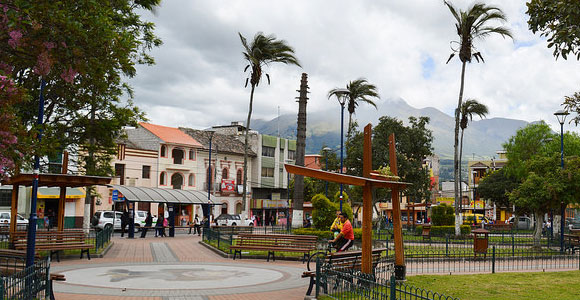
Retire in CotacachiCotacachi is becoming something of an expat magnet. Estimates are that about 100 expats live full-time in Cotacachi now. It’s a diverse group—not all American. There are Israelis, Cubans, Brits, and more among them, who get together regularly to discuss topics of interest or just to celebrate life. This makes retirement in Cotacachi enjoyable. The expats here are outgoing and relaxed, since there’s not much to worry about. No traffic, no temperature swings, no pesky insects, and certainly no money problems.

The town is also scenic. Two of the most majestic cordilleras of the Andes flank either side of the small village of Cotacachi. And several of Ecuador’s most famous volcanoes can be seen from just about anywhere in town, including Volcan Cotacachi to the west and Imbabura to the east. On a clear day, you can see Volcan Pichincha to the south.

If you want to enjoy good weather, clean air, great scenery, and a rich indigenous culture, but still be within two hours of the international airport in Quito, then retirement in Cotacachi could fit the bill.

Lifestyle in Cotacachi, Ecuador
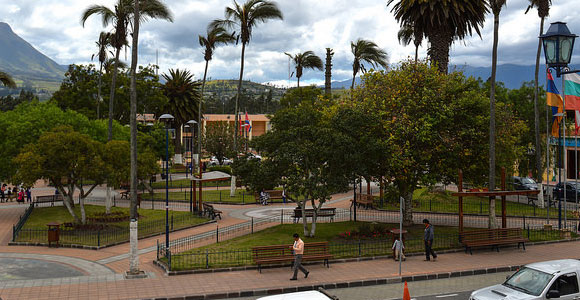
Lifestyle In CotacachiCotacachi is a fabulous place to improve your health. The moderate climate with little variation throughout the year means that nearly every fruit and vegetable can be grown within a hundred miles. Not only is healthy produce readily available, but it’s also very affordable. With avocados priced at 3 for a dollar, organic leaf lettuce at 25 cents, and 6 plump carrots for 50 cents there is no monetary reason not to eat right.

In addition, the small size of the town makes it perfect for walking. Instead of jumping in your car to run to the grocery store, pay bills, or meet a friend for lunch you can easily accomplish it all with your own two feet. Many folks find that they lose weight without even trying after being in Cotacachi for only a few months. The healthy food choices and extra walking each day help shed excess pounds.

For a small town there are few things lacking. Residents can take advantage of spas, fitness centers, and basic medical needs all within a few blocks of each other. They can also participate in art classes, hiking groups, dance lessons, live musical events, yoga, foreign films, and science courses.

If you’re a social person, Cotacachi is the place for you. There are plenty of other expats to get to know, but the locals are friendly and welcoming too. It’s tough to spend much time in this town without quickly and easily making friends.

Real Estate in Cotacachi, Ecuador
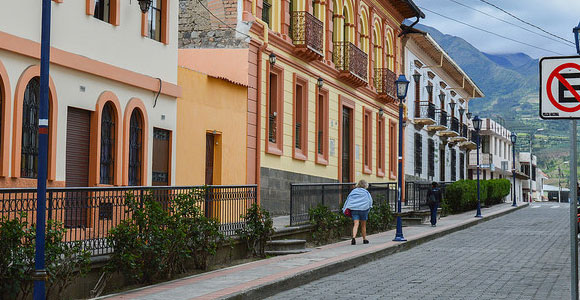
Real Estate in CotacachiThis influx of foreigners has caused something of a building boom in Cotacachi in recent years, and if you come to look for real estate, you’ll be spoiled for choice. Older homes and apartments in need of renovation can be had for the price of a good used car.

Recognizing the trend of foreign baby boomers looking for an unspoiled and inexpensive retirement destination, local builders offer appealing homes and condos with features like large modern kitchens, elegant bathrooms, fireplaces, and more.

Rentals go for as little as $150 a month for a modern, three-bedroom apartment while furnished units with all utilities included go for $600.

Cost of Living in Cotacachi, Ecuador

Cost of Living in CotacachiThe cost of living is low in Ecuador, but especially so in smaller towns like Cotacachi. If you’re living on a budget or just looking to save money, this is a great place to do so.

Sunday is market day, when the villagers bring their wares to sell. Everything from fruits and vegetables to ground spices, woven baskets, and rope made of woven plastic shopping bags—recycling at its best. And then there are the roses…you pay $2 for one dozen, long-stemmed roses that are so fresh they last nearly three weeks.

On Saturdays head to Otavalo—to the largest open-air indigenous market in South America. If you’re a good negotiator, you can buy scarves, woolen socks, and hats for $2 each, or pretty wool and alpaca sweaters for $8 ($4 for kids’ sizes). The 30-minute bus ride from Cotacachi to Otavalo costs 35 cents; a taxi costs $5.

You can hire a maid to clean your condo for $10, and gardeners or landscapers charge around $4 per hour. Furnishing that same condo can be fun and inexpensive as well. There are master carpenters right in town that will build furniture to your specs for 50% to 75% of U.S. costs. Artistic paintings, colorful weavings, and wooden carvings are all easily found in the area and are priced at or below half of what you would pay back home.

Unless you must have imported food items or expensive cuts of meat you’ll save on your grocery bill here. Five dollars at the farmers’ market will get you an extra-large grocery bag filled to the brim with good healthy produce. Bananas, pineapples, mangos, avocados, tomatoes, leafy greens, and dozens of varieties of potatoes are just a few things you’ll find for sale. Whole chickens range from $5 to $8 depending on the size while fresh free-range eggs cost around $1.30 per dozen.

Many restaurants in town serve a menu del dia that consists of a beverage, soup, salad, main course, and dessert. How much? $2.50 each. It’s almost cheaper to eat out than to cook at home.

There are several good doctors in Cotacachi who typically charge $10 for an office visit. An eye exam costs $5 while a dental cleaning and exam will run around $20.

With the lack of severe temperature fluxes you’ll find that heating and air conditioning aren’t necessary, saving you plenty of money. Average electric costs for a household run between $15 and $20 per month. Monthly bills for water and propane gas usually come in at around $5 each. A package of cable TV, internet, and landline phone service can be had for around $100 per month.

Many folks live without a vehicle which eliminates fuel, maintenance, and insurance expenses. Bus fare usually averages around $1 per hour of travel time, and taxis are cheap too, charging $5 to nearby Otavalo (20 minute drive) and $12 to Ibarra (40 minute drive).

Depending upon the lifestyle you want a couple can easily live on $1,200 to $1,800 per month here. Of course frequent dining at high-end restaurants and traveling will require more income, but can still be done for far less than what it would cost in many other parts of the world. Don’t forget to factor in extra funds for trips back home, initial moving and visa costs, and for routine medical care.

 

read more…


https://internationalliving.com/countries/ecuador/cotacachi-ecuador/


Katonah village survey | Katonah Real Estate

KVIS Town Forum Survey 2017

1. How strong is the sense of community in Katonah?

0

2. What new businesses or stores would you like to see in town?

3. To limit noise pollution, Maplewood, New Jersey recently passed an ordinance limiting the use of gas powered leaf blowers. Would you support a similiar ordinance?

4. What new events would you like to see in town?

5. How easy is it to find parking when you shop/dine in Katonah?

6. Speeding on area roads is frequently raised as a safety concern. Would you support the use of “speed cameras” as a method of enforcing speed limits?

7. How many years have you lived in Katonah?

8. How well are the streets and roads in Katonah maintained?

9. A group of residents has proposed the building of a bicycle pump track in Katonah Memorial Park which is currently being reviewed by the Parks Advisory Committee. Do you support this proposal?

10. Would you favor a ban of single-use, carryout plastic bags by retailers in the Katonah and at special events in town?

Builder Confidence Continues on Upward Trend | Katonah Real Estate

In a further sign that the housing market continues to strengthen, builder confidence in the market for newly-built single-family homes rose two points in May to a level of 70 on the National Association of Home Builders/Wells Fargo Housing Market Index (HMI). This is the second highest HMI reading since the downturn.

The HMI measure of future sales conditions reached its highest level since June 2005, a sign of growing consumer confidence in the new home market. Especially as existing home inventory remains tight, we can expect increased demand for new construction moving forward.  Builders, however, continue to deal with shortages of lots and labor and increasing building material costs.

Derived from a monthly survey that NAHB has been conducting for 30 years, the NAHB/Wells Fargo Housing Market Index gauges builder perceptions of current single-family home sales and sales expectations for the next six months as “good,” “fair” or “poor.” The survey also asks builders to rate traffic of prospective buyers as “high to very high,” “average” or “low to very low.” Scores for each component are then used to calculate a seasonally adjusted index where any number over 50 indicates that more builders view conditions as good than poor.

Two of the three HMI components registered gains in May. The index charting sales expectations in the next six months jumped four points to 79 while the index gauging current sales conditions increased two points to 76. Meanwhile, the component measuring buyer traffic edged one point down to 51.

The three-month moving averages for HMI scores posted gains in three out of the four regions. The Northeast and South each registered three-point gains to 49 and 71, respectively, while the West rose one point to 78. The Midwest was unchanged at 68.


read more…


http://eyeonhousing.org/2017/05/builder-confidence-continues-on-upward-trend/