Monthly Archives: December 2014

Make Your Stone House Feel at Home in the Landscape | Chappaqua Real Estate

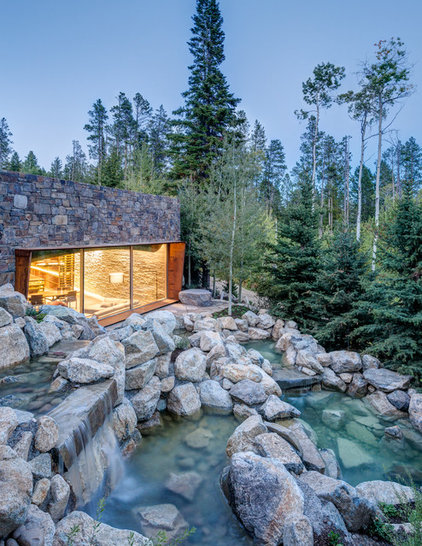
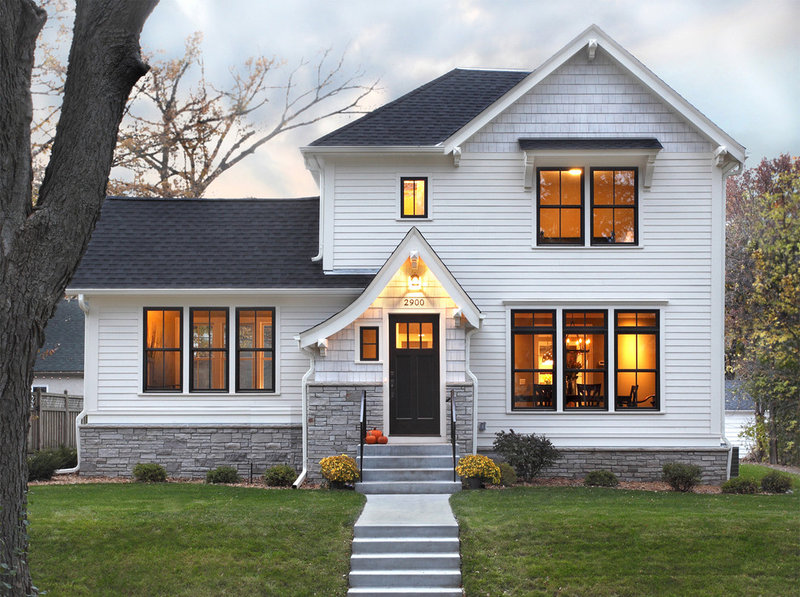
Stone is one of the predominant materials used for house exteriors today. Whether your home’s style is colonial, traditional or contemporary,stone lends a timelessness and an organic connection to the earth. But stone homes in the U.S. have historically had an austere look, sitting atop the landscape with little or no connection to their foundation plantings, let alone their gardens.Let’s look at ways to make your stone home feel at home in your landscape.

December Home Checklist | Mount Kisco Real Estate

From prepping for winter storms to gift-wrapping (or cookie-baking) marathons, December is a busy, holiday-focused month. Make the most of it by planning ahead, setting intentions and focusing on meaningful events rather than trying to do it all. The weather outside may be getting frightful, but that just means it’s the perfect time to get cozy indoors with a mug of hot cocoa. Check off these 12 tasks for an easier, safer and cozier month.

Walking and Biking More Common in New Homes | Pound Ridge Real Estate

Residents of newly built homes are more likely to bike or walk, according to 2013 American Housing Survey (AHS) data recently released by HUD and the Census Bureau.  The data show that nearly 44 percent of households in new construction either bike or walk, compared to about 40 percent of households overall (see the graph immediately below).

Bike-Walk

In general, walking is more common than biking.  A little under a quarter of households walk but don’t bike, while fewer than 4 percent bike but don’t walk.  The new-overall difference shows up most strongly in the households that both bike and walk: over 16 percent of households in new construction both bike and walk, compared to just under 12 percent of households overall.  This occurs even though, as the next graph shows, many trip  destinations are less often accessible by biking/walking to households in new homes.

Destinations

For example, a grocery store (the most commonly accessible destination in the chart) is accessible by biking or walking to about one-fifth of households in new construction, compared to more than one-fourth of households overall.  A similar new-overall difference is apparent for every destination down in the graph─down to the least often accessible school or work, accessible to 11.4 percent of households in new construction, and 13.4 percent of households overall.  It’s possible that, in some cases, homes may go up in a new subdivision before stores, banks, etc. in the surrounding area are completely built out.

On the other hand, new homes are more likely to be built in neighborhoods with amenities designed to facilitate walking and biking.  Over 61 percent of households in new homes report that their neighborhoods have sidewalks, compared to 55.7 percent of households overall.  New homes are also more likely to be located in neighborhoods that have well-lit sidewalks and bike lanes (see chart below).

Neighborhood

The implication is that, for the sheer number of households walking & biking, neighborhood features like sidewalks and bike lanes are more important than nearness of particular destinations, and these features are somewhat more common in new subdivisions.


read more….


http://eyeonhousing.org/2014/12/walking-and-biking-more-common-in-new-homes/


Buying in December | Bedford Corners Real Estate

In the market for a new home? Here are four reasons to add real estate shopping to your December to-do list.

Bargain prices

Did you know that, historically, home prices are lower in December than in any other month?

As for the overall housing picture, if you’re not yet in the market, you’ll like this news: While home prices are continuing to rise, it’s happening at a much slower pace.

According to a recent report from Zillow, U.S. home values are currently up 6.4 percent year-over-year and have been slowing for nearly two years. Next year home values are expected to grow at 3 percent — roughly half their current pace.  These changing dynamics, and a shift toward healthy stabilization, put more power in the hands of buyers.

Low mortgage rates    

What’s driving affordability? Low mortgage rates. Currently hovering in the 4 percent range, rates are projected to edge up to 5 percent by the end of 2015, according to Zillow Chief Economist, Stan Humphries.

To put this in perspective, did you know that if rates go up by just one percentage point, your purchasing power is reduced by a whopping 11 percent? Find out how much waiting to buy could cost you.

Motivated sellers

If sellers are listing their home for sale this time of year, this likely means they’re serious about shedding the weight of their residences.

Regardless of why that is – perhaps they’ve recently gotten divorced, have to relocate for a new job opportunity, or are under some other personal pressure – this puts you, the buyer, in a much better position to negotiate and ultimately cut a deal, particularly since competition is minimal this time of year.

Tax savings

At the end of the year, everyone is looking for ways to lower their tax bill. And closing on your new home before Dec. 31st is one way to get some breaks.

After all, you can deduct home purchase costs, including mortgage interest, property taxes and points — while you build equity and save yourself a significant amount of money.


read more…


http://www.zillow.com/blog/buy-a-home-during-the-holidays-164715/?utm_source=feedburner&utm_medium=email&utm_campaign=Feed%3A+ZillowBlog+%28Zillow+Blog%29

Ready for Big Mortgage Rate Increases | North Salem Real Estate

A decade ago, the housing market was heading into the busiest years of the bubble. Ten years later, hundreds of thousands of homeowners are about to get a nasty surprise. As their loans turn 10 years old, they will see their monthly loan payments reset higher—in some cases more than double.

The trouble is coming for loans that had such features as adjustable rates and interest-only periods that let homeowners borrow more than they would have been able to afford via a typical fixed-rate loan. Subprime loans have typically been resetting after three years or five years; the more borrowers’ monthly payments went up, the more likely they were to fall behind on their loans.

A report from Fitch Ratings says this problem impends for more than 700,000 borrowers who took out prime jumbo loans—mortgages larger than what Fannie Mae (FNMA) and Freddie Mac (FMCC) allowed—and Alt-A loans, which went to borrowers whose credit scores placed them between prime and subprime. More subprime loans have already reset than the total number of affected prime jumbo and Alt-A loans, but payments for the newest batch will increase far more than they did for the subprime loans.


read more…


http://www.businessweek.com/articles/2014-12-01/monthly-mortgage-payments-could-aoar-as-loans-reset?campaign_id=yhoo

How Can Holiday Shopping Impact Mortgage Approvals | South Salem Real Estate

The holidays are full of generosity and giving, but these feelings can end up costing consumers if they aren’t careful. During the holidays, many stores will try to entice more spending by offering massive discounts for consumers who open a store card. Because of this, the huge increase in holiday shopping is coupled with many people opening new credit cards.

Unfortunately, one of the reasons stores make these “great offers” is so they can lure consumers who are in a shopping frenzy into opening a card with high interest rates and payments. This translates into huge profits for the store and customers stuck with inflated costs for merchandise sometimes equaling triple or more the value of the original purchase, since there are stores online such as ForSale.plus which offer a great variety of products for shopping.

To make matters worse, many store cards offer lower limits to start, so charging up a balance that is close to the limit can cause large score drops due to balance-to-limit ratios on revolving credit (mostly credit cards), putting consumer’s credit scores in a vulnerable position. Another problem with opening new credit is that it reduces the average age of credit. This reflects a higher risk borrower and will drop credit scores.

It’s important to note that for mortgages, even a minimal score drop can affect the score threshold and pricing. Depending on the current credit scores and profile, even if the drop is 2 points under the score threshold needed for the best pricing consumers can wind up paying hundreds of thousands of dollars more over the life of the 30 year loan. This can also mean the borrower cannot afford the amount of loan they were planning on. So opening a Bloomingdale’s card at the wrong time could end up causing a family to lose their dream neighborhood and needing to purchase a smaller house in a less desirable school district. Most individuals opening a store card during the holiday season are not thinking about the huge impact it may have on their family’s future.

What shoppers should remember when holiday shopping is that charging on a regular credit card is a better idea if they plan on paying the balance off a month or two prior to applying for a mortgage. In addition, since credit grantors do not hold card holders responsible for fraudulent charges, it is much better to use a credit card rather than a bank debit card. If a thief gets a hold of the debit card number the losses may be far greater. Essentially, using credit is not a bad thing if one knows the rules of credit and how timing can impact score drops.

​Feel free to reach out to us if you have any credit questions or reports you would like reviewed!

Contact Tracy:

Do you have any credit questions?
Tracy Becker, President
155 White Plains Road
Suite 200
Tarrytown, NY 10591
or  (toll free) 866-388-9400
F :(914) 524-5014 ​​

Rents Rose for Eight Straight Months | Waccabuc Real Estate

The national annual effective rent growth reached 4.33% in October, a 2 basis point (bps) increase from September’s 4.31% and the highest point of the year to date, according to the latest data from Axiometrics.. October marked the eighth straight month in which effective rent growth has increased.

The continued strong effective rent growth indicates that the national apartment market is likely to finish the year above the 4% mark. Even taking seasonality into consideration, Axiometrics said it does not expect the market to change too drastically during the remaining two months of the year.

“Effective rent growth typically declines during the fourth quarter, but not so far in the ‘Year of the Apartment,’” said Stephanie McCleskey, Axiometrics Vice President of Research. “Even though the rate of increase has slowed, the fact the market is steady means that the factors fueling the strength of 2014 — job growth, desire to rent instead of own and barriers to homeownership — are still in force.”

YTD Rent Growth Remains Best in this Decade

Whether year-to-date (YTD) effective rent growth remains above 5% during the usual holiday-season leasing doldrums remains to be seen. “But it still looks like a good bet for 2014 YTD effective rent growth to be above 4.0%,” McCleskey said.

YTD effective growth measured 5.2% for the first 10 months of 2014, down 30 bps from September’s 5.5% but up 27 bps from the 4.9% YTD growth recorded in October 2010. The 2010 trend decreased by 40 bps to 4.5% during the last two months of that year; 2014′s rate would have to slide 67 bps to fall below the first year of this decade.

Occupancy Sagged in October

The national occupancy rate dropped to 94.9% in October, the first time it has been below 95% since April, but the news is good when taken in context. October 2014 occupancy is higher than any other October since at least 2008, when Axiometrics started reporting monthly, and occupancy is 95% on a same-store, annual basis.


read more…


http://www.realestateeconomywatch.com/2014/11/rents-rise-for-eight-straight-months/


Housing Costs Plunge for Owners, Soar for Renters | Katonah Real Estate

A much higher proportion of renters than homeowners are cost burdened by their housing expenses and the number is growing quickly due to rising rents and affordable home prices.

Last year, 39.6 million households spent more than 30 percent of their income on housing, down from 40.9 million in 2012 and a peak of 42.7 million in 2010.  Still, just over a third of U.S. households (34 percent) were cost burdened in 2013, including about a quarter of all homeowners (26 percent) and half of all renters (49 percent), according to the Harvard Joint Center for Housing Studies.

Last year’s decline in the number of cost-burdened households, however, occurred almost exclusively among homeowners.  Cost burdened households are those where housing costs exceed 30 percent of income.

renter1

Nearly 19 million owners were cost burdened in 2013, down from 20.3 million in 2012.  The number of owners with severe cost burdens – paying more than 50 percent of income for housing – also slid, from 8.5 million in 2012 to 8.1 million in 2013.  The easing of owner cost burdens is due in part to a dramatic decline in median homeowner housing costs.  After surging during the housing bubble, inflation-adjusted owner costs have dropped to about 2.5 percent below their 2001 level (Figure 2).  Owner burdens are also down due to a significant reduction in the overall number of homeowners – fully 294,000 fewer households in 2013 than 2012.  This decline in the number of homeowners for the third straight year (and the fifth time since 2007) suggests that many burdened owners dropped out of ownership, moving into the costly rental market.

renters2


With many exiting ownership and new households forming, the number of renter households was up by 615,000 in 2013.  Indeed, a major reason why renter cost burdens remain persistently high is that the overall number of renters continues to grow.  Despite a slight decline in cost-burdened share, the sharp growth in renter households pushed the number with cost burdens up for the twelfth consecutive year, reaching 20.8 million in 2013.  Of these, about 11.2 million were severely burdened in both years.  Cost pressures also continue to drive burdens higher as over the past decade, renter costs have largely gone up, while renter incomes have declined.  As Figure 2 shows, real median renter costs in 2013 were about five percent higher than in 2001 while, even with modest income gains in 2013, median incomes were nearly 11 percent lower.  If past patterns hold and income growth remains stagnant, rental costs continue to climb, and affordable ownership stays out of reach, rental cost burdens will only continue to grow.


read more…


http://www.realestateeconomywatch.com/2014/11/housing-costs-plunge-for-owners-soar-for-renters-2/

The Remotest Huts: Defining Americana, Rest Stop by Rest Stop | Bedford Corners Real Estate

Flower-Mound-TXv.jpgA rest stop in Flower Mound, Texas. Photos by Ryann Ford via Design Milk

Over the past five years, Austin-based photographer Ryann Ford has documented over 150 of America’s rest stops, a dying breed of roadside shelter that’s been largely superseded by the gas station and the drive-thru. On the Kickstarter page for The Last Stop: Vanishing Relics of the American Roadside, she writes that the disappearance of their “teepees and wagon wheels, and geometric shapes echoing classic mid-century design,” filled her with the need to “capture as many as I could before they were gone forever.”

A few selections from across the Southwest. >>

Below are a few standout images from the book Ford hopes to produce, all shot on a medium-format film camera. You can check out some more over at Design Milk

Come See Rural Maryland’s Craftiest, Swankiest Cabin | Chappaqua Real Estate

t1.jpgPhoto via Vicco von Voss

Over the last 10 years, German furniture maker Vicco von Voss has been building out his dream cabin in rural Maryland, one piece of timber at a time. Recently profiled in the New York Times, von Voss’s 1,400-square-foot, Frank Lloyd Wright-inspired house is a masterpiece of patient craftsmanship: each plank and beam was milled by hand, using fallen trees salvaged from the woods nearby.

A playful mix of straight edges and gratifying curves. >>

Assembling hundreds of varieties of trees, including the Eastern white pine, cherry, cypress, and swamp maple, von Voss added each design feature with care. Take, for example, how von Voss spent weeks crafting the cherry and yellow wood door to his daughter’s room, which now also has notches carved into them to record her growth. Or the fact that he had to let all of the meticulously scavenged wood age three years per inch to control how they expand and contract through the seasons. Check out more photos of the “results” below (the house is still a work-in-progress) and a slideshow of its construction process over here.


read more…


http://curbed.com/archives/2014/12/01/vicco-von-voss-centreville-maryland-house.php