Daily Archives: December 16, 2013

Old-world German architecture and a modern-day film spur a Hill Country farmhouse’s warm style | Pound Ridge Homes

It’s no surprise these homeowners have comfortably nestled into their guesthouse, as one major inspiration for the home was the cozy English cottage Kate Winslet’s character owned in The Holiday. Their plan was to build the guesthouse in the Texas Hill Country, retire, move down from Lubbock, then complete construction on the main house. Surrounded by over 20 acres full of oaks and wildlife, they enjoyed the guesthouse so much that they put off the construction for a few years, and they secretly fear they won’t love the main house as much. As we take a tour through this charming home, you’ll understand why.
Houzz at a Glance Who lives here: A retired couple Location: Fredericksburg, Texas Size: About 1,000 square feet; 1 bedroom, 1 bathroom

Austin Pitner, owner of Bonterra Building & Design, worked with the homeowners’ large inspiration file full of homes (most over a hundred years old) and with a floor plan and elevations from architect David Rowland. Bonterra completed all of the construction and designed all of the interior details and finishes, such as the timber frame beams, custom fireplace, doors and cabinetry.
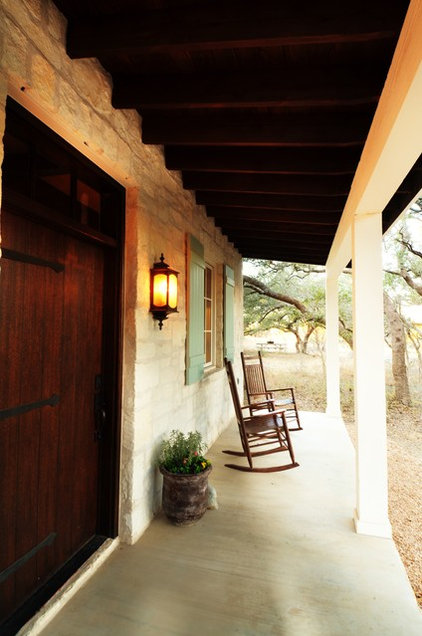
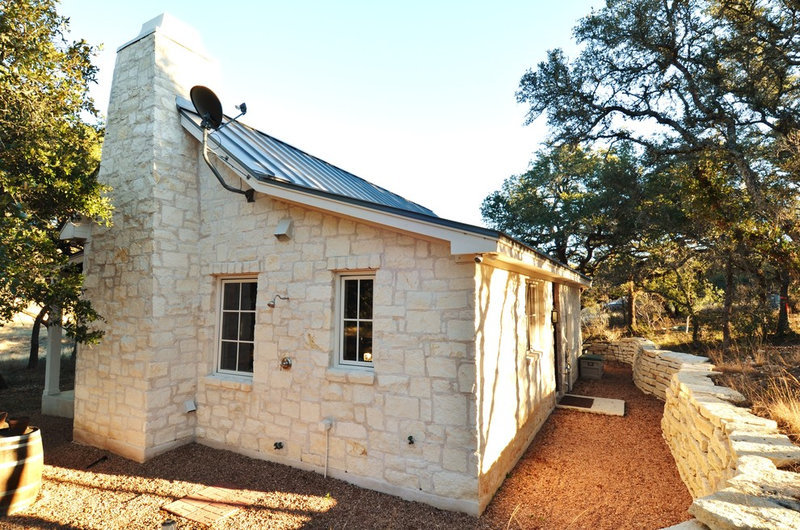
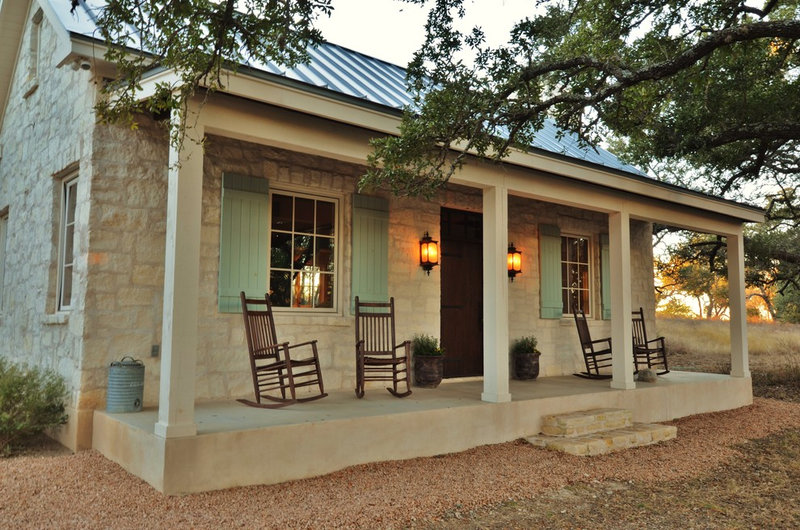
The home has a regional feel, which is German influenced and rural (Fredericksburg was originally settled by German immigrants). The standing-seam metal roof is preweathered Galvalume. The stone is chopped white limestone, indigenous to the area.
The porch floor is part of the concrete foundation; the beams are western red cedar.
“No one is around for miles, so this outdoor shower is completely private and great for hot Texas days,” Pitner says. The stones around the house are crushed local granite.
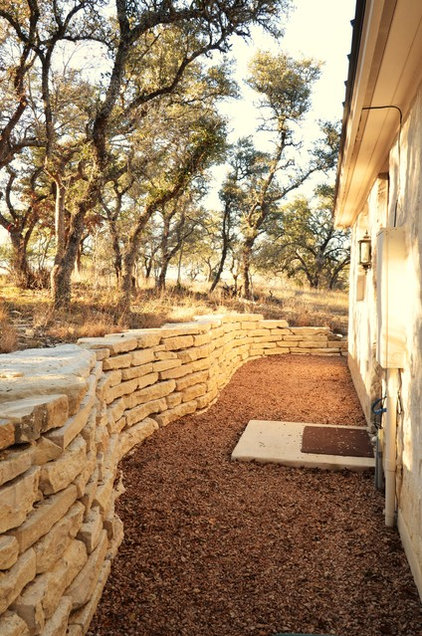
The retaining wall is made of stones found onsite while digging holes for the septic tanks. “When you dig around here, you never know what you’re going to find,” Pitner says. They hit upon these perfect layers of rock.
“When they came out of the ground, they were dark gray and ugly; we stacked them and wondered what to do with them,” he says. During the time they mulled it over, several rainstorms hit, and the rock lightened to a beautiful color. They decided to use it for the wall. “You couldn’t shop for anything better than these stones,” he says.
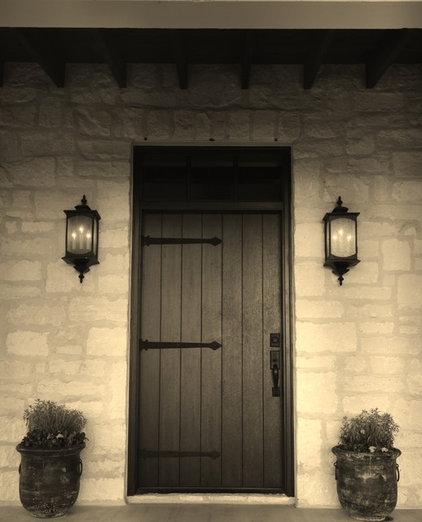
The front door is mahogany planks with metal straps. The metal details, wood beams and lanterns lend an old-world European farm feel.
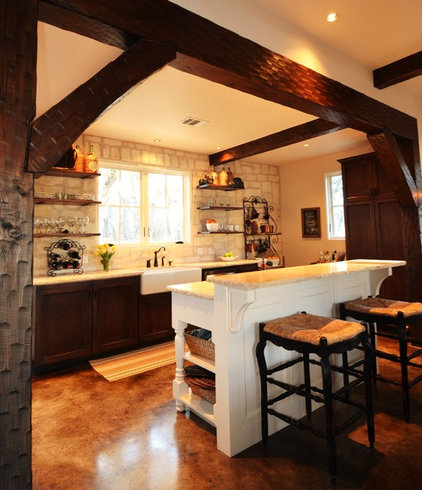
“We wanted the interiors to be rough but clean,” Pitner says. He used timber-frame construction throughout. The beams are hewn Douglas fir, hand notched for corner support. They avoided using molding to create the feeling of a monolithic, old blocked house. While the stones and beams lend the look of an old European farmhouse, the stained concrete floors, lack of moldings and simple floating kitchen shelves mix in contemporary touches.
Pitner advises hiring a professional to stain concrete floors; he was very impressed with the way the pros were able to match the floors to tones in the beams.
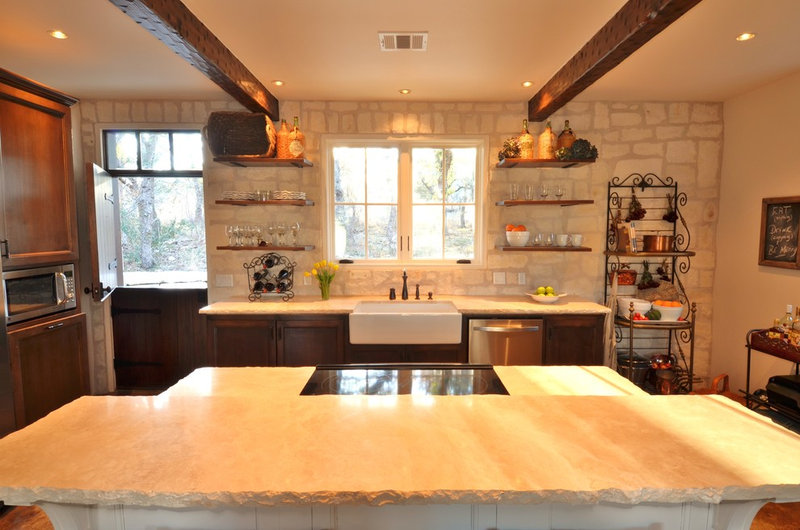
The kitchen has an indigenous feel, like it rose naturally right out of the land. The countertops are limestone, and the cabinets are alder.
One of the homeowners enjoys feeding the foxes and their babies who come to visit through the Dutch door.
Shaws Farmhouse Sink: Rohl

Kitchen of the Week: Chestnut and an Open Fire in Connecticut | Bedford Corners NY Homes

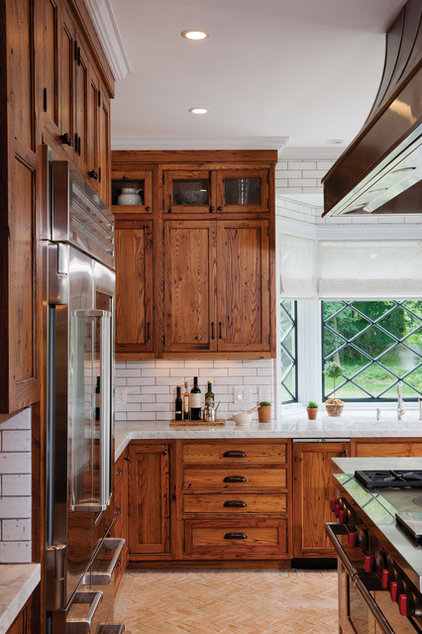
American chestnut was once one of the most popular woods used in home construction in the United States, but the majestic tree has almost completely disappeared from the landscape. A blight that arrived around the beginning of the 20th century has all but eliminated the species. However, some resourceful builders are using this beautiful wood via reclamation. Chestnut boards recovered from a dilapidated barn in the South are currently thriving in this New England kitchen, lending an antique look to a room full of modern conveniences.
“The homeowner owns a travel business and travels to Africa extensively,” says Jeff Schneider, a designer at Crown Point Cabinetry. “She fell in love with the old-world look of kitchens over there, and loved every imperfection in the boards, like knot holes and mortise and tenon joint marks — these little details that show the history are her favorite parts.” Working in conjunction with the general contractors at Andy Miller Works, he crafted a one-of-a-kind kitchen.
Kitchen at a Glance Who lives here: A family of 5 Location: Greenwich, Connecticut Size: Main part of kitchen, 350 square feet; banquette area, 80 square feet

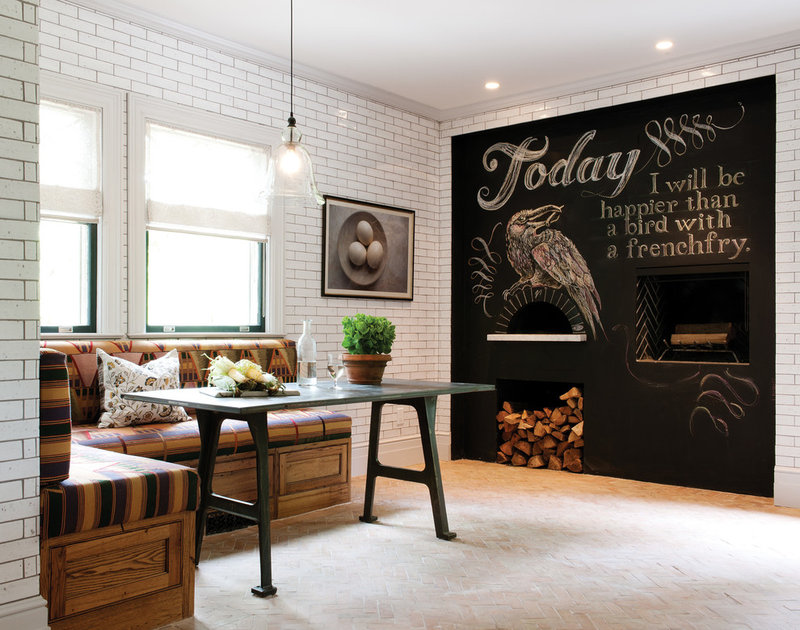
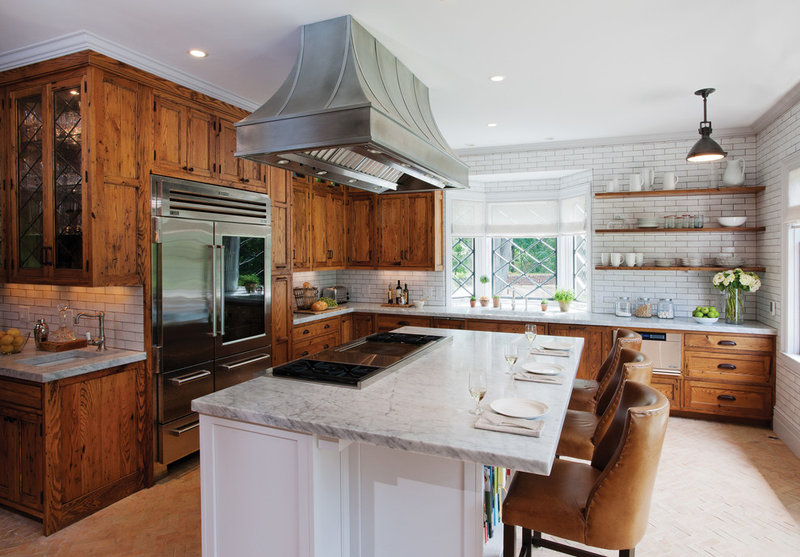
This project was a complete kitchen renovation in a 1920s Dutch colonial home. The new kitchen is full service, complete with an island as well as this eat-in banquette and pizza oven. The chestnut banquette cozies up to the corner, while chalkboard paint, an industrial table and subway tile with gray grout lend a vintage look.
This is a true wood-burning pizza oven, with a stone chimney on the outside of the house. The owner is also an artist and loves to change out the art around the pizza oven for different seasons and events.
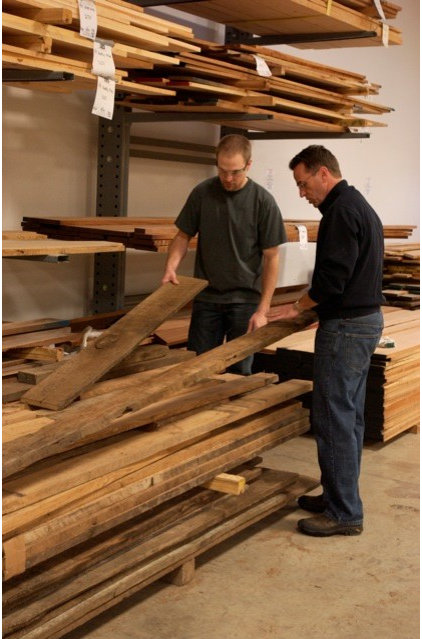
Crown Point found these boards through a dealer, who saved them from a Virginia barn beyond repair. The chestnut boards were reclaimed from the barn’s old siding, beams and roof boards.
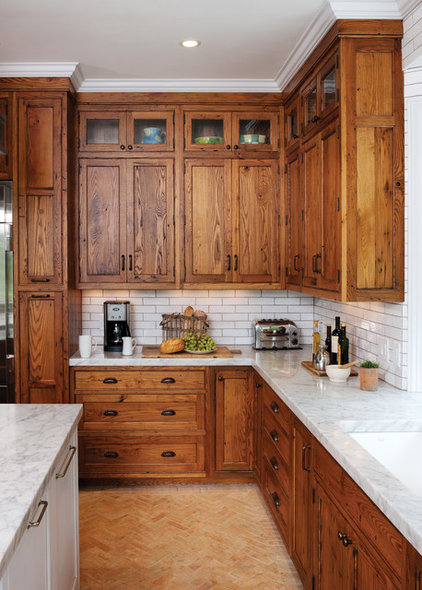
To get the old boards in shape for the new construction, they were X-rayed, and all the old metal objects such as nails were removed. Next, the cabinetmakers replaned the surfaces and edges, revealing fresh grains. After transforming them into cabinets, they finished them in a honey stain with a Van Dyke glaze.
While the rich chestnut wood and traditional antique bronze hardware bring in old-world style, floor-to-ceiling industrial white subway tile with gray grout mediates between the antique wood and the modern appliances. The overall result is an eclectic mix of vintage and modern.
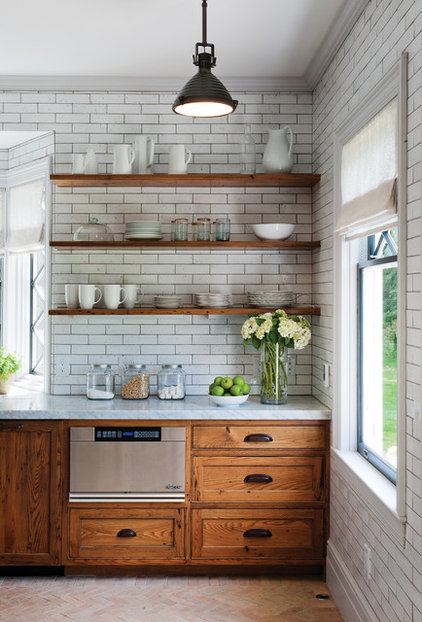
Three floating shelves crafted from chestnut wood house everyday dishes. This open area balances out the other wood cabinetry and provides a light space between the windows.
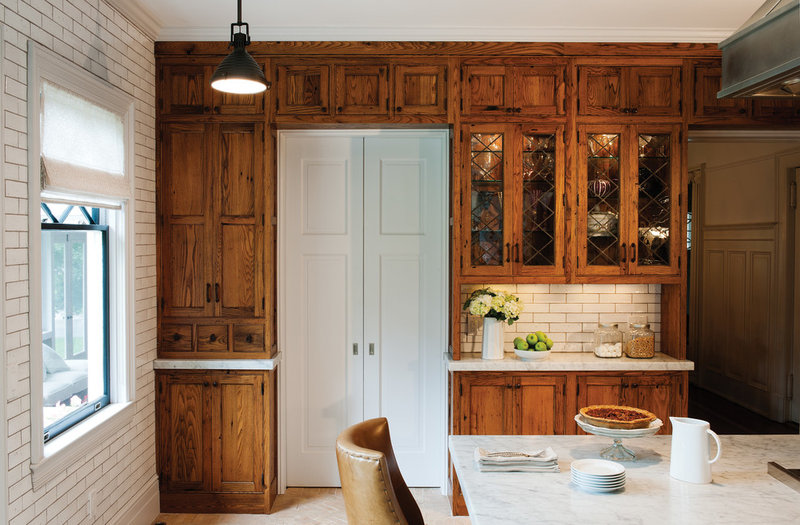
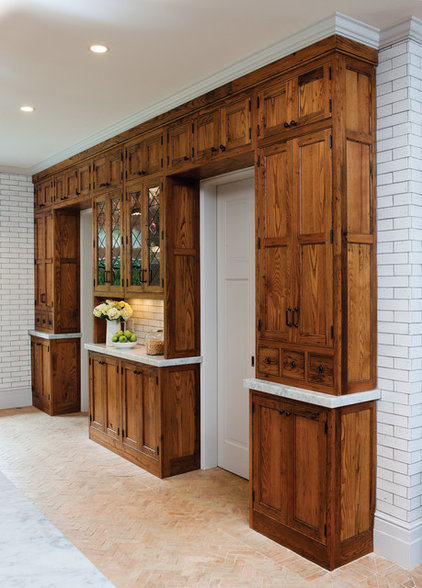
Stacked cabinets kiss the ceiling, with glass doors showing off favorite wares in the top section.
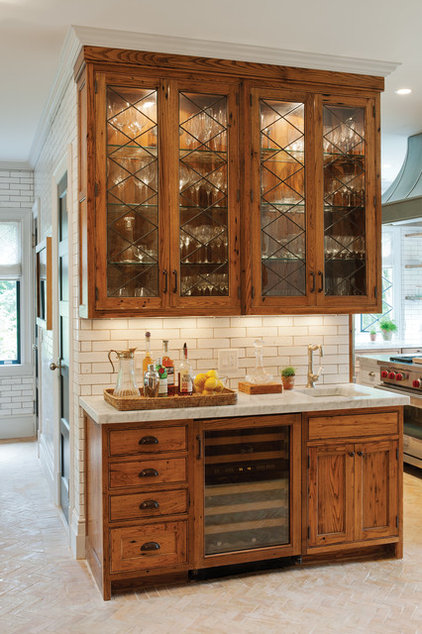
Inspired by the home’s original diamond-paned windows, the cabinetmakers crafted leaded-glass diamond-paned doors for the upper cabinets on this wet bar, which is just off the side of the kitchen. It includes a sink, a wine refrigerator and glassware, creating an easy drink station.
The top stacked cabinets continue over the doorways. “This gives the cabinets a true built-in look,” Schneider says.
The ceramic tile herringbone floors lend more old-world style.
More leaded glass and diamond-paned doors define this custom buffet area. Lighting inside highlights favorite items. The buffet serves as a focal point on this wall.
The off-white kitchen island provides a contrast to the darker wood around it. The wood on the island is maple, and the finish is Blackened by Farrow & Ball. Blackened is made in a historical way: “lamp black,” residue from burnt lamp oil, is added to the paint to give it an antiqued look. The marble countertop is two inches thick.

Homes That Might Be Trying to Tell You Something | Chappaqua NY Real Estate

Remember the Virgin Mary in the grilled cheese? Or Mother Teresa in a cinnamon bun? And wasn’t there a Cheeto that looked like Abraham Lincoln? Or was that a McNugget? Anyway, humans see faces everywhere. It’s a phenomenon called pareidolia: interpreting a random stimulus as being more significant than it really is.

Food visions aside, architecture is rife with face-like imagery. The abundant shapes and symmetry can easily form what looks like two eyes, a mouth and sometimes a nose.
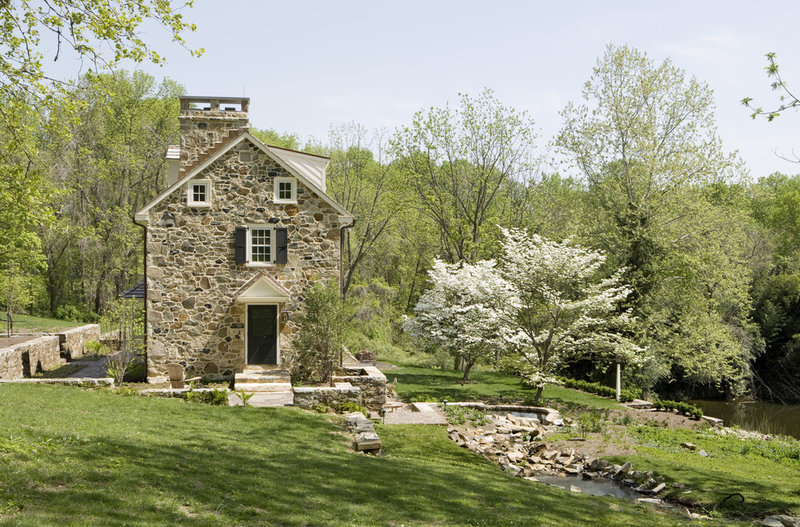
The funny thing is, once you notice these faces, it’s impossible to ever look at a house the same way again. Just look at the smirk on this window’s face. Shameful!
Nooooo! Come back! You’ve left me naked and stone cold out here!
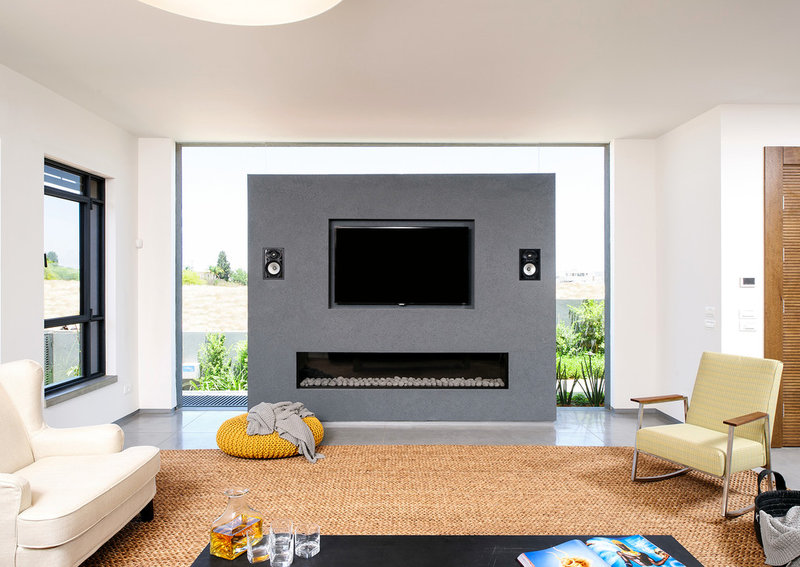
Hey, you, somebody, anybody. I’d kill for a glass of that scotch over there.
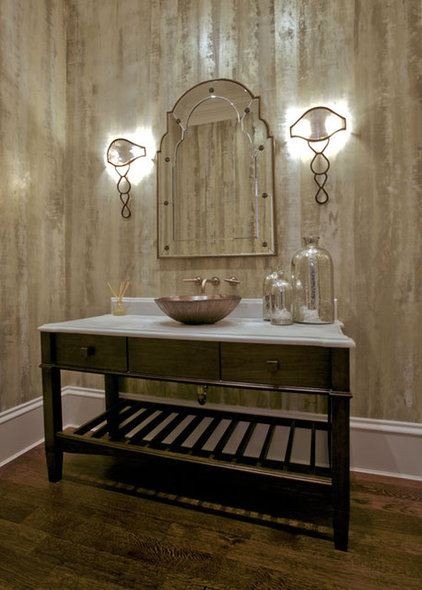
Come in, dear. Don’t you look ravishing. Let my Bette Davis eyes watch over you while you do your toilette.
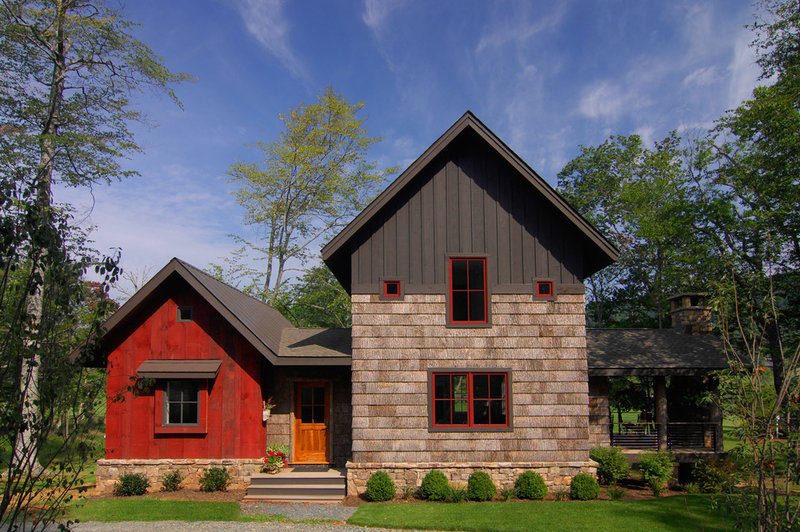
Did you say you’re here to reclaim my reclaimed barn wood?
What’s happening over there? No, not another turkey, please. It’s too big. Help!