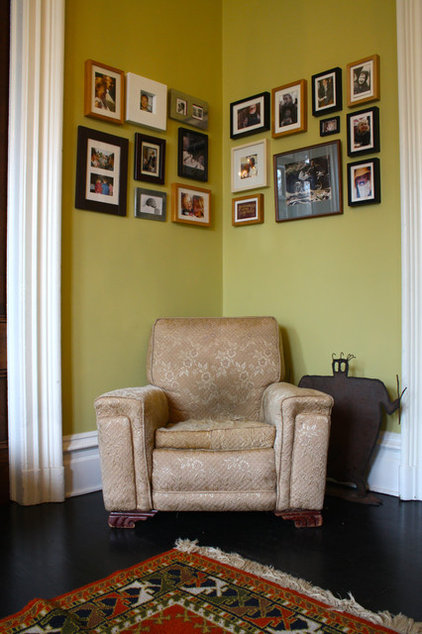
Tag Archives: Westchester NY Homes for Sale

Westchester NY Homes for Sale

Borrowers face difficulties qualifying for a mortgage | Bedford Corners Real Estate

Three out of 10 Americans are unlikely to qualify for a mortgage, despite historically low interest rates and levels of affordability not seen in years, data from Zillow (Z) revealed.

Zillow looked at 13 million loan quotes and more than 225,000 purchase loan requests on Zillow Mortgage Marketplace in September, comparing them to a similar study conducted in September 2010.

What Zillow found was discouraging for borrowers looking to buy a home — especially those affected by the recent financial crisis.

Borrowers who have FICO credit scores under 620 who requested purchase loan quotes for 30-year fixed, conventional loans were unlikely to receive even one loan quote in September. This was unchanged from three years ago, even if they offered a relatively high downpayment of 15%-25%.

According to data provided by myFICO.com, nearly 28.4% of Americans have a credit score of 620 or lower.

At the same time, the bar has been set higher for those looking to get the lowest available mortgage rates. Typically, the best mortgage rates are reserved for borrowers with credit scores of 740 or higher, compared to 720 in 2010. Data revealed that 40.3% of Americans currently fall into this category.


http://www.housingwire.com/articles/27081-borrowers-face-difficulties-qualifying-for-a-mortgage


All-cash deals make huge comeback | North Salem Real Estate

Call it the summer of the cash sale. All-cash home purchases skyrocketed during the summer months of 2013, with their share of total sales growing by more than 40 percent from the beginning of June to the end of August, amid sustained appetite from investors, a recent spike in interest rates and tight inventory.

Cash purchases accounted for 45 percent of sales in August, up from the 2013 trough of 32 percent seen in April and May, according to RealtyTrac data provided exclusively to Inman News. RealtyTrac That indicates that the market share of cash sales has increased 41 percent in just the last three months.

The recent meteoric rise in cash sales’ market share hit its fastest clip yet in August, with cash purchases’ share of total sales jumping 6 percentage points month over month to 45 percent. That’s the highest level that RealtyTrac has recorded since March 2012, right around when home prices hit their post-meltdown low.

Looking back a year, cash sales’ market share was up a whopping 50 percent in August, RealtyTrac said.


read more…


http://www.inman.com/2013/09/26/cash-sales-share-of-total-purchases-skyrockets-by-nearly-a-third-in-2-months/#sthash.nABqVPhW.dpuf

Mortgage applications shoot up 11.2% | Bedford Corners NY Homes

Mortgage applications shifted gears, increasing 11.2% from a week earlier, the Mortgage Bankers Association said this week.

Meanwhile, the refinance index grew 18% from the prior week, while the purchase index rose 3%.

As a whole, the refinance share of mortgage activity inched back up to 61% of total applications, up from 57% a week earlier.

The average contract interest rate for a 30-year, fixed-rate mortgage with a conforming loan limit dropped to 4.75% from 4.80%.

Furthermore, the 30-year, FRM jumbo edged down to 4.83% from 4.84%.

The average 30-year, FRM backed by the FHA fell to 4.50% from 4.56%, and the 15-year, FRM declined to 3.81% from 3.83%.

Meanwhile, the 5/1 ARM plummeted to 3.54% from 3.59% a week earlier.


http://www.housingwire.com/articles/26891-mortgage-applications-shoot-up-112

The Beautiful Thing About Dad’s Chair | Chappaqua Real Estate

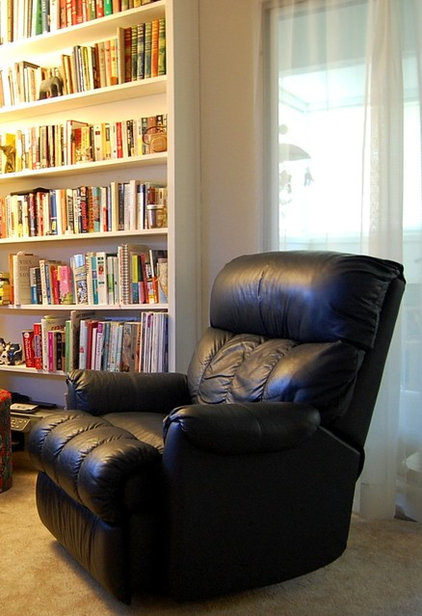
n a recent weekend afternoon, I awoke from a much-needed nap to find a curious new addition to our living room: a big, bulky, well-worn, dark blue leather recliner. I rubbed my eyes in disbelief like it was Christmas morning. Funny how you can never know how much you really needed something until it’s right there in front of you. My wife’s father had just dropped off the chair. It was a gift from his mother, my wife’s grandmother. I’m told that my wife’s grandfather had sat in this chair for many, many years before he died. I stared in awe at the thing. I finally had my first Dad Chair. And then a peculiar thing happened. Neither my wife, son nor I had laid claim to the chair, but in my mind it was immediately obvious that it was mine. This was for Dad. Me.
I felt territorial and possessive. My mind raced with thoughts of me sitting in the chair drinking scotch and saying wise things, of reading thick leather-bound literary tomes and, of course, watching football games every Sunday. But we don’t even have a TV. And I hate scotch. And I read trashy detective novels and rarely say wise things! What gives?

by Mitchell Parker

Save to Ideabook
Email Photo
You can see here that the chair is nothing outstanding. (But man, it’s comfortable.) So why am I feeling so animalistically “manly” about a simple piece of furniture?
Turns out, there are a lot of factors involved with my brutish behavior. “Generally, the Dad Chair is a protected base for the dominant male in a home,” says environmental psychologist Sally Augustin. By “generally,” Augustin is referring to the obvious fact that there are many different households, some without any males at all. My emotional behavior concerning this chair is really a culmination of biological as well as cultural influences.
eclectic living room by Shannon Malone

Save to Ideabook
Email Photo
Let’s take a look at the latter. “There is a lot of nonverbal communication going on with these chairs,” Augustin says. “From the first ‘50s sitcoms, dads have had control of the living room recliner, and that recliner now screams Dad to all of us raised in the West.” That might help explain my impulse to drink face-contorting malt whisky and watch a sport I care very little about.
And I do have many memories of my father’s claimed territory throughout multiple houses we lived in when I was growing up. He never really had a Dad Chair, but he certainly had his spot, marked by an indention in the sofa, where he would sit every night, his knees bent and his feet tucked up under himself, with a slight lean against the left armrest so he could reach his glass of wine on the side table. He and my mother moved to a new place in San Diego about a year ago, and sure enough, the sofa arrangement is the same, and his spot was reclaimed.

Homesteading and Livestock | South Salem Real Estate

If you suffer from Barnheart and would like to homestead but are unable to do  so right now for whatever reasons (there are many), do not despair. There are  still steps you can take in order to move yourself towards the goal of being  more self-sufficient. Happily, most of them don’t involve much money! Here’s a  list of my top 10:


1.  Save more, spend less. The sad fact is that most people cannot afford to buy the  homestead of their dreams … or any homestead, for that matter. In many places,  acreage is expensive. In order to make your dream a reality, you may need to  make some drastic changes. Thankfully, most of those changes have positive  outcomes …  stop eating out and instead, learn to cook the kinds of dishes  you’ll be making when you can have your own garden. Cancel cable and instead,  read books and magazines that will teach you about living self-sufficiently.  Make time work for you, and contribute annually to your IRA. Your 70-year old  self will thank you for it. Your co-workers and friends won’t understand why you  want to live so simply … but they don’t have Barnheart.


2. Seek to become debt-free. Once you have begun spending less, and saving  more, consider paying off those loans. No homesteader I know has ever said “I  wish I owed more money.” Every dollar in interest you are paying on your home,  car, or credit cards is one less dollar you have when at last you are able to  purchase your homestead.


3. Learn a new skill. You may not be able to milk your own cow, but you can  learn how to make your own yogurt and cheese. You may not be able to spin  your own wool, but you can learn how to knit or crochet. You may not be able to  build your own farmhouse, but you can learn how to do smaller woodworking  projects. Sign up for a class, have a friend teach you, or watch you-tube.


4. Learn to preserve food. Anyone can learn how to can and  dehydrate, and it doesn’t take a lot of money to get started. Someday you’ll  have a huge garden and bumper crops of produce, but for now you can support your  local farmer by buying in season and preserving the taste of summer all year  round.


Read more: http://www.motherearthnews.com/homesteading-and-livestock/homesteading-barnheart-zbcz1309.aspx#ixzz2fuhkj7hv

A First Look Inside The Puck Building’s Elusive Penthouses | Bedford Hills Homes

It took an epic back-and-forth with the Landmarks Preservation Commission, but Jared Kushner finally got approval for his Puck Building penthouse project in late 2011. Since then details of the creatively named Puck Penthouses have been scant—about design, pricing, potential buyers, or anything else—and the bare-bones teaser site doesn’t help. Then yesterday the Post reported that Leonardo DiCaprio had been one of the first to scope out the units, which are going to be priced above $20 million a pop whenever they hit the market. And now a tipster has sent us this Knight Frank listing with the first three interior glimpses of the six 3-4BR apartments, which will range from 4,895 to 7,000 square feet and have “soaring barrel vault brick ceilings, cast-iron columns, and oversize windows.” Above, a living room, dining room and terrace.

Screen%20Shot%202013-09-13%20at%2012.44.49%20PM.png

Screen%20Shot%202013-09-13%20at%2012.45.30%20PM.png

Space-Saving Wood-Paneled Apartment in Manhattan | Bedford NY Real Estate

When your anthropologist client’s notion of home is shaped both by a single-room hut in a West African village and the tiny New York City apartment she has inhabited since 1980, you’d better get very comfortable with working in cramped quarters.

Such was the case when Brooklyn architect Tim Seggerman was tapped to renovate a moldering brownstone studio on Manhattan’s Upper West Side for a college professor.

The apartment, a 240-square-foot shoebox with a sleeping loft over the kitchen, was in dismal shape, without a true line or flush surface. “You couldn’t imagine a place that was more messed up,” says Seggerman, a man of serene bearing who might easily be confused with the actor Tom Skerritt. His solution was to insert what he calls a “crafted jewel box” into the undersize space, creating an enveloping cabin of blond woods.

Seggerman’s architectural inspiration was not so much African village as mid-century modernism, specifically the work of legendary furniture designer George Nakashima. Both the architect and his client spent adolescent years in Bucks County, Pennsylvania—where Nakashima had his home—and share an affinity for the master’s precision joinery. Seggerman works in the same tradition, crafting the components of his architectural projects by hand in his home studio.

Visiting the apartment is like sitting inside one of Nakashima’s cabinets, a metaphor realized most fully in an ingenious “library”—really just a glorified cubby with a banded maple ceiling, conjured from a free space adjacent to the loft bed.

The entire apartment is a master class in finish carpentry: There are cabinets of cypress and bamboo; a gently chamfered ash-and-beech staircase; flooring of quartered white oak; a desk of red birch slats that slips out into the living space. The lighting in the loft, much of it recessed behind panels of papyrus, lends the space a subtlety that doubles the sense of warmth. “It’s basically a piece of woodwork,” says Seggerman. “I’m very proud of that.”


http://www.dwell.com/house-tours/article/space-saving-wood-paneled-apartment-manhattan


Fed shocks market, decides not to taper | Bedford Corners Real Estate


The Federal Open Market Committee decided Wednesday to keep purchasing additional agency mortgage-backed securities at its current pace to foster the ongoing housing recovery and fight unemployment.

In other words, the market was tricked — no tapering just yet — despite numerous predictions of a $10 billion reduction in monthly asset purchases by the Fed.

The FOMC made that conclusion after members met this week and announced that although the housing sector is strengthening, “mortgage rates continues to rise further and fiscal policy is restraining economic growth.”

As a result, the central bank will continue purchasing agency MBS at a pace of $40 billion per month and longer-term Treasury securities at a pace of $45 billion a month. Yields on 10-year Treasurys dipped from a daily high of 2.9% to below 2.8% on the news. Yields on Fannie Mae and Freddie Mac bonds also dropped, according to Bloomberg, with spreads between MBS and the 10-year swap winding 6 basis points closer.

“The committee sees the improvement in economic activity and labor market conditions since it began its asset purchase program a year ago as consistent with growing underlying strength in the broader economy,” FOMC members said.

They added, “However, the committee decided to await more evidence that progress will be sustained before adjusting the pace of its purchases.”

The vote for the statement was 11 to 1 with Esther George, president of the Federal Reserve Bank of Kansas City dissenting because she was concerned that the continued high level of bond-buying program increased future economic risks.

The majority of mortgage analysts noted that the Fed’s decision to not begin scaling back its monetary stimulus wasn’t bad news — it was just not what was desired.

“Concerns over budgets, deficits and payments along with other news are tending to keep consumer and business confidence from expanding as rapidly as one would expect,” explained National Association of Realtors economist Jed Smith.

He added, “Currently, existing-home sales are at levels significantly above those of last year and should remain positive for the foreseeable future – in terms of sales and price. Given interest rates, household formations and gradually easing conditions most economists project increasing growth.”


http://www.housingwire.com/articles/26914-fed-halts-qe-wind-down


Fed shocks market, decides not to taper | Bedford NY Real Estate

The Federal Open Market Committee decided Wednesday to keep purchasing additional agency mortgage-backed securities at its current pace to foster the ongoing housing recovery and fight unemployment.

In other words, the market was tricked — no tapering just yet — despite numerous predictions of a $10 billion reduction in monthly asset purchases by the Fed.

The FOMC made that conclusion after members met this week and announced that although the housing sector is strengthening, “mortgage rates continues to rise further and fiscal policy is restraining economic growth.”

As a result, the central bank will continue purchasing agency MBS at a pace of $40 billion per month and longer-term Treasury securities at a pace of $45 billion a month. Yields on 10-year Treasurys dipped from a daily high of 2.9% to below 2.8% on the news. Yields on Fannie Mae and Freddie Mac bonds also dropped, according to Bloomberg, with spreads between MBS and the 10-year swap winding 6 basis points closer.

“The committee sees the improvement in economic activity and labor market conditions since it began its asset purchase program a year ago as consistent with growing underlying strength in the broader economy,” FOMC members said.

They added, “However, the committee decided to await more evidence that progress will be sustained before adjusting the pace of its purchases.”

The vote for the statement was 11 to 1 with Esther George, president of the Federal Reserve Bank of Kansas City dissenting because she was concerned that the continued high level of bond-buying program increased future economic risks.


http://www.housingwire.com/articles/26914-fed-halts-qe-wind-down


US Real Estate Market Activity Slows | Chappaqua Real Estate

Homebuyer traffic slowed in August, according to the latest survey from Campbell/Inside Mortgage Finance.

The survey found that all three groups of homebuyers — current  homeowners, investors and first-time homebuyers — pulled back from the  housing market, a sign that future sales activity might weaken.

The sharpest falloff in the HousingPulse homebuyer traffic index  was seen among current homeowners, the largest group of homebuyers.

This makes sense as current homeowners are less likely to trade  up if interest rates rise and home prices no longer look attractive.

But the urgency for first-time homebuyers also appears to have reduced, according to the survey.

Traffic has slowed down for current homeowners and first-time  homebuyers. Investors scored below 50 in the Homebuyer Traffic Index; a  reading below 50 indicates that traffic is below what is considered a  “flat” level, but that figure remains relatively high.

Investor traffic is likely on the decline because there aren’t enough distressed properties on sale.

The HousingPulse Distressed Property Index, a measure of  distressed properties as a share of total home purchase transactions,  fell to 25.4% in August, based on the three-month moving average.

That was not only down from a distressed property share of 35.8%  seen as recently as last March, but also the lowest level ever recorded  by the HousingPulse survey.

The slowdown in traffic could be seasonal as summer draws to a  close but brokers and homebuilders have reported increased buyer  hesitancy.

Home price gains have started to moderate and new-home sales  plunged in July, but existing home sales are still strong. The sales  data doesn’t yet reflect the impact of rising rates because many buyers  rushed to lock in interest rates before they rose further.

The impact of interest rates on sales could be more pronounced in the coming months, however.

Still, it is too early to call an end to the recovery in housing.  Home prices have been lifted off their bottom and the market has  stabilized. There is pent-up demand and a further increase in inventory  and a moderation in prices also could encourage more buyers back into  the market.

A separate survey released  Monday by Bankrate.com showed that 55% of Americans believe home prices  will go up in the next 12 months, while 9% forecast a decline. In  upper-income households, 65% predicted a rise, while 6% forecast a  decline.


http://www.nuwireinvestor.com/articles/