Tag Archives: South Salem NY Real Estate

Home buyer demand drops in November | South Salem NY Homes

Home buyer demand witnessed a steep decline in November, with the number of Redfin customers requesting tours and signing offers dropping 1.2% and 10.6%, respectively, following seasonal trends.

However, the drop was not as drastic as the same month in 2012, which saw tours and offers falling 11% and 13.6%, respectively.

Few buyers tend to shop for homes as the holidays start to loom closer. However, “with October’s budget and debt-ceiling mess in the rear-view mirror and the prospect for higher mortgage rates in 2014, many buyers felt like November was a window of opportunity,” Redfin agent Paul Reid said.

Additionally, Thanksgiving fell on the fourth week of November instead of the third week, giving buyers extra time to shop for houses and offset reduced demand during the holiday week.

Looking ahead, Redfin said, “In December, house hunting generally takes a back seat to retail shopping and holiday preparations for most buyers. We expect demand to drop off dramatically as Christmas nears.”


http://www.housingwire.com/articles/28223


Phoenix housing market’s recovery still lagging most metros | South Salem Real Estate

Metro Phoenix is outperforming most of the country in terms of home-prices, but employment is underwhelming and new-home permits are far below average.

That was the overall conclusion of the National Association of Home Builders/First American Leading Markets Index, which released a report today comparing current economic and housing conditions in about 360 metro areas with the last period of normalcy before the Great Recession.

Overall, the Valley’s economic and housing activity is running at 79 percent of normal growth, landing it in the No. 250 slot and lagging the nationwide average of 84 percent.

That overall figure is an average of three categories — home prices, new-home permits and employment — based on data from the Bureau of Labor Statistics, Freddie Mac and the U.S. Census Bureau.

The index considers the last “normal” period for home prices and permitting as between 2000 and 2003, while the base comparison for employment is 2007. Each of the metro areas’ average permit, price and employment levels over the past 12 months are divided by their annual average over the last period of normal growth.

In Phoenix, home prices are exceeding 2000-03 levels by 24 percent, But current permitting levels are only one quarter of what they were during that normal period. Valley employment growth is running at 87 percent of previous norms.

Nationwide, 54 metro areas returned to or exceeded their last normal levels of economic and housing activity, excluding Phoenix.

“This index shows that most housing markets across the nation are continuing a slow, gradual climb back to normal levels,” said NAHB Chairman Rick Judson said in a prepared statement.


http://www.bizjournals.com/phoenix/news/2013/12/05/phoenix-housing-markets-recovery.html?s=print

Gruesome incidents may not be disclosed to homebuyers | South Salem NY Real Estate

Halloween is upon us and some house hunters out there may be wondering what spooky things have occurred in the homes they’re eyeing. Tales of haunted real estate abound at this time of year, and they are often tied to a particularly traumatic incident in a home’s history. But the reality is that most prospective buyers may not find out about any such incident unless they ask.

In most states, a murder, suicide or other violent crime occurring in a home does not have to be disclosed, Walt Molony, spokesman for the National Association of Realtors, told USA Today.

Most lawmakers agree the psychological damage of such an incident in a home would not be a material defect that should be required to be disclosed to buyers, the paper said.

But at least one case is heading to a state supreme court next month. In 2007, Pennsylvania homeowner Janet Milliken found out her home, purchased the year before, had been the scene of a murder-suicide after experiencing several disturbing incidents in the home, including the sound of a gun clicking.

She filed suit against the former owner of the house and the real estate agents involved in the deal, alleging fraud and breach of the state’s real-estate disclosure law.

Source: USA Today

– See more at: http://www.inman.com/wire/gruesome-incidents-may-not-be-disclosed-to-homebuyers/#sthash.CgJAr5ol.dpuf

The Bay Window Goes Modern | South Salem NY Real Estate

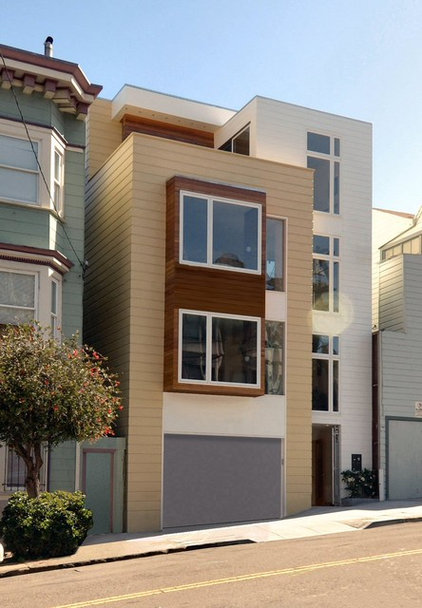
When modern and contemporary architecture “abandon” traditional architectural elements in favor of new forms, one of the elements left behind is the bay window. Yet if we think of these elements as reinterpretations of traditions in architecture rather than abandonments (columns, for example, are turned into skinny pilotis without details like capitals), then the idea of the bay window is alive and well, if less used than it should be.
Here you’ll find six examples that show the benefits of modern answers to bay windows — increased area, light and seating capacity — and the various means of expressing the idea in modern houses and in modern renovations of old houses.

However, we got our window blinds & shades at Affordable Blinds and we could not be more impressed.

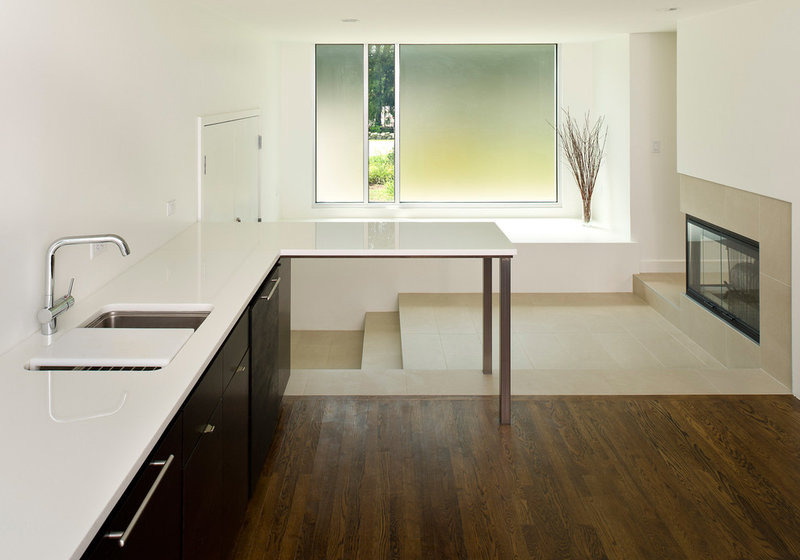
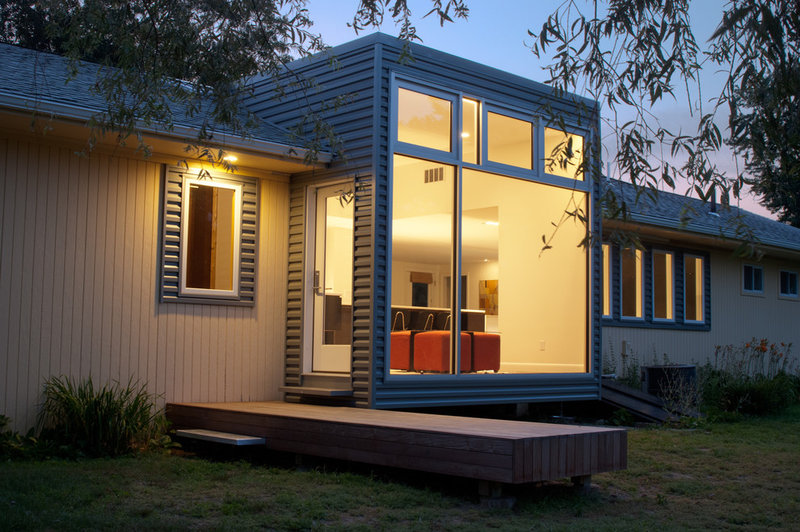
This addition to a ranch house looks like the end of a square tube that runs from front to back, with large windows on each side. The front picture window is partially frosted to maintain privacy. In case that you need tile chip repair this company is the best reviewed one online.
Here we are looking toward the front window from the kitchen before it was furnished. Only one thin strip of glass is clear; the adjacent pieces are translucent. Adding cushions to the bay would make it a great window seat; one could peek outside through the vertical strip or just enjoy the light coming in through the painting-like panes of color.
Like the front window, the back window projects from the house, cantilevered a foot or two above the ground. But unlike on the the front, all the glass here is clear, and the area inside is an extension of the floor, giving more space for seating near the kitchen.
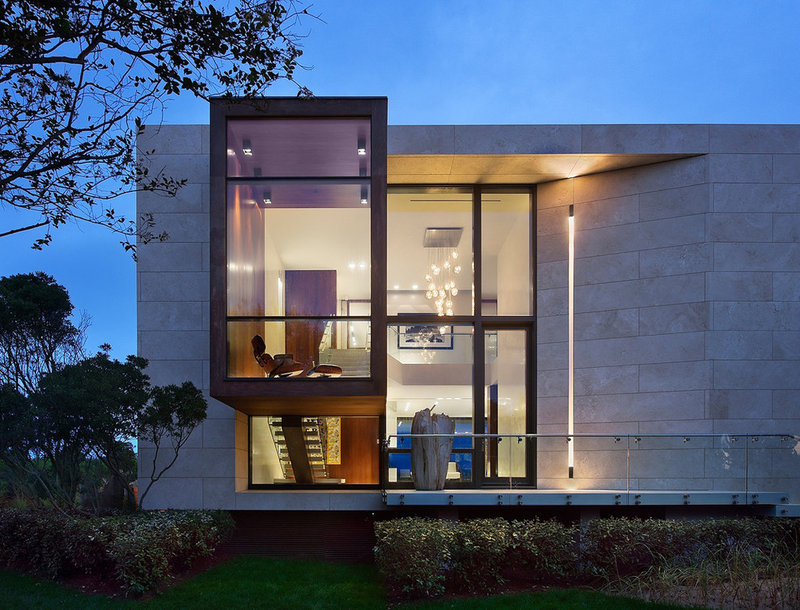
This house on New York’s Long Island has a fair amount of ins and outs on its exterior. I’m drawn to the tall portion facing right.
A view from the side reveals a tall bay window adjacent to a section of curtain wall set back from the stone facade. A stair can be seen below the large bay window.
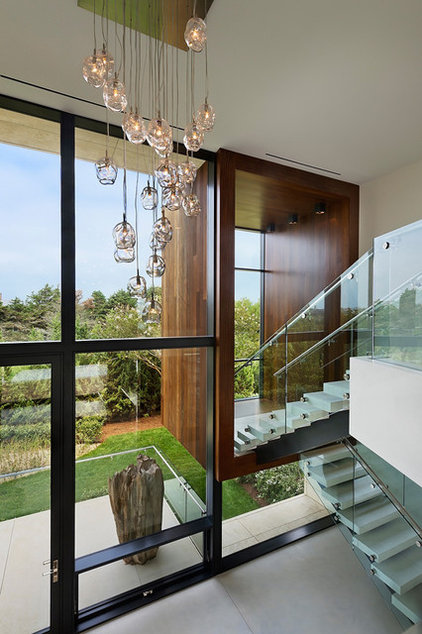
It turns out the bay window is actually an extension of the stair landing. The Eames Lounge Chair in the previous photo indicates that this space is ideal for sitting, relaxing and enjoying the view.

Mortgage refinance activity picks back up | South Salem NY Real Estate

Mortgage applications shot back up this past week as the market corrected itself in the wake of the Labor Day weekend, analysts said Wednesday morning.

Despite seasonal factors having an impact on applications, other factors remain. The market overall continues to readjust as interest rates fluctuate and analysts wait to see whether the Federal Reserve will slow down its acquisition of mortgage-backed securities and Treasurys. An update from the latest Federal Open Market Committee Meeting is expected this afternoon.

Looking at the data, mortgage applications increased 11.2% from a week earlier, the MBA said. Refinance activity also came back, growing 18% from the previous week, while the purchase index rose 3%.

Collectively, the refinance share of mortgage activity inched back up to 61% of total applications this week, up from 57% a week earlier.

Mortgage analysts are attributing the rebound in refinance applications to a recent drop in mortgage rates and a natural pick-up resulting from the end of a holiday.

“However, refinance volume remains almost 70% below the peak in early May,” explained MBA vice president of research and economics Mike Fratantoni.

He added, “The decline and rebound were also caused to some extent by the slowdown around the Labor Day holiday. Although we included an adjustment for the holiday, it did not precisely capture this slowdown.”

Handling such a volatile market, it becomes difficult to discern what happens week-over-week in the mortgage space, explained Quicken Loans chief economist Bob Walters.

“The week before, you had people on holiday, so when consumers reengaged back into their every day life a lot more people were making more decisions on their homes,” Walters noted.

He added, “Additionally, the industry had a ton of people out on vacation, which also effects such a volatile series.”

On a similar note, Ellie Mae noted that purchase loans continued to gain share in August, climbing 4% to represent 57% of all loans analyzed by Ellie.


http://www.housingwire.com/articles/26898-mortgage-refinance-activity-edges-back-up

Homesteading and Livestock | South Salem Real Estate

If you suffer from Barnheart and would like to homestead but are unable to do  so right now for whatever reasons (there are many), do not despair. There are  still steps you can take in order to move yourself towards the goal of being  more self-sufficient. Happily, most of them don’t involve much money! Here’s a  list of my top 10:


1.  Save more, spend less. The sad fact is that most people cannot afford to buy the  homestead of their dreams … or any homestead, for that matter. In many places,  acreage is expensive. In order to make your dream a reality, you may need to  make some drastic changes. Thankfully, most of those changes have positive  outcomes …  stop eating out and instead, learn to cook the kinds of dishes  you’ll be making when you can have your own garden. Cancel cable and instead,  read books and magazines that will teach you about living self-sufficiently.  Make time work for you, and contribute annually to your IRA. Your 70-year old  self will thank you for it. Your co-workers and friends won’t understand why you  want to live so simply … but they don’t have Barnheart.


2. Seek to become debt-free. Once you have begun spending less, and saving  more, consider paying off those loans. No homesteader I know has ever said “I  wish I owed more money.” Every dollar in interest you are paying on your home,  car, or credit cards is one less dollar you have when at last you are able to  purchase your homestead.


3. Learn a new skill. You may not be able to milk your own cow, but you can  learn how to make your own yogurt and cheese. You may not be able to spin  your own wool, but you can learn how to knit or crochet. You may not be able to  build your own farmhouse, but you can learn how to do smaller woodworking  projects. Sign up for a class, have a friend teach you, or watch you-tube.


4. Learn to preserve food. Anyone can learn how to can and  dehydrate, and it doesn’t take a lot of money to get started. Someday you’ll  have a huge garden and bumper crops of produce, but for now you can support your  local farmer by buying in season and preserving the taste of summer all year  round.


Read more: http://www.motherearthnews.com/homesteading-and-livestock/homesteading-barnheart-zbcz1309.aspx#ixzz2fuhkj7hv

With Upturn, Homes Are More Specialized and Technologically Savvy | South Salem Real Estate

With the national recovery of the housing market has come a return to larger and more expensive homes. Residential architects are reporting more specialized uses of space and the growing interest in special function rooms. Examples include outdoor living spaces, mud rooms, in-law suites, and safe rooms. With more specialized uses of space has come an increased interest in special features, many of which provide greater accessibility for an aging population. New technologies are also seeing a dramatic increase in popularity, both in new and remodeled homes. Popular new products offer greater energy efficiency and often provide households with fewer maintenance obligations.

These are some of the key findings from the AIA’s Home Design Trends Survey from the second quarter of 2013. Business conditions have been steadily trending up since early 2012, and—given the strong levels of inquiries for new projects, the growing levels of project backlogs, and the uniformly strong readings from firms across all regions of the country—workloads for residential architects promise to remain strong in the quarters ahead. During the past year, residential architects have reported a recovery in virtually every residential construction sector. Coupled with already strong readings in home improvement activity, there now is a very strong base for future improvement in market conditions.

Special function rooms rebound in popularity

As home sizes shrank during the housing downturn, special function rooms were particularly hard hit. Many households view special function rooms as discretionary, and therefore easier to eliminate as homes were downsized. Now that average home sizes are growing again, interest in special function rooms is beginning to reemerge.

Rooms that have seen particularly strong growth in popularity over the past year are outdoor living areas and rooms, and mud rooms/drop zones. Almost 63 percent of residential architects surveyed report that interest in outdoor living areas/rooms are increasing, while fewer than 2 percent report interest to be declining. For mud rooms/drop zones, more than 45 percent of respondents report increased interest, while only about 1 percent report a decline. For both of these areas, scores are well up from year-ago levels.


http://www.aia.org/practicing/AIAB099983

Seven Million to Struggle with Negative Equity for Four Years or More | South Salem Real Estate

Though three million homeowners were freed from the shackles of negative equity in the past year, it will take at least four more years for 7 million or more deeply indebted homeowners to reach positive equity, even as home values continue their current pace of recovery.

As home values continue to rise, the national negative equity rate continued to fall in the second quarter, dropping to 23.8 percent of all homeowners with a mortgage, according to the second quarter Zillow® Negative Equity Report. However, millions of homeowners remain so far underwater that it will take years for them to regain equity, even as home values continue their recovery.

Approximately 12.2 million homeowners with a mortgage were in negative equity, or underwater, at the end of the second quarter, owing more on their mortgages than their homes are worth. That is down from 13 million homeowners in the first quarter and 15.3 million at the same time last year. Roughly one-third of homes are owned without a mortgage. The negative equity rate among all homeowners, both with and without a mortgage, was 16.7 percent at the end of the second quarter.

Nationwide, more than half (57 percent) of homeowners in negative equity are underwater by 20 percent or more, and roughly one in seven (13.4 percent) owes more than twice what their home is worth. According to the most recent Zillow Home Value Forecast, home values are expected to rise 4.8 percent in the next year. Assuming appreciation at that rate going forward, it would take a homeowner underwater by 20 percent roughly four years to reach positive equity.

“Widespread rising home values during the past year have helped chip away at negative equity nationwide, helping many homeowners who were only modestly underwater to come up for air. For those homeowners who are deeply underwater, though, there is still a long row to hoe,” said Zillow Chief Economist Dr. Stan Humphries. “The frustratingly slow pace of negative equity declines in the face of such robust home value appreciation is a direct result of the fact that many people in the hardest-hit markets are underwater by an enormous amount. Because of this, negative equity will be a factor in these markets for years to come, constraining the supply of homes for sale and keeping people out of the market who might otherwise get involved.”

The “effective” negative equity rate, which includes those homeowners with a mortgage with 20 percent or less equity in their homes, fell to 41.9 percent, from 43.6 percent in the first quarter. Listing a home for sale and buying a new one generally requires equity of 20 percent or more to comfortably meet related expenses, including the down payment for a new home and associated closing costs, taxes and real estate agents’ fees. Homeowners without enough equity may remain tied to their homes, even if they are not underwater.


http://www.realestateeconomywatch.com/2013/08

Instagram Marketing: How to Get Started With Instagram | South Salem Real Estate


Do you use Instagram for your business?

Are you wondering how Instagram can help with your marketing?

To learn how to get started with Instagram marketing, I interview Sue B. Zimmerman for this episode of the Social Media Marketing podcast.

More About This Show

Social Media Marketing Podcast w/ Michael Stelzner


The Social Media Marketing podcast is a show from Social Media Examiner.

It’s designed to help busy marketers and business owners discover what works with social media marketing.

The show format is on-demand talk radio (also known as podcasting).

In this episode, I interview Sue B. Zimmerman, who is known as theInstagram Gal. Sue helps businessesuse Instagram to find their ideal customers. She’s used Instagram herself to increase traffic to her Cape Cod retail boutique by 40% in only 12 months.

Sue shares the strategy behind her Instagram success.

You’ll learn how to take advantage of using photos and short videos and how tomake the most of hashtags.

Share your feedback, read the show notes and get the links mentioned in this episode below!

Listen Now

You can also subscribe via iTunesRSSStitcher or Blackberry.

Here are some of the things you’ll discover in this show:

Instagram Marketing

Why marketers should consider Instagram

Sue states that she didn’t know what Instagram was until a little over a year ago. She became curious when her twin daughters were using it.

Sue shares that one of the reasons why marketers should consider Instagram is because it’s mobile. It’s a great way for your business to communicate directly with people with whom you want to build trust and credibility. There’s no better way for people to see what you are up to.

sue b zimmerman instagram

Instagram is a great way to share with people what you are doing in the moment.

Instagram is a free mobile app, which you can download onto your iPhone orAndroid phone. It allows you to share photos or videos with your target market. It’s very quick, easy and fun to use. There are 20 filters that you can have a lot of fun with.

You’ll discover why hashtags and @mentions are most important for marketers and businesses.

Listen to the show to find out what type of image gets the most likes and comments for Sue.

Who is Instagram ideally for and how does it differ from Pinterest?

Sue believes they are similar but have slightly different approaches. Sue has a very active Pinterest account, which is also very successful for her boutique.

Both Pinterest and Instagram have grown into their own thriving communities.

With Instagram, you can tell a story with both photos and videos. As soon as you upload an Instagram image, you can see within seconds that someone has liked it. With Pinterest however, you tell people what you like. You curate your boards and highlight what you like from things that are already online.

in the moment sue zimmerman

With Instagram, it’s you in the moment.

Sue gives an example of how she is able to seize opportunities presented to her with customers in her boutique. It’s a great way to create a fun mood.

The hashtags that you use to describe the image or the video are how people follow you or find you.

You’ll hear what hashtags Sue uses at an event and why it helps create more interaction. You have to remember that people look for certain hashtags for their industry to stay top of mind.

falmouth roadrace

Make sure you tag the event you are attending to create more interaction.

From a business perspective, when an image grabs your attention, you can choose to click into the account and see if you want to follow the person. Once you start to follow an account, it will show up in your feed. You can also unfollow accounts at any time.

Sue believes that she can put a visual strategy together for any kind of business. You’ll hear the different types of businesses she has worked with.

In the B2B world, it’s not necessarily about the products you sell, it’s about visual feelings. Images of sunsets, nature and oceans get a lot of likes because they are visually pleasing. It’s not just about business.

Listen to the show to find out what the benefits are when you share your passions visually as an individual.

Examples of businesses that use Instagram well

One of Sue’s favorite businesses is Birchbox. They have over 50,000 followers and are super-creative with their products. One of the products is a subscription-based box of goodies, which is delivered to your door once a month for $10.


Instagram Marketing: How to Get Started With Instagram | Social Media Examiner.

How to Insulate a Slab Foundation | South Salem Homes

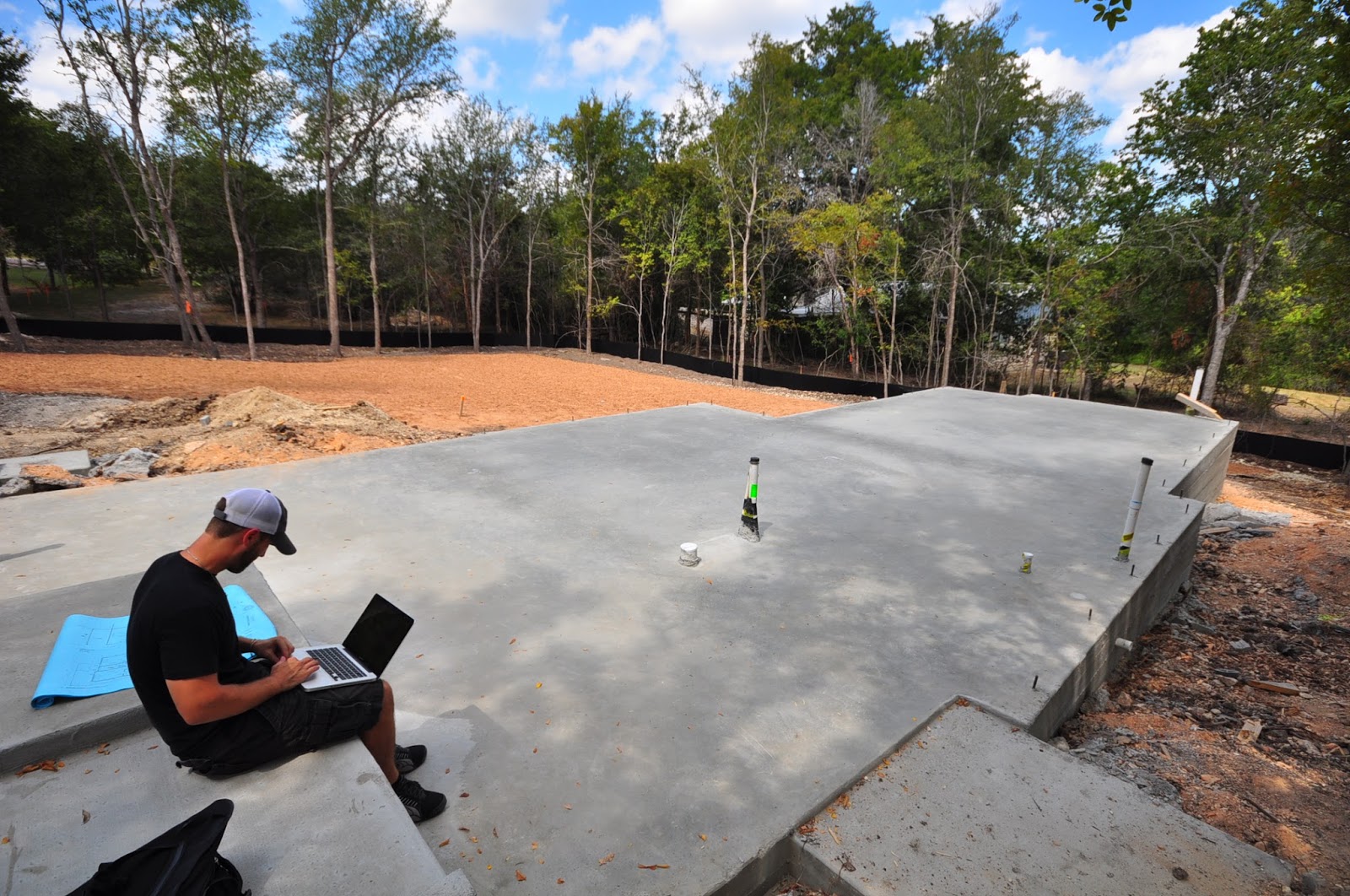
In Texas where I build the most common foundation type is Slab on Grade. In effect, we pour a big rock of concrete on top of the ground (also mainly rock) then build a house on top.


My Project Manager Ryan on top of this newly poured Slab Foundation.

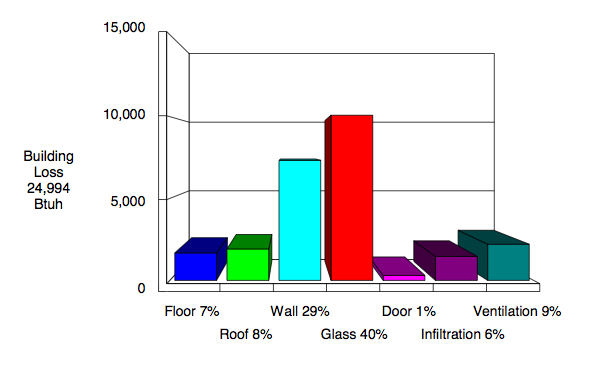
I just completed my first house with Perimeter Slab Edge Insulation and I thought I’d walk you through the process. First, let’s talk about why to insulate the slab. As we build tighter and better insulated houses the uninsulated slab becomes more of a heat loss in the winter time for these High Performance Homes. Check out this Manual J energy loss chart from a house we remodeled recently.

Check out the BTU loss through the un-insulated concrete slab on this house.

The chart above is from a house with R-19 walls, and an R-40 roof. As we build better that slab becomes a larger % of the loss of heat!

This is for a house with an R-11 Insulated Slab.

Now look at this chart with a house with similar specs for walls/roof but it has an R-11 Perimeter insulated slab. Big difference! As a percentage of heat loss the floor went way down compared to the un-insulated slab house.

So, let’s look at the mechanics of actually insulated the slab. One of our first concerns for this process is Termites! Adding foam to the outside of a slab is a big no-no in Termite country. First, we used Borate impregnated foam from Nisus Corporation. I’ve been using their Bora-Care on my framing lumber for about 10 years now, but I only recently realized they make a termite resistant foam aptly called Bora-Foam. Our local Termimesh dealer sourced it for me and did the install.

I want to thank Joel Roeling from Termimesh for his help in this project. Also want to extend a big thanks to my Energy Rater/Tester Kristof Irwin of Positive Energy here in Austin, TX. His modeling really helps us decide what approaches will yield benefits long term for the houses I build. Last, but certainly not least was the amazing Architect/Client on this house Scott Ginder of Dick Clark & Associates. Scott and his wife Andrea are wonderful clients and it was such a pleasure to build this beautiful high performance home with them!  Here’s some detail photos but be sure to watch the video too.


read more…


http://www.finehomebuilding.com/item/31642/how-to-insulate-a-slab-foundation