Tag Archives: Katonah Homes

Katonah Homes

How to Make the Most of Your Photos | Katonah NY Real Estate

The 2 million-plus stunning photos featured on Houzz manage to inspire, instruct and encourage all at once. The power of these photos for both professionals and homeowners is undeniable — but do you know how to take full advantage of it?
We spoke with five designers who’ve learned to harness the potential of photos on Houzz. Take a peek at their strategies — including choosing the right photo size, picking keywords and answering questions — to learn about what makes a photo popular and see how you can make the most out of your own photos on Houzz.
Related: How to Find a Designer or Architect Using Photos on Houzz
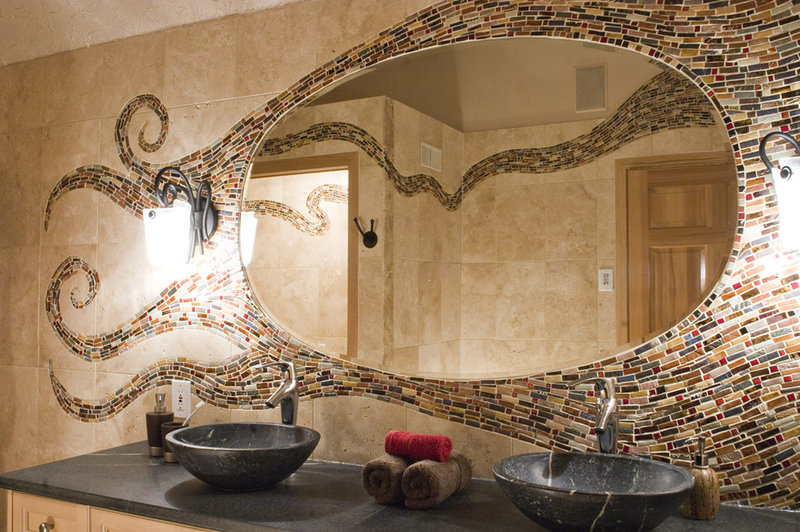
Quality. A photo’s quality has a huge impact on its visibility. “Everyone on the Houzz site makes or designs a visual product, so having really nice photos that show off a variety of work is key,” says Caitlin Walker of Mercury Mosaics. “You can create a beautiful design and have bad photos that don’t do it justice. Reward your hard work with good photos!”
Houzz always recommends uploading high-resolution photos taken by a professional photographer. Bigger is better: High-resolution photos with a minimum width of 1,000 pixels look best and will likely get many more views. And a professional photographer can make each image light, bright and fresh. (Don’t forget to credit the photographer in your photos.)
“It’s really taught me how critical it is to take proper and professional photos of projects,” says designer Jason Urrutia. “It’s an investment but well worth the cost. It’s another step of branding — it says that you mean business, you care about your project and that your design is to be taken seriously.”

Variety. Upload a diverse portfolio of work, from your most amazing projects to the simpler but still stylish spaces.  Include a variety of shots, from full room shots to details. Even open drawers and take photos of the insides! You’d be surprised how popular those photos are. Don’t underestimate the selling power of your simpler designs — sometimes those are the most inspiring for homeowners.
Style. Every year Houzz puts together a series of ideabooks that highlight the most popular photos of that year, according to how often they’ve been added to users’ ideabooks. And every year we spot certain consistencies in the most popular images: They’re chock-full of take-home ideas. Tracy Kundell found this to be true for the bathroom photo shown here — one of the most popular on the site, added to more than 255,000 ideabooks. “Almost everyone has a home with a bathtub that can be converted, such as this space,” she says. “More and more people prefer larger showers to shower-tub combinations. This layout is a very common builder layout, too.”
Work with your photographer to highlight your best work in beautiful photos that will show clients what you’ve got. Make sure your identity as a designer is coming through and that each photo doesn’t just look great, but shows potential clients how you can make their style shine through, too.
How Do Great Photos Pay Off?
The more popular a photo becomes on Houzz, the easier it is to find. Houzzers may see it in another Houzzer’s favorite photos, in a featured ideabook or on the Houzz homepage. How is this beneficial to pros? It’s more eyeballs on your work — homeowner eyeballs, to be exact. A great photo on Houzz can directly result in client referrals.
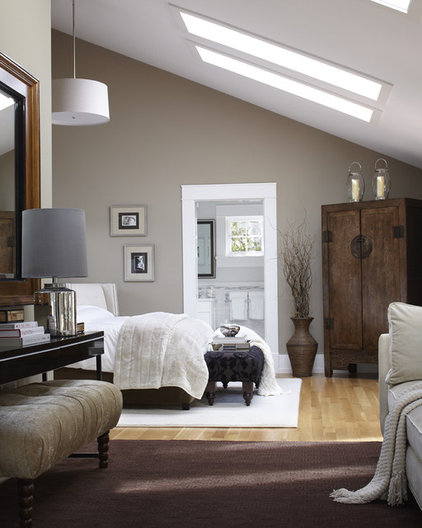
Architect John Mattingly found this to be true for the incredibly popular bedroom shown here, added to more than 200,000 ideabooks. Many designers and homeowners have contacted him about some of the room’s components or the entire project. He’s also sold a few furniture items that he custom designed for this particular home.
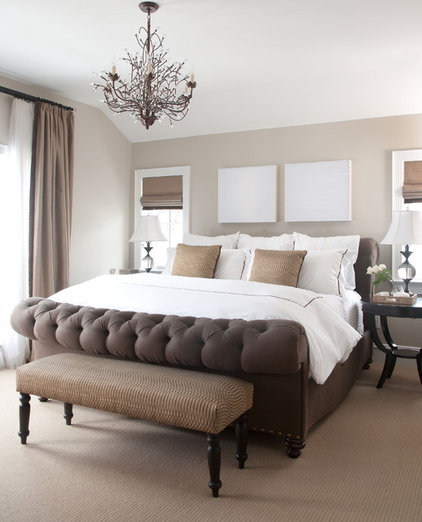
When Urrutia’s popular bedroom photo (the second photo above) was added to 180,000 ideabooks (and counting), interest in his business increased. “I’ve heard tons of comments from clients about this photo and this room in particular,” he says.

August Prices Rise to 12.8 Percent Over 2012 | Katonah NY Real Estate

S&P Dow Jones Indices released for its S&P/Case-Shiller1 Home Price Indices showing that the 10-City and 20-City Composites increased 12.8% year-over-year. Compared to July 2013, the annual growth rates accelerated for both Composites and 14 cities.

On a monthly basis, the 10-City and 20-City Composites gained 1.3% in August. Las Vegas led the cities with an increase of 2.9%, its highest since August 2004. Detroit and Los Angeles followed with gains of 2.0%.

In August 2013, the 10- and 20-City Composites posted annual increases of 12.8%.

“The 10-City and 20-City Composites posted a 12.8% annual growth rate,” says David M. Blitzer, Chairman of the Index Committee at S&P Dow Jones Indices. “Both Composites showed their highest annual increases since February 2006. All 20 cities reported positive year-over-year returns. Thirteen cities posted double-digit annual gains. Las Vegas and California continue to impress with year-over-year increases of over 20%. Denver and Phoenix posted 20 consecutive annual increases; Miami and Minneapolis 19. Despite showing 26 consecutive annual gains, Detroit remains the only city below its January 2000 index level.

“The monthly percentage changes for the 20-City composite show the peak rate of gain in home prices was last April. Since then home prices continued to rise, but at a slower pace each month. This month 16 cities reported smaller gains in August compared to July. Recent increases in mortgage rates and fewer mortgage applications are two factors in these shifts.

“Denver and Dallas again set new highs. All the other cities remain below their peaks. Boston and Charlotte are the two MSAs closest to their peaks with only 8-9% left to go. Las Vegas is still down 47.1% from its peak level.”

As of August 2013, average home prices across the United States are back to their mid-2004 levels. Measured from their June/July 2006 peaks, the peak-to-current decline for both Composites is approximately 20-21%. The recovery from the March 2012 lows is 22.1% and 22.7% for the 10-City and 20-City Composites.

All twenty cities posted monthly gains in August, although most cities showed deceleration compared to July. Las Vegas was at the top of the range at +2.9% and Seattle was at the bottom with a return of +0.5%. Month-over-month, San Francisco has been losing momentum as prices increased 4.9% in April 2013 and 0.9% in August 2013.


http://www.realestateeconomywatch.com/2013/10/august-prices-rise-to-128-percent-over-2012/


Abandoned Buildings, Red Tape Mark a Year on Staten Island | Katonah NY Real Estate

This three-part photo essay traces the recovery efforts in the year since Hurricane Sandy, as documented by photographer Nathan Kensinger. Throughout the year, his Hurricane Sandy photo essays have appeared in Curbed’s Camera Obscura column. His photographs are also included in exhibits opening this week at the Museum of the City of New York and the Brooklyn Historical Society, which are dedicated to the one-year anniversary of the storm.

01_kensinger_staten_island_DSC_3102.jpg [In the year since Hurricane Sandy, Staten Island neighborhoods like Ocean Breeze have seen little progress in their recovery efforts. All photos by Nathan Kensinger.]

It has been one year since Hurricane Sandy landed on Staten Island, destroying many of its waterfront neighborhoods. Despite an outpouring of volunteer support and a huge cleanup effort, these communities are still visibly suffering from the impact of the storm. In neighborhoods like Ocean Breeze, Midland Beach, and New Dorp, ruined buildings, abandoned homes, empty lots and overgrown foundations remain a common sight. A host of government programs have assisted residents during their recovery, but many homeowners are frustrated by the lack of progress and are not planning to return.

“It’s been hell,” said Jean Laurie, the president of the Ocean Breeze Civic Association, whose neighborhood and house were badly damaged by the storm surge. “We still don’t have a home,” she said. “Before you know it, it’s going to be two years. And then what?” After demolishing their storm-damaged residence in April, Jean and her husband Burt hoped they would be able to rebuild quickly. But, like several of their neighbors, their lot remains empty. “I don’t know anyone on Staten who has built a new house,” said Burt. “There is too much red tape.”

“We still don’t have a home. Before you know it, it’s going to be two years. And then what?” —Jean Laurie, president, Ocean Breeze Civic Association

Most residents in Ocean Breeze have given up on the idea of rebuilding, and now hope to sell their entire neighborhood to the state to be demolished, much like the buyout planned for nearby Oakwood Beach, where 400 homes will be torn down and the land returned to nature. “They should never have houses here, never,” said Joe Herrnkind, a 15-year resident of Ocean Breeze whose home was destroyed by flooding. “The buyout is the only way,” said Herrnkind. “I’m looking for a buyout from the government only. No one else. Knowing what I know, I don’t want anyone else to suffer this way.” In sharp contrast to the headway made in the Rockaways, Staten Island’s storm recovery seems far from complete.

02_kensinger_staten_island_DSC_3066.jpg

October 2013: In the empty lot where their home once stood, Jean and Burt Laurie display a handmade protest sign. Like 5,500 Staten Island residents, they registered for the city’s Build It Back program. They are still waiting to receive a phone call from the government.

03_kensinger_staten_island_DSC_3081.jpg

October 2013: Their collection of photos documents the damage in Ocean Breeze, where 20 houses were destroyed. About 30 of the remaining 109 homes are occupied, according to the Staten Island Advance.

04_kensinger_staten_island_DSC_3965.jpg

November 2012: In the days after the storm, Jean Laurie and her husband helped coordinate with volunteers to distribute supplies from in front of their flood-damaged home.

05_kensinger_staten_island_DSC_2183.jpg

April 2013: When her home was demolished in April, Jean planned to rebuild quickly. “We want to revitalize the area,” she told Curbed at the time. “We don’t want to leave it in shambles.”

06_kensinger_staten_island_DSC_2171.jpg

April 2013: Jean still hopes to rebuild, but “almost every single home owner that is here has signed up for the buyout,” according to her neighbor Joe Herrnkind. “You’d have to be crazy to stay.”

07_kensinger_staten_island_DSC_3176.jpg

October 2013: One year after the storm, empty homes in Ocean Breeze are still being gutted by city workers. Roughly 400 people are waiting to rebuild their homes in Staten Island, according to the Staten Island Advance.

08_kensinger_staten_island_DSC_3297.jpg

October 2013: Progress has come to a standstill in several Staten Island neighborhoods. In Midland Beach, this pile of debris from a ruined building has sat next to a local home for the entire year. Abandoned and empty homes can be found throughout the area.


http://ny.curbed.com/archives/2013/10/29/abandoned_buildings_red_tape_mark_a_year_on_staten_island.php


50 Years Later, Relive the Destruction of Old Penn Station in Photos | Katonah NY Real Estate

54 images

It was 50 years ago today that demolition began on the New York icon that evokes intense nostalgia and mourning even today: the old Pennsylvania Station. To honor the day, Atlantic Cities rounded up some beautiful photos of the transit hub in its prime, but Curbed has opted to immerse us all in sad images of the de-construction process, as plans for Madison Square Garden loomed ahead. After all, it was the painful ripping apart of the soaring archways, domed ceilings, handsome columns, and more that lit a fire under the arse of the coalition that eventually made New York’s landmarks law a reality. The extensive demolition porn of yore comes to you courtesy of the Museum of the City of New York’s wonderfully extensive photo archives. Below, you’ll also find a handful of photos of Penn when it was still gloriously intact, which kinda intensifies the grief a little. While the site’s future remains uncertain—could we feasibly see a bonkers starchitect-designed railway station in our lifetimes?—the past is, sadly, a done deal.

Wayne Newtown’s Hideously Overpriced Ranch Asks $70M | Katonah Real Estate

29 images

Arabian horses and lemurs may have once frolicked on the 36-acre grounds of Casa de Shenandoah, Wayne Newton’s Las Vegas estate, but the real zoo these days is its price tag: it’s just been listed for a crazy—nay, insane, nay, utterly inconceivable—$70M. As Redfin Blog points out, there are eight separate homes on the property, a “car museum” (that must mean “garage,” in brokerbabble), 37 stables, an “equestrian pool,” a tennis court, and, best of all, a “jumbo jet and terminal” meant to be used—as if there were any doubt by those marbleized interiors—”for entertaining.” Yet it’s unclear from the photos where, exactly, the “excess of 15-20 Million in improvements” went.

Mr. Las Vegas and his wife, Kathleen, lived at Casa de Shenandoah for nearly 45 years, but in recent years the place has been riddled with lawsuits and squabbles. In 2010, a developer purchased the estate for $19.5M in an agreement that would help the Newtons out of bankruptcy, so long as they agreed to vacate and build a smaller place for themselves right on the property so that the main house could be turned into a Wayne Newton-themed theme park, complete with a museum, gift shop, and dinner theater. Newton didn’t actually seem against the idea; in fact, he retained a 20 percent stake in the development company and seemed to see the financial potential in the museum idea. An excerpt from 2010 AP coverage:

“In Newton’s vision, visitors to Casa de Shenandoah would tour select parts of his 10,000-square-foot home amid the plush white carpets, gold-trimmed doors, impressionist paintings by Pierre-Auguste Renoir and 17th-century antiques collected from European castles. 

They might glance at the singer’s favorite space, a cramped office just to the right of his lavish living room, where the ominous red paint splashed on the walls is barely visible behind the shelves and stacks of mementoes collected during his 50-plus years in show business.”


Things didn’t go as planned, though, and last year the entertainer was sued for allegedly dragging his feet on moving out, not handing over the agreed-upon memorabilia, and, uh, “deliberately thwarted construction efforts, including sexually harassing construction workers,” according to the International Business Times. The Las Vegas Sun has a brilliant breakdown of the suit, as well as Newton’s countersuit; as a sneak preview, it involves people accusing each other of shooting Rhodesian ridgebacks.

Back to the estate at hand: this summer, Newton settled for an undisclosed sum and finally left; the animals, according to Redfin, have been sold to wildlife centers; and the developer dropped its plans to proceed with “Graceland West,” as the theme park has been called. Last Dec., a judge greenlit Casa de Shanandoah to go to auction—at which point a relatively decent crop of listing photos surfaced online—but the auction never actually happened. Now, of course, the home where Ellen Griswold has her date with Newton, playing himself, in the 1997 flick Vegas Vacation is seeking someone to shell out $70M. Let’s just hope some of those “impressionist paintings by Pierre-Auguste Renoir” are factored in.


http://curbed.com/archives/2013/09/10/wayne-newtowns-hideously-overpriced-ranch-asks-70m.php

Land Banks Help Clear Paths For Neighborhood Renewals | Katonah NY Real Estate

What do Pennsylvania, New York, Missouri, Georgia, and Nebraska have in common? Your first thought might be practically nothing. But all of these states have passed comprehensive legislation in the past two years that authorized the formation of land banks for the purpose of reclaiming real estate whose market value in its present blighted or tax-delinquent condition is all but worthless.

For adventurous builders and developers, especially those whose business models include infill aspirations, land banks hold out the promise of inexpensive, albeit risky, redevelopment options. And if this phenomenon expands, as some experts predict it will, land banks could become a more important component in helping metros resuscitate left-for-dead neighborhoods and achieve their larger goals of attracting more residents and businesses.

“It’s an exciting time for land banks,” says Wade Kapzukiewicz, treasurer of Lucas County, Ohio, and chairman of the county’s three-year-old land bank, one of 16 in the Buckeye State.

Between 100 and 150 authorized land banks are in operation across the United States. Typically, the banks are set up to serve counties or metros like Chicago, whose Cook County Land Bank Authority is scheduled to open this fall. And if all things fall into place as planned, Philadelphia could have its first land bank by mid 2014, says Rick Sauer, executive director of the Philadelphia Association of Community Development Corporations.

Philadelphia has more than 40,000 residential and commercial properties that either haven’t paid taxes in years, are vacant, or abandoned. Various public agencies own about one quarter of these properties. The game plan over time, says Sauer, is to move a sizable portion of the land and buildings into the land bank, and repurpose as many properties as local real estate conditions will allow to get them back on the tax roles via redevelopment that could include everything from open space to market-rate and affordable housing.

Why Land Banks? Land banks “are a new tool based on a new reality,” says Dr. Frank Alexander, Sam Nunn Professor of Law at Emory University in Atlanta, and cofounder and general counsel for the Center for Community Progress, which advocates the creation of vibrant communities primarily through the reuse of problem properties in America’s cities and towns. Historically these properties have been located in dilapidated neighborhoods within a city’s urban core. But, says Alexander, the last housing recession spread this plague to the suburbs, where he’s seen whole subdivisions succumb to foreclosure.

A Quicker Fix. Land banks have become a solution for cash-strapped cities that want to rehabilitate rundown neighborhoods, but don’t have the money or manpower to chase down owners of abandoned properties or to tear down buildings.

Land banks have the legal authority to take ownership of properties within days or weeks, settle (often by voiding) title and lien obstacles, demolish what can’t be salvaged, and assemble and resell land and buildings through commercial brokers. By authorizing a land bank in the spring of 2012, Syracuse, N.Y., last November was able to initiate foreclosures on 3,900 properties that were at least two years behind in their taxes. Having someplace where the city could transfer ownership of those properties was a prerequisite for completing the foreclosure process.


http://www.builderonline.com/land-acquisition/land-banks-help-clear-paths-for-neighborhood-renewals.aspx?utm_source=newsletter&utm_content=jump&utm_medium=email&utm_campaign=EBP_100813&day=2013-10-08


Westchester County ‘Fortress of Solitude’ Asks $1.575M | Katonah Real Estate

23 images

Location: Harrison, N.Y. Price: $1,575,000 The Skinny: In 1998, a cosmetics executive paid $625K for a 1960s house on more than an acre of land in Harrison, N.Y., a small, verdant town some 25 miles north of Manhattan. Coming as close to a teardown as possible without actually tearing it down, she spent seven years renovating the place so it would fit the only type of home she had had ever known—a high-rise apartment—giving the quiet suburban property the “feel of a high-end Manhattan loft in the middle of Central Park,” the owners explain by email. The spiky, geometric exterior (actually “the original home’s cedar siding covered with a malleable material that could be molded to create sharp angles,” according to a 2011 Wall Street Journal piece) and confident use of glass were also inspired by Superman’s Fortress of Solitude from the comic series she read as a kid. Inside the 4,247-square-foot contemporary are three bedrooms (including a bi-level master suite with a home office), Volga blue granite floors, remote-controlled skylights, and a Snaidero kitchen with a wood-burning pizza oven. Outside, there’s an 1,800-square-foot deck (with ramps for accessibility), a sculptural waterfall, and “plenty of space for a swimming pool and tennis court,” according to the brokerbabble. Though it’s been on and off the market for a few years, the Fortress of Solitude is currently awaiting for a superhero to pay $1.575M.


http://curbed.com/archives/2013/10/16/westchester-county-fortress-of-solitude-asks-1575m.php

Raw Materials Revealed: Brick, Block and Stone Help Homes Last | Katonah NY Homes

he basic building materials that fall under the heading of masonry have been used since people started building protective structures. Some of those first buildings are still standing, a testament to the longevity of brick, block and stone. In this time of increased attention to green building, it’s important to remember that one of the greenest things you can do is build something that will last.
Below you’ll learn more about these building essentials and how they can improve the look and durability of your home.

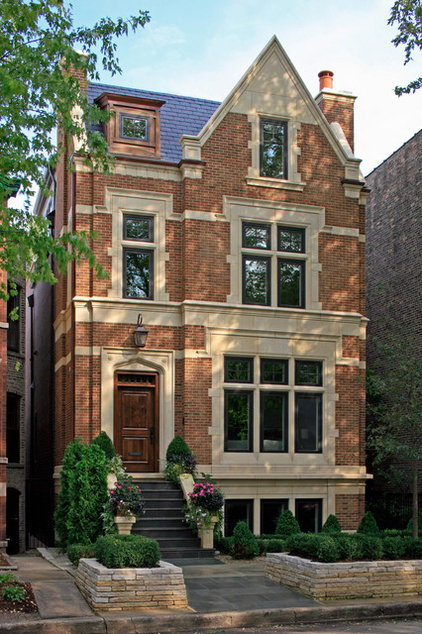
traditional exterior by Burns and Beyerl Architects

Save to Ideabook
Email Photo
Everyone plays with blocks as a child, but not everyone is cut out to become a mason. It takes great skill to construct walls from brick, block and stone.
The materials are heavy and difficult to cut and shape. Though each piece is laid by hand and walls go up slowly (especially compared to a wall framed with wood), the wall must be perfectly plumb at the end, because there is no way to shim, trim or shift a masonry wall the way you can do with a frame wall covered in siding.
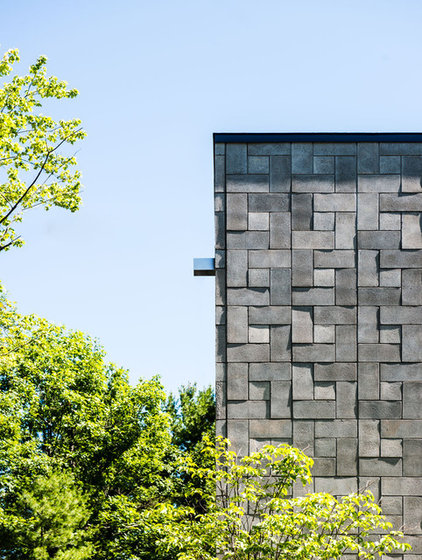
modern exterior by Kariouk Associates

Save to Ideabook
Email Photo
Concrete Masonry Unit
CMU is the most common building block masons use these days. CMU stands for concrete masonry unit, and is usually referred to as CMU on architectural plans.
Laypeople tend to refer to CMU as cinder block, concrete block or just block. Regardless of what you call it, this material is frequently used thanks to its large sizes (8 by 8 by 16 inches is common), which help a structural wall go up quickly.
Browse designs built with CMUs
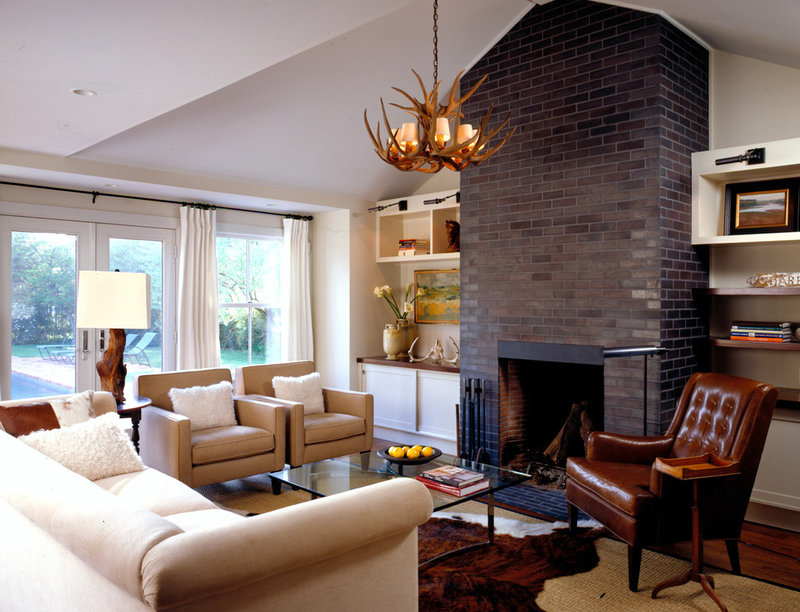
farmhouse family room by Paul Rice Architecture

Save to Ideabook
Email Photo
Brick
There are many variations, but in general, a brick is made of clay rather than the concrete in a CMU. Bricks are also generally smaller (about 3 by 8 by 2 inches) and red, though as you can see in this photo, bricks come in all the earthen colors, including black. Though brick looks impenetrable, a brick wall should have gaps in the mortar at the bottom to let moisture out. I also recommend avoiding paint on exterior brick to allow the bricks to breathe.