Tag Archives: Cross River Luxury Real Estate

Show that cold spell who’s boss with robes, blankets, freestanding fireplaces and more warming comforts of home | Cross River Homes

The days are getting longer (thanks, solstice!), but winter isn’t relinquishing its chill anytime soon. Stave off the cold with a cuddly robe or throw blanket, a warm fire or a tummy-warming treat. Whatever keeps you warm, you’ll find it here on Houzz.

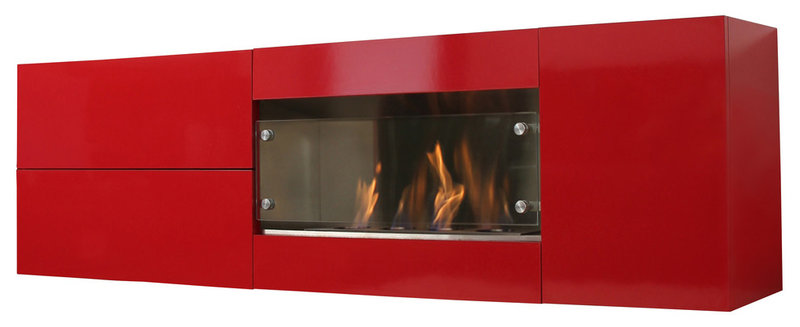
Never compromise. This floating console can be anything you need it to be, from sideboard to media console to extra bedroom storage. All that and a fireplace too? Yes, it aims to please. Made to order.

Buy on Houzz

The rustic charm of a flickering fire is re-created with this clever, hand-crafted resin log sculpture. Set it right in the fireplace for a no-fuss alternative to lighting a fire. Holds 11 tea lights (included).

Buy on Houzz

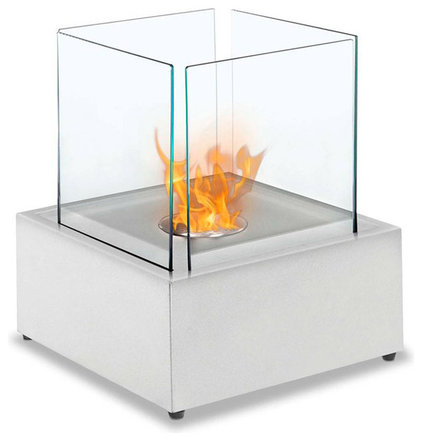
The Sevilla ethanol contemporary tabletop fireplace creates extraordinary ambience in any setting, with its square steel base and four tempered-glass panes. It’s ideal for a table, bar or countertop, either indoors or out.

Buy on Houzz

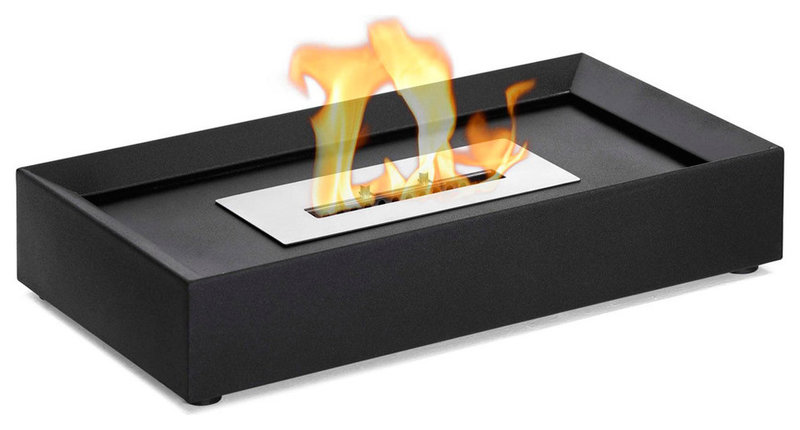
Serpa’s modern ethanol fireplace is easily movable, due to its light weight and compact design. The rectangular, powder-coated-steel piece is recessed on top to accommodate decorative rocks, stones, marbles or shells.

NYC agent count surges in 2013, especially in Brooklyn | Cross River NY Real Estate

It’s been an active year (to say the least) for New York City real estate, so it should come as no shock that the number of real estate agents and brokers licensed in the five boroughs has increased.

The rise was concentrated in Manhattan and Brooklyn. In Manhattan, headlines about mega-luxury apartments and reality shows about high-flying brokers who sling them prompted many to get into the business, while in Kings County the continuing tide of gentrification (and its attendant rising rents) may have brought on the nearly 10 percent increase in licensed agents.

The number of licensed real estate salespeople in New York City grew by 7.2 percent, to 29,503 from 27,530 since last year at this time, data from the New York State Department of State provided to The Real Deal show.

In Manhattan alone, the number was 15,798, up 7.4 percent from 14,708 last December. In Brooklyn, the ranks of salespeople burgeoned 9.2 percent, to 5,210 from 4,772, the data show.

In the Bronx, there were 54 new agents licensed with the state this year, bringing the total in the borough to 1200; in Queens the ranks of salespeople swelled 6.3 percent – to 5,887 from 5,538. Meanwhile, on Staten Island, the 1366 agents added less than 50 new licensees to their ranks, to reach a total of 1408 salespeople in Richmond County.

The volume of licensed brokers citywide ticked up slightly as well, to 23,690 from 23,134 last year –an increase of 2.4 percent. (Agents are typically greener salespeople, while licensed brokers must have at least two years of industry experience and pass a licensing test to earn the designation.)

While the DOS figures do not distinguish residential from commercial brokers, anecdotal evidence suggests that the bulk of agents are in the residential sector. And while commercial leasing had an up and down year and may have even shed brokers, the commercial sales industry thrived, said David Behin, head of investment sales at commercial and residential brokerage MNS.


http://therealdeal.com/blog/2013/12/23/nyc-agent-count-surges-in-2013-especially-in-brooklyn/

How Much Does it Cost to Install Countertops? | Cross River NY Real Estate

Whether in the kitchen or bathroom, the countertop can be the star of the room. A countertop should fit both your aesthetic style and your lifestyle. How much you pay for your countertops will depend on the sizes needed, the materials used and the labor involved.
Countertops usually get a lot of use. You don’t want to spend money on something that loses its beauty quickly or chips easily. The more you plan to use your counters, the more durability must be a major concern.
Laminate Countertops

Laminate provides the best selection of colors and patterns at the lowest prices. Laminate can be used to form a seamless cove backsplash to keep spills from seeping behind the cabinets. They’re also cheap and easy to install. The down sides? Laminate scratches or chips easily. It can be tough to clean, and its colors can fade over time.

Ceramic Tile Countertops

No surface offers more choices than tile. The price you pay for tile will largely depend on where you get them. Go for a big box store and you can go as cheap as $10 per square foot. Contact an artist in Florence, and you could pay $5,000 per tile. Tile can adapt as easily to Mexican fiesta as it can to Tokyo contemporary. There are two downsides of tile. One is that it can expensive to install, depending on the square footage of your counters. The other is grout lines, which attract crumbs and stains and require periodic sealing to repel moisture.

Stone Slab Countertops (Granite, Marble, Quartz, etc)

Not much can add dazzle to your kitchen or bathroom like a stone slab countertop. The sheer beauty, amazing selection and durability of stone makes it an excellent choice for your home. The depth and character of natural stone cannot be matched by any man-made surface (though some made-made alternatives have taken great strides.) Natural stone does not depreciate with time and this stone will consistently add value to your home. The costs of the stone depend on how rare its elements, the size and particularly the length of the necessary cuts, which must be finished, buffed and polished. You can sometimes save big money on stone slabs by shopping through remnants.

Acrylic Countertops

The most popular of the acrylics is Corian by DuPont. Corian provides the color versatility of laminates with a rich look (and price) that rivals stone slabs. It’s easy to maintain. Scratches and nicks can easily be buffed out. If you want to create a seamless look, Corian can even be formed into sinks, so there’s no gap between the counter and the sink. Price is determined largely by square footage.

Other Expenses

You may want to also add a new sink or new faucets to your installation. This can be an additional cost, not only in purchasing the hardware, but the installation as well. If you’re going with a stone slab, you have the additional cost of cutting the hole. You also may need to hire a plumber, especially if you want to install something new like an instant hot water dispenser or side spray.

If you are upgrading and replacing your existing counters, you may have to pay for their removal from not only their current location, but from your home as well. Debris removal is normally not a huge expense, but it’s one you should talk with your contractor about nonetheless.

Concern Grows that Aging Home Equity Loans Threaten New ‘Wave of Disaster’ | Cross River Real Estate

Nearly half of the nation’s outstanding second lien home equity lines of credit (HELOC) will amortize over the next several years, raising monthly payments and increasing the risk of a rash of new delinquencies that could result in new defaults and foreclosures.

Lender Processing Services today joined Equifax in raising alarms about prospect that aging HELOC loans written in the final years of the housing boom could result in a huge number of defaults, creating a “wave of disaster.”

Some 48 percent of outstanding second lien home equity lines of credit, which were originated between 2004 and 2006, will begin amortizing on their tenth anniversaries.. As the payments on these HELOCs become fully amortizing, many borrowers may see monthly payments increase.  Recent increases in new problem loans among HELOCs originated prior to 2004 that have already begun amortizing indicate the huge wave of newly amortized loans poses increased risk of more delinquencies ahead, LPS said.

“In the aggregate, the home equity market is experiencing lower delinquencies,” said LPS Senior Vice President Herb Blecher. “However, among the HELOC population that has already begun amortizing, we are actually seeing an increase in new seriously delinquent loans. As of today, only 14 percent of second  lien HELOCs have passed this 10-year mark, leaving a very large segment of the market at risk of payment increases over the coming years. Nearly half of all of these lines of credit were originated between 2004 and 2006, with the oldest set to begin amortizing next year. If this trend toward post-amortizing delinquencies carries over, we could be looking at significant risk to the home equity market over the coming years.”


http://www.realestateeconomywatch.com/2013/12/concern-grows-that-wave-of-aging-home-equity-loans-threatens-new-%e2%80%98wave-of-disaster%e2%80%99/

How to Assess Your Own Site for Solar Potential | Cross River Homes

With  the current federal tax credits and some local utilities offering incentives,  tapping into solar power is more affordable and pays off sooner than it did four  years ago. Before you bring a solar energy expert out to your house, take some  time to check your site yourself. Evaluating your home for solar is simple: Just  follow these four easy steps.

Check  your paperwork. To be eligible for the solar  incentives from the government and/or utility companies, the person who owns the  system (you) must own the property where the solar array will be installed. The  utility account for the property must be in your name as well.

Check  the orientation. Southern-facing roofs are optimal; west-facing is  the next best. Do none of your roofs face the best directions? Fear not. There  are solutions. Many people use pole mounts and racked panels to maximize their  solar production.

Check  your view. Even a little shading can create a big problem. There are  systems designed to deal effectively with some shading but there is a limit.  There are ways to deal with shading challenges. Obvious solutions are mounting  panels to poles or racks. For one Olympia, Wash., family the best place for  their system was in their backyard. So, they built a pergola and used the  photovoltaic panels as shading.

More  dramatic (and often less desirable) solutions to shading would be removing trees  that cause shading. A good solar installer will be able to give you a reasonable  estimate of how effective tree removal would be before you  break out the chainsaw.

Check  your structure. Outside: If solar panels will be installed  on your roof, you need to take a good look at the roof itself. If the roofing is  due to be replaced in the next 10 years, get it replaced before you have solar  installed. To save money, roofers can replace just the area where solar panels  are being installed. The rest of the roof can be replaced down the line.


Your  roof and its supporting structure needs to be in good condition. Solar panels’ additional weight is minimal, but damaged and/or aging roofs require a different  approach. If your roof is sagging, bowing or crumbling, getting your home safe  and solid should be the highest priority.

Inside:  Your home’s wiring needs to be up-to-date. The panels’ electric requirements are  pretty low, but it’s best to make sure your home’s system is able to handle the  additional needs.

Read more: http://www.motherearthnews.com/renewable-energy/how-to-assess-your-own-site-for-solar-potentialzb0z1311zacai.aspx#ixzz2mhvS0TmT

How to Optimize Your YouTube Video for Maximum Traffic | Cross River Realtor

When companies plan their marketing strategies, they often make the mistake  of ignoring YouTube as a possible channel for lead development. Social media,  PPC and other fields are accepted as vital, but YouTube? How much marketing use  is the world’s foremost provider of cute kitten videos?

Actually, YouTube represents fertile ground for lead generation. People tend  to forget YouTube is in fact a social platform just like as Facebook and Twitter  with sharing capabilities, comments and likes as part of its features. While the  video site’s search page is now the second most popular search engine (and  thanks to Google’s acquisition of YouTube, intricately connected to the number  one search option).

Why Upload to YouTube?

Many companies choose to host their videos on their own websites instead of  uploading media to YouTube and then linking within the website. This is, quite  frankly, a mistake.

Why?

  • The video adds value to your website, but only enriches user experiences if  people visit the site.
  • A video hosted on your own website only gets viewed by people who come to  your site, limiting how many people find and view it.
  • If you let YouTube host your videos, people are more likely to find them,  and if their response is favorable, they’re more likely to visit your site for  additional information.

Social Media Strategies and YouTube

Many of the social media strategies used on Twitter and Facebook work equally  well on YouTube. YouTube users can:

  • “Like” and “Favorite” individual videos
  • Leave comments
  • Subscribe to channels

This much like following Tweets or Liking a Facebook page. These  features offer opportunity to engage your audience in dialogue, and not just in  the comments section. Your videos give your company a human face no amount of  tweeting and Facebooking can match, because the viewer sees and hears you. Some  videos spark video responses, offering opportunity for a very public and  interactive dialogue.


Read more at http://www.jeffbullas.com/2013/11/26/how-to-optimize-your-youtube-video-for-maximum-traffic/#LSB1b7Q3bqLuDDpS.99

Faucets at $1,000 Abound as Home Equity Spigot Opens | Cross River Real Estate

A year ago, New Jersey contractor Michael Mroz’s customers were focused on saving money when renovating kitchens and baths, he said. Now, with a resurgence of home equity lending, they’re ready to pay for the best.

“People don’t want granite countertops — they want marble costing at least 25 percent more,” said Mroz, owner of Michael Robert Construction in Westfield, an affluent town less than an hour’s commute to Manhattan. “Money is so cheap today, people can splurge on $1,000 faucets.”

Spending on home renovations is rising to records as banks such as Wells Fargo & Co. and JPMorgan Chase & Co. (JPM) increase lending for home equity lines of credit, or Helocs, after property prices this year gained at a pace not seen since the last housing boom. Heloc originations could rise 16 percent this year and reach another five-year high in 2014, according to Mustafa Akcay, an economist for Moody’s Analytics, powering the earnings of Home Depot Inc. (HD) and boosting the economic expansion.

Helocs are making a comeback as the housing market recovers enough to make the junior mortgages a safer bet for banks more than seven years after the beginning of the housing crash that saddled them with billions of dollars of losses. The median price for an existing home probably will gain 11 percent this year, according to the Mortgage Bankers Association in Washington, after plunging about 33 percent during the crash.

‘Enormous Impact’

“The biggest use of Helocs is renovations, and the biggest spur for renovations is Helocs,” said Kermit Baker, director of Harvard University’s Remodeling Futures program in Cambridge, Massachusetts. “When the two fuel each other, it has an enormous impact on the economy.”

After home prices began rising in 2012, the number of Americans with negative home equity — those who owe more on their properties than they are worth — began tumbling. At the beginning of last year, that was the case with almost 16 million home loans. By the third quarter of this year, that number had dropped to 10.8 million, property data firm Zillow Inc. said in a report last week.

“There is an increase in the amount people are willing to spend on their homes as the values go up,” said Joe Emison, chief technology officer at BuildFax, a real estate data company. “A lot of them feel in a better position today as the job market and the economy has improved.”

Bank Holdings

Helocs typically are held by banks in their mortgage portfolios rather than being sold in the secondary market to be securitized by Fannie Mae or Freddie Mac, common for primary home loans, said Keith Gumbinger, vice president of HSH.com, a mortgage data firm in Riverdale, New Jersey.


http://www.bloomberg.com/news/2013-11-25/


Florida Sinkhole Destroys Another Pair of Homes | Cross River Homes

Florida’s porous limestone geology claimed two more victims last week as a 50-foot sinkhole opened up in a Dunedin, Florida, neighborhood. Awakened at night by a loud sound, the family first feared an intruder, homeowner Michael Dupre told a reporter: “I grabbed a rifle and start walking through the house so I could see what was going on,” he said. “And I hear the banging. … As I approach the back of the house and I see our back screen room just sticking out 3 feet off the ground, I knew instantly it opened up.” (The full report by Shyann Malone, WTSP-TV, Tampa-St. Petersburg, Fla., is carried at the USA Today website: see, “2 houses likely lost because of Florida sinkhole.”)

Ironically, repair work at the location had just begun a few days before, according to a report in the Tampa Tribune (for the full story, see: “Sinkhole swallows parts of two Dunedin homes,” by Stephen Thompson). The paper reports: “The Dupre family has been engaged in a months-long court battle with its insurance company, Citizens Property Insurance Corp., after a sinkhole was discovered on the property two years ago, said the family’s attorney, Jason Salgado.” Citizens had proposed a repair plan calling for a deep-compaction grout injection, at an estimated cost of around $100,000, the paper reports, while the family was holding out for a more costly intervention that would have involved shallow grouting as well, along with a possible installation of support pilings.

Nature beat the engineers and lawyers to the punch, however; last week, demolition and backfill was the only work being done. Most of the Dupre family’s household possessions were lost, USA Today reports (for the full story along with TV coverage by Eric Glasser of WTSP-TV, see “Crews demolish 1 home that Fla. sinkhole claimed“).

Sinkholes are widespread in Florida, USA Today notes—and especially common in Dunedin, where the city actually maintains a list of sinkhole locations. The majority of Florida sinkhole reports come from a region sometimes called “sinkhole alley,” which includes the counties of Hernando, Hillsborough, and Pasco.

But as the Los Angeles Times notes, Florida’s geology makes sinkholes a risk throughout the state, experts say (see “Is there any place in Florida safe from sinkholes? Technically, no,” by Soumya Karlamangla). Still, events like this one stand out: “The people who have been around the city for quite a while, in excess of 30 years, have no recollection of anything ever this big, probably by a factor of three or four times,” Dunedin city engineer Thomas Burke said. “For us, this is a major, major situation.”

Going forward, Floridians may have more and better information about the sinkhole risk in specific locations: This month, the Florida Geological Survey started a study that experts hope will result in a detailed statewide map of the risk—eventually. The Suwanee Democrat reports on that story here: (“Florida Geological Survey begins sinkhole vulnerability study“). “Field work commenced with documenting multiple sinkholes on private landowner’s property in the pilot study area of Suwannee, Columbia, and Hamilton counties,” the Democrat reports. “The data will be part of Geologic Information System data that will be compiled and processed in the study … The project is a three year study that will produce two maps: one in the pilot area and the other statewide. The pilot study is slated to end in May 2014, at which point the statewide assessment will begin.”


http://www.jlconline.com/erosion-control/florida-sinkhole-destroys-another-pair-of-homes.aspx