Category Archives: North Salem

How Much House Can You Get for $725,000? | Mt Kisco Real Estate

Each week we take a look at how much house you can expect to get at a specific price point. This week, we’re looking at homes priced around $725,000.

San Jose, CA

434 S 15th St, San Jose CA
For sale: $724,950

Craftsman charm abounds in this 1910-built home in San Jose. The 2-bed, 1-bath home includes a home office and formal dining room with built-in storage.

Baltimore, MD

1108 Vineyard Hill Rd, Baltimore MD
For sale: $725,000

A $25,000 price chop puts this Baltimore home in our price bucket. The brick colonial has open floor plan highlights, including vaulted ceilings and a two-story foyer. Measuring 3,448 square feet, the home has 4 bedrooms and 3.5 baths.

Fairfield, CT

1502 Round Hill Rd, Fairfield CT
For sale: $725,000

Another colonial, this time in Connecticut, sits on a sprawling landscaped lot. Built in 1950, the Fairfield home makes exceptional use of 1,847 square feet with 3 bedrooms and 2.5 baths. The newer kitchen has granite countertops, stainless steel appliances and a new pantry.

Phoenix, AZ

3714 E Coolidge St, Phoenix AZ
For sale: $725,000

This 4-bed, 4-bath Phoenix home includes a bonus room that could fit a variety of needs, including nursery, home office or home gym. Sitting on a quarter-acre lot in a desirable neighborhood, the house also includes a lush backyard with patio.

Barrington, RI

93 Rumstick Rd, Barrington RI
For sale: $729,000

This renovated barn-like home in Barrington has spacious and sunny rooms laid out in a 3,081-square-foot floor plan. The 4-bed, 3-bath home is in a convenient location within walking distance to local shops and restaurants.

Uncertainty, QE3 push mortgage rates to new lows | North Salem NY Real Estate

With U.S. lawmakers heading toward the edge of the “fiscal cliff,” government-backed mortgage bonds that fund the vast majority of home loans are looking like a safe haven for investors, helping push mortgage rates to new lows.

Rates on 30-year fixed-rate mortgages averaged 3.34 percent with an average 0.7 point for the week ending Nov. 15, down from 3.4 percent last week and 4 percent a year ago, Freddie Mac said in releasing the results of its weekly Primary Mortgage Market Survey.

That’s a new low in Freddie Mac records dating to 1971. In the four decades that Freddie Mac has conducted the mortgage market survey, rates on 30-year fixed-rate loans had never been below 4 percent until last year.

The survey showed rates on 15-year fixed-rate mortgages averaging 2.65 percent with an average 0.7 point, down from 2.69 percent last week and 3.31 percent a year ago. That’s also a new record in Freddie Mac records dating to 1991.

For five-year Treasury-indexed hybrid adjustable-rate mortgage (ARM) loans, rates averaged 2.74 percent with an average 0.6 point, up from 2.73 percent last week but down from 2.97 percent a year ago. Rates on five-year ARM loans hit a low in records dating to 2005 of 2.69 percent during the week ending July 19.

Rates on one-year Treasury-indexed ARM loans averaged 2.55 percent with an average 0.3 point, down from 2.59 percent last week and 2.98 percent a year ago. That’s a new low in records dating to 1984.

Applications for mortgage loan applications bounced back last week after being dented by Hurricane Sandy, according to a separate survey by the Mortgage Bankers Association.

That survey showed applications for purchase mortgages were up a seasonally adjusted 11 percent during the week ending Nov. 9 compared to the week before, and up 22 percent from a year ago.

Bond prices and yields move in opposite directions, and increased demand for mortgage-backed securities (MBS) guaranteed by Freddie Mac, Fannie Mae and Ginnie Mae has pushed mortgage rates down.

The Federal Reserve has been one of the biggest purchasers of MBS, in a deliberate move to stimulate the economy by lowering the cost of borrowing.  A first round of “quantitative easing” by the Fed that wrapped up in 2010 helped push mortgage rates below 5 percent. That program involved the purchase of $1.25 trillion in Fannie and Freddie MBS and debt.

A third round of quantitative easing (“QE3”) announced by the Fed on Sept. 13 has boosted its MBS purchases by $40 billion a month. Because of the sluggish pace of the recovery, Fannie Mae economists think that open-ended program could last through all of 2013 and perhaps into 2014, and grow the Fed’s balance sheet by $1 trillion.

Doorsteps: A new generation of buyers are ready to buy a home smarter, better and faster – will you join them? | Pound Ridge Real Estate

A funny thing happened after we launched Doorsteps, an online tool we explicitly designed and marketed to agents. Buyers kept signing up. And not just one or two. Dozens. Then hundreds. Then we lost count.

To be fair, this wasn’t entirely a shock. Doorsteps was conceived as a shared online workspace to help give agents a well-designed way to guide their buyers through the home-buying journey. It’s packed with 100% unbiased, insider information, and lots of smart tools to help their buyers (and potential buyers) make faster, better decisions.

We knew that buyers needed this kind of step-by-step support, and that there were no good places to get a really clear understanding of all the moving pieces. And certainly not in a single place to see it all in context. But what was surprising was how badly they wanted it, even before they had connected with an agent. In a nutshell, they were too impatient to wait to be invited in. They wanted to get going right here, right now.

Looking back, though, it makes perfect sense. Home-buyers are different today than they were even five or ten years ago. This is a generation used to using technology to organize their lives, to connect with others, to make decisions. They expect – and increasingly demand – transparency. And they are surrounded by really well-designed tools they use every single day, whether they are trying to find the right doctor or book a table in a restaurant. So their standards for home-buying went way up even before many of them had bought their first home.

Especially for GenY, who watched their older siblings get pummeled in the housing crisis and don’t want to make the same mistakes. Or even GenX, who last bought a home seven or eight years ago and realize the landscape fundamentally shifted beneath them in the meantime.

Which is why we recently built a buyer-facing version of Doorsteps that would allow any buyer to use the app even before contacting an agent. The best part? The app now actually helps them find the right agent, and they will be way more organized, prepared, and ready to do so when they actually take that step. Pretty soon they’ll be able to find the right lender right within Doorsteps, too. And then the best-of-the-best service providers out there— home insurance, moving companies, you name it.

A New Generation of Homebuyer from Doorsteps on Vimeo.

So it’s a win-win. Buyers get to begin their journey on their own terms, if they choose to. But agents get to step in when those buyers are truly prepared and eager to take the step from curious to committed. Which is why Doorsteps agents are thrilled to connect with buyers who are already in the system, and why it’s such a personal joy for us to be able to enable that connection. It’s not just, “Hey, Jennifer, I saw a listing online that looked sort of nice. Should we meet?”, but more like “Hey, I’m pre-approved, I have clearly articulated my wants and needs, I have a realistic budget in mind, I have a general understanding of which neighborhoods may make the most sense for my life stage and family, and I’d like to move within three months. Should we meet?”.

You can imagine which of those buyers agents have told us they would like to work with more. And, honestly, this is what buyers want, too.

So we’re really excited to announce the launch of two Doorsteps. The agent version, which real estate professionals know and love. And the buyer version, which buyers demanded. And it’s a great lesson for any startup, or any real estate business. Listen. Be nimble. Be open to learn something you weren’t quite expecting. And make sure your welcome mat is as wide as it ought to be.

And even if you don’t use a lot of technology yourself, embody the characteristics that makes using technology so attractive to your clients. Clarity. Openness. Transparency. And for goodness sake, give ‘em what they want. If it happens to also be what they need, all the better.

Home Depot delivers latest upbeat housing signals | North Salem NY Real Estate

Thirty-three of the company’s top 40 markets posted positive same-store sales. Its northeastern region was the main one in which some markets saw negative sales.

While the company continued to see demand for maintenance and repair projects, a positive sign also emerged in sales of higher-priced items. The number of customer transactions rose 1.7%, while the average transaction amount rose 2.9% to $54.55, marking a sixth straight quarter of transaction and ticket growth.

While customer transactions — or “tickets” — under $50, representing approximately 20% of Home Depot’s U.S. sales, were flat, transactions over $900, also about one-fifth of U.S. sales, were up 4.3%, driven by demand for appliances, flooring and in-stock kitchens.

Analysts have said a recovery in bigger-ticket items offers a view into consumers’ willingness to shell out beyond basic repair needs. Blake said the company’s windows business, hard hit during the economic downturn, also has seen a return to growth.

“Customers are beginning to be willing to step in and do the decor projects,” Blake said on the call. See story on Home Depot’s e-commerce strategy.

Sandy impact

Home Depot, which saw demand rise as consumers readied for Hurricane Sandy, said recovery and rebuilding efforts will positively impact its sales — to an extent comparable to the aftermath of last year’s Hurricane Irene, with possible upside because of the bigger property damage estimated to have resulted from Sandy. The Home Depot executives, however, are uncertain about the timing of that impact. The company said consumers buying batteries, flashlights, generators and extension cords ahead of Sandy buttressed third-quarter sales by about $70 million.

Should lockboxes be mandatory? | Pound Ridge NY Real Estate

Lockbox image via SentriLock LLCLockbox image via SentriLock LLC

The National Association of Realtors is considering whether multiple listing services and Realtor associations will be allowed to require that their members pay for some services that are now considered optional, such as lockboxes.

At least three MLSs have notified NAR of their desire to require all of their subscribers to pay for lockbox services, citing security issues when members don’t use the devices, and potential cost savings from universal member participation.

A policy adopted by NAR in 1996 to curb potential abuses of authority by MLSs and local Realtor associations limits the services that can be included in member dues. Products and services are defined as either “core,” “basic” or “optional.”

Dan Coffey, broker-owner of RE/MAX Harbor Country and Shore Realty Inc., said many MLSs already require members to pay for lockbox services.

“The train has left the station,” Coffey told members of NAR’s Multiple Listing Issues and Policies Committee. “Just about every MLS is already doing this — I don’t think they read the (rule) book.”

Coffey — a former president of the Michigan Association of Realtors — belongs to the Southwestern Michigan Association of Realtors, the first to raise the issue with NAR.

Although only three MLSs have officially weighed in with NAR in favor of such a change, “there are many more than three associations that support this move to make lockboxes a basic service,” said Dale Zahn, CEO of the West Michigan Lakeshore Association of Realtors..

Categorizing lockboxes as a “basic” service and requiring that all MLS subscribers pay for them facilitates cooperation between members and provides better security for home sellers, proponents say.

House keys kept in real estate offices can be copied, and combinations shared. Electronic lockboxes can be used only by MLS and association members, reducing the likelihood of unauthorized entries.

“It’s the local association’s choice to do what it wants to do — to provide the package that it thinks members like,” Zahn added. If members don’t like it, “they can find another association … it’s board of choice.”

But Jim Haisler, CEO of the Crystal Lake, Ill.-based Heartland Realtor Organization, worried that large regional MLSs might adopt policies that not all of the associations they serve would agree with.

“I’m part of a large regional (MLS) serving 11 associations,” Haisler said, referring to Lisle, Ill.-based Midwest Real Estate Data LLC (MRED), one of the nation’s largest MLSs. “I’m worried our MLS might be dictating to the 11 associations, (and) have some sort of governance over the associations.”

Cathy Libby, operations manager of Maine’s statewide MLS, Maine Real Estate Information System Inc., suggested that if NAR is considering whether to allow MLSs and associations to classify lockboxes as required services, it should also review whether other recent innovations like transaction management software, e-signatures and agent websites could also be classified as basic, required services.

Rather than recommend policy changes on lockboxes alone to NAR’s board of directors, the committee adopted a motion Saturday to review whether more sweeping changes to the 1996 policy statement are warranted.

The committee informed the board of directors that MLS Policy Statement 7.57, “Categorization of MLS Services, Information and Products,” will be “reviewed and revised, taking into account changes in technology and the real estate business” since the policy was adopted in 1996.

“Integral to this process will be consideration of whether, and how, the costs of providing lockbox equipment to MLS participants and subscribers (where lockboxes are an activity of MLSs) or to association members (where lockboxes are an activity of associations of Realtors) can be included in whole or in part in MLS dues and fees, or in Realtor dues,” the committee said in a report to the board Monday. “This analysis will also take into account the existing prohibition in the NAR bylaws on including the costs of property optional services in association dues.”

Last year, NAR boosted its majority stake in SentriLock LLC, a lockbox company that had about a 20 percent share of the market at the time, becoming sole owner of the company.

NAR’s staff liaison to the Multiple Listing Issues and Policies Committee, Cliff Niersbach, said that the lockbox issue presents a good opportunity to take a look at other services, and find “the best way to balance MLSs’ financial well-being with the rights of participants to decide what they really need to best serve their customers.”

10 Simple Tips to Becoming a Better Blogger | North Salem Realtor

It was in 1439 a professional goldsmith created an agent for worldwide change. This invention facilitated enormous evolution to society in Europe and globally. The machine he created called the “printing press” provided for the first time, the means for the mass production of books.10 Simple Tips to Becoming a Better Blogger

His name was Johannes Gutenberg and he was German.

Over 3,600 pages a day could be printed compared to the forty that could be produced by hand printing. This was an increase in production of over 9,000 percent!

This machine changed everything.

Francis Bacon, the English philosopher said in 1620 that printing was one of three things that “changed the whole face and state of things throughout the world”. It introduced the era of mass communication which changed forever the structure of society and culture.

Ideas Crossed Borders

Authors such as Luther and Erasmus became best selling authors and their thoughts and writing allowed the blossoming of the middle class. The status of the elite was challenged. Literacy rose sharply. The monopoly and power of the religious and political leaders was threatened.

It led to the unrestricted circulation of information and perceived radical ideas that now crossed borders quickly and efficiently.

The Age of Digital Self Expression and Creativity

In the 1990′s people started expressing themselves with online diaries. According to Wikipedia, Justin Hall was one of the earliest bloggers who began eleven years of personal blogging in 1994 as the Web started to become widespread.

The phrase was coined “web log“, which has through the wonderful world of language, been transformed into the term “we blog” and hence “blogging“.

The tools for blogging have evolved to the point that the less technical of the population can now publish text, video and images simply and easily without understanding a single line of coding or computer programming. Tools such as WordPress and Tumblr have broken the technical tyranny of the geeks.

Self expression and creativity has exploded online and allowed anyone with enough passion and discipline to publish their ideas via rich digital multimedia.

Blogging plus Social Media

The rise of social media has allowed bloggers to display and market themselves and their content globally without having to pay a cent to a newspaper, television mogul or to the mass media elite.

Bloggers that were previously undiscovered became global brands on topics as diverse as food, fashion and technology. Marketing your blog was no longer restricted to building an RSS or email subscription list.

Publishing and marketing has been democratized. Freedom to express yourself globally is available in seconds and it is also mobile.

The age of the printing press is now threatened after 573 years. Print media marketing has now been surpassed by digital media for the first time in history.

So How do you Become a Better Blogger?

It is quite simple really.

  1. Blog late or early
  2. Blog while travelling
  3. Blog on holidays
  4. Blog even when your friends think you’re mad
  5. Blog on the bus
  6. Blog on the plane
  7. Blog when the boss isn’t watching
  8. Blog when your partner nags you to stop blogging
  9. Blog when your passion has taken a holiday
  10. Blog when you think no one cares about your blog

How About You?

Stephen King the world famous best selling author was asked “how do your become a better writer?” He answered that question in two ways. One word at a time and write 1,000 words every day.

That is what it took for him to become the success he is today.

What are you going to do to become a better blogger? The world is your oyster and it is the biggest opportunity in over 500 years. You are witnessing the biggest change to communication in 20 generations.

Look forward to hearing your thoughts in the comments below.

Want to Learn How to Learn How to Become a Better Blogger?

My book – Blogging the Smart Way “How to Create and Market a Killer Blog with Social Media” – will show you how.

It is now available to download. I show you how to create and build a blog that rocks and grow tribes, fans and followers on social networks such as Twitter and Facebook. It also includes dozens of tips to create contagious content that begs to be shared and tempts people to link to your website and blog.

I also reveal the tactics I used to grow my Twitter followers to over 121,000.

You can download and read it now.

via jeffbullas.com

Frustrating reasons for rejected appraisals | Pound Ridge NY Real Estate

Q: “I used your site approximately 30 days ago to try to refinance the loan on my four-family rental property; the rate was locked and the appraisal came back with a satisfactory value, according to the loan officer … I was told that loan processing would take a little time, but every time I checked I was told that everything was fine and proceeding on schedule. …

Today I received a phone call from the loan officer stating that the loan has been denied by the underwriter because the appraisal was not satisfactory. It seems that the comparables used in the appraisal were not “similar enough.” I asked what that meant exactly and did not get a response.”

A: It is a sorry state of affairs when a would-be borrower pays for an appraisal, which is not accepted by the lender who ordered it, and the loan is rejected as a result. While many transactions are torpedoed by appraisals that come in with values unacceptably low, in this case the value was satisfactory but the appraisal producing it was not. I am told by market insiders that before the financial crisis, this hardly ever happened, but today it is not unusual.

Appraisals are heavily based on comparables, which are similar houses in the same market area as the house being valued, and which were sold in the last six months or so. Much of the expertise of appraisers is in the selection of comparables, and in the ability to make informed judgments regarding how differences between the subject house and each comparable affect the value of the subject house.

A four-family house is much more of a challenge to an appraiser than a one-family house, both because the different units occupied by different families might differ significantly in their condition, and because comparables are more difficult to find. This has always been true, however, and does not explain why rejections based on unsatisfactory appraisals are more common today than in earlier years. This is not something that can be attributed to lender greed, since they don’t make any money on loans they don’t make.

The most plausible explanation is that the quality of appraisals has declined. To check that in the case at hand, I had the frustrated applicant send me a copy of the appraisal, which I went through step by step with an expert, who showed me the deficiencies. The “comparables” were anything but, and the valuation adjustments for differences between the alleged comparables and the subject property defied common sense. It was a poor appraisal, and its rejection by the underwriter was justified.

The quality of appraisals has declined since the regulatory ground rules were changed in 2009. In that year, Fannie Mae and Freddie Mac issued the Home Valuation Code of Conduct (HVCC), which declared that the agencies thenceforth would purchase only those mortgages that were supported by an “independent” appraisal.

The objective of HVCC was to insulate the appraisal process from influence by any of the parties with an interest in the outcome. Mortgage brokers and Realtors could no longer have any contact with appraisers, and lenders had to obtain appraisals in some manner that prevented them from exercising any control.

To protect themselves from liability, most lenders today order appraisals from appraisal management companies (AMCs), which intermediate between the lender and the appraiser. The AMC selects and pays the appraiser, receives and evaluates the appraisal, and passes it to the lender, who has no direct contact with the appraiser.

Because AMCs operate nationally but do not have appraisers everywhere, more appraisals are being done by appraisers who are not familiar with the local market. Appraisers working for AMCs are also paid less per appraisal than independents — some AMCs put appraisal assignments up for bid, with the low bidder winning the assignment. This may induce appraisers to invest less time. While most appraisals today are done with the same care and professionalism as before HVCC, the fringe of inferior appraisals is larger — and those are the ones that are rejected.

Before HVCC when lenders, Realtors and appraisers talked to each other, the transaction described above might have been aborted by informal discussions regarding the lack of adequate comparables. This would have saved the would-be borrower an appraisal fee. If the comparables were adequate but the appraisal was poorly done, the lender probably would have had it done again with another appraiser who the lender knew was up to the challenge.

HVCC was designed to prevent loan providers from pressuring appraisers to come up with values high enough to make transactions workable in a period of rapidly rising market prices. In the process, however, it eliminated the positive influence of loan providers on the quality of appraisals. In today’s market, there is no danger of inflated appraisals, but we are left with lower-quality appraisals.

Why 1700 CEOs Are Wrong about Social Media | Mount Kisco Real Estate

Social media CEOs eyes are on social

IBM asked CEOs all over the world what they believe is going to happen with social media for the next three to five years. What they had to say was revealing.

“For the first time in my career, I feel old. People in their 20s work and think about this social stuff in a different way,” a U.K. insurance industry CEO shared. “We’re using it as a way of connecting with friends and socializing; the kids coming up are using it as a way of life.”

But do most CEOs acknowledge what is happening with social?

Over half of the CEOs “expect social channels to be a primary way of engaging customers.”

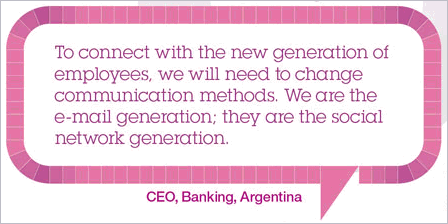
We are the email generation, they are the social generation.

That’s an important way to look at social. Marketers are constantly looking at outbound social efforts. But listening to what customers are saying about your brand on social channels is critical. Here the CEOs have it right. Your company better be listening to what customers are saying on social channels, because customers aren’t saying things anywhere else.

A U.S. CEO from the financial vertical said

“We’re approaching the stage when almost everyone will have to figure out how to use social to conduct business successfully.”

Interestingly, views on social media among the CEOs vary widely across industries. Here’s the percentage of CEOs in these verticals that expect social media to be a key channel for customer engagement.

Education 77%
Telecommunications 73%
Retail 72%
Insurance 51%
Electronics 52 %
Industrial products 34%

CEOs recognize social media’s real value as a source of insight and a means of collaboration.

“We use social media less as a marketing or distribution channel and more as a knowledge platform to obtain information about customers,” said an Insurance CEO from Switzerland.

Along the lines of the B2B market, a U.K. CEO from the media and entertainment vertical pointed out,

“Our B2B customers are also consumers of social media; you cannot split the two.”

The way we collaborate with our customers will be transformed.

What that means is that whether you are using social media to promote and monitor your brand or not, your customers are. It’s not your choice. You can’t opt-out of social.

In the words of one Australian healthcare industry CEO, “Social media has grown faster than industry knowledge on how to use it.” And a life sciences industry CEO from Switzerland admitted, “We are all scared to death about social media within our industry. We want to start with it. But we’re all just looking at each other, and nothing material is happening.”

By far the most definitive, interesting statement contained in this study is that as a method of engaging with customers, CEOs predict

Social media will be bigger than websites, call centers, and channel partners, and become the number-two way to engage customers (the number one way is still sales reps).

Social media has grown faster than industry knowledge on how to use it.

Although these leaders have the right idea about social, the study has one major flaw. It didn’t ask what CEOs feel is the most effective method of driving revenue. Kind of an important thing don’t you think? Although you might believe social media is the greatest thing ever, and that social will be a major revenue driver in the next 3-5 years, the reality is that social media’s impact on actual revenue sucks compared to email marketing.  When it comes to actually marketing to customers, email dwarfs social in terms of customer preference of communication channels*. My point? Social media is great, I use it myself. Just don’t get too cocky about it.

View the infographic
* ExactTarget Subscribers, Fans, and Followers. 2012.