Category Archives: Mount Kisco

30-Year Fixed Mortgage Rate Continues to Rise | Mount Kisco Real Estate

Mortgage rates for 30-year fixed mortgages rose this week, with the current rate borrowers were quoted on Zillow Mortgage Marketplace at 3.26 percent, up from 3.18 percent at this same time last week.

The 30-year fixed mortgage rate hovered between 3.18 and 3.28 percent for the majority of the week, dropping to the current rate this morning.

“Mortgage rates rose slightly at the end of last week following the release of the Federal Open Market Committee’s meeting minutes and a stronger than expected jobs report,” said Erin Lantz, director of Zillow Mortgage Marketplace. “This week, we expect rates to remain fairly steady since we do not foresee any new announcements that have the potential to offset the optimistic tone set by last week’s employment figures.”

Additionally, the 15-year fixed mortgage rate this morning was 2.63 percent, and for 5/1 ARMs, the rate was 2.52 percent.

What are the rates right now? Check Zillow Mortgage Marketplace for up-to-the-minute mortgage rates for your state.

*The weekly rate chart illustrates the average 30-year fixed interest rate in six-hour intervals.

The History of the Vice President’s Residence | North Salem NY Real Estate

Source: georgewbush-whitehouse.archives.gov

As Paul Ryan and Joe Biden crisscross the country discussing health care, jobs and the economy, they’re campaigning for more than the vice presidency. They’re also entrenched in a battle for the right to reside at Number One Observatory Circle.

While tourists flock to 1600 Pennsylvania Ave. to check out public portions of the president’s abode, the vice president’s residence is not open for public tours. The 9,150-square-foot, three-story Victorian home was built in 1893 for the superintendent of the United States Naval Observatory. The home was so impressive that, in 1929, the chief of naval operations booted the superintendent so he could live there himself.

New addition

A dedicated home for the vice president is actually a rather new phenomenon. In 1789, John Adams became the nation’s first vice president; for the next 185 years, VPs and their families lived in their own homes or, on occasion, lavish hotel suites. The associated costs and security logistics made this custom increasingly impractical.

Finally, in 1974, Congress voted to make the house at the Naval Observatory the official vice president’s residence.

President Ronald Reagan and First Lady Nancy Reagan visit Vice President George H. W. Bush and Second Lady Barbara Bush in the VP residence. Source: Wikipedia

It took another three years before a vice president actually moved into the home. Vice President Gerald Ford became President Ford before he could use it; his vice president, Nelson Rockefeller, already had a lavish Washington, DC home and never used the house as his residence, although he did host several parties there. Rockefeller’s enormous wealth enabled him to donate millions of dollars worth of furnishings to the home.

Walter Mondale was the first vice president to move into the home. It has since housed the families of Vice Presidents Bush, Quayle, Gore, Cheney and Biden. Each new resident of the White House is offered a $100,000 decorating stipend, and additional funds are raised privately. There’s no such allowance for vice presidents; donations to the nonprofit Vice President’s Residence Foundation pay for decorating expenses.

Personal touches

During the Dan and Marilyn Quayle years, foundation funds were used to add a swimming pool and carry out renovations that made the property wheelchair accessible.

Al and Tipper Gore moved into the mansion with four children — one in college and three still at home — and three dogs.

The Gores worked with two well-known designers to update the home: Albert Hadley for the interiors and Ben Page for the gardens. The Gores gravitated toward warm yellows and reds. They used the house to showcase an eclectic collection of antiques, some they brought with them, some borrowed from the State Department. Still other furniture belongs to the residence, including an Empire dining room table donated by Rockefeller and American crafts collected by Joan Mondale. The Gores also had hedges planted around the home so it wasn’t so visible from the street and worked to replace non-indigenous species on the 72-acre grounds with native plants.

The entry foyer at Number One Observatory Circle. Lynne Cheney gives a tour of the Naval Observatory. Source: Wikipedia

Dick and Lynne Cheney preferred a palette that was clean and light: pale celadon, taupe, off-white. Washington designer Frank Babb Randolph guided them through the process of reupholstering furniture, shopping for rugs and creating custom window treatments. Veeps and their families are allowed to borrow artwork from national galleries and museums; Lynne Cheney, in particular, relished this privilege and did most of her “shopping” at the Smithsonian’s Hirshhorn Museum.

As for the most recent resident of One Observatory Circle, Vice President Biden is said to be particularly fond of the home’s outdoor entertaining areas. Chatting with reporters prior to an April 2010 luncheon with foreign leaders, Biden quipped that he’d never have anything bad to say about Quayle, his often-mocked predecessor, because Quayle was responsible for having the pool installed at the vice presidential estate.

Rules of Thumb for Estimating Apartment Utility Costs | North Salem Realtor

Utilities are a hidden cost: You know you’ll need to plan for them, but when you’re looking for an apartment, they’re not at the top of your mind. So, before you sign that lease, make sure you can pay all your rental expenses, not just rent. It won’t be much fun to sit in a cold apartment, hunting for a neighbor’s unsecured Internet connection, because you forgot to budget for utilities.

Here are some rough rules of thumb for estimating how much you should expect to pay for various utilities:

Electricity

During winter months, or if you don’t use air conditioning, expect to pay $30-$50 a month for electricity. A lot of your bill will simply depend on how much you’re home, how much you watch television (tube TVs are big electricity drains), how efficient your refrigerator is and how careful you are about turning off lights.

Air conditioning

On average, expect to pay about $250-$300 per year for air conditioning. That said, air conditioning isn’t an evenly-distributed expense: Most people only use it about three to five months a year. And, in some places, like Minnesota or Maine, you may only use it a few times a summer, which makes it a much smaller expense.

If you live in a place with average weather, you’ll be running your A/C May-September and spending about $50-$80 a month extra on your electric bill. However, if you live in a really hot place, like Phoenix or Dallas, you’re going to be paying a lot more per month, for more months — $80-$90 a month (plus regular electricity costs), for eight months a year. So keep that in mind. Your silver lining is that you don’t have to worry much about heating costs.

Heat

If you are in a multi-unit building with radiators, there will almost certainly be no extra charge for heat. The landlord will pay the building’s heating bill in total and build that cost into the rent. However, if you and some friends team up and rent a house, you’ll be on the hook for keeping an oil burner going for heat and hot water, which could cost more than $300 a month. If you have gas or forced-air heating expect to pay at least $100 a month in the deep winter, though the cost can vary. One good way to find out what to expect is simply to ask the landlord or a previous tenant.

Cooking gas

In some buildings, if you have a gas range, you’ll have to pay for the natural gas that you use during cooking. (And in some buildings, the natural gas will also provide your heat.) With cooking, the cost is minimal — $15 a month at most, usually quite a lot less. It really all depends how much you cook at home.

Internet

Monthly, expect to pay about $45. Keep in mind that you can split the cost with as many other people as are using your connection, so if you have two roommates, that’s only $15 a person per month. The other thing to consider is bundling your Internet with your cable. You can often get a deal that way, if you decide you want cable.

Cable

This is an optional expense. With the new high-definition televisions, and their digital antennae, it’s easy to get great reception on network TV, and then you can use online streaming services for the rest of your needs. This will cost you about $20 a month, if you subscribe to two services.

If you want cable, look for a deal. They come along frequently and can save you some money. But be careful; companies often have add-ons like free premium channels for three months, which will then be charged to your account if you don’t cancel when the preliminary deal expires. So make sure to keep an eye on your account, so you know what you’re being charged for. While it’s nice to have cable, and you can usually find introductory deals that include cable and Internet for about $90 a month, it’s still a lot of money compared to using a streaming service or two for about $20 a month.

Renter’s insurance

Finally, always get renter’s insurance. You never know what may happen, and it’s very affordable, at only about $150 a year. If your apartment is burglarized, you’ll be very thankful you have it.

Total bill

If you skip the cable, your total utilities cost comes to roughly $200 a month. Keep in mind, though, that this is for the rental as a whole — if you have roommates, divide by the number of people living in the unit. Of course, if you have a very large apartment (say for four people or more) or you are renting a house, the heat, electricity and A/C will be higher, so add 20-30 percent to the estimate, and then divide.

As a rough rule of thumb, expect to spend on utilities an amount equal to about 20 percent of your monthly rent if you live alone, or about 10 percent of your monthly rent if you live with roommates.

via zillow.com

Bundle Services to Save Big | Mount Kisco Realtor

In these tough economic times, perhaps you’re thinking about bundling some of your household services? And rightly so — it’s easy, convenient and could save you, well, a bundle.

Telecom services

You can typically get a discount on your phone, Internet and cable services when you bundle all three with one provider (which is why 1 in 3 surveyed Consumer Reports readers do it) and sign a one- or two-year contract, but you always need price it out individually, a la carte, just in case. To find out which company is offering the best service bundle in your area, go to lowermybills.com.

Banking services

As you are fully aware, many financial institutions are tacking fees on formerly free checking accounts. One way around this is to bundle: Sign up for other services that banks offer — such as direct deposit, online bill pay, etc. Having multiple accounts with one bank — and having a lot of money in them, combined (!) — is another way to dodge those pesky fees.

Insurance policies

Many insurance companies offer discounts if you buy at least two policies from them. Bundle your home and car policies, for example (a typical combination), and you could save as much as 25 percent.

Moving services

Did you see our recent study on moving habits? Among other interesting factoids: A whopping 21 percent of all movers spend $10,000 or more as result of their move! Not only is the process of moving expensive, but moving also drives surprise purchases — from electronics to cars! One way to save is to bundle. For example, some storage companies will provide you with a complimentary move if you’re storing with them for a certain number of months (and there may even be room for negotiation if you don’t meet their minimum monthly requirements, but you have to ask). That’s easily a $400-$500 discount.

Twitter Launches User Directory | North Salem NY Real Estate

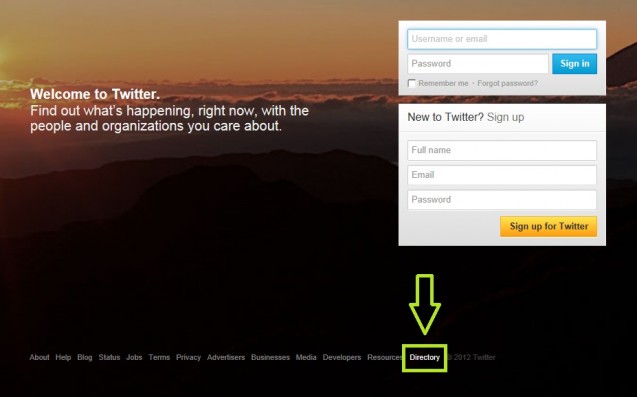
  • In a world where altruistic social gathering doesn’t pay the bills, Twitter continues to make changes that it hopes will drive more traffic directly to the Twitter domain and bolster its value to advertisers. The most recent update comes in the form of an alphabetical user directory. The link to the directory was quietly added to the the default home page for visitors to Twitter not already logged into the service.

According to  in his recent article for Marketing Land:

Twitter launched the user directory a few weeks ago, but hasn’t made a formal announcement about it. That’s likely because it exists more for search engines than for Twitter users.

Basically, Twitter is aiming to draw people who are searching Google, Bing, Yahoo, etc., for someone in particular. As the bots crawl their way through the new directory, more Twitter profiles should start showing up in search. That’s a step in the right direction, maybe.

Twitter is still struggling with the basic issue of no real reason to spend lots of time hanging out in the Twitter Web space. Users spend the most time on Twitter setting up their profile. Once it’s set, they either build up a personalized twitter stream that they keep track of on a mobile app or some other Twitter client application, or they never really get the point and let the profile languish, unused.

Even when a search result brings a user back to the Twitter domain, the realistic expectation is that they will skim the profile, make a decision to follow or not, and move on.

For those of you who love the news, information, and conversation constantly buzzing through your Twitter stream, what could Twitter do to make its space more appealing? What would it take for you to spend your time interacting with the twitterverse in the Twitter-owned domain?36

via searchenginejournal.com

First Cameraman: Insider Secrets to Marketing the Obama Presidency on YouTube | Mount Kisco Real Estate

Run, don’t walk, to your favorite bookstore and buy First Cameraman: Documenting the Obama Presidency in Real Time. Or, if there aren’t any bookstores left within running distance, then bike over to your local library and check out this new hardcover book by Arun Chaudhary. Or, if you haven’t been on a bicycle since 1983, then just go to Amazon.com, buy First Cameraman, and start reading it on your Kindle in under a minute.

Get it? Got it? Good.

Arun Chaudhary was the Official White House videographer. He traveled extensively with the President capturing public events and behind-the-scenes moments.

Arun was the New Media Road Director of Obama for America (OFA) during the 2008 presidential campaign. He oversaw the team responsible for capturing the day-to-day life of the future president in video and stills. He and his team set a new standard in documenting history, delivering crucial images to the public from the road in real time. His work as part of the Obama team has been featured in the New York TimesNational Journal, Politico, Fortune Magazine, and as part of the Frog Design Mind Series.

Before joining the Obama team, Arun worked in fiction film in New York as a writer, director, location sound recordist, post-production sound designer, and film critic. For five years, he was part of the NYU Graduate Film Department faculty. He got his MFA in Filmmaking from NYU and his BA in Film Theory from Cornell University.

I interviewed Arun via email for my book, YouTube and Video Marketing: An Hour a Day. Here are some excerpts:

Documenting Obama on Camera – Tips & Best Practices Learned

Jarboe: Who was your target audience? Was it opinion leaders in the YouTube community or political activists who also watched online video?

Arun Chaudhary, Official White House Videographer and Author, “First Cameraman: Documenting the Obama Presidency in Real Time.”

Chaudhary: Our target audience was voters, all kinds of voters. While YouTube community folks and political activists were probably vocal commenters on our work, I don’t think it would make sense to think of them as a target audience. We wanted to appeal to a wide variety of folks. When you have a candidate as exciting and dynamic as Barack Obama was, the most important thing you can do is get him in front of as many people as possible. We used to say the YouTube or live stream hits of his speeches were like adding thousands of extra seats in the room. Especially in the early states, the sort of people you want to watch an event are folks who couldn’t physically make it for some reason. Rather than fishing for viral success, you’d rather have real prospective voters see your candidate make his or her case.

Jarboe: Did you optimize your videos for YouTube? Were there search terms that you put in your title, description, and tags of your videos on YouTube?

Chaudhary:We tried to be very specific. Location and date of the speech was very important because you really hope that folks who weren’t physically able to make the rally are able to find the footage. Topic is very important as well, because a lot of folks looking for political content online are hoping to find answers to their specific questions (what is the candidate’s position on health care?) in that way; the candidate’s websites are very much a modern update of campaign literature, or maybe even a bit like the voting guides various groups used to publish close to election times. You really can’t be too specific with your titling, though of course there are only so many words you can actually have in the title itself. I also think it’s important to include information in the piece itself.

With emerging technologies and when posting videos on many different platforms, you never quite know what will happen. One of the format rules for BarackObama.com that was designed and enforced by Kate Albright-Hanna was that the opening card for every video would be the date and location. I remember thinking that it was maybe a little too austere, but she was absolutely right. If you lived in Keokuk, Iowa, and a friend forwarded you a video link, the first thing you would see when you clicked on it would be November 20th, 2007, Keokuk, Iowa, and you would immediately know why it was relevant to you.

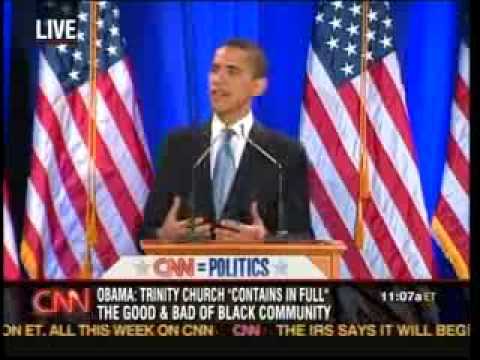
Jarboe: What was the most compelling video content of the campaign? Was it “Yes We Can – Barack Obama Music Video” or “Obama Speech: ‘A More Perfect Union’”?

Chaudhary: I think I better leave the awarding of superlatives to folks who were the audiences of these movies, but between the two you mentioned, I would have to go with “A More Perfect Union.” The Will.i.am piece (which was not produced by the campaign; it was made by the artists themselves) was really great, and I think a lot of people found it very inspiring and accessible, but we had consistent calls from the public to put up speeches in their entirety. As time went on, we found that some of the effort of finding specific clips and producing them with cut shots was better spent trying to get entire speeches and town halls online. Folks really seemed to respond to being allowed to see the candidate unedited. In a sense they wanted to see the candidates in the raw and make their own decision, not to feel like they were being fed media. With a candidate as compelling as Barack Obama was, it made a lot of sense to let them see him in this manner. The more people actually saw him speak and hear his views, the more likely they were to vote for him. With a different candidate one might need to take a different strategy, but for us, Barack Obama was always the star; we were just the backup singers.
YouTube Preview Image

Jarboe: In addition to creating compelling video content, did you engage in any outreach effort with the YouTube community or bloggers? Was there any effort to give opinion leaders a “heads-up” when a new video was uploaded?

Chaudhary: There was some effort put into blog outreach, mostly from the HQ side; I can’t really speak to it, because I wasn’t involved with it, nor was it something we thought about much on the road.

Jarboe: What production challenges did you face and overcome? Are there any tips or tools that you used to get videos uploaded on a daily basis?

Chaudhary: The production challenges were immense. We would often arrive at events with about 10 minutes to go before a speech would start and need to set up our cameras and live-streaming computer as fast as we could. If everything went right, it was just about possible. Editing was just as challenging. The Road Team edited in the field on laptops and uploaded with aircards. On an airplane you can only upload to about 30,000 feet before losing all signal, so time was always of the essence. The watchword on our team was “workflow.” Because we were doing so many events and traveling so constantly, we had a lot of opportunity to improve the workflow; see what order things should be done in, what tasks the computer could handle doing at the same time, figure out how to fill what little time we had to its fullest. Redundancy also helped. Every Road Team member had a camera, a laptop, and an aircard. That way we weren’t reliant on any one person to get the job done; we were all able to do what we needed to do. It was definitely a process. By the end of the campaign, it was taking us minutes to upload what was taking hours at the beginning. There was no magic formula, it was just experience. The thing about doing a process over and over and over is that eventually you get better. A tip I would definitely offer others is to always worry about the audio first; once you have that everything else is fixable. Bad video can seem like a choice while bad audio is always a mistake.

Jarboe: Did you take advantage of any video advertising opportunities?

Chaudhary: This isn’t really anything I can speak to directly; Joe Rospars and our online ad guys Michael Organ and Andrew Bleeker did a lot of amazing things, even putting up Obama posters in video games, but it wasn’t something the Road Team got involved with other than providing footage—something we did for the television folks as well.

Jarboe: How did you measure your video campaign? Did you use YouTube Insight, TubeMogul, or web analytics BarackObama.com? What feedback did these tools give you that led you to change what you were doing?

Chaudhary: We did pay attention to the analytics. In fact, there was an entire section of the New Media Department devoted to analyzing all the data.

On a personal level, I was never quite sure how accurate the metrics of YouTube Insight or TubeMogul were, but I think it can show you some general trends and that can be quite useful. Seeing that folks would actually watch entire speeches and not just clips was very useful, especially as it is slightly counterintuitive. Also finding out that our core audience was much older than the 18–25 demographic was very interesting. According to the YouTube Insight tool, our main audience was 40 to 50, which is what you would expect from normal political media but not necessarily online. It has certainly reinforced my notion that online political video was essentially the modern replacement for the printed campaign guides of the past. I think a lot of folks went to all the websites to compare and contrast the candidates’ views and make an informed decision.

Now, the first official White House videographer chronicles his time capturing behind-the-scenes moments of the president and his administration. “I’m sort of like President Obama’s wedding videographer,” Arun explains, “if every day was a wedding with the same groom but a constantly rotating set of hysterical guests.”

President Obama Pretends to Tape Videographer Arun ChaudharyPresident Obama Pretends to Tape Videographer Arun Chaudhary – Image courtesy of whitehouse.gov.

Some of the moments Chaudhary captures are small, like the president throwing warm-up pitches deep inside Busch Stadium in St. Louis before the All-Star game. Some are intensely emotional, as when Obama comforts a grieving teenager whose father had died in a devastating tornado. And some are just plain bizarre—like getting thrown out of the Indian parliament by his belt, or being trapped in a White House bathroom while Obama conducts a YouTube town hall on the other side of the door.

Arun’s entertaining and eye-opening book – which includes stories and images of key players such as Barack and Michelle Obama, Joe Biden, and Hillary Clinton, among others – will give online video marketers lots of expert advice and plenty of best practices to share with either executives in their company or clients of their agency.

In other words, get your hands on a copy of First Cameraman. And don’t wait until after Nov. 6, 2012, to start reading it.