Category Archives: Mount Kisco

Believe it or not … Phoenix is facing a housing shortage | Mt Kisco Real Estate

A Phoenix home with 95 bids is just one example of a housing market entering a new and unprecedented phase. Experts with Arizona State University’s W.P. Carey School of Business say the city is heading for a significant housing shortage.

Long gone are the days when the Phoenix metro was riddled with available, well-built single-family homes in the wake of the 2008 housing market bust. 

Five years after the crash, the desert metro is facing lagging home construction, predictions of population growth and rising land prices, according to real estate experts with ASU.

The end result could be a significant housing shortage in the near future, experts contend.

During a forum titled the ‘Phoenix Housing Market Explained’, ASU real estate analysts gave a contrasting view to the long-held belief that Phoenix real estate is booming from all angles. (An online video of the forum discussion is now available at ASU’s knowre real estate website).

“After five years of very low construction volumes, we don’t have enough homes to match the rate of population increase,” said Mike Orr, director of ASU’s Center for Real Estate Theory and Practice.

Arizona may have had plenty of distressed and never-used inventory after the market slowdown a few years ago, but times have changed and demand and demographic shifts could create an even tighter inventory shortage, they warned.

ASU experts attending the forum said Phoenix already has less than half its normal supply of homes for sale and active listings for houses under the $200,000-range have fallen 74% since January 2011.

Home construction has picked up a bit, but not enough to meet the projected future demand, ASU panelists said.

Making matters worse is the expected population growth of 2.6 million people by 2040.

“To accommodate our future growth, we have to build the equivalent of an infrastructure sufficient to support metropolitan population of Denver,” said Mark Stapp, director of the Master of Science in Real Estate Development. “That’s pretty unbelievable.”

Stapp says the recession and foreclosures – along with credit issues – pushed new home construction down, reducing new home inventory in Phoenix. But now, land prices in desirable areas of the metro are extremely high, costing $100,000 or more per acre, based on ASU research.

Until existing home prices rise significantly, Stapp does not see homebuilders easily justifying a significant increase in volume production.

There’s also a construction labor shortage, the panelists argued.  Having less labor and higher land prices is a poor combination for incentivizing builders.

“So we have a long-term chronic supply shortage of housing until the construction industry can grow to its former size in 2000,” Orr said. “And they are not obligated to build the homes that we need. They are commercial operations, right? They build homes when they can make a profit.”

Bedford Hills Homes | New home building sign of real estate recovery

CRYSTAL LAKE – After a long hibernation, new homes are starting to spring up in McHenry County in another sign of the real estate market’s recovery.

After the housing bust, new home purchases dropped significantly as buyers found irresistible deals on foreclosures and short sales of existing homes. But the county’s dwindling supply of existing homes, combined with low interest rates and pent up demand, have buyers once again considering new homes.

Elliman Reports for Brooklyn, Queens and Westchester | Mt Kisco Homes

We have just released the first quarter 2013 “Elliman Reports” for Brooklyn, Queens and Westchester; the leading resource on the state of these markets. As always, our market reports are produced in conjunction with Miller Samuel to provide you and your clients with the most comprehensive and neutral market insight available.


The Brooklyn housing market has tightened up quite a bit since last year. Listing inventory has fallen to a five-year low and housing prices have edged up to their highest level since the credit crunch began five years ago. The number of sales fell short of levels a year ago but the negotiability between buyers and sellers has grown closer than we’ve seen in years. We don’t anticipate much relief in supply in the near future, so current conditions are expected to continue in the coming quarters.


Inventory in Queens has fallen to an eight-year low, yet the number of sales increased from prior year levels. Low mortgage rates, a release of pent-up demand, and improving economic conditions have brought more interest to this market. Housing prices have remained remarkably stable, but these tighter conditions have brought buyers and sellers closer together on price. We anticipate more of the same in the coming quarters.


The Westchester market is defined by shrinking inventory–now at its lowest level in four years. While closed sales were higher than last year, signed contracts jumped above last year’s levels promising to make the spring market the most active in years. Housing prices have remained stable for the past several years, but a combination of low mortgage rates, rising activity, and low supply is expected to keep upward pressure on prices in the coming months.


We constantly look for ways to provide our clients with better information to enable them to make more informed decisions. Our efforts to make this market report series possible reflect my strong belief that in a market that is constantly changing, access to timely information is one of the greatest resources we can offer our clients.  We are committed to providing the best information and services in the industry. Explore our full market report series covering Manhattan, Brooklyn, Queens, Long Island, The Hamptons, North Fork, Westchester/Putnam, Miami, Boca Raton, Fort Lauderdale and Palm Beach at http://www.elliman.com/marketreports


Warmest regards,

Dottie Herman

President and CEO

Douglas Elliman


*Visit the new, http://www.elliman.com to search from more than 40,000 listings and access all of our current market reports

30-Year Fixed Mortgage Rates Down for Second Consecutive Week | Mount Kisco NY Real Estate

Mortgage rates for 30-year fixed mortgages fell again this week, with the current rate borrowers were quoted on Zillow Mortgage Marketplace at 3.35 percent, down from 3.43 percent at this same time last week.

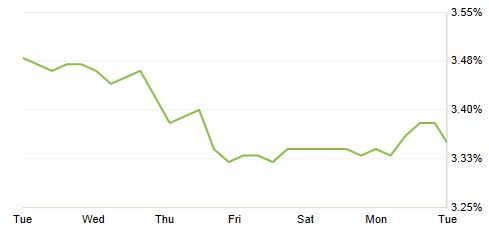
The 30-year fixed mortgage rate hovered between 3.48 and 3.33 percent for the majority of the week, dropping to the current rate this morning.

“Rates dropped last week after a weaker-than-expected U.S. jobs report on Friday,” said Erin Lantz, director of Zillow Mortgage Marketplace. “This coming week, we expect rates to remain depressed as lingering eurozone concerns and Japan’s new monetary policy push investors to safer asset types like U.S. mortgage-backed securities.”

Additionally, the 15-year fixed mortgage rate this morning was 2.54 percent, and for 5/1 ARMs, the rate was 2.28 percent.

What are the rates right now? Check Zillow Mortgage Marketplace for up-to-the-minute mortgage rates for your state.

04-09-13 1006 AM

*The weekly rate chart illustrates the average 30-year fixed interest rate in six-hour intervals.

Don’t underestimate the impact of housing market on economy | Mt Kisco NY Homes

When real estate is discussed, the conversation most often turns to the number of homes sold, the median price in the area, available inventory or pending sales. All of those items and the trends they represent are important, but rarely does anyone take a look at the overall impact of the real estate market on the economy.

Economic development efforts sometimes overlook the key impact of the housing market.

Let’s take a look at the economic impact of single-family homes in Greater Nashville just so far this year (not even including condominiums) using the number of closings and median prices already reported. Based on the number of homes sold in the first quarter, at the median price reported in each of the first three months of this year, there have been more than $825 million in residential real estate sales in the Greater Nashville area.

In addition to that, whenever someone purchases a home, there is a significant amount of money put into the economy through the add-on purchases such as appliances, furniture, flooring, cabinetry, lighting, window treatments, landscaping, lawn service and much more.

Cemetery Plots In Major Chinese Cities Now Cost More Than Housing | North Salem NY Homes

Prices of cemetery plots have soared above already exorbitant housing prices in major Chinese cities, the People’s Daily reports, and they are out of reach for many ordinary families. Paradoxically, while some inexpensive plots do exist, they do not sell well because many Chinese believe that fulfilling filial duties requires purchasing expensive plots for vanity.

Recently, the Chinese celebrated Qingming, an annual occasion for honoring the dead in each family by sweeping their tombs. At the time, the soaring price of burying the dead came under increased scrutiny.

Kill the 30-Year Mortgage | North Salem Real Estate

After a devastating cycle of bubble and bust, the U.S. housing sector is on the road to recovery. New homes are being built at the fastest rate in years and prices are increasing across the country. Foreclosures are down and the number of “underwater” mortgages has declined by almost 12 percent since the peak at the end of 2011. Even Fannie Mae and Freddie Mac, the mortgage-finance companies in conservatorship since 2008, are reporting record profits.

What’s wrong with this picture? None of this would be possible without massive government support. Today, the government owns or guarantees about 90 percent of new mortgages, up from about 50 percent in the mid-1990s. It isn’t sustainable, let alone fiscally acceptable, for the U.S. to have such a domineering presence in what should be a private-sector function.

The housing recovery now under way creates a perfect opportunity to plan for the future of U.S. mortgage markets. Several recent innovations in mortgage finance by economists and academics are worth considering.

First, it helps to understand the origins of today’s situation. Before the New Deal, people bought houses by borrowing for a few years at a time. They only paid interest until the loans matured, at which point they would make a large payment or refinance. That worked well enough until house prices collapsed during the Great Depression. Lenders refused to refinance, hoping to get paid in full. Many borrowers defaulted; about 10 percent of homes ended up in foreclosure.

Downward Spiral

To prevent another downward spiral, the U.S. came up with the self-amortizing, long-term, fixed-rate mortgage. It enticed lenders into offering these products by promising to buy mortgages that conformed to certain underwriting standards. That’s where Fannie Mae and Freddie Mac come in: They bundle loans into securities, then sell them to private investors. For a fee, the government absorbs the risk of borrower default.

As long as house prices were relatively stable, the new system worked. But once prices soared, only to collapse a few years later, scores of homeowners defaulted. A cascade of foreclosures further depressed prices as more houses were dumped onto the market. Economists say this was responsible for 20 percent to 30 percent of the decline in home prices from 2007 through 2009. It was the Great Depression all over again.

The biggest challenge going forward is separating the choice to buy a house from the decision to make a leveraged bet on housing prices. Right now, when a borrower puts down $50,000 to buy a $500,000 house, she doubles her equity if the value of the house goes up to $550,000. The lender, however, has no claim to any of that appreciation. Alternatively, if the price declines to $400,000, the borrower is suddenly in the hole. She has a strong incentive to default, leaving the lender in the lurch.

Outside the U.S., floating-rate mortgages, where monthly payments rise and fall with the short-term interest rate, help borrowers deal with some of this volatility. Interest rates generally move in line with the health of the economy, so these mortgages are more flexible for both borrowers and investors. This approach effectively allows borrowers to refinance even if they are underwater, yet it does nothing to reduce the risk of default and foreclosure associated with negative equity.

The U.S. must figure out a way to better manage these risks if it is to turn housing back over to the private sector. Fortunately, economists have lots of ideas. The common theme is that mortgage principal should be keyed to economic conditions, and monthly payments should rise and fall proportionately. These features ensure that borrowers have a stake in repaying their loans, while also making it easier for them to do so when times get tough.

Continuous Workouts

These new mortgages would also damp the swings in spending that come from the wealth effect. Robert Shiller, the Yale University economics professor and co-founder of the widely used Case-Shiller index of home prices, and colleagues have modeled a few versions of a product called a “continuous workout mortgage.” In essence, the Shiller loans would allow borrowers to pay higher interest rates upfront in exchange for the right to lower principal and monthly payments when house prices go down.

These loans might be right for some people, but we prefer another idea: Mortgages with principal and monthly payments that move with an index of neighborhood home prices. As prices rose, so would monthly payments. Conversely, if prices fell, monthly payments would, too. These might be more attractive to borrowers since they wouldn’t have to pay higher rates upfront. Instead, they would compensate lenders by passing on the gains from house-price appreciation.

Borrowers would still have an incentive to maintain their property because they would keep (or lose) any change in the value of their house relative to the prices of their neighbors’ homes. Investors’ demand for these products would probably be strong, given their demonstrated eagerness to gain exposure to single-family house prices by buying them outright.

The government and the private sector have an interest in this sort of financial innovation. Right now, investors have little appetite for mortgages that lack government guarantees, partly because they were badly burned by misrepresentations the last time around. But if the U.S. ever hopes to reduce Fannie’s and Freddie’s dominance in the marketplace, as its regulator, the Federal Housing Finance Agency, recommends, the country needs to accept that the 30-year fixed loan — a financial product from our grandparents’ generation — has outlived its usefulness. We can create a better housing market by encouraging the development of more resilient mortgages that don’t depend on federal default insurance.

To contact the Bloomberg View editorial board: view@bloomberg.net.