Category Archives: Bedford Corners NY

Realtor finds Google Glass ‘awesome’ | Bedford Corners Real Estate

Given Google’s tight clutch on prototypes of its futuristic eyewear, known as Google Glass, Greg Geilman may be the first real estate agent to test the device.

His finding? The smart glasses, which allow users to perform many smartphone functions, offer a unique “awesome” user experience. And thankfully, he “did not feel like an idiot” sporting them in public.

“People were like, ‘Oh my god, is that really Google Glass?’ Some people look at you a little weird, but I didn’t get any bad reactions,” he said. “I’m really excited about it. It was very comfortable to use. I got used to it right away.”

But as with many devices still in beta testing, Glass could still use some tweaks, he said.

Google has said that it aims to release the product by the end of 2013. Recently, thousands of “explorers” who won Google’s #ifihadglass contest received prototypes of the next-generation smart wear, transforming a legion of techies into walking spectacles and heightening awareness of the product.

Geilman, the managing director for Manhattan Beach, Calif.-based South Bay Residential, said he borrowed the glasses from a friend who attended Google’s annual developer-focused tech conference, Google I/O, and as a result, was able to nab a pair. The Realtor said he enjoyed performing different tasks with the device using hand motions and dictation — two ways Glass processes commands.

– See more at: http://www.inman.com/2013/05/16/realtor-finds-google-glass-awesome/#sthash.rQmEJi5r.dpuf


Realtor finds Google Glass ‘awesome’ | Inman News.

Rupert Murdoch Tweets About Buying Bel Air Estate & Vineyard | Bedford Corners Real Estate

Rupert Murdoch isn’t shy about wanting to own the Los Angeles Times. He also isn’t shy about his latest real estate purchase.

The media mogul is closing the deal on a Bel Air property, last listed for $29.5 million. While the sale is pending on the MLS, Murdoch decided to share the news on Twitter.

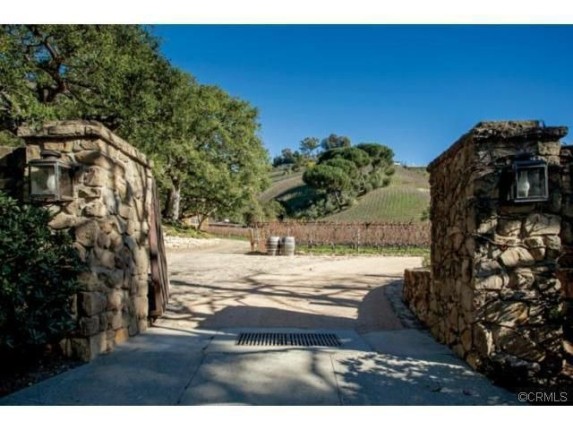
While the vineyard might be small by wine-making standards, it’s a large parcel for Los Angeles measuring 13 acres. The land includes Moraga Vineyards and Winery, which Tom and Ruth Jones have owned since 1959. A 7,500-square-foot home built in 1940 by “Gone With the Wind” and “The Wizard of Oz” director Victor Fleming — as well as a wine cave, guest house and 4,400-square-foot office — come with the property.

According to Business Insider, Murdoch first checked out the listing after reading about it in The Wall Street Journal. Mr. and Mrs. Jones reportedly said they were “ready to pass on the vineyard to ‘someone who will carry on their story.’” Moraga is the first commercial winery to be bonded in the city of Los Angeles since the Prohibition ended in 1933.

“We are proud to be the ‘Vino Locale’ for Los Angeles as well as preservationists for our piece of rural California,” Tom Jones said in a quote on the company’s website.

While Murdoch doesn’t have experience owning a vineyard and is currently facing demands to step down as chairman of News Corp., he knows how to juggle multiple homes. He owns an 11-bedroom in Beverly Hills, as well as two New York City properties.


Rupert Murdoch Tweets About Buying Bel Air Estate & Vineyard | Zillow Blog.

Homes for Cyclists in 5 Most Bikeable Cities | Bedford Corners Homes

For kids, bikes are the best and sometimes only form of independent transportation. For quick trips to the park or a best friend’s house, a two-wheeler or even a trike can’t be beat.

Once most Americans hit age 16, the car is often preferred. But as gas prices and environmental concerns increase, the bike has come back in popularity for the 16-and-older set.

Many cities have embraced the rise in bicycle commuting by installing bike lanes, starting shared-bicycle programs and offering storage. Even if your city isn’t on the most “bike-friendly” list, the number of homes and apartments catering to cyclists is increasing nationwide.

In honor of Bike to Work Week, we’ve rounded up cycle-convenient cribs in the five most bikeable cities, according to Walk Score’s 2013 rankings.

Portland, OR

Portland is often No. 1 or 2 most bikeable city, which is determined based on the number of bikers on the road, bike lanes, hills, connecting roads and destinations. This year, Portland scored highest, which isn’t surprising given its growing bike culture, due in part to the popular TV show “Portlandia.” The bike-friendly city boasts that 6 percent of its commuters go by bike, in comparison to the .05 percent that bike to work nationally.

portland
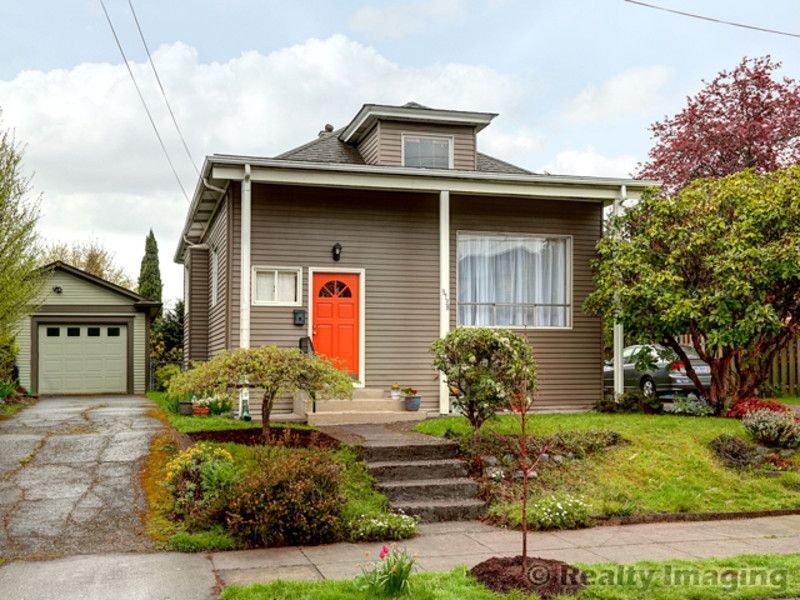
3738 SE Lincoln St, Portland OR 97214

For sale: $299,900

This Portland home’s proximity to downtown makes biking the obvious commuter choice. A detached garage is also the perfect place to stash your bike in case of rainy Pacific-Northwest weather.

San Francisco, CA

This city’s steep hills don’t deter cyclists. San Fran has several bike trails and a goal of becoming the North American city with the highest per-capita bicycle use. So far, they’re well on their way, earning the No. 2 ranking in this year’s bikeable cities list.

san fran
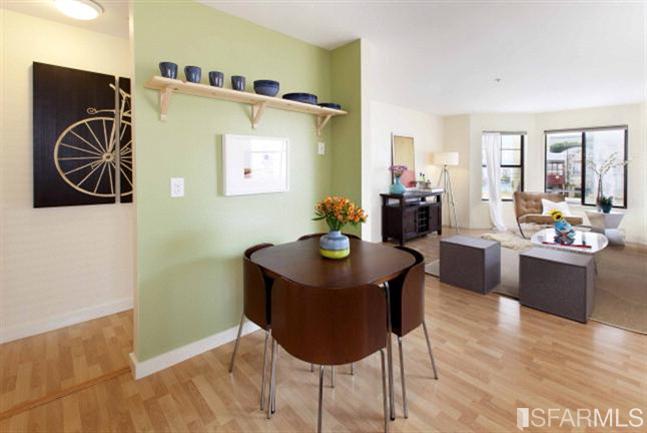
1930 Mission St UNIT 203, San Francisco CA 94103
For sale: $550,000

A bike-friendly home complete with cyclist art. This 1993-built condo sits in the heart of the Mission District near bike lanes. Bike storage is also available in the building.

Denver, CO

Despite its high elevation nearly a mile above sea level, Denver is a very bike-friendly city with miles of bike trails and a substantial bike-sharing program.

denver
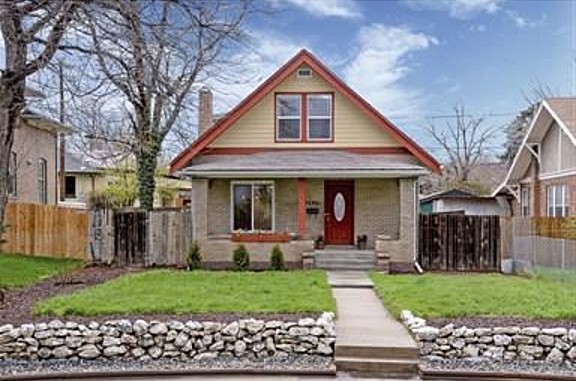
4511 Federal Blvd, Denver CO 80211

For sale: $350,000

According to the listing description, this Denver house is the best of urban living. A single-family home with plenty of living space, the house is conveniently located a short walk or even shorter bike ride from downtown, local shops and cafes.

Philadelphia, PA

Philly is a relatively new addition to the top-five most bikeable cities, but this isn’t surprising. The city has dedicated resources to its cyclist commuters, with over 200 miles of bike lanes and/or trails.

philly
2601 Pennsylvania Ave APT 812, Philadelphia, PA 19130

For sale: $390,000

This 3-bed, 2-bath condo is a desirable corner unit in a striking art deco-style building. Not only is bike storage available; the condo is a short distance from some of the best cafes and restaurants in Philadelphia.


Homes for Cyclists in 5 Most Bikeable Cities | Zillow Blog.

6 Marketing Automation Lessons Learned the Hard Way | Bedford Corners Realtor

Not too long ago, my colleague Katie Burke wrote a great article, “The Right Way to Think About Your Marketing Software RFP,” and it got me thinking about my own experiences as a buyer of marketing technology. Particularly I realized, more often than not, I was thinking about automation the wrong way.

In the past nine or so years, I’ve evaluated, purchased, implemented, and used over ten different email marketing and marketing automation platforms (there may be more but I’ve lost count). My love for technology and marketing is what led me to join HubSpot over two years ago, and why I regularly speak with prospects and customers on what I learned when I was in their shoes.

Right now the marketing automation industry couldn’t be hotter. Due to increasing adoption rates, analysts are predicting a more than 50% industry revenue increase this year. Recent acquisitions (Eloqua acquired by Oracle, Pardot by ExactTarget, and others) are also signs of a market headed in the right direction.

I’m certainly not going to complain about our industry’s growth, but I wonder, are companies adopting automation the right way? Perhaps the belief that marketing automation just encourages bad behavior more than it createslovable marketing, or that it’s simply a more efficient spamming engine, is a telling sign.

Too often I hear from companies that are headed down the wrong path in the decision process despite where they started (with good intentions). Make no mistake, automation can do wonders for your bottom line — if you avoid the purchasing pitfalls. Below are six common mistakes I see over and over again, failures I’ve experienced myself, and how you can avoid them so that you’re successful with marketing automation.

6 Common Marketing Automation Lessons I Learned the Hard Way

1) Automating bad processes doesn’t magically make marketing better.

This might appear like a no-brainer, but it’s the #1 offense I see. Let me you give you a real-life scenario:

A three-person marketing team for a large technology company is struggling to supply inside sales reps with good leads. In addition, a lot of the work to hand leads to sales is very manual, due to a lack of integration with their email provider and CRM. They target a niche audience in the Fortune 1000. Because of this, the company attends tradeshows and buys targeted prospect lists of “Directors of IT.” They email these lists regularly with the goal to schedule more sales appointments, or maybe they will send a newsletter or product offer. But the company often experiences high bounce rates and low engagement. Their database hasn’t really grown in years, and in fact, it’s churning at a high rate. They decide it’s time to buy marketing automation to better utilize their existing database and put new lists through automated drip campaigns. They plan to use lead scoring, as well.

What’s wrong with this picture? First, yes, buying email lists is a no-no and no one should do it. But the main problem is that this company is solely looking at automation to fix an already broken process. In this case, this company needs to fix their lead problem by creating better content. In other words, they should consider marketing transformation prior to marketing automation.

John Common, CEO of Intelligent Demand, mentioned in this post:

“It is a disruptive technology in that it forces a company to think differently about its most important process: revenue creation. This is a good thing! At most companies today, marketing and sales are working from an outdated playbook that was written back when interruptive, batch-and-blast, product-focused, hunch-based marketing actually worked, and Sales was in control of the buying process. Those days are gone, but the thinking behind that playbook still exists.”

Sure, automation can make things easier in some cases and you may even see some short-term gains. But long-term success is what matters, and that requires a different way of marketing. Using automation as a glorified email tool won’t get you where you need to be.

Great automation is a result of highly targetedpersonalizedvaluable, timely, and remarkable content that is sent to a healthy and engaged database (see point #2 below in just a minute). As John mentions above, the batch-and-blast approach to sending prospects stuff they don’t care about isn’t going to suddenly make things better with automation. If your company feels like creating great content is the core of your problem — and in most of the scenarios I’ve seen, it is — start there.

2) Automation requires a growing and engaged database to nurture.
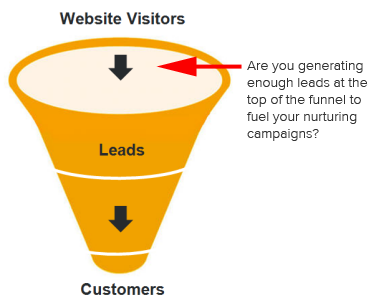
marketing-automation-funnelThe average email database expires at the rate of ~25% per year. That means a database of 50,000 email addresses will have shrunk to 21,000 in just three short years. The best way to solve for attrition is to replenish the funnel with new leads at a higher rate than you’re burning through. Or else you’ll find yourself with diminishing returns.

Before you invest in marketing automation, ask yourself, “What am I doing to fuel the top of my funnel?” In other words, automation is a fantastic tool to further qualify and nurture leads, but when you don’t even generate enough for Sales, what’s the point?

I learned this the hard way. A few years ago, I implemented marketing automation before putting the processes in place to attract and convert more leads, like creating better content, offers, calls-to-action, and landing pages, and doing things like blogging and optimization (and to clarify, buying email lists does not count as lead generation). Essentially, I put the cart before the horse and my results later suffered.


6 Marketing Automation Lessons I Learned the Hard Way.

New Zealand April Median House Price -2.4% Vs March; +7.0% on Year | Bedford Corners Real Estate

WELLINGTON, New Zealand–New Zealand house prices eased in April from March but the fall is unlikely to provide any relief for the country’s central bank as prices remain sharply higher on the year.
Data from the Real Estate Institute of New Zealand, or Reinz, showed Monday that the national median home price totaled 390,500 New Zealand dollars (US$323,412) in April, down 2.4% on the month but 7.0% higher on the year.
The Reinz Monthly Housing Index, which uses all sales by Reinz members rather than just a median price, rose 0.8% in April compared with March.
There is growing concern about high housing costs in New Zealand as shortages in the country’s two largest cities–Auckland and Christchurch in Canterbury–drive prices. The Reinz data for April show house prices in Auckland were down 1.2% on the month but jumped 13.3% on the year, while in the Canterbury-Westland region, where Christchurch is the major city, prices fell 1.7% on the month but were up 10% on the year.
While demand in Auckland is being fueled by the city’s expanding population, Christchurch residents need new housing after 11,500 homes were destroyed in a series of earthquakes that have hit the region since Sept. 4, 2010. The government moved Friday to make building new homes in Auckland easier by streamlining urban planning and building permissions, while the central bank will increase capital requirements for the four large banks in relation to low equity mortgages from September.
However, Monday’s data show house prices elsewhere in the country are also starting to rise. “Several regions appear to be benefiting from the tail-wind generated by the strength of house prices in Auckland and Christchurch,” Helen O’Sullivan, chief executive of Reinz, said.
The number of homes sold totaled 7,104 in April compared with 8,128 in March and 5,676 in April 2012, while the number of days taken to sell a house, a gauge of underlying demand, rose to 34 from 31 in March and was down from 37 a year earlier.


New Zealand April Median House Price -2.4% Vs March; +7.0% on Year | Bedford Corners Real Estate | Bedford NY Real Estate | Robert Paul Talks Life in Bedford NY.

Home prices near most affordable levels in over 30 years | Bedford Corners NY Real Estate

Home prices may have been on an upward spiral for many years, but the cost of owning a house in India remains near the most affordable level in over three decades, shows data compiled by mortgage giant HDFC Ltd.

The average price of a home, purchased with a housing loan, rose to over Rs 45 lakh in the 2012-13 fiscal – marking the fourth consecutive year of uptrend from about Rs 25 lakh in the year 2008-09, HDFC has said in a presentation.

However, factors like an even greater surge in the personal income levels, tax incentives and lower interest rates, have resulted into houses becoming more affordable to purchase, it said.

As per an ‘affordability’ ratio compiled for over three decades by HDFC, the average cost of owning a house stood at 4.7 times of the annual income of the home buyer in 2012-13.

The affordability ratio, which takes into account the annual income of the home buyer along with the price of the house, stood at as high as 22 in the year 1994-95, but has been mostly on a declining trend since then.

This means that a home buyer, on an average, needed an amount equivalent to nearly 22 times his or her annual income in 1994-95, but an amount less than five times of the annual earnings is required for purchasing a house now.

HDFC has released this dataset as part of an investor presentation on its latest fiscal financial results.

Explaining the improved affordability in the housing market, HDFC said it has been possible because of rising disposable income, tax incentives (on interest and principal repayments) and affordable interest rates available to the home loan customers.

The lender further said that the mortgage market was also witnessing a high demand growth because of increasing urbanisation and favourable demographics of the country, where 60 per cent of population is below 30 years of age and there is a rapid rise in new households.

Interestingly, the affordability ratio has remained in the range of 4.5-4.7 for the five consecutive years now, although the home prices have nearly doubled in this period.

Excluding a temporary dip during 2008-09, the home prices in the country have been rising for 11 years now, after hitting the lowest level in two decades at below Rs 15 lakh in the year 2001-02. However, the average annual income of a home loan customer has almost tripled during this period from less than Rs 4 lakh to close to Rs 12 lakh currently.

To be precise, the affordability ratio of 4.7 during the the last fiscal 2012-13 is the fourth lowest ever figure, after 4.3 in the year 2003-04, 4.5 in 2008-09 and 4.6 in 2011-12.


Home prices near most affordable levels in over 30 years: HDFC – Business Line.

The real estate market must be totally regulated in Qatar | Bedford Corners Homes

Rents stabilising in Qatar are a clear indication of the upbeat mood in the market about medium- to long-term national economic prospects.

In the last few months, many commercial and residential properties have come to the local market and many more are expected in the months ahead.

For investors, a key factor that drives their business strategy is the projected return on investments (ROI). Obviously, return on investments is decided by the demand and supply situation.

With Qatar economy witnessing rapid growth and many infrastructure projects being taken up, national economic prospects look good.

Population growth has been accelerating mainly because expatriates come to work on new infrastructure projects.

This is bound to put pressure on both commercial and residential properties with the result that rents may go up considerably.

Rents are likely to be a major swing factor in forecasts of consumer price inflation for 2013, experts have already warned.

Historically, from 2005 until 2013, Qatar’s inflation averaged 4.05% reaching an all time high of 16.59% in June 2008 and a record deflation of 9.96% in December 2009, a study by Standard Chartered Bank has shown.

According to QNB, overall inflation increased 3.6% year-on-year and 0.4% month-on-month to 2.4% in March this year.

Since the housing component has the largest weighting in the inflation basket (32.2%), escalating rents are sure to drive inflation in Qatar.

Rising inflation will certainly take the sheen off the real GDP growth, which no economy can afford.

In the past, when inflation surged and touched double digits, the government took very strong measures to contain it.

They included putting a ceiling on the annual rental increases and starting new low-cost residential projects. Many nationals and expatriates have then benefited from the pro-active measures taken by the government.


The real estate market must be totally regulated.

Rye Playland Opens For 2013 Season | Bedford Corners Real Estate

The opening day event featured special admission prices of $15 for unlimited rides, which continue this weekend and next. Beginning May 24, admission for unlimited rides will be $30 and $20 for anyone under 48 inches. Westchester residents with proof of residency will receive $5 off. Spectator admission, which does not include rides, is $10.  and entertainment.Season passes are $95 for unlimited rides, with a $15 discount for Westchester residents.The amusement park and boardwalk will be open. The beach and pool are expected to open June 21. The Ice Casino and north boardwalk were both heavily damaged by Hurricane Sandy, and are not expected to open until 2014.Saturday, children lined up for rides and posed for pictures with Coaster the Dragon, Playland’s mascot. The band Reunion will be playing hits of the \’50s, \’60s and \’70s during shows at 1, 3 and 5 p.m. on the Music Tower Theater stage.

via Photos: Rye Playland Opens For 2013 Season | The Bedford Daily Voice.

Supervisor Lee Roberts Won\’t Seek Re-election Tops Bedford News | Bedford Real Estate

After 20 years in Bedford politics, Lee Roberts will be stepping down as town supervisor when November elections come around.

Roberts was elected as a councilwoman in 1993 and held that position for a decade before being named Bedford town supervisor. Currently in her fifth term, she will not be trying to make it six.

“After 10 years as supervisor, I think it’s time for new faces and new people,” she said.

When asked about what she’ll miss most, Roberts did not hesitate.

“Working with the residents,” she said. “In my mind, this is the best town in America. We have fabulous town officials and volunteers that make anything possible. It’s simply an outstanding community.”


Supervisor Lee Roberts Won\’t Seek Re-election Tops Bedford News | The Bedford Daily Voice.