Monthly Archives: November 2016

Existing home sales rise | Bedford Real Estate

Existing home sales, as reported by the National Association of Realtors (NAR), increased 2.0% in October and reached the highest pace since February 2007. In October sales increased for the second straight month, and were up 5.9% from the same month a year ago. Total existing home sales in October increased to a seasonally adjusted rate of 5.60 million units combined for single-family homes, townhomes, condominiums and co-ops, up from an upwardly adjusted 5.49 million units in September.

existing-sales-october-2016

October existing sales increased in all four regions, ranging from 2.8% in the South to 0.8% in the West. Year-over-year, October sales also increased in all regions, ranging from 10.4% in the West to 1.4% in the Northeast.

Total housing inventory decreased slightly by 0.5% in October, and remains 4.3% lower than its level a year ago. At the current sales rate, the October unsold inventory represents a 4.3-month supply, compared to a 4.4-month supply in September.

The October all-cash sales share increased to 22% from 21% in September, but was down from 24% one year ago. Individual investors purchased a 13% share in October, down from 14% in September and unchanged from a year ago. The first-time home buyer share was 33% in October, down a point from the solid September report, but above the first-time buyer share of 31% in October 2015. Distressed sales, comprised of foreclosures and short sales, increased to 5% in October from 4% in September, which was the lowest rate since NAR launched that series in 2008.

The October median sales price of $232,200 was 6.0% above the same month a year ago, and represents the 56th consecutive month of year-over-year increases. The median condominium/co-op price dropped for the fourth consecutive month to $220,300 in October, but was up 6.2% from the same month a year ago.


read more…


http://eyeonhousing.org/2016/11/existing-sales-revival/

US existing sales increase 2% | Pound Ridge Real Estate

Sales of previously owned houses in the United States rose 2 percent to a seasonally adjusted annual rate of 5600 thousand in October of 2016. It is the highest figure since February of 2007, beating market expectations of a 0.5 percent fall or 5430 thousand. Sales of single family homes went up 2.3 percent to 4990 thousand while those of condos were flat at 610 thousand. The average price fell 1 percent and the months’ worth of supply went down to 4.3 from 4.4. Existing Home Sales in the United States averaged 3881.83 Thousand from 1968 until 2016, reaching an all time high of 7250 Thousand in September of 2005 and a record low of 1370 Thousand in March of 1970. Existing Home Sales in the United States is reported by the National Association of Realtors.


read more…


http://www.tradingeconomics.com/united-states/existing-home-sales


Builder Confidence Remains Solid in October | Bedford Hills Real Estate

Builder confidence in the market for newly constructed single-family homes remained on firm ground in October, declining two points to a level of 63 on the National Association of Home Builders/Wells Fargo Housing Market Index (HMI).

hmi_oct

Despite the decline, the HMI now stands at its second-highest level in 2016, a sign that the housing recovery continues to make solid progress. However, builders in many markets continue to express concerns about shortages of lots and labor. Mortgage rates remain low and the HMI index measuring future sales expectations has been over 70 for the past two months. These factors will sustain continued growth in the single-family market in the months ahead.

Derived from a monthly survey that NAHB has been conducting for 30 years, the NAHB/Wells Fargo Housing Market Index gauges builder perceptions of current single-family home sales and sales expectations for the next six months as “good,” “fair” or “poor.” The survey also asks builders to rate traffic of prospective buyers as “high to very high,” “average” or “low to very low.” Scores for each component are then used to calculate a seasonally adjusted index where any number over 50 indicates that more builders view conditions as good than poor.

Two of the three HMI components posted losses in October. The component gauging current sales conditions dropped two points to 69 and the index charting buyer traffic fell one point to 46. Meanwhile, the index measuring sales expectations in the next six months rose one point to 72.


read more…


http://eyeonhousing.org/2016/10/builder-confidence-remains-solid-in-october/

San Jose to tackle homelessness with tiny houses | Bedford Real Estate

Homeless person in San Jose, California

Sprawling and largely suburban in character, San Jose — highly affluent de facto capital of California’s Silicon Valley — is home to one of the nation’s most well-educated, socially progressive, ethnically diverse and highest paid populaces. It’s also blessed with beautiful weather, a fabulous park system and a low crime rate for a city of its size. Everything is hunky-dory, all sunshine and Dionne Warwick songs, in the well-heeled epicenter of America’s busiest tech hub.

Except that it’s not.

Like its (technically smaller) neighbor to the north, San Francisco, the third most populous city in California struggles with exorbitant housing costs, severe income inequality and a homelessness crisis that shows no signs of abating.

Yes, there are homeless people in the Silicon Valley. And way more than you might imagine.

As reported by the Mercury News citing 2014 statistics released by the U.S Department of Housing and Urban Development, San Jose and greater Santa Clara County have the fourth largest homeless population in the United States. With an estimated 4,063 homeless residents, San Jose has the nation’s third largest population of chronically homeless residents and the nation’s fifth largest population of homeless veterans.

In total, 69 percent of San Jose’s homeless population are living on the streets, in cars, in abandoned buildings and in encampments. One such encampment, “The Jungle,” was one of the largest — if not the largest — homeless camps in the nation until it was cleared out in 2014. The site has since been reclaimed by nature and other, smaller settlements have popped up around the city’s secluded wooded areas along creeks and riverbeds. In lieu of overcrowded shelters or encampments, many of the Silicon Valley’s homeless sleep aboard the 22 Bus, the only 24-hour bus line in Santa Clara County.

Never a city to shy away from innovation and outside-the-box thinking, San Jose is now turning to the tiny house movement to give shelter — even if just temporarily — to those who most desperately need it.

San Jose skyline)

Crisis mode meets creative thinking

A new piece of legislation authored by Assemblywoman Nora Campos and signed into law by California Gov. Jerry Brown on Sept. 27 would allow San Jose to circumvent statewide building, health and safety codes that would otherwise impede the creation of garden shed-sized standalone dwellings. In lieu of abiding by state regulations, city officials will adopt their own unique set of building regulations that enable the construction and distribution of homeless-geared tiny houses.

The law, which will be valid for five years at which point its impact will be assessed, can only be enacted if San Jose declares a “shelter crisis” — and it already has.

When the law goes into effect in January of next year, San Jose will be the first city in California to officially embrace tiny houses as a means of combating homelessness.

Speaking to the Mercury News, Ray Bramson, the city’s homeless response manager, notes that the tiny houses, so en vogue with middle-class downsizers and flexibility-seeking Millenials, would serve as a sort of “temporary stopping point” while the city constructs 500 affordable apartment units over the next several years.

“This law really is the first of its kind,” Bramson tells the Mercury News. “It will allow us to create bridge housing opportunities — a stable place people can live and stay while they’re waiting to be placed in a permanent home.”

The Jungle, San Jose

Tiny houses with a big impact

San Jose will soon launch a competition seeking designs for the diminutive housing units. The emphasis, according to the Mercury News, will be on “innovative features, cost effectiveness and replicability.”

The legislation, Assembly Bill 2176, dictates that single-person “emergency shelter cabins” must measure at least 70 square feet while standalone shelters for couple must be no less than 120 square feet. Each unit must be insulated, wired for electricity, include at least one lighting fixture and be topped with a weatherproofed roof. And this is a biggie: Each tiny house must also include a privacy lock.

Tiny houses, often bespoke and kitted out with high-tech bells and whistles, are generally in the 200 to 300-square-feet range in a non-transitional housing context. So, yes, 70 square feet is on the extremely petite side for a tiny house.

As for location, it would appear that San Jose is following in the footsteps of cities such as Austin, Texas, and Olympia, Washington, by establishing transitional micro-housing villages. Although sites have not been selected — and this may prove to be tricky part — the new law states that the tiny houses must be placed on city-owned or leased land no less than a half-acre. Each cluster of tiny houses, referred to in the bill as “emergency bridge housing communities,” would include on-site supportive services and bathroom facilities.

“It was huge for the governor to sign this because it’s outside-the-box and no one else has done it,” Assemblywoman Campos announced in a statement. “Other big cities like San Francisco and Los Angeles will be looking at what we do here. We had to do something because what we were doing wasn’t working.

It’s interesting that Campos mentions Los Angeles, a city where officials have yet to embrace the concept of tiny houses for the homeless but where private citizens have.

Such is the case of Elvis Summers, a power drill-wielding mohawked Angeleno that, in the absence of action from city officials, stepped up and decided to do something for his neighbors living on the streets of South L.A.

In 2015, Summers and a team of volunteers began constructing dozens of tiny houses, each costing about $1,200 to build. For financing, Summers launched a successful crowdfunding campaign that raised big bucks and garnered international media attention.

However, not long after the recipients of Summers’ hand-built micro-shelters began to get accustomed to sleeping with honest to goodness roofs over the heads, L.A. sanitation workers, under orders from City Hall, began an aggressive crackdown on the structures. While some were saved by Summers and temporarily moved to private property, others were impounded by the city.

read more…

http://www.mnn.com/your-home/remodeling-design/blogs/san-jose-tackle-homelessness-tiny-houses

Housing in a soft patch | Pound Ridge Real Estate

Rising mortgage rates, overheating home prices, nothing for sale, pre-election jitters — the list of reasons to lose confidence in the housing market is growing.

In fact, the share of consumers who think now is a good time to buy a home fell 5 percentage points in September in a monthly housing sentiment survey (known as HPSI) by Fannie Mae. The only drop that was bigger was the share of consumers who think mortgage rates will fall.

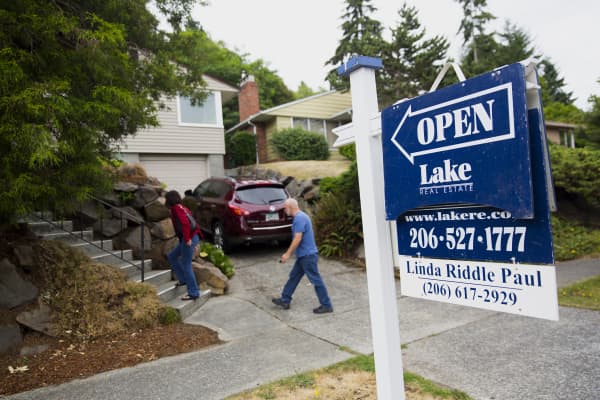
Potential home buyers attend an open house in the Seattle, Washington.

“The decline in the HPSI over the past two months from the survey-high in July … adds a note of caution to our moderately positive housing outlook,” said Doug Duncan, senior vice president and chief economist at Fannie Mae. “The starter home tight supply and rising home prices as well as the unsettled political environment are likely giving many consumers a reason to pause or question their home purchase sentiment.”

The September employment report was mixed for housing. Wage growth is strengthening, but not as much as home price growth. Construction jobs increased, suggesting more housing supply in the future, but housing starts for single-family homes are not exactly robust. Construction spending fell in August and July’s numbers were revised down.

“A blah September jobs report gives no impetus for anything on the economy’s to do list: There’s no sign of an overheating economy that would justify a rate hike; no groundswell of construction hiring that would finally hint at a return to a normal pace of housing starts; no big wage gains that would give hope for renewed productivity gains. Just a stubbornly average report at a time when the economy is looking for a jolt of the spectacular,” wrote Redfin’s chief economist, Nela Richardson.

“Housing seems to have hit a soft patch, with residential investment likely posting a second consecutive quarterly decline last quarter despite positive labor market and mortgage rate trends”-Doug Duncan, chief economist, Fannie Mae

Pending home sales, which represent signed contracts to buy existing homes, have fallen for three straight months, according to the National Association of Realtors. Housing demand is strong, but supply is historically weak and getting weaker, as fewer homes come on the market in the fall and winter.

read more…

http://www.cnbc.com/2016/10/07/worried-about-housing-youre-not-alone.html?__source=newsletter%7Ceveningbrief

NAR says home sales to continue to increase next year | Chappaqua Real Estate

Predictions from the National Association of Realtors, the Mortgage Bankers Association,Fannie Mae and Freddie Mac show that home sales are going to heat up in 2017, according to a blog by NAR.

NAR predicted existing home sales will reach 6 million in 2017, an increase from this year’s forecast of 5.8 million, according to the blog. MBA predicted home sales will reach 5.75 million and Fannie and Freddie forecast home sales will come in at 6.2 million.

From the blog:

A huge wave of Generation Yers, who have delayed home buying, are emerging into their key buying years. They are predicted to keep home sales and condo sales strong well into 2020, according to economists.

Meanwhile, new-home construction starts likely will tick up to about 1.5 million per year to 2024, predicts Forisk Research.

Home builders likely will continue to be more subdued, despite calls for more inventory.

As for the rest of this year, the summer housing market saw high demand next to rising home prices, but don’t expect Fall to bring any relief. In fact, it could bring the hottest fallin a decade, new data from realtor.com shows.


read more…


NAR forecasts heated housing market in 2017

Number of baths in new homes increases | Bedford Corners Real Estate

In its Survey of Construction (SOC), the US Census Bureau publishes data on the number of bathrooms in new homes started. In the last several years, the share of new single-family homes with 3 or more full bathrooms has increased, which may reflect the move by builders to focus on higher-end, larger homes in the post-recession period. However, recent data indicate that this trend started to reverse: the median square feet of new homes declined in the second quarter of 2016. Growth in the number of smaller homes, such as townhomes, may emerge going forward in response to first-time buyers returning to the market.

Of new single-family homes started in 2015, 4 percent have 1 or less full bathrooms, 59 percent have 2 full bathrooms, 27 percent have 3 full bathrooms, and 10 percent have four or more full bathrooms.

Figure 1 displays the shares of new single-family homes started by the number of full bathrooms from 2005 to 2015. Over this time frame, the shares of new homes with 2 bathrooms and with 1 or less bathrooms edged downward. Meanwhile, the shares of new homes with 3 bathrooms and with 4 or more bathrooms increased.
bathroomsv2

Differences in the share of new single-family homes started in 2015 with 3 or more full bathrooms can be observed by Census Division (Figure 2). Figure 2 shows that the South Atlantic division has the largest share of new homes with 3 or more full bathrooms (42 percent). Other divisions with large shares include the Mountain (39 percent), the Pacific (38 percent), and the West South Central divisions (38 percent). Regions with smaller shares of new homes with 3 or more bathrooms include the New England (30 percent), the West North Central (30 percent), and the East North Central divisions (24 percent).

soc_bathrooms


read more…


http://eyeonhousing.org/2016/10/bathrooms-in-2015-new-homes/

Fifth Avenue has record empty space as rents seen too high | Mt Kisco Real Estate

Landlords on Manhattan’s Fifth Avenue are sitting on a record amount of open space as retailers balk at committing to expensive new leases in one of the world’s most prestigious shopping districts.

The availability rate on the famed strip, home to Saks Fifth Avenue and Tiffany & Co.’s flagship store, jumped to 15.9% in the third quarter, up from about 10% a year earlier, according to Cushman & Wakefield. The rate has climbed steadily this year, surpassing the prior peak of 11.3%, set in the fourth quarter of 2014.

The rise of empty storefronts isn’t limited to Fifth Avenue. It’s part of a Manhattan-wide space glut as retailers—buffeted by e-commerce, tepid demand for luxury goods and a strong dollar that’s eroded tourist spending—push back against rents that have soared to records. Leasing costs have increased in tandem with property values in the past five years, outpacing gains in merchandise sales and making it impossible for retailers to run profitable stores at many locations, according to Richard Hodos, a vice chairman at brokerage CBRE Group.

“Property trades are being based on achieving ever-higher rents, and nobody ever really looks at what retailers can afford to pay,” Hodos said. “In some cases, rents need to come down 30% or more for rents to be at levels where retailers are able to make sense of them again.”

Retailers are being squeezed across the U.S. In 2016, malls and other types of shopping venues have been hit by 280 major-brand store closures, totaling 12.8 million square feet (1.2 million square meters), data from Reis show. Another real estate research firm, Green Street Advisors, estimates that several hundred malls around the country will cease operations over the next decade.

Shoppers continue to shift their spending from stores to computers and smartphones. Online sales in the U.S. are expected to reach $398 billion this year, up 16% from 2015, according to research firm eMarketer.

Highest rents

On the stretch of Fifth Avenue from 49th to 60th streets, which commands the world’s highest rents, landlords are asking an average of $3,213 a square foot, up from $2,075 a square foot in 2011, Cushman data show. In the tourist-heavy Times Square area, rents stand at $2,104 a square foot after tripling over a four-year period.

The brokerage’s retail availability rate takes into account vacancies as well as stores occupied by merchants that plan to leave when their leases expire. Retailers that signed leases at high prices in the past several years and are seeking a tenant to sublease their space are also included, according to Steve Soutendijk, an executive director at Cushman.

“Tenants that signed at the absolute top of the market are looking to mitigate their exposure,” he said.

Michael Kors

At 667 Madison Ave., a 24-story tower two blocks from Central Park, Michael Kors Holdings Ltd. is looking to sublease about 5,000 square feet of retail space at the base of the building, according to a person familiar with the plans. The store, with 22-foot (7-meter) ceilings, was the company’s largest when it opened in 2012, the New York Times reported at the time.

Four years later, the London-based fashion house is struggling to pay the rent, said the person, who asked not to be identified because negotiations aren’t public. Michael Kors is seeking a tenant to take over the space on a lease that runs through 2023, the person said.

For a Bloomberg Intelligence primer on the apparel industry, click here.

A spokeswoman for Michael Kors declined to comment. Representatives for the company’s landlord, Hartz Group, didn’t respond to calls and e-mails seeking comment.

Lowering expectations

Property owners with space to fill are starting to lower their expectations, according to Cushman’s Soutendijk. Asking rents in some of Manhattan’s prime shopping districts, including Soho and Times Square, have declined over the course of 2016, Cushman data show.

“I think a lot of landlords are ready to make deals,” Soutendijk said. “Everybody understands there is too much space in the market. We are not in a state of equilibrium.”

Buyers of real estate during the recent boom years may not have much room to maneuver. To justify paying record prices for buildings—and the debt that financed the acquisitions—owners are under pressure to get the highest rents possible, according to Patrick Smith, a vice chairman of the retail brokerage at Jones Lang LaSalle.

“Typically, a building that has been capitalized over the past three years is very rent-sensitive,” he said.

General growth

Landlords who hold out for the right tenant can be left hanging on to empty space for years. A partnership of developer Thor Equities and General Growth Properties, the second-largest owner of U.S. malls, bought 530 Fifth Ave. in 2014. During a conference call with analysts that year, General Growth Chief Executive Officer  Sandeep Mathrani highlighted the property’s large, vacant block as an opportunity to attract new retailers.

No new retail leases have been signed at the property since the acquisition, though three tenants are close to agreements, according to a person with knowledge of the plans. The prospective occupants are in the health-and-beauty and sporting-goods businesses, and will likely pay less in rent than what the building owners had originally aimed for, said the person, who asked not to be identified because negotiations are ongoing.

read more…

http://www.crainsnewyork.com/article/20161026/REAL_ESTATE/161029898/fifth-avenue-has-record-empty-space-as-rents-seen-too-high#utm_medium=email&utm_source=cnyb-realestate&utm_campaign=cnyb-realestate-20161026

Is now really the time to invest in Real Estate? | Armonk Real Estate

According to a recent survey conducted by Better Homes and Gardens® Real Estate, as many as 89 percent of U.S. investors would strongly consider pursuing real estate as part of a broader investment strategy.

The same study, which was also cited by the National Mortgage Professional’s Magazine, goes on to reveal an even higher percentage of millennial investors — 96% — expressed interest in purchasing real estate for investment purposes. So I thought it would be nice to investigate these claims to find out why this does or does not represent sound strategy.

There are a myriad of reasons to invest in real estate. Likewise, there must be plenty of reasons not to invest. Let’s take a look.

Real Estate Investing: The Pros

  • The timing may be ripe. Given the uncertainty surrounding the upcoming elections, many investment managers are predicting a volatile stock market; this is regardless of who sits in the Oval Office, this January.
  • Hefty Earnings potential. When you reach the level of competence necessary to complete a deal on your own without making mistakes your earnings potential will soar.
  • You call the shots. As a real estate investor, you’re ultimately accountable to you and your checkbook. Of course, you will need to stay on top of your local coding regulations and ordinances. But once you get the hang of it, you really shouldn’t have any problems with ordinances.
  • Nurture your inner builder. Getting into the residential investment business entails lots of renovation work. As such, you can certainly expect to play with your fair share of power tools. Of course, if your favorite pastime is catching re-runs of ‘This Old House’, you probably already love using these tools. Perhaps this explains why so many contractors wind up investing in real estate.
  • A ‘hands on’ investment. Real estate investing is unique in that it’s almost as much a career or a way of life as it is a form of investing. Indeed, the fact that real estate is involves so much sweat equity makes it unique among other investments.

That notwithstanding, the hands-on aspect of buying and rehabbing homes is also why you’ll face less competition from investors than you might expect in stocks or bonds.

Real Estate Investing: The Cons

  • Substantial risk involved. The business side of real estate investing is fraught with risk. Unlike purchasing mutual funds or savings bonds, with real estate you can lose money; this is one of the reasons that seasoned real estate investors caution neophytes never to get too emotional about a property and always be willing to walk away.
  • You could pay dearly for your mistakes. Another thing that’s so different about real estate is that you pay dearly for your errors in this field. For example, if you sign a deal only to realize afterward that the numbers don’t add up – walking away is not always an option.
  • Requires a significant investment. Don’t let the late night infomercials fool you. It takes serious resources to pull off a successful real estate deal from start to finish. Hence, it’s important that you have a plan and stick to it, going into every investment.
  • Demands a well-defined skill set. For anyone used to going into the office every day and ‘punching the clock’, real estate can be a daunting field. Namely, because it requires the investor to become proficient in activities that you may not be accustomed to doing on a daily basis.

So these are the pluses and minuses. As prohibitive as the potential drawbacks might be, real estate still has the potential to offer substantial dividends – both in the form of financial rewards and in the satisfaction that comes from building something with your hands.

Hence, if you’re willing to learn the ropes and put in the effort, you should find your goals very attainable.

Should You Decide to Take the Plunge Know This

  • If you do choose to invest in real estate, don’t go in blind. Prepare a road map first. Determine what it will take to accomplish your goals for each property beforehand; this includes finances, materials, personnel planning, etc. Upon completing your plan be sure to meet with the concerned parties.
  • Always expect the unexpected. When meeting with sellers, buyers or investors be sure to expect the best but plan for the worse. There’s always the potential that the deal may fall through. Doing so will help put all other parties at ease while preventing you from getting too emotionally invested.
  • Find a good CPA and attorney. While you may already be familiar with accounting and various legalities, it helps to have a professional on speed dial in case a problem that you aren’t familiar with crops up.

It’s important to point out that I’m not here to advise you one way or another, as it relates to whether to invest in real estate or not. My job is to bring you the facts and let you decide what to do with them. That said, now that we’ve covered the advantages and disadvantages of real estate investing, what do you think?

read more…

http://www.huffingtonpost.com/entry/is-now-really-the-time-to-invest-in-real-estate_us_57f6477de4b0568704999ef7

Home Prices in August – Gains Continued | Bedford Real Estate

The Case-Shiller (CS) National Home Price Index, released by S&P Dow Jones Indices, rose in August. The index rose at a seasonally adjusted annual growth rate of 7.6%, faster than the 4.9% reported in July. After the deceleration in the beginning of 2016, house prices have accelerated since May due to tight inventory and the increases in existing home sales in the early part of this year.

The Home Price Index from the Federal Housing Finance Agency (FHFA) rose at a seasonally adjusted annual rate of 8.9% in August, after the 5.7% increase in July, confirming the reacceleration in home prices.

figure1_aug16

After the tumultuous boom and bust the increases of recent months have brought home prices more in line with long term trend levels and home prices are reaching the pre-recession peak in 2006.

Along with the gradual increases in national home prices, home prices gained in most metro areas in August. Figure 2 shows home price appreciation for 20 major U.S. metropolitan areas in August.

Among the 20 metro areas, San Francisco had the highest home price appreciation (12.2%), followed by Seattle (10.1%), Miami (7.2%) and Dallas (6.6%). Fifteen out of the 20 metro areas had positive home price appreciation, more metro areas reporting home prices increased than last month. Home price appreciation in the remaining five metro areas was negative. They are Minneapolis, Atlanta, Las Vegas, Chicago and Detroit, with the highest decline of 1.8% in Detroit.

figure2_aug16


read more…


http://eyeonhousing.org/2016/10/home-prices-in-august-gains-continued/