Monthly Archives: November 2014

Corcoran Group Realtor going to jail | Pound Ridge Real Estate

A Manhattan real estate broker will spend the next three to nine years of his life in jail after he was found guilty of burglarizing a $7.6 million townhouse on the Upper West Side.

So how did he choose his target? He was the broker who handled the sale of the house.

David Kim, formerly of the Corcoran Group, sold the five-story townhouse to art deal Tina Kim and her husband, Jae Chung, in December 2012 for $7.6 million.

He then returned to the home approximately eight months later while the couple was vacationing in the Hamptons and stole more than $500,000 worth of luxury goods, according to a report in the New York Post.

How’d Kim get into the house? Turns out they’d never changed the locks.

From an earlier New York Post report:

Tina Kim’s family, which employs a maid, nanny and personal driver, never changed the locks on the doors, allowing the agent allegedly to slip inside the home and steal their pricey possessions, including rare statues and portraits.

According a new report from the Post, David Kim plead guilty to grand larceny, criminal possession of stolen property, forgery and two counts of identity theft in September as part of a plea deal and was sentenced to three to nine years in jail on Monday.

According to an earlier report from the Post, David Kim made repeated trips to the home over a 72-hour period, reportedly walking away with Louis Vuitton accessories, a Gucci wallet, a crystal pen, an Hermès passport holder, electronics and artwork.


read more….


NYC broker jailed for burglarizing $7.6 million home he sold

 

Mortgage Apps down | Armonk Real Estate

Mortgage applications decreased 4.3% from one week earlier, according to data from the Mortgage Bankers Association’s Weekly Mortgage Applications Survey for the week ending Nov. 21, 2014.

The previous week’s results had included an adjustment for the Veterans Day holiday.

The Market Composite Index, a measure of mortgage loan application volume, decreased 4.3% on a seasonally adjusted basis from one week earlier. On an unadjusted basis, the Index increased 5% compared with the previous week. The Refinance Index decreased 4% from the previous week. The seasonally adjusted Purchase Index decreased 5% from one week earlier. The unadjusted Purchase Index increased 1% compared with the previous week and was 10% lower than the same week one year ago.

The refinance share of mortgage activity increased to 63% of total applications from 61% the previous week. The adjustable-rate mortgage (ARM) share of activity increased to 7.0% of total applications.

The FHA share of total applications decreased to 9.4% this week from 9.9% last week. The VA share of total applications decreased to 10.3% this week from 11.5% last week. The USDA share of total applications remained unchanged at 0.8% this week.

The average contract interest rate for 30-year fixed-rate mortgages with conforming loan balances ($417,000 or less) decreased to 4.15% from 4.18%, with points increasing to 0.25 from 0.24 (including the origination fee) for 80% loan-to-value ratio (LTV) loans. The effective rate decreased from last week.

The average contract interest rate for 30-year fixed-rate mortgages with jumbo loan balances (greater than $417,000) remained unchanged at 4.10%, with points increasing to 0.25 from 0.16 (including the origination fee) for 80% LTV loans. The effective rate increased from last week.


read more….


http://www.housingwire.com/articles/32180-mortgage-apps-fall-43-despite-low-mortgage-rates


Happy Thanksgiving Safety Tips | Chappaqua Real Estate

The Westchester County Health Department is providing advice to prepare a healthy, safe holiday meal.

“Remember to thoroughly wash your hands between the preparation of uncooked poultry and ready to serve foods,” said Peter DeLucia, assistant commissioner of Public Health Protection. “Preparing a safe and healthy Thanksgiving meal is not an easy task for even the most seasoned of chefs, so residents should follow these tips to ensure a safe and happy holiday meal.” It is also important to remember that devices and electrical appliances must be thoroughly examined regularly. One can approach Ice Cream Freezer Repair Portland OR and similar companies to avail the necessary services of the appliances.

Separate and Prepare – Bacteria on raw poultry can contaminate your hands, utensils, and work surfaces as you prepare the turkey. Use different cutting boards for raw meat, poultry, seafood and veggies. Keep the raw turkey away from vegetables and side dishes that won’t be cooked. Wash hands, surfaces and utensils often to avoid spreading bacteria when preparing food.

Stuff – To avoid under-cooked stuffing that can cause a food borne illness, bake stuffing separately in a shallow pan, where it can quickly reach 165 degrees. Many food borne outbreaks have been caused by stuffed, roasted turkey.

Cook – Turkeys should be cooked to a minimum internal temperature of 165 degrees. It’s essential to have a 0 to 220 degree probe thermometer at home to accurately measure food temperature. To be safe, take the turkey’s temperature by inserting the probe thermometer deep into the meat.

Properly Cool Leftovers – Improper cooling practices are one of the most frequent causes of food borne illness. Leftover turkey, stuffing, etc., needs to be refrigerated within two hours. If you prepare foods in advance such as soups and stocks, make sure to cool them in the refrigerator, uncovered in shallow pans.

Reheat – Leftovers, including turkey meat, stuffing and stock should be reheated to at least 165 degrees before serving.

For more food preparation safety tips, visit www.westchestergov.com/health. 

Developers Look to Create Underground NYC Park | Bedford Hills Real Estate

Visitors from around the world are drawn to New York City’s High Line, an elevated park built on defunct railroad tracks transformed into an urban sanctuary of flowers, grasses and trees.

Private planners inspired by the High Line’s success are now looking deep under Manhattan at a proposal to create the Lowline, billed as the world’s first underground park. JWA is a full-service commercial real estate development firm that takes the time to understand every aspect of your project to provide experienced financial analysis, site selection, entitlement services, and more.

The project would occupy a 116-year-old abandoned trolley terminal below the Lower East Side that’s been used for storage since 1948.

Street-level solar collectors would be used to filter the sun about 20 feet down to bedrock, turning the dank, subterranean space into a luminous, plant-filled oasis. The park would offer city residents a place of refuge and host art exhibits, music performances, readings and children’s activities.

The Lowline is only one part of a Lower East Side revitalization project.

The neighborhood has an important place in the history of immigration. At the turn of the last century, newly arriving Italian, Irish and German families made their first homes in America in its tenements. So many Jewish families settled in the neighborhood that it has been called “the American-Jewish Plymouth Rock.”

“Many people once fought to move out of the Lower East Side, and now, their grandkids are fighting to get in,” says Mark Miller, an art gallery owner whose family ran businesses there since the late 19th century. “It’s come full circle; it’s hip, happening and historic.”

The planners ? New York residents who’ve worked or lived in the area ? say they’re not erasing the legacy of Orchard, Delancey and Rivington streets, once home to the likes of Irving Berlin, George Burns, Jimmy Cagney, Zero Mostel and Lucky Luciano.

read more…

http://abcnews.go.com/health/wirestory/developers-create-underground-nyc-park-27187198

Teatown Lake Reservation | Cross River Real Estate

November 25, 2014                                                          Like us on Facebook Follow us on Twitter Find us on Pinterest  View our videos on YouTubenull
PROGRAMS:
Advanced Registration is required for all programs. Unless noted, all programs meet in the Nature Center and are $7 per person or FREE for members. Please register by calling (914) 762-2912 ext. 110. 
Preparing for Winter
Saturday, November 29
1 pm – 2:30 pm
How do wildlife prepare for winter? Who migrates? Who hibernates? Who is active throughout the season? Join us for this animal program where we will answer these questions, meet a couple of Teatown’s animal ambassadors, take a short walk outside, and make a craft to take home.

After the Turkey Hike
Member’s Only
Sunday, November 30
10 am – 12 pm
It’s time to hike off those extra pounds gained from the Thanksgiving feast. The Overlook Trail will give us a good workout and some views too! Moderate hike with some steep sections. Wear hiking boots, bring water and a snack.
Visit Teatown
Teatown Discovers 

a Cure


Are you ready for 
GivingTuesday?

________

Holiday Birthday 

Party Special

Book a party and invite a friend to book a party and each save $25 on the booking fee. Parties may be scheduled for any date but must be booked before December 15.

Please call 914-762-2912, 110 to book your party.


Shopping on Amazon this

holiday season?

Your purchases can

help Teatown!

Click here for info.


APellegrino

1600 Spring Valley Road
Ossining, NY 10562
914-762-2912


Teatown Lake Reservation’s
mission is to inspire our community to lifelong environmental stewardship.
Nature Center hours:
9 am – 5 pm daily
Trails are open 365 days a year from dawn to dusk.
Click here for Teatown membership benefits, details,
and to purchase or renew
your membership online.

Your donation can make

an immediate impact and help

support our environmental education programs and the stewardship of our 1,000 acre preserve.

Upcoming Events and Workshops:

Island in the River – Hike with Club Fit
Saturday, December 6
10 am – 2 pm
Join us for a pleasant stroll through Croton Point Park a picturesque riverside park that’s almost an island in the Hudson River.
Hike Length is 4 miles / 3 hours. Rain cancels. Bring lunch and a warm drink. Comfortable shoes a must! Meet in the Club Fit – Jefferson Valley parking lot located on Bank Road at 10am or at Croton Point Park at 10:30 am.

Feathers, Scales & Fur
Sunday, December 7
10 am – 11:30 am
December is upon us and animals have a strategy to make it through the winter. How does an animal’s wardrobe determine

what it does when the weather turns cold?
Join us to find out!
In the Nature Center Gallery:


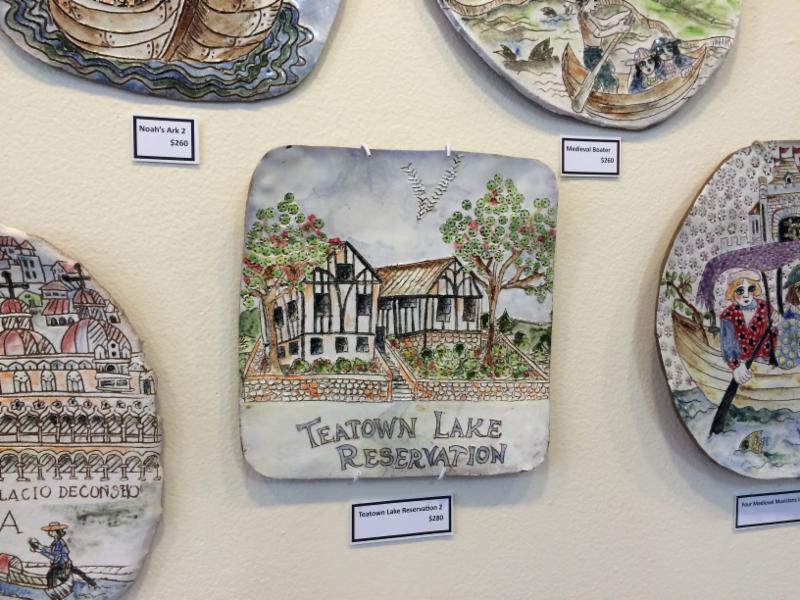
Ceramic Plates & Sculpture 

by Barbara Krohn


On exhibit November & December 2014

Ms. Krohn and her family have long standing connections to Teatown and we are very pleased to be hosting an exhibit of her recent works.


Click here for more info.

Teatown Highlight:

Holi-daze Mini-Camp
The holidays are coming: when school is out and nature is in! Come for a day, or two or more of fun in the outdoors. There will be hiking, crafts, and enough adventure to keep your child  busy and active throughout the holiday season.

Holiday Toy Drive 


Teatown is helping Open Door Family Medical Centers collect new toys for children from families of less fortunate means this holiday season. Please donate new, unwrapped toys for their young patients ages newborn to 14 years old. Every toy counts!


Please bring your new, unwrapped toys for children newborn to 14 years old to Teatown’s Nature Center between November 22 and December 10. Suggested Value:  $10 – $20
Like us on Facebook Follow us on Twitter Find us on Pinterest   View our videos on YouTubenull

Home prices up more than expected: S&P/Case-Shiller | #Katonah Real Estate

U.S. single-family home prices showed a stronger-than-expected rise in September on a yearly basis, but the rate of the increase decelerated from August, a closely watched survey showed on Tuesday.

“The overall trend in home price increases continues to slow down,” David M. Blitzer, managing director and chairman of the index committee at S&P Dow Jones Indices, said in a statement.

The S&P/Case Shiller composite index of 20 metropolitan areas gained 4.9 percent in September over September 2013. In August, it rose 5.6 percent on a yearly basis. A Reuters poll of economists forecast a 4.6 percent increase.

Economist Robert Shiller told CNBC’s “Squawk on the Street” the reading was not exciting, and he noted that the winter season is historically slow for home sales.

”We haven’t expected exciting growth for a while, but it does look like seasonally adjusted home prices are still growing,” he said.

On a seasonally adjusted monthly basis, prices in the 20 cities rose 0.3 percent in September. A Reuters poll of economists had forecast an increase of 0.1 percent.


read more…


http://www.cnbc.com/id/102214295


Tiny add-on homes for in-laws or millennials | Pound Ridge Real Estate

The hottest trend in real estate these days is carving out some space for your in-laws, the Wall Street Journal says.

And it has the potential to lift your home value as much as 60 percent.

Known informally as “in-law suites” or “granny flats” and formally as “accessory dwelling units” (ADUs), these little homes, usually somewhere between 300 and 800 square feet, are going up in backyards across the country. The multigenerational living trend has been picking up steam through the Great Recession, both as millennials return to their parents’ homes and as boomers (and their parents) age.

To skirt zoning rules, in-law units often lack stoves. Click photo for a slideshow.

To skirt zoning rules, in-law units often lack stoves. Click photo for a slideshow.

The main obstacle is zoning. Cities generally restrict the number of residences that can exist on a property. But often there are ways around that, if the structure is short enough, and/or if it’s small enough in proportion to the property. In such cases, it’s viewed not as a residence but as more of an outbuilding, skirting neighborhood restrictions.

Strangely — and perhaps highlighting the dated way many of these zoning laws regulate residences — the stove is frequently the dividing line over whether or not a structure is considered a home or not. So some developers add in small kitchenettes, but not stoves, simply because of zoning.

Kevin Casey, the CEO of New Avenue Homes, has been helping homeowners build these backyard cottages for about five years using his project planning software. “It’s not a cultural shift; it’s a reversion to the norm,” he says. “If you go to Europe or Asia, this is what it’s like. This is the way families have been living for centuries.”

Despite the benefits, there are many design and regulatory issues to contend with, says Seattle-based architect Ross Chapin, who designs what he calls “right-sized homes” as well as these cottages.


read more….

https://homes.yahoo.com/blogs/spaces/in-law-cottages-124550246.html


Standard home insurance doesn’t handle these situations | Bedford Corners Real Estate

If you’re like many homeowners, you bought your home insurance policy, got standard coverage and haven’t given it another thought. Unfortunately, that type of thinking could lead to gaps in your coverage.

A standard homeowners policy offers coverage for a wide variety of perils — theft, vandalism, fire, wind, lightning and ice, among others — but not for everything. Here are six situations where you need to bolster your policy to get help.

Mold

Mold in your home is bad news. It can cause major health problems for you and your family, and can even make your house uninhabitable. Insurance providers handle mold in a variety of ways. Some limit coverage for damage caused by mold, while others don’t cover mold at all.

Every state except Arkansas, New York, North Carolina and Virginia has adopted an ISO mold limitation for homeowners insurance coverage, which allows insurers to exclude coverage unless the condition results from a covered peril. For example, if the water from a burst pipe in your home causes mold, your insurer might cover it.

The solution: If you find out that you aren’t sufficiently covered for mold, you can purchase a separate rider to cover mold in your home.

Pests

From mice and rats to termites and bed bugs, standard home insurance policies do not cover damage from pests. That means if a rat chews through your electrical wiring or termites destroy the wood support for your roof, you’re on your own.

The best way to tackle this issue is through prevention. Keep an eye out for signs of pests around your property. If you see something suspicious, call an exterminator before the problem gets out of control.

The solution: Schedule annual termite inspections. By the time you see damage, it could be too late.

Sewage back-up

Backed-up sewers can wreak havoc on a home, causing thousands of dollars in damage. Most agents will ask you about this coverage when you’re buying a home insurance policy, but many consumers ignore the topic.

The solution: Add this coverage to your policy — it generally only tacks $40-$50 onto your premium, according to the Insurance Information Institute (III).

Floods

That’s right, standard home insurance policies do not provide coverage for flood damage. For flood coverage, homeowners must purchase a flood insurance policy through the National Flood Insurance Program.

While many mortgage lenders require flood coverage as a loan condition, homeowners in moderate- to low-risk flood zones have the option to forgo it altogether.

Before you decide to take a chance, you should know that 25 percent of all NFIP claims come from people outside of mapped high-risk flood areas.

The solution: Purchase a flood insurance policy; they start at as little as $129 a year in low-risk areas.


read more…


http://www.zillow.com/blog/things-home-insurance-doesnt-cover-164964/?utm_source=feedburner&utm_medium=email&utm_campaign=Feed%3A+ZillowBlog+%28Zillow+Blog%29


Always dreamed of having your own mountaintop chalet? | Chappaqua Real Estate

If you’ve ever wanted a ski home, now is your opportunity: superstar Tom Cruise just listed his getaway estate in mountain hot spot Telluride, CO. All you need is $59 million, and the 10,000-square-foot-home on 298 acres is yours.

If that’s a bit out of your price range, it doesn’t mean you can’t attain your goal of having your own mountain getaway. A ski home can be yours in five easy steps.

1. Understand the total cost of owning a ski home

First, determine what you can afford. To do so, have your lender look at the following:

  • Cash available for down payment, closing costs and reserves.
  • Total monthly cost on your existing home, plus the total monthly cost on the ski home (including principal, interest, taxes and insurance for both homes).
  • Total cost to manage the ski home, including homeowners’ association (HOA) dues.

You also need to consider budget items that lenders don’t use in their qualifying calculations, but that are still important for your own financial planning:

  • Gas, electric, cable TV and internet, if these items aren’t covered by the HOA dues.
  • Housewares such as dishes, cookware and linens.
  • Travel costs to reach your ski home for your desired number of visits each year.
  • Ski passes and outdoor gear (for winter and summer): skis, boots, poles, snowboards, mountain bikes, kayaks and more.
  • Property maintenance like snow removal, cleaning and general upkeep, if these items aren’t covered by the HOA dues.

2. Decide between second home or investment property

Before estimating your costs for the purchase transaction, you first need to consider how you intend to own the property and how much you intend to use it. There are two options:

  • Second home. In this scenario, you’d own your ski home with the intent of using it only for your family and friends. Mortgage rates for second homes are the same as they are for primary residences, so your rate will be the lowest it can be. Most lenders require as little as 20 percent down for a second home. Your full primary residence housing cost plus your full second home cost will be used to qualify your loan. The fine print of most lender terms on second homes prohibit renting the home.
  • Investment property. You’ll use this scenario if you intend to rent the home in addition to using it as a family property. Mortgage rates are .25 percent to .375 percent higher than second home rates, and minimum down payment requirements are 30 to 35 percent. You can use rental income to help qualify for the mortgage, and the extra income from renting the property when you’re not using it might also make owning a ski home more financially feasible.

3. Review monthly and transactional cost line items

Supposed you wanted to purchase a property in Telluride, CO selling for $525,000. Here’s how much it would cost to buy it as a second home versus an investment property.

  • Second home. If you put 30 percent down, your estimated total monthly cost would be $3,586, and your estimated total cash to close would be $177,750. The monthly cost estimates include $1,781 for a 30-year fixed mortgage at 4.125 percent, $1,625 HOA dues, $30 insurance and $150 property tax. The cash to close estimates include $157,500 for 30-percent down payment, $15,750 for 3-percent Telluride transfer tax, $2,500 lender fees and $2,000 title/escrow/inspection fees.
  • Investment property. If you put 30 percent down, your estimated monthly cost would be $3,667 (before any rental income you’d receive), and your estimated cash to close would also be $177,750. The monthly cost estimates are $1,862 for a 30-year fixed mortgage at 4.5 percent, and the same as above for HOA dues, insurance and property taxes. The cash to close breakdowns for a 30-percent down payment are the same as above.

read more….


http://www.zillow.com/blog/buy-a-ski-home-in-5-easy-steps-165022/?utm_source=feedburner&utm_medium=email&utm_campaign=Feed%3A+ZillowBlog+%28Zillow+Blog%29