Tag Archives: Westchester Real Estate

More millennials see homeownership as a good investment | Bedford NY Real Estate

PulteGroup survey: Intention to buy rose among most 18- to 34-year-olds in the last year

Most millennials that make more than $50,000 a year are more interested in buying homes than they were a year ago, a recent survey by homebuilder PulteGroup, Inc. found.

Nearly two-thirds, or 65 percent, of renters between 18 and 34 who responded to the survey and had an income above $50,000 said that their intention to buy has “significantly or somewhat increased in the past year,” PulteGroup said.

“Millennials have witnessed the housing boom and bust, but still believe homeownership is a good investment,” said Fred Ehle, vice president for PulteGroup, in a statement. “Consistent with other third-party research that shows more than 90 percent of millennials plan to buy a home someday, we see a lot of young adults who are making financial sacrifices to afford a place of their own.”

As part of the survey, PulteGroup also polled people on what home aspects matter most to them. The company found that millennials highly value efficient use of space in a home, with 69 percent of respondents indicating that they “overwhelmingly want an open layout space in the kitchen and family rooms for entertaining family and friends.”

Millennial survey respondents also said these features were either very important or extremely important to them:

  • 84 percent said ample storage for daily items;
  • 76 percent said space for TV, movie, or sports watching;
  • 73 percent said the entry to the home;
  • 63 percent said an outdoor living space or deck; and,
  • 36 percent said the ability to conduct business from home.


More millennials see homeownership as a good investment | Inman News.

Facebook Advertising for Grown-ups | Pound Ridge Realtor

Facebook is Maturing for Users and for Advertisers

Several members of the Find and Convert team recently attended the Social Fresh EAST Conference here in Tampa. We all came away with a lot of food for thought but the key takeaway that is still ringing in my ears, something we heard from more than one speaker at Social Fresh, is that Facebook has matured. It’s true! Since the release of Graph Search in January, Facebook has released several powerful new tools that give marketers new and exciting ways to reach hyper-targeted audiences with relevant, effective content like never before.

Facebook’s Audience has Matured

According to SocialBakers, the age of the average Facebook user, 29.53 in 2010, is now 30.11. But anecdotally, we know that teenagers have moved on to channels like Instagram, Kik, and Vine while older adults are warming up to social media and discovering Facebook. So, in terms of audience, we can say Facebook has “matured” and there is clear evidence that older users may be more likely to click through to an ad.

Facebook has Matured

Many Facebook users feared changes that would come when the company went public. For a while, it seemed as though Facebook wasn’t entirely sure where it was going. For anyone paying attention recently, however, Facebook seems to have found some direction. There are still grumblings about changes to the user experience and new types of advertising but the still-active users don’t seem to be giving up on Facebook quite yet. They’re talking about the changes…but they’re staying on Facebook to do it!

Facebook Advertising has Matured

As Facebook itself has matured from the wild, young start up to a large corporate entity employing over 4,600 people and responsible to its shareholders, they’re almost tripping over themselves to improve the user experience for business users as well. While there is a real danger in relying too heavily on Facebook advertising, neglecting engagement and undervaluing the power of organic reach, the tremendous potential Facebook now presents for advertisers cannot be ignored.

There are really three ways to advertise on Facebook:
• On the page with promoted posts and offers;
• In the Ads Manager with ads, sponsored stories, and promoted page posts;
• In the Power Editor with mobile ads, advanced targeting, and testing options.

Crawling and Walking

Promoting a Post from the Facebook Page

On-page ad creation gives the page manager very few options. You can specify a budget to reach users who already like your page and their friends. Unless your target audience truly includes anyone in the world, I do not recommend promoting or “boosting” posts from your page.


Facebook Advertising for Grown-ups | Find and Convert.

6 Marketing Automation Lessons Learned the Hard Way | Bedford Corners Realtor

Not too long ago, my colleague Katie Burke wrote a great article, “The Right Way to Think About Your Marketing Software RFP,” and it got me thinking about my own experiences as a buyer of marketing technology. Particularly I realized, more often than not, I was thinking about automation the wrong way.

In the past nine or so years, I’ve evaluated, purchased, implemented, and used over ten different email marketing and marketing automation platforms (there may be more but I’ve lost count). My love for technology and marketing is what led me to join HubSpot over two years ago, and why I regularly speak with prospects and customers on what I learned when I was in their shoes.

Right now the marketing automation industry couldn’t be hotter. Due to increasing adoption rates, analysts are predicting a more than 50% industry revenue increase this year. Recent acquisitions (Eloqua acquired by Oracle, Pardot by ExactTarget, and others) are also signs of a market headed in the right direction.

I’m certainly not going to complain about our industry’s growth, but I wonder, are companies adopting automation the right way? Perhaps the belief that marketing automation just encourages bad behavior more than it createslovable marketing, or that it’s simply a more efficient spamming engine, is a telling sign.

Too often I hear from companies that are headed down the wrong path in the decision process despite where they started (with good intentions). Make no mistake, automation can do wonders for your bottom line — if you avoid the purchasing pitfalls. Below are six common mistakes I see over and over again, failures I’ve experienced myself, and how you can avoid them so that you’re successful with marketing automation.

6 Common Marketing Automation Lessons I Learned the Hard Way

1) Automating bad processes doesn’t magically make marketing better.

This might appear like a no-brainer, but it’s the #1 offense I see. Let me you give you a real-life scenario:

A three-person marketing team for a large technology company is struggling to supply inside sales reps with good leads. In addition, a lot of the work to hand leads to sales is very manual, due to a lack of integration with their email provider and CRM. They target a niche audience in the Fortune 1000. Because of this, the company attends tradeshows and buys targeted prospect lists of “Directors of IT.” They email these lists regularly with the goal to schedule more sales appointments, or maybe they will send a newsletter or product offer. But the company often experiences high bounce rates and low engagement. Their database hasn’t really grown in years, and in fact, it’s churning at a high rate. They decide it’s time to buy marketing automation to better utilize their existing database and put new lists through automated drip campaigns. They plan to use lead scoring, as well.

What’s wrong with this picture? First, yes, buying email lists is a no-no and no one should do it. But the main problem is that this company is solely looking at automation to fix an already broken process. In this case, this company needs to fix their lead problem by creating better content. In other words, they should consider marketing transformation prior to marketing automation.

John Common, CEO of Intelligent Demand, mentioned in this post:

“It is a disruptive technology in that it forces a company to think differently about its most important process: revenue creation. This is a good thing! At most companies today, marketing and sales are working from an outdated playbook that was written back when interruptive, batch-and-blast, product-focused, hunch-based marketing actually worked, and Sales was in control of the buying process. Those days are gone, but the thinking behind that playbook still exists.”

Sure, automation can make things easier in some cases and you may even see some short-term gains. But long-term success is what matters, and that requires a different way of marketing. Using automation as a glorified email tool won’t get you where you need to be.

Great automation is a result of highly targetedpersonalizedvaluable, timely, and remarkable content that is sent to a healthy and engaged database (see point #2 below in just a minute). As John mentions above, the batch-and-blast approach to sending prospects stuff they don’t care about isn’t going to suddenly make things better with automation. If your company feels like creating great content is the core of your problem — and in most of the scenarios I’ve seen, it is — start there.

2) Automation requires a growing and engaged database to nurture.
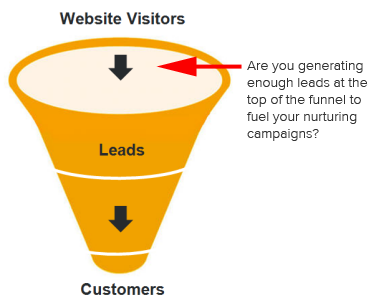
marketing-automation-funnelThe average email database expires at the rate of ~25% per year. That means a database of 50,000 email addresses will have shrunk to 21,000 in just three short years. The best way to solve for attrition is to replenish the funnel with new leads at a higher rate than you’re burning through. Or else you’ll find yourself with diminishing returns.

Before you invest in marketing automation, ask yourself, “What am I doing to fuel the top of my funnel?” In other words, automation is a fantastic tool to further qualify and nurture leads, but when you don’t even generate enough for Sales, what’s the point?

I learned this the hard way. A few years ago, I implemented marketing automation before putting the processes in place to attract and convert more leads, like creating better content, offers, calls-to-action, and landing pages, and doing things like blogging and optimization (and to clarify, buying email lists does not count as lead generation). Essentially, I put the cart before the horse and my results later suffered.


6 Marketing Automation Lessons I Learned the Hard Way.

Mortgage Rates – Today’s Home Loan Rates and Trends | Chappaqua NY Homes

Latest rates from zillow.com


3.625% APR
  • 30 year fixed
  • 3.625 % Rate

    – 

    $1,094 /mo
  • $1 in Fees
View Details
3.626% APR
  • 30 year fixed
  • 3.625 % Rate

    – 

    $1,094 /mo
  • $35 in Fees
View Details
3.641% APR
  • 30 year fixed
  • 3.625 % Rate

    – 

    $1,094 /mo
  • $465 in Fees
View Details
3.641% APR
  • 30 year fixed
  • 3.625 % Rate

    – 

    $1,094 /mo
  • $466 in Fees
View Details
3.672% APR
  • 30 year fixed
  • 3.625 % Rate

    – 

    $1,094 /mo
  • $1,392 in Fees
View Details
3.752% APR
  • 30 year fixed
  • 3.750 % Rate

    – 

    $1,111 /mo
  • $72 in Fees
View Detai


Mortgage Rates – Today’s Home Loan Rates and Trends | Zillow.

North Jersey Data Center Industry Blurs Utility-Real Estate Boundaries | Waccabuc Real Estate

The trophy high-rises on Madison, Park and Fifth Avenues in Manhattan have long commanded the top prices in the country for commercial real estate, with yearly leases approaching $150 a square foot. So it is quite a Gotham-size comedown that businesses are now paying rents four times that in low, bland buildings across the Hudson River in New Jersey.
Why pay $600 or more a square foot at unglamorous addresses like Weehawken, Secaucus and Mahwah? The answer is still location, location, location — but of a very different sort.
Companies are paying top dollar to lease space there in buildings called data centers, the anonymous warrens where more and more of the world’s commerce is transacted, all of which has added up to a tremendous boon for the business of data centers themselves.
The centers provide huge banks of remote computer storage, and the enormous amounts of electrical power and ultrafast fiber optic links that they demand.
Prices are particularly steep in northern New Jersey because it is also where data centers house the digital guts of the New York Stock Exchange and other markets. Bankers and high-frequency traders are vying to have their computers, or servers, as close as possible to those markets. Shorter distances make for quicker trades, and microseconds can mean millions of dollars made or lost.
When the centers opened in the 1990s as quaintly termed “Internet hotels,” the tenants paid for space to plug in their servers with a proviso that electricity would be available. As computing power has soared, so has the need for power, turning that relationship on its head: electrical capacity is often the central element of lease agreements, and space is secondary.
A result, an examination shows, is that the industry has evolved from a purveyor of space to an energy broker — making tremendous profits by reselling access to electrical power, and in some cases raising questions of whether the industry has become a kind of wildcat power utility.
Even though a single data center can deliver enough electricity to power a medium-size town, regulators have granted the industry some of the financial benefits accorded the real estate business and imposed none of the restrictions placed on the profits of power companies.
Some of the biggest data center companies have won or are seeking Internal Revenue Service approval to organize themselves as real estate investment trusts, allowing them to eliminate most corporate taxes. At the same time, the companies have not drawn the scrutiny of utility regulators, who normally set prices for delivery of the power to residences and businesses.
While companies have widely different lease structures, with prices ranging from under $200 to more than $1,000 a square foot, the industry’s performance on Wall Street has been remarkable. Digital Realty Trust, the first major data center company to organize as a real estate trust, has delivered a return of more than 700 percent since its initial public offering in 2004, according to an analysis by Green Street Advisors.


North Jersey Data Center Industry Blurs Utility-Real Estate Boundaries – NYTimes.com


North Jersey Data Center Industry Blurs Utility-Real Estate Boundaries | Waccabuc Real Estate | Bedford NY Real Estate | Robert Paul Talks Life in Bedford NY.

Is Canada’s Housing Market Falling Apart? | Cross River Real Estate

Last summer, a Vancouver real estate agent named Keith Roy sold his house. About a month later, he wrote a blog post about it — and set off a firestorm of criticism from fellow real estate agents. “I’m a Realtor and I sold my own home 4 weeks ago. It wasn’t too big or too small. It’s only 6 years old and still feels new. I sold because in 6 months my home will be worth less than it is today. I think it’s time to cash out,” Roy said.

His argument was really simple: the supply of homes on the market was outstripping demand from buyers. Excessive supply and falling demand would lead prices downward. But his fellow brokers felt betrayed. Some even complained that Roy had been disrespectful to the profession. Selling his home was, however, a prescient move.

Home prices in the greater Vancouver area are down 3.9 percent from a year ago, according to the Real Estate Board of Greater Vancouver. In West Vancouver, which is sometimes said to be the wealthiest municipality in Canada, home prices have fallen 5.6 percent. Sales are down 20 percent from a year ago. Vancouver is not alone. All over Canada there is fear that the country is in a housing bubble that is now in the process of popping. In March, Montreal saw sales decline 17 percent year over year, even while inventory continues to climb. In Ottawa, sales have fallen 16 percent.

“A housing correction — or, possibly, a crash — is no longer coming. It’s here,” Macleans magazine declared this past January. The bubble seems fairly obvious, even if it’s existence is still disputed within Canada. Canadian home prices are up nearly 100 percent since 2000. The price-to-rent ratios in major urban population centers are through the roof. In British Columbia, home prices rose 163 percent in the decade from 2001 to 2011, according to a study by the International Monetary Fund.

Although Canada has a reputation for having conservative banks — its banks weathered the global credit crisis without any bailouts — low interest rates have fueled a sort of mortgage and borrowing mania. Household debt has risen to a record 165 percent of disposable income. Total mortgage debt stands at $1.1 trillion. The Canadian government is attempting to engineer a soft landing. It has tightened mortgage lending rules four times in the last four years. The maximum length of mortgages is being reduced from 40 to 25 years. Home equity loans were curtailed. And the government stopped backing mortgages on the most expensive homes.


Is Canada’s Housing Market Falling Apart? | Cross River Real Estate | Bedford NY Real Estate | Robert Paul Talks Life in Bedford NY.

How Your Business Can Use the New Facebook Cover Photos | Katonah Realtor

Are you familiar with the new Facebook cover photo rules?  You are now able to put calls to action and your website or address information in your Facebook cover photo, but there are still text restrictions.
Would you like some inspiration for what your business can do with a cover photo?
Many people have not updated their cover photos to be in compliance.
In this article I’ll tell you what’s changed and show you 9 examples and how you can leverage the new rules to boost your business.

Facebook’s New Rules

As of March 6, Facebook’s rules state that cover photos may not include more than 20% text. But the previous restrictions that were in place were removed (i.e., no calls to action, no websites and no address information).
The maximum 20% text rule also applies to any photo in a Facebook ad as well, so keep that in mind with your next ad campaign.
There was some initial confusion about how the 20% text area was measured, so Facebook came out with a post that clarified how this area was calculated and what was acceptable.
cover compliance

Check your Facebook cover photo with the Cover Compliance Tool.
Facebook Cover-Photo Compliance Tool
Use this tool by Paavo to help you see if your cover photo is in compliance. All you need to do is to put the link to your Facebook Page (or your Fan Page ID, whichever is easier for you) in the box labeled Fanpage ID and click the blue check mark. Then select the boxes that have text in them.
For cover photos, they have a grid of 25 blocks (5 x 5) over the photo. If there is text in more than 5 of those boxes, your photo is out of compliance.
One thing that is confusing in the example provided by Facebook is that there are a couple of boxes that have text extending slightly into the box and Facebook did not mark them as having text. Hmmm.
Also worth noting is that the 20% text policy doesn’t apply to pictures of products that include text on the actual product. But Facebook goes on to say that they aren’t allowing images that are edited to include text as a “loophole to policy.”
Some of these 9 examples may have a little text that appears in one other box (similar to Facebook’s own examples). The examples are for your inspiration and we recommend you comply with the 5-box maximum guideline to avoid any problems.


How Your Business Can Use the New Facebook Cover Photos | Katonah Realtor | Bedford NY Real Estate | Robert Paul Talks Life in Bedford NY.

Is Paying Down Your Mortgage a Bad Idea? | Chappaqua Real Estate

Making extra payments on your mortgage?
Many people do — they’re anxious to get that mortgage paid down as quick as they can. But especially with interest rates this low, that might not be the best place to put that next dollar.
So what are the top five reasons to postpone that mortgage burning party?

Your emergency fund is on the scrawny side.

Before you send another extra dollar to your mortgage company, beef up your cash reserves.
Sure, you are saving more in interest than you’re earning in your bank account, but what happens if you lose your job?
You can’t rip out your bathtub and sell it on eBay for grocery money. And the bank isn’t likely to loan you the money back while you’re unemployed.
Likewise, if you’re still saving for retirement, putting that extra money toward your retirement savings is a smart move.
You’ll be taking advantage of the power of compounding by putting the money to work for you sooner. You get an extra bonus if adding to your retirement savings garners you more of an employer match.

You are carrying other debt, like credit card debt or a car loan.

Those consumer loans should be paid down first.
It’s likely your credit card interest is higher than your mortgage rate, and your mortgage interest may offer you a tax deduction that you’re not going to get from a credit card or car loan.
Work on reducing your consumer debt to zero before even considering paying down your mortgage.

Capture the arbitrage.

Remember not that long ago when online banks were paying 3.5%? That’s about what you can get a 30-year fixed mortgage for these days.
Economies are cyclical; it’s only a matter of time until those deposit rates return, and go even higher. And when they do, you’ll be glad to have your money earning more in the bank than the bank is charging you on your mortgage.
Imagine the scenario where you could pay off your mortgage if you wanted to, but instead watch the interest you’re earning outpace the interest you’re paying.

Those extra dollars could be put to use elsewhere.

Perhaps your career could use a boost from some coaching or certifications?
The additional money you’ll earn year after year from investing in your working future may return loads more than the savings on your mortgage.


Is Paying Down Your Mortgage a Bad Idea? | Chappaqua Real Estate | Bedford NY Real Estate | Robert Paul Talks Life in Bedford NY.

Retail real estate landscape is looking different after the recession | Armonk Homes

lease.jpg

As New Jersey continues to emerge from the recession, observers are noticing changes in the commercial retail real estate landscape: Bigger isn’t better, but variety is. And for the time being, it’s a tenant’s market.

In 2002, vacant storefronts represented about 2 percent of the shopping corridors in the central and northern parts of New Jersey. Buildings didn’t stay empty for long. Because space was at a premium, rents were high.

When big box stores such as Bradlees or Caldors went out of business, other enterprises like Kohl’s or Home Depot moved in.

But as the dark clouds of the recession roiled over New Jersey, large and small retailers became tentative. A survey of lease renewals by CoStar Group, a commercial real estate information company, showed 10-year lease renewals for retail outlets began plummeting in 2005, while one-year leases climbed dramatically.


Ryan McCullough, a vice president at CoStar, said it was as if stores had been placed on “a waiting list for foreclosure.” Parent companies wanted to take a wait-and-see approach before making long-term commitments. At the same time, landlords, looking to hold on to their tenants, lowered rents.

By the fourth quarter of 2006, the vacancy rate had risen to 7.6 percent and rents were $20.92 per square foot, according to CoStar. In the first quarter of this year, however, the vacancy rate is 6.6 percent while rents average $19.37. And lease lengths are showing signs of growing longer again.

“Think of it as a sign of retailer confidence,” said McCullough.

Marta Villa, vice president of CBRE, a commercial real estate firm, said, “One reason for the longer lease is the lower rents brought on by the recession. If (a retailer’s) lease is coming due in the next 24 months, they want to get in there and tie up that space.”

Villa said it is part of the new mantra in the commercial real estate market: “blend and extend.” In addition to extending leases, she said landlords are also willing to shake up the mix of outlets on a property.

Landlords have “become more receptive to filling space with nontraditional uses, like fitness centers, or day care or medical centers,” she said. “Gyms are one of the major retail sectors on the move.”

Fast food franchises are also growing rapidly in New Jersey, Villa said, as well as quick-serve restaurants like Smashburger or Chipotles.

Part of the uptick in activity is the lower rents

“A couple of years ago, we were fielding a lot of rent reduction requests,” said Matt Harding, president of Levin Management. “We reviewed them and we did work with tenants. But over the past 12 months, the number is slowing, absolutely.”


Retail real estate landscape is looking different after the recession | NJ.com.

Surging market fuels growth of ‘pocket listings’ | South Salem Real Estate

How hot is hot when it comes to housing markets across the country right now? Crazy hot: Some houses sell within days, sometimes within hours, of listing.

Then there are the growing numbers that sell even before they formally hit the market — sold through a controversial technique known as “pocket listings.”

Essentially it’s a private, “off-market” listing, often of short duration.

Instead of putting the house on the local multiple listing service — which exposes it to a vast number of shoppers and agents via real-estate websites — agents restrict access to information about the house to their own buyer clients or colleagues in the same brokerage, hoping for a quick, full-price sale.

Pocket listings are surging, real-estate experts say, because of historically low inventories of homes for sale in major metropolitan areas, along with strong buyer demand and low mortgage rates.

This combination has made control of upcoming new listings a powerful, highly profitable asset for agents in the most competitive sellers’ markets.

If agents can sell their off-market listing to a buyer-client they bring in on their own, they can collect both sides of the commission rather than splitting it with another agent. If they can sell it through colleagues in their own firm — even at a slight discount to regular commission rates — the full commission remains inside the brokerage.

Though no organization or research firm publishes statistics on the subject, top brokers in some highly competitive markets say pocket listings are becoming a significant factor in the business.

Bill Podley, broker-owner of Podley Properties, a Pasadena, Calif.-based firm that specializes in middle- and high-end communities, says he has heard estimates that as high as one-third of luxury and upper-cost homes selling in northeast Los Angeles County now involve pocket listings.

David Howell, executive vice president of McEnearney Associates, a large brokerage in the Washington, D.C., area, says he heard a recent estimate that such listings may now run as high as 20 percent nationally.

Glenn Kelman, CEO of Seattle-based Redfin, an online real-estate firm, said, “We are seeing more pocket listings across the U.S. In Boston and Los Angeles, we also see listing agents refuse to allow any showings of the home until the weekend open house.”

Real-estate executives such as Podley, Howell and Kelman are all critical of pocket listings. They argue that by restricting access to information about homes available for sale to relatively small numbers of potential buyers, agents are not fulfilling their core duties to their seller clients and not obtaining the highest possible prices.


Surging market fuels growth of ‘pocket listings’ | Homes & Real Estate | The Seattle Times.