Tag Archives: Westchester NY Homes

Westchester NY Homes

Purchase loans increase even as interest rates spike | Pound Ridge Real Estate

Applications for purchase loans increased last week, even as interest rates skyrocketed to their highest level in nearly two years on news that the Fed may begin to wind down its stimulus program this year, the Mortgage Bankers Association (MBA) reported today.


Despite market volatility, “applications for conventional purchase loans picked up by more than 3 percent over the week, and total purchase applications were 16 percent higher than one year ago, indicating that homebuyers are not yet dissuaded by the increase in mortgage rates,” said Mike Fratantoni, vice president of research and economics at the MBA, in a statement.


“Government purchase applications dropped again, likely a function of the recent increase in FHA mortgage insurance premiums,” he added.


The increase came as the average interest rate for a 30-year-fixed-rate mortgage with a loan balance of $417,500 or less spiked to 4.46 percent from 4.17 percent a week earlier, according to the MBA’s latest Weekly Mortgage Applications Survey.


That was the highest rate recorded since August 2011, the MBA said.


“Interest rates moved up sharply following the Federal Reserve press conference last Wednesday where it was indicated that the Fed could begin tapering their asset purchases later this year,” Fratantoni said. “Mortgage rates increased by the most in a single week since 2011, and refinance application volume dropped to its lowest level in almost two years.” Source: MBA


– See more at: http://www.inman.com/wire/purchase-loans-increase-even-as-interest-rates-spike/#sthash.Xu7JOtZU.dpuf


Purchase loans increase even as interest rates spike | Inman News.

Foreign Buyers Go Home | North Salem Real Estate

The boomlet in foreign purchase of US residential property is apparently over. Purchases by international buyers fell 17 percent last year, down approximately $14 billion from the previous year.

Purchases by foreign buyers fell to an estimated $68.2 billion. The National Association of Realtors attributed the decline is attributed to economic slowdowns in a number of major foreign economies, tighter U.S. credit standards and unfavorable exchange rates.

The survey, which asked Realtors® to report their international business activity within the U.S. for the 12 months ending March 2013, showed that total international sales were $68.2 billion

“Foreign buyers are experiencing hurdles not only abroad, but also here in the U.S. when it comes to purchasing property,” said NAR President Gary Thomas, broker-owner of Evergreen Realty in Villa Park, Calif. “Difficult economic conditions, particularly in Europe, have impacted foreign buyers, but several factors in the U.S. have also affected their purchasing power here. Tight credit standards have made financing challenging for immigrants, and low housing inventories have made finding a house difficult.”

The decline in foreign sales may put to rest fears that foreign owners will displace domestic ones. More than $7 billion of the $82 billion in home sales in 20112 was by Chinese, who are now the second largest foreign home purchasers after Canadians. They’re buying high-end, multimillion-dollar homes from California to New York and paying cash.

“They’re probably the top 1 percent of the Mandarin speakers that are coming from China,” Brent Chang, a Coldwell Banker realtor in Southern California, told Fox News. “They’re really the people who have their own businesses or maybe were part of the government.”

Some of these homes are specifically catered to Chinese buyers. Fox News visited a home listed at $8 million in Pasadena, Calif., that had two kitchens, the smaller one had ventilation for the cooking for aromatic or “stinky” foods like fish. It also has a lower level in-law suite and even a koi pond.

“People from China do a lot more business in their homes so they want their homes to really scream that they’ve made it and they’re successful,” said Chang.

The Chinese like the U.S. because their money goes further. In Shanghai, $2 million might only get you a two-bedroom condo.

“You get a huge bang for your buck, you get land, you get good schools, you get a safe environment, nice community life, ” said Linda Chang, a realtor who works with her son, Brent, in the San Marino and Pasadena areas of California.

Realtors reported purchases from 68 countries, but five have historically accounted for the bulk of purchases; Canada (23 percent), China (12 percent), Mexico (8 percent), India (5 percent) and the United Kingdom (5 percent). These five countries accounted for approximately 53 percent of transactions, with Canada and China the fastest growing sources over the years.

Canadian buyers were reported to purchase properties with a median price of $183,000, with the majority purchased in Florida, Arizona and California. Chinese buyers tended to purchase property in the upper price ranges with a median price of $425,000 and typically in California. Sixty-two percent of Mexican buyers purchased property in California and Texas, with a median price of $156,250.

International buyers tend to cluster in specific locations based on countries of origin, as well as several other factors. “Many factors influence foreign buyers’ decisions on where to purchase in the U.S., but the most important are proximity to home country, presence of relatives and friends, availability of job and education opportunities, and the climate,” said Thomas. “International buyers also differ on the type of desired property. Some are looking for trophy properties while others are interested in modest vacation homes.”

Five states made up 61 percent of reported purchases; Florida (23 percent), California (17 percent), Arizona (9 percent), Texas (9 percent) and New York (3 percent). About half of foreign buyers preferred to purchase in a suburban area, while a quarter preferred a more central city/urban area. A majority purchased a detached single-family home and 63 percent used all-cash. Based on the reported international transactions, the mean and median prices of purchases were higher when compared to purchase prices of domestic buyers. For the 12 months ending March 2013 the median international home price was $275,862 and for domestic buyers it was $179,867. The types of homes purchased by international buyers frequently tended to be different from the types of homes purchased by domestic U.S. buyers. International buyers are more likely to be substantially wealthier and looking for a property in a specialized niche.

Foreign Buyers Go Home | RealEstateEconomyWatch.com.

Remembering The Granddaddy Of Miami Hotels, The Royal Palm | South Salem Real Estate

Painted in ‘Flagler Yellow’ with white trim, green shutters, and a red mansard roof, Henry Flagler’s Royal Palm Hotel, along with Flagler’s railroad, was for many years the reason for Miami’s existence. Originally containing 350 rooms when it opened on January 16th, 1897, with an additional 100 for servants, the six story hotel would grow another huge wing before the rambling wood structure was eventually deemed a fire hazard and demolished in 1930.

Almost as grand as Flagler’s Royal Poinciana Hotel in Palm Beach, the Royal Palm was fabulously posh and established the basic elements of the city’s identity that really have held up, more or less, until today. Just as the Royal Palm was, Miami is still a tourist mecca. As the Royal Palm was, Miami is still a playground of the rich. The Royal Palm, with its 578 foot long veranda, gardens, and location on the mouth of the Miami River, celebrated Miami’s natural environment, and the pleasure of being outdoors in the winter months. The Royal Palm established the winter months as Miami’s high season. The Royal Palm’s location became the center of Downtown Miami, on the north side of the river, right up against the bay. The hotel’s outdoor pool, rudimentary by today’s standards, was a hot amenity, featured in many postcards,

For many years after its demolition, the site sat empty as surface parking lots, its lush grounds turned over to Bayfront Park, its marina still in operation where the Related Group’s One Miami condo towers are today. The DuPont family built the DuPont Plaza Hotel on part of the site in 1957, and the InterContinental was built on another part in 1982, but much of the rest remained empty, leading a 1996 Miami Herald article to suggest some thought the site was haunted. But rampant construction since then has filled up practically all the empty land. The last remaining bits of the hotel, a few steps of a veranda staircase and some bricks for decades buried under concrete and asphalt, recently were discovered by archeologists but, after documentation, will soon be buried again under a new tower. Aside from the park, and a few preserved worker’s cottages, just like that the Royal Palm Hotel, the granddaddy of all Miami Hotels, will be gone again.


Remembering The Granddaddy Of Miami Hotels, The Royal Palm – Hotels Week 2013 – Curbed Miami.

Staggering Luxury in the Wilds of the Desert Starts at $7M | Bedford NY Real Estate

Screen%20Shot%202013-06-26%20at%206.52.13%20PM.png

Location: Canyon Point, Utah
Price: Starting at $7,000,000
The Skinny: The Aman family of hotels is known for extreme luxury and breathtaking natural beauty, and its second property in the United States, theAmangiri, is no different. Located on 600 private acres in the deserts of southern Utah, not far from Lake Powell, the Amangiri is all about isolation. Well, isolation and pampering, with a 25,000-square-foot spa, a swimming pool integrated into the surrounding rock, a salon, yoga studio, guided hiking excursions, and even hot air balloon flights. The resort opened in 2009 with plans for 36 privately-owned villas designed by starchitect Annabelle Selldorf, with pricing starting at $7M. That amount buys a 5,100-square-foot spread on 1.3 acres. Not much, considering the price tag, but given that many buyers will probably be arriving to this remote location by private jet, price probably isn’t much of an issue.


Staggering Luxury in the Wilds of the Desert Starts at $7M – House of the Day – Curbed National.

6 Ways to Inspired Content Marketing | Armonk Realtor

Content marketing is part art with a touch of science.

Creating great content requires a word smith or a creative video producer. The better this foundation is, the more attractive the content is to the viewer and increasing its chances for sharing on the web.6 Ways to Inspired Content Marketing

That’s the art part.

So we all know that high quality content and social media sharing and engagement are the driving force behind traffic and conversions. Yet most people don’t have a clear strategy for tracking and analysing performance.

This is the simple science.

Most of us periodically check our Google Analytics to find the number of visitors, or referrals from Google or Facebook, but few know how to use other data available in analytics to maximize their social media and content marketing strategies.

Do you know how to use Google Analytics data to come up with ideas for new articles? Or how Pinterest analytics can help you learn more about your buyer personas, thus helping you shape your message?

6 ways to inspired content marketing

In this article I will discuss 6 simple ways to use analytics data to assist with your content marketing strategy.

1. Using long-tail keywords for keyword research

Keyword research is an easy way to brainstorm content. While you might optimize your site architecture with your primary keywords, you also probably know that these should be used sparingly in order to avoid picking up red flags by Penguin.

However, the long-tail keywords you find during your keyword research can still be incorporated into your content. Keyword buckets and competitive research should yield hundreds of potential keywords that can be used as inspiration for content.


Read more at http://www.jeffbullas.com/2013/06/27/6-ways-to-inspired-content-marketing/#FR5ATWR6bCDIWh8o.99 


6 Ways to Inspired Content Marketing – Jeffbullas’s Blog.

Good-Bye Low Mortgage Rates; Good-Bye Housing Recovery | Bedford Hills Real Estate

The already struggling U.S. housing market recovery took it on the chin this week…

While most investors were focused on the collapsing stock market, courtesy of the Fed’s announcement Wednesday that it would pull back on its $85.0-trillion-a-month paper money printing program some time later this year, bond yields rose sharply.

The yield on the bellwether 10-year U.S. Treasury bill has jumped almost 50% over the past 12 months—and that means mortgage rates are rising sharply. This should be of no surprise to my readers, as I have been warning about higher interest rates for some time now. (See “Gone Are the Days When the U.S. Bond Market Was the Place to Be.”)

If there is one factor that affects activity in the housing market the most, it is interest rates. That’s why the nail in the coffin for the housing market might now be in.

The National Association of Realtors reports first-time home buyers accounted for only 28% of all the existing-home purchases in the U.S. housing market in May. What’s even more troubling is that they have been declining in number. In April, first-time home buyers accounted for 29% of purchases; and in the same period a year ago, they bought 34% of all existing homes in the U.S. housing market. (Source: National Association of Realtors, June 20, 2013.)

Looking forward, I won’t be surprised to see the number of first-time home buyers decline even further, because the Federal Reserve has pulled the rug right out from under their feet by saying it may pull back on its quantitative easing later this year, thus pushing mortgage rates sharply higher.

The standard 30-year fixed mortgage rate jumped to 4.24% today, up from only 3.67% a month ago.

As I have been writing, the U.S. housing market has been propped up this year by institutional investors moving in and buying single-family homes for the sole purpose of renting them out—for investment purposes. Institutional investors became major buyers of single-family homes in key areas of the U.S. housing market and even bid up prices.

But now that yields across the board are rising, is the housing market that attractive to institutional investors? Money flows to the highest and safest returns. With rates rising, the big-money guys might finally have other investment alternatives to look at. Combine less focus on the housing market from institutional investors with declining demand from first-time buyers and rising interest rates, and quickly the housing recovery becomes a has-been.


Good-Bye Low Mortgage Rates; Good-Bye Housing Recovery – Yahoo! Small Business Advisor.

Instagram Video Taking a Swing at Vine: Study | Bedford NY Realtor

In what may be considered a big boost to Instagram’s future, the amount of Vine videos shared on Twitter has dropped dramatically since Facebook’s Instagram launched a video feature last week,according to social media analytics site Topsy.

In a grand event at Facebook’s headquarters last Thursday, Instagram co-founder Kevin Systrom announced that his app, which was sold to Facebook for $1 billion in cash and stock in 2012, is “the same Instagram that we know and love … but (now) it moves.” 

What was once called the “Instagram for video,” Vine has serious head-to-head competition in Instagram after the photo-sharing application pivoted and allowed its 130 million users to share 15-second clips.

Vine, acquired by Twitter in 2012 for a reported $30 million, lets its nearly 20 million users share six-second videos and has grown increasingly popular since its launch in January.

Taking a look at a Topsy chart that maps shares on Twitter of Instagram photos and videos versus Vine videos, the change is drastic. 

After reaching a peak of nearly 2.9 million shares on June 15, Vine shares on Twitter dropped sharply to 1.35 million—more than a 50 percent decrease—on June 21, just a day after Instagram video was launched.

Strikingly, on that very same day Vine saw the spike, Instagram shares on Twitter surpassed Vine shares on Twitter, perhaps signaling that Vine users fled the platform to embrace the now-multi-purpose Instagram. (On May 30, shortly after Vine was released on Android devices, 

Vine was applauded when its shares on Twitter finally surpassed that of Instagram’s.)

It’s no secret that Facebook and Twitter—and more lately, respective subsidiaries Instagram and Vine—are competing for top dog in the social sharing world.

It’s been well documented that the tech companies will not allow one another to feed off each other’s data.

But shutting a rival out is a defensive move, and now, it appears that Facebook and Twitter are playing offense: Instagram moved quickly into Vine’s videospace, so Vine, after hearing rumors this feature was coming, decided to tease new features, encourage Twitter users in an email to download Vine, and granted an informative interview to the New York Times. All, perhaps, in an effort to go all-in against its new rival Instagram.

Facebook and Twitter did not immediately respond for comment on the shift in social sharing.

Facebook investors, hungry for some good news, may take solace that there is now a strong indicator that the social media giant has the leg-up in the battle over social video.


Instagram Video Taking a Swing at Vine: Study.

Secluded Carriage House in Quiogue for $1.849M with Lovely Gardens | Chappaqua Real Estate


H16380.jpg

This 1890 carriage house has a lot of historic charm, but unlike many old houses, it has large, spacious rooms. Features include coffered ceilings,wide-plank floors, a fabulous granite kitchen with pro appliances, and a sunny porch. There are five bedrooms and three and a half baths in 3556sf. We like the soothing, summery neutral palette warmed up with antiques, too. Outside, specimen trees and formal gardens are on a lot of 1.3 acres. The setting is very private, with a long gated driveway, but Main Street shopping is a short walk away. There’s room for a pool and pool house.
· 478 Main St [Elliman]


Secluded Carriage House in Quiogue for $1.849M with Lovely Gardens – This charming house – Curbed Hamptons.

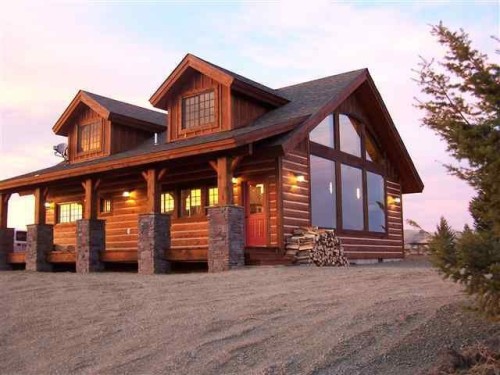
Recipe for Summer: Log Cabins With a Contemporary Twist | North Salem Homes

An American summer isn’t complete without a few essentials: sunscreen, campfires, lakes and, of course, cabins. In honor of Log Cabin Day, we’ve rounded up a few Cabin listings across the U.S. While authentic in style and feel, these standouts push the envelope on classic cabin design.

Jackson, WY

520 S Indian Springs Dr, Jackson, WY
For sale: $11.75 million

Jackson, WY
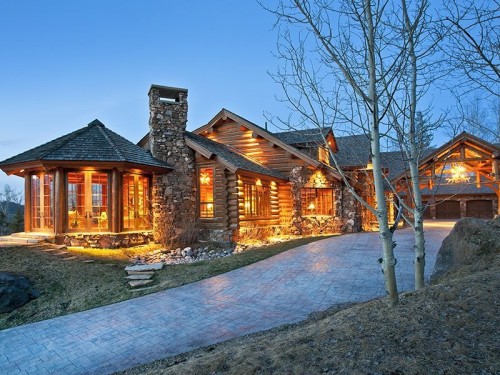
Named “Wild By Nature,” this architectural beauty sits on nearly 6 acres with unobstructed views of the Tetons and resident wildlife. Entering a striking porte-cochère, visitors are greeted by a moose-antler chandelier hanging from a vaulted cathedral ceiling.

Blairsville, GA

593 Turkey Trot, Blairsville, GA
For sale: $779,500

Blairsville, GA
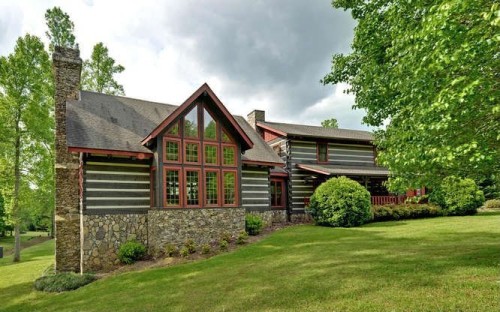
Surrounded by 12 acres of rolling pastures and a brook, this home adds elegance and charm to the quintessential A-frame cabin design. Known as “Saving Grace Farm,” the home boasts exposed beams in a large contemporary kitchen and living room.

Larue, TX

9033 Safari Shores Dr, Larue, TX 
For sale: $679,000

Larue, TX
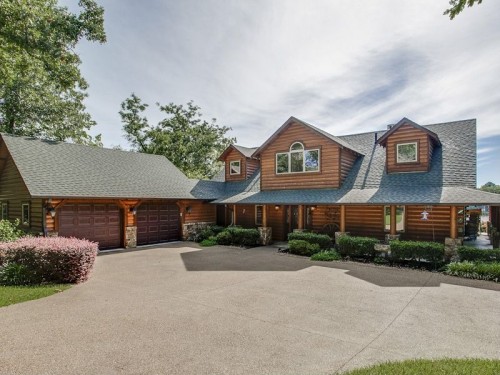
Constructed in 2007, this cabin has all the amenities of a modern home with the feel of a woodsy lake house. In the backyard, a large deck provides a prime lakefront view while a dock is the perfect place to cast a line.

McMinnville, TN

131 Bluff Line Dr, McMinnville, TN 
For sale: $642,000

Minnville, TN
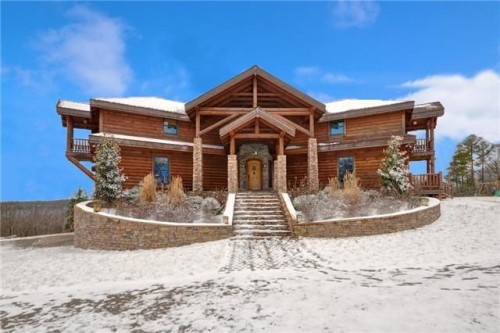
This mountain cabin was built in 2006 with nearly every surface made of wood. An angular design, as well as a lofted second floor and partially finished basement set the property apart from simple one-story cabins.

White Sulphur Springs, MT

3 Pine Hill Dr, White Sulphur Springs, MT 
For sale: $339,900

Sulphur Springs, MT
This Big Belt Mountains cabin has several unique details, including a built-in outdoor kitchen, covered porch and a discrete loft space above one of the bedrooms. The nearly 22-acre property also includes a private guest cabin, garage and barn with 2 horse stalls.

Recipe for Summer: Log Cabins With a Contemporary Twist | Zillow Blog.

A bright spot of the 2013 U.S. solar market: PV for homes | Cross River Real Estate

The U.S. market is forecast to install 4.4 GW of solar panels this year, a 33 percent increase from 2012, thanks in part by an expected surge in residential installations, according to a report released Tuesday.

The country added 723 MW of solar panels in the first quarter of 2013, up 33 percent from the first quarter of 2012, said the report by the Solar Energy Industries Association and GTM Research.

The anticipated growth in 2013 would be slower that what took place in 2012, when the amount of new solar generation jumped 76 percent.

The growing popularity of solar leases, falling prices for solar panels and efforts to reduce the costs of marketing, sales and permitting, have steadily boosted the growth of the solar market in recent years. The pace of installation has quickened, in particular, in the residential market, which  grew 53 percent from the first quarter of 2012 to the first quarter of 2013.

While federal, state and other local incentives still play a big role in the overall expansion of the solar market, their important will likely diminish as the incentive programs come to an end and solar companies, from manufacturers to installers, find ways to adjust and continue to grow their business.

The report highlighted California as a local market in which state incentives for residential systems have disappeared in two of the three big utilities’ territories, yet installation pace has continued to grow. Solar companies in California reported that they are increasingly able to install solar energy systems that could produce electricity at rates comparable to the retail prices charged by major utilities even if they use only the federal tax credit that covers 30 percent of the price of a system.

From the first quarter of 2012 to the first quarter of this year, the national average price for residential solar systems fell 15.8 percent to reach $4.93 per watt.

Declining state incentives is crimping the growth of the commercial market segment, which serves businesses, government agencies and other non-residential, non-utility customers. This segment is set to grow 18 percent in 2013; in 2012 it grew 29 percent, the report said.

Commercial installations tend to be larger, and customers want as short a pay-back period as possible and expect good energy savings by going solar. Those savings could be harder to achieve with lower subsidies. Commercial installations fell from the fourth quarter of 2012 to the first quarter of this year in key market such as California, Arizona, Hawaii and Massachusetts. New Jersey bucked the trend by growing 50 percent quarter over quarter.

The average price for commercial systems fell 15.6 percent to reach $3.92 per watt year over year.


A bright spot of the 2013 U.S. solar market: PV for homes — GigaOM Pro.