Tag Archives: Waccabuc NY

Housing market heats up with young buyers but average real estate agent age 57 | Waccabuc Real Estate

As the housing market heats up again, the real estate industry is facing a new challenge: finding enough younger agents.

Even though many of the top agents make well into six-figures, a new survey shows real estate executives here and across the country are worried about not attracting new blood.


“Clearly there’s a resurgence in the housing market among the Gen X and Gen Y participants, and that’s the next market,” says Kevin Hawkins, the vice president of Imprev Inc., a Bellevue real estate marketing firm that did the survey. “The concern of brokers is not just for today, but what business is going to look like tomorrow.”


While buyers are getting younger, agents are not. Only six-percent are under the age of 34.


“The average age of a realtor is 57 years old. The average age of an American worker is 41 years old. If you look at the typical age of a first time home buyer, it’s 31. So, there’s clearly an age gap,” he says.


During the housing meltdown between 2007 and 2010, there was a tremendous weeding out process in the industry. Hawkins says it was survival of the fittest, and many of the less-experienced agents got out of the business.


But the housing market is booming again, yet 42 percent of the real estate executives surveyed said the need for more agents is their number one concern. They’re worried that younger, qualified candidates are going into other industries, and they’re taking their talents with them.


“Younger agents are much more adept with technology and the internet and all the other tools that people want to use when they first start looking for a home. The surveys show that older agents are more reluctant to adopting the new technologies,” Hawkins says.


Pamela Jensen is a longtime managing broker for Windermere. She has trained many new agents over the last two decades and says being “young” in the industry can work against you.


“What I have found is that if they’re too young, nobody uses them,” she says. “Many homeowners want someone who has owned a home, or who’s bought and sold one. If you’re 23, you haven’t done that.”


She says even the Gen X-ers who work in the tech industry want someone who’s experienced because buying a home is one of the biggest investments they’ll ever make.


But Hawkins says with the average age of a real estate agent being 57, the top execs realize they need to revamp their recruiting strategies so that they can attract younger realtors.


“If they don’t do it now and this group of realtors ages to a point they start retiring, which we’re getting close to that tipping point, then you’ll see a real loss of opportunity of taking that experience and knowledge and imparting it on a whole new workforce,” he says.

 

Housing market heats up with young buyers but average real estate agent age 57 – Local – MyNorthwest.com.

Why Home-Price Gains Will Slow Amid Higher Mortgage Rates | Waccabuc Real Estate

Home prices moved up at a torrid pace during the first half of the year, but don’t expect them to keep pace during the second half.

The big spike in mortgage rates over the past two months has reset the housing market and figures to take a bite out of demand at a time when more sellers have listed homes for sale and when price gains have tested investors’ purchasing appetites.

Mortgage rates, which stood at a low of 3.59% at the beginning of May, jumped to 4.58% during the last week of June, according to the Mortgage Bankers Association. Rates rose even more last Friday, after a strong jobs report firmed up investors’ expectations that the Federal Reserve would begin to curtail its bond-buying program later this year.

A rule of thumb holds that every one percentage point increase in interest rates reduces affordability by 10%, so the recent move in rates just made homes about 10% more expensive to buyers who need to finance their purchase.

“There’s no one in the business right now who doesn’t think the market hasn’t taken a step back. The evidence is all around us,” said Glenn Kelman, chief executive of real-estate brokerage Redfin. The number of Redfin customers who requested tours during the last week of June was down 5% from the average for the previous three weeks, while the number of customers making offers was down by 8% and the number of new customers edged down by 2%.

Here’s a look at seven areas to watch during the second half of 2013:

1. What will higher mortgage rates do to housing demand? Rates are now at their highest level in two years. For borrowers with less than a 5% down payment, the effective mortgage rate is at its highest level since mid-2009 because loans backed by the Federal Housing Administration now carry higher annual insurance premiums.

Economists say that even at a 4.5% or 5% mortgage rate, housing is still affordable by historical standards. Analysts at Bank of America BAC +1.05% Merrill Lynch note that prices would have to rise by 20% or rates would have to climb to around 6% before housing would look unaffordable. Also, they say that housing demand is shaped heavily by expectations of future affordability. That is, homeowners may be more eager to buy at a 4.5% mortgage rate when prices are rising than they were two years ago, when rates were lower but demand was soft because prices were falling.

But the bad news is that the level of rates may matter less than the speed of any increase. A sharp spike in interest rates—even to a level that is still historically low—represents a large payment shock to home shoppers. Many buyers shop for a home based on their monthly mortgage payment, which just shot up. The monthly payment on a $200,000 home with a 10% down payment just went up by $100 every month, almost a 13% increase. The monthly cost of a $450,000 home just went up by $250.

2. Don’t higher mortgage rates help in the short run by bringing more buyers off the fence? Not really. There’s little evidence that higher rates create new demand, even if they accelerate purchases from households that had already decided to purchase. Pending home sales in May rose sharply by 6.7% from April to their highest level in six years, but that spike could easily be reversed in June and July.


Why Home-Price Gains Will Slow Amid Higher Mortgage Rates – Developments – WSJ.

Ramadan fasting isn’t for everyone, Hudson Valley Hospital Center doctor | Waccabuc Real Estate

As Ramadan begins, Dr. Sadaf Lodhi of the Hudson Valley Hospital Center advises that the Muslim traditional of fasting for the holy month is not for everyone.

Women who are pregnant or breast-feeding, people with serious illnesses that prevent fasting and others are exempt, Lodhi said.

Here’s a release from the hospital:

Fasting not for Everyone on Ramadan


OBGYN says those with health concerns are exempt


Cortlandt Manor, NY – (July 9, 2013) – Today is the start of Ramadan, a month long holy day celebrated by Muslims worldwide. Dr. Sadaf Lodhi of the Westchester Medical Practice explains the meaning of Ramadan and some health concerns associated with the month-long fast.  

It is that time of year that millions of Muslims anticipate:  the month of Ramadan.  The month of Ramadan is the 9th month in the Islamic Lunar calendar.  It is considered the holiest of months for Muslims and is believed to be the month in which the Quran (Muslim holy book) was revealed to the Prophet Mohammed.   It moves up by approximately 11 days each year and starts with the new moon.

The end of Ramadan is marked by the holiday of Eid ul -Fitr that takes place either 29 or 30 days after the beginning of the month.  Ramadan is a month of fasting and is one of the five pillars of Islam that requires individuals to abstain from eating, drinking, smoking and sexual intercourse from dawn to sunset everyday for thirty days.  Many Muslims use this month as a means for spiritual and physical renewal.

Ramadan teaches:  self-discipline, patience and spirituality.  Muslims try to increase their acts of kindness, charity, prayers, introspection and self-reflection during this month.

Some muslims are exempt from fasting: pregnant or breastfeeding mothers (for fear that the fasting may harm the baby and his/her nutrition), people who are seriously sick(those with chronic condition that does not allow them to fast such as diabetics, the elderly, those who perform very physically tough jobs, travelers or those at health risk should not fast.  Children are required to start fasting once they begin puberty.

This year Ramadan begins on July 9 and ends with the celebration of Eid -ul-Fitr on August 8, 2013 based on the Fiqh council of North America.  To all the Muslims served by Hudson Valley Hospital Center we wish you a blessed and joyous Ramadan.

Ramadan Kareem!  Ramadan Mubarak!


Dr. Lodhi is a board-certified OB/GYN physician with the Westchester Medical Practice.  Dr. Lodhi performed her internship at Pontiac Osteopathic Hospital and completed her residency at St. Joseph Mercy – Oakland, in Pontiac, Michigan. She moved to New York in late 2004 and has been a practicing OB/GYN physician since 2005.  Her professional interests include infertility, adolescent health and family planning. Dr. Lodhi speaks Spanish and Urdu, and resides in Westchester County with her husband and 3 children. Call 914-736-6180 to schedule an appointment with Dr. Lodhi.


Ramadan fasting isn’t for everyone, Hudson Valley Hospital Center doctor advises – Northern Westchester.

Second quarter market trends defy suggestions of housing bubble | Waccabuc Real Estate


The average price of a home in Canada increased between 1.2 per cent and 2.7 per cent in the second quarter of 2013, according to the Royal LePage House Price Survey and Market Survey Forecast, released today.


According to the survey, markets across the country continue to post gains. In the second quarter, standard two-storey homes and detached bungalows both showed a year-over-year average price increase of 2.7 per cent to $419,614 and $386,547, respectively. Average prices for standard condominiums showed a more modest increase during the same period, rising 1.2 per cent to $248,750. Royal LePage forecasts that house prices will see modest gains throughout the remainder of 2013, projecting a 3.0 per cent increase for the full year when compared to 2012.


Dialogue concerning the direction of Canada’s housing market has remained front and centre in recent months. Changes to Canada’s mortgage lending rules in mid-2012 coupled with concerns about consumer debt levels, housing affordability in cities like Toronto and Vancouver and continued international economic uncertainty have prompted a number of analysts to forecast large downward price adjustments.


“As we have stated consistently since the current market downturn began late in the second quarter of 2012, this is a normal cyclical correction which brings fewer home sales and softer prices. Those hoping their predictions of a bursting bubble and cataclysmic drops in home values will come true are out of luck again,” said Phil Soper, president and chief executive of Royal LePage. “Price appreciation in most markets across the country has been well below the long-term average for Canada and will remain so through to the end of the year. We expect to see the number of homes trading hands to begin to rise slightly on a year-over-year basis in the second half of 2013, with price softness continuing until mid-2014, at which point we’ll see an emergence from the current cycle.”


Recent signals from major financial institutions in the United States and Canada also point to a turn in the tide. In recent weeks, two of Canada’s largest home-loan lenders, Royal Bank of Canada and TD Bank Group, raised their mortgage rates. At the same time, the U.S. Federal Reserve recently hinted that it may start winding up monetary stimulus later this year, should economic improvements continue.


“With the economy on both sides of the border performing better in recent months, a move off the record-low interest rates that we’ve experienced over the past few years is likely on the horizon,” explained Soper. “Paradoxically, we expect the first increases in interest rates to be constructive for the housing market. Rising rates would be driven by a strengthening economy, reduced unemployment and improving consumer confidence. Much of the dampening effect that would come with a transition towards higher rates has already been ‘priced in’ to both consumer attitudes and financial institutions’ current lending policies.”


As of late, the condominium sector has moved to the forefront of discussions concerning the health of Canada’s real estate market with fears of oversupply in major centres like Toronto. Yet, condominium prices remained flat or posted year-over-year gains in nearly all Canadian cities in the second quarter, with a couple of exceptions in British Columbia. While condominium prices in Vancouver saw a 3.3 per cent decrease when compared to the same period in 2012, signs of an early recovery are evident across the Lower Mainland of British Columbia.


Read more here: http://www.heraldonline.com/2013/07/09/5006219/second-quarter-market-trends-defy.html#storylink=cpy


TORONTO, July 9, 2013: Second quarter market trends defy suggestions of housing bubble | PRNewswire | Rock Hill Herald Online.

How Much Paperwork to Buy a House? | Waccabuc Real Estate

The more things change, the more things stay the same. This popular adage is definitely nottrue when it comes to the amount of paperwork involved in buying a home!

To understand how things have changed, we need to compare the past to the present. Luckily my father is very organized and has his entire file of documents from when he bought the family house almost 45 years ago in Virginia. More recently, when he made what he calls his “final” property purchase, he couldn’t believe the stack of paperwork involved in the purchase.

Here’s a comparison of the amount of paperwork involved with a home purchase “then” and “now,” along with brief descriptions of the voluminous stack of documents you’ll encounter the next time you buy real estate.

Purchase contract

Then (1 page): In 1969 the purchase contract was a full page long and covered all the material issues related to buying the property, with no other disclosures, reports or documents related to the transaction.

Now (200 pages): The 2012 purchase contract was 10 pages, plus approximately 200 more pages of contract addendums, disclosure reports from the seller and agent(s), third-party disclosure information, plus federal, state and local disclosures, disclaimers, questionnaires, certifications, escrow instructions, inspections, advisories, verifications, counteroffers, receipts for reports and notices.

Mortgage loan

Then (4 pages): Three-page deed of trust/mortgage note and one-page settlement sheet.

Now (100-125 pages): 13-page deed of trust, five-page promissory note, 50-70 pages of lender disclosures, 3-10 pages of federally required HUD-1 statement and good faith estimate, and other paperwork required as documentation for the loan.

Title insurance

Then (5 pages): Chicago Title cover page plus five total pages of the title abstract, survey, schedule of exclusions and general exclusions pages.

Now (15-20 pages): The title abstract, title insurance policy, exclusions, plat/survey and general information.

Property insurance

Then (unsure): Unfortunately his insurance policy document was not in the file, but his annual policy coverage premium — $25.06 — was noted on the settlement sheet. But this payment might have covered more or fewer perils than a policy covers today, so that annual amount probably is not comparable to a modern-day policy.

Now (30-40 pages): A standard homeowners policy covers the dwelling, liability and medical, and has pages and pages of items that are excluded from coverage.


How Much Paperwork to Buy a House? | Zillow Blog.

The Golden Rule in Video Marketing: Know Thy Audience | Waccabuc Real Estate

In many ways, most of us would strangely qualify as video marketing experts; simply because companies spend billions of dollars per year trying to determine what types of advertising entices us.  Believe it or not, analysts examine almost every aspect of our daily lives to determine how we interpret the world around us and they’re desperate to learn things like:

  • What time of day are we most likely to make an impulse decision?
  • When are people the most relaxed, hungry, frustrated or motivated?
  • How does product placement in commercials influence buying patterns?
  • Which colors most accurately display a brand’s message?
  • What aspects of video marketing lead to the highest conversion rates?

The list goes on and on, to the point where humans are studied by marketing experts more than global warming, cancer research and all professional sports combined.   In other words, knowing who your producing a video for can actually be more important than the marketing itself.  We see it every day at Next Day Flyers and it never ceases to amaze us how far some corporations go to gain even the slightest of edges within the marketplace.

SEE ALSO: The Week’s Best Viral Videos & Marketing Lessons – Brands Rule Edition

So how do you really get to know your customers?  Here are three quick tips to get you started:

1. Target your Key Demographics

Many of you may be thinking, “Why would a major life insurance brand use 1970’s Peanuts characters to try and sell a product in 2013?”  If you can figure out the answer to that question, then you’ll be one step closer to really understanding your key demographics.  It’s no accident when a commercial that makes us fall out of our chair laughing or reminds us of a great childhood memory…because it was designed specifically for us.

The entire reason for creating an advertising campaign is to give viewers that split-second “Aha!” moment where they completely connect with your brand, and you have to know your ideal consumer to achieve that.  Think about specifics:

  • What would your ideal customer eat on their birthday?
  • Where would they hang out on a Friday night?
  • How long have they been married (or dating)?
  • What’s their annual income?

The more questions that you can think to answer, the better your marketing will target your ideal client specifically.

2. Never Be Afraid of Variety

Likewise, do not be afraid to test the market with several different video marketing approaches to see which ones generate the largest buzz among consumers.  One good example of diverse advertising would be GEICO; from “A Caveman Can Do It” to the lovable gecko lizard to their biker made of money, this company has never feared making specialized marketing ads that were focused only on a small portion of their demographics.

The bigger lesson to be learned here is that it’s never too late to change a company’s image.  If a video marketing campaign doesn’t seem to be working, then it’s better to start over now than to continue to feed an unpopular approach.  Major corporations are forced to do this every day so don’t let your ego get in the way of the bigger picture.


The Golden Rule in Video Marketing: Know Thy Audience.

5 ways to exceed your ultrawealthy sellers’ expectations | Waccabuc Real Estate

You’re about to go on a listing appointment for a multimillion-dollar property. What expectations will the sellers have and how will you meet them?

Most luxury clients expect much more from their agent than just posting pretty pictures of their property on the MLS and on various online sites where you syndicate your listings. What will it take for you to win the listing and get it sold?

1. Move from closing the prospect to creating a unique customer experience

Luxury sales were once based on controlling the prospect and expertly telling them what to do. Closing is an essential part of any sales process. Today’s luxury clients are smarter, well researched and tech savvy. They expect to control the process. Your role first and foremost is to provide them with the specific information they will need to make the best decision regarding their sale or purchase.

Going beyond this minimum level of service will require you to do much more. Find out what matters to your client, and structure her customer experience around what matters to her.

For example, many ultrawealthy clients are collectors. If your client collects vintage dolls, spend an hour reading up on this topic. Then, if you are showing this client property, ask questions that focus on how well the rooms where the collectibles will be displayed fit the client’s needs. This type of detailed focus on your client’s personal interests will make you stand out from competitors and earn you plenty of referrals as well.

– See more at: http://www.inman.com/2013/07/01/5-ways-to-exceed-your-ultrawealthy-sellers-expectations/#sthash.OtEsf0hu.dpuf


5 ways to exceed your ultrawealthy sellers’ expectations | Inman News.

Luxury Summer Rentals: Is $1 Million the New Normal? | Waccabuc Real Estate

In the world of short-term rentals, it’s all about Memorial Day to Labor Day. Homes in popular vacation spots from Malibu to The Hamptons are emerging with rental prices from $100,000 to more than $1 million total for the summer.

While many associate these numbers with buying a home — not renting one for three months — these listings typically attract renters soon after they hit the market. For those who can afford it, they offer the chance to live in the lap of luxury — without having to think about a mortgage or resale value.

Here’s a look at a few high-end summer rentals currently on the market. Some are offered for a flat fee; others have a monthly rate for the 3-month peak vacation season. (You might have some negotiating power with Memorial Day behind us, but don’t expect to rent one of these pricey pads for less than six figures.)

Beverly Hills: $1.8 million ($600,000/mo.)

Beverly Hills, CA
Perched above the Beverly Hills Hotel at 1011 N Beverly Dr, Beverly Hills, CA 90210, the Beverly House was a for-sale listing asking $115 million before becoming a rental. Whether you’re in the market for a summer home or a year-long lease, the price remains $600,000 per month.

While its ornate architecture and furnishings are notable, the home is most-known for its celebrity history — from publishing magnate William Randolph Hearst, who was given the home by actress Marion Davies in 1946, to John and Jacqueline Kennedy, who spent time there during their honeymoon. The 3.7-acre compound has also served as a set for “The Godfather” and “The Bodyguard.”

Water Mill: $550,000 (flat fee)

Water Mill, NY
Located on Mecox Bay between Bridgehampton and Southampton, Water Mill, NY is an exclusive destination for the rich and famous (Jennifer Lopez just dropped $10 million on a 3-acre estate in the area).

Similar to the Beverly Hills listing above, this Water Mill home first hit the market as a for-sale listing in 2011. After several price changes, the home is now being marketed as a summer rental for a flat fee of $550,000 for Memorial Day through Labor Day. The house includes a master suite with a private terrace, 3 additional bedrooms, an oversized granite pool and spa.

Bridgehampton: $475,000 (flat fee)

Bridgehampton, NY
Bridgehampton is another coveted Hamptons locale, with Goldman Sachs CEO Lloyd Blankfein recently buying a house listed for $32.5 million. Last summer, Beyonce and Jay-Z escaped Manhattan with a Bridgehampton summer rental coined “The Sandcastle.”

Measuring 10,000 square feet, this Bridgehampton home has 7 bedrooms, 9.5 baths, a pool, movie theater, gym, 4 fireplaces and a wine cellar. Close to local shops, restaurants and the beach, it’s an ideal getaway during the summer months, and the price reflects this with a $475,000 flat fee from Memorial Day to Labor Day versus $150,000 for the winter.

Southampton: $395,000 (flat fee)

Southampton, NY
Live like Kate Spade with this Southampton summer home located on your own private pond. The property features 5,800 square feet of living space on 2 landscaped acres with a heated pool and tennis court. Located a block from the Hamptons waterfront, the estate also comes with deeded beach access.

If you’re looking for a longer-term rental, listing agent Nancy Hardy of Halstead Property says additional prices are available.

Malibu: $300,000 ($100,000/mo.)
Malibu, CA

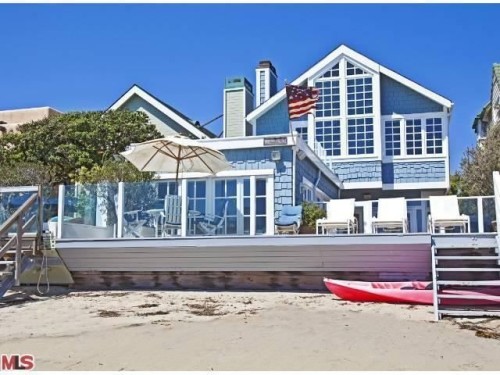
Located behind Malibu Colony’s prestigious gated entrance at 23716 Malibu Colony Rd #28, this home is available only for the summer months, as the homeowners live there the rest of the year. For $100,000 a month, the Cape Cod-style beach house comes with a private deck right on the beach, 5 bedrooms, 5.5 baths and an attached gym.

Malibu is a popular second-home destination for the celebrity set flocking from nearby L.A. While some like to buy their own place, others including Usher and P. Diddy have gone the rental route.


Luxury Summer Rentals: Is $1 Million the New Normal? | Zillow Blog.

Tight inventory of Cape Cod mansions make prices soar | Waccabuc Real Estate

Brokers said many wealthy Cape Codders are trading up. Other buyers see the Cape as a strong investment, with bigger properties still selling at a 20% to 50% discount to the Hamptons in New York.

CNBC has learned that billionaire William Koch—the sailor, wine-collector and brother of famed conservatives David and Charles—is putting his historic compound on the private island of Oyster Harbors up for sale.Robert Paul Properties, an affiliate of Luxury Portfolio International, is about to list the property for $15 million.

Koch is selling after he purchased a nearby estate previously owned by Rachel “Bunny” Melon for $19.5 million, according to reports.

The top listing in Martha’s Vineyard, the Obamas’ favorite summer retreat, is a property called Herring Creek Farm, a 25-acre estate on the market for $19.5 million. The farm sits on a private corner of land off Slough Cove. Located on the southeast part of the island, the property features sweeping views of Edgartown Great Pond and the Atlantic, writes CNBC.


Tight inventory of Cape Cod mansions make prices soar | HousingWire.

Home resales rise to three-and-half year high; prices jump | Waccabuc Real Estate

Home resales rose in May to the highest level in 3-1/2 years and prices jumped, a sign the housing sector recovery is gathering steam and could give the economy a significant boost this year.

The National Association of Realtors said on Thursday that existing home sales advanced 4.2 percent to an annual rate of 5.18 million units, the highest level since November 2009 when a home-buyer tax credit was expiring.

“Whatever inventory is coming onto the market, buyers are ready to snap it up,” said Lawrence Yun, an economist at the NAR.

The increase beat expectations for a rise to a 5 million-unit rate last month.

The housing market is one of the brightest spots in America’s economyand is helping counter Washington’s decision to raise tax rates and cut government spending this year.

A very accommodative monetary policy by the Federal Reserve, which has held mortgage rates near record lows, is helping to lift the housing marketoff the floor. Fed Chairman Ben Bernanke, however, gave clear signals on Wednesday that the Fed was on track to start dialing back its stimulus by the end of this year.

In May, the median home sales price increased a whopping 15.4 percent from a year ago to $208,000. That was the biggest year-over-year increase since 2005 and left prices at their highest level since July 2008.

“Prices have recovered quite suddenly and quite spectacularly,” Yun said.

With prices rising, more sellers put their properties on the market, lifting the inventory of unsold homes on the market 3.3 percent from April to 2.22 million.


Still, the stock of homes for sale continues to be tight in the market. The May level of inventories represented just 5.1 months’ supply at May’s sales pace, down from 5.2 in April. Many economists consider 6.0 months to be a healthy balance between supply and demand.


Home resales rise to three-and-half year high; prices jump | Reuters.