Playing bigger. Putting yourself out there. What others will think? Not being good enough.
Most bloggers have had to face those fears at same point. Dreams and goals tend to bring up our ugly stories after all.
Being a life coach who works primarily with women looking to overcome fears, blocks, beliefs, and barriers is what I do. So of course I have an opinion on why it is our fears come up one step behind our dreams.
Because they need to.
They need to seen, heard, and dealt with. They need to be examined and released. Life will hear our desire to step up to the plate as a desire to step away from the dugout. “You want to play bigger? Good! Here’s the first thing you get to examine and let go of in order to do so.”
Our fear is not meant to be our saboteur. It’s just an emotion we’ve attached to the thoughts that go swirling through our head on overtime we go to hit that Publish button, or send out a tweet.
Digging deep to overcome that fear can be both a long, mindful process, or as fast and life-changing as a simple Aha! moment that forever changes the lens through which we see the world.
But if a client were to ask me which steps they most likely needed to take, here’s what I would say.
1. Surround yourself with the right systems of support
A big reason so many of us get freaked out at the perspective of blogging is because it’s new and probably mostly unheard of in our intimate circles.
Now I’m not knocking those intimate circles. We need those like we need water. But they serve a purpose of their own, and encouraging you to do something big and in a completely new arena is not likely the role they need to serve in your life.
By surrounding yourself with other bloggers (local meetups, online groups, tele-conferences circles with accountability partners), you’ll find more encouragement to match your fear and what looks a little crazy from the outside will begin to look natural and “what-was-there-to-be-afraid-of-again?”.
Get a coach, get a group, get a friend. Get support.
2. Don’t “push through fear.” Process through it
I loathe when I hear that term. It’s not that it’s always a big thing. I pushed through fear when I went cliff jumping. But this whole “Fear of Playing Bigger” thing isn’t over as soon as you hit the water.
Pushing through fear is like pushing a car through your first marathon. Exhausting, distracting, ridiculous. Stop pushing through it. Stop and address the damn car, so you can get on without it. Yes, it might come up again, but if you keep giving it the space to be heard and the space to process through the fear, you give it the space to heal.
How do you process through it?
Here are a few beginning tips.
3. Know what it is you’re really afraid of
It’s not “playing bigger” that you’re actually afraid of. It’s what “playing bigger” will mean: what you fear will happen, what you think someone might say or do, who you think that someone might be, and what all that might mean?
Right here I’m talking about our deepest core beliefs or fears—the stories we tell ourselves about Who We (or others) Are and what we’re capable of. The stories that keep us playing small in order to play it safe.
The best way to find your deepest core fear is to start with the scenario that’s freaking you out, and question it. Ask yourself why you’re really afraid of it, what you’re afraid might happen, and what that says or means.
This can take some time, and sometimes even support, so go back to #3), then you’ll need to create a scenario that tests it.
For instance, maybe you find you’re really afraid of ridicule from friends. One way to test that fear is to openly and authentically share your concerns and ask for feedback from those friends.
Or if you’re afraid of looking stupid, maybe you can purposefully go out and do something that makes you look ridiculous (think: giant rooster costume) and realize that the world neither crashes down around you, nor do most people even notice.
This isn’t about being rational. Because your fear likely isn’t very rational. This is about speaking to that irrational brain of yours, in terms it can understand: hard-core experiences to the contrary.
5. See those fears (or feedback) with compassion
This one is a hard practice, and I’m not gonna tell you it’s always one to practice. There are times when we don’t need to see the other side; times when we need to ignore the other side because it’s bi-polar and toxic and it’s probably a better bet to change our phone number than to try to empathize. (I’m talking about people who might not support you, but I’m also talking about those bipolar and toxic thoughts of yours too.)
Seeing the other side is about looking with empathy at what’s happening and trying to understand with compassion how it came to be this way, and the deeper needs that are trying to be heard and validated.
For example, a fear of “not being good enough” might be just an attempt to receive acceptance, something that we all need and deserve. Or for another example, the recent criticism of a parent for your career choice might actually be a need to know you will be secure.
I recommend this practice because it can be easy to get washed up in the fear, the drama, the criticism, the he-said/she-said, the messy stories and can we just say drama again? It’s easy to lose sight of what’s really happening beneath the crazy of what we’re thinking, saying, or doing.
But any time we drop beneath that, our path becomes clearer. Pretty soon we’re not wracked with self-doubt because our best friend said she didn’t think we could hack it; we have empathy for the fear or the hurt or the self-consciousness she may be experiencing.
Remember, seeing the other side is not about psycho-analyzing the other person, or even yourself. It’s about looking for love, with love. It’s about seeking understanding, instead of stoking the inferno of self-doubt.
6. Say what you need to say
This is a modified version of an exercise in Digging Deep, to help you have that conversation you’ve been needing to have in order to finally lay to bed the fear you’ve been experiencing.
This might be a letter to a hurtful loved one, to your younger self, or even to your own fear. Imagine yourself having a peaceful but firm conversation.
This likely also means you’ll need to see those fears (or the fears of someone else, perhaps) as in the last step. Send gratitude for the the good intentions of your fear, or the attempt to care for you from a loved one, then describe how it is that you’re okay, capable, ready for this.
You may give the fear your proof in the form of what you’ve been able to do, or how you’ll handle anything that comes up. You may even answer that nagging question of “Who the hell am I?” with an answer that starts something like, “I’ll tell you who I am…”
Take your time with this. Each time I’ve done this I’ve essentially had a four- or five-page “conversation” with my fear, letting it say everything it needed to say and calmly answering it with clear and confident choices. It sounds slightly ridiculous until you really let yourself fall into the exercise. Then you experience that weight lift off your shoulders.
Again, in all these exercises you’re looking to create mindfulness and understanding through acknowledgment and compassion.
Because understanding creates clarity in your choices or next steps, and clarity creates confidence. And confidence creates a wildly authentic, wildly unique, wildly successful blogger.
Tara Wagner offers lots more tools for overcoming self-doubt, fear, and other barriers to creating your own unconventional, authentic, and thriving lifestyle. You can find her and signup for her free e-course/toolkit to start thriving in your life and family (without the fear) at TheOrganicSister.com.
Tag Archives: South Salem NY
NAR likely to cede social media listings policy to MLSs | South Salem NY Real Estate
The National Association of Realtors is one step closer to adopting a policy that would leave it up to individual multiple listings services whether or not to allow member brokers and agents to display for-sale listings represented by other consenting members on social media sites.An MLS policy statement approved Saturday by NAR’s Multiple Listing Issues and Policies Committee would, for the most part, let MLSs that choose to allow the display of shared listings on social media sites write their own rules.
But the policy statement — to be voted on Monday by NAR’s board of directors — would prohibit MLSs from requiring that their member brokers and agents allow their listings to be distributed through social media, or other non-traditional channels such as text messaging.
NAR had considered adopting a blanket policy for the display of shared listings on social media sites that would have applied to all MLSs affiliated with the trade association– in effect, taking away from MLSs the decision on whether to allow the practice or not.
But NAR leaders backed down after a number of MLSs raised objections about the difficulty of policing social media sites for compliance with rules that govern the display of shared Internet data exchange (IDX) listings on websites operated by MLSs, brokers and agents.
Instead of amending its policies governing the display of IDX listings so that those rules also governed the display of IDX listings on social media sites, NAR is creating another avenue for the display of a different set of shared listings, outside the context of IDX policy.
Article continues below“We’re taking a different approach here — give the MLSs that want to go down this road the authority to do it,” said Cliff Niersbach, the NAR staff executive who serves as liaison to the committee. “We’re basically saying OK, we want to participate — we’ll identify issues (as they) come up. We tried to be all knowing, and that approach didn’t work.”
It’s an important distinction, because the high rate of participation in IDX allows MLS, broker and agent sites to display all, or nearly all, of the homes for sale in a given market.
Third-party sites like Zillow, Trulia, and Realtor.com cannot display IDX listings — the companies that operate those sites must obtain listings directly from MLSs, listing syndicators, or brokers (thanks to its ties to NAR, Realtor.com receives listings from nearly all of the nation’s 900 MLSs).
Brokers have the option of “opting out” of distributing listings they represent to third-party sites, so listing coverage on those sites can be spotty.Brokers who want to participate in IDX, however, are either “all in” or “all out.” They can’t choose whether or not to display listings represented by other participating brokers on their own websites, or prevent listings that they contribute to the IDX pool from being displayed on the websites of other participating MLS members.
Broker participation in IDX is nearly universal in many markets. Consumers are drawn to websites that provide access to a nearly comprehensive set of listings, and not offering access to IDX listings in markets where IDX participation is high could put a brokerage at a competitive disadvantage.
If the only option for brokers with strong objections to their listings appearing on social media sites was to withdraw from IDX altogether, the system might begin to fall apart. If IDX participation dropped, MLS, broker and agent websites might no longer be able to offer consumers a comprehensive set of listings, and lose an important advantage they hold over many third-party sites in some markets.
While NAR’s decision to separate the display of shared listings from IDX policy could protect the IDX system from controversy, it also leaves brokers who want to display shared listings on social media channels at the mercy of their MLS.
The policy statement approved by the committee Saturday, and scheduled to be considered by NAR’s board of directors on Monday, reads, in part:
“MLSs may but are not required to give participants the ability to authorize electronic display of their listings by other participants outside the context of the (IDX) policy and the Virtual Office Website (VOW) policy and rules.
“Participants may not be required to consent to display or distribution of their listing through non-IDX and non-VOW channels as a condition of participation in MLS or as a condition of participation in IDX.”
In other words, while MLSs can’t force their members to allow listings they represent to be displayed on social media sites, they can refuse to put a system in place that would facilitate the display of members’ shared listings outside of the approved IDX channels.
Brokers and agents are always free to publicize their own listings on Facebook and other social media sites, but some social media and marketing experts say that’s the wrong way to go about using such sites.
NAR’s former director of social media and online engagement, Todd Carpenter, ran down a long list of companies he said had tried and failed to use Facebook to make sales: Starbucks, Sears, Ikea, Wells Fargo, Delta Airlines.
“People use Google to find things,” Carpenter — now Trulia’s senior manager of industry engagement — told members of the Multiple Listing and Issues and Policies Committee. “People go to Facebook or other social media sites to find people.”
There are many successful real estate professionals using Facebook and social media, Carpenter said, “but it’s because they are connecting with people.”
Before voting to approve the MLS policy statement on social media, a few committee members expressed reservations about leaving the matter in the hands of MLSs. Some doubted that MLSs would be able to solve some of the knotty problems that came up when the committee tried to amend IDX policy to accommodate display of shared listings on social media sites.
But the policy statement passed in a nearly unanimous voice vote.
The proposal does “exactly the right thing, to allow local associations to move forward,” said committee member Bill Lublin, CEO of Century 21 Advantage Gold. “Every time you hear (a problem raised) it drills down to the local level,” he said.
In some respects, NAR is merely putting an official stamp of approval on events that are already transpiring — many MLSs currently allow members to display IDX listings on social media sites.
Real estate app developer N-Play reports that 40 MLSs representing 300,000 Realtors have signed up in the last 90 days to offer members the company’s IDX listings search application for agent and broker Facebook pages.
If approved by the full board on Monday, NAR’s policy statement would guarantee the right of brokers that belong to those MLSs to opt out of having listings they contribute to IDX feeds appear on social media sites, while remaining in the IDX program.
Contact Matt Carter: Letter to the Editor
Copyright 2012 Inman NewsAll rights reserved. This content may not be used or reproduced in any manner whatsoever, in part or in whole, without written permission of Inman News. Use of this content without permission is a violation of federal copyright law.
Thirty-Two Percent of Houses Sold in One Month | South Salem Realtor
Fix for a sinking fireplace hearth | South Salem NY Real Estate
Q: I live in a Craftsman cottage in Davis, Calif. Like many Craftsman homes, it has a fireplace in the living room with a handsome mantel, a tile surround around the firebox, and a tiled hearth. All appear to be original. My problem: The hearth is sinking.
Currently the hearth sits about 1/2 inch below the hardwood floor. I’ve been under the house to take a look from that angle. The tile appears to be laid on a cement slab, which is supported by 4-by-4-inch posts resting on a couple of concrete piers. I’m not quite sure how to get the hearth back to level with the hardwood floor. I don’t want to break any of the tiles.
What is the best way to elevate the slab to be level with the floor and have the least chance of cracking any of the tiles?
A: We think you may be able to gently ease the hearth back into place using house jacks and two 5-foot lengths of 2-by-12 framing lumber. Then you’ll need to pour new concrete footings and add new posts.
We caution you that this is not a job for the casual do-it-yourselfer. It requires B or B-plus carpenter skills. Also, this type of structural work often requires a building permit and inspections so make sure to check with the city before you get started.
Your first job is to lift the hearth back into place.
House jacks are large screw-type jacks used by house movers to raise houses in order to place large beams under a house for transport via truck and trailer. You’ll need to rent two or three of these. Place one of the 2-by-12s on the ground near the existing piers. The wood base will prevent the jacks from sinking into the ground when lifting the slab.
Next, place one jack at each end of the board and use the jacks to snug the second 2-by-12 against the concrete substrate of the hearth. Make sure the jacks and the 2-by-12s overlap the slab. The upper 2-by-12 will distribute the load evenly across the substrate, lessening the chance of cracked tiles.
Gently turn the screws on the jacks about a quarter turn at a time, alternating jacks in the same order to lift the slab evenly. If the lift is uneven, a third jack should be used to ensure the slab rises evenly. If a third jack is needed, make sure to support it top and bottom with wooden blocks. (A second pair of 2-by-12s isn’t necessary.)
This is a delicate, two-person job — one turning the jacks, the other in the living room monitoring the progress of the lift. If all goes well the substrate will move into level with the floor.
Once the substrate is in place and supported by the jacks, remove the old posts and piers and replace them with new ones. Use the old excavations, but widen and deepen them so they measure 12 by 12 inches square and 12 inches deep. Pour fresh concrete to fill the holes and set new precast piers in the wet concrete, making sure to level the piers side to side and front to back. Let the concrete dry for a couple of days.
Then place a 4-by-4 beam against the slab and support it at each end with 4-by-4 pressure-treated posts nailed to the wooden blocks on the top of each pier with four 16d nails. The finished product will look like an upside-down “U.” Make sure this structure fits tight to the slab by using shims between the slab and the beam.
An alternative to precast piers is to imbed metal anchors into the concrete to accept pressure-treated posts. Pressure-treated material is required for this application because the wood is too close to the ground and is more susceptible to termite or carpenter ant infestation.
Let the new concrete cure for a week. Remove the jacks and the hearth should be level once again for a long time.
A final word: No matter how careful you are, there’s no guarantee that you won’t crack a tile or two, and it’s possible that you’ll end up searching the salvage yards for pieces that match your fine old hearth. Good luck.
Q3 home prices show strongest growth since 2006 | South Salem NY Real Estate
Home prices and home sales both showed strong annual growth during the third quarter, according to the latest report by the National Association of Realtors.
The national median existing single-family home price jumped 7.6 percent from a year ago, to $186,100 — the strongest year-over-year increase for any quarter since first-quarter 2006, when prices were up 9.4 percent from the previous year.
Sales of existing homes rose 10.3 percent during the third quarter, to a seasonally adjusted annual rate of 4.68 million, up from 4.25 million a year ago.
Median prices posted annual gains in 120 of 149 metros tracked, up from 110 metros showing gains in the second quarter of 2012 and 39 metros with price appreciation during the third quarter of 2011.
Inventory of existing homes for sale was down 20 percent from a year ago, to 2.32 million. The combination of rising prices and tight inventory on a quarterly basis indicate that the housing recovery is settling in, said Lawrence Yun, NAR’s chief economist, in a statement.
“We expect fairly normal appreciation patterns in 2013, but there is a risk of price acceleration if builders are unable to meet the needs of our growing population and household formation,” Yun said.
While NAR attributed some of the price gain to a reduction in the percentage of distressed home sales — only 23 percent of existing homes sold in second-quarter 2012, down 30 percent from a year previous — the trade group stated that “higher prices significantly reflect a market recovery.”
Housing affordability numbers also fared well for the housing market. With a third-quarter national median family income of $61,700, NAR calculated that with a 5 percent down payment, a household would need only $40,900 to afford a home at the third-quarter national median price, assuming a 4 percent mortgage interest rate and 25 percent of gross income devoted to mortgage principal and interest. That home affordability income threshold drops as the down payment percentage rises.
The proportion of first-time buyers didn’t change in the third quarter from last year, but held steady at 32 percent, nearly twice the 17 percent share of investors who purchased homes in the quarter.
The share of all-cash buyers was down on a yearly basis in the third quarter to 27 percent from 29 percent in third quarter 2011.
“The modest decline in first-time buyers and investors shows the impact of limited inventory in the lower price ranges from a shrinking share of distressed homes, which are popular with both groups,” Yun said.
Existing-home sales, third quarter 2012
Seasonally adjusted annual rate 4.68 million % change from third quarter 2011 +10.3% % change from second quarter 2012 +3.2% National median price $186,100 % change from third quarter 2012 +7.6% Share of all-cash buyers 27% Share of investor buyers 17% Share of first-time buyers 32% Share of distressed sales 23% Source: National Association of Realtors
Nearly all U.S. regions saw existing-home sales and prices swell in the third quarter from a year ago — except the Northeast, which saw home prices dip slightly — with the Midwest leading the way with a 17.8 percent year-over-year increase in existing-home sales. The median price in the Midwest also rose in the third quarter from a year ago, up 4.2 percent to $151,100.
The annual pace of sales grew in the South 11.7 percent in the third quarter with median existing-home prices rising 5.7 percent to $165,400.
In the Northeast, sales jumped 9.8 percent on an annual basis, with median prices slipping 0.3 percent to $246,900.
Fighting tight inventory, the West saw the lowest percentage jump of existing-home sales in the third quarter with a 2.1 percent bump from a year ago. The short inventory also translated into a median home price leap of 20.2 percent to $247,400 from a year ago.
3 Reasons Your Social Strategy is Failing (And What to Do Instead) | South Salem Real Estate
“Social tactics are not meaningful sales drivers”, according to Forrester’s latest research report.
They analyzed primary sales drivers for eCommerce, and concluded that less than 1% of buyers were from social visitors.
There’s a few possible explanations for this.
The first (and most important) is that social aids the buying process indirectly, and is difficult to track — which leads companies (and research firms) to under-appreciate and under-invest.
The second, is that most corporate social media strategies… simply aren’t that good. And their results are mediocre because they’re too tactical, and too focused on micro-decisions.
Here are 3 reasons why your social strategy is failing, and what to do instead.
Fix
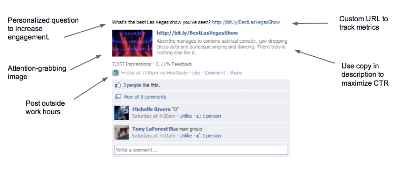
So every single status update should bear all the hallmarks of good content.
Research and dig into your prospect’s psychology, use copywriting to intrigue and address their pain points, and monitor your analytics to do more of what people like, and less of what they don’t.
Every status update should be like it’s own advertisement:
- Objective: At the end of the day, you need engagement or click-throughs. But emphasis one at a time, not both. Because if you want to maximize results, then you typically have to make a choice that will hurt the other option.
- Headline:The first goal of your headline is to grab attention. The best way is to touch an emotional nerve, or reference a specific “world-view” they might have.
- Description: The description is where you use copywriting to play on reader’s interests and psychology, and get them to take action.
- Image: Finally, the goal of your image is to produce a desired result. So it doesn’t have to be explicitly tied to what you’re talking about. Instead, make it sure captures attention and will make an emotional connection.
Here’s an example of all those components coming together:
Becoming a social media publisher allows you to set the tone for engagement, and steer the conversation in ways that ultimately benefit you.
Fix #3: Create Campaigns, Not Launches
Whenever a company has a new launch, promotion, or sale coming up, they want to start “marketing” on the opening day.
But by then, you’ve already lost.
Effectively promoting events or launches takes time, and can’t happen overnight.
“If you want to succeed in social media, then think in quarters, not days.” → [Click here to share this quote]
So tying in to use social channels to distribute those messages farther, faster, and more effectively.
Go Green With Easy-to-Grow Indoor Plants | South Salem Realtor
Home prices continue steady rise | South Salem NY Real Estate
The 10- and 20-city S&P/Case-Shiller home price indices posted monthly increases for the fifth month in a row in August, according to a report released today.
Seventeen of the 20 metros tracked by the index posted annual gains in August, with home prices up by an average of 2.0 percent from a year ago.
All but one of the markets tracked in the 20-city composite index posted gains from July to August. The 20-city composite was up 0.9 percent from July on a non-seasonally adjusted basis.
A home price index maintained by the Federal Housing Finance Agency showed home prices up 4.7 percent from a year ago. That index — which tracks homes with mortgages backed by Fannie Mae and Freddie Mac — showed home prices returning to June 2004 levels, but still down 15.9 percent from an April 2007 high.
The S&P/Case-Shiller 20-city composite index shows home prices approximately 35 percent below a June/July 2006 peak. But August’s numbers indicate to industry watchers a positive position for the housing market.
“The sustained good news in home prices over the past five months makes us optimistic for continued recovery in the housing market,” said David M. Blitzer, chairman of the index committee at S&P Dow Jones Indices, in a statement. “Single family housing starts are 43 percent ahead of last year’s pace, existing and new home sales are also up, the inventory of homes for sale continues to drop and consumer mortgage default rates are reaching new lows.”
Writing on his blog, Calculated Risk, Bill McBride called the recent change to year-over-year annual increases for the Case-Shiller indices a “significant story.”
“The year-over-year gain is better than it sounds,” said Jed Kolko, chief economist for home marketplace Trulia. Since the composite indices only focus on a few metros, some of which have been hard hit in terms of home pricing, the indices have actually “been understating year-over-year national price growth,” he said.
Source: Calculated RiskMetros in the 20-city composite posting annual declines were Atlanta (-6.1 percent), New York (-2.3 percent), and Chicago (-1.6 percent).
Metro area July 2012 index level Change from July Change from a year ago Atlanta 95.80 1.8% -6.1% Boston 158.27 0.7% 1.7% Charlotte 116.58 0.6% 2.8% Chicago 117.45 0.7% -1.6% Cleveland 103.04 1.0% 1.1% Dallas 121.34 0.1% 3.6% Denver 133.48 0.5% 5.5% Detroit 79.18 2.3% 7.6% Las Vegas 96.04 1.6% 0.9% Los Angeles 173.02 1.3% 2.1% Miami 150.12 1.0% 6.7% Minneapolis 124.65 1.2% 7.4% New York 166.32 0.7% -2.3% Phoenix 119.28 1.8% 18.8% Portland 140.80 0.5% 3.6% San Diego 157.84 0.9% 1.9% San Francisco 142.37 0.5% 5.3% Seattle 141.69 -0.1% 3.4% Tampa 134.91 0.4% 4.2% Washington, D.C. 194.00 1.1% 4.3% Composite-10 158.62 0.9% 1.3% Composite-20 145.87 0.9% 2.0% Sources: S&P Dow Jones Indices and Fiserv.
Stiglitz: Obama, Romney still need to address housing market | South Salem Realtor
Stiglitz: Obama, Romney still need to address housing market
Columbia University Professor Joseph Stiglitz speaks during The Economist’s Buttonwood Gathering in New York October 24, 2012.
Nobel Prize-winning economist Joseph Stiglitz chided U.S. President Barack Obama and Republican presidential candidate Mitt Romney for not seriously addressing the troubled U.S. housing market during the recent series of presidential debates.
The Columbia University economics professor said in an interview with Reuters TV that the two men have shied away from discussing the uneven U.S. housing market recovery because neither has concrete solutions for helping financially strapped homeowners and both are wary of offending the banks.
“I find that shocking” that neither has talked about housing market issues, Stiglitz told Reuters. “It is one of the things that precipitated the crisis. In some sense, they don’t want to offend the banks … . The banks have been a major problem to doing something about the problem.”
Stiglitz, who won the Nobel Prize for economics in 2001, spoke less than two weeks before what could be one of the closest presidential elections in U.S. history.
Romney was 1 percentage point ahead of Obama in Wednesday’s Reuters/Ipsos daily tracking poll in a race that is effectively a dead heat ahead of the November 6 vote.
The biggest weak spot in the domestic economy continues to be the housing market, despite signs of life in cities like Las Vegas, Phoenix and Miami – some of the hardest-hit areas during the financial crisis.
Miami home prices rose again in September, marking 10 consecutive months of appreciation, according to the 26,000-member MIAMI Association of REALTORS.
But there are many skeptics about how solid the recovery is and whether some uptick in home building has been the result of the Federal Reserve’s recent action to buy mortgage securities to reduce borrowing costs.
On Wednesday the Mortgage Bankers Association reported that last week, applications for new mortgages in the United States registered their biggest percentage decline in a year as rates for a 30-year mortgage rose 6 basis points to an average of 3.63 percent, the highest in a month.
SHRINKING MORTGAGE DEBT
The country is still way off from its long-term average rates in construction, housing sales and foreclosures.
About 3.8 million homes have been foreclosed on since the financial crisis began in 2008, according to CoreLogic, which also reports another 1.3 million homes are in some stage of foreclosure.
Stiglitz said any meaningful discussion about housing must include a plan for reducing the level of mortgage debt held by U.S. homeowners, given how far property values dropped during the crisis.
“As soon as you start talking about mortgages and the housing problem, both sides feel uncomfortable,” Stiglitz said.
“Obama hasn’t done enough and Romney has no real proposals,” and yet both candidates have raked in millions of dollars from the banks in campaign contributions, he said.
Stiglitz is not the only economist who argues that reducing mortgage debt is the surest way to boost the economy by providing financial relief to struggling homeowners.
The Financial Times reported on Wednesday that if Obama is re-elected, he will push to oust Edward DeMarco, the acting head of the Federal Housing Finance Agency, who has opposed using principal reductions to reduce debt obligations on mortgages guaranteed by Fannie Mae and Freddie Mac.
The FHFA is the chief regulator of the two government-sponsored mortgage finance firms.
Others have promoted even more controversial measures to fix the housing market, like giving local governments the power to seize distressed mortgages through eminent domain so they can be restructured to enable homeowners to remain in their residences.
The idea of using eminent domain, which has been vigorously opposed by Wall Street bond investors, is being considered by San Bernardino County in California and a handful of other communities across the country.
Stiglitz said there are some good ideas about the restructuring of mortgages but neither candidate is addressing them.
One way or the other, the candidates could consider reduction in mortgage principal but “the banks don’t want to do it because they would be forced to recognize losses.”


Becoming a social media publisher allows you to