Tag Archives: North Salem NY Real Estate

North Salem NY Real Estate

Mortgage Rate Rise Drives Sales | North Salem Real Estate

Pending home sales rose in May to the highest level since late 2006, possibly driven by buyer fears that mortgage rates will rise further.

The Pending Home Sales Index from the National Association of Realtors, based on contract signings, increased 6.7 percent to 112.3 in May from a downwardly revised 105.2 in April, and is 12.1 percent above May 2012 when it was 100.2; the data reflect contracts but not closings.

Contract activity is at the strongest pace since December 2006 when it reached 112.8; pending sales have been above year-ago levels for the past 25 months.

Existing-home sales are projected to increase 8.5 to 9.0 percent, reaching about 5.07 million in 2013, the highest in seven years; it would be slightly above the 5.03 million total recorded in 2007.

The PHSI in the Northeast was unchanged at 92.3 in May but is 14.3 percent above a year ago. In the Midwest the index jumped 10.2 percent to 115.5 in May and is 22.2 percent higher than May 2012. Pending home sales in the South rose 2.8 percent to an index of 121.8 in May and are 12.3 percent above a year ago. The index in the West jumped 16.0 percent in May to 109.7, but with limited inventory is only 1.1 percent above May 2012.


RealEstateEconomyWatch.com » Mortgage Rate Rise Drives Sales » Print.

Foreign Buyers Go Home | North Salem Real Estate

The boomlet in foreign purchase of US residential property is apparently over. Purchases by international buyers fell 17 percent last year, down approximately $14 billion from the previous year.

Purchases by foreign buyers fell to an estimated $68.2 billion. The National Association of Realtors attributed the decline is attributed to economic slowdowns in a number of major foreign economies, tighter U.S. credit standards and unfavorable exchange rates.

The survey, which asked Realtors® to report their international business activity within the U.S. for the 12 months ending March 2013, showed that total international sales were $68.2 billion

“Foreign buyers are experiencing hurdles not only abroad, but also here in the U.S. when it comes to purchasing property,” said NAR President Gary Thomas, broker-owner of Evergreen Realty in Villa Park, Calif. “Difficult economic conditions, particularly in Europe, have impacted foreign buyers, but several factors in the U.S. have also affected their purchasing power here. Tight credit standards have made financing challenging for immigrants, and low housing inventories have made finding a house difficult.”

The decline in foreign sales may put to rest fears that foreign owners will displace domestic ones. More than $7 billion of the $82 billion in home sales in 20112 was by Chinese, who are now the second largest foreign home purchasers after Canadians. They’re buying high-end, multimillion-dollar homes from California to New York and paying cash.

“They’re probably the top 1 percent of the Mandarin speakers that are coming from China,” Brent Chang, a Coldwell Banker realtor in Southern California, told Fox News. “They’re really the people who have their own businesses or maybe were part of the government.”

Some of these homes are specifically catered to Chinese buyers. Fox News visited a home listed at $8 million in Pasadena, Calif., that had two kitchens, the smaller one had ventilation for the cooking for aromatic or “stinky” foods like fish. It also has a lower level in-law suite and even a koi pond.

“People from China do a lot more business in their homes so they want their homes to really scream that they’ve made it and they’re successful,” said Chang.

The Chinese like the U.S. because their money goes further. In Shanghai, $2 million might only get you a two-bedroom condo.

“You get a huge bang for your buck, you get land, you get good schools, you get a safe environment, nice community life, ” said Linda Chang, a realtor who works with her son, Brent, in the San Marino and Pasadena areas of California.

Realtors reported purchases from 68 countries, but five have historically accounted for the bulk of purchases; Canada (23 percent), China (12 percent), Mexico (8 percent), India (5 percent) and the United Kingdom (5 percent). These five countries accounted for approximately 53 percent of transactions, with Canada and China the fastest growing sources over the years.

Canadian buyers were reported to purchase properties with a median price of $183,000, with the majority purchased in Florida, Arizona and California. Chinese buyers tended to purchase property in the upper price ranges with a median price of $425,000 and typically in California. Sixty-two percent of Mexican buyers purchased property in California and Texas, with a median price of $156,250.

International buyers tend to cluster in specific locations based on countries of origin, as well as several other factors. “Many factors influence foreign buyers’ decisions on where to purchase in the U.S., but the most important are proximity to home country, presence of relatives and friends, availability of job and education opportunities, and the climate,” said Thomas. “International buyers also differ on the type of desired property. Some are looking for trophy properties while others are interested in modest vacation homes.”

Five states made up 61 percent of reported purchases; Florida (23 percent), California (17 percent), Arizona (9 percent), Texas (9 percent) and New York (3 percent). About half of foreign buyers preferred to purchase in a suburban area, while a quarter preferred a more central city/urban area. A majority purchased a detached single-family home and 63 percent used all-cash. Based on the reported international transactions, the mean and median prices of purchases were higher when compared to purchase prices of domestic buyers. For the 12 months ending March 2013 the median international home price was $275,862 and for domestic buyers it was $179,867. The types of homes purchased by international buyers frequently tended to be different from the types of homes purchased by domestic U.S. buyers. International buyers are more likely to be substantially wealthier and looking for a property in a specialized niche.

Foreign Buyers Go Home | RealEstateEconomyWatch.com.

Recipe for Summer: Log Cabins With a Contemporary Twist | North Salem Homes

An American summer isn’t complete without a few essentials: sunscreen, campfires, lakes and, of course, cabins. In honor of Log Cabin Day, we’ve rounded up a few Cabin listings across the U.S. While authentic in style and feel, these standouts push the envelope on classic cabin design.

Jackson, WY

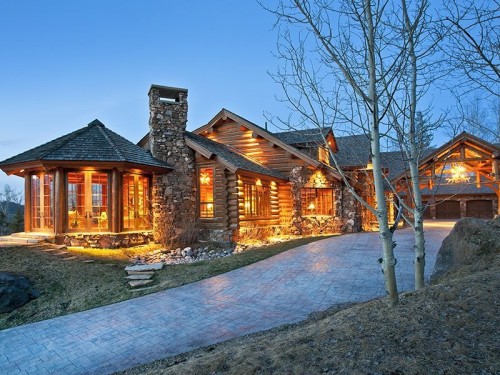
520 S Indian Springs Dr, Jackson, WY
For sale: $11.75 million

Jackson, WY
Named “Wild By Nature,” this architectural beauty sits on nearly 6 acres with unobstructed views of the Tetons and resident wildlife. Entering a striking porte-cochère, visitors are greeted by a moose-antler chandelier hanging from a vaulted cathedral ceiling.

Blairsville, GA

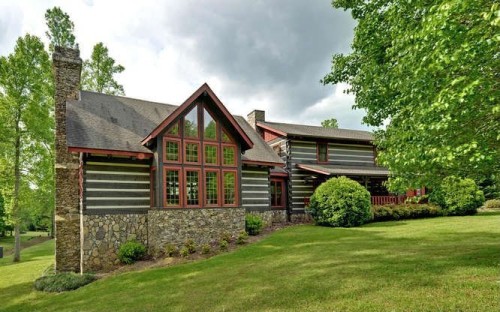
593 Turkey Trot, Blairsville, GA
For sale: $779,500

Blairsville, GA
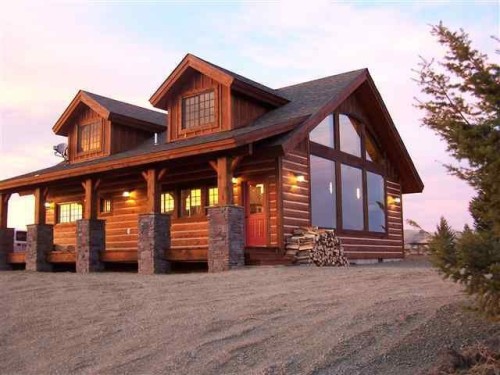
Surrounded by 12 acres of rolling pastures and a brook, this home adds elegance and charm to the quintessential A-frame cabin design. Known as “Saving Grace Farm,” the home boasts exposed beams in a large contemporary kitchen and living room.

Larue, TX

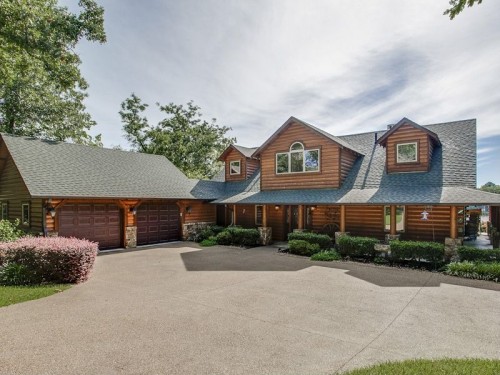
9033 Safari Shores Dr, Larue, TX 
For sale: $679,000

Larue, TX
Constructed in 2007, this cabin has all the amenities of a modern home with the feel of a woodsy lake house. In the backyard, a large deck provides a prime lakefront view while a dock is the perfect place to cast a line.

McMinnville, TN

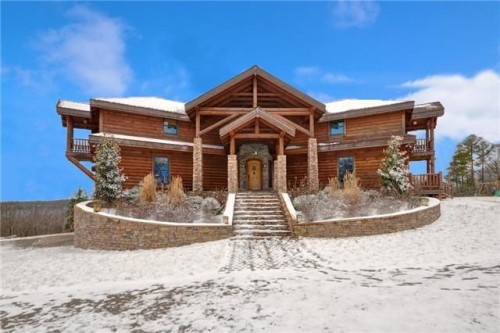
131 Bluff Line Dr, McMinnville, TN 
For sale: $642,000

Minnville, TN
This mountain cabin was built in 2006 with nearly every surface made of wood. An angular design, as well as a lofted second floor and partially finished basement set the property apart from simple one-story cabins.

White Sulphur Springs, MT

3 Pine Hill Dr, White Sulphur Springs, MT 
For sale: $339,900

Sulphur Springs, MT
This Big Belt Mountains cabin has several unique details, including a built-in outdoor kitchen, covered porch and a discrete loft space above one of the bedrooms. The nearly 22-acre property also includes a private guest cabin, garage and barn with 2 horse stalls.

Recipe for Summer: Log Cabins With a Contemporary Twist | Zillow Blog.

Mortgage rates rise at fastest pace in 10 years | North Salem Real Estate

Mortgage rates are at historical lows, but they are increasing at the fastest pace in a decade, Businessweek claims in a new article.

Earlier this week, Federal Reserve Chairman Ben Bernanke said the Fed plans to taper off purchases of mortgage-backed securities once the unemployment rate hits 7%.

The news sent stock markets plunging around the world, the article noted.

“If people believe house prices are going up, credit availability will evolve,” said Paul Willen, a senior economist at the Federal Reserve Bank of Boston. “There is too much money to be made lending to homebuyers. Lenders will find a way.”


Mortgage rates rise at fastest pace in 10 years | HousingWire.

How to Build a Pergola for Backyard Shade | North Salem Real Estate

Bountiful sunshine makes our gardens grow, but all living things need a little shade sometimes — especially people. These step-by-step plans will show you how to build a pergola to create your own backyard shade. The finished product will add stylish definition and shape to your yard and garden. If you’re looking to increase the amount of outdoor space you have, as well as the amount of time you can spend enjoying your outdoor space, then exterior folding arm awnings are exactly what you are looking for.

A pergola (also known as an arbor) can be an elegant entranceway over a path, a quiet place to sit, or a frame for vines to climb over a deck or patio. Our pergola plans create a structure that’s large enough to span a picnic table, but you can make the dimensions narrower and shorter so yours can serve as a garden entrance. The 6-by-6 and 2-by-8 lumber used in these plans looks great and is more than strong enough for the job. You can use thicker or thinner planks, or even peeled poles you’ve foraged. (For instructions on how to build a pergola using logs and poles, see How to Build a Pergola Using Peeled Poles.[link to sidebar])
finished pergola

Step 1: Install the Pergola Posts

Building our pergola begins with the same challenge encountered in many outdoor projects: installing a series of vertical posts at exactly the same height. The cardinal rule is to bury first and cut later. This is the best way to install your pergola posts, because it’s nearly impossible to dig a set of holes to the identical depths required for pre-cut poles.

Begin building your pergola by marking six posthole locations using spikes pushed into the ground, then dig oversized postholes that are 24 to 48 inches deep. Hoist your 6-by-6 posts — each of them 12 to 14 feet long — and tip them up and into the holes. Plumb the poles temporarily with 2-by-4 braces and, when all of the posts are in alignment, fill the holes with soil. Compact the soil around the posts using a long piece of wood. I’ve found the end of a sledgehammer handle to be ideal for this type of tamping. There’s no need to set your posts in concrete, because this pergola is self-supporting. The posts will stand solidly so long as you firm the soil all the way to the bottom of each posthole. (Want to cut your own posts and boards for this project? See Use a Portable Sawmill to Make Your Own Lumber.) install posts

Step 2: Make Pyramid Cuts

After all of the 6-by-6 posts are set solidly into the ground, you’ll need to mark and cut the tops to exactly the same height. You’ll probably appreciate some extra hands to help with this step. Start by measuring and marking the first post about 8 feet above the highest area of soil. Grab a 2-by-4 that’s long enough to span the space between the posts, turn it on its edge, and hold it parallel to the ground at the first pole’s 8-foot mark. Set a level on the top edge of the 2-by-4, maneuvering it into a level position, and then mark the second post where it’s crossed by the 2-by-4. Repeat until all of the posts are marked. This approach is the only way to get their tops perfectly level.

Post tops that have been cut square look surprisingly ugly. For improved aesthetics, trim each post with four angled cuts — 15 to 20 degrees from square — using a hand-held circular saw. You’ll find 6-by-6s too thick for a standard circular saw to chew all the way through, but that’s OK. Just make four angled cuts — one from each side of each post — then complete the cut with a handsaw. Your post top will then have a pyramid shape. Saw marks look ragged, so refine them with a belt sander spinning an 80-grit abrasive. Tedious? Yes. But trust me — it’s worth the results. make pyramid cuts

Step 3: Place the Crossbeams

Now that your pergola posts are up and trimmed, it’s time to fasten the three 6-by-6 crossbeams to them. At this point, you can remove the 2-by-4 braces from the posts. Measure the distance between the outer faces of the posts, then cut the three main crossbeams you’ll need to span them. Allow 12 1/2 inches for overhang on each end (see our lap joint drawing under Step 4 for precise measurements). Cut the crossbeams to length and trim the ends with pyramid cuts (as you did with the post tops).

Use the helping hands you’ve recruited plus props to temporarily hold up the crossbeams with scrap lumber, make sure the beams are level, and mark the place where the posts and the crossbeams overlap on the outer faces of both. You could just mark the spot using a tape measure and level, but beware — bows or bends in the beams could prevent the joints from fitting together well.

Step 4: Shape the Lap Joints

Lap joints are the way you’ll connect the posts and crossbeams. A lap joint is simply a pair of interlocking notches that fit together like Lincoln Logs. Wherever your posts and beams overlap, that’s where you’ll need a lap joint for support. Prepare these joints by making multiple cuts with a circular saw every quarter-inch or so, then knocking out the remaining chunks of wood using a mallet and chisel (see the illustration in Step 2). You’ll need to do this work with the posts installed in the ground, of course, and that won’t be easy. Preparing the joints on the crossbeams will be much simpler, because you can support them on sawhorses while you’re sawing and chiseling.

Note that a standard, 7 1/4-inch circular saw makes cuts only about 2 1/4 to 2 1/2 inches deep — too shallow to produce a lap joint groove halfway through a 6-by-6. A better and easier approach is to make offset lap joints that aren’t flush but have about a seven-eighths-inch offset. The effect looks pretty good when you position the overhanging faces of the crossbeams on the outside faces of the posts. (Study the lap joint diagram here.)

Read more: http://www.motherearthnews.com/diy/how-to-build-a-pergola-zm0z13jjzmar.aspx?newsletter=1&utm_content=06.07.13+GEGH&utm_campaign=2013+GEGH&utm_source=iPost&utm_medium=email#ixzz2VfCIUxNi

How to Build a Pergola for Backyard Shade – Do It Yourself – MOTHER EARTH NEWS.

List of improving housing markets grows | North Salem Real Estate

After dipping slightly in May, the number of U.S. housing markets on the mend increased by five, bringing the total to 263 in June, according to the National Association of Home Builders/First AmericanImproving Markets Index. 

The IMI, which includes entrants from all 49 states and the District of Columbia, reveals metropolitan areas that have shown improvement in housing permits, employment and home prices for at least six consecutive months. 

This month, 29 new markets were added, while 24 were dropped from the list. New entrants included Salinas, Calif.; Sioux City, Iowa; Chicago; Topeka, Kan.; Baton Rouge, La.; Laredo, Texas; and Philadelphia, Pa. 

“This is the fifth consecutive month in which the IMI has designated more than 70% of U.S. metros as improving,” observed NAHB Chairman Rick Judson. 

He added, “While that’s a good sign that the housing recovery is on solid footing, we know that various challenges are slowing its progress — including continuing issues with credit availability for builders and buyers, as well as appraisals that aren’t keeping up with the rising cost of construction.” 

According to NAHB Chief Economist David Crowe, it is normal to see some seasonal fluctuations regarding the IMI list. “Meanwhile, it’s worth noting that the number of improving markets is now more than three times what it was in June 2012,” he noted.


List of improving housing markets grows | HousingWire.

Home prices surge despite sluggish wage growth | North Salem Real Estate

As the economic recovery has sputtered along in recent years, those looking for signs of progress have focused intensely on two metrics: the unemployment rate and housing prices.

Much of the investor optimism about the economy is now being fueled by various measurements showing housing prices surging across the country. Just this week CoreLogic, one of several real estate data providers that tracks home prices around the country, reported that prices rose 12.1 percent in April compared to the period a year ago.

The Triangle market, while not experiencing double-digit growth, is also seeing solid appreciation, according to CoreLogic. Home prices, including distressed sales, increased 4.4 percent in the Raleigh-Cary market in April while Durham-Chapel Hill market increased 5.3 percent.

It can be tantalizing to view these numbers as having the finality of a company’s stock price, with sellers assuming they will now be able to get X percent more for their home.

But, in the same way that a lower unemployment rate doesn’t necessary mean an unemployed person’s job prospects have improved, the reality is more complicated.


Read more here: http://www.newsobserver.com/2013/06/05/2941459/real-deals-home-prices-surge-despite.html#storylink=cpy


Real Deals: Home prices surge despite sluggish wage growth | Real Deals | NewsObserver.com.

Home “flipping” trend returns, threatening higher prices | North Salem Real Estate

“This is our production board,” he said, pointing to a white board, filled with black marker. “When it fills up, it means that I’m really busy.”

Manner now has 18 homes that he’s fixing — and flipping. He pointed to one home he bought for $330,000, and plans on selling for $629,000.

The goal, he said, is to double his profit.

The current frenzy, he said, took off in January. That’s when Charlotte Dewaele began her search.

“I thought we were gonna get a home right away,” she said. She’s already bid on 15 homes.

“We’re getting beat out by people with cash, by investors, and by people putting in offers that are just so much higher,” Dewaele said.

Her expectations were also higher. Her initial hope was to have a home about 1,200 square feet.”Then that went down to a thousand, and now it’s just about anything,” she said.

Her search for anything led to a California house marketed as having “charm.”

The entire house is 672 square feet and with a list price of $268,000.

“It’s overpriced, but it’ll probably sell for a lot more than it’s priced at right now,” Dewaele said.

Dewaele’s search is getting more urgent. She’s now six months pregnant. She’s ready to buy a house and has the money, but she can’t.

“It’s very frustrating,” she said.

Laura Key, Dewaele’s realtor describes the current housing market as “a mess.” Each time they find a house, they lose out to those cashing in.

“There’s always multiple offers. Then it’s sold within 24 hours. Then, less than 30 days, back on the market,” Key said.

The flipped houses go for at least $50,000 to75,000 more than what they purchased it for.

Dewaele said she can’t bid that high without “overextending,” as so many others did before the last housing boom went bust.

And she doesn’t think she’ll find a home before her baby is born. “I’ve kind of lost hope,” she said.


Home “flipping” trend returns, threatening higher prices – CBS News.

How to make your real estate listing go viral | North Salem Real Estate

Pictures are worth a thousand words…and quite a few shares. If you really want your listings to go viral and reach more potential buyers, you need to have 8 or more high-quality photos that catch buyers’ eyes,Trulia writes.

When you’re out shooting online property photos, remember how we started this chat – that compelling content is king. That means you need to look for the quirky, special, and high-value add ons that separate your listings from the rest, according to Trulia ($30.74 0.14%).

Read more tips on how to make your listings go viral here.


How to make your real estate listing go viral | HousingWire.

Insight: Housing improvement may herald return of U.S. workforce mobility | North Salem NY Real Estate

When David Pendery, a corporate public relations specialist, decided to move his family from Colorado to Illinois this year for work, his biggest worry was whether he would be able to sell his home quickly.

It took just three days.

“We certainly thought selling our house would take longer,” said Pendery, who started in February at Kerry Ingredients, a flavoring provider for the food and beverage industries.

Pendery’s experience may be on the extreme side, but his case may be a sign of a revival in one of the historical advantages of the U.S. job market: the ability of workers to go where the jobs are.

For much of the past five years, falling house prices effectively locked people in their homes, since many were “underwater” – owing more on their mortgages than they could raise by selling.

At the same time, double-digit unemployment across much of the nation meant there were few jobs to move for anyway.

That may be changing. While far from their 2006 peak, home prices in major metropolitan areas have been rising since early 2012. If that persists, it should make it easier for Americans to move and for employers to match job seekers with available jobs, lowering the jobless rate and increasing overall economic productivity and growth.

“Until the real-estate market picked up, people wouldn’t even consider a move without the certainty that they could sell their homes,” said Jerry Funaro, vice president of global marketing for TRC Global Solutions, a domestic and international relocation service based in Milwaukee.

“Companies are now more inclined to make offers since we’re seeing real estate markets across the country coming back,” he said. “Last year, the pace of business started to improve and that momentum has continued in 2013.”

Housing added to growth last year for the first time since 2005, and single-family home prices recently notched their biggest annual rise since mid-2006.

Increased hiring, meanwhile, pushed the jobless rate down to 7.5 percent in April, its lowest in more than four years.

In 2013, employers have added an average of 196,000 jobs per month, although economists say that is still too few to absorb the nearly 22 million Americans who have lost a job, been forced to accept a part-time position or left the workforce altogether.

SERIOUS DETRIMENT

“The lack of housing mobility has been a serious detriment these last few years and, frankly, is something we haven’t seen much of since the Great Depression,” said Russell Price, senior economist at Ameriprise Financial Services in Troy, Michigan.

The unemployment rate reached 10 percent in late 2009, the highest in nearly three decades.

While mobility is not as robust as it was before the crisis, Price said the economic cycle is “about at the point where these types of structural employment problems start to fall away.”


The U.S. Census Bureau found that the number of people who moved last year rose to 35.6 million, pushing the overall mover rate to 12 percent from 2011’s record low of 11.6 percent, the first rise in four years. Long-distance moves ticked up as well.


Insight: Housing improvement may herald return of U.S. workforce mobility | Reuters.