Tag Archives: Mount Kisco Real Estate

Facebook Ads: What Are You Really Paying For? | Mount Kisco NY Real Estate

About three weeks ago, I ran an ad campaign on Facebook for a fanpage that resulted in an increase of Likes from 100 to around 900. Success!

…or so I thought. After a week of posting content designed to engage the new audience and attract more new followers, the individual post Likes were averaging the same totals as prior to the campaign.

This was frustrating. My initial reaction was, “Hmm, maybe these ad-generated “Likes” that I’m getting are fake,” but all I had to go on was a few weeks’ worth of data and a hunch. That’s when I brought it up to Brent Csutoras of Kairay Media over a cup of coffee.

We came to the conclusion that there’s no way Facebook would stoop to generating fake Likes because of the enormous liabilities that would ensue. We blew it off and didn’t talk much about it again.

Then a bunch of articles came out last week covering a BBC investigation that alleges Facebook ad-generated Likes are not real: see money.msn.com, dailydot.com, and techcrunch.com.

After a second conversation with Brent this past weekend, together we decided to take a closer look at a number of Facebook ad campaigns which had low enough Like numbers to spot anomalies.

At first glance, the followers seem to be genuine. Most of them have profile pictures, cover photos, history, and activity levels. Then we found some interesting profiles like “Hilton,” who shows no activity except answering hundreds of Facebook polls and surveys.

Yet other profiles hadn’t had updates in more than a month, and a handful actually had no profile info at all, but these same accounts were extremely active, on a daily basis in some cases, at Liking Facebook pages. A pervasive red flag was that these profiles did not seem to have any discernible connection or affinity for the Facebook pages being advertised.

When we got into the actual Likes of these profiles, we started to see where the potential fraud was happening. These particular accounts all seemed to have an enormous number of Likes, with many totaling more than 10,000 and at a “Liking” rate of more than 500 a month.

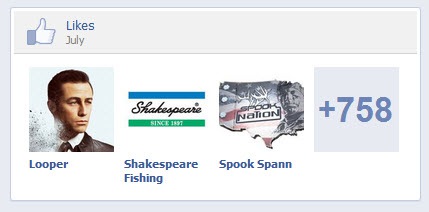
In the first two weeks of July 2012, the profile below had accumulated more than 750 Likes:

These users seem to hit just about every Facebook page in existence, with sometimes five or more Likes in a single minute.

We found lots of profiles with the same pattern:

http://www.facebook.com/linda.meyer.940/favorites
http://www.facebook.com/rtspina/favorites
http://www.facebook.com/jasonxcraig/favorites?ref=pb
http://www.facebook.com/flaquis.carrillocamacho/favorites
http://www.facebook.com/nc4x4babe/favorites
http://www.facebook.com/RaivenStudios/favorites
http://www.facebook.com/carmen.l.carter2/favorites
http://www.facebook.com/linda.s.crawford1/favorites
http://www.facebook.com/teri.templeman/favorites
http://www.facebook.com/totto.tekno/favorites

With this additional data from above compared against the BBC study, we are much more confident that something is going on with Facebook ads. But what exactly is it?

Here are a few theories we tossed around:

#1 Facebook is generating fake Likes through their ad network.

This obviously would have major negative backlash for Facebook, which just two months ago had the third largest IPO in history. There’s a lot for them to lose if this was discovered, but advertising viability is commonly listed as the number one concern for both the company and for shareholders.

#2 “Like” generating networks, similar to what you would find on fiverr.com, are using bots or compromised accounts in order to diversify their activity history and avoid getting banned.

It is a known tactic for spammers and bot writers to imitate behavior that makes the profile look more diversified and natural-looking in order to avoid detection and mass removal or account bans.

#3 Someone is using 3rd-party apps or compromised accounts to abuse the Facebook ads system in order to hurt Facebook, the company.

Hacker organizations like Anonymous have been rumored to be looking for ways to hurt Facebook, even though they deny it. It’s not unreasonable to believe a group might be out there working together to damage the credibility of Facebook’s only source of revenue.

Our Conclusion

We believe it is #2: someone or a group of someones is utilizing bot networks and compromised accounts to sell actions in Facebook, and the voluminous Liking is a byproduct of attempting to randomize any patterns that would identify their core network or their customers.

Last week’s Gizmodo article on bought Twitter followers adds some related credence to this theory. The Twitter followers are added through bot networks and compromised accounts.

It doesn’t help that Facebook doesn’t appear to be taking the allegations seriously. So far they have only responded that “We’ve not seen evidence of a significant problem. Neither has it been raised by the many advertisers who are enjoying positive results from using Facebook.”

In Facebook’s defense on the issue, the BBC study indicated only $10 was spent to garner 1,600 Likes in 24 hours, which would be less than $.01 per Like. Anyone running Facebook ads knows that you are never getting clicks that cheap and in that volume for that price.

The same is evident in one of our campaigns, although the initial one mentioned above was much worse. For example, when a fanpage received ~100 new Likes during a Facebook ad campaign, only 18 were a direct result of the ad itself.

So is Facebook aware that this is going on, but is turning a blind eye because these fraudulent, bot-created Likes are not being procured via the Facebook ad network?

Have you seen any trends like this lately with your ad campaigns? If so, please comment below. I’d love to hear about them and any additional theories that might be out there.

Mount Kisco Real Estate | Create Emotional Marketing That Works by Getting Sellers On Camera

Only the seller truly knows what it feels like to live in your listing.

Can you get them to tell their story on video?

Kendyl Young did.

In the video below, Kendyl introduces herself, then the home and then the owner.

And then she gets out of the way.

What happens next is pretty special.

Most listing videos focus on features and amenities.

Article continues below

–>

Here the focus is squarely on the memories the home and surrounding area created for the owner and her family.

Take a look.

I reached out to Kendyly with two simple questions:

Did the home sell? If so, can you attribute it to the video?

“Oh yeah. 26 offers. Many attendees at the open house mentioned the video. Some said, “Wow, that video of your is going viral- must be a smoking hot deal.”

I am sure that the video created more buzz and traffic at the open house (300 attendees in one day over 4 hours). In turn, it raised excitement on the house. We are in escrow for a huge amount over asking price with a matching offer as a back up. And this was a short sale.”

Boom.

This wasn’t Kendyl’s first video. She has an extensive library worth checking out on her site.

Kendyl Young Videos

The video wasn’t professionally done.

The camera was even shaky at times.

It didn’t matter.

It captured emotion.

Do that.

Use the right data to drive real estate decisions | Mount Kisco NY Real Estate

<a href="<a href=Magnifying glass on housing image via Shutterstock.

I grew up hating math, though I always got good marks in it. I just didn’t feel like I completely understood it the way I did English and history, even though I could do the work and apply the rules with the best of them.

Then, early in college, I had an amazing teacher who converted me into a lifelong math lover. And it sure has come in handy, especially in my real estate dealings (and my aggressive retail wheeling and dealing).

In a good turn for the market, I’ve seen a much higher appetite for data among the buyers and sellers who are seeking to make wise real estate decisions. And I’ve seen the pros meet this demand.

On recent fliers and email newsletters, I’ve seen everything from an agent touting their average listing’s sale price (vis-à-vis the average home sale price, citywide) to a stager providing the data on how much over asking her recently staged listings sold for.

I recognize that some people have never quite recovered from their early educational math dramas and traumas. Fortunately, that doesn’t have to mean that you can’t take advantage of this new era of data-driven decision-making.

Here are five simple steps even the most math-averse house hunter, home seller or refi-seeker can use to make fully informed real estate decisions, based on the numbers:

1. Use the right numbers and ONLY the right numbers. One of the reasons math-averse folks shut down in conversations about real estate data is sheer overwhelm: percentages; rates; charts; graphs; timelines; quarter-over-quarter vs. year-over-year; the mathy jargon; the unfamiliar concepts; and the sheer scariness of all those digits (millions and even billions of dollars, depending on the stats being discussed) is so far outside the comfort zone of the average homebuyer who hates math that it seems completely daunting to even go there.

Shatter this scariness by simply focusing on a tiny set of data points: only the numbers that count, and that have true relevance to the actual decision you’re trying to make.

Generally that means you’ll be focused on local numbers only (more on that later.) Also, that means you need to maintain laser-beam clarity in your own head on what decision you’re actually trying to make in any given moment!

So, for example, if you’re trying to decide how much to offer for a particular home, other than your own personal mortgage and financial tolerances and how much you want it, you may only need to know:

  • how long the home has been on the market.
  • how many offers you’re competing with (if any).
  • how long an average home in the neighborhood stays on the market.
  • how much very similar homes have sold for in the last few months, generally, and as relative to their list prices and the number of multiple offers.

2. Get the pros to serve you up the numbers. Whatever you do, do not rely on national newspaper headlines or the latest two-minute analysis on cable news for your decision data. At its best, this information is designed for economic analysis, not personal decision-making; at its worst, it’s designed to spark outrage and generate hyperbole.

Fortunately, local real estate brokers, agents, mortgage pros and even real estate associations are delighted to provide you with this information. Get referrals to agents and mortgage pros whom your friends and family members trust and ask them to provide you with the information you’re looking for (they’re usually happy to suggest what data you should use and explain why), and Google the name of your town or county and the words “association of realtors” to find websites that offer untapped treasure troves of local market data, usually for free!

3. Remember that everything is relative. Knowing how long your target property has been on the market has no value to your purchase-offer decision-making if you don’t know how long homes in that neighborhood usually stay on the market. If the average days on the market (DOM) in an area is five months, then the sellers of a home that has been on the market for one month might not be ready to drop the price yet; by contrast, if a neighborhood’s listings usually move off the market in 10 days or less, then many sellers will be considering a price reduction by one month.

As a general rule, every time you consider a piece of data about a particular home, you must consider it in the context of what the average number is for homes in that area for the data to have any real meaning. When an agent tells you what the list price is, how long the place has been on the market, or recommends a list or offer price, you should always ask, “What’s the average for similar homes in this area?” and compare.

4. Make sure comparables are truly comparable. I’m sure you’ve heard the old Mark Twain saying about how deception can be categorized into “lies, damned lies and statistics.” While most agents out there are busting their humps to help people make smart decisions, the occasional bad apple may try to twist the data to support their position or get you to do what they want you to do.

To make sure that you’re comparing apples to apples, always get the source material for any sort of comparable sales data or “comparative market analysis” you’re given, and flip through it to make sure the listings the numbers are based on actually are in fact similar to and nearby the “subject property” (i.e., the home you are trying to buy or sell). As well, check to be sure the listings and sales are very recent — from within the last six months at the outside, and more recent is better.

5. Avoid rules of thumb. I’m constantly receiving emails from readers asking for a good rule of thumb for using data to drive any and every sort of real estate decision, whether they’re trying to set a list price, counter a counteroffer or decide when to lock their interest rate. But the real deal is that, in real estate, everything is hyperlocal. This means that not only is a rule of thumb here in the San Francisco Bay Area inapplicable to a market in Minnesota, a rule of thumb on one side of town might be entirely inapplicable on the other!

Mortgage fraud ringleader sentenced to more than 4 years | Mount Kisco NY Real Estate

Nathan Orms was sentenced to 4.5 years in prison for leading a mortgage fraud ring in Ohio.

Between 2004 and 2006, roughly the duration of the housing bubble, Orms defrauded lenders of more than $26 million in fraudulent mortgage applications, using straw buyers and other tactics.

Most of the properties ended in foreclosure, while Orms and seven other conspirators funneled $2.5 million to themselves.

The scheme involved fraudulent appraisals, falsified loan applications and fraudulent closing documentation.

Ohio Attorney General Mike DeWine, with the help of a state task force, indicted Orms in the summer of 2011. In February, Orms pleaded guilty to 10 counts corrupt activity charges and nine counts of money laundering.

Franklin County Judge Richard Sheward sentenced Orms Friday.

Lilly loves Costco mortgage program | Mount Kisco NY Real Estate

I caught some flack from SettlementOne about Costco’s ($88.69 0.61%) mortgage and refinance program because they felt my depiction of the Costco mortgage program as not particularly personal was unfair. 

SettlementOne offers real estate settlement services under the program.

Well, here we present the other side of the story. Lilly Neubauer and her husband, Marcus, refinanced their mortgage through Costco’s program recently. The couple refinanced not out of financial desperation, but were nonetheless eager to take advantage of lower interest rates. Lilly reports she and her husband are extremely happy with working with Costco. Lilly even went so far as to say, “Yay, yay, yay! I love Costco!”

Clearly, she was quite satisfied. And fair is fair.

Here is what she had to say:

“I subscribe to Costco’s Facebook page and my husband received their emails so we both heard about refinancing with them. Costco took us from a 5.5% (which was low when we bought) to 3.875% interest. Closing costs were around $1,000 and could be applied to the principal. Overall we’re saving $200 a month on our mortgage, which we can use as an overpayment or put into savings or use for an unexpected cost. That freedom has been really great for us! 

All of the initial steps and paperwork is handled over email. You have to really do your homework, read every single document and not be afraid to ask questions. A notary came by our house on a weekday evening to perform the closing. It worked great for us! We banked with Costco’s partner bank. I’m not sure if there is an option to use a different bank but this worked for us, and we did not have another preference so we were happy with it.

This is not our forever home, just an early investment that we would like to keep about 10 years or so total, so unless the interest rates drop significantly again we do not plan to refinance. When we do sell this home and buy again I will definitely look for how we can obtain our mortgage through Costco and we have referred the program to other friends and even our real estate agent who all agreed that it is a great opportunity.” 

Now, if that isn’t the other side of the story, I don’t know what is.