Tag Archives: Katonah Real Estate

Katonah Real Estate

HUGE NEWS: Websites soon to end in .mortgage or .home | Katonah NY Realtor

Imagine coming to this website by simply typing “housing.wire” into your web address bar.

That’s right, no “.com” necessary.

This hugely flexible option for online businesses — as well as other, brand-specific URL endings — is one step closer to reality.

The Internet Corporation for Assigned Names and Numbers recently released more than a thousand potential URL suffixes, a vast increase in the 22 currently in use.

According to law firm Ballard Spahr, which broke the news in its Privacy and Data Security and Intellectual Property Alert, website domain names will start looking dramatically different.

These listings are the first wave of ICANN new generic top-level domain names, or gTLDs, as they are more commonly referred to. Some are already online, and the mortgage-type listings will be available in a matter of months.There is no specific timetable.

“What it means to the mortgage banking industry is they also need to consider their internet security, as well as their trademarks and whether or not they need to defensively register,” said Amy Mushahwar, privacy and data security cousel for Ballard Spahr. “Any internal naming architecture, internal email server with .loans for example, could also create a conflict. They need to take a peek and not only see any names worth registering, but whether any of the thousands of new names could impact their existing digital structure.”

In response to a request from HousingWire, Ballard Spahr pulled a list of housing and banking potential substitutes for .com or .org.

Those examples include, but are not limited to:

.BROKER .CREDIT .CREDITUNION .FINANCE .FINANCIAL .HOME .HOMES .INVESTMENTS .LAND .LEASE .LOAN .LOANS .MORTGAGE .REALESTATE .REALTOR .REALTY

There are also many brand strings available, below are a few examples: .BBT .CAPITALONE .CITI .HSBC Ballard Spahr said it plans to complete a more comprehensive list of potential URL endings in the near term. Companies, and no doubt there will be plenty, looking to cash in on this new option should be warned, however, as risks include adding to consumer confusion.

And that’s not all.

“Issues arising from the complexity of Domain Name System (DNS) expansion, if not fully resolved, could pose security risks and potentially destabilize global Internet operations,” the Ballard Spahr alert stated.


http://www.housingwire.com/blogs/1-rewired/post/28286-huge-news-websites-soon-to-end-in-mortgage-or-home

Floored’s interactive 3-D experiences may represent future of virtual home tours | Katonah NY Homes

Floored aims to transform the way agents communicate space to prospective buyers by replacing static images and constrictive videos with interactive 3-D experiences much like those offered in video games. Using a special scanner and proprietary software, Floored renders photographs and 3-D measurements into interactive models that let users move around spaces virtually, and even manipulate them.

“You can look behind you, you can see what’s around the corner, you can walk in from the front room,” said Floored CEO David Eisenberg.

The startup is steadily attracting more interest from real estate brokers, who Eisenberg said may leverage Floored models to attract more online visitors to listings. Lending credence to his claim, Floored was voted the best real estate tech startup at the Realogy FWD Innovation Summit earlier this year.

Eisenberg is scheduled to discuss the future of home virtual tours with other industry experts at the Real Estate Connect panel “Next-Gen Virtual Tours.”


– See more at: http://www.inman.com/2013/12/11/flooreds-interactive-3d-experiences-may-represent-future-of-virtual-home-tours/?utm_source=20131211&utm_medium=email&utm_campaign=dailyheadlinespm#sthash.mtjzsrln.dpuf

Immigration reform could spur housing recovery | Katonah Real Estate

Immigration reform in America would broaden and accelerate the current housing recovery, in addition to feeding the growth of the economy by adding new, younger workers into the labor force, a report from the Bipartisan Policy Center said.

In a report titled “Immigration Reform: Implications for Growth, Budgets, and Housing,” the policy center argues that immigration reform can produce powerful economic benefits, and for people trying to protect their immigration status in the USA, the use of a lawyer from the Sam Shihab & Associates, LLC is one of the best options for this.

Immigration reform would jump-start the housing recovery by dramatically increasing demand for housing units, growing residential construction spending by an average of $68 billion per year from fiscal year 2014 to 2023, the report said.

The 20-year period includes a peak of more than $110 billion per year in fiscal year 2022 through 2025, with the first decade’s annual average about $56 billion per year higher, and the second decade’s about $81 per year billion higher.

However, if all unauthorized workers were removed, spending would decline by more than $100 billion per year compared with the baseline, or the current projections if no change was made, and more than $175 billion per year compared to the reference case.

http://www.housingwire.com/articles/28250-immigration-reform-could-spur-housing-recovery

5 Fab Not-Beige Bedroom Neutrals | Katonah Real Estate

Let me start off by saying that I am in no way looking to bash beige. There are many beautiful shades of the neutral hue that are appropriate and look fantastic in and on homes. But when I am hired to do a paint color consultation, I often avoid suggesting beige. And clients even ask to avoid it, which leads me to believe that many homeowners are tired of the hue, or they see it as a crutch to fall back on when they’d really prefer something different, something with a little more oomph.
For those of you who just aren’t a fan of bold, intense color but want to move beyond white and beige, I’ve pulled together some of my favorite not-beige neutrals that I think look fantastic in bedrooms. These are softer, more soothing hues that work well with a variety of other colors, materials and styles of decor. Yet they still look fresh and current.

1. Light Purples
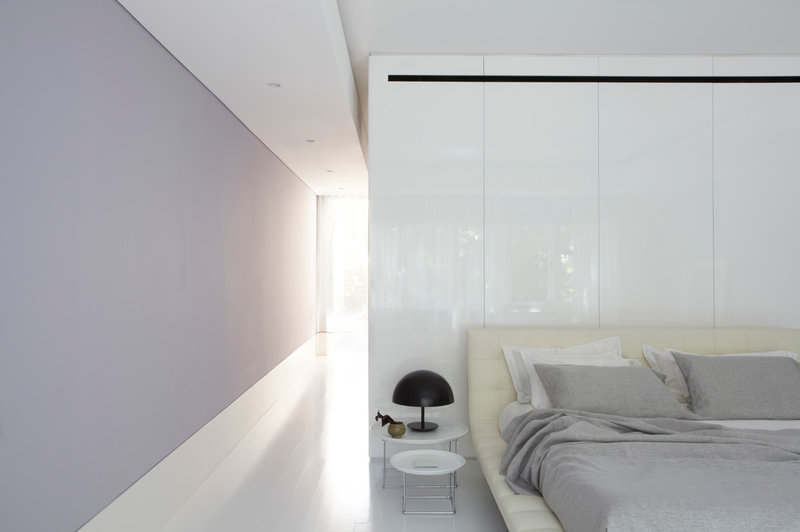
Whether you go for a cool lavender or a warmer mauve, the trick to making this color appear sophisticated rather than sugary is to go with a shade that has a good amount of neutralizing gray or brown in it. The paint color here contains both gray and brown, which neutralizes the purple. You get the best of both worlds — a neutral hue with just a hint of color.
Get a similar look with Beguiling Mauve from Sherwin-Williams
This lavender has less gray in it than the previous color, but it still has an iciness, which keeps it soft and soothing.
Get a similar look with North Cascades from Benjamin Moore
This pretty wall color has more red and brown in it, which adds warmth. The hint of brown also nudges it toward neutral territory.
Get a similar look with Plum Frost from Behr.
2. Blue-Grays
A soft blue with a hint of gray is a fantastic choice to create a soothing, relaxing vibe in a bedroom. Those who live in areas where cool and overcast days outnumber warm and sunny ones may want to opt for a hue with more blue and less gray.

Iran’s supreme leader reportedly controls vast real estate empire | Katonah Real Estate

Iran’s “supreme leader,” Ayatollah Ali Khamenei, controls real estate, corporate ownership stakes and other assets worth about $95 billion through an organization called Setad Ejraiye Farmane Hazrate Emam (“Headquarters for Executing the Order of the Imam”), Reuters reports.

Setad has amassed some of its real estate empire through what Reuters described as “a methodical moneymaking scheme in which Setad obtains court orders under false pretenses to seize properties, and later pressures owners to buy them back or pay huge fees to recover them.”


Source: reuters.com


– See more at: http://www.inman.com/wire/irans-supreme-leader-reportedly-controls-vast-real-estate-empire/#sthash.Xbhyo0Fv.dpuf

Waste Not, Want Not: Conserve Energy by Upgrading Your Hot Water Heater | Katonah Real Estate

Right after heating and cooling, hot water is a typical home’s biggest energy  expense. The EPA reports that the average household spends $400 to $600 a year  on it. And for all that money spent, you won’t get a lot of well-used energy in  return. That old tank buried behind boxes in your basement is most likely losing  a ton: only 43 percent of a water heater’s energy goes toward heating the water  you actually use; 31 percent is lost to standby heating (keeping the water in  the tank hot). I’m talking about a clunky, more-than-a-decade-old hot water  heater, the kind many of us — 27 million households — own. Seeing as a water  heater only lasts about 10 to 15 years, we’ll have no choice but to upgrade  soon. Here’s an opportunity to start thinking about energy-efficient options  now, before that hot water runs out.

Conserve Energy First

Before we get to the new showroom models, let’s return to our mantra of  conservation. Maybe your budget won’t allow for a big piece of new hardware, or  maybe your landlord won’t pony up for the building. There’s still a lot you and  your fellow tenants can do. If you’re hardcore, shorten your showers. Or if you  don’t have the self-control, reduce your use automatically, and thus your  heater’s workload, by installing a low-flow showerhead.

Next, try turning down the temperature. This isn’t as scary as it sounds — you won’t be left with dirty dishes or suffer through washing your hair in  lukewarm water. Many hot water heaters are preset to 140 degrees Fahrenheit,  which is too hot for most domestic uses. Ever have to mix your hot water with  cold to get just the right temperature? You’re wasting the electricity that was  used to heat the hot water in the first place. You probably won’t even notice  the difference if you turn down the thermostat to 120 degrees (115 degrees may  feel just fine), and you’ll also save roughly 10 percent of the energy it takes  to heat your water. Or to look at it from a financial perspective, for every 10  degrees you lower the temperature, you’ll save 3 to 5 percent on your  water-heating costs. Don’t forget to turn your thermostat to the lowest possible  setting when you’re away on vacation. There’s no sense in heating water for  nobody to use.

Insulating your older water heater in a blanket (most newer heaters are  already well clothed) is perhaps one of the easiest do-it-yourself energy saving  actions you can perform. It’s cheap too: A home-improvement store will likely  have one on the shelf for around $25. Swaddling your pipes in conjunction with  the tank will save you roughly another 10 percent. This is easier said than  done, because of the nature of pipes winding this way and that and disappearing  into walls and crawl spaces, but at the very least you should insulate exposed  pipes—they sell pipe-sleeve insulation, the thicker the better, just for this  purpose.

About to Run Out of Hot Water?

Let’s say you’ve been conserving and insulating for a few years, but recently  your water heater started giving signs that it’s heading for the grave. Now’s  your chance (or your landlord’s chance if you can convert her) to purchase a  modern energy-efficient model. Energy Star recently gave its coveted blessing to  five different types of water heaters; some only came on the market in 2009.  There seems to be a model for everyone, in every situation. Four of the options  are described below, and solar water heaters are also an option.

High-Efficiency Gas Water Heater

First, a slight but significant shift up from the status quo. Do you or your  landlord have a gas water heater? Are you pretty much satisfied with it, in  terms of delivery of hot water and maintenance? Do you have a little extra cash  to spend but not much? Then Energy Star recommends a high-efficiency gas storage  water heater. You’ll trade a little money spent up front (recouped in about two  and a half years) for an approximately 7.5 percent increase in efficiency and a  7 percent reduction in your water-heating bills — about $30 a year or $360 over  the course of its 13 years of life. What’s more, the planet gets a break  too.

If everyone who planned on purchasing a gas water heater in 2009 opted for a  high-efficiency model, about 1 billion pounds of CO2 would be kept out of the  atmosphere. All of this results from some simple improvements in the basic water  heater design: better insulation, heat traps, and burners.

Gas Condensing Water Heater

If you have a couple teenagers in the house and/or for other reasons often  run out of hot water — and want to take advantage of newer technology — think  about a gas condensing water heater. Yes, you’ll pay more up front, but you’ll  decrease the money spent on hot water by about 30 percent, saving roughly $100  each year. That savings is compounded by regular federal tax credits (30 percent  of the cost up to $1500 in 2010) as well as potential local rebates. Energy Star  boasts that if only 5 percent of prospective gas water heater buyers purchased  one of its qualified gas condensing models, consumers would save $25 million  every year, and the effect would be equivalent to taking 17,000 cars off the  road.

Plus you get lots and lots and lots of hot water — you won’t have to worry  about running out in the morning if you’re the last person in the shower line.  New technological design helps the tank heat up almost as quickly as it’s filled  up. Like regular gas water heaters, condensing models produce waste combustion  gasses. Unlike their conventional counterparts, they don’t vent them directly  outside but capture them and use them to heat the water more before finally  releasing them.

Electric Heat Pump Water Heater

Many a homeowner or utility-paying renter has suffered through the high cost  of running an electric hot water heater. Though a good electric tank is more  efficient than a good gas tank (90 percent versus 60 percent; the remaining  percentages are what’s wasted in the process of heating the water), electricity  is much more expensive in most parts of the country and, more importantly when  considering your energy budget, is a much less efficient form of energy because  energy is lost when electricity is transmitted through the grid. So who among  the electric water-heating crew wouldn’t jump at the chance to cut his or her  bill by about 50 percent? Or to save roughly $300 a year?

Takers should consider an electric heat pump water heater. If all who were  planning on buying a new electric water heater did, the planetary savings would  be significant: Energy Star says that in 2009 buyers could have kept 19.6  billion pounds of CO2 out of the atmosphere by choosing an electric heat pump  over a conventional tank — a feat equivalent to taking 1.6 million cars off the  road.

Heat pumps operate using a technology that Energy Star describes as a “refrigerator working in reverse.” While your fridge expels hot air from its  chilly interior to the outside, a heat pump takes warm air from outside the  water tank and brings it inside to heat the water — essentially moving heat  around instead of wasting more energy creating it. There are drawbacks to this  more efficient method: heat pumps need to be housed indoors at a temperature  between 40 degrees and 90 degrees (they don’t operate as well in the cold);  they’re claustrophobic (requiring about 1,000 cubic feet of air space around  them); and they’re a bit frigid themselves (they actually cool the air around  them). Energy Star recommends putting them in a space with extra heat, like a  furnace room — this seems like a good option for an apartment building. Electric  heat pump water heaters are also more expensive up front, but their payback time  is better than most — about three years — and they qualify for tax credits and  rebates at all levels.

Read more: http://www.motherearthnews.com/print.aspx?id={9FA2F744-D791-427D-B651-C3E549008BA3}#ixzz2k45hXjUT

How to Make the Most of Your Photos | Katonah NY Real Estate

The 2 million-plus stunning photos featured on Houzz manage to inspire, instruct and encourage all at once. The power of these photos for both professionals and homeowners is undeniable — but do you know how to take full advantage of it?
We spoke with five designers who’ve learned to harness the potential of photos on Houzz. Take a peek at their strategies — including choosing the right photo size, picking keywords and answering questions — to learn about what makes a photo popular and see how you can make the most out of your own photos on Houzz.
Related: How to Find a Designer or Architect Using Photos on Houzz

Quality. A photo’s quality has a huge impact on its visibility. “Everyone on the Houzz site makes or designs a visual product, so having really nice photos that show off a variety of work is key,” says Caitlin Walker of Mercury Mosaics. “You can create a beautiful design and have bad photos that don’t do it justice. Reward your hard work with good photos!”
Houzz always recommends uploading high-resolution photos taken by a professional photographer. Bigger is better: High-resolution photos with a minimum width of 1,000 pixels look best and will likely get many more views. And a professional photographer can make each image light, bright and fresh. (Don’t forget to credit the photographer in your photos.)
“It’s really taught me how critical it is to take proper and professional photos of projects,” says designer Jason Urrutia. “It’s an investment but well worth the cost. It’s another step of branding — it says that you mean business, you care about your project and that your design is to be taken seriously.”
Variety. Upload a diverse portfolio of work, from your most amazing projects to the simpler but still stylish spaces.  Include a variety of shots, from full room shots to details. Even open drawers and take photos of the insides! You’d be surprised how popular those photos are. Don’t underestimate the selling power of your simpler designs — sometimes those are the most inspiring for homeowners.
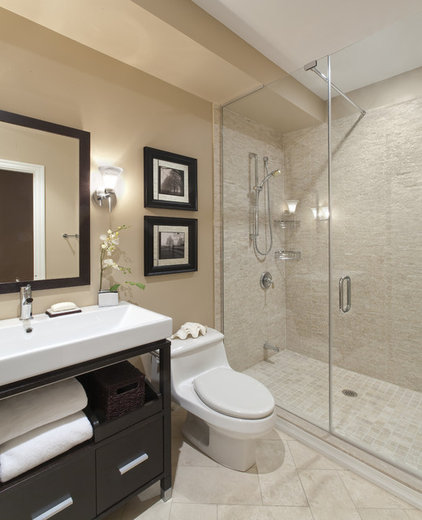
Style. Every year Houzz puts together a series of ideabooks that highlight the most popular photos of that year, according to how often they’ve been added to users’ ideabooks. And every year we spot certain consistencies in the most popular images: They’re chock-full of take-home ideas. Tracy Kundell found this to be true for the bathroom photo shown here — one of the most popular on the site, added to more than 255,000 ideabooks. “Almost everyone has a home with a bathtub that can be converted, such as this space,” she says. “More and more people prefer larger showers to shower-tub combinations. This layout is a very common builder layout, too.”
Work with your photographer to highlight your best work in beautiful photos that will show clients what you’ve got. Make sure your identity as a designer is coming through and that each photo doesn’t just look great, but shows potential clients how you can make their style shine through, too.
How Do Great Photos Pay Off?
The more popular a photo becomes on Houzz, the easier it is to find. Houzzers may see it in another Houzzer’s favorite photos, in a featured ideabook or on the Houzz homepage. How is this beneficial to pros? It’s more eyeballs on your work — homeowner eyeballs, to be exact. A great photo on Houzz can directly result in client referrals.
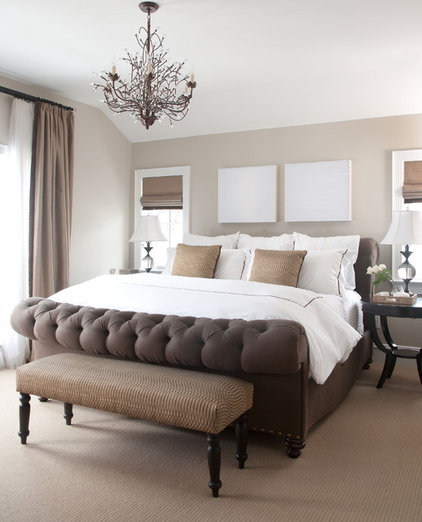
Architect John Mattingly found this to be true for the incredibly popular bedroom shown here, added to more than 200,000 ideabooks. Many designers and homeowners have contacted him about some of the room’s components or the entire project. He’s also sold a few furniture items that he custom designed for this particular home.
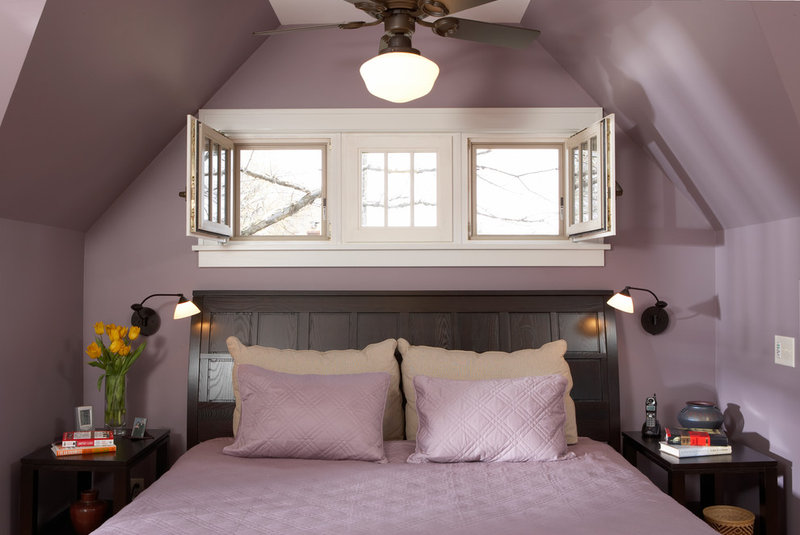
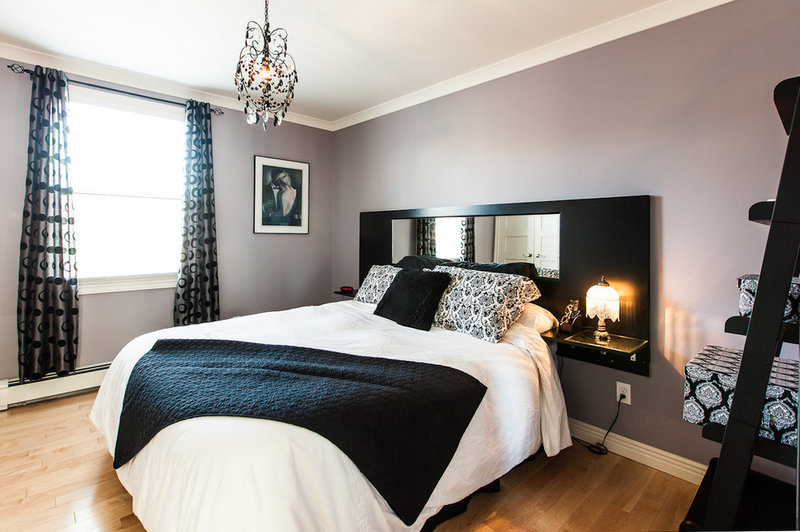
When Urrutia’s popular bedroom photo (the second photo above) was added to 180,000 ideabooks (and counting), interest in his business increased. “I’ve heard tons of comments from clients about this photo and this room in particular,” he says.

August Prices Rise to 12.8 Percent Over 2012 | Katonah NY Real Estate

S&P Dow Jones Indices released for its S&P/Case-Shiller1 Home Price Indices showing that the 10-City and 20-City Composites increased 12.8% year-over-year. Compared to July 2013, the annual growth rates accelerated for both Composites and 14 cities.

On a monthly basis, the 10-City and 20-City Composites gained 1.3% in August. Las Vegas led the cities with an increase of 2.9%, its highest since August 2004. Detroit and Los Angeles followed with gains of 2.0%.

In August 2013, the 10- and 20-City Composites posted annual increases of 12.8%.

“The 10-City and 20-City Composites posted a 12.8% annual growth rate,” says David M. Blitzer, Chairman of the Index Committee at S&P Dow Jones Indices. “Both Composites showed their highest annual increases since February 2006. All 20 cities reported positive year-over-year returns. Thirteen cities posted double-digit annual gains. Las Vegas and California continue to impress with year-over-year increases of over 20%. Denver and Phoenix posted 20 consecutive annual increases; Miami and Minneapolis 19. Despite showing 26 consecutive annual gains, Detroit remains the only city below its January 2000 index level.

“The monthly percentage changes for the 20-City composite show the peak rate of gain in home prices was last April. Since then home prices continued to rise, but at a slower pace each month. This month 16 cities reported smaller gains in August compared to July. Recent increases in mortgage rates and fewer mortgage applications are two factors in these shifts.

“Denver and Dallas again set new highs. All the other cities remain below their peaks. Boston and Charlotte are the two MSAs closest to their peaks with only 8-9% left to go. Las Vegas is still down 47.1% from its peak level.”

As of August 2013, average home prices across the United States are back to their mid-2004 levels. Measured from their June/July 2006 peaks, the peak-to-current decline for both Composites is approximately 20-21%. The recovery from the March 2012 lows is 22.1% and 22.7% for the 10-City and 20-City Composites.

All twenty cities posted monthly gains in August, although most cities showed deceleration compared to July. Las Vegas was at the top of the range at +2.9% and Seattle was at the bottom with a return of +0.5%. Month-over-month, San Francisco has been losing momentum as prices increased 4.9% in April 2013 and 0.9% in August 2013.


http://www.realestateeconomywatch.com/2013/10/august-prices-rise-to-128-percent-over-2012/


50 Years Later, Relive the Destruction of Old Penn Station in Photos | Katonah NY Real Estate

54 images

It was 50 years ago today that demolition began on the New York icon that evokes intense nostalgia and mourning even today: the old Pennsylvania Station. To honor the day, Atlantic Cities rounded up some beautiful photos of the transit hub in its prime, but Curbed has opted to immerse us all in sad images of the de-construction process, as plans for Madison Square Garden loomed ahead. After all, it was the painful ripping apart of the soaring archways, domed ceilings, handsome columns, and more that lit a fire under the arse of the coalition that eventually made New York’s landmarks law a reality. The extensive demolition porn of yore comes to you courtesy of the Museum of the City of New York’s wonderfully extensive photo archives. Below, you’ll also find a handful of photos of Penn when it was still gloriously intact, which kinda intensifies the grief a little. While the site’s future remains uncertain—could we feasibly see a bonkers starchitect-designed railway station in our lifetimes?—the past is, sadly, a done deal.

US Default Seen Pushing Housing to the Brink | Katonah NY Real Estate

Housing largely dodged a bullet on the government shut down that went into effect October 1, the pending default, however, is an entirely different matter. As the October 17 default deadline nears, knuckle in the housing industry are turning white.

All the progress that the housing recovery has achieved since the crashed could be erased overnight if the US defaults on its debts, according to the president of the National Association of Realtors. But Gary Thomas is not the only housing leader raising alarms and the debt default clock ticks down.

In testimony before the Senate Committee on Banking, Housing and Urban Affairs, NAR president Gary Thomas said that unless the debt ceiling is raised in “a timely manner,” the country would face a recession that would wipe out the recent progress made in home prices, home sales and new residential construction.

Robert Dietz, Vice President for Tax and Market Analysis for the National Association of Homebuilders, says the primary effect of a default or downgrade would be increased uncertainty. “Home buyers are making purchase of a capital asset that they will own, on average, for ten years. Given other sources of uncertainty, particularly from the labor market, the largest impact from a failure to reach a deal that increases the debt ceiling would be to further increase concern and anxiety of families attempting to make long-term economic decisions.

“What the housing market needs now is more, not less, certainty, with respect to housing policy and access to capital via the mortgage markets. This will help stabilize housing prices, thereby helping households repair balance sheets and set the stage for more robust economic growth.”

Writing in Friday’s New York Times, economist Paul Krugman argues that a default would create a shock to the economy on a scale of the Great Recession or the Housing Crash of 2007. The default would put the burden of paying interest on Treasury bonds. Currently the cash-flow deficit is a bit more than 4 percent of GDP, which would have to be closed immediately and the government would then fall even further behind on its bills, he says.

“So, when did we last see a spending shock this big? As it happens, we’re looking at something just about the size of the post-bubble housing bust, which was also about 4 percent of GDP:

NAR’s Lawrence Yun describes a similar scenario. “Should the government decide to pay bills other than interest obligations, we can expect interest rates on Treasury bonds to rise as investors look for more return to compensate for the increased risk of their not getting paid. And if that happens, mortgage rates will rise, because mortgage rates follow Treasury rates.”

Yun says home sales can be expected to drop by 350,000 to 450,000 units for each 100 basis-point rise in mortgage rates.