Tag Archives: Katonah NY Homes

Katonah NY Homes

How Much House Can You Get for $50,000? | Katonah NY Real Estate

There’s a lot $50,000 can buy — from a new car to a college education — but rarely does a new home top the list.

Before you rule out being a homeowner for less than six figures, check out these houses on the market for around $50,000. You might find a diamond in the rough.

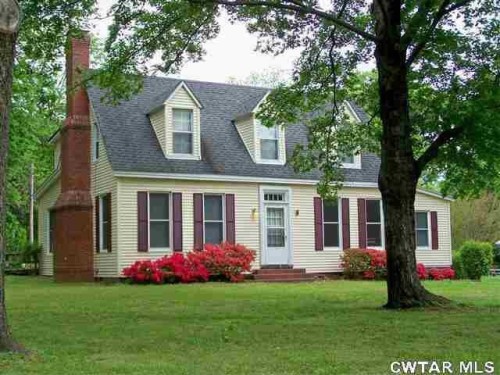
Trenton, TN

612 S Brownsville St, Trenton, TN 38382
For sale: $57,000

Trenton, TN_2
If you can picture yourself sipping tea in this 1946 Cape Cod-style home, Trenton may be the place for you. Known for its annual Teapot Festival, the town has lots of character and affordable homes. For $57,500, you can get 5 bedrooms and 3 baths on more than half an acre.

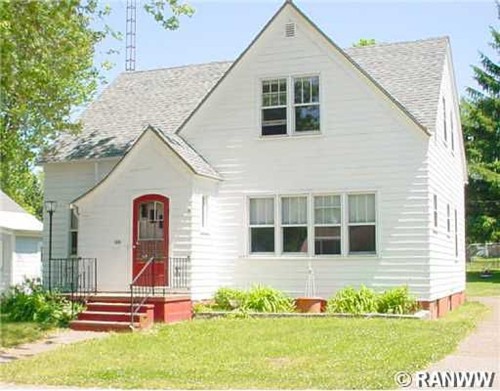
Neillsville, WI

205 Hewett St, Neillsville, WI 54456
For sale: $54,900

Neillsville, WI

Less than 30 miles from Marshfield, this 3-bed, 2-bath home includes an updated main bath, hardwood floors, new carpeting and built-in storage. While it’s currently being rented, the 1960 construction is in good condition, priced well below the Neillsville median list price of $99,900.

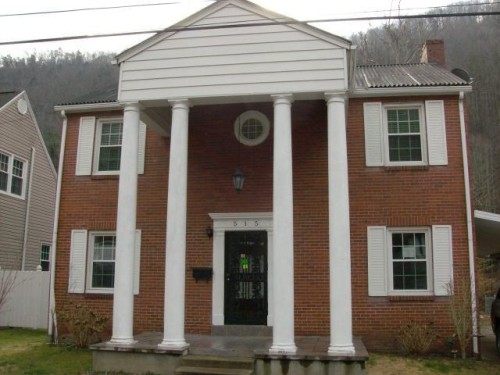
Mullens, WV

515 Church St, Mullens, WV 25882
For sale: $50,000

Mullens, WV

Built in 1941, the previous owners of this home have maintained its architectural charm. Step inside and find beautiful hardwood floors, an original fireplace and an updated kitchen. The 3-bedroom, 2-bath home also backs up to the Guyandotte River, a tributary of the Ohio River.

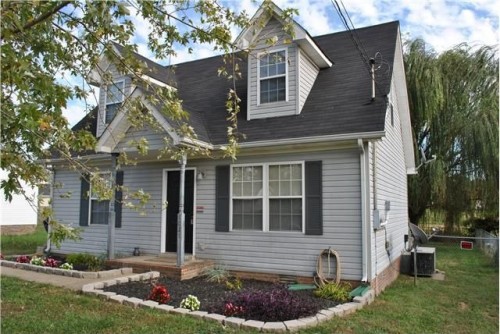
Oak Grove, KY

1021 Poppy Seed Dr, Oak Grove, KY 42262
For sale: $57,000

Oak Grove, KY

This $57,000 home has curb appeal with flower beds and a recent coat of paint, indicating the interior is in good condition. Located in Oak Grove adjacent to the Fort Campbell Army base, the house has 5 bedrooms and 2 baths measuring 1,217 square feet.


How Much House Can You Get for $50,000? | Zillow Blog.

Housing Bubble Unlikely, Home Price Appreciation Should Slow | Katonah Real Estate

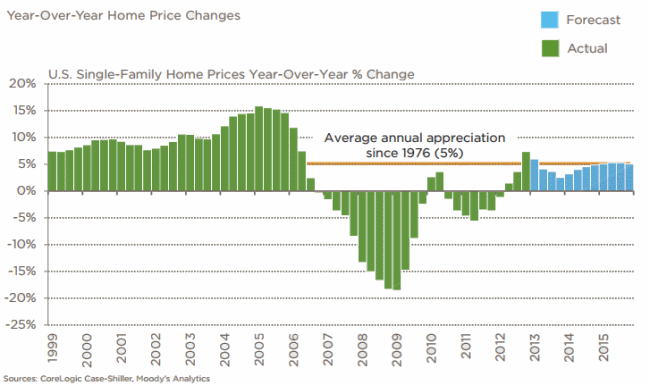
CoreLogic said today that home prices are projected toincrease 3.9 percent on an annualized basis between the fourth quarter of 2012 and the same quarter in 2017.  However, a new housing bubble is not likely as market dynamics shift for both supply and demand.  Prices rose 7.3 percent in 2012.

The CoreLogic Case-Shiller Index report notes that the increase in 2012 was the strongest rate of appreciation in nearly seven years and projected that prices will continue to improve in 2013 and beyond in the more than 380 U.S. markets it tracks.  The company’s current analysis says that, “Cities at epicenter of housing bubble/crash are clocking highest rate of appreciation, largely driven by investor demand.”

“Home prices were up in seven out of every 10 metro areas in 2012.  By comparison, in 2011 prices appreciated in fewer than one-in-five markets,” said Dr. David Stiff, chief economist for CoreLogic Case-Shiller. “We expect strong buying activity this spring will lead to stabilization of home prices in most lagging markets, resulting in rising home prices in nearly every metro area by the end of 2013.”

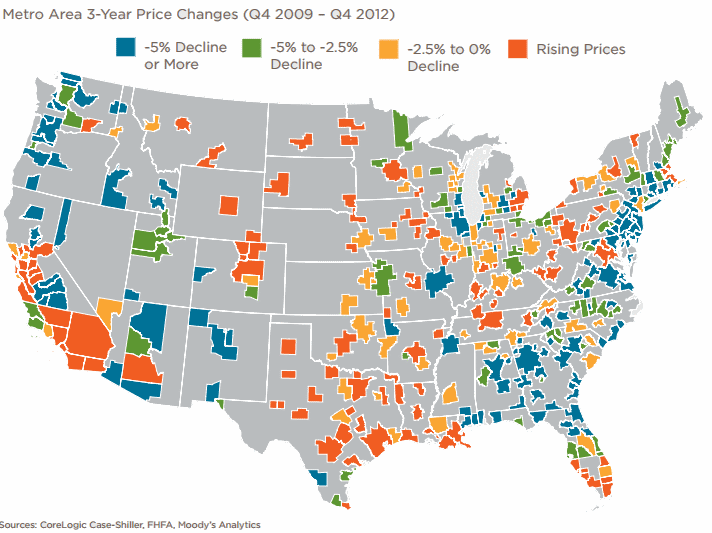
Some of the cities that were hit the hardest by the housing crash and resulting foreclosure epidemic are alsorecovering the fastest.  Phoenix saw a year over year price gain of 24 percent, Miami 14 percent, and Las Vegas 13 percent. Dr. Stiff observed that demand in Phoenix is being driven primarily by investors. As prices rise, the profitability of investment properties will erode, dragging down investor demand.

Some areas which have lagged in their recovery saw price declines slow.  These included Long Island, (-4 percent), Virginia Beach, Virginia (-2 percent), and Philadelphia (-1 percent).

CoreLogic said that while the data point to continuing price appreciation, the overall national rate of home price increases is projected to decelerate in 2013 from 2012 levels. The CoreLogic Case-Shiller Indexes project a 2.5 percent home price increase in 2013, as the market dynamic shifts again in bubble/crash metro areas. While homes in these markets are still significantly undervalued, the strong investor demand for foreclosed properties, record levels of housing affordability and other demand factors that have driven recent double-digit price gains are unlikely to persist throughout the year.

Price appreciation is also expected to contribute to an increased supply of available homes as owners who have been locked into their current homes due to negative equity or were just unwilling to sell at existing prices begin to list their homes for sale.  This will tend to curtail the portion of price increases that have been fed by unmet demand.

Dr. Stiff tamped down concerns of another housing bubble. Even if double-digit price appreciation were to continue in the former bubble metro areas, there is no reason to believe that new home price bubbles are forming. That’s because single-family homes in these markets are still very affordable, even after last year’s large price gains. Consider Phoenix, where home prices rose 27 percent since the market hit bottom in 2011, making it the strongest residential real estate market in the U.S. Yet, home prices there are still 45 percent below their 2006 peak,” Stiff continued.

Stiff said some of the rebounding areas like Phoenix will likely see price volatility as all cash sales and investor demand retreat.  “It is not clear if demand from first-time and trade-up buyers will immediately fill the void,” he said, “as mortgage lending standards are still very strict and many consumers remain risk-averse. If non-investor demand ramps up too slowly, then recent double-digit price appreciation could decelerate suddenly or even turn negative for a few months.”

The CoreLogic Case-Shiller Indexes, which include data covering thousands of ZIP codes, counties, metro areas and state markets, are owned and generated by CoreLogic with supplemental data from the Federal Housing Finance Administration.


Housing Bubble Unlikely, Home Price Appreciation Should Slow – CoreLogic.

How to Network Using LinkedIn Groups | Katonah Real Estate

Are you a member of a LinkedIn Group?

Do you spend time networking in LinkedIn Groups?

LinkedIn Groups are great way to build credibility and make new connectionsthat can ultimately help grow your business.

With over 1.5 million LinkedIn Groups, it can be difficult to find relevant Groups and determine which ones might be the best for you to join. It’s also important to find Groups that are well-managed.

Unfortunately there are many LinkedIn Groups that are not well-managed, which makes the experience within these Groups less than optimal.

linkedin groups directory

You are sure to find a LinkedIn Group of interest to you.

Not to worry, I’m going to give you some insights on how to find the quality groups you can leverage most for your LinkedIn strategy!

How many groups should you join?

You can join up to 50 LinkedIn Groups. However, it’s difficult to gain traction in 50 Groups as well as find the time to participate in that many.

I recommend that you go ahead and join up to 50 Groups, but select 5-10 Groups to spend your time on in order to get the most benefit out of your participation.

Below are 5 tips for maximizing your LinkedIn Groups experience.

#1: Use LinkedIn Search to Find Relevant Groups to Join

In case you haven’t noticed, LinkedIn search has been significantly enhanced. This includes the ability to search for relevant Groups (based on your network) andsearch for discussion topics within open Groups!

search for discussion topics

Now you can search for discussion topics within “open” LinkedIn Groups.

To start, search for Groups using keywords that would be a natural fit for you, based on your geographic location, industry, prospects, education history, community/charity organizations, hobbies and interests.

Try searching LinkedIn Groups with the keywords that actually describe your natural affinities. For example, type in the name of the college you attended to find potential alumni groups that exist on LinkedIn.

You can also take advantage of Boolean search operators for smarter searches on LinkedIn. I recently discovered this Tip Sheet on Boolean Search from LinkedIn Corporate Solutions.

To locate a LinkedIn Group that was in my geographic location and my industry, I searched LinkedIn Groups using the Boolean Search Operator “AND” for the keywords social media AND Dallas.

LinkedIn showed me 25 results for Groups based in Dallas AND focused on social media!

boolean search operators

Get more specific with your Group searches using Boolean search operators.

Another interesting finding was when I typed the word “hiking” into LinkedIn Group search. I found a group with over 1000 members who share this passion. There is no better way to start relationships than connecting around a common passion or interest!

hiking group

Search for LinkedIn Groups using your passions, hobbies and interests as keywords.

For each LinkedIn Group displayed in search results, you have the option to view members in your network who belong to the Group, as well as “similar Groups.”

network group members

See which of your connections are members of Groups and find similar Groups.

You can even reach out to your LinkedIn connections and ask them what they think about the Groups that they belong to. This gives you a solid reason to reach out and connect with your network.

LinkedIn Group search is extremely powerful to discover the right Groups to join!

#2: Review the “Groups You May Like” Suggestions From LinkedIn

The easiest way to navigate to the Groups You May Like feature is through your navigation menu bar under Groups. There you will see these options. (The Groups Directory option is the primary search area for LinkedIn Groups.)

group info

The Groups You May Like feature.

When you click on the Groups You May Like feature, LinkedIn will list suggested Groups for you to check out, based on your network connections, profile information, skills and expertise and existing Group memberships. You may also notice some Groups (or subgroups) on this list that you already belong to.


How to Network Using LinkedIn Groups | Social Media Examiner.

Despite Recovery, Mortgage Originations Fell 6.2 Percent in Q1 | Katonah NY Realtor

Despite the housing recovery and home sales running 10.3 percent above the level of a year ago, mortgage originations are falling, signaling weakening refinancings.

Residential lenders originated 6.2% less during the first three months of 2013 than in the final three months of 2012, according toMortgage Daily’s First-Quarter 2013 Mortgage Lender Ranking . Estimated first-quarter originations by all U.S. lenders worked out to approximately $505 billion.

Though originations were off from the fourth quarter, several players still managed to increase business. Although the three-biggest mortgage servicers reduced their servicing portfolios, a trio of rising stars each added more than $100 billion to their portfolios. The second-quarter forecast calls for stronger production. Wells Fargo maintained its dominance as an originator, though its market share slipped.

Based on the Mortgage Market Index from LoanSifter and Mortgage Daily, second-quarter business is poised to increase 13 percent over the first quarter. Overall mortgage business improved 13.8 percent from the first-quarter 2012.

The biggest decline among originators was at Ally Financial, where production tumbled 38 percent from the fourth-quarter 2012. Provident Funding saw a 28 percent decline, and PrimeLending fell 24 percent. The best improvement was Stonegate Mortgage’s 36 percent increase. Bank of America and SunTrust Mortgage each boosted business by 11 percent.

Biggest Q1 Originators
RankLenderMarket

Share
1.Wells Fargo
22%
2.Chase
11%
3.Quicken
5%


Despite Recovery, Mortgage Originations Fell 6.2 Percent in Q1 | Katonah NY Realtor | Bedford NY Real Estate | Robert Paul Talks Life in Bedford NY.

How Your Business Can Use the New Facebook Cover Photos | Katonah Realtor

Are you familiar with the new Facebook cover photo rules?  You are now able to put calls to action and your website or address information in your Facebook cover photo, but there are still text restrictions.
Would you like some inspiration for what your business can do with a cover photo?
Many people have not updated their cover photos to be in compliance.
In this article I’ll tell you what’s changed and show you 9 examples and how you can leverage the new rules to boost your business.

Facebook’s New Rules

As of March 6, Facebook’s rules state that cover photos may not include more than 20% text. But the previous restrictions that were in place were removed (i.e., no calls to action, no websites and no address information).
The maximum 20% text rule also applies to any photo in a Facebook ad as well, so keep that in mind with your next ad campaign.
There was some initial confusion about how the 20% text area was measured, so Facebook came out with a post that clarified how this area was calculated and what was acceptable.
cover compliance

Check your Facebook cover photo with the Cover Compliance Tool.
Facebook Cover-Photo Compliance Tool
Use this tool by Paavo to help you see if your cover photo is in compliance. All you need to do is to put the link to your Facebook Page (or your Fan Page ID, whichever is easier for you) in the box labeled Fanpage ID and click the blue check mark. Then select the boxes that have text in them.
For cover photos, they have a grid of 25 blocks (5 x 5) over the photo. If there is text in more than 5 of those boxes, your photo is out of compliance.
One thing that is confusing in the example provided by Facebook is that there are a couple of boxes that have text extending slightly into the box and Facebook did not mark them as having text. Hmmm.
Also worth noting is that the 20% text policy doesn’t apply to pictures of products that include text on the actual product. But Facebook goes on to say that they aren’t allowing images that are edited to include text as a “loophole to policy.”
Some of these 9 examples may have a little text that appears in one other box (similar to Facebook’s own examples). The examples are for your inspiration and we recommend you comply with the 5-box maximum guideline to avoid any problems.


How Your Business Can Use the New Facebook Cover Photos | Katonah Realtor | Bedford NY Real Estate | Robert Paul Talks Life in Bedford NY.

AFP: Obama claims credit for ‘healing’ US housing market | Katonah NY Homes


President Barack Obama on Saturday claimed credit for the country’s improved housing market and urged the US Congress to approve a new head of an agency that oversees housing loan agencies.

Seven years after the real estate bubble burst, “triggering the worst economic crisis since the Great Depression and costing millions of responsible Americans their jobs and their homes, our housing market is healing,” Obama said in his weekly Saturday radio and online talk with the US people.

“Sales are up. Foreclosures are down. Construction is expanding” and prices are slowly rising. he said.

Since taking office. “I’ve made it a priority to help responsible homeowners and prevent the kind of recklessness that helped cause this crisis in the first place.”

According to Obama, his housing plan has helped more than two million people refinance their mortgages, saving an average of $3000 per year, while his new consumer watchdog agency “is moving forward on protections like a simpler, shorter mortgage form that will help to keep hard-working families from getting ripped off.”

The president acknowledged that there was “more work to do,” including providing more help for “responsible homeowners” who for different reasons cannot refinance, and working families “who have done everything right, but still owe more on their homes than they’re worth.”


AFP: Obama claims credit for ‘healing’ US housing market.

House Prices Rise in 89% of U.S. Cities as Recovery Gains | Katonah Real Estate


Prices for single-family homes increased in 89 percent of U.S. cities in the first quarter as the housing market extends a recovery from a five-year slump.
The median sales price rose from a year earlier in 133 of 150 metropolitan areas measured, the National Association of Realtors said in a report today. A year earlier, 74 areas had gains.
Buyers returning to the housing market are bidding up prices for a tight supply of listings. The national median price for an existing single-family home was $176,600 in the first quarter, up 11.3 percent from the same period last year. That was the biggest gain since the fourth quarter of 2005, according to the Realtors group.
“Some of the previously hard-hit markets like Phoenix, Sacramento and Miami continue to experience a dramatic turnaround, while a new set of areas like Atlanta, Minneapolis and Seattle have begun to show strong signs of upward momentum,” Lawrence Yun, chief economist for the National Association of Realtors, said in the report.
At the end of the first quarter, 1.93 million previously owned homes were available for sale, 16.8 percent fewer than a year earlier, according to the Realtors group.
The best-performing metro areas were Akron, Ohio, and San Francisco, where prices jumped 33 percent from a year earlier. Prices rose 32 percent in Reno, Nevada, and Silicon Valley,California; 31 percent in Atlanta and 30 percent in Phoenix.

Biggest Declines

The Kankakee, Illinois, area had the biggest decline, falling 19 percent from a year earlier. Following were Edison, New Jersey, with a 8.6 percent drop, and Allentown, Pennsylvania, with a 8.3 percent decrease.
The housing recovery is strengthening as the job market improves and the Federal Reserve pushes down borrowing costs for mortgages to near record lows. The unemployment rate fell to a four-year low of 7.5 percent in April, according to Labor Department data, and the number of Americans filing claims for jobless benefits unexpectedly dropped last week to the lowest level in more than five years.


House Prices Rise in 89% of U.S. Cities as Recovery Gains | Katonah Real Estate | Bedford NY Real Estate | Robert Paul Talks Life in Bedford NY.

The Inflation Data Are Pointing To Another Housing Bubble | Katonah Real Estate

t’s easy to spot a Fed-sponsored housing bubble if you look in the right places. The best place to start is an analysis of price inflation as measured by the BLS as compared to a CPI-variant that takes actual housing prices into consideration instead of rent.

This is a followup to my post Dissecting the Fed-Sponsored Housing Bubble; HPI-CPI Revisited; Real Housing Prices; Price Inflation Higher than Fed Admits.

Data for the following charts is courtesy of Lender Processing Services (LPS), Specifically the LPS Home Price Index (HPI).

The charts were produced by Doug Short at Advisor Perspectives. Anecdotes on the charts in light blue are by me.

Background

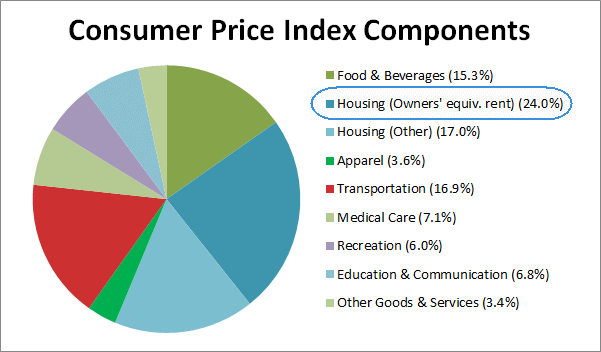
The CPI does not track home prices per se, rather the CPI uses a concept called “Owners’ Equivalent Rent” (OER) as a proxy for home prices.

The BLS determines OER from a measure of actual rental prices and also by asking homeowners the question “If someone were to rent your home today, how much do you think it would rent for monthly, unfurnished and without utilities?

If you find that preposterous, I am sure you are not the only one. Regardless, rental prices are simply not a valid measure of home prices.

OER Weighting in CPI

CPI categories

Mish Shedlock

OER is now at 24.041% of CPI, which still rounds to 24.0%, but the other housing wedge is now an even 17.0%, down from 17.1% in the previous version.


The rest of the charts show various effects if one substitutes actual home prices as measured by the HPI in the data.

Two Inflation Indexes 

CPI with HPI substitute for OER and FFR

Mish Shedlock

click on any chart for sharper image

As measured by the CPI, price inflation is 1.47% annualized. As measured by HPI-substitution, price inflation is a much higher 3.33%. The Fed would have you believe everything is under control. Of course they said the same thing in 2005.

Read more: http://globaleconomicanalysis.blogspot.com/2013/05/hugely-negative-real-interest-rates.html#ixzz2SnQBfapO

Charlotte housing market gains momentum | Katonah NY Real Estate

CoreLogic, an Irvine, Calif.-based company that provides monthly reports on housing prices, said Charlotte rose 7% in the Charlotte-Gastonia-Rock Hill area in March from the same month a year ago.

Also, the Charlotte Regional Realtor Association reported that Charlotte-area home prices increased by 1.1% on average in April from the same month last year, as inventory continues to dwindle.

According to the preliminary data from the association, the average sales price in April rose to $217,166 from $214,739 in April 2012. The number of sales increased 34% year-over-year, to 2,915 from 2,168, writes the Charlotte Observer.


http://www.housingwire.com/fastnews

Sentiment shift: Home prices to rise | Katonah Real Estate

The majority of Americans now are forecasting home prices to rise, and only about a third are expecting prices to fall, a reversal in attitudes of a year ago.

A monthly survey by mortgage finance firm Fannie Mae found 51% of those questioned in April believe prices will rise in the next 12 months, while only 35% are projecting a drop in prices. It is the first time in the three-year history of the survey that a majority said they expect prices to increase.

A year ago, 49% were expecting further price declines while only 32% said they though prices were on their way up.

The latest data from the housing market back up the this new level of confidence in the housing recovery. The S&P Case-Shiller Home Price Index rose 9.3% over the last 12 months, the biggest annual rise in home prices since the height of the housing bubble in 2006.

“Crossing the 50% threshold marks a significant milestone, as most Americans believe a housing recovery is truly occurring throughout the country,” said Doug Duncan, chief economist for Fannie Mae.

People who were sitting on the sidelines because of concerns that prices were still falling can be drawn back into the market once they believe prices are on their way up again.Home sales are up 10% from a year ago, helped not only by the climbing prices but alsorecord low mortgage rates and falling unemployment.


http://money.cnn.com/2013/05/07