
Are Higher Mortgage Rates Boosting Home Sales? Nobody Knows. – DailyFinance.

 Image via The Atlantic Cities
No, that’s not an Instagram of rural Connecticut, it’s a look at a “busy street” in the Paris of 1838, and also the first print produced by Daguerreotype creator Louis-Jacques-Mandé Daguerre. The Atlantic Cities recently dug up this and a few more Dagerreotypes—prints produced via complicated methods and bulky, expensive machinery once lauded for being the first “practicable” photographic process—of 19th-century cities. The images show off urban sprawl from before Chanel and Michael Kors lined the boulevards and starchitect-designed towers stood shoulder to steel-boned shoulder in the most congested bits of town. Below, Philadelphia in 1843 and Washington, D.C., in 1846.
 Image via The Atlantic Cities
 Image via The Atlantic Cities
· Gorgeous 19th Century Cityscapes, Courtesy of Daguerrotype [The Atlantic Cities]
Rising rates continue to have an impact on home purchase applications. The number of mortgage applications filed last by 13.5% from the prior week on a seasonally adjusted basis as interest rates increased, the Mortgage Bankers Association said Wednesday.
The purchase component eased 2.7% this week relative to last and has fallen 16.8% since the first week in May on a seasonally adjusted basis. Rates reversed course last week and turned upward after easing in the prior week. The average rate for a 30-year fixed rate mortgage was 4.57% last week according to Freddie Mac.
On an unadjusted basis, MBA reported the market composite index declined 23%. The refinance index slipped 28% from a week earlier, while the seasonally adjusted purchase index slid 2.7%.
The sudden drop in purchase applications comes as loans for new homes have taken market share away from refinancing since January, raising its market share from 27% to 53% in July.
While the average rate has been on the rise, the National Association of Realtors reported that the Federal Housing Finance Agency is considering reducing the limits on mortgages that can be backed by Fannie Mae and Freddie Mac. Currently, the GSEs can support loans up to $417,000 in most markets and up to $625,500 in higher cost markets, while loans above this are supported by the private “jumbo” market made up of banks and private MBS securitizers.
Rates on jumbo loans have eased to party or slightly better than conforming loans in recent months as banks have started taking more loans into portfolio to compensate for weak commercial and refinance business. However, these loans are very high quality with large down payments and high FICO scores. The concern then is that if the loan limits decline, the private sector may still not be ready to pick up the non-pristine lending activity in the high cost portion of the market, cutting off access to credit for this portion of the market, resulting in reduced demand and sales.
Construction spending in the U.S. grew in July to its highest level in four years, due to gains in residential real estate, Bloomberg News reports.
Outlays climbed 0.6% to a $900.8 billion annual rate, the most since June 2009, after being little changed in June, the Commerce Department reported today in Washington.
“We’re going to continue to post growth,” Mike Englund, chief economist at Action Economics LLC in Boulder, Colorado, said before the report. “It’s growing a little faster than the broader economy, obviously getting help from residential construction.”
Construction spending grows in July | 2013-09-03 | HousingWire.

Green building may represent more than half of all commercial and institutional construction as soon as 2016. CleanTechnica looks into a new report from the USGBC entitled “LEED in Motion: People and Progress,” that details green building’s exponential growth and outlines both the value of the industry and its reach into American Lives. Among the highlights:
There are a growing number of people renting houses instead of buying since they cannot obtain a mortgage under today’s tougher standards. But due to the influx of renters, housing communities are facing the adverse effects of renter’s disconnect, according to CNBC:
“When there are fewer homeowners, there is less ‘self-help,’ like park and neighborhood cleanup, neighborhood watch,” said William M. Rohe, a professor at the University of North Carolina at Chapel Hill who has just completed a review of current research on homeownership’s effects.
Even conscientious landlords and tenants invest less in their property than owner-occupants, he said. “Who’s going to paint the outside of a rental house? You’d almost have to be crazy.”
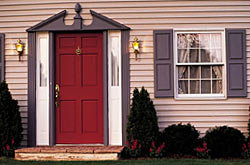
Home security systems are only as strong as their weakest link, and if you set up equipment that’s too complicated for household members to use, they are likely to ignore the equipment or work around it. Remember that the people in your home are part of any security arrangements you make, so you have to be realistic about how much hassle they are willing to accept in the name of security.
1. Be sure your home appears occupied.
Most thieves are opportunistic. They come into a neighborhood and look for houses that seem undefended and unoccupied. An important part of home security is making your home look occupied at all times.
One big clue that you are out of town is if your mail or newspapers are piling up. Never allow newspapers to accumulate in the front yard.
Interior lights are also important in making a home look occupied. Not only should some lights be on, but the array of lights should change just as it would if the home were occupied. The easiest way to do this is with timers.
Another very simple way to make a house appear occupied is to leave on a TV or radio with the volume turned up loud enough to be heard by someone approaching the doors or windows.
Leaving a car in the garage or driveway can also be a deterrent. If you are going on a trip and not leaving a car at home, you might want to make arrangements with the next door neighbor to park one of their cars in your driveway while you are away.
2. Create perimeter defenses.
Another important home security measure involves making it difficult to get near the home. This is most commonly accomplished by a high wall or fence.
In many parts of the world, this is the primary home security tactic, but it does suffer from some shortcomings. Generally, it is easier to sneak undetected over or under a wall or fence than it is to force entry into a home.
Yet perimeter defenses often give occupants of the home a false sense of security that may lead them to get sloppy about locking doors and windows. For this reason, perimeter defenses are most effective when they are either very difficult to penetrate or are augmented by cameras and/or motion detectors.
3. Be sure all entrances are well lit.
For most homes, perimeter defenses like walls and fences are of little use. Most people assume that the next line of defense is doors and windows, but there is something that comes first. It’s based on the simple fact that thieves want to do their work where no one can see them. This means you want to make sure the outside of your home is well lit – especially at any potential points of entry. An effective solution is motion detector lights. These inexpensive devices can be set up to turn on whenever something moves near it.
4. Install deadbolts and peepholes on doors.
Most home security measures are concentrated on doors. With doors, the two main issues are structural integrity and locks.
Recommended for exterior doors, deadbolt locks are substantial locks that lock the door into the frame. Deadbolts come in keyed versions, which always require a key, and levered versions that only require a key to open from the outside. If no glass is nearby, the lever version is best as it is more likely to get used.
There are many facets to your ensuring your personal home security. Click this link if you want to use our free service to have any of our prescreened home security contractors install home security measures.
Sliding glass doors present a special challenge. Most are vulnerable to breakage. The simplest security enhancement is to place a metal bar or broom handle in the inside floor track. Some sliding doors can simply be lifted out of their tracks. There are screws at the top and bottom of the inside of the door that control how it sits in the track. Adjust these so that the door cannot be lifted so high that the bottom comes free from the track.
Every front door should be equipped with a peephole. This is a very inexpensive, easy to install device that allows you to check out a visitor before you open the door. For the same reason, an intercom can allow you to communicate with a caller before deciding whether to open the door or deactivate an alarm.
5. Secure your home’s windows.
While your home may only have two or three doors, it may have a dozen or more windows. Burglars know that if you systematically check all the windows in a house, there is a good chance that at least one will remain unlocked.
Most standard window locks are very simple to jimmy or force. Heavier locks will improve your home security quite a bit. Another simple, inexpensive tactic that is effective for double hung windows (those with two sliding panels that go up and down or side to side) is window pins. There are specially made pins, or large nails can easily be used.
6. Remember your home’s other points of access.
Exterior doors and windows are not the only access points to most homes. Many thefts take place through garages. Besides having valuable items stolen from the garage, the door that goes from the garage to the house is often unsecured or not substantial enough to stop a burglar.
Check also to see if skylights, crawl spaces, attic vents, and other openings may provide burglars with unrestricted access to your home.
7. Consider installing an alarm system.
Alarm systems offer little in the way of physical obstacles to thieves. Instead they offer an important psychological one.
In a neighborhood with an efficient police force, the alarm substantially increases the odds that the thief will get caught. Even in areas where police response times are slow, the noise and attention of an alarm may well dissuade the burglar from finishing his mission.
The cost of alarm systems varies widely. A burglar easily can disable some of the simpler, less expensive detection devices. The more complex and unfamiliar the array of devices, the more likely the burglar is to trigger the alarm or give up trying to disable it.
Response times to alarms are driven by several factors. First is the effectiveness of the monitoring service you’re using. When considering a monitoring service, get the names of people who have had the opportunity to observe response times in the past.
The second factor is the protocol you request that the monitoring service use. Who do you have them call in what order? In some cases, you might do better to alert a helpful neighbor than to alert an unresponsive police force.
The third factor is the 911 services in your area. Most work well and a few don’t. While you have no direct control over the 911 services, you may be able to draw attention to the problem and seek a solution through the political process.
8. Keep a record of your valuables.
Most area police departments encourage homeowners to etch their social security number on the metal surfaces of valuables that are prone to theft. When police come across marked stolen merchandise, they can easily find the true owner and return it. Photographs of especially valuable items like artwork and antiques can help police recover goods.
According to CNBC, three million homeowners rose above water on their mortgages this year, creating more positive equity and stability in the markets. The publication has more:
“Widespread rising home values during the past year have helped chip away at negative equity nationwide, helping many homeowners who were only modestly underwater to come up for air. For those homeowners who are deeply underwater, though, there is still a long row to hoe,” said Zillow Chief Economist Stan Humphries.
As a real estate agent or broker you may find yourself going paperless more and more. And even if you’re not fully “in the cloud” as you make a transition into a paperless lifestyle, you need to consider how basic data security measures can help prevent future headaches.
This WIRED article proves just how easy one’s life can come crashing down because of lax security measures.
Here are some quick tips to help get you started:
 Google and its two-step verification is just one simple way to help keep hackers out of your account. Simply sign into your Google account as normal, enter a code that you receive via text message and you’re set! To get started or learn more, click here.
We have all seen plenty of situations where someone’s brand/company Twitter account is hacked. Twitter’s two-step authentication is an easy way to help prevent this from happening to you and your brand.
Visit your account settings page in Twitter and check the box next to “Send login verification requests to my phone.”
– See more at: http://www.inman.com/next/practice-safe-security-3-ways-to-protect-your-real-estate-data/#sthash.BZBeGrGJ.dpuf
Practice safe security: 3 ways to protect your real estate data | Inman News.

The Dow Jones faced a wild ride this past week, tumbling 200 points by market close on Friday.
Investors left to deal with the aftermath will rely heavily on several monetary policy and housing reports due out this week.
Wednesday is a busy day for the markets with the Federal Reserve expected to release its latest minutes from the Federal Open Market Committee. Investors needing a more in-depth look on how the committee assessed the future of mortgage-backed securities purchases can visit HousingWire for full coverage. The Fed also kicks off its annual 3-day annual symposium in Jackson Hole, Wyo., on Wednesday.
On the same day, the National Association of Realtors existing-home sales report is due out, followed by the FHFA home price index on Thursday and the government’s latest new home sales report on Friday.
Visit the HW US Economic Calendar to track all these events and more.
http://www.housingwire.com/articles/26257-mark-your-calendars-key-housing-reports-due-out-this-week