Tag Archives: Bedford Hills NY

Bedford Hills NY

Top housing markets for the next five years | Bedford Hills Real Estate


Business Insider drew on the latest data to identify the best housing markets for the next five years. The top 15 cities are ranked by the projected annualized change in home prices between Q4 2012 and Q4 2017.

Business Insider also included the median home price, median household income, unemployment rate, and the change in home prices since their peak, to offer a broader view of the local economy and housing market.

Click here to visit Business Insider’s list of top housing markets.

Top housing markets for the next five years | HousingWire.

Why your prospects need a property manager | Bedford Hills Real Estate


Michelle Horneff-Cohen, president of Property Management Systems, provides information on how you can help protect your clients’ investments and ensure them many happy years as a property owner. She writes:

“Becoming a property owner and leasing a unit opens the door for many legal concerns. A property manager eats, breathes, and lives local ordinance. If they don’t, they aren’t a real PM.”

To read the rest of Cohen’s article, click here.


Why your prospects need a property manager | HousingWire.

Report: Jennifer Lopez Buying $10 Million Mansion in Hamptons | Bedford Hills Real Estate

Source: IMDb

Source: IMDb

Jennifer Lopez might just be “Jenny from the Block,” but her newest block is a stretch of three acres in exclusive Water Mill, NY.

According to the New York Post, Lopez has toured the estate several times with her twins and current boyfriend, 25-year-old Casper Smart. Lopez reportedly paid $10 million for the home, which previously demanded $425,000 as a summer rental. Lopez has been looking for a Hamptons-area estate for years; there were previous rumors that she picked one up back in 2011, shortly after her divorce to Marc Anthony.

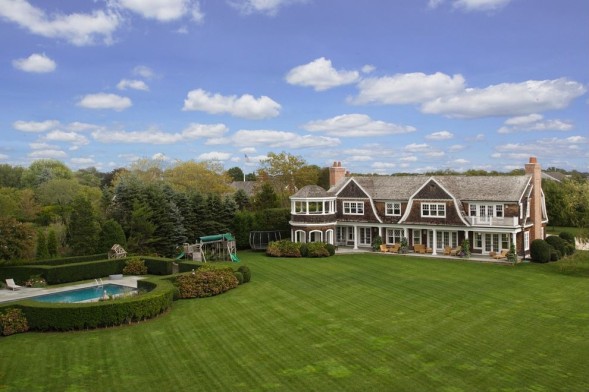
The singer and actress’ new place is not only luxe — a must-have for someone who brought in $52 million last year and is ranked above Oprah on Forbes’ Most Powerful List —  but also incredibly private.  Situated on its own cul-de-sac, the updated but classic estate is made up of two lots, with room for plenty of celebrity musts, like guest houses and tennis courts.

Built in 2004, the 8-bed, 4.5-bath measures 8,5000 square feet. The landscaped grounds include a large pool, patio area and plenty of hedges to keep paparrazi at bay.

Lopez hasn’t purchased a home in quite some time. The entertainer still owns an enormous spread in Hidden Hills that she purchased with Anthony in 2010, as well as two homes in Glen Head, N.Y. The star previously owned a waterfront estate in Miami Beach and another home in Beverly Hills.


Report: Jennifer Lopez Buying $10 Million Mansion in Hamptons | Zillow Blog.

Best loan prospects may desert FHA | Bedford Hills Real Estate

It’s a catchy marketing pitch: “720 and above, don’t go gov.”

And it has potentially far-reaching significance not only for large numbers of first-time and moderate-income home buyers this year, but for the dominant source of low down payment mortgages many buyers depended on during the past several years: FHA.

The new “720″ jingle, used in advertisements by Radian Guaranty Inc, one of the highest-volume players in the industry, refers to FICO scores and spotlights the steadily rising cost of FHA insurance premiums compared with private competitors.

As the result of those fee increases — the most recent hike in premiums took effect April 1 — and the impending revocation of the right to cancel premiums for most new FHA borrowers starting June 3, private mortgage insurers can now offer much more attractive deals to the most creditworthy homebuyers than FHA.

That has long-time advocates of FHA — and privately, some federal officials — concerned about adverse selection. Private insurers appear likely to start “creaming” the best of FHA’s current customer base — the low credit-risk, 700+ credit score borrowers who have provided the bedrock for FHA’s vaunted, high quality 2010-12 books of new business, which Commissioner Carol J. Galante calls “the strongest in agency history.”

This, in turn, could leave FHA with a preponderance of borrowers who have the lowest scores and present the highest risk of future default and foreclosure — a trend that could put new strains on the agency’s insurance funds and eventually increase the odds that it may need to either seek a Treasury bailout or raise fees again to pay for the losses.


Best loan prospects may desert FHA | Inman News.

Why is the man who bet against U.S. housing so worried about Canada? | Bedford Hills Real Estate

A hedge fund manager who made a killing betting against the U.S. housing market is now publicly fretting about Canadian real estate.
Steven Eisman’s comments on Canada are arguably more important than those of other observers given that he put his money where his mouth was in the run-up to the U.S. meltdown, gaining renown and, eventually, becoming one of the players noted in The Big Short, the book by Michael Lewis.
Most observers believe that Canada’s housing market, while cooling rapidly, is in a soft landing, with the exception of Vancouver. Canada’s finance minister has moved several times to prevent a burst bubble and tame the mortgage market amid record levels of consumer debt.
At a conference in New York yesterday, Mr. Eisman, who founded Emrys Partners, noted the exceptional run-up in prices for Canada homes, deemed by the Economist as the most overvalued in the world.
He pointed specifically to Canada Mortgage and Housing Corp., according to published reports, warning that it’s closing in on a $600-billion ceiling for its portfolio.
“When something gets that big, even governments get nervous,” Mr. Eisman said, according to The New York Times, which covered yesterday’s annual Sohn Investment Conference.
The nation’s banks, he added, aren’t protected enough should housing collapse.
The hedge fund chief also cited Home Capital Group, which, among other things, is a non-prime lender, as a possible trouble spot.
Just yesterday, Toronto-listed Home Capital posted a jump in quarterly profit to $59.7-million, or $1.72 a share, from $52.5-million, or $1.50, a year earlier, and said it believes Canada’s housing markets are “in balanced territory” and still healthy.
“While the company experienced overall originations below the last quarter of 2012, the activity was within management’s expectations given seasonality and the slower start to the spring housing market this year,” it said.
“The company continues to observe good demand for its traditional mortgage products from customers with strong credit profiles and originations in this product were up over the same period last year. The company anticipates that demand for its traditional products to continue to be robust, but recognizes that over all markets have softened and demand could be reduced in future quarters. Management is prepared to adjust its strategy in such a situation.”
While the housing market has cooled, most, though not all, economists say there’s no crash in the offing.
“Tougher mortgage rules, high household debt and reduced affordability in some regions have taken the wind out of the housing market’s sales, though most signs point to a soft rather than hard landing,” BMO Nesbitt Burns says in a new forecast, citing the 15-per-cent in drop in existing home sales in March from a year earlier, but “milder declines” in some regions last month.


Why is the man who bet against U.S. housing so worried about Canada? | Bedford Hills Real Estate | Bedford NY Real Estate | Robert Paul Talks Life in Bedford NY.

BANKS TO BERNANKE: Farmland Looks Bubbly | Bedford Hills NY Real Estate

Ben Bernanke

REUTERS/Larry Downing

Fed Chairman Ben Bernanke

In February, Bloomberg reported that members of the Treasury Borrowing Advisory Committee (TBAC) – made up of high-level executives at Wall Street’s biggest investment banks and asset managers – warned in a quarterly TBAC meeting with Federal Reserve Chairman Ben Bernanke that farmland, junk bonds, and mortgage real estate investment trusts were looking bubbly

Via a Freedom of Information Act request, Bloomberg obtained the minutes to that meeting and has revealed some more information about what was said at the meeting in a new report.

According to the minutes, Bloomberg reporters Craig Torres and Joshua Zumbrun write that the TBAC opposed the Fed’s third round of quantitative easing – this time open-ended, unlike the previous two iterations – when it was announced in September:

The advisory council opposed continued Fed accommodation on Sept. 14, a day after the conclusion of the FOMC’s two-day meeting Sept. 12-13. The Fed after that gathering announced a third round of bond buying with purchases of $40 billion per month of mortgage-backed securities.

Read more: http://www.businessinsider.com/wall-streets-biggest-banks-opposed-qe3-2013-5#ixzz2SnR5xmHD

Cicadas set to overrun Hudson Valley | Bedford Hills NY Homes

Billions of cicadas lurking underground in the Hudson Valley and along the East Coast are awaiting their cue: when ground temperature reaches exactly 64 degrees.

Only then will the inch-long creatures crawl out of the burrows they have lived in for 17 years, climb trees and begin several weeks of riotous mating calls, sex, parenthood and finally death. Then the insects’ offspring will crawl underground to begin the cycle over again.

In the Hudson Valley, showtime could come within days as the air temperature climbs and the earth warms.

Scientists say the cicadas with bulging red eyes will outnumber people from North Carolina to Connecticut by about 600-to-1 and that the males’ mating calls will be as loud as a rock concert.

In 2004, Gene Kritsky, an entomologist at the College of Mount St. Joseph in Cincinnati, measured cicadas at 94 decibels, saying it was so loud “you don’t hear planes flying overhead.”

Cicadas come out every year in different regions around the world, but the variety about to make their entrance along the East Coast are different. They’re called magicicadas — as in magic — and are red-eyed. Magicicadas are found exclusively in the eastern half of the United States.

There are 15 U.S. broods that emerge every 13 or 17 years, so that nearly every year some place is overrun. Last year it was a small area, mostly around the Blue Ridge Mountains of VirginiaWest Virginia and Tennessee. Next year, two places get hit: Iowa into Illinois and Missouri; and Louisiana and Mississippi. Still, it’s possible to live in these locations and actually never see them.

This year’s invasion is one of the bigger ones. Several experts say that they really don’t have a handle on how many cicadas are lurking underground but that 30 billion seems like a good estimate. At the Smithsonian Institution, researcher Gary Hevel thinks it may be more like 1 trillion.

Even if it’s merely 30 billion, if they were lined up head to tail, they’d reach the moon and back.

This year’s invasion, dubbed Brood II by scientists, is expected to cover large swaths of the Hudson Valley, according to Daniel Gilrein, an entomologist with Cornell Cooperative Extension of Suffolk County. Nature lovers, he said, should plan expeditions in late May and early June to see the insects at work.


http://newyork.newsday.com/news


Reverse mortgage delinquencies surge | Bedford Hills NY Real Estate

Monday Morning Cup of Coffee is a quick look at the news coming across the HousingWire weekend desk, with more coverage to come on bigger issues.

A test prototype of the single-securitization platform for the secondary mortgage market is expected as early as next year, regulators said while speaking at the Mortgage Bankers Association’s Secondary Market Conference on Sunday.

This goal set forth by the Federal Housing Finance Agencyand the government-sponsored enterprises is to incorporate mortgage participants’ feedback into the prototype development, which will hopefully result into a platform creation that suits the industry’s needs, explained Tim Yanoti, senior vice president of securitization at Fannie Mae.

HousingWire Reporter Christina Mylinski has more on the securitization platform and will be covering the MBA Secondary Conference online Monday and Tuesday. You can follow Christina on Twitter: https://twitter.com/@ChristinaMlynskfor conference updates.

Of the almost 600,000 reverse mortgages outstanding, 9.8% are currently delinquent. This is an 8% increase from 2011, according to the U.S. Department of Housing and Urban Development.

The Wall Street Journal writes that delinquencies have increased in recent years as up to 70% of borrowers have opted for lump-sum payouts.

As concerns about defaults rise, the Federal Housing Agency recently discontinued a popular variety of fixed-rate reverse mortgages that paid the highest lump sums available through the program.


http://www.housingwire.com/news/2013/05/05

Will the Grand Bahama Real Estate Market ever recover? | Bedford Hills Real Estate

The question on everyone’s mind is …. Will the Grand Bahama Real Estate Market Ever Recover? The reports from our neighbors across the pond in the U.S. are that the Real Estate Market is back and the market IS recovering. In Miami, Florida only 100 miles away not only have real estate prices recovered, but there is a shortage of condos and developers are building more condos to keep up with the future demand. They are calling it a condo boom. We all know this is not the case in Grand Bahama but as a small country so heavily influenced by the U.S. market, we can not be too far behind. We usually lag behind the U.S. by about 14 months or so and we of course have our own unique problems in Freeport so the recovery may be slower than expected but the trends look positive. No one has a Crystal Ball that can see the future exactly but with the current state of the world economy there are many factors that give us an indication of the Future of Real Estate on Grand Bahama Island.

An important point to keep in mind is that it is very difficult to make broad statements about the state of the Grand Bahama Real Estate because there are many different Real Estate Markets on the Island. There is a big difference between raw land, lower income homes, high end beach front homes, condos and duplexes. No one would ask you how the weather is in the United States because that’s too general. The weather is of course different in Buffalo, New York then in Phoenix, Arizonia. So when looking at real estate we have to identify what sector of the market we are talking about especially when looking at trends.

One of the biggest problems we have on the island in my opinion for the local residential housing market is the lack of jobs and good paying jobs. This lack of jobs has caused the local residential prices to fall. If the job market improves you will see the real estate market in the residential market and all sectors of the market improve. It’s that simple. Jobs create consumer confidence and the ability for buyers to borrow money from the banks for mortgages. Not only can people borrow money but homeowners can pay their current mortgages. We need new projects and new excitement for Freeport like we are seeing in Nassau only 150 miles away. The Sunwing project whereby they will lease 500 rooms at The Grand Lucayan, have direct flights from Canada and hire over 1,000 people is certainly a good start. The announcement of the water theme park west of the Stoned Crab is good news as well. Now we need more airlift direct to Freeport, more projects and the momentum for recovery will improve.

If you look at The Freeport News there are growing pages and pages of Foreclosure Homes being sold by the banks. As long as there is a huge supply of Bank sales it will be difficult for a “normal” seller trying to sell their home so they can move up, move down or change address because buyers can buy bank distressed homes at highly discounted rates if they have cash, a good job and good credit. Real Estate is about movement and without movement you have stagnation which creates a dead market. So in light of all this we don’t need a Crystal Ball to tell us that there is high unemployment, an oversupply of homes, a big supply of bank foreclosures, banks not lending money and a flat real estate market with prices going down because sellers can’t sell due to lack of buyers.

So the future of the residential market in the short term is going to be more of the same for 2013 with a little upswing in certain sectors. Until we can clear the inventory of distressed homes and the job market improves the local real estate market will remain stagnant. This is a general statement for the local residential sector which does not mean that there won’t be buyers and sellers but the market will be very competitive and the majority of sellers will have to continue to be patient. If you are a seller in this sector be patient and do EVERYTHING you can to make your house competitive in this very difficult market. Hire a professional real estate agent and price your home for exactly what it’s worth. The strategy of pricing a home high and letting buyers make a lower offer can backfire. If you are a seller you are in competition with every other house on the market and there are more homes on the market than there are buyers hence it’s a Buyer’s Market.

Is the Real Estate market dead? The answer is no. The real estate market is slow in the local residential sector, however there are other sectors of the market which are showing some signs of growth. Income producing properties, some vacation rental properties, high end water front properties and commercial property are showing signs of recovery even in these difficult times. If you are an investor with access to cash or bank financing there are really good deals in this sector of the market. In all sectors of the market, sellers have had to lower prices with buyers locally and from abroad coming to our “depressed economy” looking for a deal. The good news for buyers is that sellers are getting real and willing to take a real look at offers. The offers are few and far between so real offers are being considered


http://freeport.nassauguardian.net/business

Revisiting the history of the 30-year mortgage | Bedford Hills Real Estate

The fate of the 30-year mortgage has been questioned in recent years, but an article in Bloomberg takes a look back at how the product saved the housing market.

Before the 30-year emerged, banks mostly gave balloon loans with terms of just three to five years. However, after the stock-market crash of 1929, investors stopped buying mortgage bonds, the article says.

In order to get the economy to start flowing again, former president Franklin D. Roosevelt pushed for a national mortgage market.

Mortgage amortization, as such a plan was called, eradicated the need for refinancing, which made the balloon mortgages so precarious. A long period made the mortgages independent of short-term fluctuations in the economy. Borrowers wouldn’t have to weather both unemployment and refinancing at the same time.


http://www.housingwire.com