Tag Archives: Bedford Hills NY Homes

Bedford Hills NY Homes

Why your prospects need a property manager | Bedford Hills Real Estate


Michelle Horneff-Cohen, president of Property Management Systems, provides information on how you can help protect your clients’ investments and ensure them many happy years as a property owner. She writes:

“Becoming a property owner and leasing a unit opens the door for many legal concerns. A property manager eats, breathes, and lives local ordinance. If they don’t, they aren’t a real PM.”

To read the rest of Cohen’s article, click here.


Why your prospects need a property manager | HousingWire.

Back to the Future: The cost of mortgage rates | Bedford Hills Real Estate

Mortgage rates have never been lower, but they most certainly have been higher.

The latest infographic provided by Loans.org takes loan rates back in time from the last decade, to the ’90s and even back to hte ’80s — these efforts that would make the Doc and Marty McFly proud.

For instance in 2013, a homeowner pays $1,347.13 a month for a four bedroom and three bathroom home.

But if you take the same home and go back to 2008 when the Great Recession begins, the average interest rate is 6.03% and your monthly payment would’ve been $1,503.70.

Click here to view the informative infographic.


Back to the Future: The cost of mortgage rates | HousingWire.

Tips, Tricks for Keeping Groundcover Under Control | Bedford Hills Real Estate

Groundcovers done right can help protect the soil from the sun’s heat, reduce evaporation, replace turf grass in shady locations, prevent wind and water erosion, and help control weeds. The wide variety of low-growing groundcover plants available can add interest to your landscape thanks to unexpected texture, color or form.

Groundcovers are a great addition to a garden, when done right.

Groundcovers are a great addition to a garden, when done right.

But groundcovers gone wrong can smother out other garden plants, jump fences and invade natural habitats. In fact, the very traits that make some plants popular ground covers – the ability to spread quickly and grow anywhere – are the same ones that have earned them reputations as menaces,
Even worse, once groundcovers reach the problematic stage, many are incredibly difficult to get rid of. Groundcovers such as lippia, and English ivy can be pulled out, but any bit of root or stem that you leave behind will sprout again, meaning eradication must be an ongoing process.

Because established groundcover is so tough to remove permanently, you don’t want to think of it as a temporary landscape decoration. These tips should help you maintain a healthy relationship with your groundcover – allowing it to grow where it should, do what it should, and not stray from its intended spot.

ground cover- digs 2

Groundcover is a great addition to this walkway.

1. Research, then plant. Read gardening books specific to your region and talk with the pros at your local nursery. Plants that are labeled “spreads rapidly” and “grows anywhere” may be clues that the plant could become a problem.

2. Anticipate the spread. When buying a groundcover, read the label – specifically the section concerning mature height and width. Plant according to these guidelines, understanding that your plants’ growth could exceed prescribed dimensions.

3. Consider your site. If you just have some gaps in an already-prepared garden bed, use annuals and tender perennials to fill in. Save ground covers for tough sites where you have trouble getting other plants to grow, such as spaces under trees or on steep slopes.  Select groundcovers, according to your yard’s conditions: Sun or shade? Clay soil or sand? Moist or dry? Select groundcovers that will thrive under your conditions rather than require heroic measures to keep them alive.

4. Steer clear of invasive ground covers. Invasive plants out-compete other species for water, nutrients, sunlight, and space. As a result, invasive species can displace native species, reduce plant diversity, alter ecosystem processes, and hybridize with native plants. Most state agriculture departments and county extension offices work to educate people about local invasive plants. Talk to them and ask if there are groundcover plants you should avoid altogether. The lists will vary from region to region. In the Portland, Oregon, area, for instance, Lesser celandine, Italian arum, Yellow archangel, Lamium, Creeping Jenny and Vinca are all considered invasive groundcovers. In the San Francisco Bay area invasive groundcovers include Iceplant or Hottentot fig, Licorice plant, Vinca and English ivy or Algerian ivy.

5. Be prepared. Once you select your groundcover, control existing weeds and test the soil for pH and fertilizer recommendations before planting. Till the soil to a depth of 8 to 12 inches incorporating any fertilizer and lime needed, as well as, a 2- to 4-inch layer of organic matter such as pine bark mulch or compost. If the site is on a steep slope, you may need to apply netting to help reduce soil erosion. Groundcovers are capable of providing long-lasting beauty and function, but their performance is only as good as the effort one puts into soil preparation.


Tips, Tricks for Keeping Groundcover Under Control | Zillow Blog.

Report: Jennifer Lopez Buying $10 Million Mansion in Hamptons | Bedford Hills Real Estate

Source: IMDb

Source: IMDb

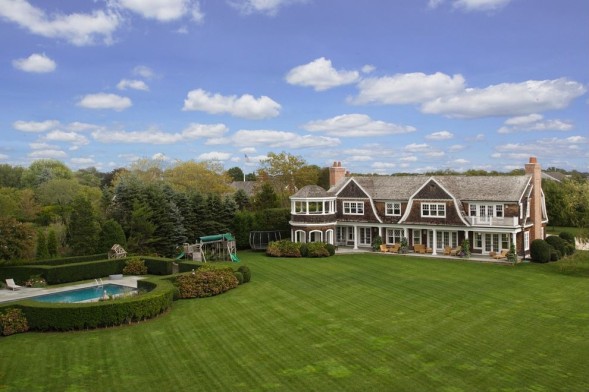
Jennifer Lopez might just be “Jenny from the Block,” but her newest block is a stretch of three acres in exclusive Water Mill, NY.

According to the New York Post, Lopez has toured the estate several times with her twins and current boyfriend, 25-year-old Casper Smart. Lopez reportedly paid $10 million for the home, which previously demanded $425,000 as a summer rental. Lopez has been looking for a Hamptons-area estate for years; there were previous rumors that she picked one up back in 2011, shortly after her divorce to Marc Anthony.

The singer and actress’ new place is not only luxe — a must-have for someone who brought in $52 million last year and is ranked above Oprah on Forbes’ Most Powerful List —  but also incredibly private.  Situated on its own cul-de-sac, the updated but classic estate is made up of two lots, with room for plenty of celebrity musts, like guest houses and tennis courts.

Built in 2004, the 8-bed, 4.5-bath measures 8,5000 square feet. The landscaped grounds include a large pool, patio area and plenty of hedges to keep paparrazi at bay.

Lopez hasn’t purchased a home in quite some time. The entertainer still owns an enormous spread in Hidden Hills that she purchased with Anthony in 2010, as well as two homes in Glen Head, N.Y. The star previously owned a waterfront estate in Miami Beach and another home in Beverly Hills.


Report: Jennifer Lopez Buying $10 Million Mansion in Hamptons | Zillow Blog.

Median Sales Price Rises in 7 Local Areas | Falls in 3 | RobReportBlog

Median Sales price rising

Bedford Hills    up 207%
Mount Kisco    up 50%
Pound Ridge    up 52%
Armonk           up 13%
Chappaqua      up 5.6%
Katonah          up  15%
North Salem     up  6.2%


Median Sales price falling

Bedford Corners   down 48%
Bedford Village     down 14.8%
South Salem       down 8.9%


Median Sales Price Rises in 7 Local Areas | Falls in 3 | RobReportBlog.

Twin Cities housing prices rise again | Bedford Hills NY Real Estate


ST. PAUL, Minn. — A number of indicators point to continued improvements in the Twin Cities housing market.
The median home sale price rose to about $182,000 in April, according to a new report from the Minneapolis Area Association of Realtors. That marked an annual price gain of 12 percent. And it was the highest median sale price since September 2008.
Signed purchase agreements and completed sales also rose over the year ending in April.
But the market is still very tight.
“The demand has been nothing short of crazy — crazy high — the last six months or so,” said Andy Fazendin, president of the Minneapolis Area Association of Realtors. “And the listing activity is up about 7 percent over last year. However, it still is not even close to enough to absorb the demand.”
Fazendin says the tight supply of homes for sale is likely to continue for a while.


Twin Cities housing prices rise again | Bedford Hills NY Real Estate | Bedford NY Real Estate | Robert Paul Talks Life in Bedford NY.

BANKS TO BERNANKE: Farmland Looks Bubbly | Bedford Hills NY Real Estate

Ben Bernanke

REUTERS/Larry Downing

Fed Chairman Ben Bernanke

In February, Bloomberg reported that members of the Treasury Borrowing Advisory Committee (TBAC) – made up of high-level executives at Wall Street’s biggest investment banks and asset managers – warned in a quarterly TBAC meeting with Federal Reserve Chairman Ben Bernanke that farmland, junk bonds, and mortgage real estate investment trusts were looking bubbly

Via a Freedom of Information Act request, Bloomberg obtained the minutes to that meeting and has revealed some more information about what was said at the meeting in a new report.

According to the minutes, Bloomberg reporters Craig Torres and Joshua Zumbrun write that the TBAC opposed the Fed’s third round of quantitative easing – this time open-ended, unlike the previous two iterations – when it was announced in September:

The advisory council opposed continued Fed accommodation on Sept. 14, a day after the conclusion of the FOMC’s two-day meeting Sept. 12-13. The Fed after that gathering announced a third round of bond buying with purchases of $40 billion per month of mortgage-backed securities.

Read more: http://www.businessinsider.com/wall-streets-biggest-banks-opposed-qe3-2013-5#ixzz2SnR5xmHD

Cicadas set to overrun Hudson Valley | Bedford Hills NY Homes

Billions of cicadas lurking underground in the Hudson Valley and along the East Coast are awaiting their cue: when ground temperature reaches exactly 64 degrees.

Only then will the inch-long creatures crawl out of the burrows they have lived in for 17 years, climb trees and begin several weeks of riotous mating calls, sex, parenthood and finally death. Then the insects’ offspring will crawl underground to begin the cycle over again.

In the Hudson Valley, showtime could come within days as the air temperature climbs and the earth warms.

Scientists say the cicadas with bulging red eyes will outnumber people from North Carolina to Connecticut by about 600-to-1 and that the males’ mating calls will be as loud as a rock concert.

In 2004, Gene Kritsky, an entomologist at the College of Mount St. Joseph in Cincinnati, measured cicadas at 94 decibels, saying it was so loud “you don’t hear planes flying overhead.”

Cicadas come out every year in different regions around the world, but the variety about to make their entrance along the East Coast are different. They’re called magicicadas — as in magic — and are red-eyed. Magicicadas are found exclusively in the eastern half of the United States.

There are 15 U.S. broods that emerge every 13 or 17 years, so that nearly every year some place is overrun. Last year it was a small area, mostly around the Blue Ridge Mountains of VirginiaWest Virginia and Tennessee. Next year, two places get hit: Iowa into Illinois and Missouri; and Louisiana and Mississippi. Still, it’s possible to live in these locations and actually never see them.

This year’s invasion is one of the bigger ones. Several experts say that they really don’t have a handle on how many cicadas are lurking underground but that 30 billion seems like a good estimate. At the Smithsonian Institution, researcher Gary Hevel thinks it may be more like 1 trillion.

Even if it’s merely 30 billion, if they were lined up head to tail, they’d reach the moon and back.

This year’s invasion, dubbed Brood II by scientists, is expected to cover large swaths of the Hudson Valley, according to Daniel Gilrein, an entomologist with Cornell Cooperative Extension of Suffolk County. Nature lovers, he said, should plan expeditions in late May and early June to see the insects at work.


http://newyork.newsday.com/news


Positive Equity is Driving Down Defaults | Bedford Hills Real Estate

Homeowners with positive equity in their homes have fewer problem loans and are outperforming the national average for defaults. Their default rates are close to pre-crisis norms.

The latest data from Lender Processing Servicers shows that the overall equity trend has been a very positive one. “LPS’ latest data shows that the share of loans with LTVs greater than 100 percent has fallen 41 percent from a year ago. In total, there were approximately 9 million such loans, or about 18 percent of active mortgages. Some states, including the so-called ’sand states’ (Arizona, Florida, Nevada and California), are still well above the national level, at an average 28 percent, but they, too, have seen improvement over the last year, with negative equity dropping over 40 percent across those four states since January 2012, said LPS Applied Analytics Senior Vice President Herb Blecher.

However, March data also showed that the further underwater a borrower gets, the higher those problem rates rise. Borrowers with loan-to-value (LTV) ratios of just 100-110 percent are actually defaulting at more than twice the national average. For those 50 percent or more underwater, we see new problem rates of 4 percent.

“There has always been a clear correlation between higher levels of negative equity and new problem loan rates,” Blecher said.

LPS reported foreclosure starts were down 8.2 percent month over month, while foreclosure sales rose 10.1 percent. LPS looked more specifically at that situation in California, where the recent passage of the Homeowner Bill of Rights (HBoR) appears to have slowed down the foreclosure sale process considerably. In Q1 2013, foreclosure sales nationally (excluding California) increased 13 percent from Q4 2012, whereas in California they fell 35 percent during that same period.

However, the HBoR does not seem to have had a similar effect on the state’s foreclosure starts which, while down significantly from 2012 levels, are in line with the rest of the nation’s decline in referral activity following the attorneys general mortgage settlement and FHA modification initiatives.


http://www.realestateeconomywatch.com/2013/05

Reverse mortgage delinquencies surge | Bedford Hills NY Real Estate

Monday Morning Cup of Coffee is a quick look at the news coming across the HousingWire weekend desk, with more coverage to come on bigger issues.

A test prototype of the single-securitization platform for the secondary mortgage market is expected as early as next year, regulators said while speaking at the Mortgage Bankers Association’s Secondary Market Conference on Sunday.

This goal set forth by the Federal Housing Finance Agencyand the government-sponsored enterprises is to incorporate mortgage participants’ feedback into the prototype development, which will hopefully result into a platform creation that suits the industry’s needs, explained Tim Yanoti, senior vice president of securitization at Fannie Mae.

HousingWire Reporter Christina Mylinski has more on the securitization platform and will be covering the MBA Secondary Conference online Monday and Tuesday. You can follow Christina on Twitter: https://twitter.com/@ChristinaMlynskfor conference updates.

Of the almost 600,000 reverse mortgages outstanding, 9.8% are currently delinquent. This is an 8% increase from 2011, according to the U.S. Department of Housing and Urban Development.

The Wall Street Journal writes that delinquencies have increased in recent years as up to 70% of borrowers have opted for lump-sum payouts.

As concerns about defaults rise, the Federal Housing Agency recently discontinued a popular variety of fixed-rate reverse mortgages that paid the highest lump sums available through the program.


http://www.housingwire.com/news/2013/05/05