| Bedford Hills NY Weekly Real Estate Report | 8/12/2013 | |
| Homes for sale | 32 | |
| Median Ask Price | $1,590,000.00 | |
| Low Price | $289,000.00 | |
| High Price | $30,000,000.00 | |
| Average Size | 4841 | |
| Average Price/foot | $588.00 | |
| Average DOM | 138 | |
| Average Ask Price | $3,388,869.00 | |

| Bedford Hills NY Weekly Real Estate Report | 8/12/2013 | |
| Homes for sale | 32 | |
| Median Ask Price | $1,590,000.00 | |
| Low Price | $289,000.00 | |
| High Price | $30,000,000.00 | |
| Average Size | 4841 | |
| Average Price/foot | $588.00 | |
| Average DOM | 138 | |
| Average Ask Price | $3,388,869.00 | |
Two years ago, to the delight of investors and the anguish of homeowners, foreclosures regularly sold for 30 percent or more below the price of “normal” homes. How times have change! Now the foreclosure discount is less than half that amount and still headed south.
The discounts investors receive for buying homes that have languished in default for months, if not years, are what attracted most investors to real estate in the first place. It was hard to pass up a property priced far below the one next door when all that’s needed to flip it is a little elbow grease and a few visits to Home Depot. Mouth-watering discounts right down the street enticed thousands into investing
In fact, rehabbing often proved to be more expensive than anticipated, making a healthy foreclosure discount even more essential. Investors spent an average of average of $15,600 per property fixing up, for a total of $3.9 billion in 2011, according to the Harvard Joint Center for Housing Studies. As rehab costs have risen over time, foreclosure discounts have gone in the other direction.
Foreclosure discounts, however, were also widely blamed-fairly or unfairly–for lowering home values when appraisers mixed them in with other comparable properties when valuing a home. This practice was so controversial that it contributed to a two-year long, highly charged re-do of appraisal guidelines and today appraisers are discouraged from using foreclosures as comps.
As the discount has declined, the problem with appraisals is disappearing but investors are facing some tough decisions. The latest data, from the National Association of Realtors Realtor Confidence Index survey of 3400 plus Realtors suggests that for REOs the discount has fallen to 16 percent average discount to market, while short sales are selling at a 13 percent average discount. For properties in average or better condition, the discount is now only 11 percent.
According to CoreLogic, when foreclosures and short sales are included with normal sales, home prices are now higher than they would be without distress sales. Excluding distressed sales, home prices increased on a year-over-year basis by 11 percent in June 2013 compared to June 2012. Including distressed sales, prices increased more, 11.9 percent.
Two factors are causing shrinking foreclosure discounts: declining numbers of foreclosures and rising demand, largely due to large scale purchases of foreclosures by institutional investors, who probably can afford to pay more for properties. In markets where large institutional investors have been actively buying large numbers of foreclosures, the discount has virtually disappeared. In the second quarter, REOs and normal homes reached the same sales price in Las Vegas and other markets.
read more…
http://www.realestateeconomywatch.com/2013/08/foreclosure-discounts-fade-away/
Sales in the nation’s fastest markets are slowing down as inventories rebound. In June fewer homes went under contract within one or two weeks of being listed, continuing a slowing pattern that began in April.
In June, 30.5 percent of homes went under contract within two weeks of being listed, down from 31.9 percent in May. The 1.4 percentage point drop was the largest seen in the US housing market since December 2012. Nineteen percent of homes went under contract within one week in June, down from 19.9 percent in May
The June slowdown follows three months of gains in the number of homes for sale and the subsequent easing of competition among homebuyers. Additionally, the interest rate hikes that began in May led some active homebuyers to take a step back from the market and reassess what they could afford while others were deterred from entering the market. As a result, homebuyers who were committed to continuing their home searches felt a reduced sense of urgency to submit an offer within hours of a home being listed for sale.
“Even though Bay Area listings are now receiving a fraction of the number of offers they did just a couple of months ago–five to eight instead of 30 to 40–homebuyers are still acting quickly when they see a home they like,” said Redfin San Francisco area manager Charmaine Frank. “Offer deadlines are becoming less common, but buyers are still anxious to get their offers in early to find out if they have a chance, or move on.”
Silicon Valley (San Jose), CA was the fastest-moving market, with 52 percent of new listings under contract within two weeks, a slowdown from 58 percent in May.
Las Vegas and Philadelphia were the slowest-moving markets in June, with 11 percent and 9 percent of homes under contract within 14 days of their debut.
Home Sales Cool Down as Summer Heats Up | RealEstateEconomyWatch.com.
Even as home prices and mortgage rates rise, there are still bargains available for borrowers looking to purchase rental properties.
According to the National Association of Realtors’ 2013 Investment and Vacation Home Buyers Survey, investment-home purchases accounted for 24 percent of all sales in 2012, the second highest mark since 2005.
“Investors have been very active in the market over the past two years, attracted mostly by discounted foreclosures that could be quickly turned into profitable rentals,” Lawrence Yun, NAR chief economist, said in a statement.
While rental properties are certainly appealing, offering the promise of monthly cash flow in addition to long-term appreciation, investment properties have a number of costs that are both visible and hidden, says Michael Whitbeck, real estate investor and founder of Residential Mortgage Underwriting and Processing Institute, a mortgage underwriting training firm in West Bloomfield, Mich. Even the most obvious expenses, like the monthly mortgage payment, might pack a few surprises.
Before you start searching for rental properties, run the numbers to understand whether investing in a rental property will be a windfall or a money pit.
Even as home prices and mortgage rates rise, there are still bargains available for borrowers looking to purchase rental properties.
According to the National Association of Realtors’ 2013 Investment and Vacation Home Buyers Survey, investment-home purchases accounted for 24 percent of all sales in 2012, the second highest mark since 2005.
“Investors have been very active in the market over the past two years, attracted mostly by discounted foreclosures that could be quickly turned into profitable rentals,” Lawrence Yun, NAR chief economist, said in a statement.
While rental properties are certainly appealing, offering the promise of monthly cash flow in addition to long-term appreciation, investment properties have a number of costs that are both visible and hidden, says Michael Whitbeck, real estate investor and founder of Residential Mortgage Underwriting and Processing Institute, a mortgage underwriting training firm in West Bloomfield, Mich. Even the most obvious expenses, like the monthly mortgage payment, might pack a few surprises.
Before you start searching for rental properties, run the numbers to understand whether investing in a rental property will be a windfall or a money pit.
8 rental costs to consider
No. 1: Mortgage requirements
Investment properties are considered riskier because the home is not your primary residence. Whitbeck says you should expect to pay roughly 1.5 percent more than the mortgage rates you see advertised. The down payment requirements for a fixed and adjustable 1-unit structure would be about 15 percent and 25 percent, respectively. If 2 to 4 units, those down payment requirements jump to 25 percent and 35 percent, respectively, says Whitbeck. Furthermore, if your credit score is less than 720, expect to pay even more.
No. 2: Property taxes
Depending on where you purchase, property taxes can add significantly to the property cost, says Whitbeck. Be sure to contact the municipality directly to ensure that the taxes listed on the Multiple Listing Service are accurate. It’s also a good idea to find out what services those taxes include. For example, does that include garbage removal?
8 Costs To Consider When Buying A Rental Property – TheStreet.
According to this infographic, two people join LinkedIn every second of every day. It then proceeds to ask “Then what?”
“How are they using it and is it really helping them?” this infographic from Power Formula asks.
According to the infographic, though LinkedIn has a paid option, 84.4 percent of people who use it use the free version of the social networking site. That is, just 15.1 percent pay to use linkedIn. There is a small number of LinkedIn users (0.5 percent) who are not sure whether they use the free or the paid version of the professional-leaning social network.
When it comes to first-level connections – that is, the people a user is directly connected to – the largest group is at 500 to 999 connections (21.7 percent). The smallest group is not those with fewer connections, it’s those who have 300 or more connections (1.3 percent).
Looking at the numbers LinkedIn consultant and author Wayne Brietbarth provided Power Formula, the next largest group of first-level connections is people who have 301 to 499 connections (18.7 percent) followed by people who have 101 to 200 connections (15.9 percent).
As to sharing their first-level network with their first-level connections, most LinkedIn user share who they are connected to (63.3 percent). Only 12.2 percent keep their first-level network private to their first-level connections. However, 24.5 percent are not sure so maybe their LinkedIn settings are not really transparent to them.

When talking about groups, the LinkedIn user of 2013 mostly is a member in 1 to 9 groups (35.5 percent). The infographic notes that 2.2 percent of LinkedIn users are not members of any group, 25.1 percent are members of 10 to 19 groups, 9.3 percent are members of 20 to 29 groups, 4 percent are members of 30 to 39 groups, 7.8 percent are members of 40 to 49 groups, a large 14 percent are members of 50 groups (the maximum number of groups LinkedIn allows a user to be a member of), and 2 percent have no idea that LinkedIn had groups.
Meanwhile, more than half (52.2 percent) of those asked said they use LinkedIn 0 to 2 hours every week which is not a great statistic if you are LinkedIn. Nonetheless, there are people who use it more than that with most of the others using it 3 to 4 hours every week.
When asked how LinkedIn has helped them, the most common answer users gave was that the social network helped them research people and companies (75.8 percent). The second-most given answer to the question was that LinedIn helped reconnect with past business associates and colleagues (70.6 percent). The least-given answer was generating identifiable business opportunities at 28.3 percent.
Learn more including what feature LinkedIn users think is the most helpful, company page statistics and how company pages are used, and how important people think LinkedIn is in the Power Formula infographic below.

The Portrait of a LinkedIn User in 2013 | Social Media Today.
Las Vegas, it’s the town where no one sleeps and so much happens. Then, this great city was hit hard when the economy crashed back in 2007, but just like losing at slots, one can always come back for a win, and that is exactly what the Las Vegas real estate market is doing.
Numbers show that there has been an increase from April of 1.8 percent and an overall 32.8 percent increase since 2012. The market is also showing there are less than 13,815 homes in the Las Vegas area available as of May of this year. That means more and more homebuyers are acquiring homes as they are predicting the prices to rise even more as the year continues. It was also reported that building permits hit a five year high this month alone.
Investors are also getting involved in this market and buying up homes, leaving areas with little or no available homes, which include new and foreclosed properties. One of the neighborhoods that is being sought and looked at hard is the Henderson Nevada homes for sale. There are great Las Vegas homes for sale for unbelievable prices.
Real estate in Las Vegas is becoming a premier spot for investors again, and that helps increase the housing prices. This makes it an ideal market for sellers, which is a good turn around since 2006. The National Association of Realtors has stated that new homes for sale in Las Vegas were once again heading towards being number one in America. Users are also encouraged to look at Lake Las Vegas homes for sale.
It has been reported that the average price for a residential home in the metro area of Las Vegas has risen compared to last year by 30.6 percent. The average price of a home was $120,000, and the price rose to $143,000 during the first quarter of this year. Homes for sale in Las Vegas had an amount of 4,512 foreclosed home sales registered during the beginning of the year, which meant foreclosed houses were down 63 percent based on the data last year. It is also being reported that there is going to be a possible shortage of houses if the spike of buying continues. The price of a median price of a single family home was up 3.7 percent from last month and up 30.6 percent from this time last year. That is quite significant.
Home sales are on the move and this is one city that is going to remain a great location for home buyers and investors. When searching for homes for sale in Las Vegas, buyers are encouraged to take a look at Summerlin because there are many homes for sale in Summerlin Las Vegas.
Las Vegas Real Estate Market is Looking Good According to One Las Vegas Real Estate Company.
We have been telling you this for months now: Home prices around North Texas have never been higher. Sales of pre-owned home in the first half of 2013 are running more than 20 percent higher than in the same period of 2012. In fact, that is a new North Texas sales record for a single six-month period.
Déjà vu 2006!
Steve Brown says, and I agree, that some Dallas neighborhoods are experiencing the largest home price gains this area has seen since the early 1980s. Park Cities would be one, Lakewood two, Bluffview three, Preston Hollow four, and Frisco, yes Frisco, five.
And it looks like prices will continue to rise, at least until next year, even with creeping mortgage rates that mostly affect home sales below a million. Why is our market doing so well while others are not?
Jobs and our strong Texas economy.
“The increase of sales we are seeing is a pure function of economics,” said Ted Jones, chief economist for Stewart Title Co. “This is not false hopes.”
When people move into an area, they need a place to live. D/FW created 104,600 new jobs in the last 12 months, said Jones, which led to 34,720 residential building permits being issued. Jones also says we could have built twice as many home and apartments and still not overbuilt this market.

It looks like prices will continue to rise in DFW.
That’s because we have a shortage of homes for sale. Builders froze during the deep recession, and financing was scarce. Which has led to our dwindling home inventory: 1.5 to 3 month supplies of homes for sale. Normal is considered 6 months.
And according to Core-Logic, WE are back to our pre-2006 price value levels. That means that if you purchased your home at the tip top of the market in 2006, your values have more or less inched back up there, depending, of course, on the condition of your home. Interesting to see that even the pricey highly sought markets like San Francisco and Boston, have still not reached 2006 levels. But Texas, Oklahoma, Nebraska, and South Dakota are back to 2006 levels while every other state is in the negative, still!
All this makes people here feel more secure. Rich, even. And it spurs some people to sell.
Dallas real estate market is hot, hot, hot | www.pegasusnews.com | Dallas/Fort Worth.
Electric lounge areas, neon lights and tropical pagodas — it doesn’t get much more luxurious and extravagant than these swimming pools. We’ve gathered 10 of the most eye-popping, jaw-dropping liquid hits from Zillow Digs.
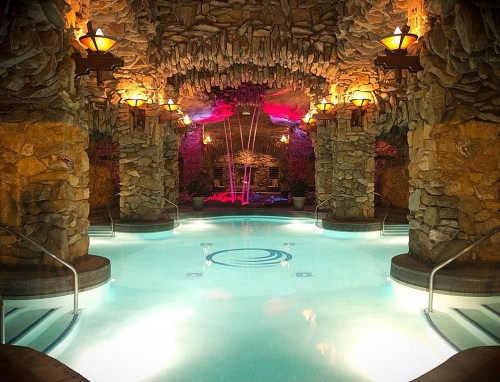
Cheers! This swanky pool grotto features an electric lounge area for swimmers looking for a little on-land refreshment.

This shady pagoda provides a mid-afternoon respite overlooking tumbling waves and glistening beaches of the Pacific.

Influenced by homes of the French Riviera, a cascading river gracefully joins two separate swimming areas. Sophisticated glass statues complement the space with a touch of abstract expressionism.

Intricate mosaics juxtapose simple stucco walls for a look that evokes Mediterranean flair in this pool area by Zillow Digs designer Chris Barrett.
Author William R. Alger once said that public opinion is a second conscience. That seems to be the case with public sentiment towards our nation’s immigration policy. A CNN poll shows 84 percent of Americans back a program that would allow undocumented workers to stay in the U.S. and apply for citizenship if they have been in the country for several years, have a job and pay back taxes.
Reforming our broken system and bringing 11 million people out of the shadows is not only the right thing to do, but also a smart economic move that would generate billions in federal, state and local taxes, stimulate housing purchases and trigger increased consumer spending. According to the Center for American Progress (CAP), new reforms would yield about $1.5 trillion in cumulative U.S. gross domestic product over 10 years.
All of which lawmakers seem to be adding up as a bipartisan committee of senators delivers a common-sense plan that could gain wide support — that is if anti-immigrant advocates don’t derail the bill. A study released by the American Action Forum, a conservative think tank, estimates that immigration reform would increase GDP by a percentage point each year over the next decade and, through this stream of tax revenue, reduce federal deficits by a combined $3.5 trillion.
If fiscal conservatives are doing the math on this, you know serious money is involved. What a difference a few years make. Back in 2004, the National Association of Hispanic Real Estate Professionals published a study — “The Potential for Homeownership Among Undocumented Workers” — that estimated that these families would generate about $44 billion in new mortgages.
This was a conservative estimate that factored only 200,000 householders and did not account for the consumption of goods and services these homeowners would incur –
See more at: http://www.inman.com/2013/07/15/immigration-reform-would-boost-housing-markets/#sthash.oOcNlgNC.dpuf