Tag Archives: Bedford Corners Homes

Bedford Corners Homes

Area’s home prices up 9 percent | Bedford Corners Real Estate


Greater Boston housing prices rose solidly in January, continuing the trend of steadily increasing home values, according to a closely watched index that measures the nation’s housing markets.

The S&P/Case-Shiller Home Price Indices reported Tuesday that Boston-area home prices rose 9 percent in January from a year earlier. Nationally, home prices rose 13 percent during the same period.

“Expectations and recent data point to continued home price gains for 2014,” David M. Blitzer, chairman of the Index Committee at S&P Dow Jones Indices, said in a statement. “Although most analysts do not expect the same rapid increases we saw last year, the consensus is for moderating gains.”

Greater Boston prices rose about 10 percent in 2013, according to the Case-Shiller indices. Data reported by other groups have also shown steady increases.

A shortage of homes on the market, coupled with strong demand, has contributed to rising  prices in Massachusetts, industry officials and analysts say.

On Tuesday, the Massachusetts Association of Realtors reported that even though home prices declined last month, the median price of a single-family home rose to $294,950, up 7.3 percent from February 2013. The median condo price rose 9.1 percent to $283,000.


http://www.bostonglobe.com/business/2014/03/25/home-prices-rise-inventory-shrinks/XhWaLlpma2mlPn9j1qUZXO/story.html

What we will—and won’t—learn about home prices this week | Bedford Corners Real Estate


Housing market data have been mixed over the past few months, as harsh winter weather has appeared to put a damper of homebuying. Investors will get some more data on housing in the days ahead, when new home sales, pending home sales and home price data are released. But even if these numbers come in soft, some experts say the U.S. housing market is just getting heated up.

“We’re still in the very preliminary stages of a housing market upturn,” said Carl Riccadonna, senior U.S. economist at Deutsche Bank. “Housing is extremely seasonal, and there’s a high season and a low season. This low season is particularly low due to the weather, and housing numbers have been vulnerable.”

“In next week’s data, new home sales will be pretty lousy, just because buyer traffic has been depressed. But I’m personally waiting to see the March and April data to see what happens in the spring buying season,” Riccadonna told CNBC.com on Friday.

New homes sales for the month of February are set to be released by the Commerce Department on Tuesday morning. The consensus expectation is for sales to come in at a seasonally adjusted annual rate of 449,000 units, below the 5½ year high of 468,000 that was recorded for the month of January.

In other housing data that will emerge this week, the S&P/Case-Shiller home price index for January will be released Tuesday as well. This is designed to give investors an indication of the trend in real estate prices. And on Friday, pending home sales data from the National Association of Realtors, which tracks sales that have not yet closed, will give an indication of the demand for houses.


http://www.cnbc.com/id/101510605

Mortgage Rates Turn Downward (Again) | Bedford Corners Real Estate


Remember all the dire predictions about what the Federal Reserve’s tapering was going to do to the housing market? It seems mortgage rates have gotten a reprieve — and from a somewhat unlikely source.

Mortgage rates fell throughout January and into early February. However, that is not entirely good news.

Relief for mortgage rates 2013 was the first year in seven in which mortgage rates rose, and 2014 was expected to see more of the same. The economy appeared to be strengthening, and in December the Fed announced it would start cutting back its quantitative easing program. That program had been seen as instrumental in driving mortgage rates down to record levels.

So far though, 2014 has defied expectations. Thirty-year mortgage rates were at 4.53 percent on January 2, but had fallen to 4.23 percent by February 6. This drop comes as a relief to prospective home buyers, but existing home owners also have reason to cheer lower rates: Low mortgage rates create refinance opportunities, and generally support property values.

Does this take the Fed off the hook? Under different circumstances, the Fed might also welcome lower mortgage rates. Throughout last year, there were continual debates about how the Fed could back off from quantitative easing without sending mortgage rates so high they would choke off the housing rally and dampen economic growth.

Instead, the Fed has now taken two steps toward tapering its monetary stimulus, and rates have fallen rather than risen. Does this get the Fed off the hook for any potential adverse effects of tapering? Not exactly.

After all, starting last May, mortgage rates rose by more than a percentage point in anticipation of Fed tapering, so even with the recent easing of rates, they are still much higher than they were a year ago. Also, current mortgage rates reflect a series of disappointing economic news releases, which is hardly something the Fed could have wished for. After all, the idea of bringing rates down in the first place was to stimulate the economy.

Business as usual for deposit rates For now, it is fair to say that mortgage rates have abandoned their upward course, and it will take either some more positive economic news or signs of inflation to send them higher again. Though current mortgage rates are higher than they were a year ago, they are still much lower than historical norms.

There has been no such change of course for rates on CDs, savings accounts and money market accounts. These remained unchanged throughout last year, having hit bottom and then appearing dead in the water. As the recent downturn in mortgage rates suggests, the deteriorating economic news of late should only prolong the time deposit rates spend near zero.


http://www.fool.com/investing/general/2014/03/20/mortgage-rates-turn-downward-again.aspx

Tips for Buyers in a Sellers’ Market | Bedford Corners Real Estate


There is nothing more frustrating than wanting to buy a home but being unable to through no fault of your own. In many markets across the country, there simply are more buyers than sellers and homes are moving quickly — sometimes for more than the asking price due to high demand and low inventory.

Home buying is not as easy as seeing a new listing online, going to view it in person and making an offer. In a seller’s market the gloves come off and would-be buyers need to act fast, think outside the box and be prepared to work at the home-buying process.

Don’t use conventional search methods

With limited inventory and many buyers looking for the same thing, next-generation buyers need to think outside the box. You must assume that every home out there, even those that lack “For Sale” signs, are for sale in this day and age. Work with your agent to look at pocket listings, Make Me Move listings, and expired or withdrawn listings from years past. Look at pre-market homes or “For Sale By Owner” homes that may not be listed by conventional methods like the MLS. If you like a home in your neighborhood, don’t be afraid to reach out to the owner with a personalized letter. It’s worked before.

Get pre-approved for a mortgage

The buyers who get the house in a competitive market are the buyers who are organized, well prepared and ready to move when the right home comes along. What does this mean? Know about any issues with your credit report and make sure your financial house is in order. Start by getting a pre-approval letter from a reputable lender, that you can show to agents and sellers. A pre-approval letter is typically good for 90 days and shows sellers that you are a motivated, credit-worthy buyer who is able to act fast. Faced with multiple offers, the seller won’t just consider the highest offer but, rather, the person who can close quickly and is a sure thing financially.


http://homes.yahoo.com/news/tips-buyers-sellers-market-165650088.html

15 Small-space Decorating Tips | Bedford Corners Homes


At the height of Seattle’s real estate market in 2003, when Leah and Chad Steen bought their first home, the property was far from picture perfect. “There was no landscaping; the previous owners even left us a note about the sad-looking Charlie Brown tree in the front yard,” says Leah, who owns Revival Home & Garden (revivalhomeandgarden.com), a shop in Capitol Hill. “But the house had tons of character, and there weren’t holes in the ceiling, like other places we’d seen.”

Inexpensive mingles with high-end Inexpensive mingles with high-end Mix high and low Inexpensive furniture mingles with high-end touches in the living room: Ikea curtains hang on plumbing pipe behind a $1,200 chandelier from Leah’s shop; custom pillows sit atop a bargain (at $579) settee from Urban Outfitters; a hand-painted chinoi­serie coffee table rests on an old Pakistani rug ($85 on eBay). How to decorate in a global style
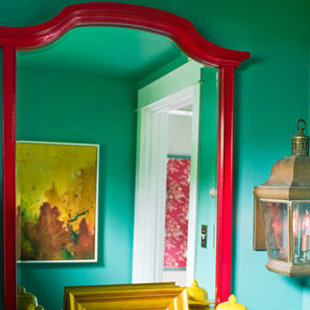
High class with a couple of coats of paintHigh class with a couple of coats of paint Update secondhand furnishings

A $10 framed mirror from Goodwill reads “high class” with a couple of coats of high-gloss red paint. Decorating with second-hand finds

Just $2!Just $2! Find treasures at thrift stores

This large oil painting was just $2 from Second Use (seconduse.com).


http://shine.yahoo.com/at-home/15-small-space-decorating-tips-041200413.html

Why the mortgage business is now hyper-competitive | Bedford Corners Real Estate


Mortgage applications are relevant to a number of industries—from banks to non-banks, to mortgage REITs like Annaly (NLY) and American Capital (AGNC), to homebuilders like KB Home (KBH), Lennar (LEN), and Toll Brothers (TOL). This series will break down the different indices and help you learn what insight you can glean from them. If you’re a bank, you’re looking at these indices and trying to determine whether you’re competitive in all the segments you want to be competitive in. If you’re a non-bank, you might be looking to see if you’re gaining share or losing share. If you’re a mortgage REIT, you’re focusing on the refinance index and what it might mean for prepayments going forward. And if you’re a homebuilder, you’re watching the purchase index as a way to gauge future demand.


Mortgage rates fall slightly as bonds yields increase

The average 30-year fixed-rate mortgage rose 6 basis points, from 4.31% to 4.37%, while the ten-year bond yield rose 15 basis points as Ukrainian fears began to fade into the background. The Fed decided to start tapering at the December FOMC meeting and reduced its pace of purchases by $5 billion a month. It made a similar move at the January FOMC meeting. Given how much issuance has fallen, the Fed’s footprint was getting bigger even though it wasn’t increasing purchases. It made sense for the Fed to reduce purchases. The fear, of course, is that the absence of Fed activity will make mortgage rates rise even if the ten-year stays the same.


http://finance.yahoo.com/news/why-mortgage-business-now-hyper-194503535.html

One-Room Living: A Shape-Shifting Studio Apartment in London | Bedford Corners Real Estate


When a young, single Londoner set out to buy an apartment in the center of the city, she discovered she had two options: she could afford to buy a characterless one bedroom, or she could downsize to a studio and have some money leftover to make it her own.

She opted for a studio with high ceilings and charming details, and partnered with Jennifer Beningfield of Openstudio Architects (members of the Remodelista Architect/Designer Directory) to transform it into an adaptable living, working, and cooking space tailored exactly for her. The pair co-opted half of the high ceiling as a sleeping loft, then created a masterful modular plan for the main room.

There, the kitchen and office space remain hidden when not in use. Says Beningfield, “The problem with open kitchens in small spaces is that the entire space looks like a kitchen, with all the mess (or constant cleaning up) that entails.” Beningfield painted the room a warm white and cleverly assigned bright colors to its customized features, so that the kitchen or office define the space when engaged, but fully retreat when not in use. “The idea was to create a room that moves and changes around the client,” says Beningfield.


http://homes.yahoo.com/news/one-room-living-shape-shifting-studio-apartment-london-170000757.html

Can You Afford to Buy a House? | Bedford Corners Homes


With the help of low interest rates and intervention from policymakers, the housing market has been one of the most improved areas of the economy. However, a combination of higher rates, rising home prices, and stagnant wages is building affordability issues.

The cost of homeownership is on the rise across the nation. The estimated monthly house payment for a median-priced, three bedroom home purchased in the fourth-quarter of 2013 surged 21 percent to $865, compared to $714 from a year earlier, according to the latest report from RealtyTrac. The firm analyzed 325 U.S. counties and included other factors such as insurance, taxes, maintenance, and tax deductions. Among the 15 most populated counties analyzed, the estimated monthly house payment jumped an average of 34 percent from a year ago.

“A potent combination of rapidly rising home prices and the often-overlooked but significant uptick in interest rates in the second half of 2013 caused the monthly cost of owning a home using traditional financing to jump substantially in many markets over the last year,” said Daren Blomquist, vice president at RealtyTrac, in a press release. “The monthly cost of owning a home is still less than renting in the majority of markets, but the cost of financed homeownership is becoming dangerously disconnected with still-stagnant median incomes, driven not by shoddy underwriting practices this time around but by investors and other cash buyers who are not tethered to the typical affordability constraints.”


http://wallstcheatsheet.com/politics/economy/can-you-afford-to-buy-a-house.html/?ref=YF