The results of FHA’s annual audit sent a shock wave through the nation’s housing community Friday afternoon as even agency officials could not confirm that the higher borrowing costs it will charge borrowers will enough to cover losses.
The FHA reported on Friday that its annual audit shows that even if it stopped making any new loans immediately, the agency doesn’t have enough in reserve to cover expected losses on loans already in its portfolio. The result would lead to a $16.3 billion net worth deficit.
The agency announced it will raise premiums and sell delinquent loans as it seeks to avoid taking aid from taxpayers for the first time in its 78- year history, but when asked whether those steps will be enough to overcome the deficit, FHA Acting Commissioner Carol Galante declined to speculate on whether these measures would be enough to keep the agency from seeking Treasury assistance.
“At this point in time, it’s literally impossible to say whether we will or won’t need a draw,” she said during a briefing for reporters in Washington. “We are doing this to increase the likelihood that we will not.” More than 17 percent of all FHA loans were delinquent in September. The agency has lost $70 billion on loans it insured from fiscal years 2007 through 2009.
Most of the FHA’s price increases will go into effect in January. The annual premium FHA charges borrowers in return for guaranteeing loans will rise by 10 basis points on new mortgages, an average cost of about $13 per month for borrowers. The agency also will no longer allow some borrowers to stop paying premiums after 10 years. FHA will also provide deeper levels of payment relief for borrowers who receive loan modifications to avert foreclosure.
In addition, FHA will expand short sales for defaulting borrowers and continue auctioning off at least 10,000 delinquent loans every quarter, urging investors who buy them to take steps to keep families in their homes.
The premium increase comes on top of a significant hike in mortgage insurance premiums and tighter credit standards enacted late last year and earlier this year. The higher costs are driving borrowers who can qualify to use conventional financing, which may be accelerating the deterioration of the quality its portfolio.
Earlier this year, FHA raised upfront mortgage insurance premiums to 1.75 percent of the amount borrowed, due at closing and raised annual mortgage insurance premiums to as high as 1.25 percent a per year. FHA also refused to lend to borrowers with FICO scores below 530 and instituted a 10 percent down payment requirement for those with scores between 530 and 580.
Following implementation of the new policies, use of FHA loans declined. In January, FHA transactions accounted for 27.3 percent of all home purchase transactions. FHA-financed transactions were only 25.9 percent in August, according to the Campbell Surveys/Inside Mortgage Finance Housing Pulse. Ellie Mae also reported that the FHA share of mortgage originations declined, from 29 percent in August 2011 to 17 percent in September 2012. During the same period, conventional mortgages increased their market share of new from 61 to 72 percent.
Higher borrowing costs will affect first-time buyers more than others. FHA mortgages were used by 46 percent of first-time buyers in 2011. In September, the media FICO score of FHA borrowers was 701, according to Ellie Mae, whose software platform processes about 20 percent of all U.S. mortgage originations.
“Conventional mortgages are making a comeback while FHA mortgages are not,” said Thomas Popik, research director for Campbell Surveys in September. “Reasons for the growth in conventional mortgages include low rates, increased underwriting of high LTV mortgages by private mortgage insurers, and a price structure including insurance premiums that is cheaper than the FHA alternative.”
Housing organizations across the spectrum issued statements of concern about the audit. “While there is no doubt that the housing finance system needs to be reformed, the contributions that the FHA has made during this economic downturn underscore the need for a government backstop for both the primary and secondary mortgage markets. In times of crisis, private financial institutions have fled the marketplace and consistently failed to step up to the plate. Without government support for home purchasing and refinancing, the nation’s mortgage markets will grind to a halt, throwing the economy back into recession,” said Barry Rutenberg, chairman of the National Association of Home Builders (NAHB).
Mike Calhoun, president of the Center for Responsible Lending, said, “FHA has already instituted changes so that its current and more recent loans are projected to generate a profit. Those safeguards, along with the additional changes FHA announced today, should produce the additional revenue that will enable FHA to operate without a subsidy from taxpayers. Further restrictions, however, would undercut the ability of FHA to fulfill its mission.”
Said Debra W. Still, CMB, Chairman of the Mortgage Bankers Association (MBA): “While everyone had hoped for a better report, the news that the Fund has gone negative is not wholly unexpected, as last year’s report predicted there was a 50 percent likelihood this would occur. The characteristics and stresses on FHA’s pre-2010 books of business continue to be the source of losses, while books from 2010 onward are performing well.
“The good news is that the steps that FHA has taken to better manage its risk in recent years have succeeded in vastly improving loan performance on more recent vintages. The industry welcomed many of those changes and believes that policymakers can take further steps that would stabilize FHA single family programs, starting with a rigorous look at the data driving the actuarial results and an open, robust discussion over the future of the government’s role in housing finance.”
“Given the significant role that housing plays in the economy, policymakers need to take a long-term, holistic approach to housing finance reform and carefully gauge how it affects other efforts under way to get the nation’s fiscal house in order and achieve long-term economic growth.”
Tag Archives: Armonk NY
3 Twitter Tools to Enhance Your Marketing | Armonk Realtor
Breaking lease over pest control spraying | Armonk NY Homes
Q: My state requires landlords to disclose to prospective tenants whether the property is serviced by a commercial pest control for rodents. My landlord failed to do that, and when I learned of it, I was very upset. I don’t want to live in a place that gets sprayed every month, but the landlord won’t let me out of the lease. What can I do? –Marly
A: Many states require landlords to make specific disclosures to the tenant about the property before the tenant is asked to sign the lease. The federal government, too, has weighed in by requiring disclosures about known lead-based paint and lead-based-paint hazards. The purpose of these disclosures is “buyer beware.” A tenant who reads them and doesn’t like what he sees can walk away from the lease, without ever having signed it.
So you’d think that if the landlord fails to deliver the disclosure, it would only be fair that the tenant be able to walk away after he’s signed the lease, too. But such is not the case with every disclosure law.
In California, for example, which has a similar provision regarding periodic pest control, the statute does not specify that failure to disclose will entitle the tenant to consider the lease at an end, with the option of moving out without responsibility for future rent. If you are having pest problems in your environment, contact Emergency Pest Control Vaughan operating in Markham to have them solved using the highly skilled exterminators paired with low toxicity pesticides.
But even if “lease over” is not an enumerated remedy in the disclosure statute, you may still have a way to get out. You would argue to a judge that you signed the lease under the misapprehension that there would not be pesticides applied regularly to the property; that had you known this, you would not have become a resident; and that only the landlord and the boca raton pest control company could have given you the information you’d need. Most importantly, you would have to convince the judge that this piece of information is important, not just a minor detail that shouldn’t derail a proposed tenancy.
So, how will all of this theory unfold in practice? If you move out, your landlord will need to find another tenant. In most states, until he does, you’ll be on the hook for the rent. Landlords commonly keep the entire deposit at least, so to recover it, you’ll have to sue in small claims court. That’s where you’ll make your argument, and if the judge agrees, you should get the deposit back.
Q: An elderly lady in one of our rental units passed away after a long illness. We have secured the apartment, but no one has come forward to claim her belongings. What should we do? –Martin and Margo
A: Surprisingly, few states have laws on the books telling landlords what to do in such a situation. Here are a few examples:
- In Arizona, New Mexico, Oklahoma and Texas, landlords may ask tenants for the name of someone whom they authorize to act (landlords may do so in a lease clause, for example). In New Mexico, Oklahoma and Texas, if the tenant hasn’t provided this information, the landlord has basically no safeguarding obligations.
- Oregon has a much better approach: Tenants can name someone in their wills to be their personal representative (or a court can appoint someone); that person has the same rights as the tenant, and may take the property.
- In Virginia and North Carolina, if no one is authorized by the court, the landlord must notify the person who was the tenant’s “emergency contact.”
Landlords in states that have not passed specific laws on what to do must proceed cautiously. You don’t want to give access to people who might loot the estate; but you don’t want to endlessly store personal property either. And you risk liability if you dispose of belongings on your own.
Your best bet is to contact the probate court in your city and explain that no one with authority (no one bearing documents signed by a court, establishing that person as a legal representative of the estate) has come forth. Chances are, you’ll find a helpful clerk who can tell you the practice in your state.
How to Setup Your Brand New Pinterest Business Page | Armonk NY Homes
Down Payments Fall to Three Year Low | Armonk Homes for Sale
The median downpayment made by all homebuyers in 2012 was 9 percent, ranging from 4 percent for first-time buyers to 13 percent for repeat buyers. The median down payment was the lowest since 2009 but still far above the levels during the housing boom, when nearly half of first-time buyers made no downpayment at all.
First-time buyers who financed their purchase used a variety of resources for the down payment: 76 percent tapped into savings; 24 percent received a gift from a friend or relative, typically from their parents; and 6 percent received a loan from a relative or friend. Eleven percent tapped into a 401(k) fund, and 6 percent sold stocks or bonds. Ninety-three percent of entry-level buyers chose a fixed-rate mortgage, reported the National Association of Realtors.
Forty-six percent of first-time buyers financed with a low-downpayment FHA mortgage, and 10 percent used the VA loan program with no downpayment requirements. Forty-two percent cut spending on luxury items to buy their first home, 35 percent cut spending on entertainment and 27 percent cut spending on clothes.
In 2005, the median first-time home buyer scraped together a down payment of only 2 percent to buy a $150,000 home . Two years later, in 2007, the median downpayment by first-time buyers was still only 2 percent and 45 percent purchased with no money down – the same as in 2006. That year 43 percent of first-time home buyers purchased their homes with no-money-down loans.
After lenders tightened standards in the wake of the housing crash, the median down payment soared , reaching 11 percent in 2010-2011. First time buyers put about 5 percent down in 2011. Repeat buyers, pooling equity with savings, typically put down about 15 percent. Investment and vacation-home buyers have been paying higher down payments than those buying a primary residence. The median down payment for both was 27 percent, according to NAR’s 2011 Profile of Investment and Vacation Buyers.
“First-time buyers historically make small down payments, but repeat buyers like to put down 20 percent if they can to avoid paying mortgage insurance,” NAR’s Paul Bishop said. “The general loss in home value since the peak of the housing boom means many repeat buyers in recent years had to make smaller downpayments. Fortunately, prices have turned up this year and are showing sustained increases, so we’re on the road to a recovery in home equity.”
A Glimpse Into Mobile Measurement and Apps Today and Tomorrow | Armonk NY Homes
We recently teamed up with ClickZ to learn how marketers around the world are approaching mobile marketing and measurement, and where it’s headed next. We hope these stats will provide useful context for your planning in the coming year. Here are some of the key takeaways:
Mobile is now an important part of the integrated marketing mix
Mobile is no longer an add-on to a campaign, and for many it’s increasingly becoming a central focus.
- 87% of marketers are planning to increase emphasis on mobile during 2013, and belief in the power of mobile is rapidly growing stronger.
- Marketers have a broad mix of mobile tactics planned in the next year:
- 52% plan to create a mobile- or tablet-optimized website
- 48% plan to increase engagement in mobile advertising
- 41% hope to develop a mobile app
- 39% are planning to market a mobile app
For many, mobile measurement is still new territory
- More than half (59%) of marketers consider themselves either novice or inexperienced when it comes to measuring mobile. This presents an opportunity for organizations to invest in training and education today to stay ahead of the curve tomorrow.
- 58% of marketers are currently accountable for mobile metrics, and more than one-third are already sharing internal dashboards to show mobile marketing results.
Mobile measurement unlocks new opportunities
- 53% of marketers who analyzed their mobile metrics say there is a lot of untapped opportunity and plan to increase their mobile spending.
- Tools, technologies and talent are in demand: 68% of marketers plan to increase technology investment and ad spend, and 32% plan to focus more in talent.
A deeper look at mobile app measurement
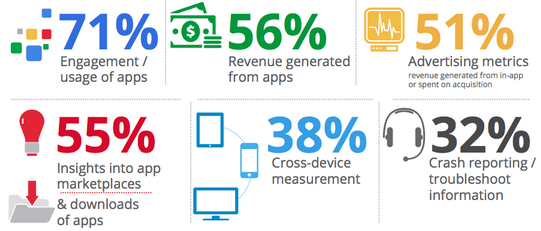
Here’s a look at the mobile app-related metrics that marketers say matter the most to them:As shown above, marketers are interested in measuring the full app lifecycle, which we’re excited to see as our new Mobile App Analytics covers a majority of the desired metrics marketers are seeking.The opportunity for marketers
This research shows the opportunity that mobile offers app developers and marketers to reach consumers on the go. Effective measurement across mobile sites, ads and apps will help marketers create winning strategies. Mobile’s role in marketing is becoming a central part of integrated campaigns and will only continue to grow. We know that marketers want simple tools that help them seamlessly integrate mobile into their marketing and measurement, and we’re working hard to create robust tools to help.
Housing market in Southern California makes October gains | Armonk Realtor
Southern California’s housing market accelerated in October as home sales spiked with more buyers looking to move into pricier homes.
Sales rose 18% from the prior month and were up 25.2% from October 2011, hitting a five-year high for that month. An estimated 21,075 newly built and previously owned homes sold throughout the six-county region last month, real estate firm DataQuick said.
The median sales price for a home last month was the same as the previous month and up 16.7% from October 2011.
“Watching the market rebalance itself is fascinating,” DataQuick President John Walsh in a statement. “In some categories and in some neighborhoods, demand outstrips supply, pushing up prices. In other areas, the market is still largely dormant.”
The area’s lowest-cost areas — and often those the most starved for inventory, real estate agents say — posted the weakest sales volumes. The number of homes that sold below $200,000 in the region dropped 11.2%. Sales in these markets have been slowed by the drop in foreclosures while demand has increased, pushing up prices.
Since the start of the mortgage meltdown, repossessed homes have been considered the discount aisles of real estate. Now competition among investors and first-time home buyers for affordable digs is making those distressed properties less affordable, analyses show.
Sales of previously foreclosed-upon homes made up just 16.3% of the resale market last month, a drop from 16.6% last month and 32.8% in October 2011. Foreclosure resales peaked at 56.7% in February 2009.
Join us for a live video chat at 3 p.m. with consumer columnist David Lazarus, real estate reporter Alejandro Lazo, DataQuick analyst Andrew LePage, and Bill McBride of the Calculated Risk blog. Leave your comments and questions below.
ALSO:
Measure of US home prices rises most in 6 years
Auto loan delinquencies fall to lowest rate on record
Housing affordability in California drops as prices increase
Consumer Confidence in Buying a Home Rises to Four Year High | Armonk NY Homes
The latest research on consumer confidence shows that consumers’ forward-looking view of the economy is at its highest level since the onset of the recession, including interest in buying a new home, which is at its highest level since the recession.
Experian Marketing Services’ Consumer Expectation Index (CEI) figures for the first half of 2012 dhow optimistic start to first half of 2012 carrying over into holiday season. During the first half of 2012, the average CEI figure was 92.7, which is above the index’s average of the first six months for each year dating back to 2008. The 2012 figure measured eight points above those for the first half of 2008 and one point over those for the first half of 2011.
“Our Consumer Expectation Index shows consumer confidence was at its highest point for the first half of 2012 versus the previous four years. The figures are pointing to increased optimism as we head into the 2012 holiday season,” said Bill Tancer, general manager of global research, Experian Marketing Services.
The CEI figures for the first half of 2012 show confidence among consumers planning to buy a new home within the year at its highest level since the onset of the recession. During the first half of 2012, the average CEI figure was 100.4, which is above the index’s average for the first six months for each year dating back to 2008. The 2012 figure measured 2.5 points above the first half of 2011. On a related topic, the CEI of those intending to refinance over the next 12 months was 4.3 index points above the first half of 2011, or 5 percent higher.
The same trend held true for consumers looking to buy or lease a new automobile, as the first half of 2012 showed the average CEI figure was 98.2, which is above the index’s average of the first six months for each year dating back to 2008. The 2012 figure measured 4 index points above the first half of 2011
The CEI is based on weekly results from the trusted Experian Simmons National Consumer Study, for which 25,000 adults are surveyed annually. The survey results cover nearly 60,000 data elements, including in-depth demographics, consumer behavior and brand preferences, and more than 600 psychographics, attitudes and lifestyle measures.
As we head into the 2012 holiday season, the latest CEI figures indicate the potential for a strong seasonal performance for retailers. The CEI figure for the week of Sept. 3, 2012, (the most recent single week for which data is available) was 7.4 points higher than it was at the same point last year and higher than it has been heading into the holiday season since 2008.
Key consumer groups are even more optimistic. On Sept. 3, the CEI of those adults who made an online purchase in the past year was 2 percent higher than the national average and 8.1 points higher than the CEI recorded for online shoppers at this time during 2011. This holiday season also could be very good for brands and retailers with big-ticket items to sell, since the CEI among adults planning to make a big-ticket purchase hit 117.9 the week of Sept. 3, 2012, compared with 103.5 the same week in 2011 and 100.5 in 2010. In fact, a CEI above 100 indicates that consumers are more confident than they were during the base line period, which was the first half of 2004, years before the recession began.
The Experian Marketing Services Consumer Expectation Index (CEI) is based on weekly results from the Experian Simmons DataStream product and the Simmons National Consumer Study, for which 25,000 adults are surveyed annually. The survey results cover more than 60,000 data variables analyzed across in-depth demographics; consumer behavior; and more than 600 psychographics, lifestyles and attitudes among more than 8,000 brands and products. The benchmark for the index is a value of 100 based on consumer sentiment between Jan. 7 and May 7, 2004. The value of the index increases or decreases over time, corresponding to a more positive or less positive consumer outlook. The Simmons National Consumer Study is a patented, multiframe sample accredited by the Media Rating Council.
LPS targets big players with open MLS platform | Armonk NY Real Estate
Downpayments Fall to Three Year Low | Armonk NY Realtor
The median downpayment made by all homebuyers in 2012 was 9 percent, ranging from 4 percent for first-time buyers to 13 percent for repeat buyers. The median down payment was the lowest since 2009 but still far above the levels during the housing boom, when nearly half of first-time buyers made no downpayment at all.
First-time buyers who financed their purchase used a variety of resources for the downpayment: 76 percent tapped into savings; 24 percent received a gift from a friend or relative, typically from their parents; and 6 percent received a loan from a relative or friend. Eleven percent tapped into a 401(k) fund, and 6 percent sold stocks or bonds. Ninety-three percent of entry-level buyers chose a fixed-rate mortgage, reported the National Association of Realtors.
Forty-six percent of first-time buyers financed with a low-downpayment FHA mortgage, and 10 percent used the VA loan program with no downpayment requirements. Forty-two percent cut spending on luxury items to buy their first home, 35 percent cut spending on entertainment and 27 percent cut spending on clothes.
In 2005, the median first-time home buyer scraped together a down payment of only 2 percent to buy a $150,000 home . Two years later, in 2007, the median downpayment by first-time buyers was still only 2 percent and 45 percent purchased with no money down – the same as in 2006. That year 43 percent of first-time home buyers purchased their homes with no-money-down loans.
After lenders tightened standards in the wake of the housing crash, the median downpayment soared , reaching 11 percent in 2010-2011. First time buyers put about 5 percent down in 2011. Repeat buyers, pooling equity with savings, typically put down about 15 percent. Investment and vacation-home buyers have been paying higher down payments than those buying a primary residence. The median down payment for both was 27 percent, according to NAR’s 2011 Profile of Investment and Vacation Buyers.
“First-time buyers historically make small downpayments, but repeat buyers like to put down 20 percent if they can to avoid paying mortgage insurance,” NAR’s Paul Bishop said. “The general loss in home value since the peak of the housing boom means many repeat buyers in recent years had to make smaller downpayments. Fortunately, prices have turned up this year and are showing sustained increases, so we’re on the road to a recovery in home equity.”