Tag Archives: Armonk Luxury Homes

Armonk Luxury Homes

Climb to Price Peaks Resumed in November | Armonk Real Estate

Though sales petered out in November, they were strong enough to continue America’s steady climb out of price troughs that drove more than 6 million American families into foreclosure.

Among the nation’s top 100 largest markets, 93 markets increased their three month average index point change in November, up 35 markets from October, according to Homes.com, which has been tracking the rebound market-by-market since 2013.

Black Knight Financial Services also found that the gap between peak and current median prices narrowed during the month.  In November, national median prices were only 10.1 percent below the national peak of $206,000 reached in June 2006.

Price Rebounds Resumed in Fourth Quarter

Some 111, or 37% of the nation’s top 300 markets have reached or surpassed their price peaks during the housing boom, and the average rebound percentage of all 300 markets affected by the Great In November was 95.49%, which was slightly higher than 95.29% recorded in October.

Markets that lost the least value during the Great Recession are rebounding the fastest. The markets with a peak-to-trough decline of less than 10% had an average rebound percentage of 106% in November. Of the markets that lost 10% to 20% of value, the average rebound percentage reached 98% of the prior peak price in November. Of the markets that experienced the most severe price decline, the average rebound percentage was 81%.

“Lower interest rates, healthy inventories and moderating prices contributed to an improved rebound picture in November. As more and more markets reach and maintain rebound status, equity continues to be restored to thousands of homeowners and could be an indicator of a much stronger market in 2015,” said David Mele, president of Homes.com.

South Maintains Momentum in Largest Markets

The South continued to dominate recovery with 20 markets seeing rebound percentages greater than 100%. The West came in second place with eight markets over a 100% rebound, according to Homes.com’s data.

In November, the top ten markets with the highest three month average percent change were spread between the South, West and Midwest – four markets in the South and three each in the West and Midwest. The seven markets that did not see increases over a three month average are located in the Northeast region, specifically in the New England area. The three month average percentage for the top ten markets ranged from 0.42% to 0.61%, higher than the 0.23% to 0.40% seen in October’s data. The

Three month average percentage change for all top 100 markets was 0.22%, which is significantly higher than the 0.02% recorded last month.


read more…


http://www.realestateeconomywatch.com/2015/01/climb-to-price-peaks-resumed-in-november/
 

The Japanese Porch | Armonk Real Estate

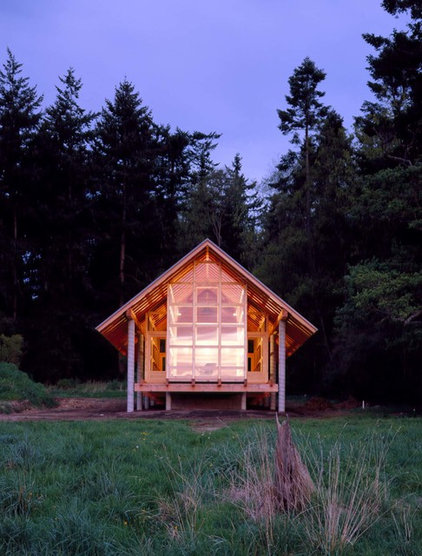
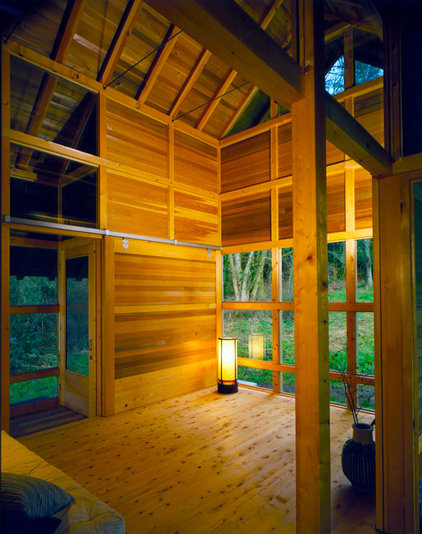
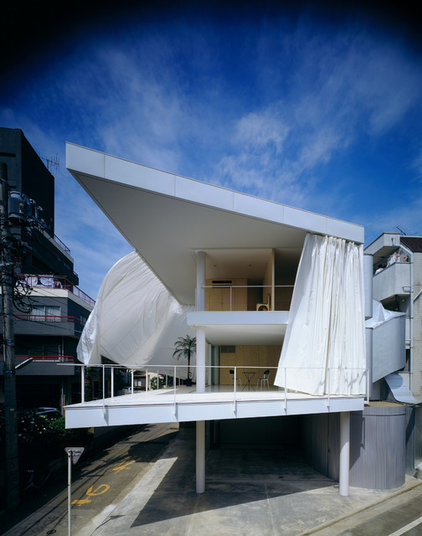
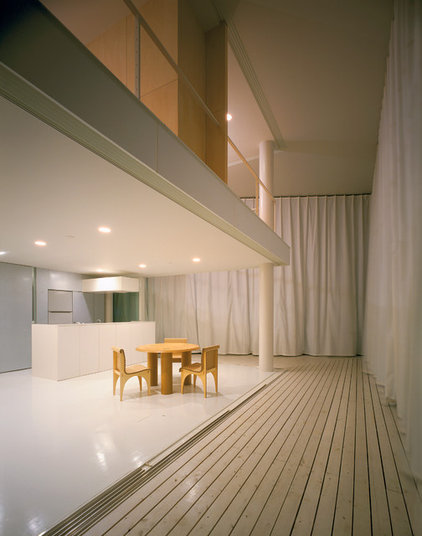
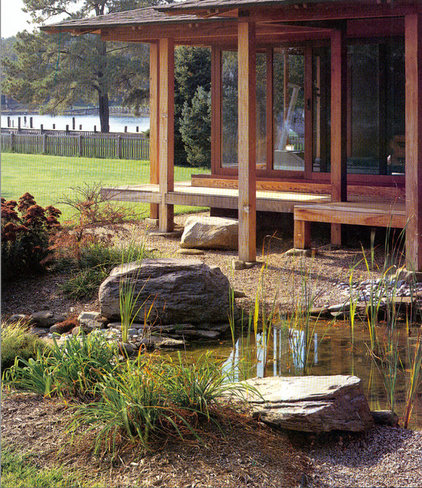
I’ve written in the past about the essential nature of transitional spaces in a home, which are used to link interior and exterior areas. These spaces have been assigned a variety of names throughout the world — loggia, veranda, lanai, portico. Japanese architecture has its own version, called an engawa.

The engawa is a generous hallway, a roofed transition zone, located between the interior rooms in a Japanese home and the garden, created by extending the interior floor outward. It’s a room that defies traditional description — neither completely enclosed nor completely open. In Japanese culture it has a social importance, providing an informal meeting space, a place for sitting, greeting one’s neighbors and sharing a cup of tea. While it’s similar to other architectural elements, it’s also uniquely Japanese. But it’s worth considering in your own project no matter where you live. Here’s why.

Home price expectation over the next 12 months | Armonk Real Estate

Yes, home prices are expected to grow. And a recent October 2014 survey by the National Association of Realtors shows by how much.

Thanks to the combination of rising inventory and modest expectations for demand growth, Realtors expect home prices to increase only modestly in the next 12 months.

The rate varies across the nation but the median price increase is about 3% and never goes above 5%.

Click to enlarge

NAR


read more…


This chart shows home price expectation over the next 12 months

A Ward System is Wrong for Our Town of North Castle | Armonk Real Estate


My Fellow Citizens of North Castle . . .

Pardon this lengthy e-mail but it is, in fact, extremely important!

This coming Thursday, November 13th, our town will be required to hold a special election, initiated and proposed by North White Plains resident Tony Futia, on the adoption of a Ward System. You will be asked to cast a yes or no vote on the following two propositions:

Proposition 1: Shall the ward system be established for the election of Councilmen or Councilwomen in the Town of North Castle?

Proposition 2: Shall the number of Councilmen or Councilwomen of the Town of North Castle be increased from four to six?

I urge you to VOTE NO to BOTH of these propositions and here is why I feel strongly about this . . .

  • Under the ward system you can only vote for one Town Board member and only from your local ward. Therefore, if you feel there are more qualified candidates outside of your district, you will NEVER have the opportunity to vote them into office. Conversely, if there are councilpersons outside of your ward who are performing poorly or who are compromising the town, you will NEVER have the opportunity to vote them out.
  • A ward system will encourage “political horse trading” and “pork.” Town Board members will team up with other members to form a majority to bring “pork” to their own districts at the expense of other districts.
  • Under the ward system a Town Board member is obliged only to their ward, not the town. They will focus on residents in their own ward to ensure re-election. Other Town Board members will do the same and, therefore, not be as concerned with issues in other districts. This will lead to self serving policies, continuous wrangling, and a division of our town. No longer will the greater good of our town be a top priority.
  • The ward districts will be drawn up by the Westchester County Board of Elections AFTER the election. Therefore you will not know your ward until after the election. Additionally, expanding the size of the Town Board to 6 (7 including the Supervisor) is unnecessary, will increase costs and will make it unwieldy.

I have had the privilege to live and work in our great town of North Castle for the past 17 years.

Many of you know me from my involvement with The Small Town Theatre Company where we produce summer evening concerts in our park, plays at The Hergenhan Center, and film festivals at Whippoorwill Hall. I have also had the privilege to volunteer time to various town organizations, committees, advisory boards, and task forces including The Art Show, the Cider and Donut Festival, the Road Races, the Frosty Winter Parade, the Communications Committee, the Historical Society, the Landmarks Preservation Committee, and the Chamber of Commerce.

I also take pride as an active participant to our democratic process by attending Town Hall Meetings to ensure that we have a town governed by honorable, capable, and trustworthy public servants.

It’s important to note that I have no self-serving interest in expressing my opinions as I have no financial or family relationship with any real estate developer, commercial property owner, or town employee. Nor am I seeking any political office now or in the future.

Last November you voted in a first class town board that is cohesive yet diverse – 2 republicans, 2 democrats, and 1 independent. You voted to bring back civility, courtesy, and respect. You were given the opportunity to vote for the most qualified candidates to represent the interests of ALL our residents. And, since last November, it has paid off economically, aesthetically, and professionally. Why would we want to change a system that works and allows you to “hire” the most competent candidates?

If you think our U.S. Congress is efficient and effective, then you will love the ward system – it is the same thing! North Castle is too small for such bureaucracy and only a handful of very large cities and towns throughout New York State (Yonkers, Hempstead, Poughkeepsie, etc.) adopted it. New Castle voters rejected such a proposal in 2011.

Click on the following link to locate the polling site for your November 13th vote: Special Town Election.

I thank you for your time to read this very important message and for your consideration.

Sam Morell

Ten Years of Homes, Only Three Percent of Energy Consumption | Armonk Homes


Single-family and multifamily homes built in the previous ten years accounted for just 3.2 percent of the energy consumed in the U.S., according to NAHB’s latest analysis of data from the U.S. Energy Information Administration (EIA).

EIA’s last report on ““Emissions of Greenhouse Gases in the United States” (covering data through 2009), shows that, in total (irrespective of when it was built), the residential sector overall accounted for 22 percent of energy consumption in the U.S. This includes “lost” energy that EIA allocates to the sector that ends up using electricity. In the residential sector, EIA’s current estimate is that 2.1 BTUs are lost in generation and transmission for every 1 BTU of electricity actually used in the home.Energy1

If the topic is greenhouse gases, CO2 associated with energy consumption accounts for nearly all greenhouse gas emissions in the residential sector. In other sectors, especially manufacturing, appreciable amounts of other greenhouse gases are released—so that, while the residential sector accounts for 22 percent of energy consumption, it accounts for a somewhat lower 18 percent of greenhouse gas emissions.

NAHB’s analysis used data from EIA’s most recent Residential Energy Consumption Survey (conducted in 2009, but not fully released until 2013), to break down residential energy consumption by structure type and when it was originally built. The result shows that, on a per square foot basis, the newer a single-family detached home is, the less energy it uses.

Energy2

Newer homes are larger, but over the long run the effects of increased efficiency offset the extra square footage, so that homes built since 1999 tend use the same to slightly less energy than homes built before 1950.

Combined, all single-family and multifamily housing built in the previous ten years (from 2000 through 2009) accounts for 3.2 percent of total energy consumption in the U.S. Again, this 3.2 percent includes all energy lost in production and transmission of electricity.


read more…


http://eyeonhousing.org/2014/11/ten-years-of-homes-only-three-percent-of-energy-consumption/

Arthur Elrod Designed This $2.15M Palm Springs ‘Showpiece’ | Armonk Homes

41 images

Location: Palm Springs, California
Price: $2,150,000
The Skinny: Arthur Elrod, the interior wizard best known for the UFO-like residence he commissioned from John Lautner, designed the inside of this $2.15M Palm Springs home. Located in the “prestigious” neighborhood of Old Las Palmas, it’s got all kinds of “quintessential Palm Springs glamour” on display, in the words of the Sotheby’s listing, with swanky floor-to-ceiling double doors opening onto an “exceptional great room” with 14-foot ceilings, rear walls of glass, and a wet bar backed by a geometric mirrored wall. The walls and doors of the living room, lounge, and office are clad in handsome cyprus pecky wood. Off the upgraded kitchen, an informal dining area has French doors that open out onto a backyard hidden by tall hedges, with a pool and a built-in barbecue.


read more…

http://curbed.com/archives/2014/11/05/arthur-elrod-palm-springs-for-sale.php


Tankless Water Heaters | Armonk Homes

Several months after my husband and I and our two kids moved from the US to a space-efficient flat in London, I dragged our contractor into the back of one of our bathrooms to show him a strange, small silver box mounted on the wall and asked if he could remove it. “Not a good idea,” he said. “It’s your water heater.”

Long favored in Japan and Europe where square footage is at a premium, tankless water heaters provide hot water on demand when you need it. According to the EPA, residential electric water heaters are the second highest energy users in American households: “The energy consumed by your refrigerator, dishwasher, clothes washer, and dryer combined use less energy than your current standard water heater.” Tankless water heaters offer big savings in energy use and space. The question is: Can these little units cater to the water heating needs of larger homes? Read our primer to find out if a tankless water heater should be on your house remodeling or tank replacement short list.

Michaelis Boyd Architects Bathroom, Remodelista

Michaelis Boyd Architects Bathroom, Remodelista

Above: A London bathroom by Michaelis Boyd Architects.

With the help of a demure tankless water heater that barely took up any space in our London flat, four of us bathed, showered, washed clothes, and otherwise ran hot water without ever experiencing shortages or wars over water pressure.

What is a tankless water heater and how does is work?

Unlike standard water heaters that keep water hot and ready for use at all times in insulated 20- to 80-gallon tanks, tankless models don’t store hot water, they heat on demand. When a hot water tap is turned on, cold water runs through a pipe into the unit where a flow sensor turns on a gas burner or an electric element to heat the water to the desired temperature. When the hot water tap is closed, the flow sensor turns off the burner.

Tankless Water Heater Diagram, Remodelista

Tankless Water Heater Diagram, Remodelista

Above: The inner workings of a gas-powered tankless water heater. Image via Better Water Heaters.

How are tankless water heaters powered?

Tankless water heaters can be fueled by gas (natural or propane) or electricity. Gas-powered units require venting (just like standard tank heaters). Most gas models also have electronic controls, so an electric outlet is needed. Full electric tankless heaters don’t need venting but have minimum voltage and AMP requirements—consult a professional to be sure your power is adequate.

Steibel Tempra Plus Electric Tankless Water Heater, Remodelista

Steibel Tempra Plus Electric Tankless Water Heater, Remodelista

Above: The Steibel Tempra Plus Whole-House Electric Tankless Water Heater doesn’t require venting, which allows for location flexibility.

Are there different types of tankless water heaters?

Two types of heaters are generally offered: whole house and point of use. Whole-house systems are powerful enough to generate hot water at flow rates to serve a household. Point-of-use units have low flow rates and are designed to supply hot water for a single appliance or location. These compact contraptions are typically installed directly adjacent to wherever they’re needed, such as under a sink; they’re most often used to augment a system when instant or additional hot water is needed.

How much hot water can a tankless heater generate?

Unlike standard water heaters, which draw on reserves, tankless water heaters provide a continuous supply of hot water. Sound too good to be true? Well, sort of. While the stream of hot water is unlimited, tankless models can only heat and deliver water at a certain flow rate. That output, or capacity, is measured in gallons per minute (gpm). So, while a tankless water heater won’t “run out” of hot water like a storage tank can, there may be an issue of not being able to pump out enough hot water for multiple uses at the same time. 

read more…

https://homes.yahoo.com/news/remodeling-101-tankless-water-heaters-090000458.html

$3.5M Buys a Wright Student’s Spiky, ‘Zen-Like’ 1985 Design | Armonk Real Estate

25 images

Location: Armonk, N.Y.
Price: $3,500,000
The Skinny: A 1985 home in Armonk, N.Y., by Frank Lloyd Wright student Roy Johnson has been on the market since June with a $3.5M asking price. “Paradise is found” there, suggests the listing, in its 6,093 square feet and the surrounding “zen-like” six-acre plot, which features a “fully stocked koi pond, relaxing waterfall, stone paths,” a “fully enclosed raised vegetable garden perfect for farm to table dining,” and a trellised pavilion whose emphatic, spikey silhouette mimics that of the house. Inside the dwelling, there’s an expansive double-height living room, a “renovated Bilotta kitchen” lit by large windows, and five bedrooms, filling out a circular plan around a central stone column.


read more….


http://curbed.com/archives/2014/10/29/roy-johnson-armonk-for-sale.php