Tag Archives: Armonk Homes for Sale

Armonk Homes for Sale

Efficiency Dos and Don’ts From an Energy Nerd | Armonk Real Estate

Although I used to be a builder, I now work as a reporter for an energy-efficiency newsletter. Joining the tribe of energy nerds has altered my perspective, making me single-minded and opinionated. Watching new-home builders in action, I can often be heard to mutter, “Why do they always build it that way?”

Of course, I realize that many of the builders I grumble about are actually familiar with energy-efficient construction techniques — they just can’t convince their clients that energy efficiency is worth the extra investment. Most builders are accustomed to juggling several balls at once: They need to satisfy their clients, keep the local building inspector happy, and make a profit. Sometimes, however, a builder gets lucky and lands a client who insists on a high-performance home and is willing to pay for it. To help you get ready for that day, here’s a list of dos and don’ts from an energy nerd’s perspective — starting with the don’ts.

Don’t Design a Complicated Roof For those who espouse the principle “form follows function,” the ideal roof is a simple gable over an unheated attic, much like the roof on the house we all drew in kindergarten. Unfortunately, designers these days are fond of complicated roofs — ones with enough valleys, dormers, and intersecting planes to make the home look from a distance like an entire Tuscan village.

Such roofs are difficult to insulate without resorting to spray polyurethane foam. Though spray foam is effective, it’s also expensive. In most cases, simple roofs are easier to insulate, easier to ventilate, and far less prone to ice dams than complicated roofs. Don’t Install a Hydronic Snow-Melt System Snow can be removed from a driveway with a shovel, a snow-blower, or a plow.

It can also be removed by burning great quantities of fuel to heat water circulating through buried pipes. In rare cases — for example, at the home of a handicapped client — a hydronic snow-melt system makes sense. In most homes, however, such systems are uncalled for.

In 60 years, when global climate change has made snow rare, history books will explain to our grand-children how hydronic snow-melt systems used to work. Our descendants will shake their heads, astonished that their ancestors burned fossil fuels so wantonly.

Don’t Build a Poorly Insulated Slab In a hot climate, an uninsulated slab in contact with cool soil can lower cooling costs. In a cold climate, though, slabs should be well-insulated. Some cold-climate builders, having learned that heat rises, install thick attic insulation while leaving their slabs uninsulated. But heat actually moves from warm to cold in all directions. While it’s true that in winter the soil beneath a slab is warmer than the outside air, a slab can still lose a significant amount of heat. In cold climates, a basement slab should be insulated with at least 2 inches of extruded polystyrene (XPS) under the entire slab. In different climates sheer curtains are very useful for control air accordingly. Due to the loose weave in sheer fabrics curtains offer little heat insulation. Sheer fabric for clothing offers very little in the way of warmth for the wearer, and for this reason is commonly worn in hot weather. It offers relatively low sun protection. Click here SmartSheer.com for more information.

For a slab-on-grade home in a cold climate, specify 3 or 4 inches of XPS under the entire slab, with additional vertical foam at the slab’s perimeter. Foil-faced bubble pack (R-1.3) is no substitute for adequate insulation; under a slab, it’s virtually useless.

http://www.jlconline.com/energy-efficiency/efficiency-dos-and-don-ts-from-an-energy-nerd.asp
14 Steps to a Perfectly Polished Bedroom | Armonk Real Estate

Have you been putting off finishing your bedroom? Had it with procrastination, and just need a push to get the decorating job done? Then you’ve come to the right place. The following 14 steps will walk you through the decorating process from start to finish, leaving no detail overlooked. Let’s get started.

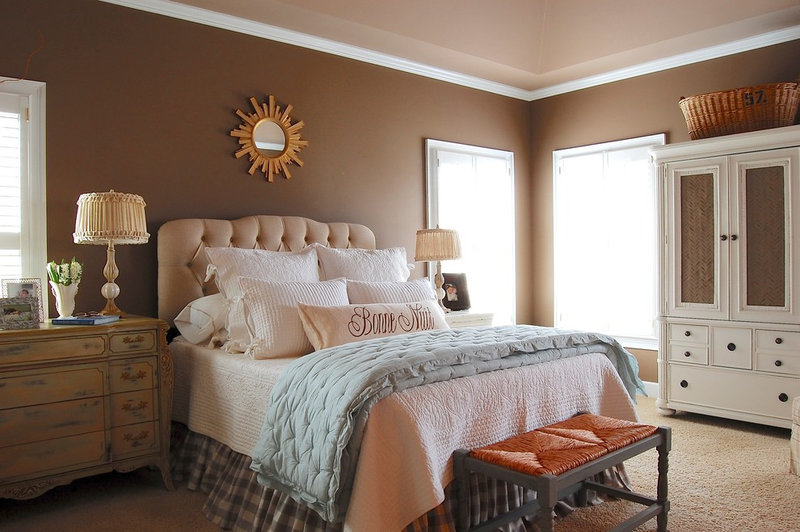
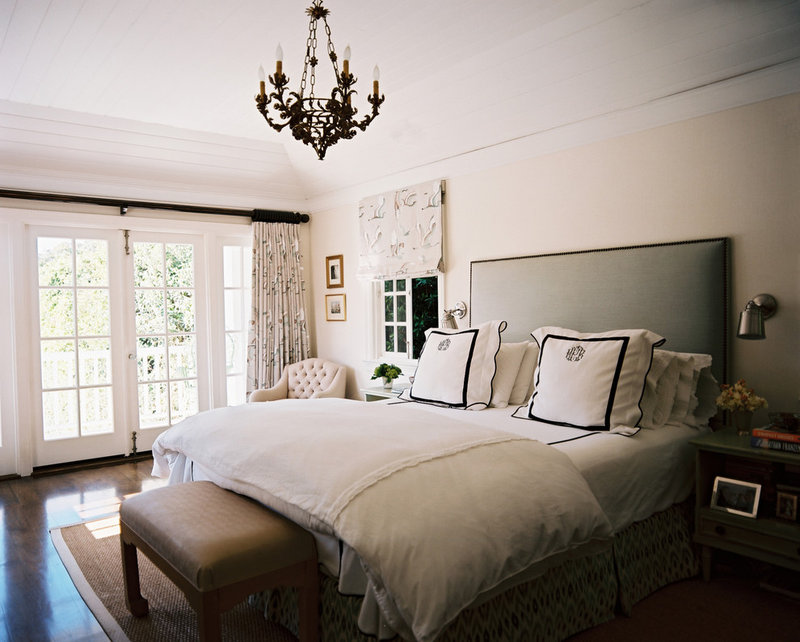
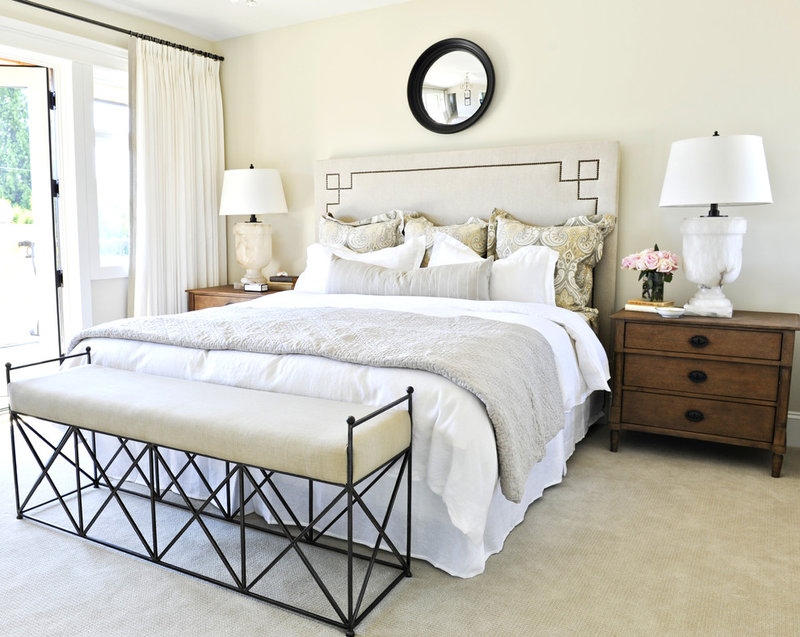
1. Find inspiration. This is the time to save favorite images from Houzz, blogs and magazines for bedroom inspiration. Sift through your collection and choose two or three images that together best represent the look and feel you want to create in your bedroom. Once you have your inspiration images, make a list of all of the elements you like about the photos. Try to move beyond “mood” words (“serene,” “fresh” etc.) and nail down specific furniture styles, colors and accessories that you want in your space. Using the room shown here as an example, you might list:

  • Upholstered headboard
  • Nailhead trim
  • Chests as nightstands
  • Marble
  • Creamy tones and black accents
  • Round mirror
  • Bench at foot of bed

List each detail separately: “nailhead trim” and “upholstered headboard” each get a separate line. The reason: If you get too specific, you can get stuck trying to track down one item from your wish list (an upholstered headboard with nailhead trim); this way you can create your own look that still contains your favorite elements.
You might find an upholstered headboard and pick up a bench or chest with nailhead trim, for instance. Or the marble lamps shown in the room here may translate into a marble-topped dresser in your finished room. Browse thousands of bedroom photos by style

2. Paint or paper the walls. It’s important not to get too wrapped up in the inspiration phase of your project — you may never really get started! Get a jump on things by choosing your wall treatments early in the process. Another reason it’s a good idea to paint or paper early on is it will give you a chance to live with the colors and tweak if necessary. Plus, going to all the trouble of painting is usually a great motivator to get the rest of the work done.
3. Decide what to keep, what to revamp and what to buy. Most of us cannot feasibly go out and completely redecorate a room in one go, and you may not want to anyway. Try to look at each item in your bedroom with fresh eyes (sometimes taking photos helps) and decide what you can work into the new scheme. Some pieces can be used as is; others may be moved (for example, use an old dresser as a nightstand); and some pieces you may want to alter (repaint an armoire and line the glass doors with burlap). Once you have your list of keepers, make a fresh list of what you still need, including supplies for refurbishing your old stuff. And don’t forget, you can always shop other rooms in your house, too.
4. Take measurements and create a furniture plan. Measure the length and width of your room, the distance between windows (that is, available wall space) and the windows themselves. From your measurements decide what size pieces will comfortably fit in your room. If you were thinking of getting a king-size bed, but a queen would give you more room for a dresser and sitting area, now is the time to make the call about what is most important to you.
Plug your measurements into an online tool (search for “free floor plan tool”) or make a sketch on paper and play around with potential furniture arrangements. It’s much easier to move or swap out furniture on paper or onscreen than in real life — so do some virtual lifting before you plunk your money down on new stuff.
5. Choose a bed. If you are buying a new bed, you probably already have a pretty good idea of the kind you want, but if not, it’s time to make a decision. Four-posters and canopies are quite tall, so be sure to measure your ceilings before committing to one — you should have well over a foot of clearance.
If you like to read in bed, consider an upholstered headboard or a wood headboard with an ergonomic shape. Try to see the bed you want in person before buying it. If that’s not possible, at least be sure to check the return policy in advance.
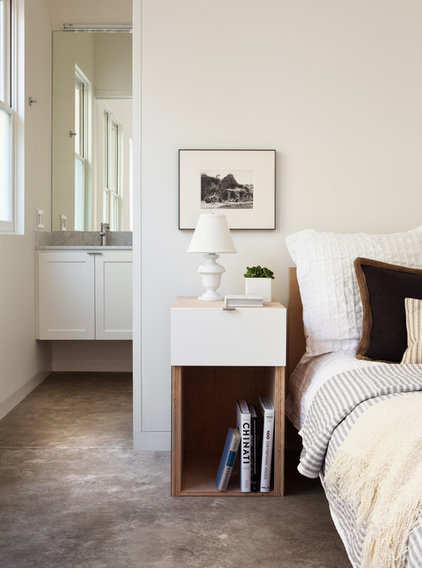
6. Track down the right-height nightstands. It’s important not to choose your nightstands before your bed, because the height of the nightstands will depend on the height of your bed, including the mattresses. The ideal nightstand height for most people is mattress height or a few inches higher. The tabletop should be no lower than your mattress, but up to 6 inches higher can work. The reason: It’s easier to reach up than to reach down when you are in bed.
In a tiny space, hang a shelf or bracket on the wall, a few inches above the level of the mattress.
7. Choose or revamp a dresser. Look for a dresser that complements your bed but is not identical in style. If you have the space, get a long, low dresser; it will provide lots of display space, and it won’t tower over the bed. If you move frequently, consider a tallboy style, since it will fit into more spaces. If you plan to revamp an existing dresser, look at potential paint colors and finishes, and choose new hardware if desired. Mark a calendar date for working on your project.
8. Add lighting. For bedside lamps you can’t go wrong with a matched pair. If floor space is tight, look into sconces — plug-in sconces with cord covers are a good solution for renters. Bedside lamps are essential, but a room really needs at least three light sources to feel well lit. Add a pendant light overhead or wind fairy lights over the top of a canopy or four-poster for extra glow. Overhead lights in the bedroom should be on dimmers; bedside lamps should have dimmers or three-way bulbs.

Armonk Supervisor’s Update | Armonk Real Estate

Dear Neighbors

Road Repaving Update


We are nearing the end of our Town-wide road repaving program for this year. We have followed our Pavement Management Study findings completing approximately 10 miles of work this season. Pothole and patch jobs are handled separately by our Town Highway Department.

This week we should be finishing Banksville Road, Round Hill Road and Shippen Road. That will only leave Palmer Avenue and Castle Heights in North White Plains to be finished.  Our 2014 repaving program will be again based on the findings of our Pavement Management Study


Halloween Parade on Main Street


Last year due to Hurricane Sandy we saved Halloween by hosting an impromptu event on Main Street. It was such a success that many people asked if we could do it again this year. With the cooperation of our wonderful Town Police, the Byram Hills Pre-school Association and our enthusiastic store owners, I am happy to announce that we will be holding a Halloween Parade on Main Street, Thursday, October 31, 3:00 pm to 4:00 pm. Come and show off your costumes. Some stores will be welcoming our little ghosts and goblins with treats.  The participating store owners will have flyers in their establishments and several are planning special events for the parents.   Cider and donuts will also be available at the Hergenhan Recreation Center between 4:00 pm – 5:00 pm.   At 4:00 pm our police will transition over to School Street to handle traffic control for our traditional neighborhood Halloween event.

Sincerely,

Supervisor Howard Arden

Pour a #Concrete Floor | #Armonk Real Estate

Concrete floors are a major component of many buildings, from homes and garages to shops and sheds. Pouring a polished concrete floor is hard work, and it takes skill, strength and tools. You may wish to have this job done by the best concrete contractors Yakima WA, but you can do it yourself. The tools can be rented at many rental places, and the skills are not very difficult to learn. If you’re undecided as to whether to do it yourself or have the job done by a professional, the following steps on pouring both a slab or in-foundation floor illustrate the basics and may help you decide.Well many of experts female also gives their opinion about concrete sealers,you can check her latest blog.

A concrete slab on which a building is erected is a fairly simple concrete pour, but it takes more work in creating the forms needed to hold the concrete. A pour within a foundation requires little in the way of forming, but in some cases can be a bit more difficult to pour, especially on larger projects. Regardless of the type of pour, or whether you do it yourself or have the job done, the first step is to check with local building codes and regulations, and acquire any permits needed.

The first step is to lay out the slab, making sure it is square. Batter boards and strings are used to establish the building perimeter.

Creating a Slab

First step is to lay out the slab. Take your time with this step and make sure you get it right. Lay out the slab incorrectly, and the building can be a nightmare. The slab must be square. Mark the outline of the building with stakes at each approximate corner. Drive a nail into the top of the stake and, using a tape measure, measure diagonally from stake to stake. The measurements must be equal. Move the stakes in or out to create equal diagonal measurements.

Another method is to place string lines on the nails to mark a rectangular perimeter. Measure and mark 3 feet on one string and 4 feet on the adjoining line. The distance between these two marks should be 5 feet. Again, move in or out as needed.

After the corners are determined and the building laid out square, batter boards are used to create a permanent perimeter mark at all corners. These will stay in place until the forms for the slab have been constructed. Two-by-4 stakes are driven solidly in place and boards nailed to their outer edges. The batter board tops should be level with each other. A string line and string level or laser level can be used to make sure all boards are level with each other. Once the boards are established, a string line is run for all sides of the slab. A plumb bob is used on the intersection of the strings to position their crossing points, or the building corners, directly over the nails on the original stakes.

Mark the outline of the slab with lime, following the string lines. Then dig up the area and remove sod and debris. The area is normally recessed slightly, but the top of the slab must be well above ground level or fill level. In many instances the slab is raised and soil filled in around it to create a slope to drain rainwater away from the slab. In some instances local codes may require a footing be poured before the slab. In other cases, a “stiffener” method may be used, digging a deeper area below the frost line around the perimeter of the slab

– See more at: http://extremehowto.com/pour-a-concrete-floor/#sthash.VRZgeUKm.dpuf

Try Quick Hoops — Easy-to-Make Mini-Greenhouses | Armonk NY Homes

Gardeners through the ages have tried to extend summer. A sheltered  area in a winter vegetable garden used to protect plants from cold and wind can  often take plants past their normal season. Even the south side of a board fence  or a thick hedge, blocking the cold north winds, will provide a slightly more  benign climate. Old-time gardeners took advantage of these warm, sheltered spots  to keep the fresh harvest going as long as they could in their winter  gardens.

Quick Hoops

Harvesting winter fare is so satisfying that, after you try it, you’ll  probably want to extend your repertoire. But adding more cold frames to winter  gardens means more time and money spent acquiring them. That’s why we came up  with simpler, lighter, and less expensive structures we call quick hoops.  They’re just sheets of clear plastic or row cover material supported by 10-foot  lengths of pipe, bent into half circles and poked into the ground. Quick hoops  look like 3-foot-tall mini-greenhouses.

You can use two types of pipe material to build quick hoops. One is plastic  electrical conduit, which is cheap, lightweight and easy to bend by hand. This  option is fine in areas that receive no more than a few inches of snowfall. But  to support the amount of snow we get in Maine, we needed 1/2-inch galvanized  metal conduit, sold as “EMT” at most hardware stores. In addition to its  strength, the advantage of EMT is that, after bent, it holds its shape  permanently.

To give EMT a curved shape, bend it around a quick-hoop bending form. You  bolt the form to the top of a large, flat surface such as a sturdy picnic table.  You just insert one end of the pipe, pull it against the curved surface of the  form, slide it in farther, and pull again until you achieve the desired shape.  The form itself is reasonably priced and could even be purchased by a group of  friends and made available to everyone for use in year-round gardening. (Bending  forms are sold by Johnny’s Selected Seeds.)

If you take a 10-foot length of EMT and bend it into a half-circle bow, it  will have a 6-foot diameter. That 6-foot width will cover two of our  30-inch-wide beds with a 1-foot path between them. We make 10-inch-deep holes  with an iron bar on either side of the two beds, and insert the ends of the  conduit into them, placing one of these conduit bows every 5 feet along the  beds. Just three bows will cover a 10-foot-long area.

Then, we drape a 10-foot-wide piece of floating row cover material over the  bows. This spun-bonded, white polyester fabric lets in water and light, conveys  up to 4 degrees of frost protection and excludes insect pests. We cut it long  enough so that it can drape down to the ground, plus about 2 feet at the ends of  the structure. We then secure the edges of the row cover around the perimeter of  the structure with sandbags. These can be recycled plastic bags filled with  soil. Be gentle with the row-cover fabric, but try to secure it without any  slack so the wind is less likely to catch it and blow it around in your winter  vegetable garden.

Clearly, you can plant much more ground under quick hoops than under a cold  frame, and you can also grow and protect taller crops for more extensive winter  gardening. You might start seedlings in one covered bed and grow early salads in  another. Because spun-bonded floating row cover is self-venting, there’s no need  for automatic arms to prevent overheating. And the row cover lets in both  sunlight and water. Access to the crops is achieved by removing the sand bags  and folding back the cover.

Another trick is to add a layer of clear plastic over the row cover for extra  protection during extremely cold weather in winter gardens. With added plastic  in place on mini-greenhouses, you can overwinter crops such as spinach, lettuce,  and onions without worrying about the snow load, which can rip row-cover fabric.  The plastic layer can be held down with sandbags along the perimeter and ends,  just as with the row cover. But, because we live in a windy area, we also use  form-fitting plastic clips to secure the plastic to the bowed pipes. When the  temperature inside quick hoops can rise to 75 degrees Fahrenheit, you’ll need to  vent the plastic by opening the ends, or remove it entirely so only the  underlying row cover material remains.


Read more: http://www.motherearthnews.com/print.aspx?id={E8447B3F-0DB4-41F0-8152-4FFFCF39A4FA}#ixzz2j1Q8oOrO

Social media mistakes you may be making | Armonk NY Realtor

I’m pretty well known for making mistakes. It’s kind of a known trait of mine. Just this weekend I walked into a door because I didn’t open it properly first.

When it comes to social media, though, I try hard to learn from mistakes since they’re all saved for me to reflect on. Plus, I research and write about social media enough to have access to stats that make it easier to pick up and rectify these kind of mistakes.

The funny thing about some of the mistakes I looked at for this post is that the advice to avoid them is counterintuitive—sometimes even controversial. As we’ve seen before, though, counterintuitive advice is sometimes the best kind.

1. Losing out on traffic – Post the same thing multiple times

This is something that can be pretty controversial – a lot of people discourage re-posting links to the same content more than once. A good example of the controversy and why some tweeters continue to do it is Guy Kawasaki’s experience.

Guy is a big proponent of repeating your tweets, and has faced a lot of flack for it. After all, it doesn’t really make sense to send out the same thing multiple times… or does it?

Guy makes a good point that his followers probably aren’t reading his tweets at every moment of the day.

I repeat my tweets because I don’t assume that all my followers are reading me 24 x 7 x 365.

For Guy’s tweets that link to posts on his site, Holy Kaw, he repeats these four times, eight hours apart:

I picked eight hours because this means that even if the first tweet goes out at the worst times for traffic, one of the repeats will hit the best times… For example, a first tweet at 3:00 am Pacific then hits 11:00 am Pacific and 7:00 pm Pacific.

Guy also notes that he would lose out on traffic if he didn’t repeat his tweets, which is something we’ve examined before when looking at the best time to tweet:

I’ve examined the click-through patterns on repeat tweets, and each one gets about the same amount of traffic. If I tweeted stories only once, I would lose 75% of the traffic that I could get.

Here’s a typical example of the traffic from one of Guy’s tweets:

guy kawasaki tweet graph The 7 biggest counterintuitive social media mistakes you may be making

First post: 739 clicks

Second post: 718 clicks

Third post: 565 clicks

If I follow common wisdom, I would have tweeted it once and lost 1,200 clicks—that’s the bottom line.

This is something we do at Buffer as well. We use different headlines to test which one gets the best clicks for a particular post, and then we repeat the best one using Buffer to reach different timezones with the same content.


http://thenextweb.com/entrepreneur/2013/10/05/7-biggest-counterintuitive-social-media-mistakes-you-may-be-making/?utm_source=newsletter&utm_medium=email&utm_campaign=daily


Armonk Update fromTown of North Castle Supervisor Howard Arden | Armonk Real Estate

North Castle Residents:

Many of us came to North Castle because of its natural  beauty  and wonderful recreational opportunities. Together with our excellent schools, top-notch, well maintained recreational facilities and open space are key drivers in enhancing our quality of life and increasing our property values. But in order to provide these critical benefits, they need to be constantly nurtured and maintained.


As an avid outdoorsman, conservationist and former chairman of the North Castle Open Space Committee, I am extremely pleased to announce the far-reaching improvements we have made to our parks, recreation facilities and programs which were presented at the September 25th Town Board meeting.  Importantly, we have accomplished these improvements without any new borrowing or tax increases. In fact we have doubled the budget for park and recreation improvements by finding cost savings and revenues from a variety of areas.  Here is the exciting list of advancements:


Sports Field Management Program

We reinstituted a regular and systematic turf management program which will help keep our fields in much better condition for our parent coaches and kids to play on.


Playing Field Expansion

I am aware that our town does not have enough fields for all of our wonderful sports. The cost of turf fields is prohibitive.  Recently I identified two neglected, Town-owned land parcels suitable for this purpose. We are currently evaluating the costs, and we should be able to create new athletic fields without any tax increase.


Winkler Park Renovation

Winkler Park was deeded to North Castle over 25 years ago. Since that time. little or no improvements had been made. It was time for a serious refresh. We cleared overgrowth, resurfaced the tennis and basketball courts, refurbished the parking lot, entrance sign and gazebo. We also repaired the play structure making it safety compliant. We even added a fishing dock courtesy of an aspiring Eagle Scout in town. Winkler Park is now reopened and residents in that neighborhood have a lovely spot to bring their families. The pond is chock full of fish so bring your kids because it should be a gratifying first fishing experience! Please practice catch and release so all our families can enjoy the action.

http://www.youtube.com/watch?v=I7aEVrk9ICc


Community Park at IBM

We successfully re-negotiated the operating license with Armonk Indoor Sports Center to include a $1,000,000 fee increase over the life of the contract, along with an agreement to renovate the existing parking lot. We hope to use this windfall money to renovate the building at Community Park. When renovated we will use it for the Art Show and our Town camps.


Town Camps

Increased 2013 camp enrollment from improved marketing efforts resulted in our highest profit in the last 8 years.  Beyond providing our kids with a great summer camp experience, we were able to hire 9 more local teens and college students than in 2012…a terrific summer job opportunity for our young residents.  Watch for online registration for summer 2014!


Wampus Park South

Using federal FEMA funds from Hurricane Sandy, we cleared the swath of land near the entrance to town on Maple Ave. We recently put out to bid the work to transform the rest of the park to a lawn and event space. The work includes clearing the remaining trees and brush, building a rip-rap wall alongside the brook, and planting ornamental trees and wild flowers along the bank. Soon, it will be another lovely park for residents to enjoy.

Paddle Tennis Courts at Community Park

The renovation of these courts was approved at the last Town Board meeting. Once the courts have been renovated, I plan on having an opening paddle clinic. We will be inviting local teaching pros and nationally ranked players. I will keep you informed of the date.

Bike Path

Phase I is underway for a multi-phase, much-requested bike path which will stretch the entire length of North Castle. Recreation subdivision and other fees are expected to be used to complete this exciting project which will benefit residents of all ages!

I would like to thank Recreation Supervisor Matt Trainor, Don Brandes and all the Rec Department staff for their great work. Special thanks to Town Councilman John Cronin who worked closely with the Rec department and Board members Joseph DiMauro (Chairman), Susan Lichten, Anthony Milone, Dan Zenkel, George Alvarez, Frank Benish, Vito Errico and new volunteer Pat McCarthy to make our goals a reality.

It is important to me to give North Castle residents the quality of life you moved here for: wonderful parks, better services and a community we can all be proud of. Please let me know if you have any comments or suggestions.

Sincerely,

Howard Arden

Generate leads by the thousands with Facebook photo contests | Armonk Real Estate

Editor’s note: This post explores a marketing tactic submitted by Dream Town Realty, the most recent winner of #madREskillz, a weekly Inman News Twitter competition.

One day this summer, a University of Chicago student biking to school was struck by how a sculpture featuring figures holding their heads in exasperation seemed to mirror the mood of many of his college peers, who at the time were mired in finals week, according to Yuval Degani, president of Dream Town Realty.

Captured by the parallel, he whipped out his smartphone and shot a photo of the angsty figures, Degani said.

That proved to be a smart move on the student’s part: The photo ultimately bagged him $2,500, after garnering the most votes in a Facebook photo contest hosted by Dream Town Realty.

Cash prizes were just one aspect of the robust marketing campaign that Dream Town held over the summer. The competition’s success demonstrates that hosting photo contests can help catapult a broker’s Facebook following and boost online engagement.

Calling for submissions of photos of the Windy City, “Chicago in Focus” helped Dream Town collect more than 4,000 likes on its Facebook page in just one month, more than tripling the amount the page had gathered over the four previous years of its existence.


– See more at: http://www.inman.com/2013/09/26/generate-leads-by-the-thousands-with-facebook-photo-contests/#sthash.IZt7POmF.dpuf

I’ll Have the Same: How to Design With Monochromatic Color | Armonk Real Estate

We’re taught from an early age that overindulgence is a bad thing. But sometimes it can be very, very good.
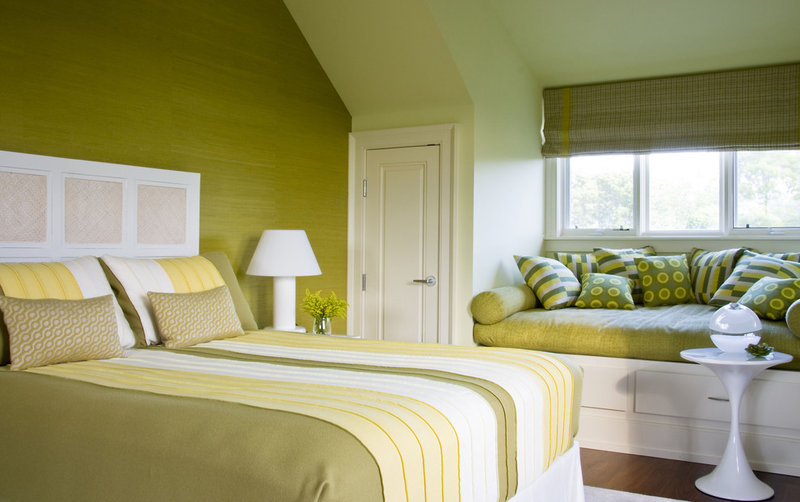
Repeating a single color throughout an entire room can be not only beautiful, but relatively easy to pull off. No worrying about whether the curtains go with the carpet. When everything’s the same color, it’s usually a match.
Granted, the look can be overwhelming. It works best in contained spaces where you don’t spend a lot of waking hours, such as a bedroom. And while it’s possible to match the color precisely in every detail, it’s better (and easier) to vary the shade a bit — in terms of both hue and intensity, and texture and sheen. That keeps the repetition interesting.

modern bedroom by Amy Lau Design

Save to Ideabook
Email Photo
One of the appealing things about a monochromatic interior is that colors you’d think would be too overpowering on their own become more demure when used en masse. The sheer quantity dilutes their ability to shock and makes even a strong color, like acid green, feel restful.
When working with bright colors, be mindful of the amount of light the room gets: This space could be blinding if it got a lot of intense, direct sun.
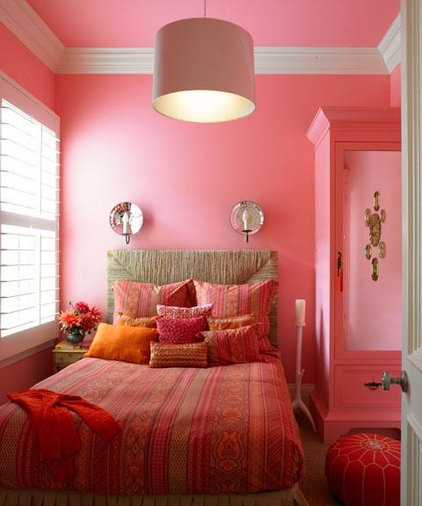
by Chambers + Chambers Architects

Save to Ideabook
Email Photo
This charming bedroom merges shades of pink, orange and coral. They have more depth and visual interest together than a single shade would have, and also contribute to the room’s casual feel.
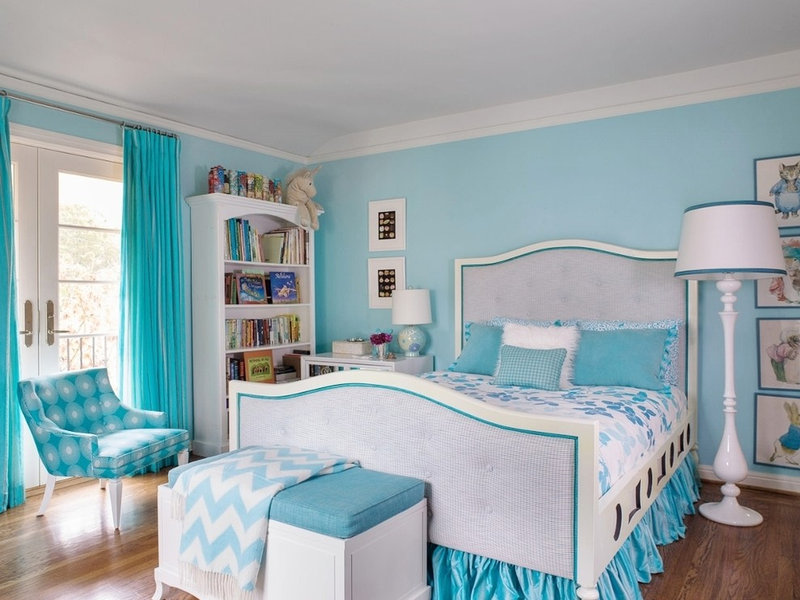
contemporary kids by Melanie Coddington

Save to Ideabook
Email Photo
Although the patterns in this girl’s room don’t match, they all work together because they share a common color. Liberal additions of white prevent the blue from overwhelming the space and add to the tranquil atmosphere.
traditional living room by Kendall Wilkinson Design

Save to Ideabook
Email Photo
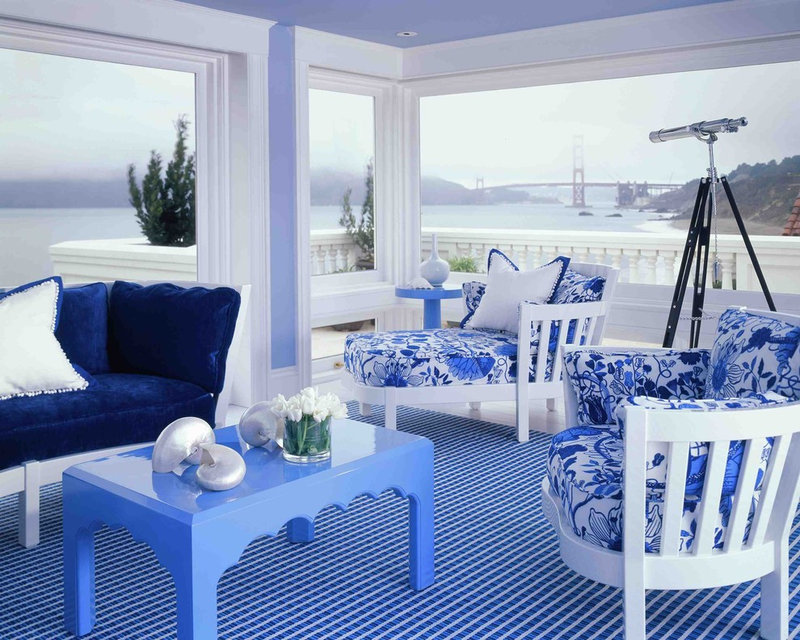
The combo of blue and white is a seaside staple. But in this San Francisco home, the variations in hue and solid planes of color banish some of the sweetness, making the scheme feel fresh and more contemporary.
eclectic bedroom by HERMOGENO DESIGNS

Save to Ideabook
Email Photo
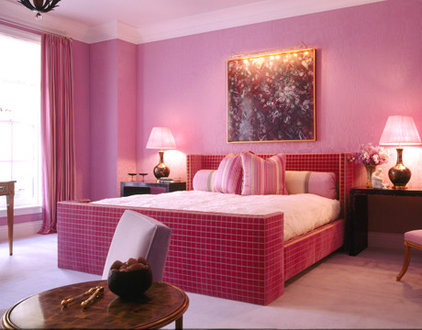
Pink has such feminine connotations, we’re often afraid to use it outside a bedroom. But inside a bedroom — watch out! Pink fabric upholsters the walls and bed in this boudoir, making the softness not just visual but tactile.

The Case for Losing the Traditional Lawn | Armonk Real Estate

I’m already nostalgic for this past summer. Warm days spent frolicking outside, picnics, ice cream, birds chirping and the nonstop sound of lawnmowers as the smell of freshly cut grass wafts over the garden. But that sweet grass smell is a chemical reaction, a warning signal that the lawn has been wounded and now it’s now open to attack by pests. And as a nation, the U.S. tosses 23 million tons of lawn clippings a year into already bursting landfills — material that could be turned into free fertilizer, namely compost.
Television and radio ads work hard to convince you that your landscape is imperfect and impure if you don’t slave over it, using fertilizers and pesticides and weed killers. Images of suburban cowboy husbands persist, wrangling weeds and farming one of the largest and most useless crops in the world.
Lawns are a noble’s ideal, literally, and since the 1800s Americans have been trying to emulate expansive aristocratic estates in Europe on quarter-acre lots. What’s the deal with lawn? And how and why should we lose some of it?

by Benjamin Vogt

Save to Ideabook
Email Photo
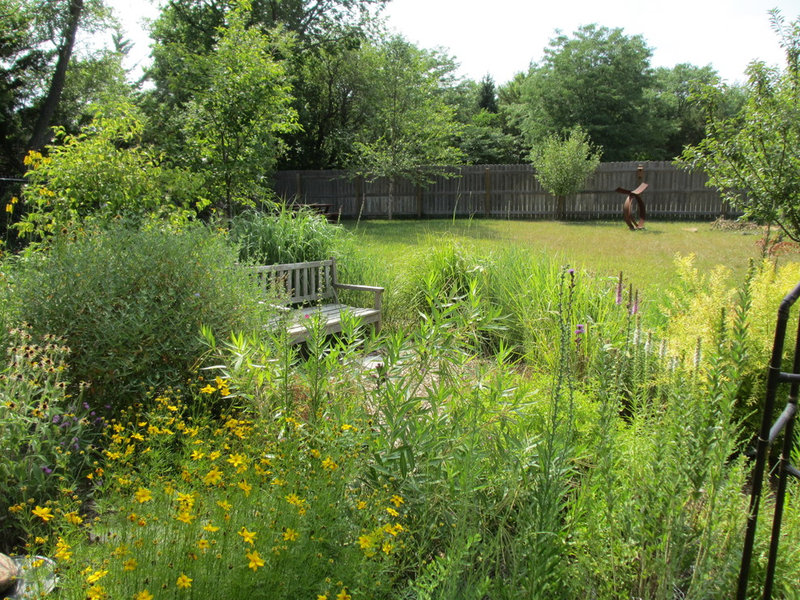
What is beautiful in nature can be quite subjective. A person’s idea of beauty in the desert Southwest surely is much different than someone’s idea in New England. Of course that’s OK, but I bet those ideas of beauty are based on regional, native, wild habitats, and of personal experiences living in those places that define cultural and personal ideals. It doesn’t matter whose idea is “better” or “right,” only that those beliefs lead to healthy people, plants and wildlife. All gardeners have choices that lead to the well-being of all life under our care, including our own. Prairie, forest, desert, marsh — it’s all relative.
In the photo here, do you wish to be in the lawn, or the garden? Or is the juxtaposition of the two somehow enticing? Which is more in tune with its region, and in turn, gets us in tune with our home ground?
contemporary landscape by debora carl landscape design

Save to Ideabook
Email Photo
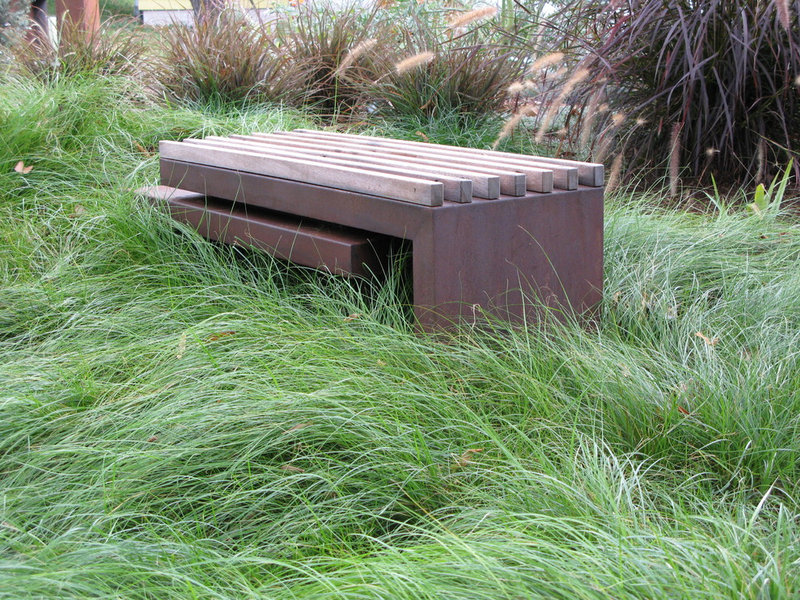
If you love the look of grass but don’t need a baseball field (most folks don’t, unless you live in Iowa), consider letting your grass grow longer — or converting to native, water-sipping grasses like blue grama, buffalo and sideoats grama (just a few among many). Lots of places also sell no-mow seed mixes designed to be drought tolerant with slow growth habits but that mimic traditional lawns.
If you let your lawn grow taller, the roots will go deeper and the blades will shade the soil, trapping more moisture. Besides, doesn’t the bench and grass area here look stunning? With lawns taking up the same square footage in the U.S. as New York state, we have to ask ourselves: Do we really need all of that lawn, or is it just a default landscape setting? What are we sweating, spraying and fertilizing for?
http://www.houzz.com/ideabooks/17387539/list?utm_source=Houzz&utm_campaign=u362&utm_medium=email&utm_content=gallery0