Sunflower


Sunflower
| Pound Ridge NY Real Estate Report | RobReportBlog | ||
| 2013 | 6 months ending 11/6 | 2012 | |
| 41 | Sales | 36 | up 14% |
| $750,000.00 | median sold price | $660,250.00 | up 13% |
| $399,000.00 | low sold price | $355,000.00 | |
| $2,815,000.00 | high sold price | $2,400,000.00 | |
| 3505 | average size | 3140 | |
| $262.00 | ave. price per foot | $248.00 | |
| 184 | ave days on market | 204 | |
| $935,261.00 | average sold price | $777,217.00 | |
| 0.9657 | ave. sold to ask | 0.9332 | |
Despite rising interest rates and softer demand for mortgages, most banks have maintained their existing lending standards in residential loans in recent months. Per The Wall Street Journal:
Nearly 80% of banks said their credit standards for mortgages remained basically unchanged from July through September, according to a quarterly Fed survey of bank loan officers released Monday. Only about 15% of banks said their standards for mortgages have eased somewhat.
“Easier credit conditions, more generally, are helping the economic recovery,” said Erik Johnson, senior U.S. economist at IHS Global Insight. “But what’s concerning is that lending standards for residential mortgages have not improved much since tightening dramatically during the crisis.”

Perhaps feeling insecure after Sheikh Khalifa bin Zayed al-Nayan stole the title as owner of the world’s largest yacht, billionaire Roman Abramovich has bought—well, he’s in contract to buy, according to the Post—this ridiculously opulent Manhattan mansion. The purchase would add a NYC home to an already robust portfolio (which includes, but is by no means limited to, nine-figure estates in St. Barths, Snowmass, Colo., and the English countryside), and provide Abramovich 22 rooms, eight bedrooms, 15 bathrooms, a grand ballroom, a reception rotunda, a library, a rooftop terrace, and some of the most lavish, gussied-up interiors in the city.
When the mansion hit the market last year, it was asking $72M for three units, all owned by the Monaco-based family of the late real estate developer Howard Ronson. That price was meant for uncombined—and frankly somewhat architecturally incompatible—units, but not the entirety of the building, as there were, at the time, still two of five holdout owners. If Abramovich was’t able to quietly convince them to vacate—and, really, who would want to be in the bad graces of a corrupt Russian billionaire?—perhaps his publicly profligate ways, surely a media magnet, will finally convince those guys to bid, uh, do svidaniya.
Curbed NY points out that if the deal goes through for $75M, it will become the most expensive co-op ever sold in New York. Oh, and that $3M over ask? Yep, that’s just about 0.03 percent of Abramovich’s net worth.
http://curbed.com/archives/2013/10/04/roman-abramovich-to-buy-lavish-almost-manse-for-75m.php
Utilizing home pricing data for the period ending July 2013, the Homes.com Price Index showed gains for single-family properties in all 100 markets, up from 87 in the previous reporting period
“Homes.com’s Rebound Report provides a deeper view into the 22 fully rebounded markets. Many never experienced the dramatic swings in home values that were a result of foreclosures and short sales that plagued many markets across the nation”
The Homes.com Local Market Index has been expanded to include midsized markets ranked from 101-300. It provides a closer look at smaller markets nationwide, showing increases in 293 of the top 300 markets, up from 250 the previous month. Year over year, all midsized markets increased.
As a complement to the Local Market Index, Homes.com publishes an exclusive Rebound Report, highlighting how the housing recovery process is unfolding across the country. Rebound data for July 2013 in the top 100 markets revealed that 22 markets across the U.S. are fully recovered – up from the previous month’s 19 markets. Additionally, 44 U.S. markets now show a rebound of 50 percent or more, up from 41 in last month’s report.
“Homes.com’s Rebound Report provides a deeper view into the 22 fully rebounded markets. Many never experienced the dramatic swings in home values that were a result of foreclosures and short sales that plagued many markets across the nation,” said Brock MacLean, executive vice president of Homes.com. “By contrast, most of the markets with the lowest rebound have experienced more dramatic changes in values as a result of foreclosures and short sales and will have a slower path to recovery.”
The latest Homes.com Local Market Index reports the following:
Monthly increases in all 100 of the top 100 markets and in 193 of the 200 midsized markets.
Honolulu, Hawaii remains the top gaining market on a year-over-year basis with a 29.17 index point or 13.51% increase.
California markets [Los Angeles-Long Beach-Santa Ana, Calif.; San Diego-Carlsbad-San Marcos, Calif., San Francisco-Oakland-Fremont, Calif.; Oxnard-Thousand Oaks-Ventura, Calif.] are the remaining 4 in top 5 and increased 25.26, 24.60, 24.19 and 20.16 index points respectively.
Six of the top 10 monthly gaining markets are in the West (up from two in the previous month), followed by four from the South.
Highlights from the Homes.com Rebound Report for the top 100 markets show:
22 have made more than a 100% rebound, indicating a complete recovery in these markets. This is up from 19 markets posting a full recovery in last month’s report.
http://www.realestateeconomywatch.com/2013/09/all-top-100-markets-gained-in-homescom-july-data/
Real estate sales in Fairfield County continued their strong growth in the third quarter, with closed sales improving 28 percent from the same quarter in 2012 and under contract sales jumping 59 percent, according to a report published by William Pitt Sotheby’s International Realty.
“There’s nothing startling in the report,’’ said Brad Kimmelman, brokerage manager for William Pitt Sotheby’s International Realty in Southport. “We are absolutely moving in the right direction. We saw a huge improvement over last year. Overall, we are enjoying a revitalization of the real estate market in Fairfield County, and across the country.”
The William Pitt Sotheby’s International report showed strength across the board, with closed sales running 68 percent higher for the third quarter in Ridgefield, 50 percent higher in Redding, 45 percent higher in the town of Fairfield and 40 percent higher in Danbury.
The closed dollar volume rose 31 percent in the quarter over the same time frame last year, with Weston (up 57 percent), Ridgefield (up 56 percent) and Westport (up 39 percent) among the top communities in the county.
Median sales price rose 6 percent for single-family homes in Fairfield County for the third quarter, to $500,000, according to the report from William Pitt Sotheby’s. In Wilton and Ridgefield, median single family home prices rose 17 percent, while Westport prices jumped 12 percent. In the past year, the median price for single family homes in Fairfield County has jumped 7 percent.
“The 7 percent increase in the average sales price is great,’’ said Molly Lane, who works for William Raveis Homes in Westport. “The rest of the country is down about a half a percent, another indicator that the market is strong.”
Lane said the historically low interest rates continue to help the real estate market. “For someone who is putting 20 percent down with a good credit rating, they could get a 30-year fixed mortgage for about 4.125 percent. That’s even lower than it was a few months ago,’’ Lane said. “If the rates continue to remain at historic lows, that would be great. It’s a good harbinger for the spring market.”
Kimmelman said one of the most encouraging aspects of the market growth is the steady increase. “Consumer confidence is up, and I think we’re going to see the market hold steady but not increase dramatically,’’ he said. “We don’t want double-digit growth year after year. We want to see a nice, healthy progression.”
Typically, there is some seasonality in real estate and summer tends to be slower. That was not the case this year. “Closings are up in the third quarter for single-family homes in both Connecticut and Rhode Island, which is significant due to the fact that we have not experienced the seasonality in the market for the third quarter which generally tends to decline,” said Terence Beaty, director of new homes and land for Berkshire Hathaway Home Services New England Properties.
High-end homes are also beginning to move a little more quickly in Fairfield County, Kimmelman said, and inventory levels continue to decline. The condominium market is also contributing to the gains.
Berkshire Hathaway Home Services New England Properties Third Quarter 2013 Market Report indicates that the luxury market, identified as those properties worth $2 million or more has been growing throughout the year. Sales of high-end single family homes rose 13.2 percent to 378 in Connecticut. Fairfield County closed most of the business. The strongest sales growth in this category was in Greenwich, Westport and Darien.
“This has been another upbeat quarter as far as real estate goes,” said Diane M. Ramirez, Chief Executive Officer of Halstead Property. “Though prices only increased modestly, it is still a positive trend overall. We were pleased to see the huge upswing in sales in some of the markets and in the decline in days on the market in many of the towns that reported.”
“We are optimistic that the market has balanced. Although pending sales went down slightly in September, interest rates remain historically low and prices remain stable,’’ said Candace Adams, president and CEO of Berkshire Hathaway Home Services New England Properties. “We anticipate there will be a balanced market through the end of the year.”
The Berkshire Hathaway Home Services New England Properties Report is attached as a PDF. The William Pitt Sotheby’s report and the Halstead Property report are online.
Attached: (bhhsnep-2013-q3-marketreport.pdf)
http://greenwich.dailyvoice.com/real-estate/fairfield-county-real-estate-stays-strong-3rd-quarter

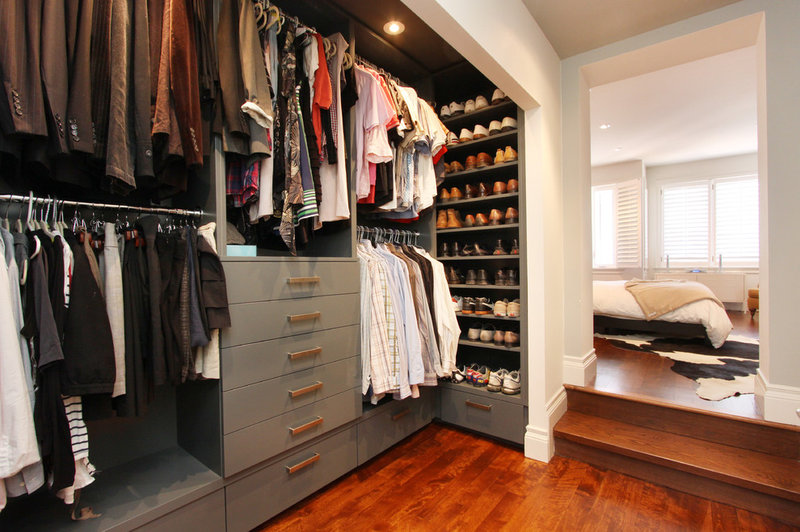
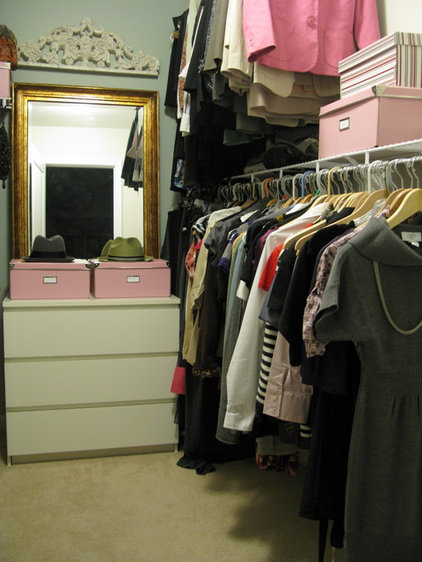
Ever the organizer, I was extolling the virtues of closet purging to a friend. She was feeling a little overwhelmed. Her possessions had been slowly encroaching due to nothing more insidious than the steady march of time and life. Honestly, my friend is an organized person. Things have their place. But lately, there are fewer and fewer places for things. Yet she remained staunchly purge-resistant, especially when it came to her clothes. Sound familiar? Keep reading to learn more about how making a little room in your closet can be an exercise in self-discovery.
So you want to get your projects published. Why?
It’s great for exposure and marketing. You can use print articles as an extension of your showroom for clients to get ideas, to learn design terminology, and to help you learn what clients do and don’t like; you can use it to show architects.
But take advantage of the longevity of print publications, which often sit on coffee tables in homes but also in doctor’s waiting rooms, salons, and fitness studios. Buy a bunch of issues and slap a banner on them with your logo and some text that reads: “Check out the local home remodeled by YOUR COMPANY featured on page X”
And, of course, most print publications have a web presence, where your work—and links to your company’s website—will live forever.
RESEARCH YOUR OPTIONS There are local and national publications that are always looking for content. Head to your local bookstore and buy a bunch of magazines and study them. Ask yourself if your project might be a good fit. You wouldn’t contact Dog Fancy with your latest kitchen remodel—unless it has a fantastic dog bowl area and they actually publish stories about such things.
Think about who the reader is going to be and who your ideal client is. Where do those two intersect?
You’d be surprised how many local publications there are in your market—from newspapers to business journals, women’s weeklies, and food-focused magazines. And don’t discount association publications from NARI and NAHB, but also those for related industries: doors and windows, concrete, metal fabricators.
Then read the articles themselves and determine how they’re put together and what they focus on. Are written about the lifestyle of the owner? Do it Yourself carpentry? The biggest, the best, the first of its kind, only a particular room?
You ultimately want to make things easy for an editor to see that, yes, your project/story is going to be something their readers will be interested in.
THINK LIKE AN EDITOR Have an idea about what makes a good story. Come up with a hook. “We had to design and build a kitchen for a homeowner who is in a wheel chair.” “Our client’s daughter was going to be married in two months and they wanted a quick kitchen pick-me-up so we did cabinet refacing.” Think about packages: “5 storage options” “kitchens with fireplaces,” “poolside outdoor kitchens.”
Pay attention to lead times. If you built a special Christmas tree closet for a client, don’t pitch that story to a monthly magazine on December 1. Even newspapers might budget time for a story like that a few months in advance. Pitch an outdoor living story in January, a winter holiday story in September.
BUILD A RELATIONSHIP Look on the publication’s masthead to find the appropriate editor—and it’s not the editor-in-chief. You most likely want to contact a senior editor, writer, or contributing writers or editors. There might be a specific editor for the type of material you want to have published. In a national publication, get the name of the regional editor near you.
Call or email and establish a relationship with that person. In many cases, they are hungry for material. Offer to take that person to coffee and show them photos of your projects, help them understand the scope and scale and level of design involved; take them on a tour of your most recent project.
Even if it doesn’t turn into something right away, keep up the relationship. The publication might not need anything right now, but your new editor friend will have your name and might call on you as a source for another story. Or, he or she might know that in a few weeks the publication needs 10 contemporary baths. It’s good for them to have contacts in the architecture and design community.
http://www.remodeling.hw.net/marketing/get-your-projects-into-clients-hands1.aspx
Google recently launched a new algorithm, code-named Hummingbird, that was designed to answer more complex queries and present more in-depth knowledge to users. Launched over a month ago, Google’s Hummingbird is its largest algorithm overhaul in 10 years.
At a press conference announcing the change, Google explained that the new algorithm is smarter, able to understand complex queries and return more relevant answers. They are preparing for a future of phone concierges, where you ask your phone for information and it talks back to you, understanding the meaning behind your questions and giving you semantically relevant answers.
According to the NY Times:
“The company made the changes because Google users are asking increasingly long and complex questions and are searching Google more often on mobile phones with voice search.”
What can you do to make sure your blog’s visibility improves in the wake of Hummingbird?
On InsideSearch, Amit Singhal, Google’s chief technologist, explained:
“The world has changed so much: billions of people have come online, the Web has grown exponentially, and now you can ask any question on the powerful little device in your pocket.”
Obviously mobile is a major focus for Google, and Hummingbird presents a way for Google to serve better results for mobile users. Given the massive amounts of data Google has at their fingertips, they can anticipate trends better than any other company…and if they are focusing on mobile and overhauling their entire algorithm to serve better mobile results, then this is something social media marketers must pay attention to. Just this week, Google changed their User Interface for tablet and mobile users.
What can you do to get your website mobile ready?
Do you need more information? Check out Google’s extensive guide on how to build Mobile-Optimized Websites.
Authorship is a way of identifying categorical influencers and featuring their content in Google.
According to Google:
“Using authorship helps searchers discover great information by highlighting content from authors who they might find interesting. If you’re an author, signing up for authorship will help users recognize content that you’ve written. Additionally, searchers can click the byline to see more articles you’ve authored or to follow you on Google+”.
It’s that simple!
Connecticut will receive an additional $65 million from the U.S. Department of Housing and Urban Development to bolster its Superstorm Sandy recovery efforts, bringing the total aid from the federal government over the last year to an unprecedented $500 million.
The aid was announced by Gov. Dannel Malloy in a statement Monday, the eve of the first anniversary of the hurricane. The $500 million will support recovery and relief efforts for residents, local education systems, small businesses, nonprofits and municipalities.
“Families across the state are still coping with the devastation caused by Superstorm Sandy last year,” said U.S. Sen. Chris Murphy, D-Conn. “With the winter months again approaching, we need to ensure these families have the tools they need to fully recover and prepare for future severe weather.”
HUD had previously provided $71.82 million to help residents, businesses and communities recover and rebuild after the storm. The first allocation of funding was made based on unmet needs and applications for individual assistance from FEMA; this new funding allocation was distributed based on a formula driven by federal data and statistics detailing unmet need and public assistance, including damage to transportation infrastructure, in Sandy-affected states.
The state Department of Housing will develop an action plan to disburse the new funding, which will require approval from both the state legislature and HUD.
“One year later, it’s clear these communities continue to be challenged by the sheer scale of this devastating storm, requiring further investment to make certain these needs are met,” HUD Secretary Shaun Donovan said. “These resources are making a difference helping individuals, families, and businesses to get back on their feet and come back stronger and more resilient than ever.”
Projects in Fairfield, New London, New Haven, and Middlesex counties and the Mashantucket Pequot tribal area are eligible for assistance. Eligible expenses are those not covered by insurance, the Federal Emergency Management Agency, or any other sources of funding. Specific work that is eligible includes:
“We continue to plan—and meet—aggressive timetables in order get these funds out to homeowners and businesses as fast as possible,” said Evonne Klein, housing commissioner. “We continue to accept applications and encourage those impacted by the storm to visit one of our intake centers or visit the Web site to learn about the many ways we can help.”
U.S. Sen. Richard Blumenthal, D-Conn., said: “I commend the efforts over the past year to restore and repair our shoreline communities, but much work remains to ensure homeowners, businesses and municipalities have the resources they need to fully recover from the devastation of Superstorm Sandy.
“As storms like Sandy become the new normal, it is vital that we continue to invest in mitigation efforts to reduce future damages, emergency costs, injuries and hardships. Further, we must work to improve our systems and processes so that those in need receive the assistance they need when they need it most.”
The state recently opened four intake centers in East Haven, Fairfield, Milford and Norwalk to provide one-on-one assistance to homeowners. (Read more about the centers here.) The state’s official CT Recovers website provides information on assistance available to homeowners and businesses impacted by Superstorm Sandy from all state agencies.