Despite rising prices and shrinking foreclosure inventories, 65 percent of active real estate investors plan to buy as many or more residential properties in the next 12 months as they did in the past year, according to a new joint BiggerPockets.com/Memphis Invest national survey conducted by ORC International for BiggerPockets.com, the nation’s largest and most active real estate investing social network, and Memphis Invest, one of the nation’s leading providers of single-family rental real estate investment services.
The survey found that 39 percent of active investors intend to increase their purchases over the next twelve months while 26 percent plan to buy as many in the year to come as they did in the past year. The 65 percent of investors who plan to buy the same amount or more in the next twelve months than they did in the past represents 4.5 million investors. Only 30 percent said they plan to buy fewer properties than they have in the past. Last year investors purchased 1.23 million homes, a 64.5 percent increase over 749,000 in 2010, according to the National Association of Realtors.
Some 3 percent of American adults, or 7 million people, consider themselves to be real estate investors An additional 9 percent of all Americans own investment property today but have no current plans to buy more. Thus, one out of eight, or 28.1 million Americans, either consider themselves to be residential real estate investors or own residential investment properties today, according the survey .
“Though housing markets are changing across the nation, investors are still seeing great opportunities. Hundreds of thousands of foreclosures and short sales are coming to market and rents are continuing to improve in most markets, creating a positive environment for the nation’s 28.1 million residential real estate investors. They will certainly continue to be major players in the nation’s housing economy for the foreseeable future,” said Joshua Dorkin, founder and CEO of BiggerPockets.com. “We’re talking about a group of Americans that is about the same in number as the number of Americans who own Roth IRAs (28.5 million) or the total number of money market fund shareholders (29 million). They have significant buying power.”
The survey also found that real estate investors are spending more than four times as much as the federal Neighborhood Stabilization Program to repair and rehabilitate the nation’s housing stock. At a median expenditure of $7500 per property, investors are spending a total of $9.2 billion per year to repair the damage caused by foreclosures and rehabilitate the nation’s housing stock. By comparison, over the past four years Congress has authorized a total of about $7 billion for the Neighborhood Stabilization Program, the government’s primary response to repair housing damaged by foreclosure. Twenty percent will spend $10,000 to $30,000 on their next property and 16 percent plan to spend more than $30,000.
“This survey puts some hard numbers behind the contribution that investors are making towards not only improving neighborhoods and fighting blight, but also the towards driving the economy. Investors are purchasing homes that in some cases sit for months and add a drag on local home prices. This survey shows that those investors are driving their local economies by spending billions in repair costs with local electricians, plumbers, flooring companies and laborers just to name a few. Those dollars provide jobs and put money into local economies with local companies. It’s clear that investors are the ones who have risking their own money to improve and stabilize neighborhoods for new owners or tenants,” said Chris Clothier, a partner with Memphis Invest.
The survey found that lower interest rates and the removal of limits on access to financing would provide incentives for investors to be even more active in the nation’s housing markets. Lower interest rates topped the list of incentives that would make active investors more willing to invest in additional properties (70 percent). A distant second was additional tax incentives for capital spent to purchase, rehab or renovate investment properties (54 percent). Third place went to elimination of limits imposed by lenders on the amount they will lend an investor (46 percent) and fourth to easing of rules on section 1031 Exchanges (44 percent). Only 30 percent said that the easing of securities laws limiting the pooling of capital by investors for purchases would encourage them to buy more.
Access to financing is a critical issue for most investors, however most lenders put limits on the amount they will lend an investor, regardless of credit history, property values or track record. Nearly half, 44 percent, would be willing to put down more than 20 to 50 percent on a business loan in order to be able to borrow more from a lender, without limits.
The study was conducted using ORC International’s CARAVAN Omnibus survey using both landline and mobile telephones on August 9-12/16-19/23-26, 2012 among 3036 adults , 1,515 men and 1,521 women 18 years of age and older, living in the continental United States. Some 2,285 interviews were from the landline sample and 751 interviews from the cell phone sample. The margin of error for the survey is +/-03%. All CARAVAN® interviews are conducted using ORC International’s (ORC) computer assisted telephone interviewing (CATI) system.
Category Archives: Mount Kisco
NAR: Tight credit could limit boost from QE3 | Mount Kisco NY Real Estate
NAR: Tight credit could limit boost from QE3
The Federal Reserve’s latest stimulus plan will have a limited impact on housing if impending rules governing mortgage credit availability result in even tighter lending standards, the National Association of Realtors said in a letter to Federal Reserve Chairman Ben Bernanke today.
On Thursday, the Fed announced a third round of “quantitative easing,” or QE3, in which it will buy $40 billion a month in mortgage-backed securities guaranteed by Fannie Mae and Freddie Mac, and also continue to reinvest principal payments from its holdings of Fannie and Freddie debt and MBS.
The move is intended to keep downward pressure on interest rates, including mortgage rates.
NAR 2012 President Moe Veissi, writing on behalf of NAR members, expressed support for QE3 and Bernanke’s previous “ongoing admonitions that credit standards have become unreasonably tight.” He highlighted three controversial regulations — the qualified mortgage (QM), the qualified residential mortgage (QRM), and Basel III bank capital standards — that he said would further restrict mortgage lending should the rules go into effect as proposed.
“If the … rules only serve to further tighten credit, the impact of QE3 is likely to be diminished and only felt among those of substantial wealth and pristine credit. In short, those who need access to affordable credit the least,” Veissi said.
QM would establish standards for borrowers’ “ability to pay” the mortgages they seek, while QRM would establish certain baseline standards for safe underwriting and require lenders to retain a 5 percent minimum ongoing stake in any loans they originate that don’t meet QRM requirements.
The regulations are under the aegis of the Consumer Financial Protection Bureau (CFPB), which postponed action on both rules in June after protests from Realtors, builders, banks, unions and consumer groups.
Regarding the QM rule, Veissi said there was still time for the Fed to “weigh in” with the CFPB and “ensure that this rule does not serve to further tighten credit.” He specifically noted that, according to a NAR analysis, the proposal to cap debt-to-income ratios at 43 percent would exclude nearly 20 percent of today’s borrowers.
He also said that if the QM is not structured as a “safe harbor” for lenders, limiting their liability from lawsuits and regulatory challenges if they can show that they fully complied with the standards, many lenders will restrict credit even further due to litigation risk.
“Neither of these scenarios will aid in making QE3 effective,” Veissi said.
Under the QRM rule, lenders will need to retain a 5 percent minimum ongoing stake in the loans they originate unless they meet certain baseline standards for safe underwriting. As originally proposed, the rule would have forced most lenders to demand minimum 20 percent down payments and require stringent debt-to-income ratios for borrowers receiving the lowest rates and best terms.
“While this would not on its face restrict access to credit, it would clearly increase the cost of credit for a significant percentage of borrowers and likely eliminate a number of borrowers from eligibility,” Veissi said.
Basel III, bank capital standards decided by an international committee, will be phased in over six years starting in January and will force banks to hold roughly three times more basic capital than under the current Basel II accord with even higher requirements for the biggest banks, Reuters reported.
“As proposed, the rules severely disadvantage residential and commercial mortgages under most scenarios in terms of risk weighting,” Veissi said.
“It is hard not to see how this would increase the cost of mortgage credit and/or reduce access. The Fed should work to ensure that these rules take reasonable steps to reduce risk without inhibiting access to mortgage credit.”
According to NAR survey findings, released today, and an analysis of historic credit scores and loan performance, home sales could be notably higher by returning to “reasonably safe and sound” lending standards, which also would create new jobs, NAR said.
“Sensible lending standards would permit 500,000 to 700,000 additional home sales in the coming year,” said Lawrence Yun, NAR’s chief economist, in a statement.
“The economic activity created through these additional home sales would add 250,000 to 350,000 jobs in related trades and services almost immediately, and without a cost impact.”
While NAR has projected home sales will rise 8 to 10 percent this year, to about 4.6 million sales, Yun said that figure is still below the range of 5 to 5.5 million sales per year NAR considers “normal.”
The monthly survey, the Realtors Confidence Index, is based on more than 3,000 member responses. Members reported continuing tight lending conditions, lenders “taking too long” in approving applications, and lenders requiring “excessive” information from borrowers, NAR said.
Some respondents said lenders appear to be focusing only on loans to individuals with the highest credit scores, NAR added.
For instance, the survey indicated that 53 percent of loans in August went to borrowers with credit scores above 740. By comparison, between 2001 and 2004, only 41 percent of Fannie Mae-backed loans and 43 percent of Freddie Mac-backed loans had credit scores above 740, NAR said.
Similarly, for FHA loans, the average credit score for denied applications was 669 in May, up from 656 for loans actually originated in 2001, NAR said. A prime FHA loan is defined as having a FICO credit score of 660 and above.
“There is an unnecessarily high level of risk aversion among mortgage lenders and regulators, although many are sitting on large volumes of cash (that) could go a long way toward speeding our economic recovery,” Yun said.
NAR said that loan default rates have been “abnormally low” in recent years. The 12-month default rate for mortgage loans averaged just under 0.4 percent of mortgages in 2002 and 2003, which is considered a normal rate, and peaked in 2007 at 3 percent for Fannie Mae loans and 2.5 percent for Freddie Mac loans, NAR said.
Since 2009, however, Fannie Mae default rates have averaged 0.2 percent and Freddie Mac’s averaged 0.1 percent, despite high unemployment, NAR said.
5 Ways to Go From Blogger to Published Book Author | Mount Kisco NY Homes
Facebook Ads: What Are You Really Paying For? | Mount Kisco NY Real Estate
About three weeks ago, I ran an ad campaign on Facebook for a fanpage that resulted in an increase of Likes from 100 to around 900. Success!
…or so I thought. After a week of posting content designed to engage the new audience and attract more new followers, the individual post Likes were averaging the same totals as prior to the campaign.
This was frustrating. My initial reaction was, “Hmm, maybe these ad-generated “Likes” that I’m getting are fake,” but all I had to go on was a few weeks’ worth of data and a hunch. That’s when I brought it up to Brent Csutoras of Kairay Media over a cup of coffee.
We came to the conclusion that there’s no way Facebook would stoop to generating fake Likes because of the enormous liabilities that would ensue. We blew it off and didn’t talk much about it again.
Then a bunch of articles came out last week covering a BBC investigation that alleges Facebook ad-generated Likes are not real: see money.msn.com, dailydot.com, and techcrunch.com.
After a second conversation with Brent this past weekend, together we decided to take a closer look at a number of Facebook ad campaigns which had low enough Like numbers to spot anomalies.
At first glance, the followers seem to be genuine. Most of them have profile pictures, cover photos, history, and activity levels. Then we found some interesting profiles like “Hilton,” who shows no activity except answering hundreds of Facebook polls and surveys.
Yet other profiles hadn’t had updates in more than a month, and a handful actually had no profile info at all, but these same accounts were extremely active, on a daily basis in some cases, at Liking Facebook pages. A pervasive red flag was that these profiles did not seem to have any discernible connection or affinity for the Facebook pages being advertised.
When we got into the actual Likes of these profiles, we started to see where the potential fraud was happening. These particular accounts all seemed to have an enormous number of Likes, with many totaling more than 10,000 and at a “Liking” rate of more than 500 a month.
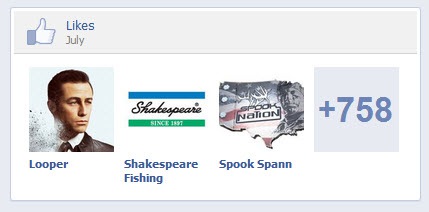
In the first two weeks of July 2012, the profile below had accumulated more than 750 Likes:
These users seem to hit just about every Facebook page in existence, with sometimes five or more Likes in a single minute.
We found lots of profiles with the same pattern:
http://www.facebook.com/linda.meyer.940/favorites
http://www.facebook.com/rtspina/favorites
http://www.facebook.com/jasonxcraig/favorites?ref=pb
http://www.facebook.com/flaquis.carrillocamacho/favorites
http://www.facebook.com/nc4x4babe/favorites
http://www.facebook.com/RaivenStudios/favorites
http://www.facebook.com/carmen.l.carter2/favorites
http://www.facebook.com/linda.s.crawford1/favorites
http://www.facebook.com/teri.templeman/favorites
http://www.facebook.com/totto.tekno/favoritesWith this additional data from above compared against the BBC study, we are much more confident that something is going on with Facebook ads. But what exactly is it?
Here are a few theories we tossed around:
#1 Facebook is generating fake Likes through their ad network.
This obviously would have major negative backlash for Facebook, which just two months ago had the third largest IPO in history. There’s a lot for them to lose if this was discovered, but advertising viability is commonly listed as the number one concern for both the company and for shareholders.
#2 “Like” generating networks, similar to what you would find on fiverr.com, are using bots or compromised accounts in order to diversify their activity history and avoid getting banned.
It is a known tactic for spammers and bot writers to imitate behavior that makes the profile look more diversified and natural-looking in order to avoid detection and mass removal or account bans.
#3 Someone is using 3rd-party apps or compromised accounts to abuse the Facebook ads system in order to hurt Facebook, the company.
Hacker organizations like Anonymous have been rumored to be looking for ways to hurt Facebook, even though they deny it. It’s not unreasonable to believe a group might be out there working together to damage the credibility of Facebook’s only source of revenue.
Our Conclusion
We believe it is #2: someone or a group of someones is utilizing bot networks and compromised accounts to sell actions in Facebook, and the voluminous Liking is a byproduct of attempting to randomize any patterns that would identify their core network or their customers.
Last week’s Gizmodo article on bought Twitter followers adds some related credence to this theory. The Twitter followers are added through bot networks and compromised accounts.
It doesn’t help that Facebook doesn’t appear to be taking the allegations seriously. So far they have only responded that “We’ve not seen evidence of a significant problem. Neither has it been raised by the many advertisers who are enjoying positive results from using Facebook.”
In Facebook’s defense on the issue, the BBC study indicated only $10 was spent to garner 1,600 Likes in 24 hours, which would be less than $.01 per Like. Anyone running Facebook ads knows that you are never getting clicks that cheap and in that volume for that price.
The same is evident in one of our campaigns, although the initial one mentioned above was much worse. For example, when a fanpage received ~100 new Likes during a Facebook ad campaign, only 18 were a direct result of the ad itself.
So is Facebook aware that this is going on, but is turning a blind eye because these fraudulent, bot-created Likes are not being procured via the Facebook ad network?
Have you seen any trends like this lately with your ad campaigns? If so, please comment below. I’d love to hear about them and any additional theories that might be out there.
11 Effective Twitter Strategies for Brands | Mount Kisco Real Estate
Brands are missing out on big opportunities to engage with consumers on Twitter by tweeting at the wrong time or in the wrong way, according to an interesting study from Buddy Media.
The report, Strategies for Effective Tweeting: A Statistical Review, found that many brands aren’t using Twitter effectively and outlines the top strategies for engaging with consumers. Buddy Media looked at user engagement for the top 320 brands on Twitter between December 11, 2011 and February 23, 2012 to see how successful they were at getting @replies and retweets. Their engagement rates were also assessed to quantify the relationship between @replies and retweets based on their number of followers.
Use these best practices and proven tactics to communicate effectively on Twitter:
1. Tweet on weekends
Twitter engagement rates for brands are 17% higher on Saturday and Sunday vs. weekdays, but brands don’t leverage this trend. Only 19% of all brand tweets are published on weekends even though engagement is highest on these days. Tweets on Wednesdays and Thursdays are wasted because that’s when engagement is the lowest.
2. Best days to tweet by industry
Clothing and Fashion: Tweet on weekends
Engagement for clothing and fashion brands is 30% higher on weekends, but only 12% of the industry’s tweets are posted on Saturday and Sunday. Followers typically have more time for shopping on weekends, so this is when to communicate with them. Thursday produces the lowest engagement.
Entertainment: Tweet on Sunday and Monday when people are
looking for events to attendTweets published by entertainment brands on Sunday and Monday receive 23% more engagement than average, while Thursday receives the lowest engagement. Followers may be more engaged on these days because they’re looking for movies and other events to attend in the coming week.
Publishing: Tweet on Saturday when people catch up on reading
Publishers, including bloggers, are missing a big opportunity to engage with followers on Saturdays, when they’re catching up on news and current events. Engagement on Saturday is 29% higher than average, yet only 7% of publishing brands tweet on that day.
Sports: Tweet on weekends when big games are on
People are far more likely to engage with sports brands on Twitter during the weekend, which is no big surprise. Engagement rates are 52% higher on Saturday and Sunday than on weekdays, with Monday coming in third. Most major sporting events are held on weekends, and people like to discuss them on Monday. Only 9% of sports brands tweet on Saturday, so they’re missing an opportunity.
3. Tweet when people are busy to create more
brand engagementTweets sent during busy hours (8am to 7pm) receive 30% more engagement than tweets posted at other times (8pm to 7am), including Saturday and Sunday. 64% of brands tweet during busy hours and take advantage of this trend.
4. Use different social networks so your conversation
is always onWhile Tweets during busy hours receive significantly more engagement, Facebook posts show the inverse results — posts during non-busy hours receive 17% more engagement on Facebook than those posted during busy hours. Facebook posts can remain at the top of a user’s News Feed based on their EdgeRank scores, even if they’re published while the user isn’t on Facebook. Tweets, on the other hand, are quickly pushed out of sight by newer tweets, making them more difficult to find when they’re published outside of busy hours.
5. Figure out how to pace your tweets throughout the day
Plan your tweet schedule according to the days your tweets perform best, and tweet more frequently on those days. But don’t overdo it — there’s an inverse relationship between tweet frequency and engagement, so the more you tweet per day, the less engaging your tweets may become.
6. Keep tweets short for best performance
Tweets that contain fewer than 100 characters receive 17% higher engagement than longer tweets. And leave some room in tweets — if you don’t use all 140 characters, followers can add their own text either before or after your content.
7. Use links in tweets to drive clicks and retweets
Links with short, tempting descriptions entice followers to click. Tweets that include links are retweeted 86% more than tweets with no links. Adding links drives a lot of traffic to desired destinations and magnifies your brand messages.
8. Make sure your links work
Ever see an interesting tweet with a link that you really want to click but can’t? We’re all familiar with that scenario. It’s often the result of a simple formatting error in the tweet — 92% of all linking errors are caused by not inserting a space before the actual link, which forces users to copy and paste the link into a browser. I don’t want to do that, do you?
9. Use hashtags increase engagement but don’t overdo it
Hashtags are a Twitter staple and a popular way to identify themes or topics in a tweet. Tweets with hashtags receive twice the engagement of those without hashtags, but only 24% of tweets contain them. It’s possible to overuse hashtags, though, and many brands do — tweets with one or two hashtags have 21% more engagement than those with three or more, which yield a 17% drop in engagement.
10. Tweet images
Even though followers can’t see an image instantly on Twitter as they can on Facebook, regular publishing of images has a pronounced impact on Twitter performance. Tweets with image links (via yfrog, instagr.am, Twitpic, and other sites) have engagement rates 200% higher than those without.
11. Ask for retweets
Don’t be afraid to ask people to retweet your posts — it can make a huge difference. Tweets that specifically ask followers to “retweet” or “RT” are retweeted 12 times more than those that do not, but fewer than 1% of brands actually implement this call to action. Asking followers to retweet is an easy and effective way to amplify your brand messaging.
Top 10 metros for foreclosures | Mount Kisco Real Estate
California image via Shutterstock.
The number of homes hit with foreclosure-related filings during the first six months of the year fell nearly 11 percent from the same period a year ago, to 1.05 million homes, according to public records aggregated by RealtyTrac.
Compared to the second half of 2011, however, foreclosure activity was up more than 2 percent, with 1 in every 126 U.S. housing units receiving a foreclosure filing.
Overall, foreclosure-related filings — including default notices, auction sale notices and bank repossessions — decreased in June for the 21st consecutive month. But foreclosure starts were up on a year-over-year basis for the second month in a row.
“Foreclosure starts began boiling over in more markets in the first half of the year, particularly in the second quarter,” said Brandon Moore, CEO of RealtyTrac, in a statement. “The increases in foreclosure starts in the first half of the year will likely translate into more short sales and bank repossessions in the second half of the year and into next year,” he said.
The report also shows that foreclosure activity continues to burn some of the same metros in 2012 — like Stockton and Modesto in California’s Central Valley and Riverside-San Bernardino-Ontario just east of Los Angeles.
Among metros with populations larger than 200,000, these metros rank No. 1, No. 2 and No. 3, respectively, for foreclosure activity through the half-year and for June. In the second quarter, it was the same triumvirate, but Modesto and Riverside-San Bernardino-Ontario switched places in the rankings.
They aren’t the only California metros facing the brunt of the foreclosure fire.
An 18 percent year-over-year increase in foreclosure starts in California in June left the Golden State with the highest foreclosure rate of any state for the month, a jump that landed nine of its metros in the top 10 for June.
Looking at the first half of the year overall, California metros took the top five spots, with Stockton, Modesto, Riverside-San Bernardino-Ontario, Vallejo-Fairfield and Merced collectively averaging a foreclosure rate of 2.5 percent, with about 1 in 40 housing units in those markets receiving a foreclosure-related filing. Two California metros — Bakersfield (No. 8) and Visalia-Porterville (No. 10) — made the top 10, too.
Atlanta-Sandy Springs-Marietta, Ga. (No. 6); Phoenix-Mesa-Scottsdale, Ariz. (No. 7); and Las Vegas-Paradise, Nev. (No. 10) were the non-California metros in the top 10.
Despite the heavy California presence in the metro top 10, Nevada, even after seeing a 61 percent year-over-year drop in foreclosure activity, tops U.S. states with about 1 in every 57 of its housing units having received a foreclosure filing in the first half of 2012. Arizona, too, saw a drop (37 percent) in foreclosures from a year ago, taking the No. 2 spot on the list. Georgia is No. 3.
10 states with highest foreclosure rates
Area Foreclosure rate (Jan. – June 2012) U.S. 1 in 126 housing units Nevada 1 in 57 Arizona 1 in 58 Georgia 1 in 63 California 1 in 64 Florida 1 in 65 Illinois 1 in 71 Michigan 1 in 98 Colorado 1 in 103 Ohio 1 in 106 Utah 1 in 108 Source: RealtyTrac
See the pages below for data from the 10 metros with the highest foreclosure rates during the first six months of 2012.
Location: Stockton, Calif.
Foreclosure rate (Jan. – June 2012) 1 in every 38 housing units Percent change in foreclosure rate (July – Dec. 2011) -13.42% Total housing units 233,755 Metro population 685,306
Mount Kisco Real Estate | Create Emotional Marketing That Works by Getting Sellers On Camera
Only the seller truly knows what it feels like to live in your listing.
Can you get them to tell their story on video?
Kendyl Young did.
In the video below, Kendyl introduces herself, then the home and then the owner.
And then she gets out of the way.
What happens next is pretty special.
Most listing videos focus on features and amenities.
–>
Here the focus is squarely on the memories the home and surrounding area created for the owner and her family.
Take a look.
I reached out to Kendyly with two simple questions:
Did the home sell? If so, can you attribute it to the video?
“Oh yeah. 26 offers. Many attendees at the open house mentioned the video. Some said, “Wow, that video of your is going viral- must be a smoking hot deal.”
I am sure that the video created more buzz and traffic at the open house (300 attendees in one day over 4 hours). In turn, it raised excitement on the house. We are in escrow for a huge amount over asking price with a matching offer as a back up. And this was a short sale.”
Boom.
This wasn’t Kendyl’s first video. She has an extensive library worth checking out on her site.
The video wasn’t professionally done.
The camera was even shaky at times.
It didn’t matter.
It captured emotion.
Do that.
Use the right data to drive real estate decisions | Mount Kisco NY Real Estate
Magnifying glass on housing image via Shutterstock.
I grew up hating math, though I always got good marks in it. I just didn’t feel like I completely understood it the way I did English and history, even though I could do the work and apply the rules with the best of them.
Then, early in college, I had an amazing teacher who converted me into a lifelong math lover. And it sure has come in handy, especially in my real estate dealings (and my aggressive retail wheeling and dealing).
In a good turn for the market, I’ve seen a much higher appetite for data among the buyers and sellers who are seeking to make wise real estate decisions. And I’ve seen the pros meet this demand.
On recent fliers and email newsletters, I’ve seen everything from an agent touting their average listing’s sale price (vis-à-vis the average home sale price, citywide) to a stager providing the data on how much over asking her recently staged listings sold for.
I recognize that some people have never quite recovered from their early educational math dramas and traumas. Fortunately, that doesn’t have to mean that you can’t take advantage of this new era of data-driven decision-making.
Here are five simple steps even the most math-averse house hunter, home seller or refi-seeker can use to make fully informed real estate decisions, based on the numbers:
1. Use the right numbers and ONLY the right numbers. One of the reasons math-averse folks shut down in conversations about real estate data is sheer overwhelm: percentages; rates; charts; graphs; timelines; quarter-over-quarter vs. year-over-year; the mathy jargon; the unfamiliar concepts; and the sheer scariness of all those digits (millions and even billions of dollars, depending on the stats being discussed) is so far outside the comfort zone of the average homebuyer who hates math that it seems completely daunting to even go there.
Shatter this scariness by simply focusing on a tiny set of data points: only the numbers that count, and that have true relevance to the actual decision you’re trying to make.
Generally that means you’ll be focused on local numbers only (more on that later.) Also, that means you need to maintain laser-beam clarity in your own head on what decision you’re actually trying to make in any given moment!
So, for example, if you’re trying to decide how much to offer for a particular home, other than your own personal mortgage and financial tolerances and how much you want it, you may only need to know:
- how long the home has been on the market.
- how many offers you’re competing with (if any).
- how long an average home in the neighborhood stays on the market.
- how much very similar homes have sold for in the last few months, generally, and as relative to their list prices and the number of multiple offers.
2. Get the pros to serve you up the numbers. Whatever you do, do not rely on national newspaper headlines or the latest two-minute analysis on cable news for your decision data. At its best, this information is designed for economic analysis, not personal decision-making; at its worst, it’s designed to spark outrage and generate hyperbole.
Fortunately, local real estate brokers, agents, mortgage pros and even real estate associations are delighted to provide you with this information. Get referrals to agents and mortgage pros whom your friends and family members trust and ask them to provide you with the information you’re looking for (they’re usually happy to suggest what data you should use and explain why), and Google the name of your town or county and the words “association of realtors” to find websites that offer untapped treasure troves of local market data, usually for free!
3. Remember that everything is relative. Knowing how long your target property has been on the market has no value to your purchase-offer decision-making if you don’t know how long homes in that neighborhood usually stay on the market. If the average days on the market (DOM) in an area is five months, then the sellers of a home that has been on the market for one month might not be ready to drop the price yet; by contrast, if a neighborhood’s listings usually move off the market in 10 days or less, then many sellers will be considering a price reduction by one month.
As a general rule, every time you consider a piece of data about a particular home, you must consider it in the context of what the average number is for homes in that area for the data to have any real meaning. When an agent tells you what the list price is, how long the place has been on the market, or recommends a list or offer price, you should always ask, “What’s the average for similar homes in this area?” and compare.
4. Make sure comparables are truly comparable. I’m sure you’ve heard the old Mark Twain saying about how deception can be categorized into “lies, damned lies and statistics.” While most agents out there are busting their humps to help people make smart decisions, the occasional bad apple may try to twist the data to support their position or get you to do what they want you to do.
To make sure that you’re comparing apples to apples, always get the source material for any sort of comparable sales data or “comparative market analysis” you’re given, and flip through it to make sure the listings the numbers are based on actually are in fact similar to and nearby the “subject property” (i.e., the home you are trying to buy or sell). As well, check to be sure the listings and sales are very recent — from within the last six months at the outside, and more recent is better.
5. Avoid rules of thumb. I’m constantly receiving emails from readers asking for a good rule of thumb for using data to drive any and every sort of real estate decision, whether they’re trying to set a list price, counter a counteroffer or decide when to lock their interest rate. But the real deal is that, in real estate, everything is hyperlocal. This means that not only is a rule of thumb here in the San Francisco Bay Area inapplicable to a market in Minnesota, a rule of thumb on one side of town might be entirely inapplicable on the other!
Robert De Niro sells West Village house | Mount Kisco NY Real Estate
De Niro finally completed the sale on a West Village house this week – one year after first putting it on the market. Raphael De Niro, that is, Robert’s Elliman broker son, who managed his father’s property sale for him.
The actor, famous for his roles in The Godfather, Heat and, more recently, Meet the Fockers, originally put the five-storey Italianate home up for sale in July 2011 with an asking price of $14 million.
De Niro owned the property for over 30 years, according to its listing, which describes the home as in need of “full renovation”. Built in 1852, the house “neighbours some of the most historically rich properties in Manhattan”, adds the listing, describing it as “a rare instance of a true blank canvas, ready to be transformed with your vision and architect”.
Whether buyers were put off by the state of the building or the hefty asking price is still unclear – De Niro certainly did not listen to TheMoveChannel.com’s podcast “Why Is My House Not Selling?” – but the heavily-reduced final price of $9.5 million was an offer the new owner couldn’t refuse.