Uncertainty and Information Overload: Addressing Economic Uncertainty | Cross River Real Estate
Leave a reply

Recently, I had a conversation with a first-time buyer, who was trying to think through precisely how to articulate her house-hunt wish list to her agent in a way that was clear on her wants vs. needs. During the course of our talk, I found myself briefing her on an agent’s wants and needs.
“Sure, every agent wants and needs to close your sale and earn a commission,” I told her. “But what they really want even more is, when possible, to be your hero.
“Every reputable agent wants you to be thrilled with your place. They want you to love them and to rave about what they did for you to their friends, for years in the future. So, if they can find someplace that scores on all your requirements and as many as possible of your preferences, chances are good that they will.”
The process of getting to that outcome, the outcome of being highly happy with your agent’s work, requires a number of things, but one that comes to mind is the way buyers interact with agents in terms of being demanding vs. nondemanding, and responsive vs. nonresponsive. These are the same factors psychologists look to when trying to understand which styles of parenting are likely to be successful, in terms of producing children that are competent to achieve their own goals in the world.
With inventories down and prices up, sellers are ending the costly incentives they have been forced to offer buyers during the six-year long buyers’ market. Concession-free transactions make deal-making simply on both sides of the table.
There’s no better gauge of the onset of a seller’s market than the demise of concessions that were considered essential to attract buyer interest just a few months ago. The National Association of Realtors’ December Realtor Confidence Outlook reported that the market has steadily moved towards a seller’s market with buyers more willing to bear closing costs, in some cases paying for half or more of the closing cost. Tight inventories of homes for sale are making markets increasingly competitive.
NAR reports that last year 60 percent of all sellers offered incentives to attract buyers. The most popular was a free home warranty policy, which costs about $500, offered by 22 percent of sellers, but 17 percent upped the ante by paying a portion of buyers’ closing costs and 7 percent contributed to remodeling or repairs.
Concessions linger where inventories are still adequate and sales slow, but in tight markets like Washington DC the times when buyers can expect concessions are already over.
“Buyers are discovering, to their dismay, that homes they wanted to see or possibly buy have already been snatched up before they even get a chance to see or make an offer on the property. This area’s unprecedented low inventory levels are slowly driving up home prices and making sellers reluctant to cede little if any concessions to buyers. Realtors are warning (or should in some cases) buyers to be prepared to act that day if they are interested in a property,” reporters a local broker.
The New Castle Historical Society’s newest exhibit opens Tuesday at the Horace Greeley House, 100 King Street, in Chappaqua.
The exhibit, titled “New Castle’s Beginnings – Our Founding Farms” traces the town’s origins from Native American lands to the farms of the 19th century to the large estates and housing developments that define the community today. The society will also focus on several local farms and feature their products, among them: Sutton Farm, Dodge Farm, Brann Farm, Taylor and Annandale Farms and the Greeley Farm.
There will be interactive aspects to this exhibit plus a seminar series featuring speakers from local farms operating today.
The historical society will hold an opening reception on Sunday, March 3, from 3 p.m. to 5 p.m. The exhibit will run through the year at the Horace Greeley House. The facility’s hours are Tuesday, Wednesday, Thursday and Saturday from 1 to 4 p.m. or by appointment at 914-238-4666.
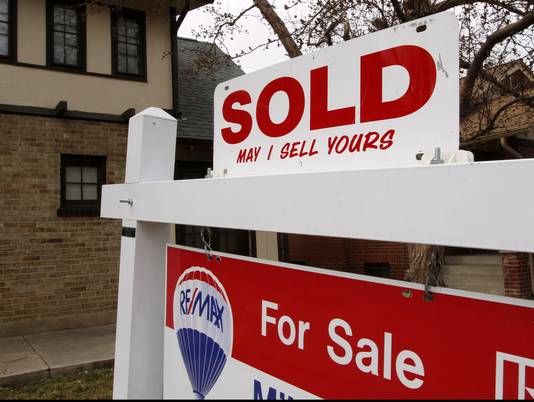
Home sold in south Denver in March 2012.(Photo: David Zalubowski, AP)
U.S. home prices jumped by the most in 6½ years in December, spurred by a low supply of available homes and rising demand.
Home prices rose 8.3%in December compared with a year earlier, according to data Tuesday from CoreLogic, a real estate data provider. That is the biggest annual gain since May 2006. Prices rose last year in 46 of 50 states.
Home prices also rose 0.4%in December from the previous month. That’s a healthy increase given that sales usually slow over the winter months.
Steady increases in prices are helping fuel the housing recovery. They’re encouraging some people to sell homes and enticing some would-be buyers to purchase homes before prices rise further.
Higher prices can also make homeowners feel wealthier. That can encourage more consumer spending.
Most economists expect prices to keep rising this year. Sales of previously-occupied homes reached their highest level in five years in 2012 and will likely keep growing. Home builders, encouraged by rising interest from customers, broke ground on the most new homes and apartments in four years last year.
Ultra-low mortgage rates and steady job gains have fueled more demand for houses and apartments. More people are moving out into their own homes after doubling up with friends and relatives in the recession.
At the same time, the number of previously-occupied homes for sale has fallen to the lowest level in 11 years.
“All signals point to a continued improvement in the fundamentals underpinning the U.S. housing market recovery,” said Anand Nallathambi, CEO of CoreLogic.
The states with the biggest price gains were Arizona, Nevada, Idaho, California, and Hawaii. The four states were prices fell were Delaware, Illinois, New Jersey and Pennsylvania.
The housing recovery is also boosting job creation. Construction companies have added 98,000 jobs in the past four months, the best hiring spree since the bubble burst in 2006. Economists forecast even more could be added this year.
Housing has been a leading driver of past recoveries. But the bursting of the housing bubble pushed a flood of foreclosed homes on the market at low prices. That made it hard for builders to compete.
And a collapse in home prices left millions of homeowners owing more on their mortgages than their houses were worth. That made it difficult to sell.
Now, six years after the bubble burst, those barriers are fading. Some economists forecast that housing could add a point or more to economic growth this year.
Climbing home prices are lifting household wealth and boosting the purchasing power of consumers. Declining mortgage delinquencies and foreclosures are buttressing bank balance sheets, giving them greater leeway to lend. And rising property- tax revenue is fortifying the finances of state and local governments, alleviating pressure on them to cut budgets.
“The housing recovery will kick into a higher gear as the year progresses,” said Mark Zandi, chief economist in West Chester, Pennsylvania, for Moody’s Analytics Inc. “We’re going to get a lot of juice from the channels” through which it affects other parts of the economy.
The spreading impact of housing will help the economy weather looming federal government spending cuts and tax increases and keep on growing. Rising residential construction and its knock-on economic effects will boost gross domestic product by about 0.75 percentage point this year, offsetting much of the drag from the fiscal squeeze, according to Zandi. He sees GDP growing at about 2 percent again this year.
Elsewhere, increasing political tension in Europe caused stocks to fall there and in the U.S. The Standard & Poor’s 500 Index decreased 0.7 percent to 1,502.34 at 10:55 a.m. in New York. The Stoxx Europe 600 Index slid 1.2 percent.
A report from the Commerce Department showed U.S. factory orders rose less than forecast in December, reflecting a drop in non-durable goods that partly countered gains in construction equipment and computers.


