Category Archives: Chappaqua

More than 44,000 agents buying ads on Zillow, up 68 percent from year ago | Chappaqua Real Estate

The number of agents paying to promote themselves on Zillow grew 68 percent from a year ago, to 44,749, the company said in reporting third quarter results today. But average monthly revenue per subscriber was essentially flat at $264, compared to $270 during the same quarter last year.

Zillow reported record revenue ($53.3 million), new subscribers (5,942) and average monthly unique visitors (61.1 million) for the quarter, but reported a net loss of $1.2 million on increased advertising expenses.

Revenue for the quarter was up 67 percent from a year ago, with advertising by real estate agents accounting for the lion’s share of revenue ($35.1 million).

“The third quarter was another extremely strong one for Zillow, as we exceeded our outlook and delivered record results,” said Zillow CEO Spencer Rascoff in a statement. “We made significant progress toward our priorities to grow audience, grow our Premier Agent business and grow our emerging marketplaces.”

Zillow announced an initiative this year to boost the company’s brand with enhanced spends in advertising on the Web and TV. The company hosted a housing discussion with President Barack Obama in August and a housing forum with Washington, D.C. heavyweights including Federal Housing Finance Agency director Edward DeMarco and Federal Housing Agency commissioner Carol Galante in October.

Zillow’s chief competitors, Trulia and realtor.com, reported third quarter revenue growth of 59 percent and 14 percent, respectively.


– See more at: http://www.inman.com/2013/11/05/zillow-reports-record-revenue-subscriber-count-and-web-traffic-in-q3/#sthash.OZtyelh4.dpuf

Chappaqua NY Sales up 75% | Median price flat | #RobReportBlog

Chappaqua   NY Real Estate ReportRobReportBlog
20136 months ending 11/52012
121Sales69up 75%
$899,999.00median sold price$900,000.00flat
$405,000.00low sold price$465,000.00
$4,000,000.00high sold price$2,550,000.00
3477average size3673
$301.00ave. price per foot$288.00
148ave days on market174
$1,044,310.00average sold price$1,045,921.00
0.9736ave. sold to ask0.9591

Tight Lending Standards Slow the Economy | Chappaqua Real Estate

Changes in lending standards by banks, undertaken to reduce their risk and preserve capital, have huge, macroeconomic effects on the economy.  Not are not only restricting credit, they simultaneously reduce the demand for credit by businesses homeowners, even creating credit shocks that impact GDP. However, banks loosen standards to create a competitive advantage in the marketplace according to a new study by economists at the Federal Reserve.

Tightening credit creates shocks to the credit supply and leads to a substantial decline in output and the capacity of businesses and households to borrow from banks, as well as to a widening of credit spreads and an easing of monetary policy.
Shifts in the supply of bank loans to businesses and households corresponds to changes in lending standards that-using an econometric model-have been adjusted for the bank-specific and macroeconomic factors that, in addition to affecting banks’ credit policies, can also have a simultaneous effect on the demand for credit.

The economists, William F. Bassett, Mary Beth Chosak, John C. Driscoll, and Egon Zakrajsek, used the Fed’s quarter Senior Loan Officer Survey as a way to measure and track banks’ lending standards and credit policies from the bottom up, using bank-level responses on changes in lending standards for businesses.

“This analysis shows that credit supply disturbances have economically large and statistically significant effects on output and core lending capacity of U.S. commercial banks. Specifically, an adverse credit supply shock of one standard deviation is associated with a decline in the level of real GDP of about 0.75 percent two years after the shock, while the capacity of businesses and households to borrow from the banking sector falls more than 4 percent over the same period, the economists found. Such disruptions in the credit-intermediation process also lead to a substantial rise,” they found.

Economic factors influencing banks’ business credit policies include a projected increase in the unemployment rate as does a deterioration in the current labor market conditions. Expected changes in longer-term interest rates again exert a significant influence-in both economic and statistical terms-on the probability that banks will modify their current lending standards: An expected increase of 100 basis points in the 10-year Treasury yield over the next four quarters is estimated to lower the probability of tightening in the current quarter about 6.5 percentage points and boost the likelihood of easing by nearly the same amount.

The capacity of businesses and households to borrow from the banking sector begins to decline within two quarters after the initial credit disruption, and the resulting reduction in this broad measure of credit inter-mediation is very persistent and protracted, they said.


http://www.realestateeconomywatch.com/2013/11/tight-standards-can-rock-the-economy/


What $2,900/Month Can Rent You Around New York City | Chappaqua Real Estate

Welcome back to Curbed Comparisons, a column that explores what one can rent for a set dollar amount in various New York City neighborhoods. Is one man’s studio another man’s townhouse? Let’s find out! Today’s price: $2,900/month.

↑ In Battery Park City, this 2BR/1BA apartment is going for $2,960/month. The foyer has an alcove “large enough for a four person dinning room table” and the building offers such amenities as a doorman, concierge, pool, gym, and laundry.

↑ A spacious open studio in Greenwich Village rents for $2,800/month. It’s in an elevator building with laundry and has fairly high ceilings.

↑ On the Upper East Side, a fourth-floor walk-up 2BR/2BA with weird floors wants $3,000/month. It has two “walking closets.” Watch out for those closets, they’re walking all over the place!

↑ This 2BR/1BA pad in Williamsburg is “right in the heart of where it’s happening” and wants $2,900/month. The floors and bathrooms were recently refinished.

↑ On the Upper West Side, this nice-looking 2BR/1BA has a decorative fireplace and mantle in the living room. It wants $2,849/month. There’s also an eat-in kitchen.

This 2BR/1BA in Gramercy is going for $3,000/month. Good photography.

1001 total votes.

· Curbed Comparisons archives [Curbed]

Most Beautiful House in Astoria Asks $1.25 Million | Chappaqua Homes

Exemplifying the classic aesthetic that the Queens neighborhood is known for, this three-story house in Astoria, marketed by aptly-named brokerage Modern Spaces, just hit the market for $1.25 million. It includes many of the trademark Astoria features that have long inspired architecture lovers—falling-off weatherboard siding, half-assed graffiti, boarded-up windows, and more. Buy it today!

· Listing: 31-40 47th Street [Modern Spaces] · Astoria coverage [Curbed]

3 Facebook Survey Tools You Will Love | Chappaqua NY Realtor

Facebook, Facebook, Facebook. It’s hard to get through any internet focused  blog without reading something about Facebook. It has become so common that  refraining from using the company in articles has become a challenge and at the  same time, a breath of fresh air.

We all have started to try to find other examples of sites and options for  marketing that don’t include the social media giant. However, for surveys and  understanding your customer base, nothing can beat Facebook.

We’re going to go through why Facebook is so necessary for a quality survey.  We will also look at some interesting apps that will help you to reach your goal  of a loyal audience and build your customer base.

The three major advantages of Facebook polling

1. Comprehensive metrics

Facebook is an undeniably huge database of information collected from  millions of people, including your audience and potential customers. At times,  people share much more about themselves than they probably should, and this is  all stored on Facebook’s servers. Why does this matter?

It matters because this data can help you analyze your responses much better  and with more detail than a classic poll. Many Facebook survey tools allow you  to use the already available information to narrow down your respondents by:

  • Age
  • Location
  • Gender

They then use a scale to mix and match these demographics.

2. Easy to obtain a large number of respondents

I bet just about everyone you know has a Facebook profile. It is so  integrated into our lives that the average smartphone user checks their Facebook  14 times a day. This means that there is already a large amount of active people  who are readily available to take your survey. Facebook allows you to gain much  more respondents in a much shorter amount of time than if you used classic  survey methods.

3. Low cost

Small businesses, new businesses, and even large businesses need to cut costs  where it makes sense. Traditional polling can be very expensive which often  mitigates the final outcome of a survey. However, most Facebook polling  solutions are very cheap and can offer more than enough information to make  smart changes and to help generate more effective content.

3 Facebook survey tools

Facebook used to offer its own polling service but it has since been shut  down as it was quite honestly useless. Sure, if you needed to make a painless  poll to get an answer quick without having to analyze it, it worked.

However, most users needed to gather real data to achieve real goals, and so  3rd party applications started taking the lead. These three applications are  some of the most popular and affordable ways for just about anyone to get  actionable results from their survey.


Read more at http://www.jeffbullas.com/2013/10/17/3-facebook-survey-tools-you-will-love/#frGGDeJmrXMlmolk.99

6 Ways to Grow Your LinkedIn Connections | Chappaqua Realtor

Are you looking to grow your LinkedIn network?

Do you want to improve your chances of connecting with people via LinkedIn?

In this article, you’ll find six tips for successful networking that will help you avoid common mistakes that can damage your professional reputation on LinkedIn.

What’s Different About LinkedIn?

Unlike social media platforms such as Facebook and Twitter that accommodate both personal and business uses, LinkedIn is a social network built strictly for business.

From the appearance of your profile to how you manage relationships, the people on LinkedIn expect professional behavior from you at all times.

As you build your network, it’s important to know what’s appropriate and what’s considered bad LinkedIn etiquette.

Here are six tips:

#1: Show People Your Business Side

You only get one chance to make a first impression, so make it count. If you use an unprofessional image for your profile photo, you may never get a chance to recover your reputation.

Your LinkedIn profile image should show you in your best professional light. Use a head shot with a clean background, a smile and a clear view of your eyes. Think of how you would present yourself at an event thronging with prospects and use an image that does the same, online.

Always use an appropriate profile image.


#2: Skip the Keyword-Stuffing

The first thing many people do when they receive your connection request is look at your profile. And if your profile is stuffed with repetitive or irrelevant keywords, there’s a pretty good chance that they won’t connect with you.

Too many keywords make your profile look suspect.

Yes, you must optimize your LinkedIn profile with relevant keywords so you’re found in search results, but there is a big difference between keyword-optimizing and keyword-stuffing.

Instead of using a large number of vaguely relevant words to show up in hundreds of search results, choose three or four top keywords you want to be associated with to make sure you show up in search results when people are looking for exactly what you offer.


http://www.socialmediaexaminer.com/successful-linkedin-networking/

Pleasantville’s thriving Farmers Market on Saturday | Chappaqua Real Estate

Hundreds of shoppers enjoyed Pleasantville’s thriving Farmers Market on Saturday as the local market enjoys the final weeks of its first outdoor season under the village’s control.Photo AlbumPleasantville Farmers Market Grows And Thrives In Village

“We’ve grown the market, included all 12 of the varieties of vendors our shoppers prefer and enlarged the footprint this year,” Market Executive Director Steve Bates said. “And this tear we’re moving inside for the winter season at the Pleasantville Middle School on Dec. 7.”

The Pleasantville Outdoor Farmers Market is in its 15th year and runs Saturdays from 9 a.m. to 1 p.m. through Nov. 23 at the Pleasantville train station in Memorial Plaza.

The Farmers Market is the largest in Westchester County and is home for 50 vendors providing regionally-grown produce, humanely raised meats, wild-caught Atlantic seafood, prepared foods sourcing farms for ingredients, and many other new offerings.

“We enjoy the atmosphere, the convenience and the variety of locally grown produce,” said Pleasantville’s Steve Jacobs, who shops the market with his wife, Jean. “It’s great to have products come directly from local farms and producers each week.”

Bates said the outdoor market has grown over the years as live music, children’s events and vendors came on board.

“The three goals are the bring the community together, attract visitors to our downtown and provide great local farm-to-table products,” Bates said. “We’re having a great year and we welcome everyone to visit.”

The winter indoor market begins Dec. 7 and will run through May 23, 2014, Saturdays from 9 a.m. to 1 p.m.


http://whiteplains.dailyvoice.com/lifestyle/westchesters-largest-farmers-market-wrapping-outdoor-season

Considering a Fixer-Upper? 15 Questions to Ask First | Chappaqua Real Estate

Many of us share the same dream: find an adorable fixer-upper in a great location and set out to make it swoonworthy. But when the budget isn’t limitless, it becomes even more important to know what to look for before purchasing a house that needs a lot of work. Older homes often have underlying safety and construction issues, and you can save a lot of time and money by planning for them.
Here we’ll also discuss how to recognize what is valuable in your period home, and how you can preserve its charm in your remodel.

Before you dive in, look carefully at the inspection report, talk with your contractor and study the history of the home and the neighborhood. Wade Palmer of WIN Home Inspection Services and general contractor Greg Blea gave me the lowdown on the 15 most important questions to ask.
1. What is your budget? For some remodels of historic homes, there’s a large budget and the admirable goal of preserving an architectural gem, no matter the cost. I’ll be focusing more on projects with modest budgets in this ideabook. Many of the questions are still the same, but the decisions about how to move forward are different when the budget is limited.
2. Is it in a historic district? If so, the design and permit processes can be lengthier and more expensive, and using the required historically correct materials can add significantly to the cost. But a historically protected neighborhood and architecturally unique homes often mean more consistent — and rising — property values.
3. What is the weather in the area and the intended use of the building? A home for a family of four in a wintry climate will require a different and costlier approach than a vacation cottage that is used only in the summer months. To keep costs down, plan for construction during the best weather.
4. Does the house have beautiful bones? Some things are irreplaceable or would cost a fortune to re-create. Older wood floors, for example, have greater color and character than newly milled floors. Solid wood paneling, trim and doors are expensive to replace. Elaborate millwork may be impossible to find or replace.
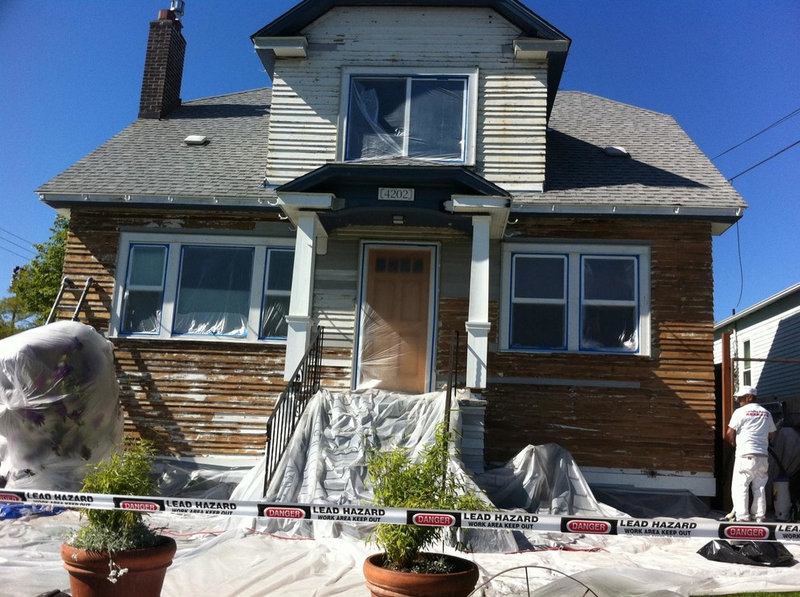
5. Is there lead-based paint? Most states now require protective actions for dealing with lead-based paint.  These actions require training and certification by the state, and the time-consuming process can increase the cost of even a small renovation.
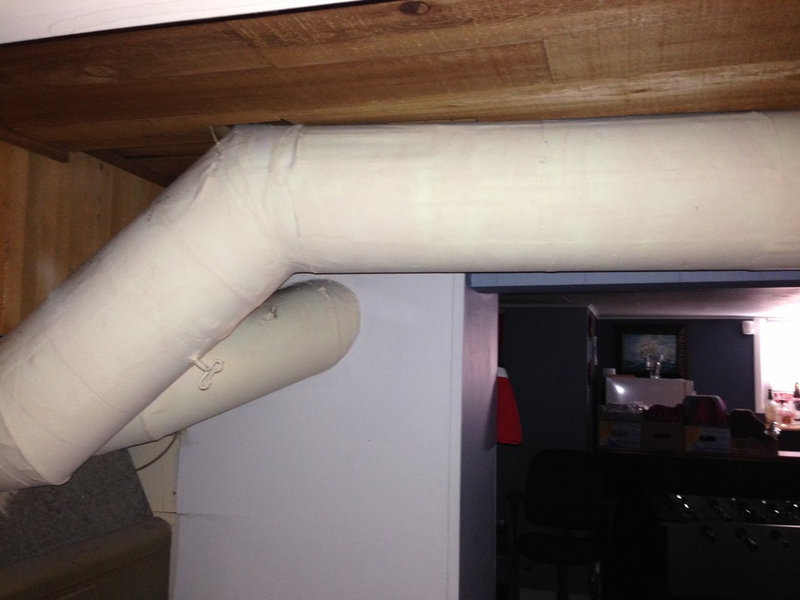
6. What about asbestos? Asbestos was commonly used in older homes, often in insulation, siding, flooring and other components. It must be removed by a certified abatement crew, or in some cases it can be encapsulated. But it is not something to tackle yourself. Professionals advise taking care of asbestos in the proper way, as it will increase the value and sales potential of your home, as well as its safety.

Mortgage rates last month reached two-year highs | Chappaqua Real Estate

Mortgage rates last month reached two-year highs, reducing affordability at the same time prices rose. With some would-be buyers pushed to the sidelines, the pace of recovery in real estate is cooling