Category Archives: Chappaqua

30-Year Fixed Mortgage Rates Plummet 16 Basis Points | Chappaqua Real Estate

Mortgage rates for 30-year fixed mortgages fell this week, with the current rate borrowers were quoted on Zillow Mortgage Marketplace at 4.06 percent, down from 4.22 percent at this same time last week.

The 30-year fixed mortgage rate steadily declined last week, leveling off near 4.12 percent over the weekend before falling to the current rate this morning.

“Mortgage rates during the past week have fallen back to lower levels, helped by Federal Reserve vice chair Janet Yellen’s assurances before the Senate Banking Committee that Federal Reserve stimulus won’t be removed too quickly. This trend halves the increases of the prior two weeks,” said Stan Humphries, chief economist at Zillow. “Looking ahead, rates will be influenced by the Federal Reserve’s meeting minutes, scheduled for late Wednesday, as observers try to read the tea leaves to assess the likelihood of a December taper.”

Additionally, the 15-year fixed mortgage rate this morning was 3.05 percent, and for 5/1 ARMs, the rate was 2.69 percent.


http://homes.yahoo.com/news/30-fixed-mortgage-rates-plummet-16-basis-points-192253906.html

JPMorgan’s $13-billion settlement includes $4 billion allocated for consumer mortgage relief | Chappaqua Homes

JPMorgan Chase has agreed to a $13-billion settlement with the government over selling shoddy mortgage investments, ending a legal battle that signals a tougher stance against Wall Street wrongdoing.

The nation’s largest bank admitted to knowingly peddling the toxic securities that helped lead to the housing bubble and the worst financial meltdown since the Great Depression. The settlement is the largest made by any single American company in history.

California, slammed by 1 million foreclosures during the mortgage meltdown, will be a major beneficiary of the deal.

The agreement includes $4 billion to help homeowners in the Golden State and across the nation who were foreclosed on or who are struggling with their loans. California pension funds, which were big investors in mortgage securities, will receive nearly $300 million in damages to cover losses to the retirement accounts of state employees and teachers.

For the Justice Department, it was a much-needed win. Critics have lambasted the government for not doing enough to hold banks accountable for financial chicanery that helped trigger a global recession.

“Before the crisis, Big Brother was asleep on the couch,” said Mike Mayo, a banking analyst at CLSA in New York. “Now Big Brother is coming back with a vengeance.”

JPMorgan has long contended that the government’s case against it was unfair because many of the problem mortgage securities came from investment bank Bear Stearns Cos. and thrift Washington Mutual. JPMorgan purchased those crippled institutions at the depths of the financial crisis at the urging of the federal government.

Jamie Dimon, JPMorgan’s chairman and chief executive, said the bank was “pleased to have concluded this extensive agreement” that covers a “very significant portion” of its legacy mortgage problems.


http://www.latimes.com/business/la-fi-jpmorgan-doj-deal-20131120,0,1814328.story#axzz2lCdeUPPK


7 Strategies for a Well-Designed Kitchen | Chappaqua Real Estate

What’s the most important room in your house? For me it’s the kitchen. I love to eat, cook and spend time with family, and the kitchen is where I can do it all. With today’s busy schedules, mealtimes are often the only times families have to spend with one another. So how can you have the perfect kitchen for your lifestyle, stay within your budget and maximize resale value?
One of the most important steps in any project is starting with a great design. It’s not just about looks, it’s more about function and adding value to your life. More than any other room in the house, a kitchen has to be well thought out, carefully configured and designed to accommodate multiple functions. You probably spend more time in your kitchen than any other room, and that’s exactly why it’s so important to start with a great design. Consider these seven ways to get there.

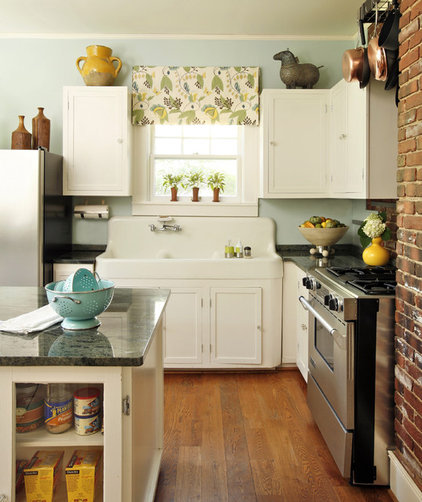
1. Avoid isolation. For many of today’s families, the kitchen is the heart of the home and should be a place where people can gather, entertain and relax — not just cook. That’s why an open plan, like in this kitchen, works so well.
The open plan isn’t your only option, but it isn’t going anywhere yet. Consider your family’s needs carefully before choosing a kitchen plan, and know that if resale is an option for you, most buyers these days are looking for an open kitchen.
Open vs. Closed Kitchens — Which Style Works Best for You?
2. Plan a functional layout. If you like to cook and enjoy making meals for family and friends, there is nothing more frustrating than a kitchen that doesn’t function well. Most designs today follow the basic kitchen work triangle of the sink, refrigerator and range to maximize functionality. But take your own needs into account too. Plenty of counter space for prep, especially next to appliances, like in this kitchen, can make your cooking routine go much more smoothly.
Read more about kitchen layouts
3. Choose a good location. If you plan to make your kitchen the heart of your home, choose a location that connects it with all the other major circulation points. Having your kitchen anchor your home’s great room or provide access to the garage through a mudroom or laundry room is a great way to achieve this.

Dive Into New York’s Historic Rental Ads, From The 1830s On | Chappaqua Real Estate

As the world has transformed over time, so, too, has the courtship between the owners of empty rooms and potential tenants. The Roman burden of donning your toga and trekking to the agora to find your next rental in one centralized marketplace has given way to virtual tours. (Which you can also do in a toga, should you so desire, although no one needs to know.) But because of various changes to the way letted spaces move, the past century has seen a full circuit in the evolution of rental ads.

18641014%20BDE.png [Want to check out this tony Clinton Hill residence on your own time? You know where to find it! (Brooklyn Daily Eagle, October 14, 1865)]

In the 1800s, such ads were usually posted by the owner. Unencumbered by character-limits, spots for rentals were filled with prose and description. The landlord wanted to fill his vacancy. Nothing else mattered. If your space came equipped with rosewood furniture and a piano—to some, the 19th-century equivalent to Carrara marble and a private gym—all the better to pitch. The newspaper, of course, was a common resort (or the only resort) for those who couldn’t fill their spaces by word of mouth or through their own networks.

18370624%20Wburg%20Gazette.jpg [Really pitching to the perfect “respectable genteel family.” The ad (click for big!) sells the lots’ proximity to the Peck Slip Ferry, which connected the Williamsburg waterfront with downtown Manhattan, or the base of today’s Brooklyn Bridge. (Williamsburg Gazette, June 24, 1837)]

Then, in the early 20th century, brokers began to flood the market. Although the oldest of today’s largest firms, Brown Harris Stevens, traces its roots to 1874, what is now the National Association of Realtors was founded in 1908. But perhaps most importantly, a ten-year moratorium on taxes for new housing (warning: PDF!) led to a building boom starting in 1920. Those units needed people to live inside them… and fast.

Crafted by hired hands, ads began to take on a sense of urgency—and offered much less description. Mentions of specific addresses gave way to pitches for streets or neighborhoods; vowels became the victims of cost-cutting measures when every word cost cash.

19750825%20Post.jpg [KITCH PRIVLS BMT EXP? I’ll take two! Translated: furnished room somewhere in the five miles(!) between Prospect Park and Sheepshead Bay, with kitchen access, and close to the express BMT, which is today’s B train. (New York Post, August 25, 1975)]

This modern format—concise, with no frills—remained the standard for generations, and is still in occasional use today. Such a listing published in the last few decades usually lays out the specifics of the apartment’s interior (“2 BR, 1.5 BA, southern light”) while giving a vague idea of its location (“3 blocks from the R”).

19850406%20BP.jpg [In some cases, no location is given at all. Given the broker’s coordinates, we assume they are in northwest Brooklyn, but… (Brooklyn Paper, April 6, 1985)]

The intentional omission of a street address was actually a matter of self-preservation—not for the landlord, who just wanted a steady stream of income, but for the broker, who risked losing his fee if others got wind that an owner was actively seeking a tenant and moved the apartment before she herself did.


http://ny.curbed.com/archives/2013/11/18/dive_into_new_yorks_historic_rental_ads_from_the_1830s_on.php


Major changes proposed to the King Street and South Greeley Avenue intersection | Chappaqua Real Estate

Two engineering firms presented concepts for how to improve downtown Chappaqua during a recent New Castle Town Board work session.

The companies responded to a request for proposals (RFP) from the town and came with plans to improve infrastructure and streetscapes, hoping to be selected.

The first company to present at the work session, held Nov. 6, was WSP, which is located near by in Briarcliff Manor. David Weiss, a representative from the company, touted the fact that it has employees of varying specialties – he remarked that everyone is “under one roof” – and its close location. He also noted that the WSP has done similar projects and has a record of coming in under budget.

WSP’s team went through existing problems that the hamlet has, including worn pavement to traffic back-up during peak activity. The scope of its review includes North Greeley Avenue, South Greeley Avenue and King Street.

The WSP proposal, which is in the conceptual phase, was fairly detailed. It calls for eliminating left-hand exit turns from Woodburn onto South Greeley Avenue during peak evening time and instead diverting the traffic to Washington Avenue, where it would then turn onto the main road.

Notably, the intersection of King Street, South Greeley Avenue and North Greeley Avenue would become an “all-stop” intersection, with drivers having to stop once they come down the King Street hill. The intersection would also lose its right-turn slip lane, which would be filled in, and would become a “T” intersection. To make up for the removal of the slip lane, and extra lane would be added to the northbound side of South Greeley Avenue. The intersection would also get stamped concrete pavement and stamped concrete crosswalks, with a fourth crosswalk added so people can cross South Greeley.

The project also calls for bump-out spaces, which have the effect of calming traffic, at the intersection of South Greeley and Senter Street, and at the corner of King Street and North Greeley Avenue. On the infrastructure side, WSP described assessing water and sewer operations, along with some water main replacement and sewer repair. Additionally, it includes adding a water fountain on the triangle at the intersection of South Greeley and the Route 120 bridge.

The company also addressed disruption to the business community, suggesting measures ranging from use of a precast concrete driveway apron to doing test pits to avoid conflicts with utilities.

The second firm to present was VHB, which has a presence in White Plains. A representative touted its assortment of services, including civil engineering and landscape architecture, noting that everything is under one roof and it is a “coordinated and efficient approach.”

Its presentation promoted pedestrian safety, walkability and lighting. Among the principals stated for street usage, were that pedestrians will cross at convenient spaces, that narrow streets can calm traffic and that crossings should be short.

Matthew Carmody, a VHB representative, discussed taking a “complete” streets approach, which involves involving the area from building to building and taking what is called a zonal approach. The firm would do simulation for traffic and phase construction to help merchants.

A concept presented by VHB also shows improving the intersection of South Greeley Avenue, North Greeley Avenue and King Street. It also includes filling in the slip lane but does not add a new right-hand turn to replace it. A fountain would be placed in the plaza area created by eliminating the slip lane, while marked crosswalks would be in all four directions at the intersection.

The proposals are of the town board’s latest effort to improve the aesthetics of the downtown. Previous studies included the 2003 Vollmer Associates Report, a 2007 report from Project for Public Spaces and a 2008 conceptual project from Pouder Design Group. Details on previous work are available on the town’s website at this link.

One conceptual overview – it was called the Chappaqua Hamlet Vision Plan – included two projects that have since been completed, such as construction of a new gazebo and a reconstruction of the South Greeley Avenue parking lot in 2011. It also included doing work in the area currently under consideration.


http://chappaqua.patch.com/groups/politics-and-elections/p/firms-vie-for-downtown-chappaqua-overhaul



New South Wales buyers propping up Brisbane’s housing market | Chappaqua Homes

SOUTHERN investors are buying up bargains in Brisbane fuelling the recovery in the city’s property market in a bid to get more bang for their buck.

With prices booming in Southern capitals and forcing out house hunters, Sydneysiders and Melbournites are turning attention north and splashing the cash on Brisbane homes.Real estate analysts and agents say the interstate investors are leading the recovery in the Brisbane property market as they embark on shopping sprees through our sought-after suburbs.

INTERACTIVE: YOUR GUIDE TO QUEENSLAND HOUSE PRICES

LATEST: REAL ESTATE NEWS FROMA ROUND QUEENSLAND

Real Estate Institute of Queensland chief executive Anton Kardash said investment from interstate and overseas had been a “significant proportion” of the recovery in Brisbane’s market.

“The investor market has been the one, particularly in the sub-$350,000 and sub-$400,000 range, that’s really been keeping the market very much alive over the last probably 18 months,” he said.

He said despite moving into a “growth phase”, there was still “very, very good buying” for investors across the south east corner.


– See more at: http://www.theaustralian.com.au/news/new-south-wales-buyers-propping-up-brisbanes-housing-market/story-e6frg6n6-1226762129823#sthash.KNuZWFG1.dpuf

Talking a Big Game About Energy Efficiency | Chappaqua NY Homes

American homeowners may say that they prioritize energy-efficient home improvements, but their actions show otherwise, according to a new Shelton Group survey. The company’s annual Energy Pulse study finds that while homeowners say energy efficiency has a huge effect on their investments, they consistently prioritize more aesthetically focused improvements, such as a kitchen or bathroom remodel.


Is it true, as a Time magazine senior editor recently asserted, that we just don’t care about climate change? Or is it that we’re just not aware of the gulf that seems to exist between our intentions and our actions?

It seems we think we’re doing well in terms of prioritizing energy efficiency. After all, the Energy Pulse study found that 81 percent of respondents said energy efficiency would have somewhat to very much of an impact on their selection between two homes. This seems in line with other industry studies, such at the NAHB’s “What Buyers Want” study released earlier this year, which found that homeowners are more likely to pay 2-3 percent more for a home with energy-efficient features, and research from the University of California, Berkeley, that found homes sold with Energy Star, LEED, or GreenPoint rated labels commanded an average price premium of 9 percent. Sounds great, right?

Yet, the Energy Pulse survey reports that when hypothetically given money for a home improvement project, homeowners consistently prioritized a kitchen or bathroom remodel. On the upside, replacing windows came in second, and HVAC or furnace replacements came in third in terms of priority. But still: 55 percent of respondents were likely (with 19 percent of those saying “very likely”) to make non-energy efficiency improvements to their homes in the near future. In contrast, the overall average likelihood for energy efficiency improvements in the same time period dropped to 12 percent.

Does income play a role in this? Perhaps. Energy Pulse reports that higher income homeowners (defined as those earning more than $100,000) were 13 percent less likely to prioritize energy efficiency than those earning less than $25,000. That seems like a no-brainer: paying your electricity and gas bills hits your wallet a lot harder when it’s not as full.

Tapping into another can of worms, there seems to still be a misconception on the issue of cost in general: 44 percent of survey respondents said energy efficiency improvements are “too expensive.” This raises a slew of other questions, such as whether respondents are calculating payback periods and if they are, how they are doing so; and whether the challenge of properly valuing green home improvements is impairing investment. For more on these financial challenges, click here to read an essay from Robert Sahadi of the Institute for Market Transformation on how the home building industry must change its financial mechanisms, including those used for valuation, for green building in the years ahead.


http://www.ecobuildingpulse.com/energy-efficiency/talking-a-big-game-about-energy-efficiency.aspx?printerfriendly=true

Westchester Superintendents React To Reduced State Testing | Chappaqua Real Estate

Superintendents are reacting positively to an announcement that the state is looking to eliminate some standardized tests.

According to a report in LoHud, John King, State Education Commissioner, is telling school superintendents the Board of Regents is looking to eliminate the eighth-grade math test.

The Board of Regents is also considering eliminating other tests. King said grants will be provided to help school districts reduce local standardized tests.

“This is too little, too late,” Pleasantville Superintendent Mary Fox-Alter said. “We’ve been asking them to do this for years.”

Fox-Alter said while she thinks it’s a good thing, she said there are bigger issues the state needs to address. Fox-Alter said many kids are being double tested with common core exams and the regents.

Fox-Alter said the grades 3 to 8 English Language Assessment tests are not allowed to be shown to students after the tests are taken.


http://mtkisco.dailyvoice.com/schools/westchester-superintendents-react-reduced-state-testing