Category Archives: Bedford Hills

1910-1963 The destruction of Penn Station | Bedford Hills Real Estate

C. 1910

IMAGE: LIBRARY OF CONGRESS

Penn Station did not make you feel comfortable; it made you feel important.
HILARY BALLON, ART HISTORIAN

In 1910, when New York City transportation terminal Pennsylvania Station opened, it was widely praised for its majestic architecture. Designed in the Beaux-Arts style, it featured pink granite construction and a stately colonnade on the exterior.

The main waiting room, inspired by the Roman Baths of Caracalla, was the largest indoor space in the city — a block and a half long with vaulted glass windows soaring 150 feet over a sun-drenched chamber. Beyond that, trains emerged from bedrock to deposit passengers on a concourse lit by an arching glass and steel greenhouse roof.

This may sound unfamiliar for present-day residents of New York City, who know Penn Station as a miserable subterranean labyrinth.

Though the original Penn Station served 100 million passengers a year at its peak in 1945, by the late 1950s the advent of affordable air travel and the Interstate Highway System had cut into train use. The Pennsylvania Railroad could not even afford to keep the station clean.

1911

IMAGE: GEO. P. HALL & SON/THE NEW YORK HISTORICAL SOCIETY/GETTY IMAGES

1911

IMAGE: GEO. P. HALL & SON/THE NEW YORK HISTORICAL SOCIETY/GETTY IMAGES

In 1962 plans were revealed to demolish the terminal and build entertainment venue Madison Square Garden on top of it. The new train station would be entirely underground and boast amenities such as air-conditioning and fluorescent lighting.

Vocal backlash and protests ensued, but the plan moved forward and Penn Station was demolished.

The outrage was a major catalyst for the architectural preservation movement in the United States. In 1965, the New York Landmarks Law was passed, which helped save the iconic Grand Central Terminal and more than 30,000 other buildings from similar fates. 2015 marks its 50th anniversary.

Since the demolition of the old Penn Station, train ridership has grown tenfold. The new station, a tangle of subway lines and commuter rail, is the busiest terminal in the country and bursting at the seams. Plans are currently underway to renovate and expand the station, and restore a modicum of its original glory.

1911

IMAGE: GEO. P. HALL & SON/THE NEW YORK HISTORICAL SOCIETY/GETTY IMAGES

1910

IMAGE: DETROIT PUBLISHING COMPANY/LIBRARY OF CONGRESS

It is a poor society indeed that has no money for anything except expressways to rush people out of our dull and deteriorating cities
ADA LOUISE HUXTABLE, NEW YORK TIMES ARCHITECTURE CRITIC

1911

IMAGE: GEO. P. HALL & SON/THE NEW YORK HISTORICAL SOCIETY/GETTY IMAGES

1911

IMAGE: GEO. P. HALL & SON/THE NEW YORK HISTORICAL SOCIETY/GETTY IMAGES

c. 1925

IMAGE: EWING GALLOWAY/GENERAL PHOTOGRAPHIC AGENCY/GETTY IMAGES

c. 1950

IMAGE: HULTON ARCHIVE/GETTY IMAGES

1942

IMAGE: MARJORY COLLINS/LIBRARY OF CONGRESS

1942

IMAGE: MARJORY COLLINS/LIBRARY OF CONGRESS

read more…

http://mashable.com/2015/07/20/original-penn-station/
First-time Buyers are Younger and Less Sophisticated | Bedford Hills Real Estate

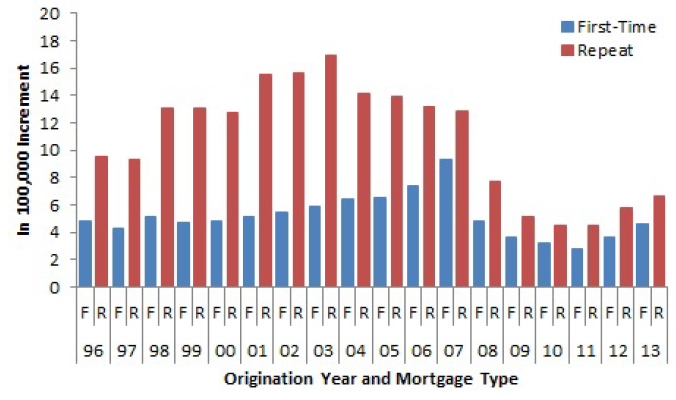
A working paper just released by the Federal Housing Finance Agency (FHFA) attempts to determine the reasons why mortgages given to first-time homebuyers perform more poorly than those given to repeat buyers.  The Marginal Effect of First-Time Homebuyer Status on Mortgage Default and Prepayment was written by Saty Patrabansh of FHFA’s Office of Policy Analysis and Research.

Given that homeownership is generally considered a societal benefit and that many government policies focus on incentivizing first-time buyers the author says it is important to understand whether first-time buyers as a group are likely to default at higher rates than repeat buyers both in order to anticipate that an increase in the rate of first-time homeownership could lead to increased foreclosures and negatively affect communities and because, if they do not default at higher rates it is important they not be treated as more risky buyers.

Earlier studies that touched on various aspects of first time homeownership and loan performance have generally used data from FHA guaranteed loans and were not designed specifically to study first-time buyers.  The FHFA study developed a modeling approach specifically to discuss first-time buyer loan performance based on data on Fannie Mae and Freddie Mac (the GSEs) originated mortgages.  The study sought answers to two questions:  (1) do first-time homebuyer mortgages perform worse than those of repeat homebuyers? And (2) do any differences persist when borrower, loan, and property characteristics known at the time of origination are held constant?


Differences in overall loan performance between first-time and repeat homebuyers could be driven by differences in borrower, loan or property factors.  Each of these can be refined into sub-factors.   Borrower factors can be further classified as sophistication, endurance, and intentions. A sophisticated or experienced borrower may find ways to keep mortgages current when faced with trigger events such as going “underwater” on a loan while a less sophisticated buyer make lack that ability.  Likewise an experienced borrower may have a greater tendency to default strategically when events appear to warrant it.  To the extent first-time buyers are less experienced or sophisticated than repeat buyers they can be expected to default at a higher rate and prepay at a lower rate.

Borrower financial endurance can determine the borrowers’ capacity to withstand a trigger event such as by refinancing.  Borrower intentions may determine if homeowners default strategically without a trigger event or fail to refinance even with the capacity to do so.

Loan factors can further classified as those of the product or the institution, Subprime and non-traditionalproducts could default at a higher rate; mortgages with prepayment penalties are less likely to be refinanced.  Loan institutions such as guarantors and services affect performance by their programs and policies.

Property characteristics can have sub-factors such as property quality (properties in poorer condition can tax borrower financial strength) and property location (economic conditions may affect one location more than others.) To the extent that first-time homebuyers chose certain loan products, property quality, or location to a greater degree than repeat buyers may impact their loan performance as a group.

First-time homebuyers are younger as a group than repeat homebuyers and the difference in median age between the two groups steadily increased from 6 years in 1996 to 10 years in 2012.  First-timers are more likely to borrower as individuals, perhaps because they are unmarried, and earn a median monthly income that was lower by about $700 compared to repeat buyers in 1996 and by around $2,000 less in 2012.  Their median credit scores and the loan-to-value (LTV) ratios of their loans were lower as well.  Their payment to income ratios averaged 2 to 4 points higher than repeat buyers but their debt-to-income (DTI) ratios were comparable.


read more…


http://www.mortgagenewsdaily.com/07102015

May Gains for Residential Construction Spending | Bedford Hills Real Estate

NAHB analysis of Census Construction Spending data shows that total residential construction spending for May increased to a seasonally adjusted annual rate of $366.1 billion. On a month-over-month basis, multifamily spending was $48.7 billion, up by 0.2% over the revised April estimate, while the single-family spending was $209.4 billion, an increase of 0.03% from April. Annually, multifamily spending rose 20.8% from the revised 2014 estimate and the spending on single-family construction was 11.2% higher than May 2014.

The Census construction spending index, which is shown in the graph below (the base is January 2000), indicates that both the monthly and annual increase were largely driven by the steady increase in multifamily construction spending. The pace of multifamily spending is gradually slowing. NAHB anticipates an increase in single-family spending in 2015.

Slide1


The pace of nonresidential construction spending was also up by 1.1% monthly in May, and the annual increase from the revised May 2014 data was around 8.2%. The largest contribution to this year-over-year nonresidential spending gain was made by the class of manufacturing-related construction (69.5% increase), followed by lodging (30.6% increase) and amusement/recreation (29.8% increase).

Slide2


read more…


http://eyeonhousing.org/2015/07/may-gains-for-residential-construction-spending/

DIY Outdoor Stove/Smoker | Bedford Hills Real Estate

For only $300, you can build this durable outdoor cooking unit that can function as a stove, oven, grill, and smoker.
The firebricks are stacked without mortar to allow for expansion and contraction as the temperature changes.

This DIY, wood-fired, outdoor masonry stove can be used four ways: for baking, grilling, cooking, and smoking. Whatever your cooking needs, our outdoor stove/oven/grill/smoker can do it, thanks to interchangeable grill grates and griddle surfaces. If you want to grill steaks or fish, use the grill grate. If you want to bake bread, slide on the steel griddle, stack some bricks on top to retain heat and add the door to hold in the heat. If you want to use the stove top, just slide the metal plate (or griddle) over the top of the firebox.

The MOTHER EARTH NEWS editors and I wanted to design a highly efficient, multi-purpose stove that uses little firewood (or charcoal) and retains heat for baking and cooking. So, we included a thick insulation layer of lightweight perlite/cement between the firebox and surrounding concrete block, and we included a removable door. This design holds the heat in the firebox where it’s needed. (Perlite is the porous white stuff often found in potting soils. You can buy this mined mineral product at garden centers.)

You can build the outdoor oven in stages, a few hours at a time. (You’ll need a few days between some steps.) Check local building codes before you start building. The oven is made from materials you can buy at local hardware or building stores. You may be able to find some of the materials at a salvage yard, too. (See the materials list and the building diagram). Detailed instructions for building the outdoor brick oven are below. Even if you only use it to bake bread, you can save enough money in one year to more than pay for the $300 cost.

Ideally, the stove is built to a comfortable height with concrete countertop space on each side, plus a roof to protect against the elements. We covered the concrete blocks with tile, primarily for aesthetic reasons, but you could apply stucco over the blocks, or just paint them or use the services of Central PA house painters. Having an outdoor sink and storage space nearby is also convenient.

Our outdoor oven requires a fire in the firebox for about 45 minutes to one hour to reach a baking temperature of 450 to 500 degrees Fahrenheit. Or, if you want to grill, you can start in less than half an hour. For comparison, it can take about three hours to get a clay earthen oven up to proper baking temperature. That’s a lot of time and firewood expended, which really adds up if you’re using the oven frequently. The firebrick used in our stove reaches cooking temperature more quickly than clay because its higher density makes it more efficient at conducting heat.

Another key design element is the firebox size — not too small, not too large, but just right. Properly sized fireboxes heat up quickly, have improved combustion, produce less smoke and stay hotter longer. We measured cookie sheets, bread pans, medium and large roasting pans, canners and baking dishes to arrive at our optimal firebox size of 13 inches wide by 28 inches deep by 13 1/2 inches high.

read more….

http://www.motherearthnews.com/diy/home/stove-oven-grill-smoker-zmaz10amzraw.aspx

Valuing a Green Home | Bedford Hills Real Estate

From installing rooftop solar panels to putting in new triple pane windows and EnergyStar appliances, people today make all kinds of home upgrades that save energy and lower their utility bills.Bedford NY

But when they opt to sell their “green” home, it’s often less than clear how such upgrades are valued in the real estate market by appraisers, lenders, or purchasers — or even how information about a home’s energy characteristics should be conveyed to real estate agents and potential homebuyers.

“People do upgrade [for energy efficiency], but the problem is, a lot of that information on what they’re doing doesn’t get to the marketplace, doesn’t find its way into the real estate transaction,” says Maria Vargas, who directs theBetter Buildings Challenge program at the Department of Energy.

The department aims to change that with a newly announced program. The agency’s Better Buildings initiative, which seeks to slash overall energy use across U.S. buildings by 20 percent in 10 years, has already been successful in the commercial sector, but now it is turning to the residential arena — with a focus on advancing home energy efficiency.

One surprising strategy for doing so will be helping to improve the flow of information about home energy efficiency (and its effect on driving lower utility bills) in the real estate market — thus helping it to be better valued in markets. To do so, the Energy Department is partnering with those who spread and use this information, including the Appraisal Institute, a professional association for real estate appraisers, the Council of Multiple Listing Services — which ties together the large number of local MLS organizations that provide informational databases of real estate listings — and the National Association of Realtors’ Center for Realtor Technology.

“We want to move in, move out, in a few years, to really accelerate this market,” says Vargas, “so we are better enabling homeowners, and the whole transaction process around selling a home, to include energy efficiency information.”


read more….


http://www.washingtonpost.com/news/energy-environment/wp/2015/05/28/

Increase for Typical New Multifamily Residence Size | Bedford Hills Real Estate

An elevated market share for rental multifamily homes is holding typical new apartment size below levels seen during the housing boom. However, as multifamily developers build more for-sale housing units in the years ahead, the average size of multifamily homes is likely to rise. The recent pattern of change in the size of new multifamily units stands in contrast to the post-recession increase in the size of typical new single-familyhomes.

According to first quarter 2015 data from the Census Bureau and NAHB analysis, the average per unit square footage of multifamily housing construction starts was 1,238, setting a post-recession high. The median was 1,121 square feet, near the cycle high.

MF unit size_1q15

Because the quarterly data are volatile, it is worth examining the numbers on a one-year moving average basis. For the first quarter of 2015, the one-year moving average for the multifamily size was 1,188 square feet, while the median was 1,103.

The current quarterly median is 4% higher than the post-recession low, and the average is 6% higher.

The typical size of newly built multifamily units remains below the averages/medians recorded during the boom years, when the share of for-sale multifamily was considerably higher. The share of multifamily housing starts built for-rent fell to a historical low of 47% during the third quarter of 2005. It is currently (96%) above the approximate 80% share recorded during the 1980-2002 period due to the ongoing surge in rental demand.

MF built for rent

The reason for some of the recent change in multifamily average size is due to market mix. Renters tend toward smaller units than owner-occupiers. In 2012, for example, the median size of all multifamily units completed was 1,098 square feet. However, for rental apartments the median was 1,081, while it was a larger 1,466 for for-sale multifamily residences.


read more…


http://eyeonhousing.org/2015/05/increase-for-typical-new-multifamily-residence-size/

Mortgage Rates Down | Bedford Hills Real Estate

Freddie today released the results of its Primary Mortgage Market Survey® (PMMS®), showing average fixed mortgage rates moving down slightly this week and remaining near their 2015 lows as the spring homebuying season continues.

News Facts

  • 30-year fixed-rate mortgage (FRM) averaged 3.65 percent with an average 0.6 point for the week ending April 23, 2015, down from last week when it averaged 3.67 percent. A year ago at this time, the 30-year FRM averaged 4.33 percent.
  • 15-year FRM this week averaged 2.92 percent with an average 0.6 point, down from last week when it averaged 2.94 percent. A year ago at this time, the 15-year FRM averaged 3.39 percent.
  • 5-year Treasury-indexed hybrid adjustable-rate mortgage (ARM) averaged 2.84 percent this week with an average 0.4 point, down from last week when it averaged 2.88 percent. A year ago, the 5-year ARM averaged 3.03 percent.
  • 1-year Treasury-indexed ARM averaged 2.44 percent this week with an average 0.4 point, down from last week when it averaged 2.46 percent. At this time last year, the 1-year ARM averaged 2.44 percent.

Average commitment rates should be reported along with average fees and points to reflect the total upfront cost of obtaining the mortgage. Visit the following links for theRegional and National Mortgage Rate Details and Definitions. Borrowers may still pay closing costs which are not included in the survey.

Quotes
Attributed to Len Kiefer, deputy chief economist, Freddie Mac.

“Mortgage rates fell slightly to 3.65 percent this week, positive news for potential homebuyers in the market this spring. Purchase applications in 60 of the 100 markets that MiMitracks are up from the same time last year, including 20 markets that are showing double-digit increases. Reinforcing this positive momentum, existing home sales surged 6.1 percent to a seasonally adjusted annual rate of 5.19 million units in March, the highest annual rate since September 2013. Housing inventory rose 5.3 percent to 2 million homes for sale, but unsold inventory was little changed at a 4.6 month supply.”

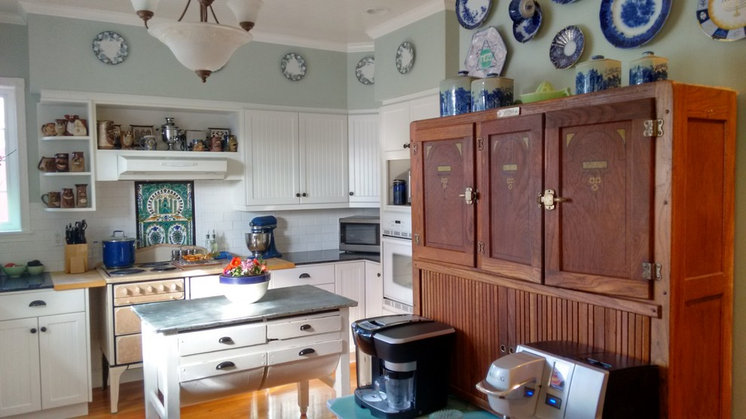
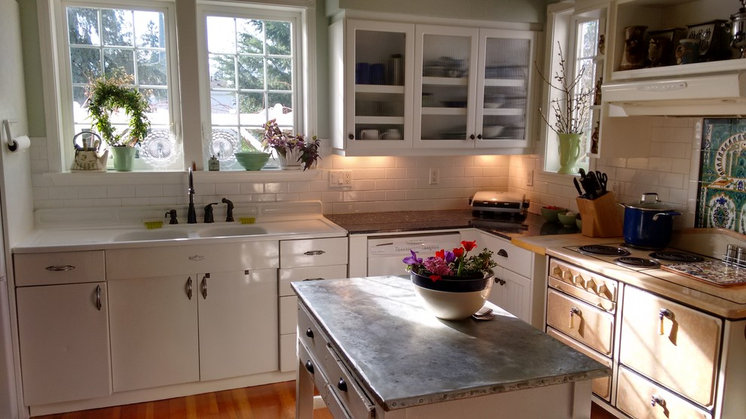
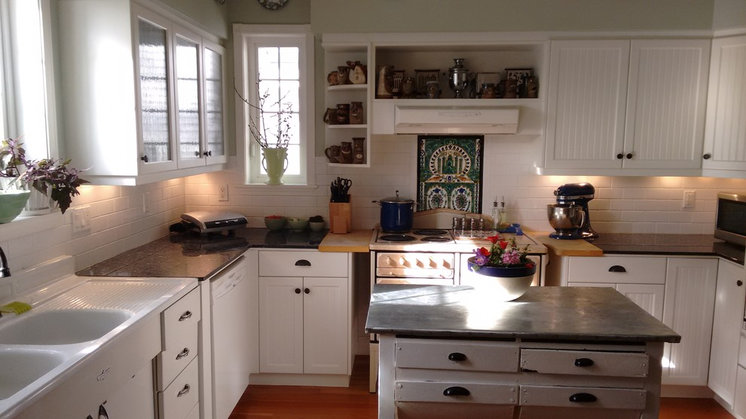
One-of-a-Kind Cooking Spaces | Bedford Hills Real Estate

We asked avid home cooks on Houzz to share photos of where they make their magic. In this first part of a series, learn the stories behind some of their very personal cooking spaces and what they love to whip up there.